After spending almost a decade in the event decorating industry I have repetatively heard "I can do that". Instead of being dismissed by creative minded people, I want to show you how I do "that" so you can be sucessful in recreating that inspiration image. I just might have a few tricks that you haven't seen yet!
It all started when I had a West Coast Clam Chowder that was too thin….
I learned how to make clam chowder from my mom. And she started her chowder with a roux. Nothing says “please give me a headache” more than trying to fix a roux based sauce or soup than your sauce being too thin. It’s not like you can add more flour because it’s not cooked out. And you can’t make corn starch slurry to thicken it up. I mean technically you can, but it’s not the same. The flavor gets thrown off and the texture is also not the same.
That’s when I had the brilliant idea of adding instant potato flakes. I put diced potatoes in my chowder and so the potato flakes made sense because it’s dehydrated powder that absorbs your excess liquid AND you get to keep the potato flavor.
Over the years, from this dehydrated potato beginnings, I have started dehydrating more and more of my vegetables.
It just made more and more sense, because if you really look at all the seasonings in the seasoning aisle in the grocery store, just about all of it comes from plants, herbs, and their seeds. We already season our food with produce. It’s not a far leap to move to use vegetables as seasoning.
Advertisements
From my chowder I moved to thickening my brown sauce made in my caste iron pan when I once again added too much water. This sauce the water evaporates relatively quickly. But this time I added dehydrated mushroom powder. It added an earthy note to my brown sauce and thickened up in just a few minutes instead of the several minutes that cooking off the water takes. Once again, the flavor improved.
And to be honest, I’ve hated working out the lumps of flour when I tried to re-thicken with flour like my mom use to. Depending on the day, I’m convinced that the flour was giving me attitude, “I’m just going to stay lumpy because there’s nothing you can do about it!”
So my comeback to my lippy flour has become, “Oh yeah? Well I’m going to use vegetables then. They don’t lump up like you do.”
I’m still waiting on some of my produce to finish growing in my garden to replenish some of my vegetable powders, but I’d like to introduce you to some of my favorite powdered veg.
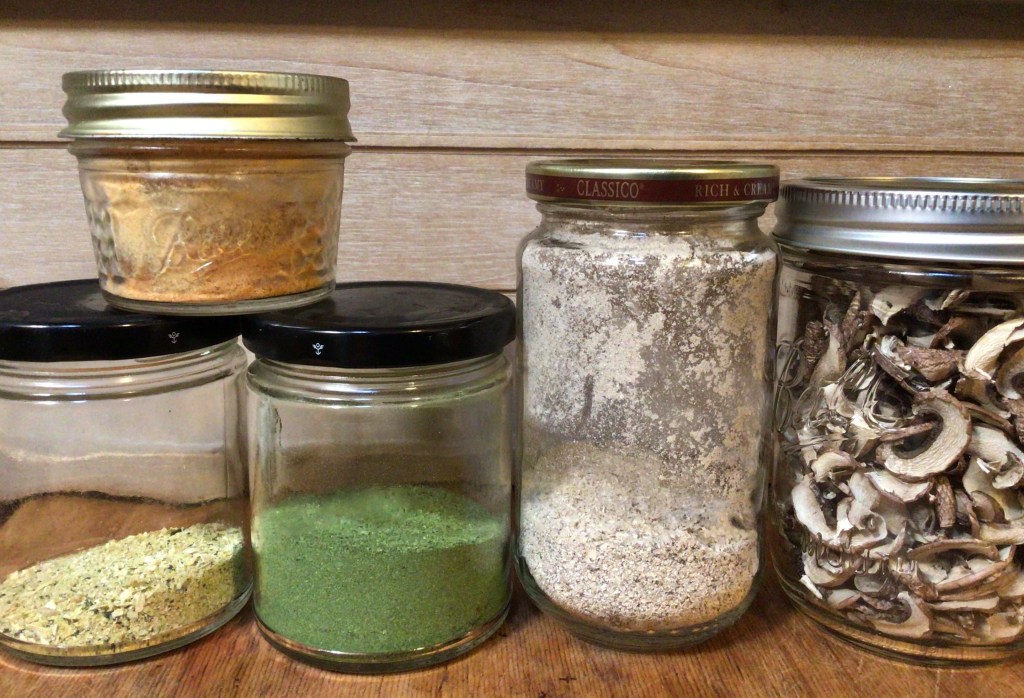
From left to right you Zucchini, Spinach, Mushrooms, and sliced Mushrooms. The orange powder on top is the combination of yellow, orange, and red sweet peppers. You know that bag of small peppers in the produce department? Those are the ones that I dehydrated and turned to a powder.
I’m all out of my powdered Butternut Squash. This one is actually my work horse. It has a nice sweet flavor that my boys don’t know that I’m adding vegetables into a meal.
Not only does my powdered veg work as a thickener, it doubles as my mom hack of hiding vegetables from my children who don’t want to see certain vegetables on their plates. Peas and Carrots are still acceptable on the plate, but all the others, I have to get pretty creative. And instead of renaming vegetables to some weird name, like my mom did, I just prefer seasoning everything with it.
Do you have a recipe that your family is always asking for?
Do you always tell them “Absolutely not!” because it’s your recipe and you don’t want anyone else to have it?
If you want to be generous this Christmas, you can dehydrate and turn your secret ingredients into a powder and make a seasoning pack or bag of instant soup.
This is particularly a great idea for loved ones who live across the country from you and shipping out a sauce or soup just isn’t practical! You don’t have to ship glass containers, liquid, or even have the weight of the ingredients that still contain their water content.
Maybe the person you’re gifting is a hiker or camper. But gifting them dehydrated food, in the form of seasoning, you’re able to give them the nutrition they need and taking up a fraction of their pack space.
Not sure about that statement?
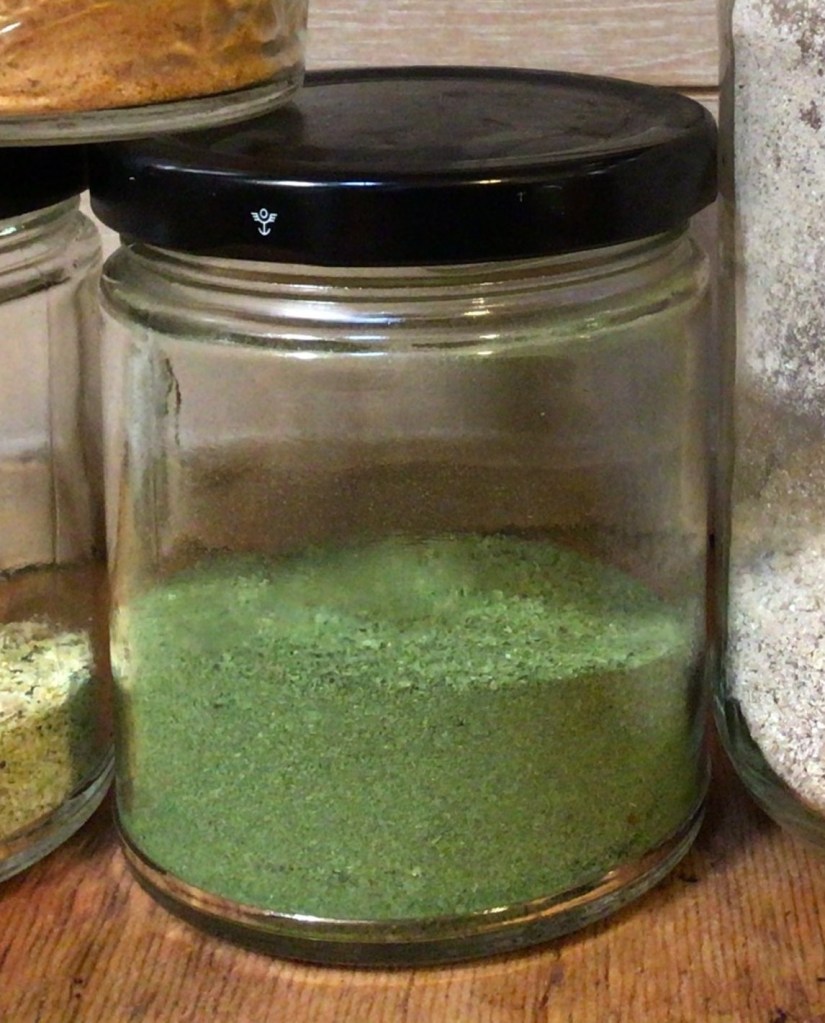
Take another look at the pictures of my powdered vegetables. The Spinach is contained in a 9 oz jar and is currently holding two bunches of spinach. Yes, that is two grocery store bunches of spinach.
Looking for a funny gift for your cook or baker this Christmas?
Here’s a design that can take on many different meanings. It’s perfect for your secret recipe cook, a white elephant present, or for that home cook whose mystery meals are not exactly the best surprises to hit the dinner table.
Here’s a sneak peak for Abstract Cooking, which is officially released on Monday.
Processing…
Success! You're on the list.
Whoops! There was an error and we couldn't process your subscription. Please reload the page and try again.
I won’t even say what else comes with this season. Let’s just say that as a mom of three young children, I’m fully aware of what the change of season means. And this past week, that came and knocked the energy out of me. Shoot I didn’t know I had any more energy to be knocked out! I thought my kiddos drained it from me to fuel their never ending supply of energy.
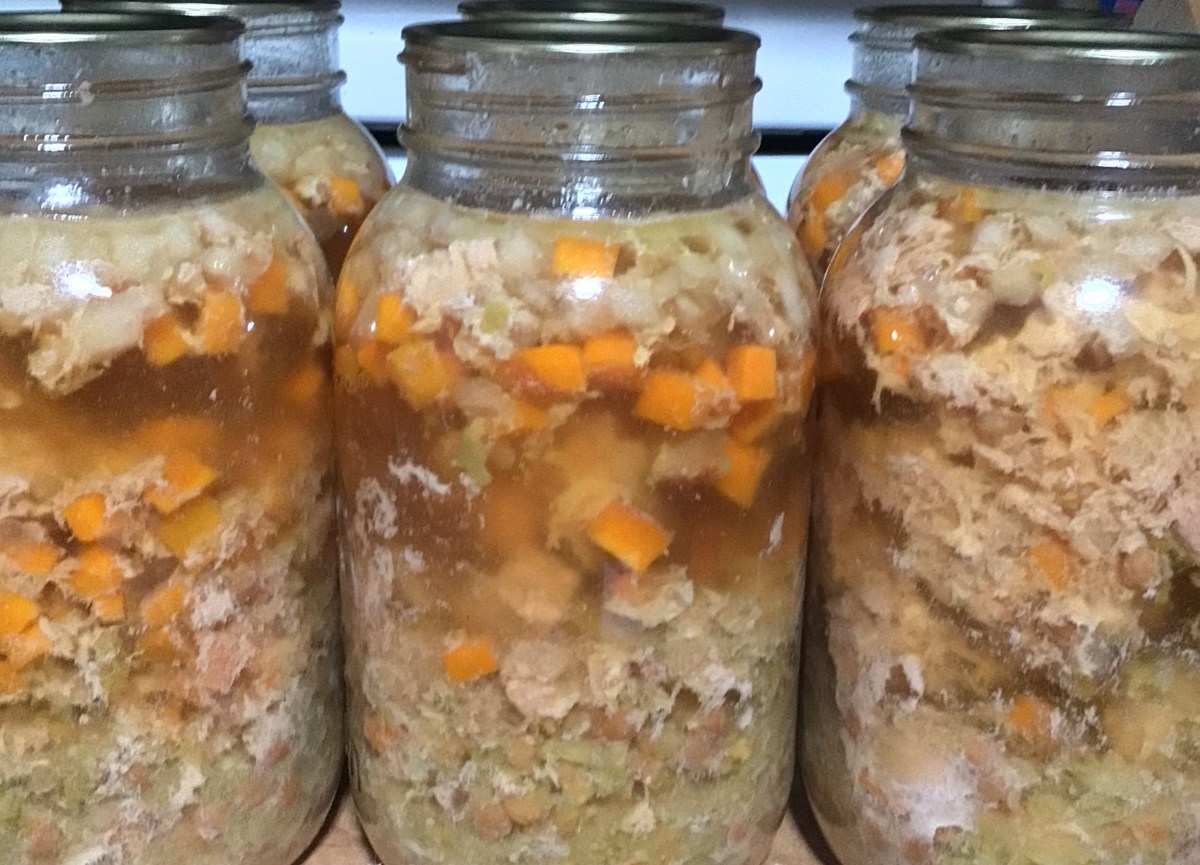
And yet, I was so grateful to have this soup already canned up and ready to go in my pantry. The chicken stock I make, I add antiviral herbs to it. Let me just say that Lemon Balm is my new favorite antiviral herb to cook with! (In a few weeks I’ll share more with you everything I put into my Chicken Stock. You’re going to love it!)
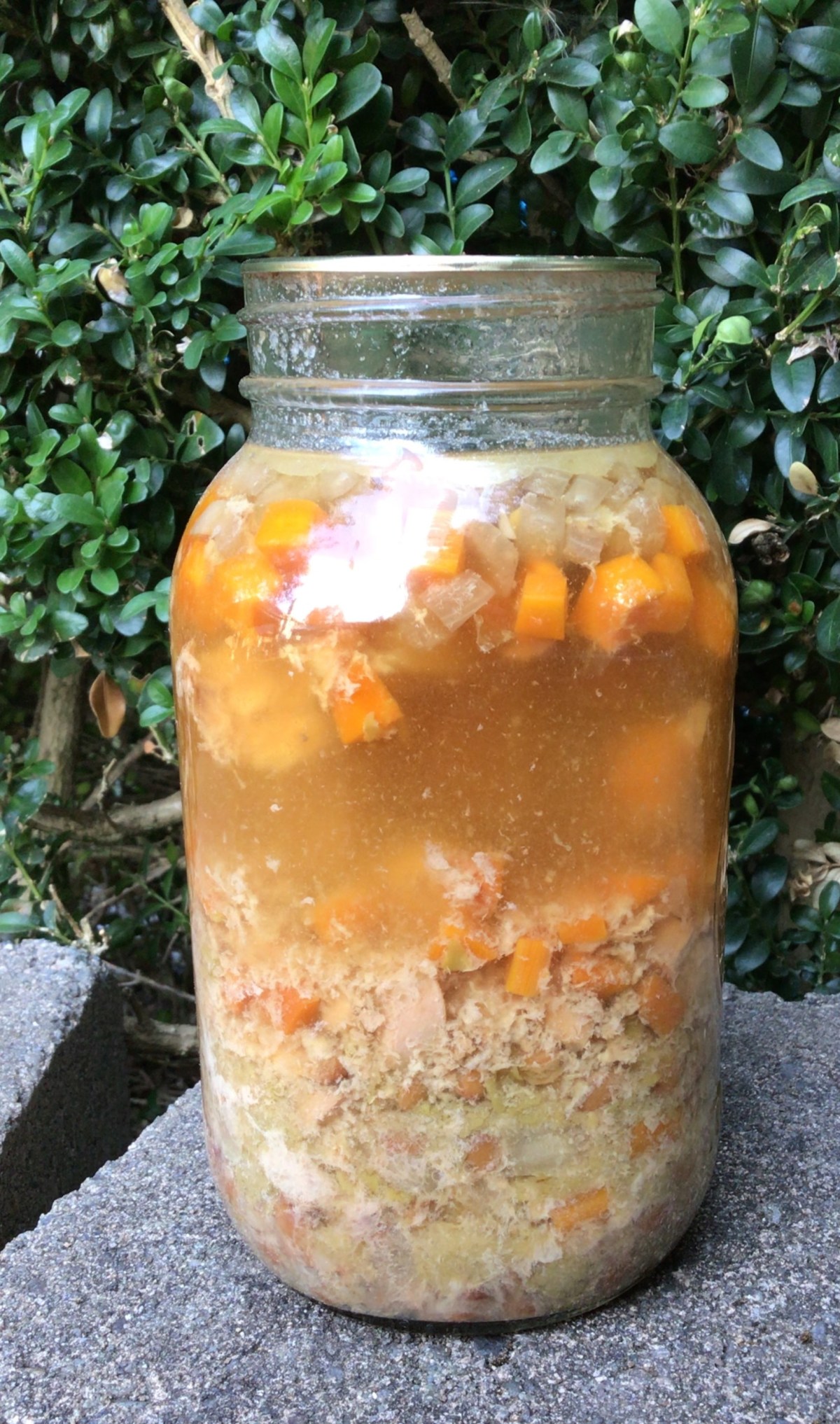
I want to share with you this recipe for Chicken Soup that is perfect for those days where you need healing chicken soup but don’t have the time or energy to make it from scratch. You will absolutely love this because it takes only 5 minutes to warm up–the same amount of time it takes to make condensed soup from the grocery store. BUT it has less ingredients and more immune boosting goodness. And even if your sick days are few and far between, this soup is quicker to heat up than going through a fast food drive through. Plus as the added bonus of being that IT item to use up some leftovers you have sitting in your fridge on the day you crack open this jar of soup.
Yields: 7 Quarts of canned soup
Clean your jars and lids.
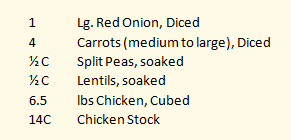
Prep your ingredients.
Cold pack your chicken, split evenly between all 7 jars.
For each of your ingredients, split evenly between all 7 jars. Start with the larger cut ingredients and end with the smaller peas and lentils.
(It’s easier to shake the smaller ingredients down into the cracks of larger ingredients than to shove the larger ones in on the smaller.)
Fill each of the Quart size jars with about 2 cups of chicken stock.
If you have Kosher or Sea Salt, you can season your soup now. Otherwise, do not put in your table salt or iodized salt. You will season your soup when you open you jar before serving.
Clean the rims of your jars with vinegar and then place lids and rings, finger tight.
Prepare your pressure canner.
Follow your canner’s directions for the correct process of canning with your canner.
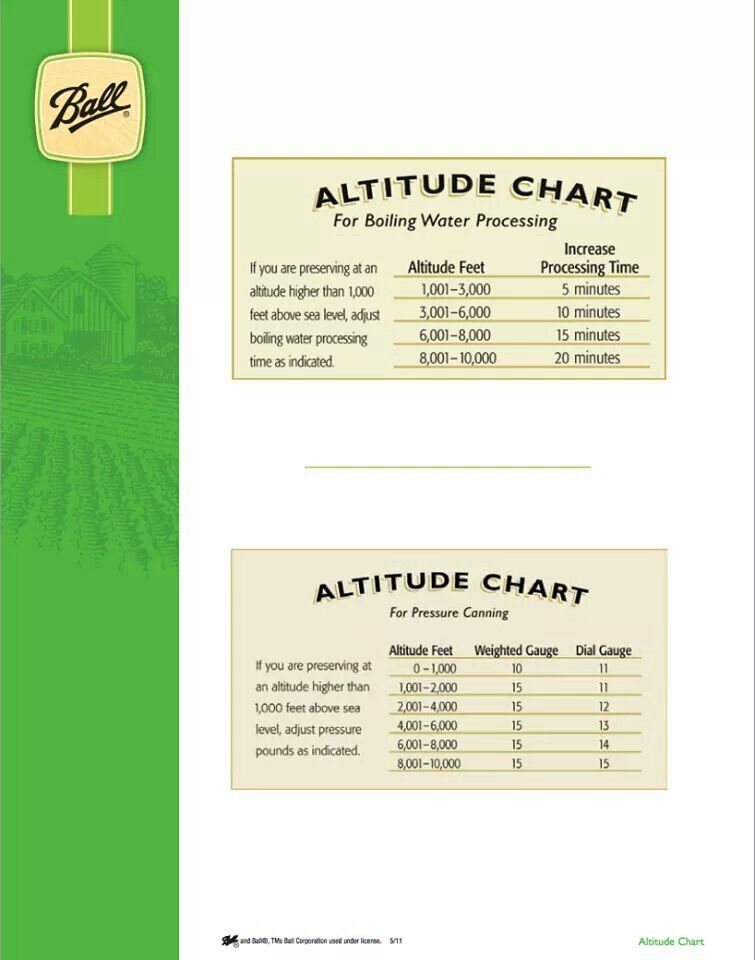
For example, I am Sea Level – 1,000 foot elevation so I can the Chicken Soup with 10 lbs of pressure for 90 minutes in my weighted canner.
Once time is complete, turn off the heat and let your canner naturally release pressure.
When you can remove your lid, let the cans sit for an additional 10 minutes before removing them from the canner.
Allow your jars to sit 12-24 hours to seal. Then remove the rings and clean your jars before storing.
With new lids preserving your canned goods for up to 18 months, you have plenty of shelf life for this soup.
There are many options you have for this Chicken Soup.
You can season it and eat as is.
If you have left over rice or noodles in your fridge you can add those ingredients and still have rice and chicken or chicken noodle soup that is ready to eat with a 5 minute warm up on your stove.
With adding a thickening agent (slurry or corn starch) you can turn this into chicken and dumplings or a pot pie filling.
Maybe you have other small amounts of leftover meat, like Italian Sausage. You can use this meat to bulk up the soup, add some kale and parmesan and have a Tuscan style soup.
Or maybe you’re looking for something Latin in flavor. Grab some tortilla strips, grated jack cheese and add in Latin American seasonings and you can have Tortilla soup.
These ideas are a far cry from being authentic cultural cuisines. However I want to give you a few ideas on how you can turn one of your canned soups into a blank slate for some variety.
Advertisements
I know a lot of us really do not have time to prep meals for our families. In fact “meal prep” might have a double four letter word effect in your ears. And that’s okay. For roughly the same time it would take me to cook a soup from scratch for my family, I can make 7 meals that I can crack open and serve dinner in less time than it is for me to go through a drive through. And it’s healthier for us.
To heat up this dinner in 5 minutes, this is all I do:
Grab my jar from the pantry.
Grab my soup pot. And turn my burner on high.
Open the jar and pour the soup into the pot.
Fill the jar with Water and pour into the pot.
Put the jar in the dishwasher and set the table.
Taste the soup to make sure it’s seasoned the way I want it. (Add salt, because I usually only have table salt readily available, so it got canned without salt.)
And it’s dinner time.
If you have a college student who’s coming up on Mid Terms or Finals, this is perfect for them! Often times they’re up late and find themselves hungry after the cafeteria is already closed. This is something they can cook from their dorm room with a microwave or hot plate and have the brain food that they need. Or maybe they’ve caught a cold and need a little mama’s love in the form of soup. This is super convenient and perfect for a care package.
Advertisements
Looking for a gift idea for this Holiday Season?
This is soup is perfect for the new mother getting use to having baby at home, an elderly family member who retired their pots and pans, someone who is an avid camper or loves cooking by camp fire, or anyone else who can benefit from a quick home cooked meal without all the fuss.
Maybe you’re the type of person who loves gifting food to a neighbor, friend, or family when they become ill. Here is a quick way of gifting all that healthy goodness without your schedule batting an eye.
I highly recommend this recipe for everyone!
Do you need another gift idea?
This one is personal and doesn’t require you to have a master’s degree in art to make!
Here are some supplies that you will need:
Canvas
Paint
Paintbrush
Clear Acrylic Spray
Chalk pen/crayon, Paint pen, Pastel, or like craft item you can write with
(Optional) Sponge, Paper towel, Napkin, or Tissue
(Optional) Embellishments such as pre-cut vinyl design
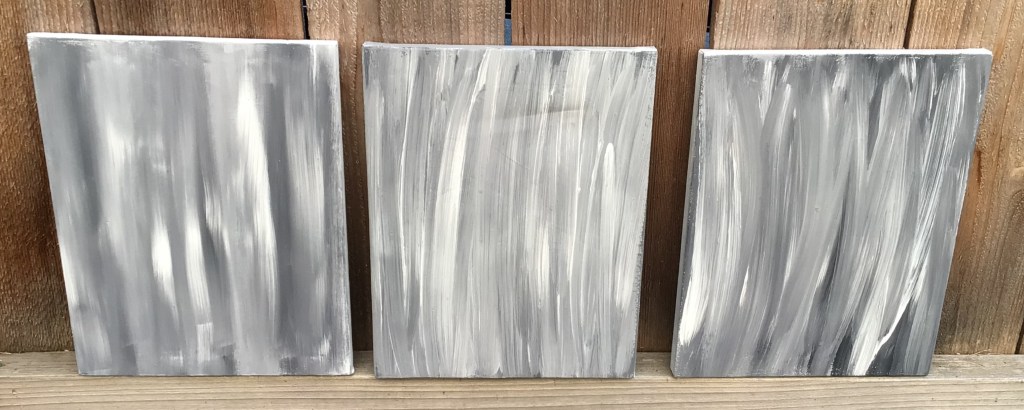
Paint a design on your canvas. You can do whatever design you would like. Here are some examples of canvases that I already have on hand. There are the canvases that my boys made 3 years ago.
And these are the ones that I have in the prepped stage for various projects that I have in the works. You can use coordinating colors, monochromatic colors, are shades for an abstract scene.
Let your canvas dry.
Spray your canvas with Clear Acrylic Spray and let dry. This step is important, because accidents happen and sometimes you want to “erase” a mistake. I’m a phonetic speller and sometimes I just get a word wrong. No worries. By having the acrylic spray dried before you start writing with your crafting pen of choice, you have the option of wiping away the mistake with a wet cloth. The only writing medium that gets to be a bit tricky is acrylic pens. That one you may not find having an “erasing” quality. Chalk pens and most pastels will generally work for excessive editing.
With your writing medium of choice write your message, series of quotes, words of encouragement, or whatever you’re inspired to say. When I made these gifts for nieces and nephews, it took about 7 quotes that I pulled from online to fill the 8×10 canvas with medium small print from top to bottom. You can write as large or small as you would like. Just be aware that the writing medium you choose to use will help you decide how small you are able to write. I used a chalk crayon that had a relatively large nib, so I wrote as small as I could and the words were as tall as the width of my pinky.
Advertisements
Decide if you would like to leave your writing clear and readable or if you would like to smudge the words to make an added texture on top of the painted design that you made. This choice is perfect for the people who believe that their handwriting isn’t pretty. By smudging your writing, you remove the uneven, shaky, or other characteristics of your handwriting that you may be self conscious of. If you choose to smudge, I recommend printing out a copy of your message that you can give with your gift, so the recipient has the opportunity to read the love that you wrote for them. For direction of smudging, that is completely up to your eye. I personally like smudging my work from left to right because I love using horizontal strokes when I paint. I do have some pieces that the strokes are vertical and so my esthetic is to smudge vertical with those, so the “text” doesn’t compete with the flow. But you could choose to smudge diagonally, circular, zigzag… each direction you go will give a different feel to your piece.
Once you are done writing and/or smudging spray your canvas with the Clear Acrylic Spray again. This is going to be a critical step for you. If you chose to smudge your “text”, the spray will prevent further smudging. If you want to add vinyl or HTV on top of your art, this spray is going to anchor your vinyl down. I’ve tried applying vinyl and HTV straight on a painted canvas and both have peeled off, taking paint with it. But every time that I’ve used the Acrylic Spray, vinyl and HTV both stay on the canvas perfectly.
Embellish your gift. Your options are endless at this point. You can choose to make something and personal with just adding your recipient’s name. You can add scrapbooking embellishments with hot glue to add some glam or character. You could pray a frame with a metallic paint and make a modern framed art. Or perhaps you want to do four panels and keep them frameless. And then there’s always the option making a 3D piece using other crafting techniques, such as this.
If you find that you are on a budget this Holiday season, this is a perfect gift option for you. We are in a time in history where people need to hear how much they are loved and valued. So when you can poor into another person and share with them a hope of a future with them, it can hold profound meaning in their life right now. I have never before seen so many people facing suicide and thoughts of hopelessness like I’ve seen in the last few years. Sharing with someone how much they mean to you is something that you will never regret. And you never know that it might be the one thing that offers them hope in a time where it seems like everything is so wrong.
What is inspiring you right now? Do you have ideas sparking in your mind?
Right now I’m inspired with many of the changes that come with fall. This is the season that always has inspired me. In fact, my boys found a whole acorn that I so want to use as a piece of 3D art. I’m hoping I can find some more and have more than a single nut to work with!
Please comment below with what you want to make and even send me some pictures. I would love to see what creativity jumps to life in you!
Files used today
Spring Triple Panel comes with all you see here. Or you can select individual elements.
This post contains affiliate links to products. We may receive a commission for purchases made through these links, but at no extra cost to you.
One of the first things you’ll hear when you start in the world of making your own jams and jellies is that you MUST stick strictly to the recipe or your jam won’t set.
And the first thing anyone will set out and do is try to take a single batch recipe and double it or triple it, like you’re making chocolate chip cookies. After all, if your family goes through PB&J like nobody’s business you really don’t want to make 6 pints of jam at a time. That would take forever!
Plus, if you have kids underfoot there is absolutely no chance you’ll get four pots of jam on your stove top. Because the odds are that you’ll have a four ring circus around your ankles and all your pots start a rolling boil at the same time. At least that’s how things would play out in my house IF I had to make jam one batch at a time.
Fortunately for us, my husband and house a lady who was selling off her jam inventory and gave us her large batch recipe. Unfortunately I can’t share that recipe with you because of a verbal agreement that we made with her. And that’s one thing about my husband and I, we keep our word.
BUT, it got us on the path to know that you don’t have to make single batch jams and jellies if what you are really looking for is to make one large batch and set your family up for a year’s worth of jam in one day!
Advertisements
I’m sure that there are other large batch recipes out there if you took the time to search, but there’s not going to be many. One, too many people have a small business making jam for bazaars and other venues. And if you’re in the business, you’re not going to put your recipe online because that’s just not a good business model. Ball has an extensive jams and jelly section, but all of them are single batch. I haven’t had time to scour the pages of extension offices to see if they have large batch recipes. But I did find one rather quickly with the company that I buy my pectin in bulk.
Yes! You can buy pectin in bulk and at a far greater savings than buying the box of 2 packets of gel pectin at your local grocery store.
For the last several years I have been buying Hoosier Hill Farm Powder Pectin. They have an amazing product and I’ve preferred this over the gel/liquid pectin that I grew up using. It’s less mess. And like I mentioned above, it’s at a far better price than buying the same quantity in the gel/liquid form.
If you don’t have the time to search out your own large batch of Jam and Jelly recipe, you can use this one from Hoosier Hill Farm. You can go directly to the site through the link, but for your convenience I have it here:
Cooked Jam Directions and Recipes
Locate and mark off fruit recipe on chart below. Check 8 OZ jars for defects. Because containers are not filled to the rim, one more container than the specified cup yield may be needed.
If jams will not be placed in boiling water bath, wash, scald and drain jars, or use automatic dishwasher with very hot rinse water. Keep hot. If jams will not be placed in boiling water bath, wash jars and sterilize in boiling water for 10 minutes. Keep hot. Wash lids and place in a small container. Cover with cooling water shortly before placing on filler jars. Always use new lids.
Prepare fruit as directed in recipe.
Measure amount of prepared fruit specified in recipe ingredients listing, pack solidly in cup. If measure is slightly short, add water. Place measured fruit in 6 or 8 quart sauce pot. Add lemon juice if listed.
Measure sugar and set aside. DO NOT REDUCE SUGAR.
Stir fruit pectin into prepared fruit. (Sauce pot must be no more than 1/2 full to allow for full rolling boil.)
Bring to a full boil over high heat stirring constantly. At once stir in sugar. Stir and bring to a full rolling boil. (a boil cannot be stirred down). Then boil hard one minute stirring constantly. Remove from heat.
Skim off foam with large metal spoon. Immediately ladle into jars leaving 1/4 inch space on top. With a damp cloth, wipe jars and threads clean.
Immediately cover jars with hot lids. Screw bands on firmly.
Place in boiling water bath carefully setting jars on rack in canner or large sauce pot of boiling water. Water should cover jars by 1 to 2 inches. Cover canner, and return the water to a boil, then boil 5 minutes. (At high altitudes, increas boiling time by 1 minute for each 1000 feet above sea level). Remove jars from canner.
Let jam stand to cool. Check seals. Jar lids should be slightly concave or remain so when pressed. Remove bands from jars. Store jam in a cool dry place. (small amounts of unsealed jam may be covered and stored in the refrigerator).
I added the pint yield for anyone who might not yet have the conversion memorized.
Tip: The above jam recipe is a little on the loose side for my taste. So by cooking it a couple minutes longer on the rolling boil will firm it right up. The next time I run this recipe I’ll rolling boil for 3 minutes instead of 1.
What I want to point out is that this recipe does set jam every time. AND if you take a look at all the measurements you will see that they are exactly doubled or tripled the original measurements.
Can I use grandma’s recipe in a large batch?
I have yet to find any real information that says you cannot.
The rumor is that you can’t double a recipe because it won’t set. But here’s the deal, jams and jellies set because the sugar to pectin ratio is kept!
If companies dealing in high volume jams and jellies sales can make recipes in high quantity, you can too. You just have to understand the science and process behind making jams and jellies.
Pectin has to have a high sugar concentration to set. Low or No Sugar Pectin doesn’t have to have that sugar content because it has dextrose (a simple sugar extracted from corn and other vegetables). Because a sugar was already added into the Low or No Sugar Pectin, less is required when you you make your jam or jelly.
So if you are meticulous in your math for creating a larger batch of grandma’s jam then there is no reason why you can’t have success in doubling, tripling, or quadrupling grandma’s recipe!
Tip: Switch from measuring out your ingredients from cups to a unit of measurement, lbs. or grams. By switching to weight measurement you eliminate the dead space of your berries and the precise measurement of your dry ingredients. The reason why the set can be different in using the same recipe over and over again is because the weight of the measurements is different even if the look of your cup measurement seems to be consistent.
If you’re nervous about increasing your batch amount, you can take a trick from candy making to test your jam. Keep a bowl or glass of ice cold water handy. When your cook time is done, drop some of the jam into the water. If it’s not going to set, but remain a syrup, the jam/jelly will dissipate in water. If it is going to set, then it will gel up in the water.
I’ve known too many canners who process their jam and then wait until they crack open a jar to find that their jam/jelly didn’t set. The simple water test, or even setting a small quantity of jam in a bowl and putting it a freezer to cool down, will give you a rather quick indication if your jam/jelly will set or not.
If the jam/jelly doesn’t set or is too loose, then there was something wrong with the ratio of sugar to pectin. (This is all the more reason to find a successful recipe and translate it into weight measurements. Then you can recreate the recipe and have perfection each and every time.) Unfortunately I can’t advise you in adding more sugar or adding more pectin to your recipe because I can’t tell you where your recipe went wrong.
Advertisements
So in this moment of uncertainty, what I would do is head this off in a scientific approach– set aside two samples. In one sample sprinkle in a little more sugar. In the other sprinkle in a little more pectin. What happens? Which one thickens the jam/jelly? Which one makes it looser or no change at all? Also remember that if you’re using powder pectin, it will take a little bit for the pectin to do its thing. It has to hydrate and react with your jam/jelly.
The same goes with if your jam/jelly is too thick. The reason for it being too thick is either because there’s too much pectin or the jam/jelly got reduced too much (you cooked off the water content). There are some fruits that have more natural pectin in it. That’s the reason why apples don’t need pectin to make an apple jelly. So if you’re working with a jam that has a mixture of apple in it, then this is one thing to keep in the back of your mind, the effect that pectin has on your recipe.
But as I mentioned above in the recipe Tip, sometimes the only change you need to make is how long you run your rolling boil for. The longer your rolling boil goes, the more your water content will burn off. Just be careful not to burn your jam on the bottom of your pan. That flavor will permeate through your entire batch.
Making a Memorable Gift
We’re living in a moment of time where family budgets are taking an extreme hit. And with the holidays quickly approaching us I want to share with you one quick idea on how to make a budget friendly gift that will leave a lasting memory. So whether you’re looking to give a hostess, thank you, teacher appreciation, Christmas, or white elephant gift you can take this skill of jam/jelly making and make a gift that will be appreciated!
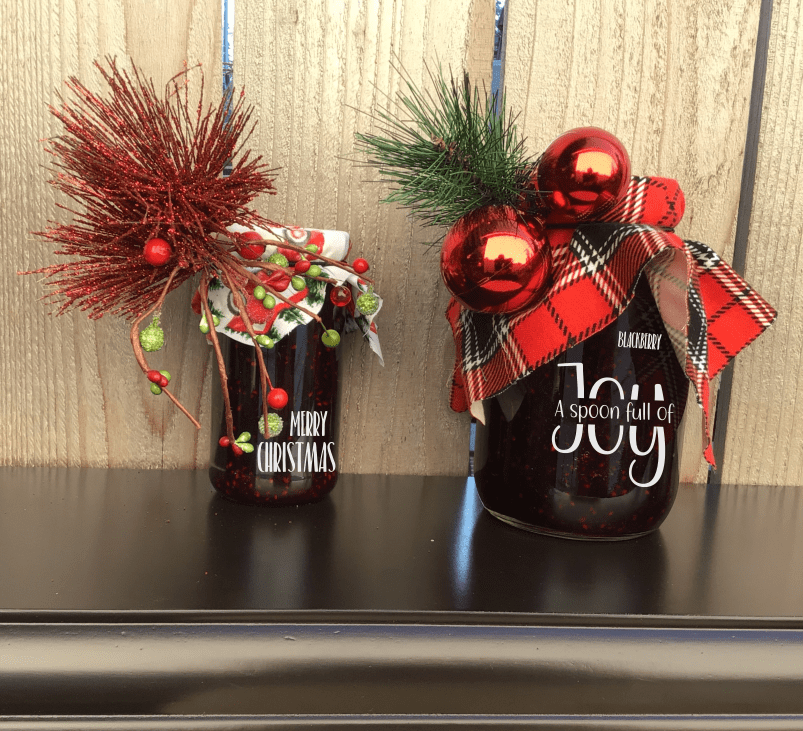
Once you’ve processed your jam and the jar has cooled, take a selection of material that fits the person or gifting moment. You can choose to cut the fabric in a square or a circle. Depending on if you’re using a wide mouth or standard jar lid will determine what size of square or circle you will make. Another determining factor will be if you want the overlying fabric to hang low or high.
Tip: Set your jar upside down on the back side of our fabric. With a marker or chalk, mark out 2″ from either side of the lid of your jar. Draw out your circle or square. (The Christmas Truck print was a 2″ square. The Red Plaid was a square cut 3″ off both sides of the lid.)
Once your fabric is cut place it on top of your lid and secure it with the jar ring, string, ribbon, or even elastic. Decorate as elaborate of simple as your taste leans.
And now you’re ready for the holidays with simple gifts that don’t suck the joy right out of your festivities!
Whether you’re trying to prevent mix ups from lookalike items at work, on sports teams, or family members, there are just certain things that are flat out difficult to personalize.
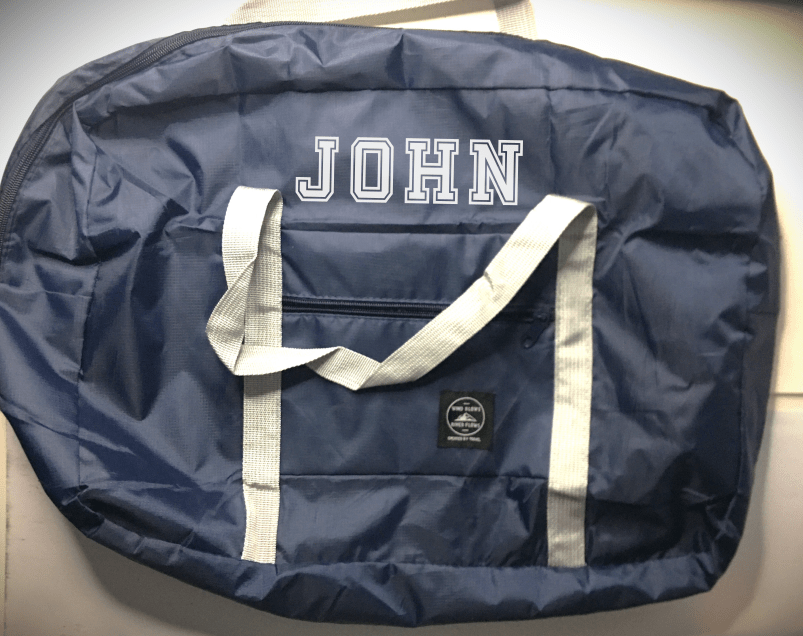
For example, my mother in law gifted my boys duffle bags for soccer. Having triplicates of the same nylon bag is great for making sure that no one got a “better” bag. But without some identifier, it makes it difficult for the kiddos to figure out whose bag belongs to whom.
In this same situation, growing up my mom took a sharpie and wrote our names on the straps of our bags.
Fortunately there’s a way of personalizing without going full on retro.
Most people shy away from using iron on (or HTV) decals because the nylon bags melt so easy.
The simple tips with these kinds of bags are that you want to minimize the exposure of high heat that you can.
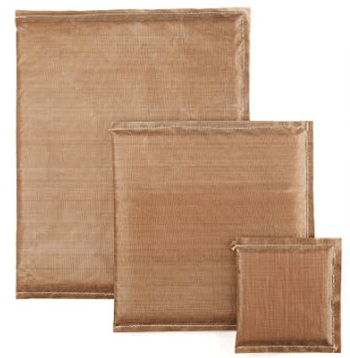
One you have selected your decal or made your own with your favorite sports font (and cut your HTV with your cutting machine), you want to grab a couple extra items. You want a pressing pillow or a folded up towel that you can place inside your bag and prevent an accidental melting of the two sides of your bag together.
Note: a pressing pillow is going to be a better option because it’s a smooth surface. Even when the nylon starts to get warm from the pressing, it’s a smooth surface that will keep your bag’s fabric smooth where you press. With a towel, especially terry cloth or a towel with some nap to it, the nylon will form against the nap and leave a texture behind when it cools down. So if at all possible, try to keep your barrier something with a smooth surface just to take you that one extra step closer to a perfect final product.
With your barrier inside your bag, you can then place your decal wherever you want on the bag. Just make sure that the pressing pillow or towel is directly under where your decal is going to be placed.
Advertisements
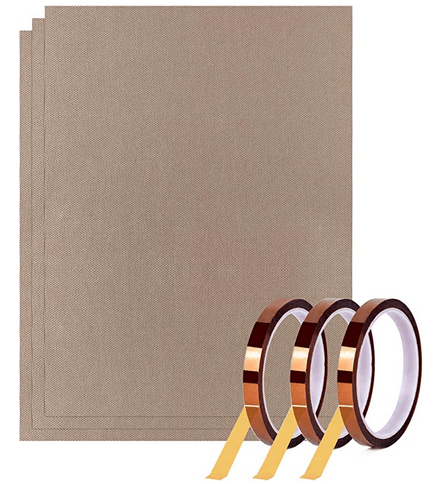
Depending on who you talk to, some crafters are going to tell you it’s okay to use parchment paper or wax paper over your decal. I’m going to steer you away from this advice. The nylon bags melt so easily (especially seeing that your decal is going to need some heat exposure to adhere properly). What is going to eliminate the potential for bag melt is to use a teflon sheet.
Teflon is going to distribute heat better than the other options. The heat bleeds out and so there’s not that clear demarcation that this was where your head source was applied. (This is especially important with an iron or a mini press, where you have a bit more precision with where you are pressing your heat.
Parchment paper will only keep is an okay alternative. I recommend making sure that your press is on a lower temperature, because parchment paper will not prevent discoloration from high heat on a delicate material.
If I can talk you out of one option, it would be the wax paper (or the press and seal that I’ve heard some crafters use as a vinyl carrier). You don’t want the wax (or the press and seal) side to be in contact with your heat source. There will be a residue transfer that is just going to give you some problems you definitely don’t want to deal with. And there are some materials, like nylon, that will absorb in anything that’s an oil based material. It is possible for the wax paper (or press and seal) to leave a halo effect on your nylon where you pressed. And it will be most noticeable if you’re like me and point your iron or press in any and every direction. Instead of having crisp lines, the halo could appear like a faint comic speech balloon.
For the bags that I personalized for my boys, I used a teflon pressing pillow and covered the HTV with a teflon sheet.
Even though the job would have been quicker with my heat press, I opted for my mini press. It was easier for when a couple of the corners of a few letters didn’t want to adhere like the rest. I could pinpoint directly to the spot.
Note: Nylon doesn’t require as long of a press as cotton or canvas. So be sure to either drop your temperature a little or cut your pressing time. It’s easier to press a little longer than to scorch the nylon.
What’s great about knowing how to apply decals onto thin nylon bags is that now I know how I want to commemorate my kiddo’s sports teams through the years. I’ve designed some team logos that I will add on from previous sports seasons. And if I can’t come up with a design for some of the crazy young kiddo team names out there (like Tiger Squirrels) I can pick and font and just add the name.
I hope these tips will help take away the fear factor of personalizing items that we tend to stay far away from. By taking proper precautions and knowing how a material will react to something (like heat), you can most certainly make adjustments to make it a usable material for your creativity!
If you haven’t heard or seen Teflon sheets or pressing pillows here are a couple of links to familiarize yourself with the products. These are affiliate links. I may receive a commission for purchases made through these links, but at no extra cost to you.
Now that Fall weather has set in, there’s one concern that comes up every year. What do we do when the power goes out this year?
You would think that with the frequency that my surrounding area loses power due to snow fall, that there would be changes in the electrical system. Or even something as simple as taking preventative measures to eliminate more outages. But instead the average number of outages remains the same. And the outage time remains the same, 24-72 hours. Some areas have outages for longer.
But none of them have hit the fame as the President Day’s Storm of ’92. Roads were thick sheets of ice. Trees were breaking from an obscene amount of cumulative ice. And the power lines were down just from the weight of the ice on the lines. That’s not even taking into consideration the transformers that were blown.
I remember that my family had no power, with snow and ice, for longer than a week. I wish I could remember how much snow we had that year. And I wish I could remember how long we were really without power. My family did quite well in that storm because we had a wood fireplace, where we could keep one room sufficiently warm, with a flat top that we could cook on.
Even with all the power outage skills that my husband and I have, it only mildly prepared us for the day that an Otter Pop propped our freezer open this past summer.
Fortunately for us, the freezer had only been ajar for a couple hours and we caught it before we had a complete loss of our frozen foods.
And for as much as working in campus dining wasn’t exactly my job of choice, I do value the information that I learned getting my food handler’s permit. In this particular instance, I had the information to easily recall safe temperatures to prevent food borne illnesses.
A couple of my meats were between 38-39°F. Most were further away from the danger zone. And the majority was still frozen solid. My defrosted meat was still safe so I cooked that all up and prepped my pressure cooker for canning hot packed meat. The rest of the compromised meat, that could safely sit in my fridge and defrost the rest of the way, was saved to process the next day.
So with storm season quickly approaching, what plans does your family have for saving food for when the power goes out? Or even your freezer gets accidently propped open? Or your fridge fails you for one of a handful of reasons?
If your fridge or freezer contents can be handled in a timely and food safe manner, there is absolutely no reason why you can have zero food waste when the unforeseen happens.
Pressure Canning
Just about everyone I talk with, who are familiar with food preservation have the skills of water bath canning (the process of canning in glass jars acidic foods). I’m sure you’ve seen people’s canned jams, jellies, tomato sauces, and fruits. Foods that are under the pH value of 4.6 can all be water bath canned, be shelf stable for 18 months, using current lids (when stored properly in a cool dark place, like your pantry or storage closet).
What about the rest of your food that is not acidic; vegetables, milk,
butter, and meat?
That’s where a pressure canner comes in.
Before moving on, I want to acknowledge those who say that they mama, grandma, or auntie still water bath can everything (even the food above a pH 4.6). I’m not going to argue with your mama, grandma, or auntie. Food is one area where I prefer to not take my chances. The risks I make in life, I prefer to make elsewhere. Pressure canners can be purchased for less than an Instant Pot. So I choose to use the pressure canner and encourage everyone else to use a pressure canner as well. It also has the least processing time. Those who claim to water bath meat do so with a processing time of over 3 hours. With the pressure canner, processing time runs from 75-90 minutes (for elevation 1,000 feet above sea level and lower) depending on the size of your jar and type of meat you’re canning. So from the money and time perspectives, the pressure canner is still the best way of processing (all other food risk issues put aside).
Another bonus to investing in a pressure canner is that it’s two canners in one. You can pressure can with it as well as water bath.
Pressure canning weights and processing times vary dependent on the elevation at which you are cooking.
Another subject that can bring some heated conversations is cold pack vs. hot pack pressure canning meats. What you need to know is that cold pack means that you put raw meat into your jar and the processing time cooks your meat. Hot packing means that you cook your meat until a little pink is left and then you pack it in your jar with a stock or water. There are safe ways of processing both ways, when you look at the cuts of meat, how it’s packed, and what proven canning recipes state.
A bit of it comes down to common sense decision making as well. For example, the meat that I took out of our compromised freezer (38-39°F) was safer to hot pack. The reason is that once you come to 40°F bacteria start to grow and cause problems. So I immediately cooked the ground beef, even a little longer than until only slight pink remains, because I didn’t want to start the canning processes with a possibility of the meat being compromised. When canning, the meat nearest the center of the jar doesn’t reach the high temperature to kill off bacteria as quickly as the meat nearest the edge of the jar. So by making sure the meat would all be thoroughly cooked (between pan and canning), I make the chance of food borne illness less. Of course, this meat I’m going to use before the other meat I have canned, but this is all about making the choices that make sense with the science behind food preserving.
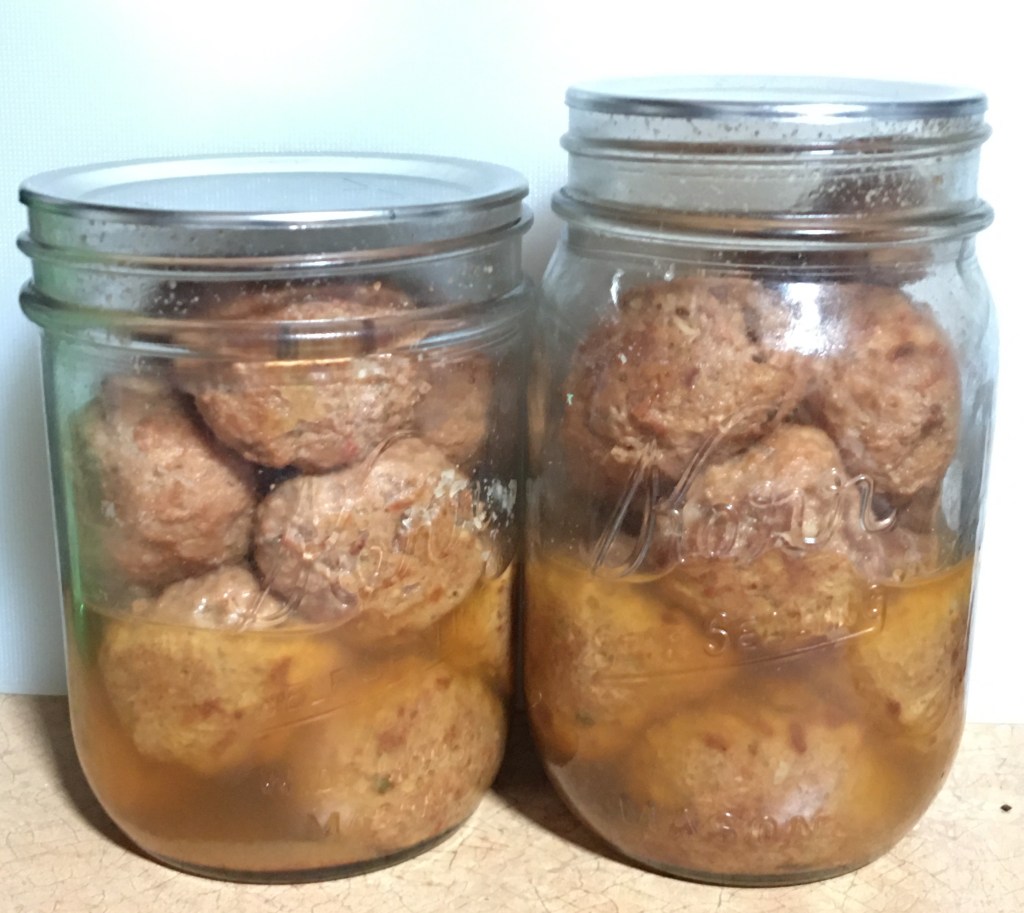
Something worth noting, that in the ideal situation where there is no compromise to your meat, how you can it is going to determine how it turns out. In the instance of ground beef, if you hot pack it, you will end up with canned beef that is small crumble in shape and texture. If you cold pack ground beef you will end up with a product that is solid–comparable to a meatloaf or a pressed meat like SPAM. So if you’re canning meat in a non-emergency setting, think about how you would like to use your canned meat. Because that is going to help you decide how you preserve your meat.
Things to Watch Out For
Obviously, the first signs of failed seal are if your lid buckles or the lid never seals to begin with.
When you remove your jars from the canner you can immediately spot the first failure type, a buckled lid. It’s any type of warping that you see on the lid. Even if the seal feels sound, it could be a false seal that will break on your shelf after you let it sit for a week or two.
Think of this issue as soundness of a structure. When you build a house, you don’t use warped wood or a broken foundation because it can cause problems to the soundness of the house in the future. Everything could be fine for a few years, but the time comes where the house gives way to other problems because of unsound structural sources of the house. A buckled lid may have a sound seal, but it’s only a matter of time before it fails.
In this instance, it’s just best to remove the lid and reprocess the jar. Your food is not going be harmed by processing it a second time. But, giving it a new lid with a proper seal is going to give it the sound structure your food needs to be safely preserved on your shelf.
Now the failed lid seal, that problem is the one that sneaks up on you. And it’s the number one reason why for good practices you never store your jars with the rings on.
Once your jars have cooled over night it’s time to remove the rings and test the seal. Pick the jar up by the edge of the lid alone. If sealed properly the jar will suspend off the lid. (I still brace myself for my jar to crash to my counter or floor, even though I haven’t ever had one do that.) If a jar is not properly sealed, you’ll hear the lid pop and it comes right off. No big deal, clean the rim of the jar off with vinegar and apply a brand new lid before processing it again.
Now the reason why we don’t store jars with rings on them is because when you go to check your jars (ideally every week), you can immediately see if a lid’s seal is broken. The couple of times it’s happened to me, I opened my pantry door, barely touch the jar and the lid clatters to the floor. Usually this happens before anything starts growing or smelling off. So, early detection of a failed seals is great.
I’ve seen many pictures and heard stories of people who left their rings on their jars. More times than not, they smell something off in their panty and have to figure out where the smell is coming from. They never say it, but I can guess the process of elimination they have to go through in removing rings. Sometimes they don’t have to touch the rings because they see a science experiment going on in a jar. A regular inspection of lids, with rings off, prevents spoiled jars from going this far.
Siphoning
There are a few reasons why your jar siphons (loses liquid). This is a great article in covering all the possible reasons. I want to point out what it looks like.
This is one of my canning sessions. These two were the only two jars that siphoned, out of the 7 in my canner. Both lost over half their liquid before sealing. Truth be told, I have no idea why these two failed (losing half a can of liquid or more is a failed seal). But with this much liquid missing, there was no way I could put these on my shelves. I could have put these in my fridge to eat the next day. Instead I chose to put in more beef stock and re-can them with a fresh lid. (They didn’t lose any liquid the second time.)
Siphoning is only a problem when you lose a drastic amount of liquid like this. Otherwise, siphoning is a common occurrence in canning and generally not a problem. Any meat (or other canned product) above liquid line will be discolored over time. It’s still good, just not visually appealing.
An interesting story is that I never learned how to pressure can from my mom or grandma, because my grandma tried pressure canning and could not figure out why she kept siphoning like this. After a few fails she just called it quits. Mom was pretty impressed when I had this conversation with her. The bottom line is that technology is pretty amazing in this day and age, where we can teach ourselves new skills and problem solve with a little research.
So please know that if siphoning was a problem with your previous attempts at pressure canning, know that making one or a couple adjustments can solve this problem for you and you can prevent it in the future.
Back to the Meat Save
As I mentioned earlier, I was so glad to have the skills to can the meat from my freezer. At first my husband was freaking out because he thought it was all lost. (And the freak out would have been rightful had I not been able to save our meat.) But his reaction is what most people have. Especially with food prices so high.
I cannot tell you the value of the calm of pulling out the pressure canner and setting up for an unplanned canning session. The best feeling of all was knowing that the whole incident was not a lost moment. My husband learned how to can meat. Up until this moment, it was something that I did and he just popped into the kitchen to find out how I was doing. But now, if we have a moment where we have to marathon can again, we can take shifts and not lose out on sleep or meat.
What are your plans for the coming storm season?
Are you prepared for a moment where your fridge is not working for you?
What cooking sources do you have for a no power situation?
Some ideas I would like open for consideration is pressure canning soups, meats, and vegetables. In a worst case situation, these are safe for you to crack the lid and eat straight out of the mason jar. Or you can warm them in the matter of minutes over your grill.
Another option is freeze dried foods. All you need alternate fuel for is to boil water. The water can then rehydrate full meals for you that are warm.
I know power outages are hard on the whole family. But by thinking in advance, it is possible to turn it into more of an adventure instead of worrying about food loss (by opening and closing the fridge) or getting burnt out by cold food.
If you’re interested in new recipes that require nothing more than a camp stove, this is the first site that I go to search, Trail Cooking. Under her tab, Trail Cooking, Sarah has an amazing list of recipes. Usually I find a handful of interesting recipes on most sites. Here, I have a list that rivals the lists I have for my cookbooks on my shelf at home. So please be sure to check out her menu offerings!
If you’re not yet into canning but still would like to prepare for no power meal options, check out The Good Steward.














 How I Can Do That
Leave a comment