

While I made a component for last weekend’s Maker’s Market I played with glitter. I slowed down my mass production to share an easy way of creating an ombre effect that’s nearly effortless and will take every time for me.
The secret is all about your glue choice.
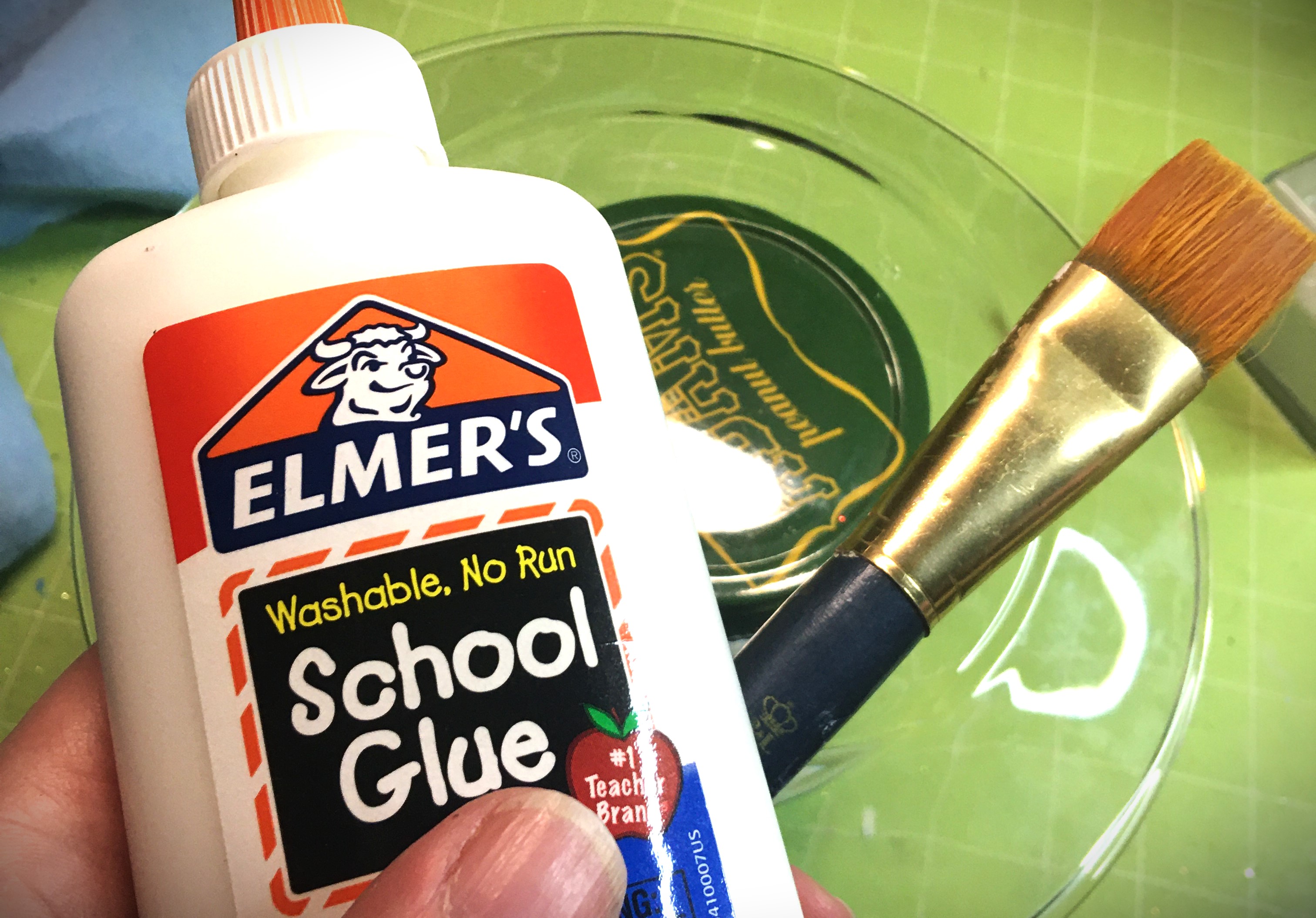
Growing up I always used Elmer’s Glue for sticking power. For ombre work, I find it’s the worst glue. There’s a few reasons for this, but for me the biggest problems I had was holes between two colors, awful looking clumping, and stark lines that just looked weird.
I’ve switched to using cheap watery glue instead.
Have you ever watched a professional cookie maker flood the icing to get that smooth design? Using watery glue has the same effect for creating glitter ombre!
So whether you’re new to crafting with glitter or use glitter on everything, more fluid glue is going to be your best friend. You can glue the sections you want to use one color glitter. Or you can lay down all your glue at once. The fluid movement of this type of glue is going to cause the glitter to drift a little and cause a natural blend. Not only that but if you have to go back in and add more glue because a spot was unexpectedly dry, a single drop will fill that hole and spread into the already laid glitter with no gaps.
Laying Down the Glue All at Once
This is my favorite way of doing ombre, particularly because I want to move quickly and optimize my production time.
First I get my glitter selection lined up. This is what allows me to lay a handful of colors while the glue is still wet.
Before I lay down the glue, I also decide which direction I want my colors to run; horizontal, vertical, or diagonal.

With that all prepped, that’s when I go ahead and lay the glue. I start at one end of my element and shake the glitter side to side to make a straight line. (Or a zig zag if I want peaks and valleys.)
If I’m going to make my own color blend, I’ll go ahead and shake out all the colors at once, without stopping between colors to put them back in their containers.
However, if I’m keeping my colors true, then I’ll lay that first edge color. Then shake off the excess with the glitter side down. Put the glitter away. Then grab the next color, shake out that next line. Shake off the excess with glitter side down. And repeat the whole process until all my glitter is put away.
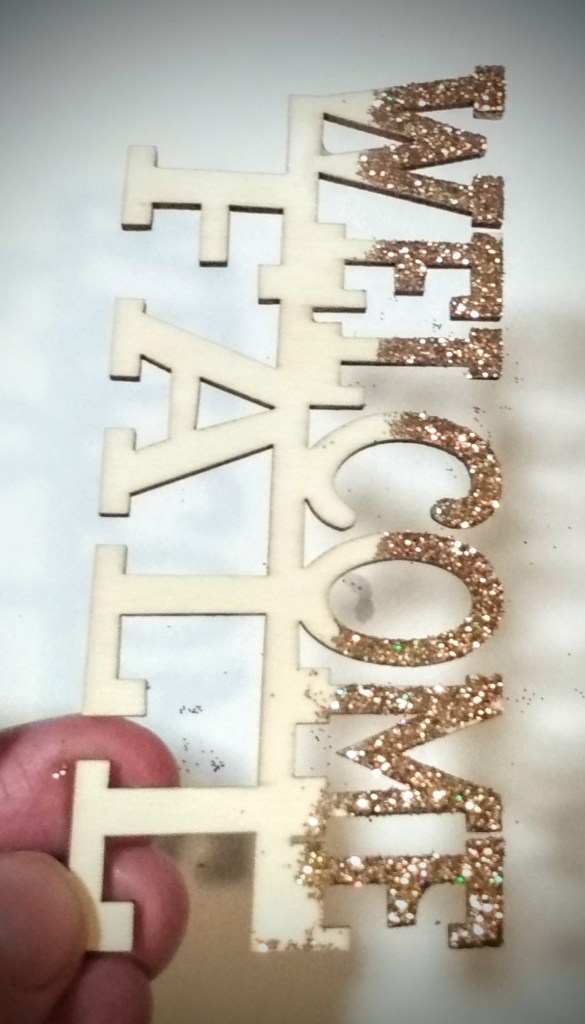
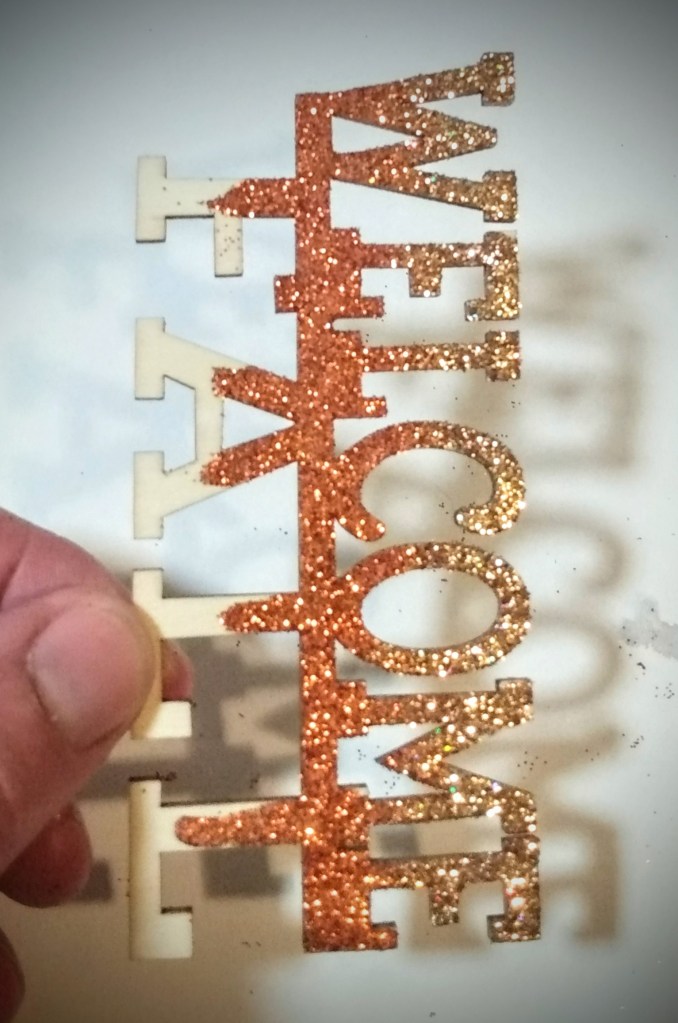

Just so that you can go into this with confidence, I want to share with you the colors that I used here in Welcome Fall. The first color I used was a pale gold (as opposed to the bright and bold gold you usually see during Christmas). I followed that up with a bright pumpkin orange. And the final was a cherry red. I didn’t have concerns with the gold and orange because they had a similar base color that matched perfectly. The red doesn’t look bad here. I pulled it off in the final project that this was going on. However if you ever find that you’re questioning your color choices before you glue, I highly recommend taking some of the neighboring color and adding it in with the color you are hesitant with. This will tone down, and help bring the color into the family.
OR… another option, which you’ll see in the second picture above, let your middle color slide down on the glue and creates a drip effect. This will help from creating a stark line that can potentially form with colors of glitter that compete with each other.
Making Your Own Blend
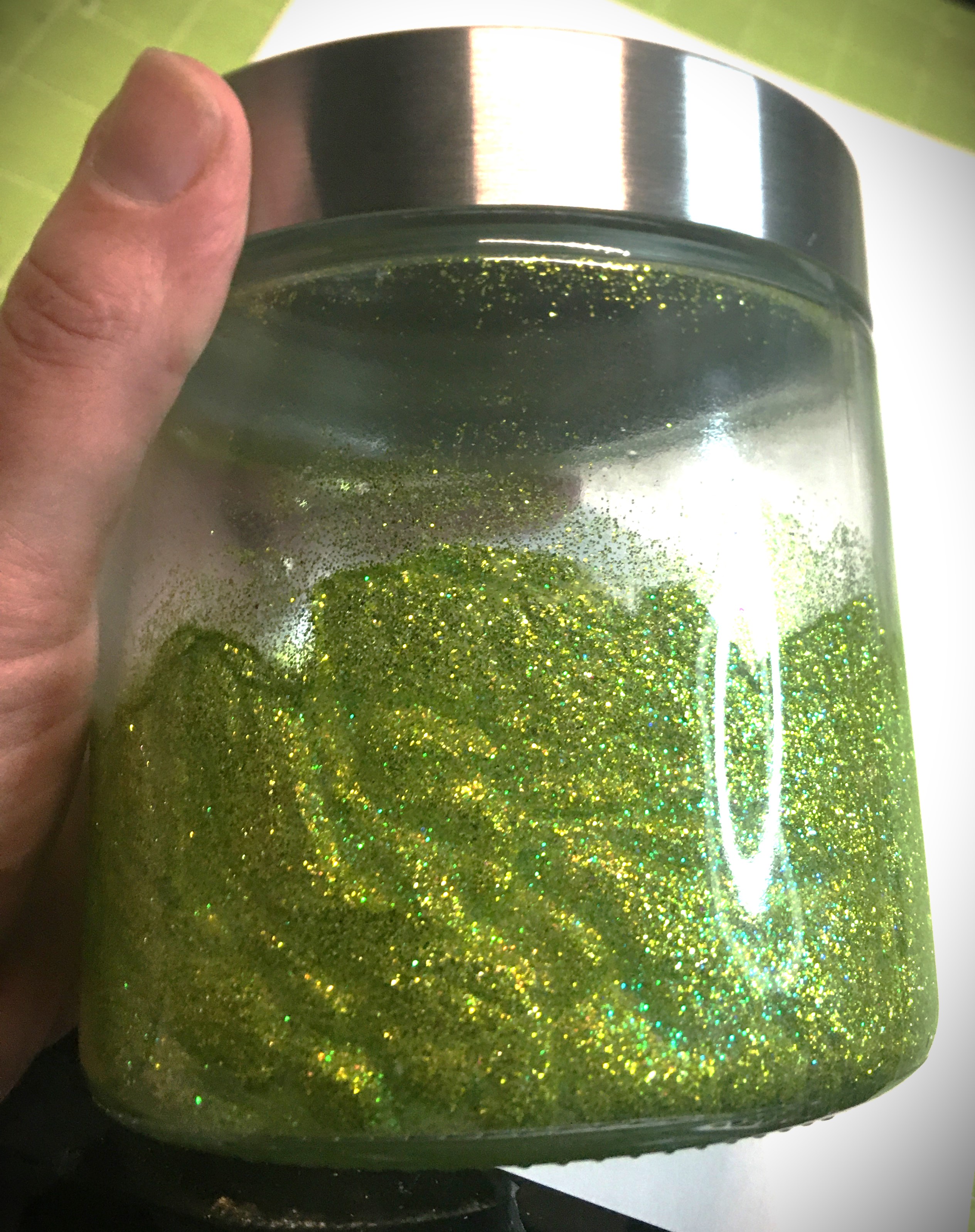
As I mentioned above, you can blend your colors together. This green that I made is a perfect example of what happens when you blend.
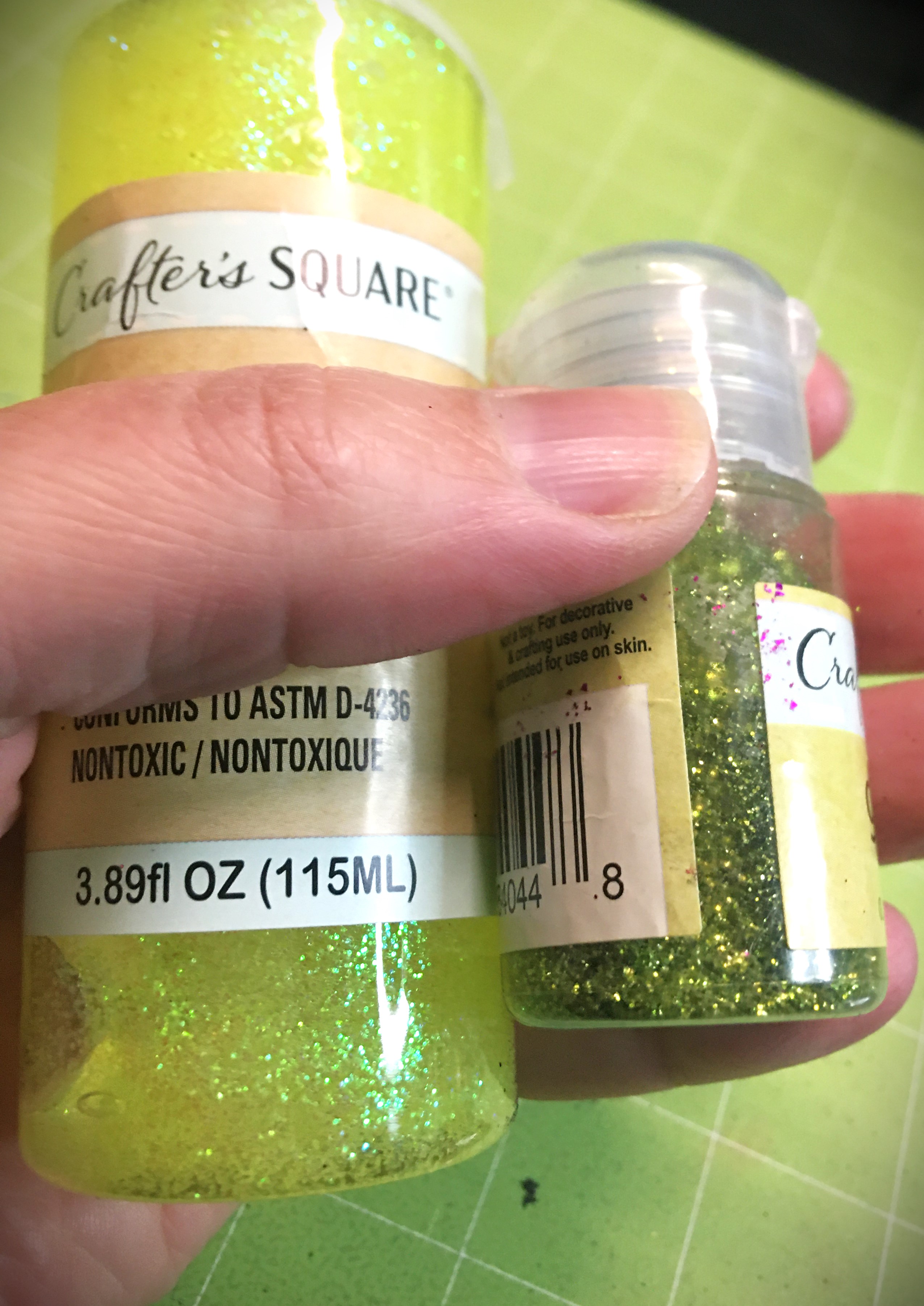
The only green glitter I had on hand was a lime green that I bought from a spring line of glitter. There was no way that I could make that Easter egg green work in a fall theme. So I grabbed my blue and purple glitters to blend a darker green. If you look closely at this picture, you might be able to pick up the different colors. Around the middle, you’ll see some grains of blue that has a turquoise to it. And then around the perimeter you see the darkness of the purple glitter.
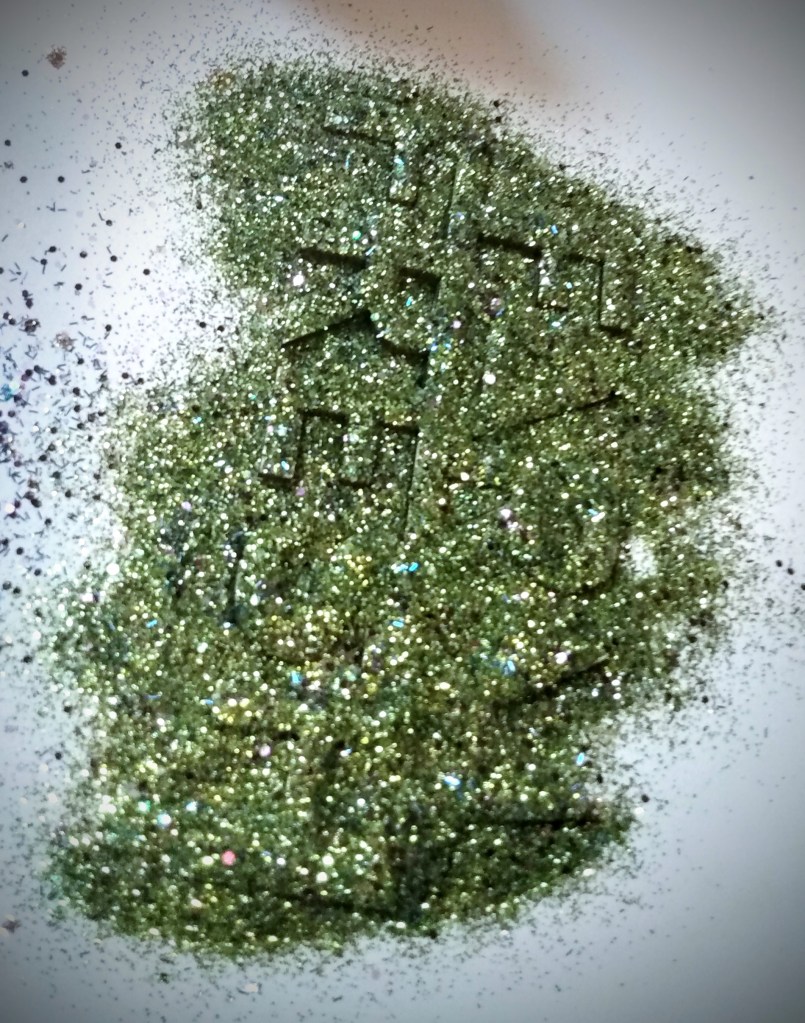
Maybe, you don’t want to make your own darker shade of green. Maybe you want a different color. How do you mix it?
Think about mixing paint and how when you use primary colors (red, yellow, blue) you make secondary colors (orange, green, purple). Glitter is going to work in the same manner. The big difference is that you’re not changing the individual grains of glitter to a new color. You’re creating the illusion of a new color by mixing different colors.
For the green that I made, I used the blue to take away the brightness of the lime. These two colors still have a fresh spring green color, so the addition of a darker color, like purple, makes the green dark. I didn’t use precise measurements. I added a little bit at a time so I don’t use my whole glitter stash and run out of colors to make corrections. Over all, it came down to the ratio of the lime taking up 50-60%, blue 30-40%, and purple 10-20%
The cherry red that I mentioned earlier, I partnered it with maroon that I absolutely love. The thought crossed my mind that I might need to make more of it because I bought it last fall and haven’t seen it since. My plan was to take the cherry red, mix a little bit of navy blue glitter (bright reds have an orange base and rich reds have a blue base–my reason for adding blue), and then black to get the red darker without changing the base color of the read. Brown would be an option if I wanted a lighter maroon. But for this dark maroon, black is the go to glitter.
The added bonus of mixing your own glitter blend is that you add dimension and something dimension to look at. Don’t get me wrong, glitter is enticing enough on its own. But the next time you play with glitter, mix a small batch of a color and look at it in comparison to the original flat color. You’ll understand what I’m talking about when it gives you something a little more.

Other Ideas
Before I close this post, I want to offer one more idea of what you can do to give your glitter work some dimension and adding a little “extra” to your work.
Take a look at “Give Thanks” in the picture above.
This one is a bit more subtle than the striped ombre, so you may need to get a closer look at this wooden tag. The picture doesn’t do it justice in comparison to what it looks like in person. But this is two different shades of gold. The darker (and more orange) gold is applied as a shadow on the left hand side of each of the letters.
Earlier I mentioned shaking glitter in a v or w shape to create a chevron pattern.
You can easily make poke a dots by dropping spots in one color and then surrounding the dots with a different color.
Feel free to not just play with colors, but also experiment with shapes and patterns. Depending on what pattern you’re making, you may need to be specific with how you lay down your glue. But there is no reason why you can’t make leaves, plaids, or anything else in glitter. If it becomes difficult to maintain shapes, take breaks between your layers. This will keep the glue from running and distorting the shape/pattern you make.
A Finishing Tip
The one disadvantage to working with fluid glue is that your glue might shed glitter because it doesn’t have the stick to keep the glitter in place. There are a couple of options that you have to seal in your glitter to minimize or eliminate shedding.
The first thing that I used, many many many years ago, was hair spray. This has the least about of stick out of the options I’ll share. It’s great if you’re in a pinch and don’t have any other products on hand. But the only shedding this is going to stop is contact shedding when you tap it. There will be some transfer if you run your finger in the glitter.
I love using clear acrylic spray! This is a great sealant that dries in a couple of minutes. The disadvantage is the fumes. But those disappear when the spray paint cures. I really don’t notice glitter loss through touch or contact/tapping. The finish is also the best option. However, you might see a dulling of the glitter’s sparkle depending on which brand you use.
If you have the time, polycrylic paint is the best as far as it goes to completely seal in all the glitter. This can be the determining factor if someone in your house, or the person you’re gifting too, hates glitter with a passion. This is completely sealed and there is no glitter loss. Just be aware that the fumes are strong and curing can take 24-48 hours. But the fumes will dissipate. I highly recommend that you dab polycrylic on. If you try to brush it on, you will get streaks, glitter will clump on your brush, and there will be brush tracks in your glitter.



























 How I Can Do That
Leave a comment