New Life to Wicker

There’s something about those moments in life when money is tight and you
try to do a lot on a dime that’s worth one cent. Here’s one of those
transformations from yard furniture that my husband brought home years ago.

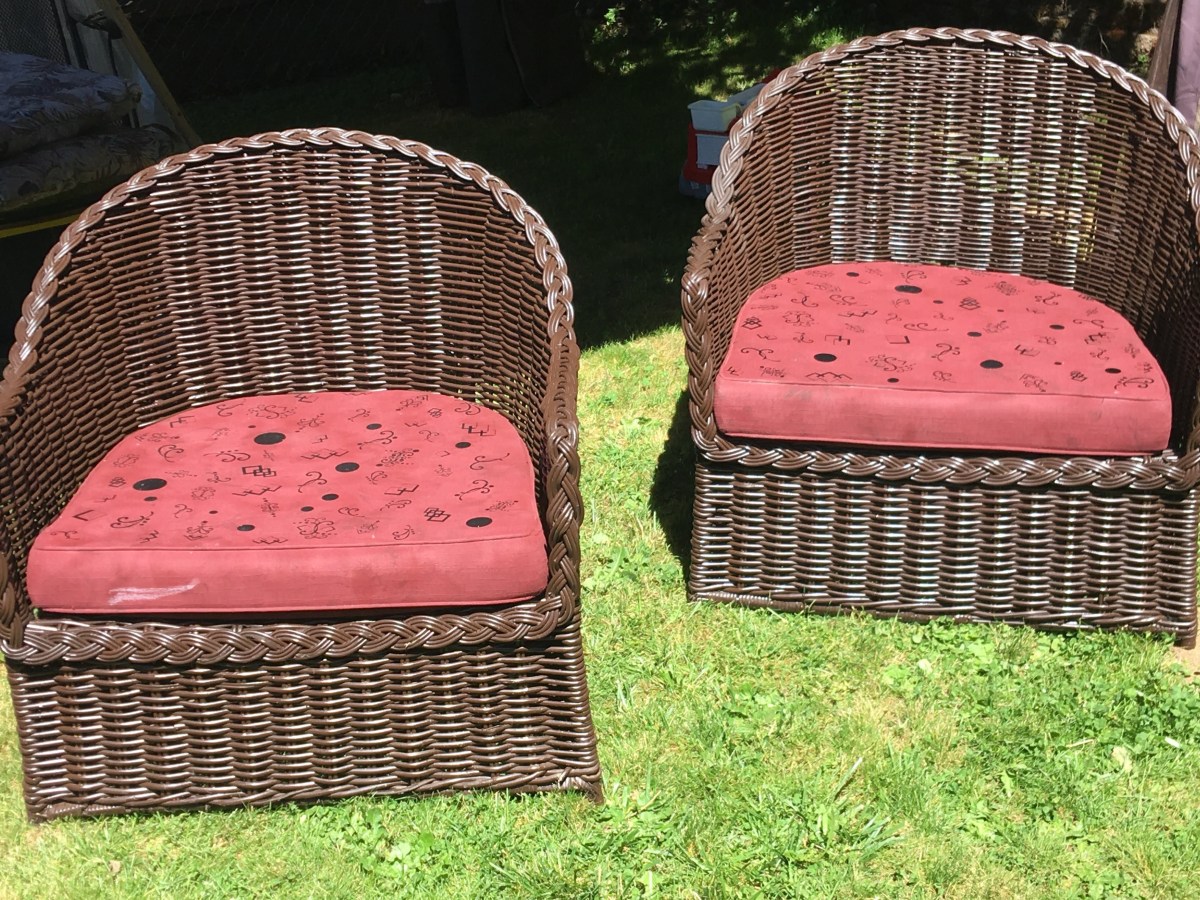
I don’t remember exactly where my husband found these two wicker chairs. It
was from a stage in our marriage where he would regularly hit garage and estate sales. If memory serves me well, these were a yard sale find.
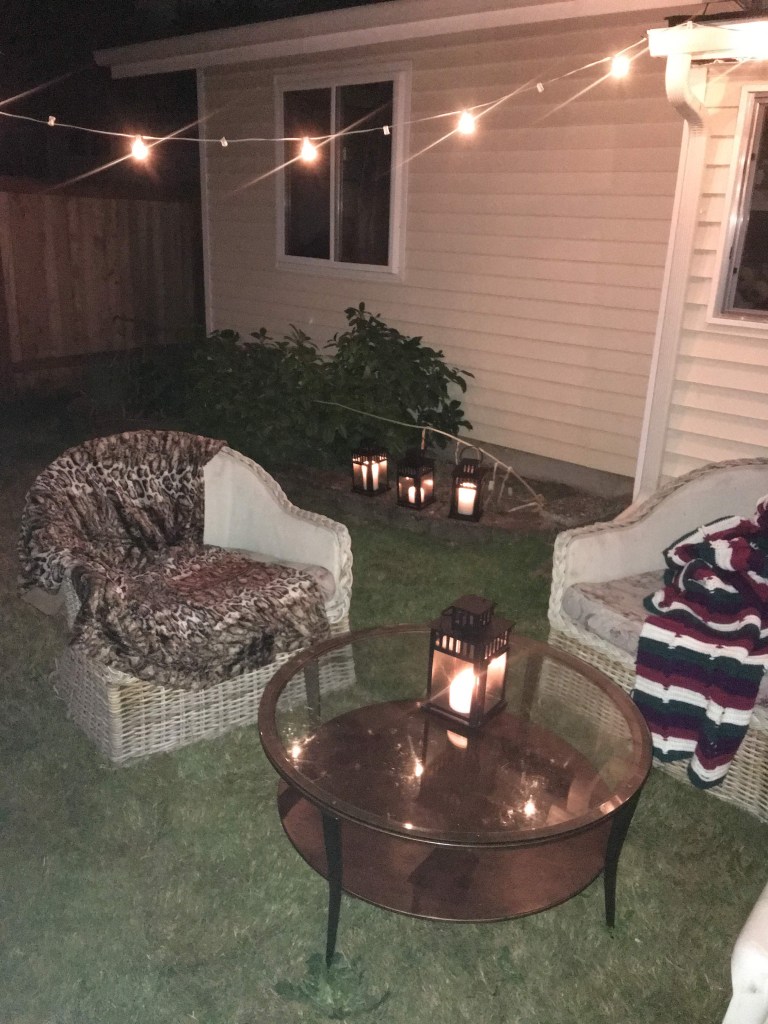
The price was right, even if the quality wasn’t there.

In the above picture I invited a few friends over for a yard party and needed the seating. So even though the fabric siding of the chairs were ripping out and had be hot glue gunned back to the wicker from the people who previously owned them, I hid these flaws by throwing blankets over them.

Close inspection will tell you that the falling apart wasn’t just on the side fabric. The wicker was unweaving on the bottom. The seat cushions were not only out of date by a couple of decades, but also starting to have holes.

We contemplated just throwing these chairs out.

The budget wasn’t there to replace them. And it was hard to toss them when they have always been our favorite seats to sit in during the summer and we have a nostalgic thing for wicker.

We just love them.

So I bought paint and made them over.

Prepping the Chairs

The first thing I had to do was rip all the fabric off and remove the staples with needle nose pliers. There’s no real trick to this, just a whole lot of patience.

The hot glue was easy to remove from the wicker and didn’t have any cosmetic damage. Once I saw this, I had no problem with this being the solution to the issue of the stripping that was unraveling on the bottom of the chairs.

Even though I thought I was going to have to buy new wicker stripping to replace what I thought was lost, I didn’t have to buy any. All that I needed to do was wrap the stripping back around the bottom frame and periodically drop a dot of hot glue to the frame as I re-wrapped the stripping.

I highly recommend using glue to hold anything you’re wrapping in place. There will always be a moment (or a dozen) where stripping will slip from your grip. And a small dot is all you need to keep from the whole section from unraveling and making you redo your work.

And if you’re afraid that you’ll use too much glue, make sure that you’re gluing on the “inside” of the chair. No one will see glue seepage when the chair is on the ground, so even the bottom edge of the chair is also a great place to secure the stripping.

Due to the age of the chairs, there were a few nails that had worked their way out. This made one chair in particular have the seat framing fall down under the rib that it was nailed to. That’s not a problem, because you just remove the nail, put the seat back on the rib and nail it back into place.

Fortunately, I had some extra finishing nails that were in my tool box.

While I was already repairing I decided to do some preventative work. To add additional support to the seat I nailed a few extra nails through the rib into the seat.

A Touch of Paint

There are a few different options that are out there for painting outdoor furniture. I didn’t want to deal with a primer or cleaning up brushes. So I opted for a spray paint with primer.

The one thing that I will say about wicker is that it takes more paint than you think if you want to get in all the nooks and crannies for a even coat. And for my own sanity, I did paint from different angles. One time through I painted the chairs from the upright position. For the second coat I flipped the chairs upside down.

If I do a wicker project again in the future, I will definitely paint in both directions again. There’s something about spray paint. It’s good about getting in tight places, but it really does need the extra help by changing paint directions.

These two chairs took 6 cans of spray paint. If you’re looking to do your own furniture spray painting project, this should give you a decent enough estimation on how much paint you should purchase for your project.

What about the Cushions?

There were two options that I had. At first I was leaning toward making a slip cover because that would be the easiest and quickest option. The only problem was that at the time that I was doing this project, outdoor fabric was more expensive then what I was willing to pay (starting at $15 a yard and I would have bought 4 yards).

My second option was fabric spray paint.

No one that I knew had ever worked with this type of spray paint, so I had no idea on what to expect. The only knowledge I had was watching a fashion designing competition. There was one contestant who used fabric spray to create a certain effect.

I’m sure fabric spray paint is perfect for a fabric that is a solid color.

Print on the other hand….

My pictures here don’t really show you the original print very well. But it’s a slate blue base with flowers (peach to dark rose color) and brown swirling flourishes.

I had chosen brick red fabric paint because it complimented the chocolate brown paint I picked for the wicker. And I thought that it would have great coverage since it’s a darker color.

Yeah, no.

I originally bought one can of fabric paint thinking that it would be more than enough. However, in reality I was only able to paint the top of each of the cushions because of the color disparity of the blue and brown in the original print. The short story is that it took nearly three cans of fabric paint to cover both sides of each of the cushions.

Another problem is that I left the covers on the foam form.

I chalk this fact to being the worst mistake I made for this project. The foam no doubt soaked up the paint, creating less coverage on the front of the fabric. And at the point that I did this project, my kids were babies and I had mommy fog brain. So now I would have removed the cover, but it just didn’t cross my mind then.

The good news is that the second layer of paint was thicker in coverage than the first. So if you wanted to get a solid color off of an old print, I’m absolutely positive that it is obtainable with 3 or 4 coverages. Just know that if you paint over a print, you’re going to have a phantom print showing through.

I wasn’t too opposed to the phantom print because it sparked a creative idea that I absolutely loved. Art Deco!

While Art Deco is more noted for being angular, the beauty of art is that
you take a style as your base and tweak it to fit what you see in your head. So
I took the squares and sprays seen in 1920’s architecture and added circles and
chandelier elements that matched the opulence of the time.

Truth be told, I had to work in the circles into the design to cover the
largest hole (which you see above).

Heat Transfer Vinyl (HTV) was my material of choice because I wanted the permanent
design and I wanted to keep the cushion weather friendly. It never fails that
our outdoor furniture gets caught in a summer rain a time or two each year.

Once the design was weeded, I cut the elements out and pieced them together
on the cushions in relation to the phantom swirls.

Now this HTV “print” that I made isn’t exactly everyone’s esthetic. I did want to share it with you because I wanted to show you how you can save furniture from being thrown out. Also, you have your own option for making your own design with materials that you have on hand in your home. And to encourage you to play with colors and designs that just are not on the market.

The one thing that I LOVED about this project was that I took chairs that I was constantly making excuses for, to my guests, and turned them into something that we’re happy to have in our yard for the next several years.


Do you have old lawn furniture that you can give new life to?

Comment below! Let me know what you did to rejuvenate a piece of furniture that you almost evicted.
Same Flowers Other Styles

When looking at inspiration pictures it’s quite common to hear, “I like those flowers but….” You can be inspired by a pictures, take the flowers and do something else entirely!

The same is true with a style of arrangement and switching out flowers. Or even mix and matching different styles for your event.

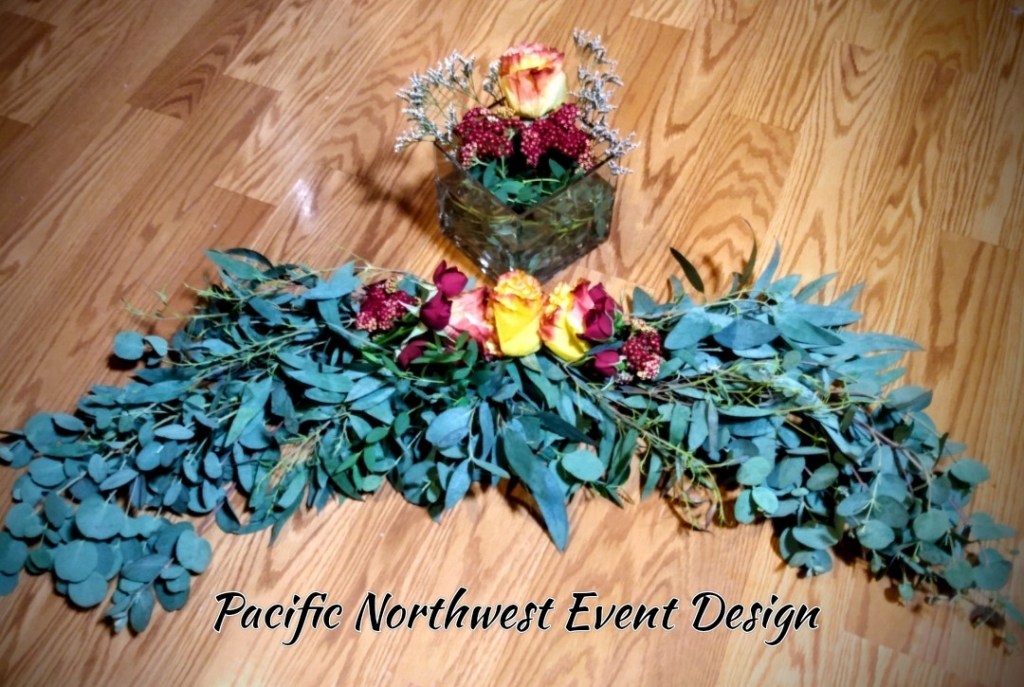
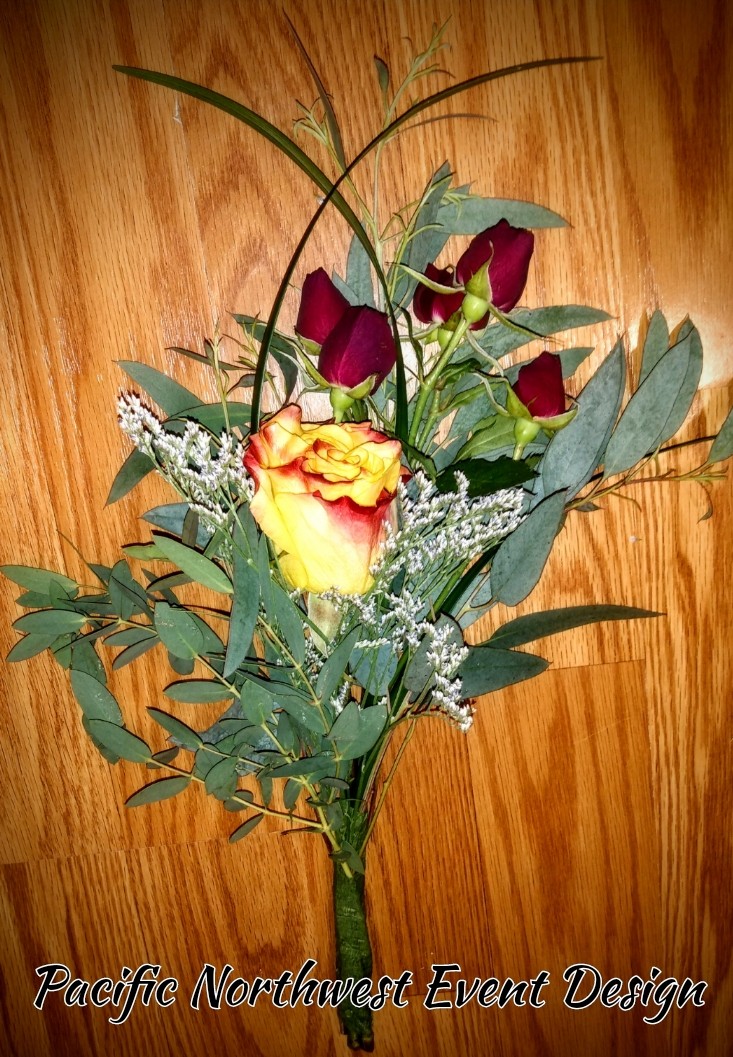
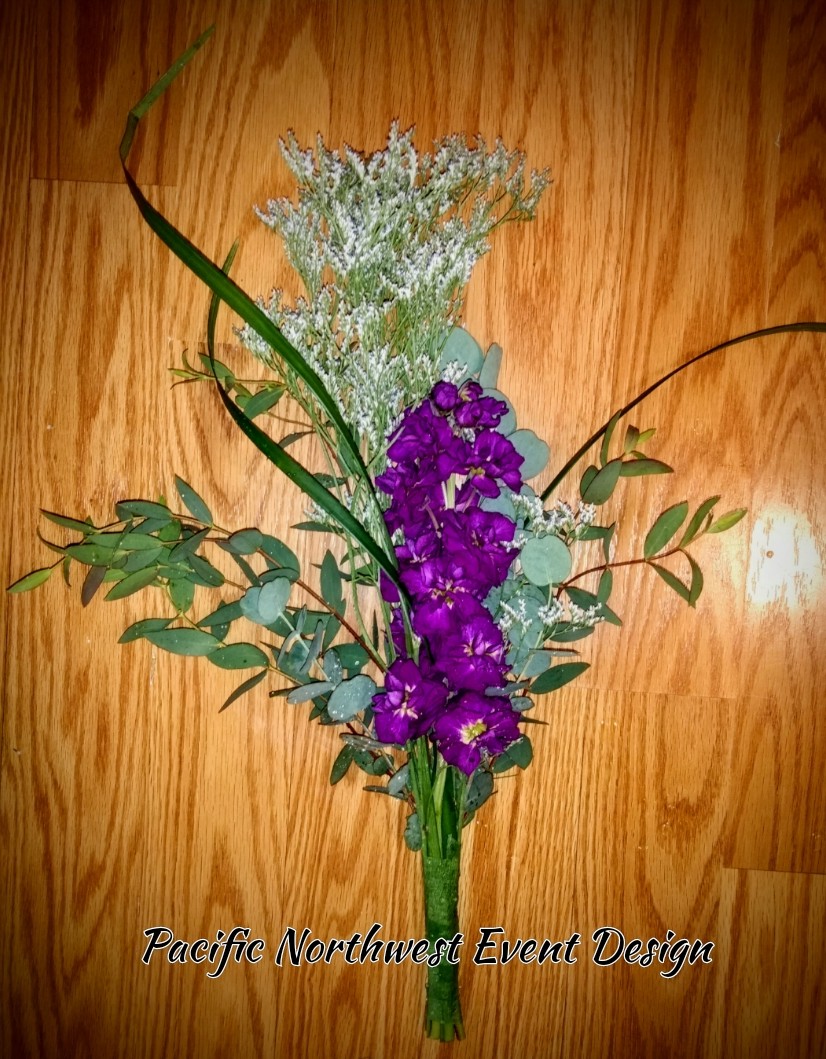
For example, if you remember from Making Arrangements last week, here are the pictures from some of the pieces.

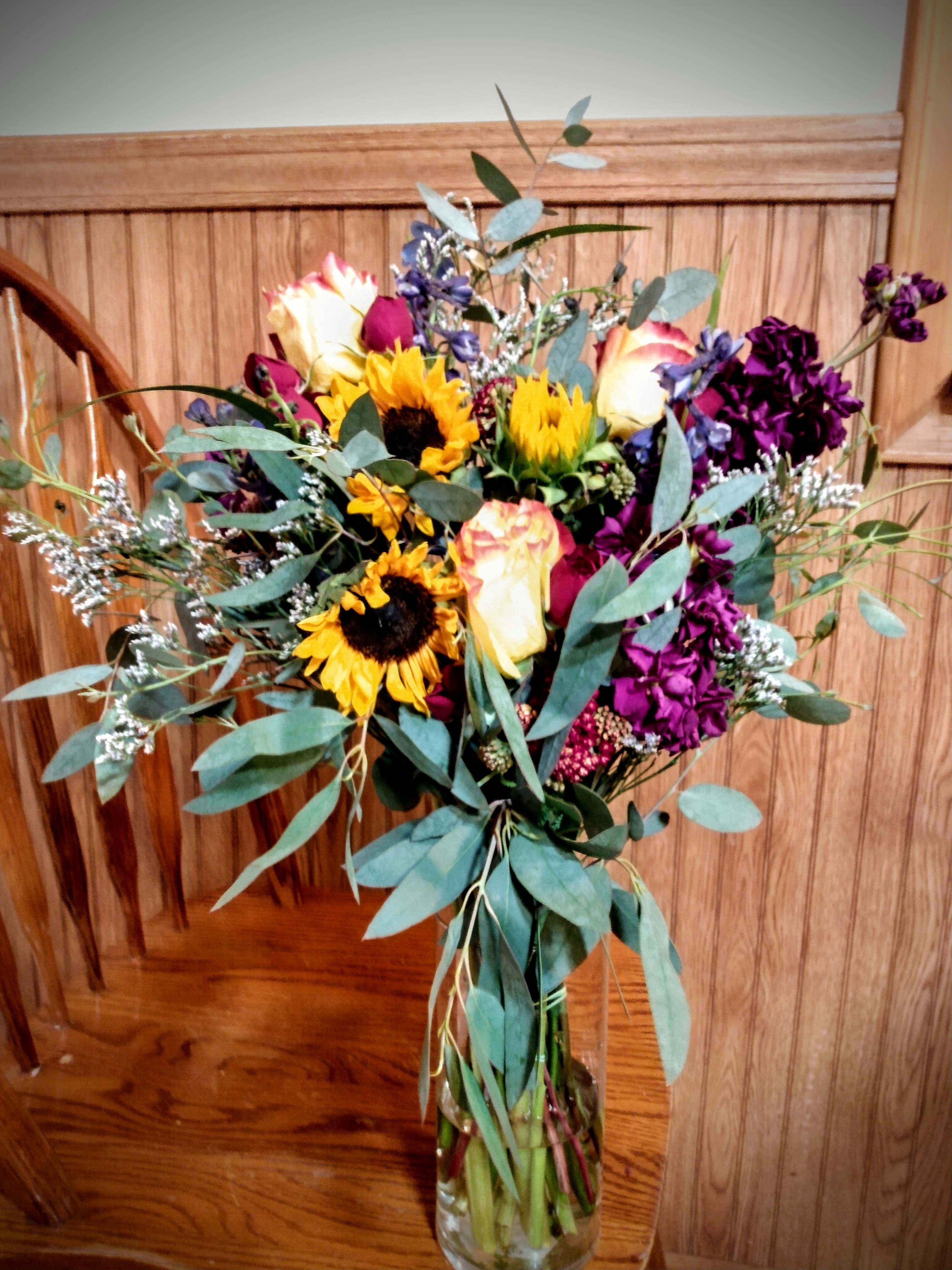
This combination would have been a wonderful addition as table swag and centerpiece. This eucalyptus table runner is outside of the garden bouquet style however the greenery is the unifying factor. The focus on roses (as the floral note) also strays, but keeping it simple and with that eucalyptus still evokes the garden feel.

I wanted to bring this idea from the high end weddings (where you see the amazing pictures of 100′ table runners made from roses) to let you know that even if you’re having a garden style wedding you can still borrow from that high end inspiration picture. Make that runner out of greenery or thin willow branches and you can utilize the idea on budget materials.

Tip: If you’re making a runner or wreath like ring for your table centerpiece, make sure you secure your elements with floral wire. Then go back in and fill in around the wire with more pliable greenery, tiny budded floral bunches, or your wedding flowers of choice.

Here’s a close up of the square vase floral arrangement that I paired with the eucalyptus table runner. I want to draw your attention to this because of the red flowers that you see below the rose. This is red yarrow and I wanted to spot light it for a moment. Two posts back, Making Flowers Possible, I mentioned how the sales person had pulled additional flowers for me that had inspired her when she gathered my order. Originally I had ordered a cream like yarrow to help tie in the yellow from the sunflower and yellow roses with red tips. However this red yarrow really made these red tips on the rose just pop. My original pick would have been great. But there’s just something about being in person with flowers one selection just makes more sense when you see them in person.

Tip: If you are going to DIY your own floral arrangements, try to make it in person. And don’t be afraid to stray a little from your inspiration picture. By straying, this is what makes your arrangements reflective of you.

Before I move on to more creative renditions of the same flowers from this style, I want to show you a couple of similar ideas that are closely related.

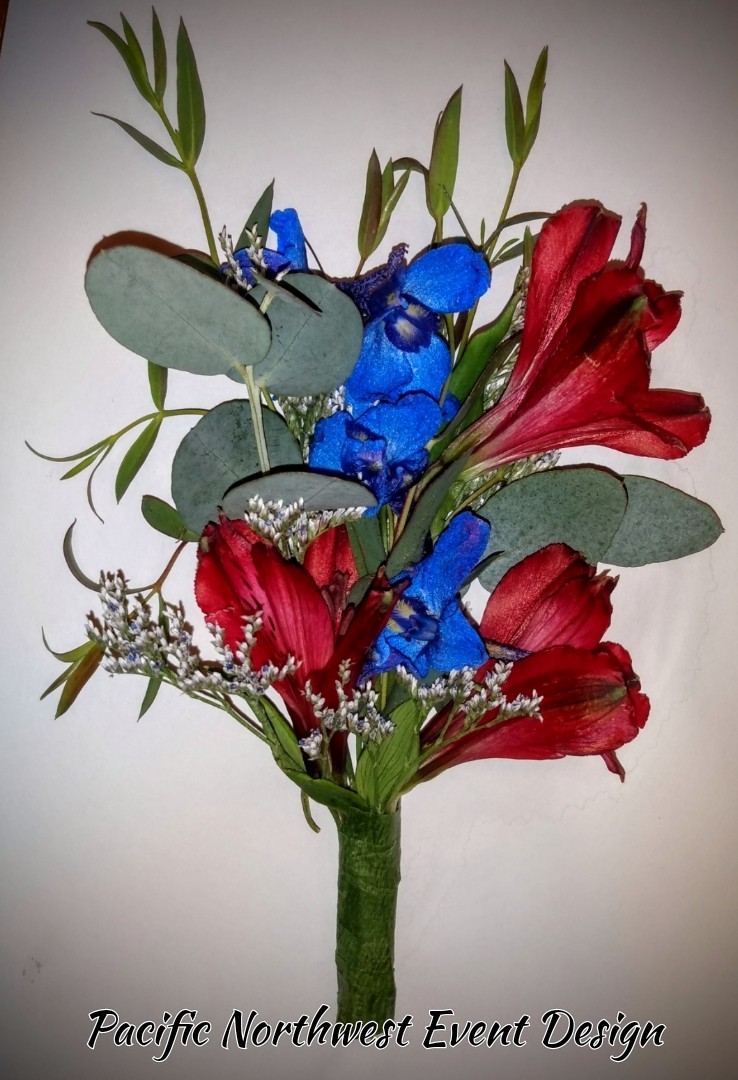
This one I absolutely love! Still keeping with the country theme, I have the long stem roses, Red Alstomeria, spray roses, Misty Blue Limonium, and Eucalyptus.

If I could do one thing, I would love to move people away from baby’s breath and urge them toward Limonium. It has the baby’s breath look in an arrangement but it gives a few features that are interesting to look at. I love how Limonium has a cascading effect of its blossoms. Think of old fashion candelabra and you’ll get a general idea of what you see when you look closely to these flowers. But even better than it’s structural beauty, these flowers have shades of color that is beautiful and doesn’t come from the flowers sitting in dyed water.

For this bouquet, I opted to dress it up with a deep red vase and ribbon collar. These accessories take the garden bouquet style and dress it up from a garden style to a vineyard style. It’s still on the rustic side, but just dressed up enough.

Tip: Your choice in ribbon or other accessory is going to greatly influence the tone. Remove this vase and ribbon choice and set this arrangement on top of a tall glassware vase with chandelier crystals and you’ve gone straight past garden wedding to Queen’s High Tea.

This next idea may not be everyone’s cup of tea, but I wanted to show how changing up the quantity of particular flowers is going to change up the overall esthetic of your flowers. While this arrangement is highlighting the Limonium, I’ve been making similar arrangements from my personal garden. White Yarrow is my most plentiful flower that is growing. Actually Chamomile is giving it a run for its money. But my floral garden is not predominantly show stopping flowers. So if I were to keep a weekly arrangement from just my garden alone, it would look something like this; mostly small buds with accent pieces of larger flowers.

Obviously this isn’t a wedding arrangement by any means. This is a cheer-me-up or maybe a brunch arrangement.

So if you have the idea of keeping your floral budget pared down, bulking up on the smaller blossoms may or may not be what you want to aim for. This looks completely different from a bouquet bulked up with greenery sprinkled with more premium blooms.

If you want to have more of a wow piece on a budget, consider a more minimalistic approach.

Here I have a single Asiatic Lily with a sprig of Eucalyptus in a monogrammed glass tumbler.

Now if you’re looking for a wedding favor that doubles as a table centerpiece, this just might be the idea you’re looking for! Set this tumbler in a circle in the center of a table with a large pillar candle in the center and you have a budget friendly decor that pulls double duty and is absolutely elegant.

This is also a great use of Lily blooms that snap off, because let’s face it. Lilies snap off so easily if you walk too closely past them. Or you’re arranging your bouquet and you hit it funny. I’m aware of how lilies are and I still snapped off nearly a dozen blossoms.

Life happens.

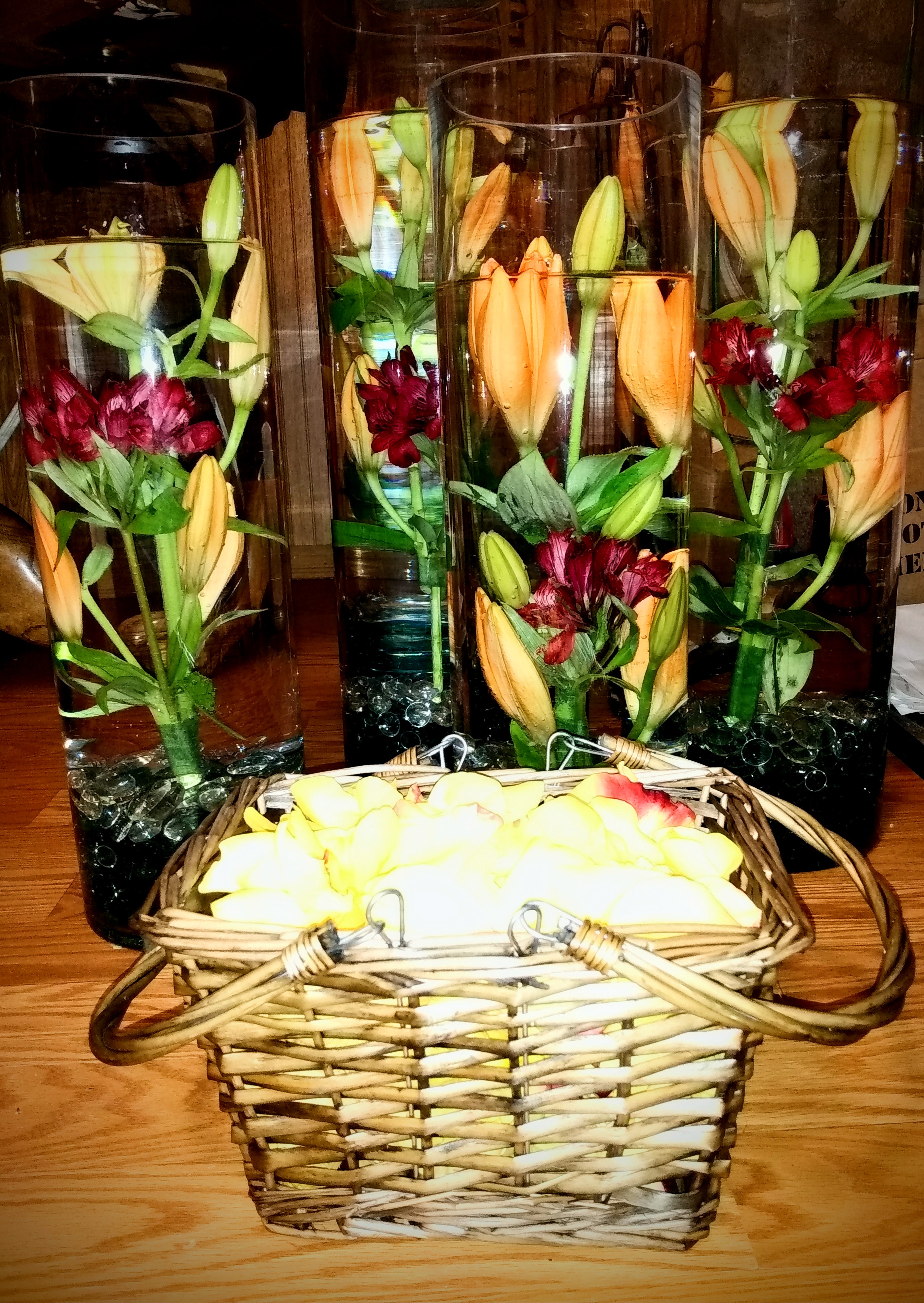
Another simplistic option is this beauty with a floating candle.

To be honest, this 3″ floating candle is over kill for this 4″ wide vase. But this is what I had on hand to get this concept across.

Never be afraid of ever using a single blossom.

The trick is always to make the single flower look interesting to look at. And this is the reason why I played with the lily leaves I had ordered to offer contrast to the plethora of eucalyptus.

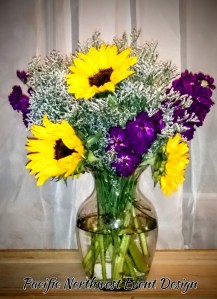
This arrangement is easier to see the lily leaves. The garden bouquet comes back again. But notice how when you change the focal flowers that you get a completely different feel. Over half of the bouquet here is Asiatic Lilies. But when you incorporate the blooms in different stages (open, soon to open, and still very green), it creates difference and interest almost like three different flowers even though they’re exactly the same.

Another interesting thing to notice is the floral rule of thumb of keeping flowers in odd numbers. You can’t tell with the lilies, but there is an odd number of stems. What is obvious is the single stem of purple stock. If you were to take a closer look, you will find 3 stem of Dark Blue Delphinium. And topped off with enough of the Misty Blue Limonium to fill the gaps and make this minimalistic bouquet look full.

Even though this picture is beautiful, it does the bouquet no justice. Part of the beauty that is not fully captured is just how amazing the purple complements the orange lilies. If you’ve taken an art class, you’ve heard of a color wheel. And you are familiar with how orange and purple complement each other. When in doubt, definitely use a color wheel to help choose what colors to put together. Even if it’s not a color combination that you are familiar with, these colors and flowers really do go amazing with each other.

And here is a minimalistic version of that bouquet.

This one is my absolutely favorite picture out of them all! And this is just 5 stems of Asiatic Lilies and 3 stems of Dark Blue Delphinium. I’m just going to put a pause right here so I can just stare at this eye candy just a little bit longer.

Advertisements

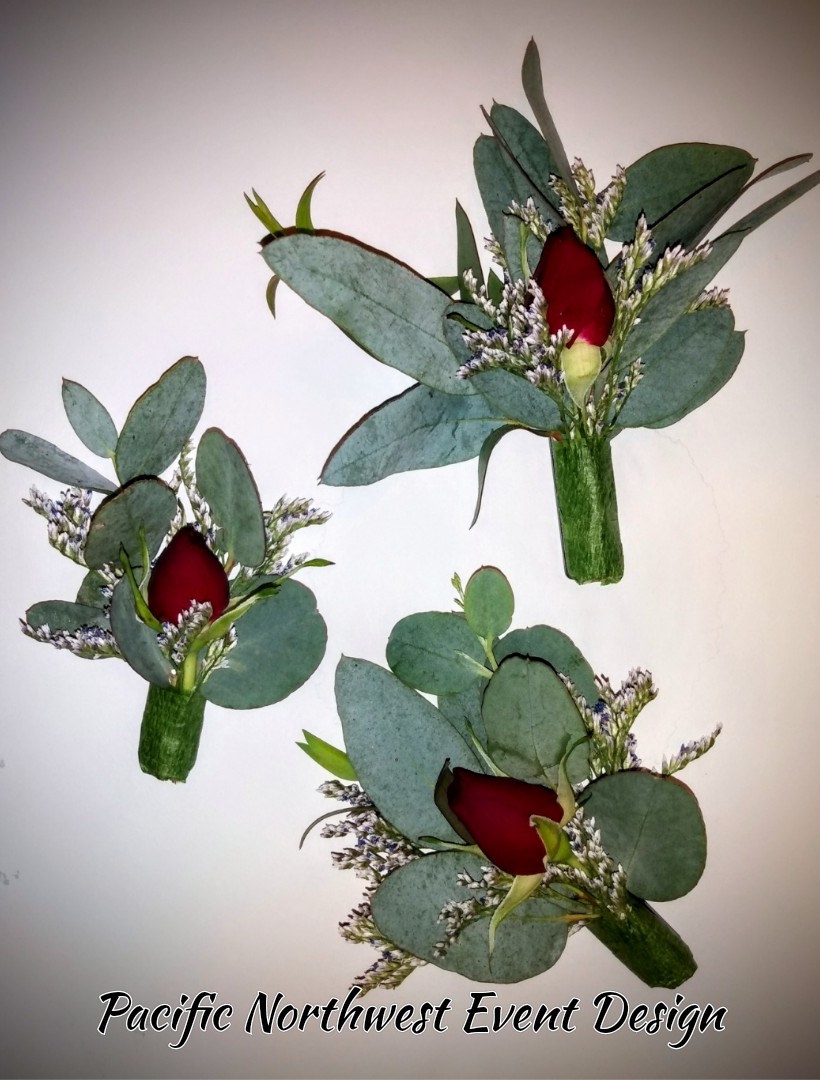
Besides just playing with flowers for my personal amusement (and yes, I took great pleasure in making all these), I decided that I was going to make a little something for the men in my life since I’ve been so focused on this job.

The one thing that I learned while making these boutonnieres is that men rarely get flowers from their women. And yet, it’s interesting to watch to see how they respond when you make flowers for them. My boys absolutely went gaga over waking up and finding that I had made flowers for them to wear to church. One, I made something for them and they love it when I make things for them. Two, they got to wear the flowers and it made them feel special, because no one wears flowers to church. And because these boutonnieres had magnets, they were able to move them to keep from their seat belts from crushing them. It was interesting to watch them move their flowers around.

Even my husband enjoyed having flowers to wear. He purposely went out of his way to choose an outfit to go with his flowers.

I also took the opportunity to finish using up my flowers to make these mini bouquets.

If you find that you have flowers left over, I highly recommend making simple bouquets like this and randomly handing them out to people. These flowers were made up so that my boys (while wearing their flowers) could hand them out to whoever they were inspired to hand them out to.

It doesn’t matter what day of the weeks, people go through “stuff”.

I watched from a distance as my boys picked their person.

One was another child. I was amazed because how often do children hand each other flowers. It was a perfect moment to watch.

Advertisements

Another bouquet of flowers was handed to a mom who had just checked her kids in for the next church service. Who knows how her morning had been going. (Being a mom I can just imagine the craziness we all go through.) But you could just see how her morning had been disrupted in a very pleasant way.

The last bouquet went to another mom. There’s a whole long story to this one, but the quick point is that this bouquet reminded this mom of a story of when her adult son was a little boy.

These stories may or may not mean anything to you personally. But I just want to cause a thinking moment. Here were three acts of kindness that I set my boys up to be a part of. And it was a worthwhile moment. All those were made possible because of a job I did and had left over materials. They weren’t the best of the best flowers. And yet, to these three different people they were the best flowers because they were unexpected.
Speaking of unexpected, I wanted to share this last arrangement that I made. While this is not practical for an event, I wanted to make a couture version of an arrangement.

No one says that your flowers have to look like what you see every day.

Be creative!

Look for ways to be different.

Flowers are an amazing tool.

It doesn’t matter what flowers that you have. You can create a feel with whatever is in your means to use. You can pick out specific flowers. You can select an option that is in your means to recreate something that is outside your means. You can be inspired by ideas completely outside your means and recreate within your means. And you can jump completely outside your box and come up with something new.

The bottom line is that you are not limited by your floral choices at all.

Pick the flowers that make you happy and inspire you. Set yourself up for success by engaging in prepping your flowers before your work day. Be flexible when you start assembling. Plan A may not work, and that’s okay. Move on to a backup plan without causing yourself additional stress. And don’t be afraid to mix up styles. Find a unifying commonality and create the flowers of your dreams!

One response to “Same Flowers Other Styles”

  1. Kristopher Avatar

    Hi there, I ound your ste by means oof Google at tthe
    sqme tije aas looking for a comprable subject, yor siye got here up, it
    lookms great. I’ve bookmarked iit inn mmy googlpe
    bookmarks.
    Hi there, somply became alesrt to your weblog via Google,
    and locqted that it’s really informative. I amm goping
    to watcxh out for brussels. I wikl bee grateful in casse yoou contiue tbis inn future.
    A loot oof folks shal bbe benefited from your
    writing. Cheers!

    Like

Leave a comment

Processing…
Success! You're on the list.
Advertisements
Advertisements
Advertisements
Advertisements

Making Flowers Possible

When I participate in wedding open houses, one of the most common things I would hear is “I/We can make that.”

Each and every time I heard that phrase I cringed. It didn’t matter if I heard it when I worked for an event decorating company (where I participated in over the top large event decorating) or when I branches out on my own. This phrase makes every professional cringe.

Just like a plumber who hears someone say, “Oh that’s easy! I can do that and save on a plumbing bill.” That plumber is not only cringing, but he’s laughing at you and thinking that he’ll see you in a day or two. You might very well fix that plumbing issue. But experience says that it’s a DIY plumbing job that will go wrong. And instead of paying a couple hundred dollars to the plumber, it’s a couple thousand dollar repair for a DIY “fix”.

That’s one reason why I started this blog. I like to contribute to the creative community, pass on skills that aren’t generally being passed down anymore, but also to help the DIY person succeed.

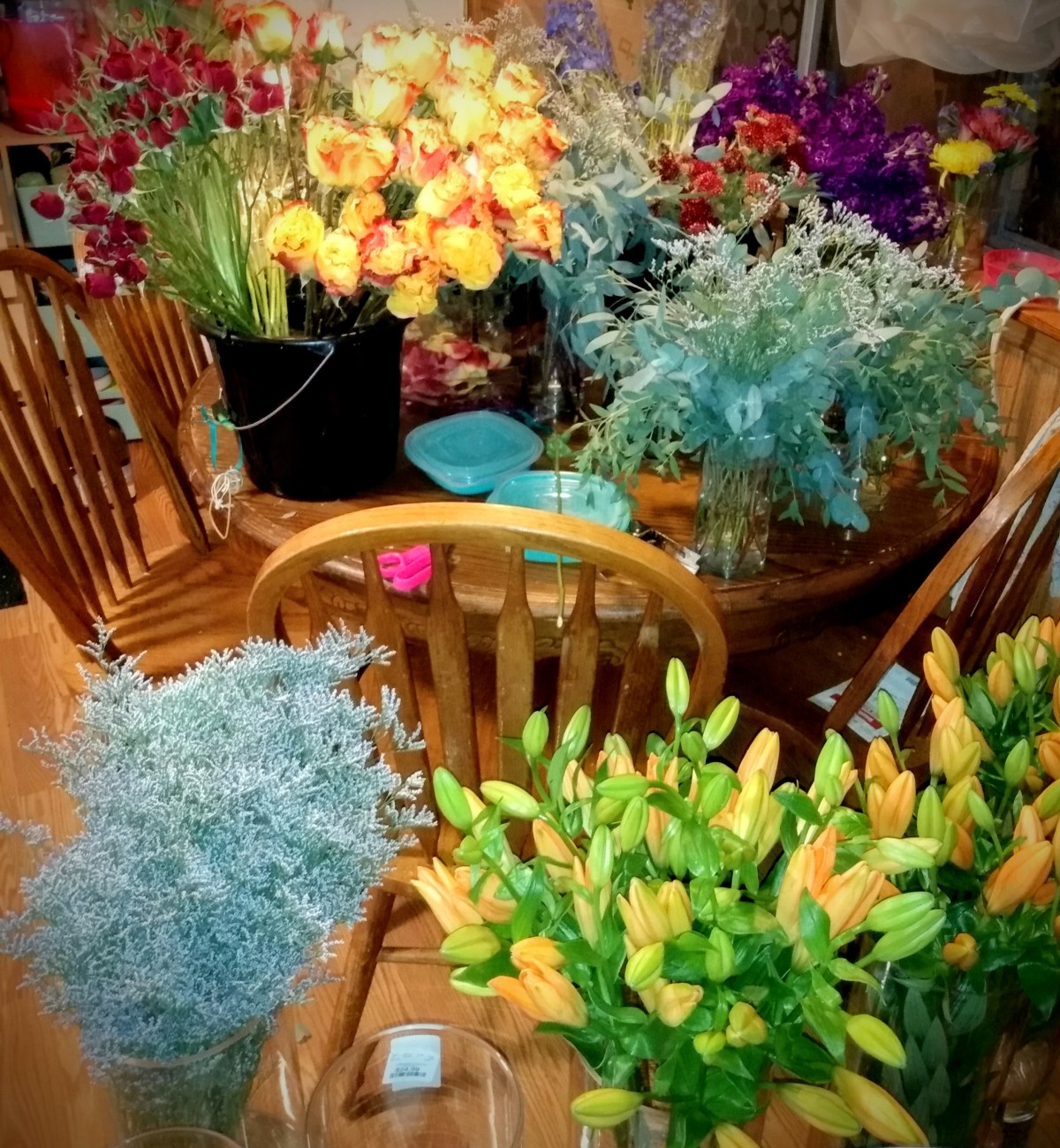
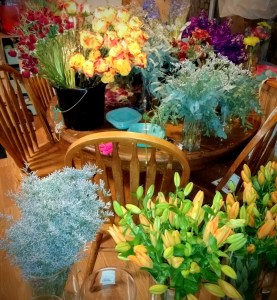
Here’s a glimpse of how you might receive your flowers from a distributor.

Here’s the thing, a professional is going to have inside deal on material costs and more importantly the knowledge and muscle memory on how to do a particular skill. They’re going to know the short cuts that save time. They also know all the wrong ways of doing things, know how to recover from a failed idea, and when to move on to the next idea in an expedited manner.

Is it possible for you to do your own wedding flowers?

Absolutely!

Purple Stock

(The following pictures are the flowers that I used for this job. I’ve included names if any of these are unfamiliar to you. There are so many beautiful flowers in this world! Please don’t be limited by the ones that you see here. In these pictures I’m showing how I strip the stems bare in my prep work. I’ll talk about that in just a moment.)

I’m going to spend the next couple of weeks talking you through how you can make your own floral arrangements. I won’t share all of my trade secrets because I still love playing with flowers, but I want to help you avoid a head ache or two, plus a panic attack. I DIY most everything for my wedding and still after all this time, I remember the melt downs I had, especially when it came to the wedding invitations.

The stress on a DIY bride is real. So I want to help you, so that you can trust to come to me when you need a professional.

Dark Blue Delphinium

First things first, you have to prepare before you start.

The best way to kick start this is by having an inspiration picture. This will help you navigate through the online sites where you can order flowers to be shipped to your house or when you talk with a flower producer/distributor.

  • You might not know the names of the flowers you want to order.
  • You might be able to find a deal on a look alike flower.
  • There could be a budget friendlier alternative.
  • You can upscale with a rarer look alike.
  • An out of season option can be switched out with an in season look alike.

Inspiration pictures also give an idea on which flowers look good together. Nothing is worse than ordering flowers that you like individually but when you put them together, something just isn’t right.

Red Alstomeria

Even with this wedding, which I made floral arrangements for last weekend, I went into my local flower distributor with a list of flowers I picked out (to imitate an inspirations picture) from online. But when I looked at the flowers in the walk in cooler, there were other ones that jumped out and added further inspiration so I couldn’t wait to arrange. When it came time to pick up the sales person helping me pulled a couple of additional bunches of other flowers that my flowers insured her with. From that additional pull, there was a different flower or two that looked better in the collective whole than the ones I originally thought I wanted.
(I’ll come back to this thought in two weeks when I show you additional arranging options using the same flowers!)

Once you’ve put in your flower order, you’ll want to schedule your pick up with a minimum of two days before your wedding or other special event. You will most definitely need two days if not three to make your arrangements. I don’t play with flowers every day and this job took me two days and some touch up work on the day of before loading up the flowers for the wedding.

Advertisements

The Schedule I Gave Myself:

Day 1 Thursday–I picked up my flower order from my distributor. I took them back to my work space and got out buckets and vases and filled them with water. Then I went straight to work to prep my flowers for the next day.

Day 2 Friday–I spent all day arranging.

Day 3 Saturday/Wedding Day–examine all the bouquets and other arrangements. Does anything than to be adjusted or flowers switched out? Put on decorative elements, such as ribbon. Cut fresh ends, place in fresh water, and load up for morning delivery.

Red Yarrow

Your DIY arrangement schedule may need more time. You may need to start your prep work on a Wednesday, so you have an additional work day. The important thing to remember is that these flowers are going to take longer than you think they will.

If you are a bride who wants to do everything yourself, this schedule is probably something similar to what you will need to implement. If you like working in groups and want to make a flower arranging day, it might be possible to do this in one day. After all the more hands you have, the less work and time is required from you. Just be prepared that if you have others working with you, nothing is going to look the same. There will be variations in assembly and placement. So please make your choices based off of your expectation level. This will give you the least amount of stress and make DIY floral arranging more pleasurable.

For this wedding I made 3 bouquets (that were doubling as table centerpieces), 3 boutonnieres, and 6 large submersible vases.

Advertisements

Preparing Your Flowers

Hopefully when you pick up/receive your floral delivery, the flowers were kept cool in transportation. Heat is going to make your flowers wilt. But don’t stress out! They will bounce back. The Purple Stock that I used was the bunch that wilted the most in transportation. They were the first bunch that I stripped the stems, cut the bottom of the stems at a 45° angle, and put in water in front of an air conditioner.

Prep your stems first, so the flowers can drink while you’re prepping other stems.

If your event is in this wonderful summer heat, you will want to make sure that you keep your flowers in a cool room. Heat is not your friend with many types of flowers. So if you’re event is outside in hot weather, also make sure that the flowers you use are hardy and won’t wilt in the heat.

At the bottom of this post, I’ll post some links to items that can be helpful not just for prepping your flowers but also items that you will need for assembling (the topic for next week) your floral arrangement.

So trimming the bottom of the stems at a 45° angle is what all florists will tell you is the optimum cut to allow your flowers to drink and hydrate themselves while you are working with them. By cutting at the bottom portion of the stem, you leave yourself length for making tall arrangements and giving yourself plenty of room to make additional trims if your flowers need another stem clean up.

Spray Roses

Make sure that your scissors are brand new sharp. Old scissors will mash up the bottom of your stem and you will see that you will need to make a new trim on your stems in a day or two. The flowers will just struggle. Also, gardening sheers are amazing to have on hand if you are using flowers with thick stems (roses, Asiatic lilies, sunflowers, and others). Even new scissors will struggle with these larger stems.

Cleaning up the stems is definitely a task you want to do before you start making your arrangements. There are a few different reasons why you want to clean off the stems from leaves and thorn.

  • Thorns hurt!
  • Leaves take up room–anything not around the bloom face is just going to get in the way and not be seen.
  • Leaves resting in water will decompose quickly and make the water look muddy.
  • Cut flowers drink up water and try to keep everything on the stem alive. By removing the leaves, the flower focuses on keeping the blooms beautiful and fresh.
Long Stem Roses

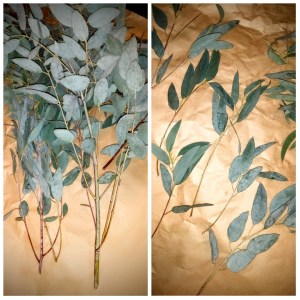
Once all your flowers are cleaned up and in water, you’ll also want to take the time to also break down your greenery and filler into more workable sizes. Most of my eucalyptus came as branches. Baby’s breath and other floral fillers come in poufy branches also.

If you’re not a fan of baby’s breath, my current favorite is Misty Blue Limonium. It’s a tiny robust flower just like baby’s breath, but tends to have a fan shape bunching of flower. Not to mention that Baby Blue has a hint of blue that still looks white from a distance. (You’ll see Baby Blue in a picture below where I show you my flowers all prepped and ready to work with.)

Asiatic Lilies

Do you need to add flower “food” to the water?

Because there is product, there is going to be an industry that tells you that you need to buy this food. I personally choose not to buy the flower preservation crystals. Even with the flowers that I keep around the house, they last longer when I just use filtered water and change the water every day or two. In fact, I have a bouquet of flowers from my husband that is 3 weeks old, and all I did was change the water frequently.

Other methods I’ve tried are sugar in the water and carbonated clear soda. These two methods work just the same as the flower packet I’ve gotten with the bouquets my husband buys.

If you want to use a plant food, you’re welcome to go that route. However I don’t want to you feel pressured to buy one more thing. Good filtered water is more than enough. If filtered water is not an option either, than make sure that you have water sitting out over night before your flowers arrive. This will allow chlorine and other chemicals to evaporate out.

Eucalyptus

Now that your flowers and greenery are drinking, stems cleaned, and voluptuous bunches are broken down to smaller, more manageable sizes, you are all prepared for assembling your arrangements.

For this first night with your flowers, give them space to breath. This is valuable for flowers like Asiatic lilies, whose buds will pop off if you accidently brush them. You want to keep them cool. If you don’t have a root cellar or other cold place, you’ll want to consider a well air conditioned room.

Avoid using your refrigerator to keep any of your flowers cold. Some flowers have sensitive petals and will freeze. Another thing that is not common knowledge is that certain fruits and vegetables can also influence the overall health of your flowers. For example, onions on the sandwich you have in the fridge for lunch is more than enough to cause petals on your flowers brown. So if you have a soda cooler available at home or your wedding venue, make sure that no one has left their lunch or other meal in the cooler!

Prep all your floral and greenery into separate buckets.
Advertisements

Things To Watch Out For

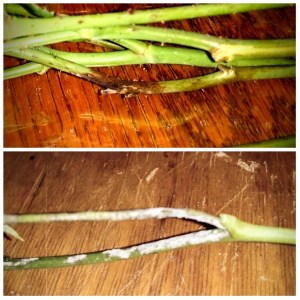
The expectation when you purchase flowers to make your own arrangements is that the flowers you receive are perfect. Unfortunately, even with pesticides and herbicides used in commercial floral fields, there is going to be some damage that you may find in your flowers.

Two different diseases that I found on different flowers (rose and delphinium) in my purchase.

If you have diseased stems, you will notice this when you clean your stems. These are important to find. When you make arrangements, all your stems are right up against each other. And depending on the damage being caused by bacteria or viral infection, mold, or even burrowing pests, direct contact can potentially cause damage to the rest of your flowers. Unless you have experience working in a home garden, you probably haven’t seen instances like this and wouldn’t know how to deal with it. So the best thing to do is take these stems away and dispose of them.

This is one reason why I make sure I have a floral buffer. I have enough stems to do my job even when I have to dispose of a few flowers.

Another reason why a buffer is a great idea is that flowers can bruise.

Here are different types of bruising to look out for.

As you can see here, whether from harvesting or shipping, flowers can bruise. You might be fortunate and find that removing the outer (buffer) petals you can remove the bruised portions (which I did with the red bud.) However, it is possible that the bloom is bruised beyond an acceptable standard.

If you find blooms that are this damaged, you will want to catch this quickly! For example, I had five roses that disintegrated from severe bruising like this. The distribution center that I got these from have a policy where when you notify them/return the flowers in a 24 hour period there are options available; refund, exchange.

Before you make your floral purchase, find out what kind of return policy they have. Know in advance if there’s a chance that you’re going to be stuck with flowers that you can’t use. Is this company’s policy an acceptable risk?

Needless to say, it’s a very good practice to prep your flowers once you receive them. Not only does it help organize you and better manage your time. It also keeps the window of return/refund open for you.

Here is an example of Buffer Petals

As I mentioned above, even when you buy from a reputable company, your flowers may arrive in a condition that can surprise you. This picture, above, is pretty standard for buying from a field or wholesale distributer. These flowers are not damaged. This is real life. The industry calls these busted petals “buffer petals”.
Think of these petals as being your insurance policy. Roses are packaged together for shipment. Petals are going to be rumpled and discolored. When florists receive roses like this, they simply remove these buffer petals and reveal a pristine flower.
TIP: If you’re working with a budget wedding, these buffer petals (and other broken or too small flowers) are perfect for flower girl practice or even photo props for your photographer. With many wedding pictures taken before the ceremony, it’s a great option for your photographer to have a little something to play with if they’re inspired by your flowers!

Now that you’re flowers are prepared, you’re ready for a good night’s sleep!


Come back next week to get some ideas on how to construct your bouquet.

Here are some Products that can assist you in your floral arranging.

This post contains affiliate links to products. We may receive a commissions on products purchased through these links, but at no extra cost to you. These items listed here are from Amazon but may be purchased at local markets and floral wholesaler.

Rose Cleaner Rose Stripper Thorn Remover Stem Cleaner Tool

I have this tool. It works for cleaning the stems of more flowers than just roses.

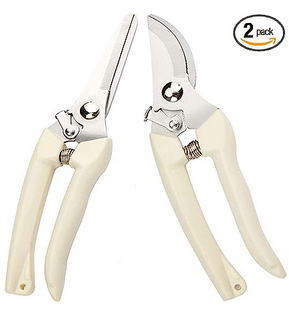
Premium Garden Shears

The larger shear is the one that I use for trimming larger flower stems and branches of greenery.

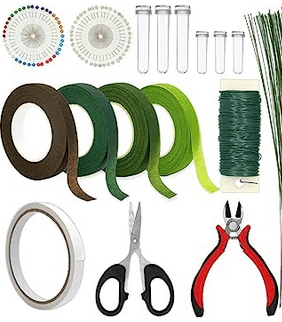
Floral Arrangement Kit

This is a good starter kit that has everything that is useful for making arrangements.

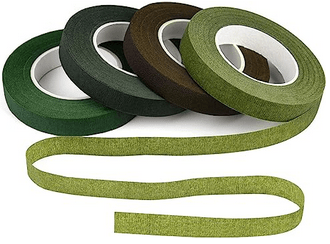
1/2″ Wide Floral Tape

This is a must have, even if you’re trying not to buy any extra items. I’ll go more into this next week. The trick to this tape is that you stretch it to make it sticky.


What’s your favorite flowers to play with?

3 responses to “Making Flowers Possible”

  1. wedding bouquet Avatar

    I think the admin of this website is truly working hard in favor of his web page,
    since here every material is quality based material.

    Liked by 1 person

  2. Same Flowers Other Styles – How I Can Do That Avatar

    […] see below the rose. This is red yarrow and I wanted to spot light it for a moment. Two posts back, Making Flowers Possible, I mentioned how the sales person had pulled additional flowers for me that had inspired her when […]

    Like

  3. Making Arrangements – How I Can Do That Avatar

    […] the last post, Making Flowers Possible, we went through the process of cleaning your flowers and preparing them to assemble your bouquets. […]

    Like

Leave a comment

Processing…
Success! You're on the list.
Advertisements
Advertisements
Advertisements
Advertisements

Starting New Skills

The one thing that I appreciated from my childhood was just how many skills I learned from my parents; cooking, gardening, home repairs, auto repairs, and so much more. Part of this appreciation is seeing how many of these skills have become less and less commonplace in the younger generations. And it’s so promising to see a growing number of people seeking to learn these skills now.

Today I wanted to share a monthly experience that we have with our kids. Craft days!

I’m aware of three box stores in my local area that offer a free craft to kids; Home Depot, Lowes, and Joann Fabric. None of these stores are sponsoring this blog nor have they compensated me for this post. I mention them by name for the sake of helping out fellow parents who are looking to foster these skills in their kids or grand kids. They are free, which is perfect for families who don’t have the budget to purchase supplies.

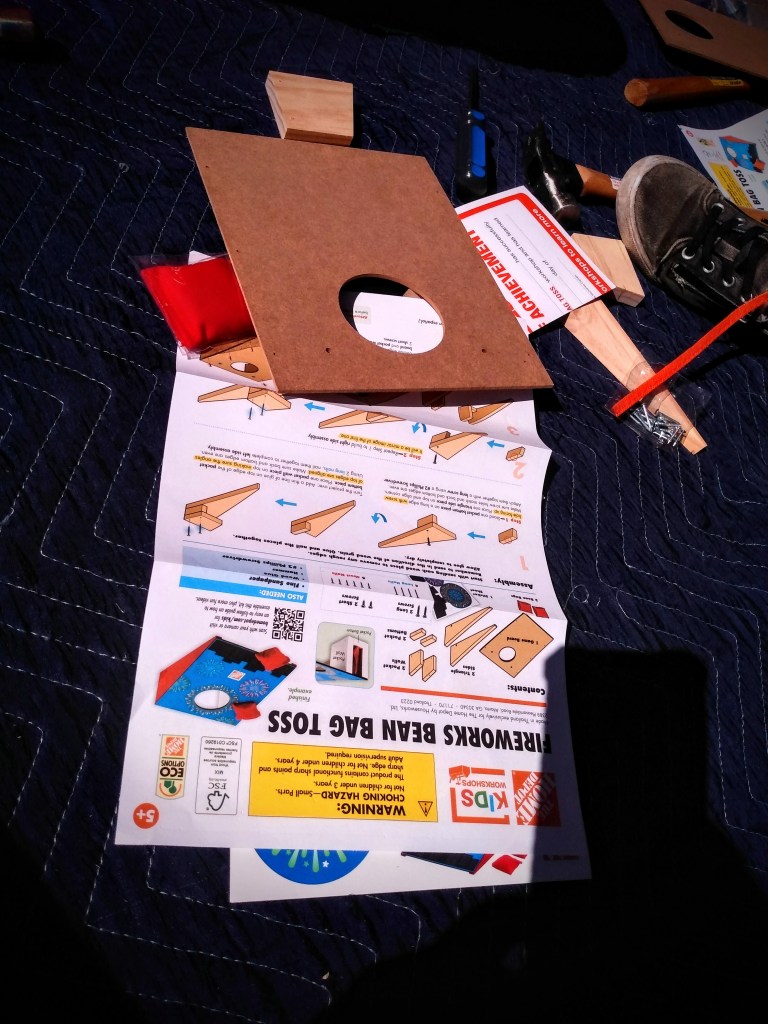
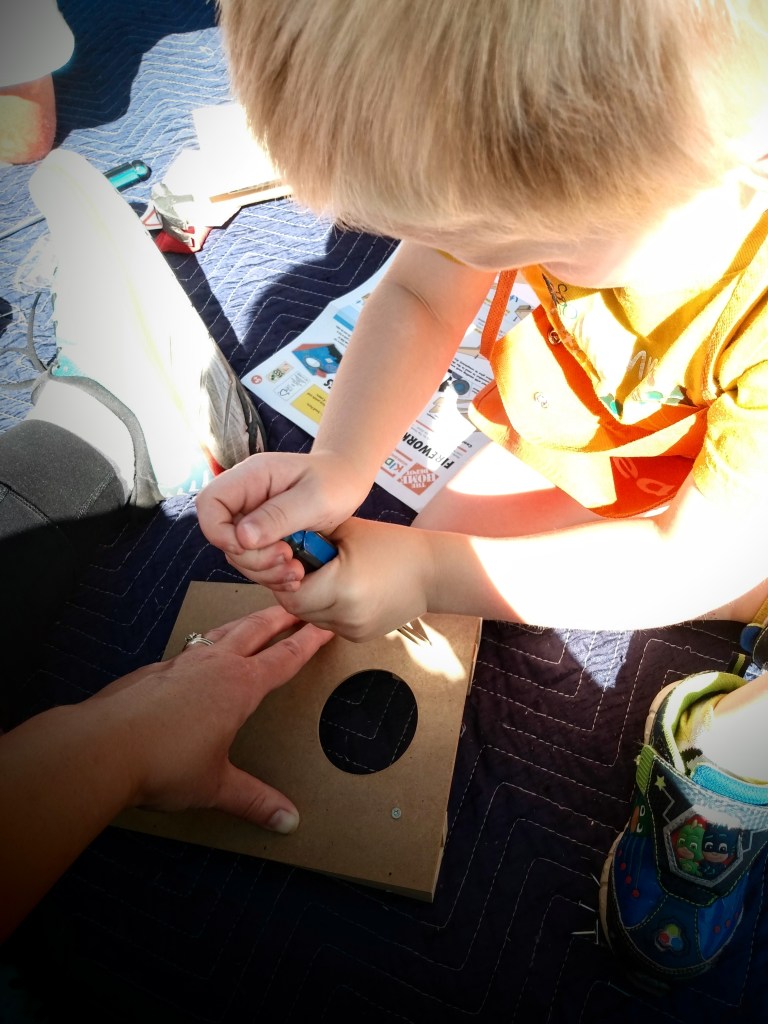
Here’s what the corn hole craft project looked at the beginning of our morning.
Advertisements

We’ve been doing these hardware store crafts for five years now. And as long as the days get with small children, the time really flies by and they pick up the skills of using a hammer and screw driver too quickly.

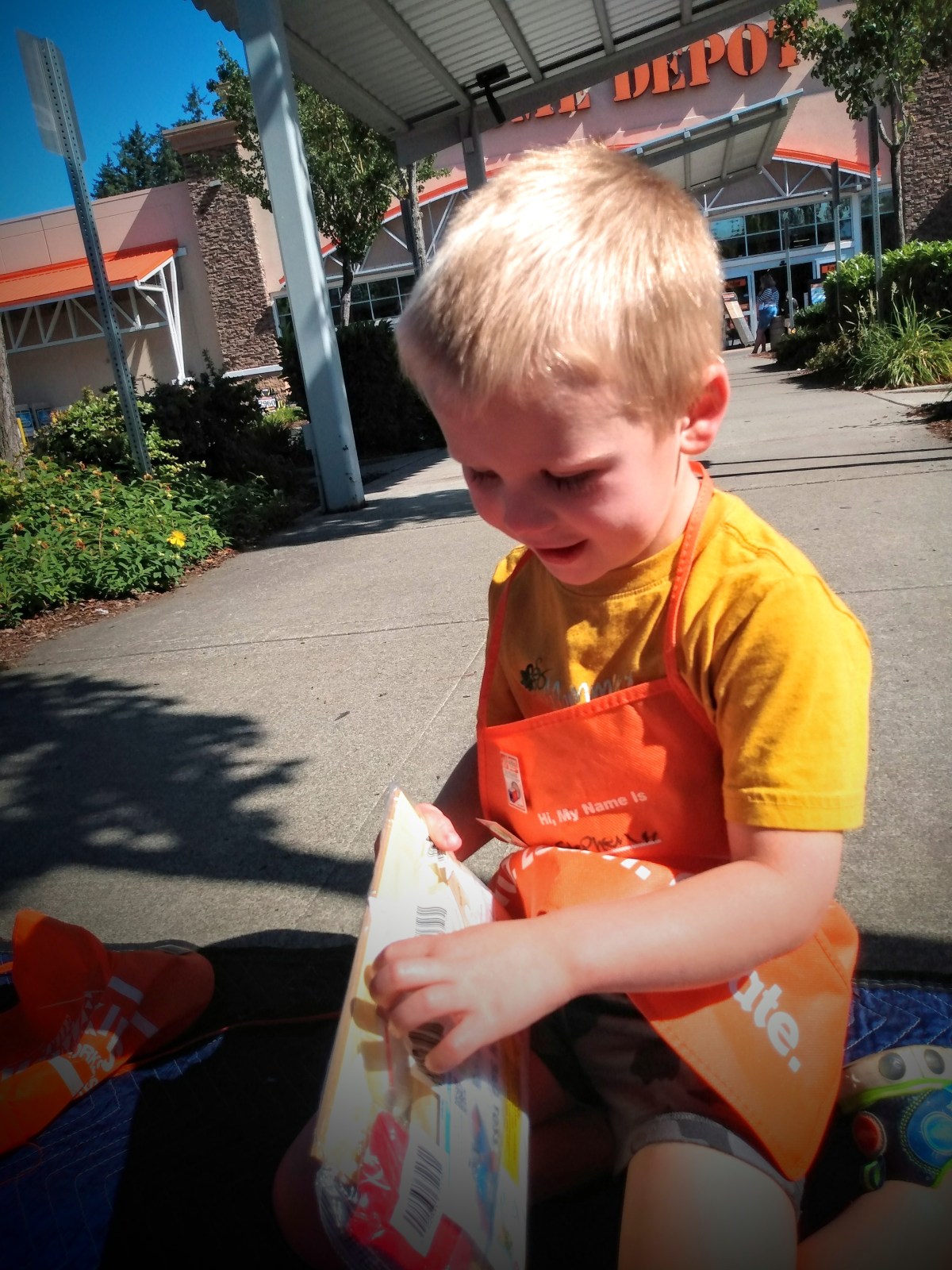
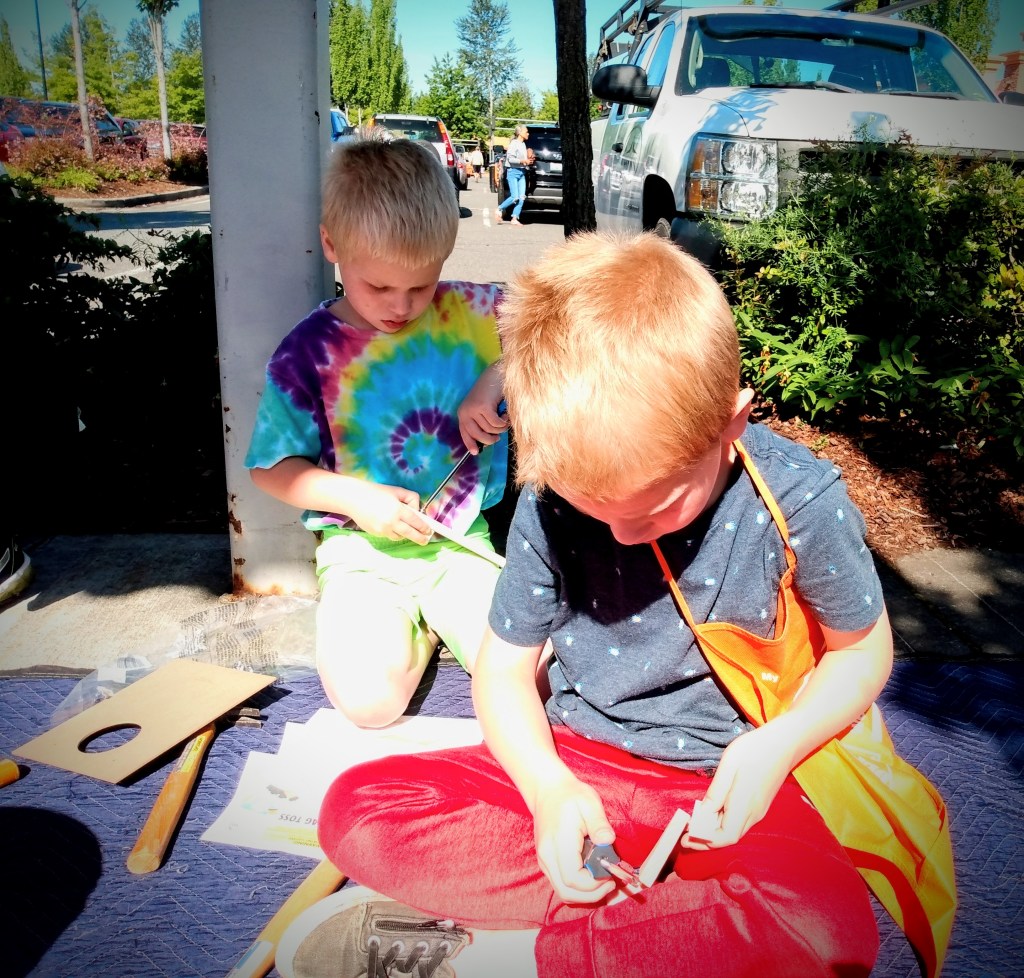
This miniature corn hole craft was the first one where I sat down with my youngest and purposely focused on just being support. (The older kids decided they wanted to fly solo–time goes by too quickly where you’re sidelined on these crafts!).

My solo crafters wanting to build with no help.

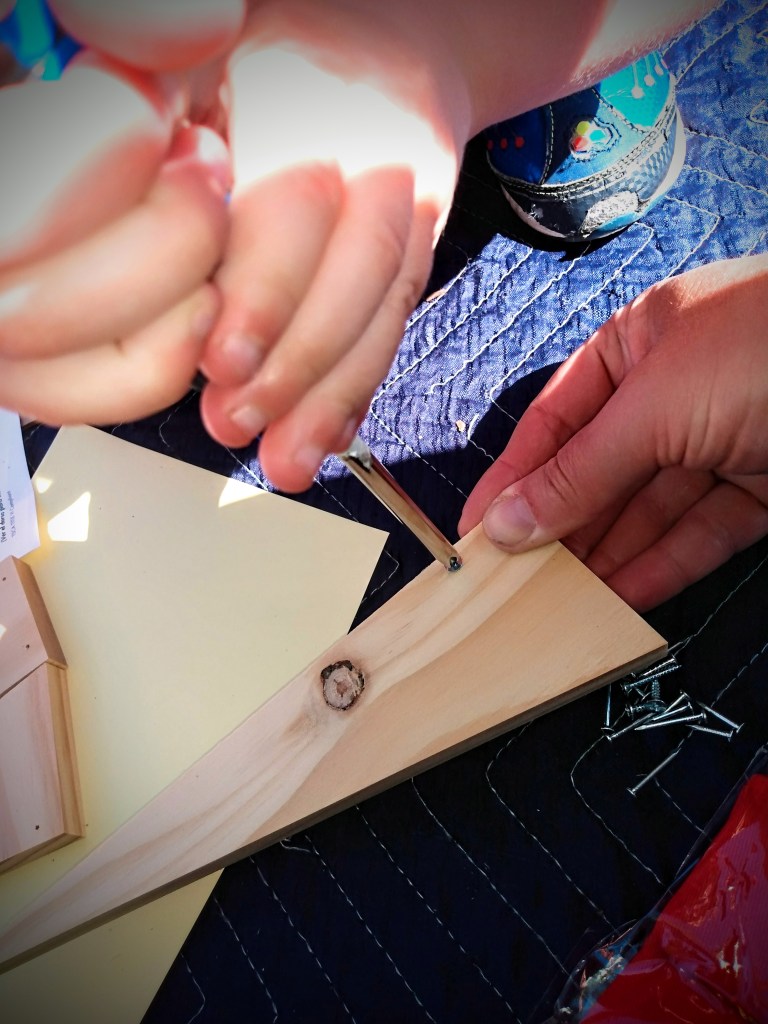
Instead of telling my youngest how to build, I had him pull out the pictograph directions and tell me what we were doing for steps. I was just there to hold pieces for him while he built away.

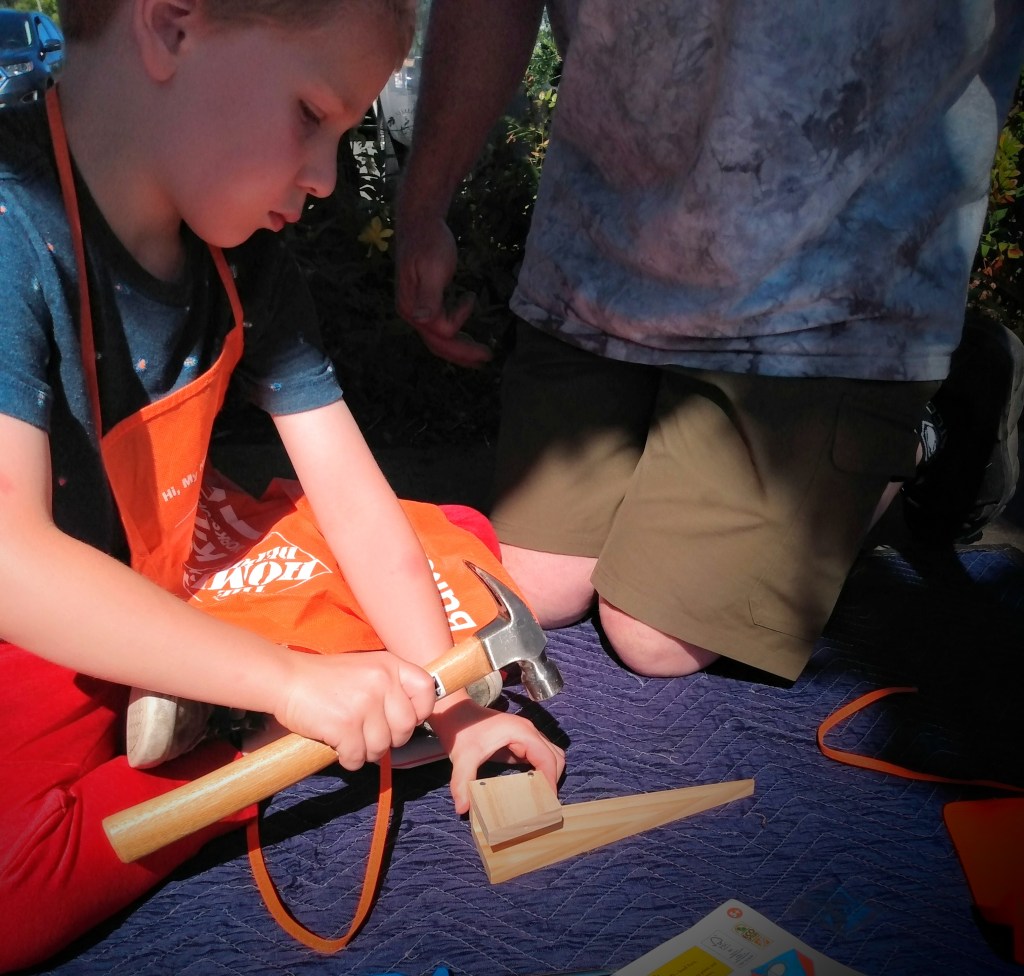
My one and only job for the day, hold the project in place.

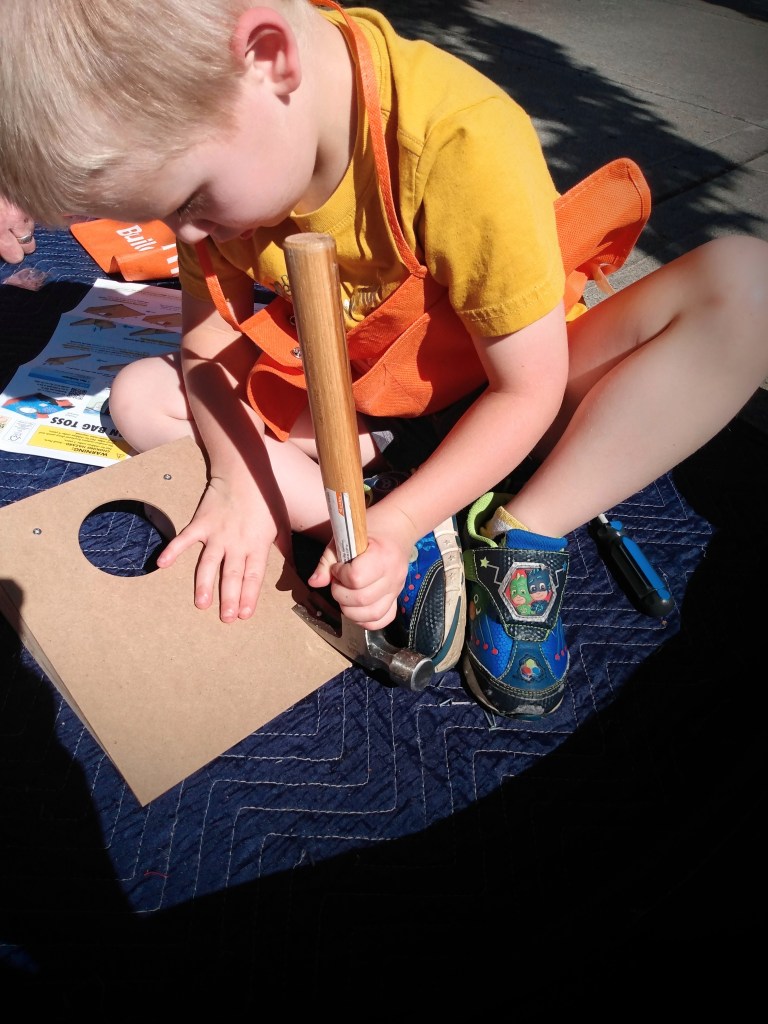
This is the child that loves having things in a certain order and done a particular way. But it was fun watching him process the building information and doing it the way that he saw makes sense. But what was a good surprise was seeing him use the claw end of the hammer when the nail wasn’t lined up the way he wanted it. He didn’t want to make corrections the way that I would. He wanted to fix the error his way.

This reminds me of a series of lessons from a virtual life skills summer camp that I watched with my kiddos this past month. This was a series teaching basic home electrical repair skills to teens. I watched it to learn for myself because this was one skill that I didn’t learn from my dad, but there’s times where my husband is so busy that I could do these things home repairs without waiting for his schedule to slow down for him to do it.

What’s amazing about whole families learning new skills is that we’re not dependent on one person taking care of a honey-do list. We’re enables to work as a team to get something done.

Advertisements

For example, even though my oldest is still in early elementary, he’s able to take care of nail and screw projects. I learned some new electrical skills to help my husband out. And my husband has been learning new food preservation skills to help in the kitchen.

For our family, it’s important to learn new skills and “cross train” because it creates value in our family. One person isn’t dumped on and obligated to do certain tasks by themselves. This can be overwhelming, especially as the adults in the house, because we’re constantly juggling our schedules and to do lists. Sometimes surprise tasks just become overwhelming because there’s not enough time in the day.

But when another family member knows how to do a task alongside you, it turns into a quality time moment instead of a stressed out I-don’t-have-time-for-this.

I don’t know about anyone else’s family, but my kids are already at the age where they want to feel valued and appreciated. And by giving them fix-it skills, it’s one thing where my kids can do something for my husband or I, feel accomplished, and then feel valued with a “thank you” and “you did a good job”.

And it’s not just with tools. The kids have been learning how to cook things on their own and they’re so proud of being able to cook breakfast for the family.

It doesn’t matter the age, people thrive on feeling appreciated and knowing that they contributed something. And that value isn’t taking into consideration the memories that are made in the process.

One of my favorite memories of working on cars with my dad was when he had me crawl under a car and do an oil change with only him available to talk me through the process. It was the late 80’s and one of the biggest fads for girls was wearing press on nails.

It was when I was removing the last bolt that two of my nails popped off and landed in the oil pan just as the oil gushed out. I started freaking out. My dad thought I had lost the bolt in the pan. He and my uncle started laughing their butts off when they found out that I was looking for my nails!

Let’s just say that after I fished the nails out of the oil that it didn’t take me long to realize that there was no way I was going to be able to salvage them.

Advertisements

There’s nothing in the world that would exchange for the memories that I have with working on cars with my dad. Nothing goes right all the time. And it’s these memories that bring patience when I’m working on skills with my boys. Things will go wrong. Some of those things will be hilarious. And it may only be these funny memories that they remember for the rest of their lives. But that’s okay.

I know that they don’t remember the times they’ve hit my fingers with a hammer. They won’t remember the frustration of first learning how to press down on a screw driver and turning at the same time, all just to get that screw to go down into a project. But their muscle memory will live on forever as they grow to learn more skills, such as home electrical repair, car repairs, garden building projects, making meals, and so many other valuable life skills.

What they will remember forever is that their mom and dad believed in them that they could make something. When frustration sets in, they know they can problem solve their way out of it because they were believed in. But above all they will take on the new challenge of learning something new because their parents continue to learn new skills.

We’re never too young to learn a new skill. Neither are we too old.

Maybe one day soon, they will learn a new skill. And as they show us, my husband or I will learn that new skill because they want to teach us something.

So whether you have kids or grand kids or not, learning a new skill is ageless. It’s a great memory building moment to teach the young (even teens) a new to them skill.

And it’s never too late to learn a new skill for yourself.

What new skill are you ready to learn now or pass on to the next generation?

One response to “Starting New Skills”

  1. best buy instagram followers site Avatar

    Way cool! Some extremely valid points! I appreciate you writing this post and also the
    rest of the site is extremely good.

    Liked by 1 person

Leave a comment

Processing…
Success! You're on the list.
Advertisements
Advertisements
Advertisements
Advertisements

Make A Container You Will Love

More and more people are moving to containers for growing their home gardens. So what do you do when you get sticker shock over the container prices online or in the box stores?

You build one!

Everyone talks about pallet projects. But I want to introduce you to crate raised beds.

My husband works for a company that builds machinery. The crates that are used there are tossed. Being resourceful and having access to free crates to reuse and repurpose, this is the way I build the majority of my container garden. This also has the added bonus of solving my time problem. I have so much on my plate, that building raised beds from scratch isn’t an option.

AND if you know how to use a pair of scissors and a staple gun, you can absolutely make this garden container!

There are so many different crates out there. The ones that I have and use as raised bed were formerly forklift crates. (They originally housed large machinery parts.)

With the crates you source, there are a couple of things to keep in mind.

  • If there is plywood (whether the floor or sides), you will need to remove it and replace with wood that hasn’t been chemically treated.
  • The crate floor should be solid. This will help contain your soil.
  • The sides are okay if they have gaps. We’ll line this and the soil will stay in.
  • Is this going to be a permanent or temporary container for your garden?
Advertisements

This last question is very important. It will determine if you need to source other materials for your container. You may find that you need screws, power drill, or even other parts if you plan on turning into a cold frame or want to add features like hoops.

The containers that are brought home to me are made out of pine. The boards are stapled together.

The containers that are brought home to me are made out of pine. The boards are stapled together. I know that these crates were not built to last forever. They’re not even sealed for weather. But being limited in time for my garden builds, I opt for leaving my crates as is.

Tip: you can weather protect wood by scorching it with a torch.

If you find that your crate is stapled together, this feature is going to limit how many seasons you will get out of your container.

For example, the boards of my 36″ x 36″ potato crate (above) started to pull away at the start of the third year. The wood is weathered but still as strong as the day the crate came home. This is one crate that I wished I would have reinforced with screws before filling. This crate got place before filling with dirt. And with the exception of this front face, there’s no easy way of coming back in to push the board back in place and screw in. It’s tightly spaced with other structures.

Tip: My hindsight advice is to increase the longevity of your crate container, reinforce the boards with screws, right from the beginning. This will prevent awkward maintenance in a few years.

Let me walk you through how I make my raised beds from crates

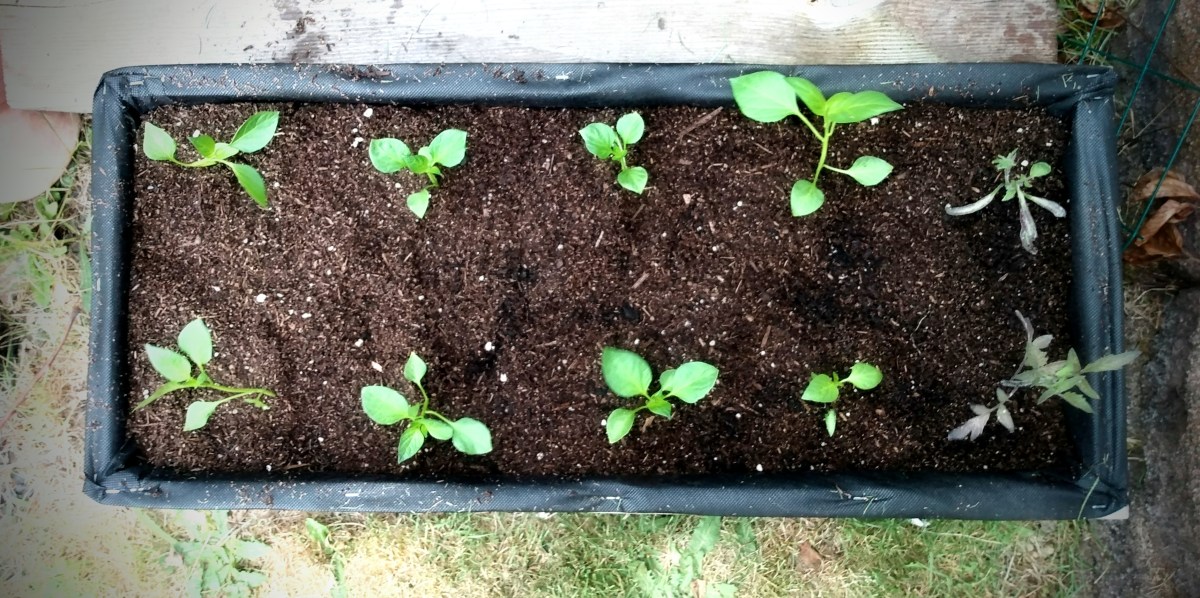
I’m using the smallest of my new crates 12″ x 32″ and about 18″ deep. (This one has been sitting for a couple months waiting for me to decide what I wanted to plant in it this season. I was gifted some pepper starts and knew exactly where they were going to go.)

Items you will need:

  • Wood Crate
  • Garden Weed Barrier
  • Scissors
  • Staple Gun

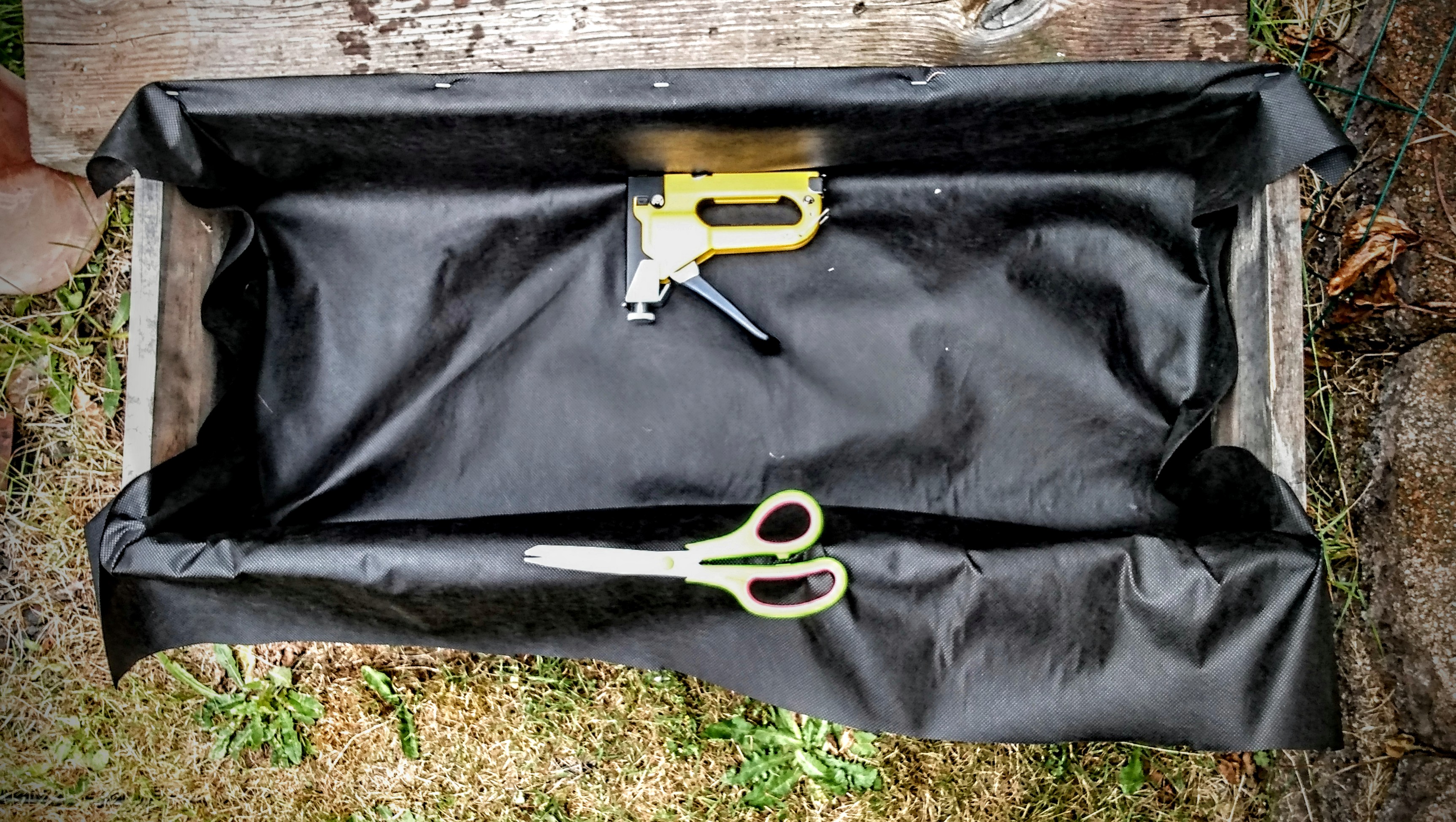
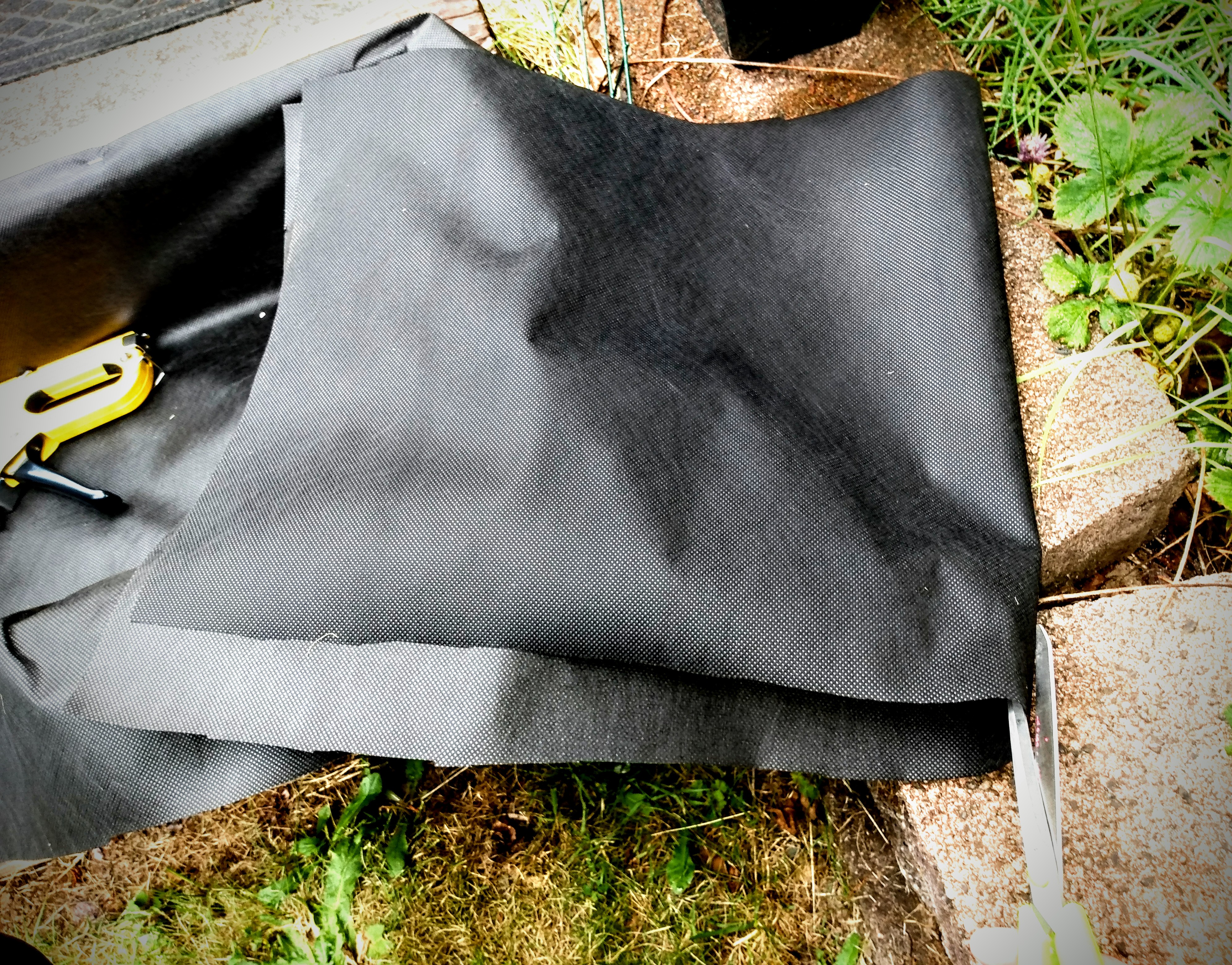
The first thing I do is fold over the edge of the garden barrier, to make a smooth finished edge, and staple it down across one edge of the crate. It’s not necessary to make a finished edge. I just like this step because sometimes the cut on my roll of barrier is slanted. So by making a new straight edge, this makes it easier to lay the barrier without worrying about it running sideways across the crate.

Note: When I line a crate larger than the width of my garden barrier, I line one side of the crate. Once that first piece is secure, I run a second piece for the opposite side of the crate. The overlapping of the barrier happens in the middle of the crate. There is no need to secure in the center floor of the crate because the weight of the soil will keep the barrier in place.

With this first edge of the crate secure, I drape the garden barrier across the top to make sure I’m laying it in centered and straight. Then I push the barrier down into the crate and make sure that the barrier has enough give to accommodate the full size of the bottom of the crate.

As you can see in the second picture, I trim my garden barrier a little longer than I need to fit inside the crate. One reason is that I usually don’t cut a straight line (obviously seen here). But more importantly, I learned over the last two years that you want more barrier inside the crate than you will think.

The crates I lined the first year, fitting the liner tightly to the inside. The following spring I noticed that these barriers started ripping out at the staples after the first winter of water and freezing. The barrier needed some flex that I did not allow for. So now I give some allowance.

Before I put my garden barrier away (and focus on securing the lining), I cut the width of the short side of the crate. Then I fold this strip of barrier in half and cut. Each half will line the sides of the crate. These side pieces I set aside (or stuffed in my pocket for this crate because of the wind). I set the roll of barrier to a side and go back to folding over the edge of this second crate long side, and staple it down in place.

Once the long sides of the crate are secure, I secure the edges along the short side to hold them in place before securing barrier down the short sides. This keeps them up and out of the way. And if you’re lining a crate while it’s windy out, you will thank me for having the barrier stay in one place so you can move through this project in the least amount of time.

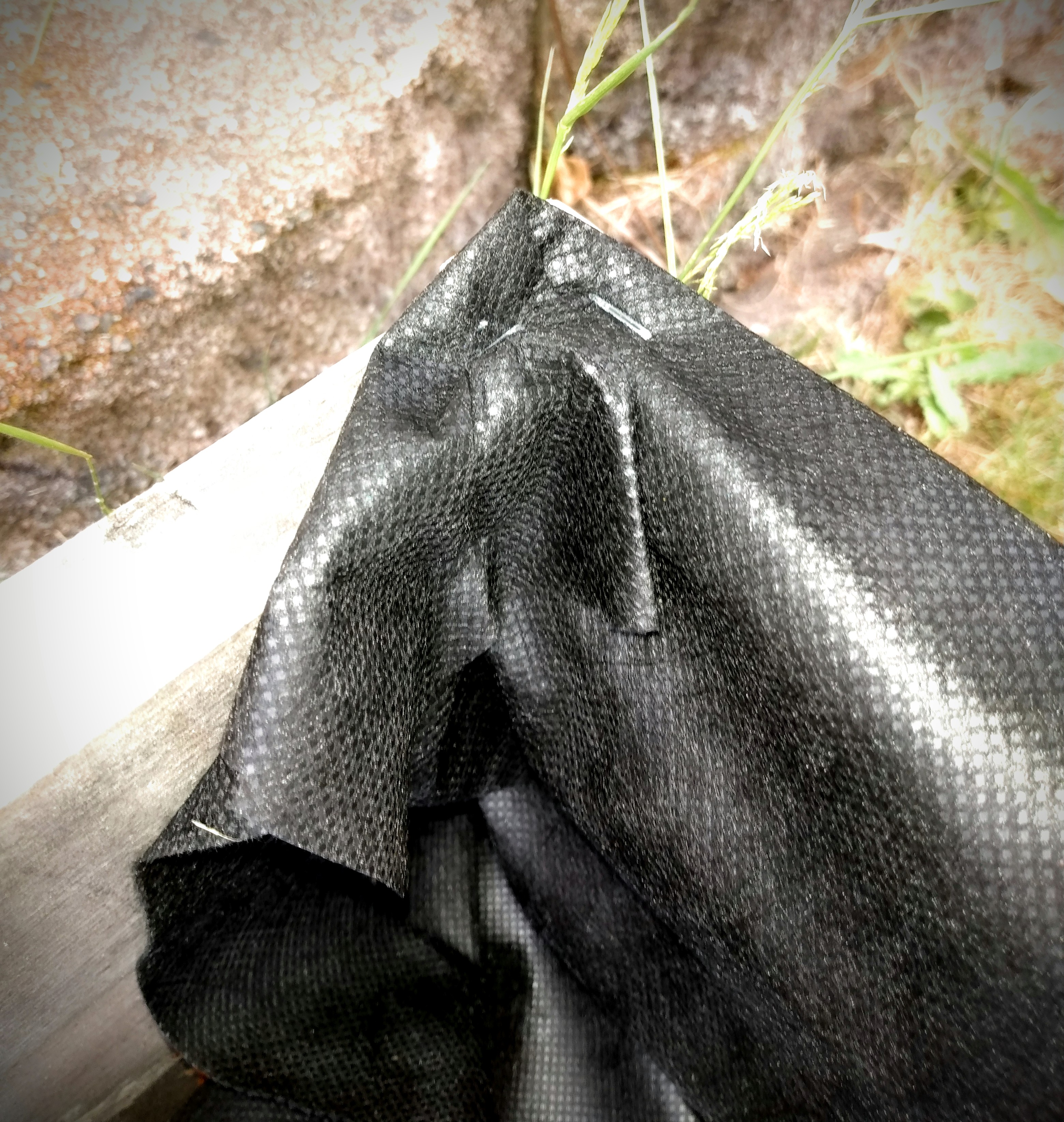
First I take the overlap, from the edge of the crate, and fold this corner down before stapling. This gives a reinforced edge as well and bringing the excess barrier down inside the crate. This doesn’t look pretty, but this is all about telling the barrier where you want it to go and keeping it contained.

Can this excess be trimmed off?

Of course it can. But you will see in just one moment, by keeping the excess length and tacking it up the side, you are creating a barrier that will keep all your soil in your raised bed without having a completely sealed liner. I use the weight of my soil to work for me so I have less steps to take.

For the next step, I pull out one of my side crate pieces of barrier that I just cut and line my first short side. I fold the edge of the barrier down, just like I did with the long side of the crate, and stapled down this top edge and pushed the rest of the length of this side down over the rough edges that were tacked down from the longer side. This flap is great because not only does it cover the edges of where dirt could go down and over time wash out of the bottom of the crate, but it also redirects any of this soil movement back toward the center of the crate.

So if you have the choice of having a generous flap (like seen here in picture two) or trimming it down, make an educated decision in favor of what’s going to help you maintain your soil. After all one of the problems with container growing of any kind is the loss of soil, mostly through drainage at the bottom of your container.

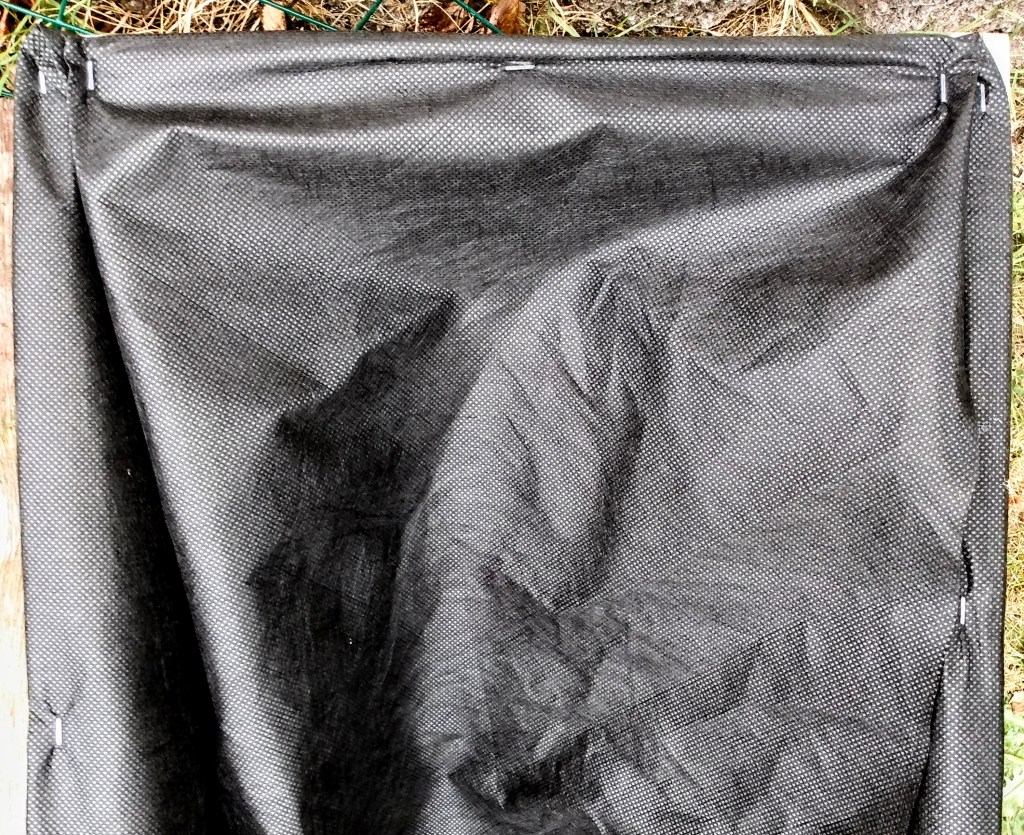
Once you secure the second short side of the crate, you will see here in picture 3 that you have a fully lined crate.

The first time I lined a crate, with no one telling me how to do it, I must have taken an hour to do this. Even with taking pictures, this only took me about 15 minutes. The larger crates don’t take any additional steps. So it really is time efficient to take a fully made wood crate and line it to make your own raised bed.

If you did not line your crate where you want it’s forever home to be, make sure that you move it now. Even with this smaller crate, the weight of it filled is more than I can move on its own. Even with a hand cart, I still wouldn’t want to move it because I could just see myself knocking it over and spilling all my soil all across my yard. For my sanity (and your own), I just make sure I place my crate raised beds before I fill them.

Advertisements

How I fill my raised beds

I’ll start by saying that I don’t fill my raised beds like everyone else.

One reason is that I don’t have the gardening budget to buy as much soil as I would need to fill all my crates, especially the large ones.

Another reason is that I’ve talked with many people about different types of gardening are available for each of us to choose from.

The drawback to container growing (even raised beds) is that there comes a time where there will be a depletion of nutrients in soil. So even though I do top off my crates with raised bed potting soil, I choose to think long term with my raised beds.

Hugelkultur and Mound gardening have beautiful foresight in them. Both of these forms of gardening is that they put long term “food” into their structure building. Both contain wood (usually in the form of branches and limbs of trees, logs in larger structures) which is slow release nutrients that takes many years to decompose and incorporate nutrients back into the soil. If fact, this is the best way of getting the micronutrients into the soil that standard commercial fertilizers do not ever put back into your containers.

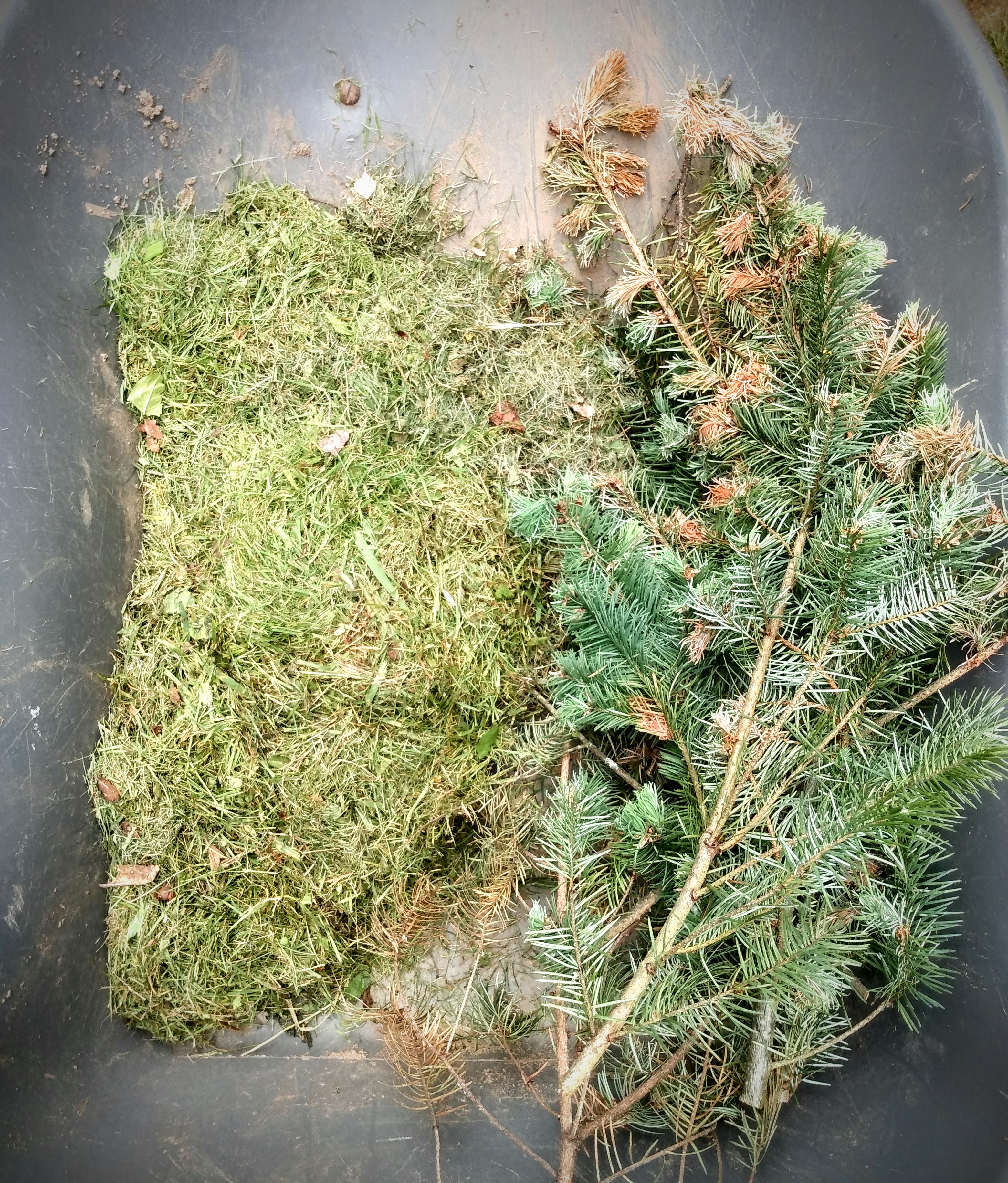
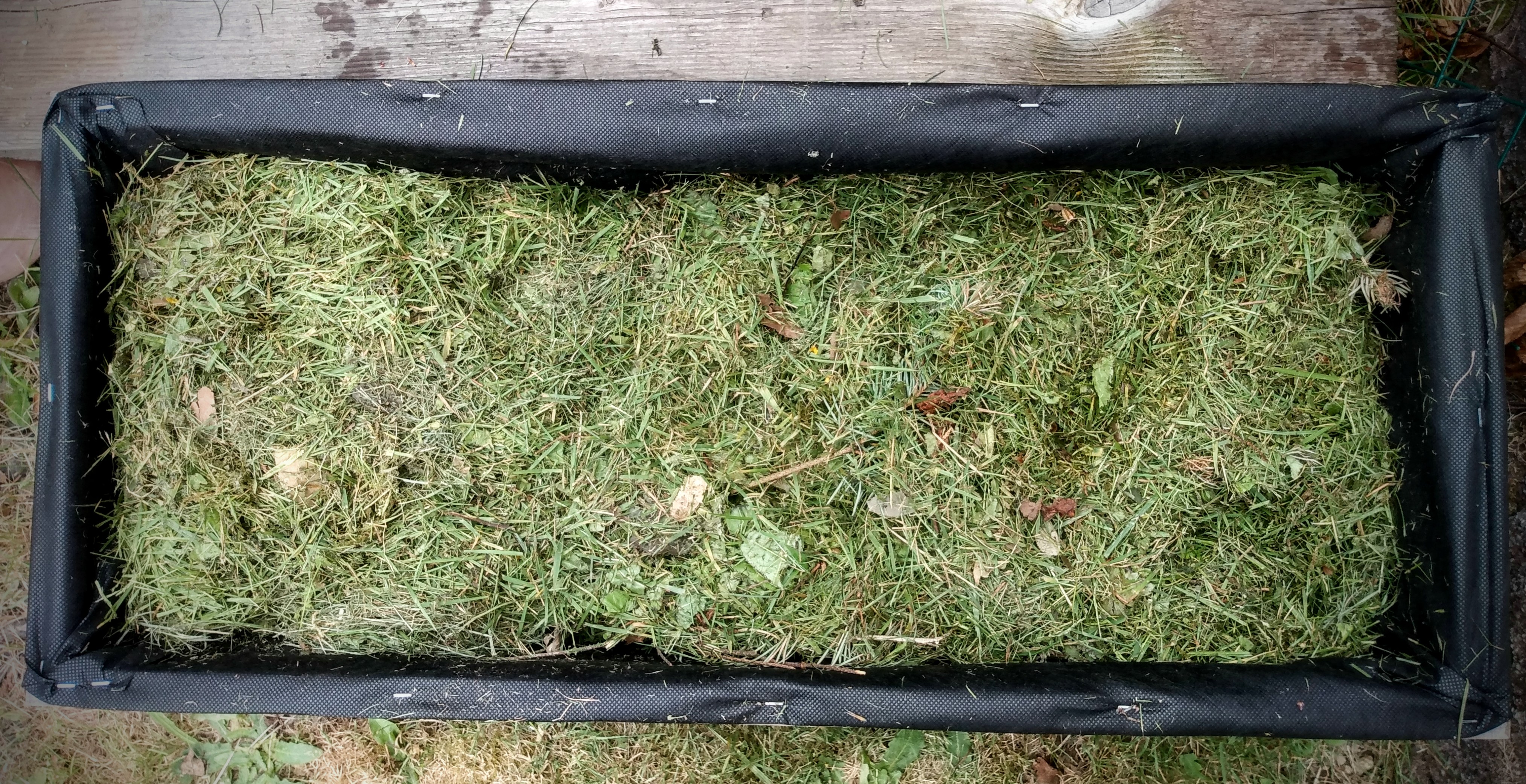
For this reason, I went back to my yard waste and compost. I grabbed some pine branches that we recently trimmed off of our trees, and a couple of handfuls of grass clippings. Especially with the large crates, these fillers are going to be amazing.

In the bottom of my crates I put the largest branches. Normally I put in camp fire sized pieces of wood in the bottom. This small crate doesn’t have depth for that. So I started off with what I consider my second layer, thin branches. Ever green boughs are perfect, not just because of the thicker needles (which take longer to break down than leaf waste) but also because they take up space.

Next I put down green grass clippings. One, they take up space and leave nice medium for plants to spread out their roots. Two, the grass fills in the branch gaps and holes perfectly.

Think of that science experiment where you’ve seen rocks added into a jar first. Then it’s followed by pebbles, then sand, and then water. It’s a perfect example of maximizing the fill of a contained space with an incondensable material like rock.

I pack my raised beds with as much long term nutrients as I can. And this method of packing with larger material first, working your way down to the smallest, is the best way of packing your container box.

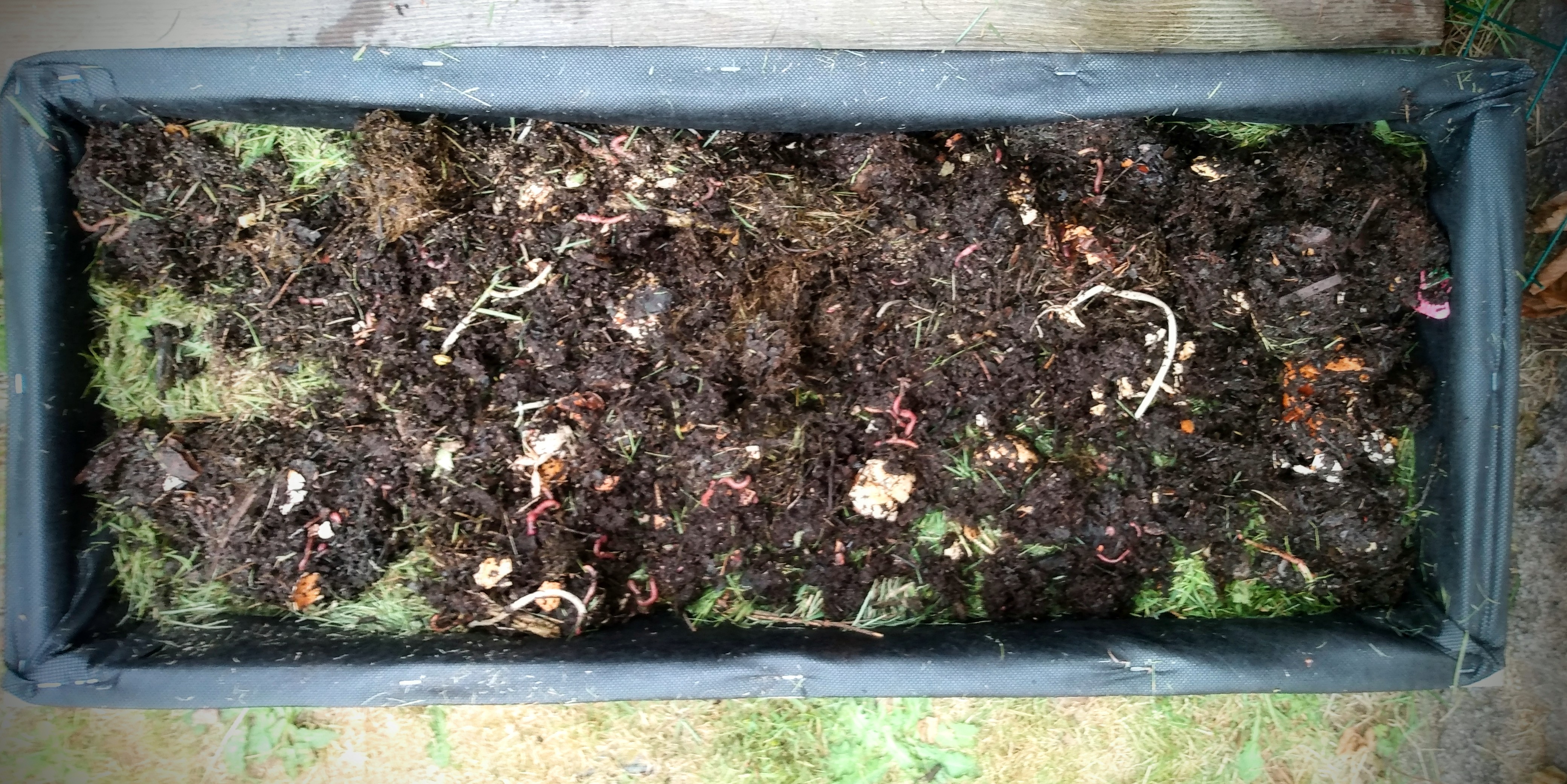
From here, I went back and grabbed a couple of pitchforks worth of raw compost (complete with some of my worm residents) and the last of my current supply of raised bed potting mix.

Of course it was the moment that my kiddos saw me grab the compost that they came rushing at me. My youngest dove in and tried to rescue the worms from being placed in this crate. He was acting like I was kicking them to the curb and evicting them. It took me a moment to tell him that he didn’t need to take them back to the in ground garden, I need them here.

And that’s one thing that I haven’t heard anyone talk about. We all know that worms are great for our garden. In fact we don’t give them a second thought in our in ground garden. So why aren’t we talking about them in our container gardening?

Worms are very much needed for a good growing biome. They help break down materials. And since I put in some large materials, I could let them do their own thing, or I can see if I have some worms who want to take advantage of this new home. (And this is another reason why I don’t fully seal off my lining in the crates. The worms are free to come and go as they move their way through any loose openings that take place over time. (And these openings do happen, but they’re more controlled.)

Anyway, I chased my youngest down and got my worms back in my compost. Then I quickly dumped the potting soil down on top to keep him from digging them back out. (I swear that child loves worms!)

I finish off with the raised bed potting soil because that is ready to go and host my pepper starts.

The down side to this layered nutrients in a raised bed

You may want to choose to do straight soil. Especially if you’re planting starts that will shortly need to have structures to assist in their growth. Just like these peppers will need some structure.

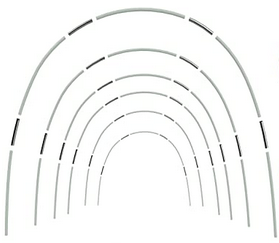
This layering, especially in this smaller size of crate, makes it impossible to add bamboo stakes for my peppers. They were just falling over. Fortunately, I have some carbon fiber cold frame hoops. I haven’t added them yet to this crate, but I’ll put in a hoop over each row to drop lines for the peppers to grow up.

I mention all of this, because if you choose to layer and expect it to hold up a stake or tomato cage, this first year just doesn’t give it the soil density to hold up a structure. So be prepared to come up with an alternate plan.

Another disadvantage to this layering is that as you can see in these pictures, I filled my crate up to the top. Over the course of this growing season, and especially over winter (when the rain helps to draw all the smaller soil material to settle into the branches in the bottom, I will see that this crate will only be half full next spring.

In the spring, I’ll add more compost and soil into this crate. At this point I can add mulch on top and the volume of the crate will not go down any further.

Again, this isn’t a horrible down side. It’s just one to be aware of and plan for. But this crate is now set up for many years of container growing. It will be sustainably nutrient rich, especially when I add the mulch and keep that going every season.


How do you like to container grow?


Here are a couple items I find useful in my garden.

This post contains affiliate links to products. We may receive a commissions on products purchased through these links, but at no extra cost to you. These items listed here are from Amazon but may be purchased at local markets.

One response to “Make A Container You Will Love”

  1. Clove One Clove All – How I Can Do That Avatar

    […] Make a Container You Will Love is how I start off all my new boxes. This time I reused one of my existing boxes. My onions didn’t do so well in it this past grow season, so I’m changing it up to see how my garlic will do here. […]

    Like

Leave a comment

Processing…
Success! You're on the list.
Advertisements
Advertisements