After spending almost a decade in the event decorating industry I have repetatively heard "I can do that". Instead of being dismissed by creative minded people, I want to show you how I do "that" so you can be sucessful in recreating that inspiration image. I just might have a few tricks that you haven't seen yet!
It never fails that a moment in life comes when you forgot to get someone a gift or you received a last minute invitation. What do you do?
There’s a couple of things that I keep in my craft room all the time: fabric, ribbon, card stock, picture frames, paint, beads… You get the idea.
We had the privilege of meeting our neighbor’s parents, who came for a visit from halfway around the world. It’s amazing to see how much you can connect with people, especially when you don’t speak the same language. And even more amazing when you find out that you share some similar interests and find commonality.
It’s even more special when you receive an invitation to be a part of celebrating their 60th wedding anniversary.
I’ve been married for over a decade. So much has changed in the world since that day. I tried to think of how much the world will change in another 50. It blows my mind.
What is it like to celebrate a 60th anniversary in another country–one you may or may not have thought you’d be in when you were younger?
Of course I couldn’t pass up an opportunity to celebrate and honor a long lasting relationship like this. And while thinking about how to give a meaningful gift, with little personal history, and something that’s not burdensome for when they return home, I chose to focus on the memories. Celebrating the last 60 years of their memories together and giving them a memento of this trip, this moment in time.
Advertisements
My husband had taken a group picture at the end of a visit where we had them over and made for them their first American meal. I chose a picture because it travels well and is minimalistic for those who gravitate to that way of life. But I also couldn’t pass up giving some flowers because it’s something that brings happiness in the moment.
So for this quick to gather gift that’s pack full of memories and meaning, here’s an idea for you to consider the next time you need to find a gift in under two hours.
Pick a photo of you and the other person from your phone and send it to a local place that can print it out in an hour.
While that is processing you can stop by a shop, florist, road side stand, farmer’s market, or garden and gather some flowers that have meaning.
In this instance I chose sunflowers because with our guests, they saw the sunflower I had grown from seed and we talked about sunflowers and sunflower oil for quite some time. Sunflowers may not be their favorite flower, but in this gift, it’s a nod to something we connected with in the middle of a language barrier.
It just so happened that at home I had a vase on a shelf that I was saving for a time to reuse by gifting to someone, and I had some fabric with sunflower print on them.
As you notice here, sunflowers can be awkward if they’re not bundled. So I decided to bundle the flowers with a strip of cloth.
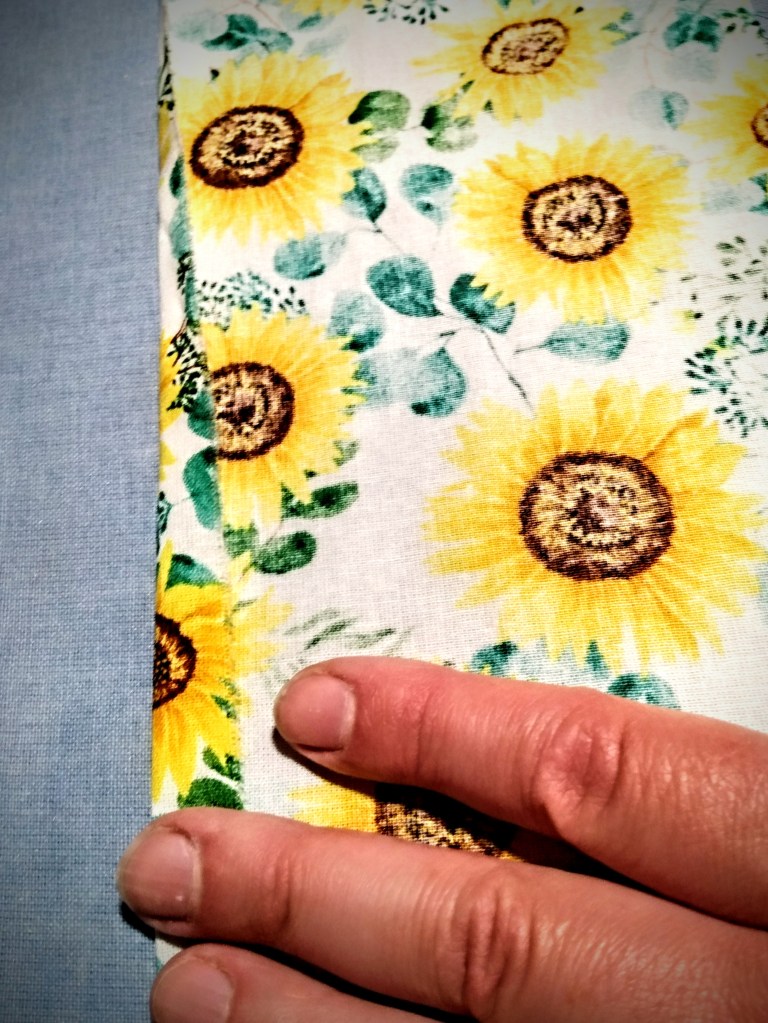
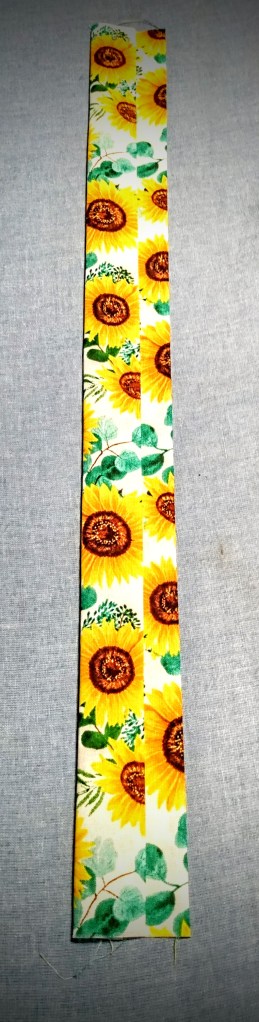
For a professional look of wrapping a bouquet, you want to first trim down the fabric you want to use into a strip. No matter how nicely you cut, the fabric will always fray. To give a clean edge, you want to press the strip of fabric. First, fold and press the raw edge. Then you’ll tri-fold and press the fabric into a wide ribbon. Now the edges won’t fray on you and you didn’t have to sew.
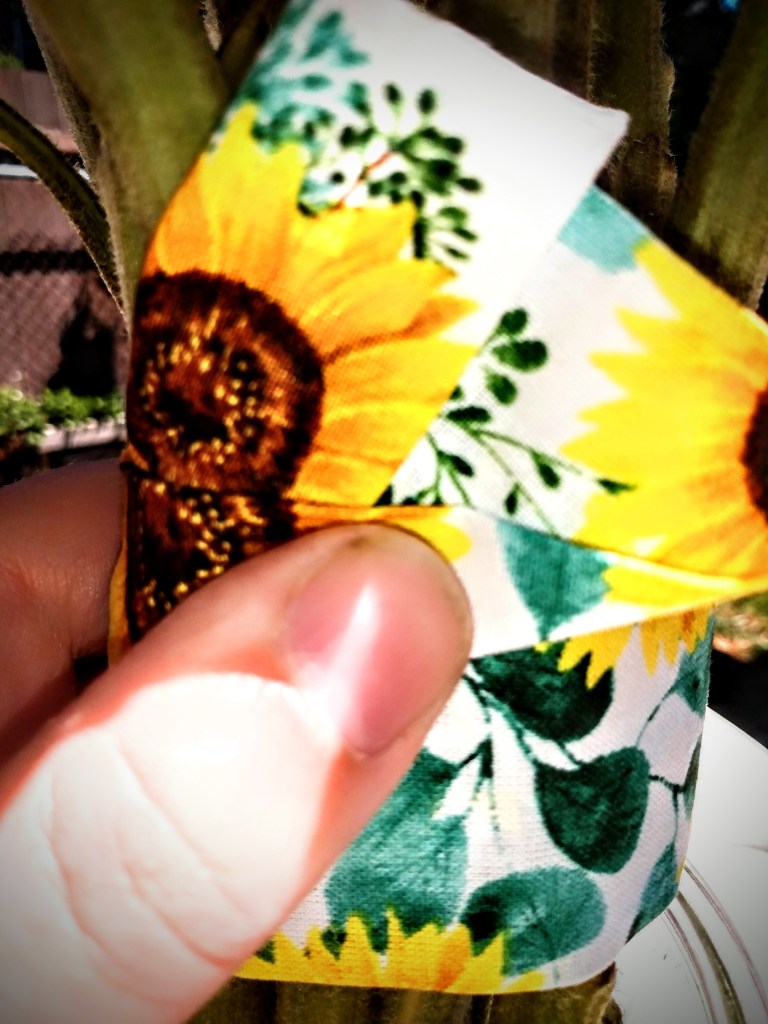
To make this wrap, you want to put one edge of the ribbon between the stems. Then you can wrap it tightly around the bouquet without the ribbon slipping on you.
When you get to the end of the ribbon, you want to fold the ribbon up at a 90° angle. The tuck this final edge down behind the wrap, between the stems. If the wrap is snug, it will hold the ribbon in place without using tape, pins, glue, or any other fastener.
The beauty of making a wrap like this is that the person you are gifting this to can use the fabric after the flowers are long gone. If this person is sentimental, they will no doubt find a way of repurposing and reusing this strip of fabric.
Don’t forget to use a small scrap of the fabric to make a card that matches.
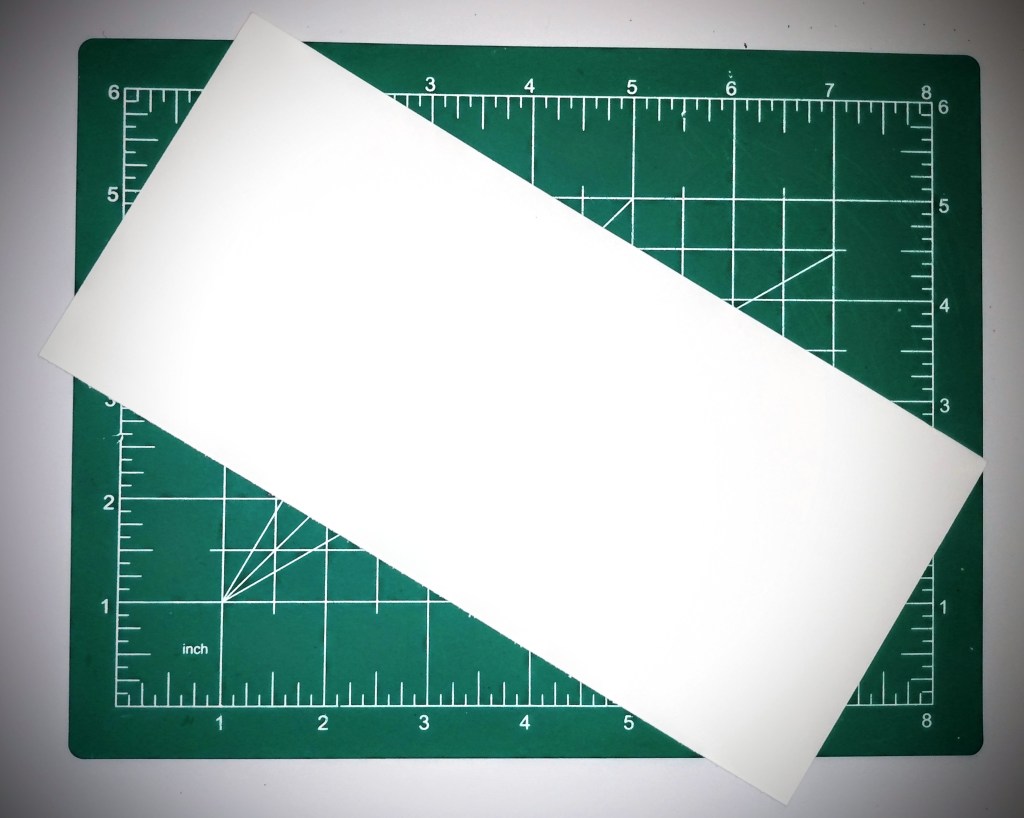
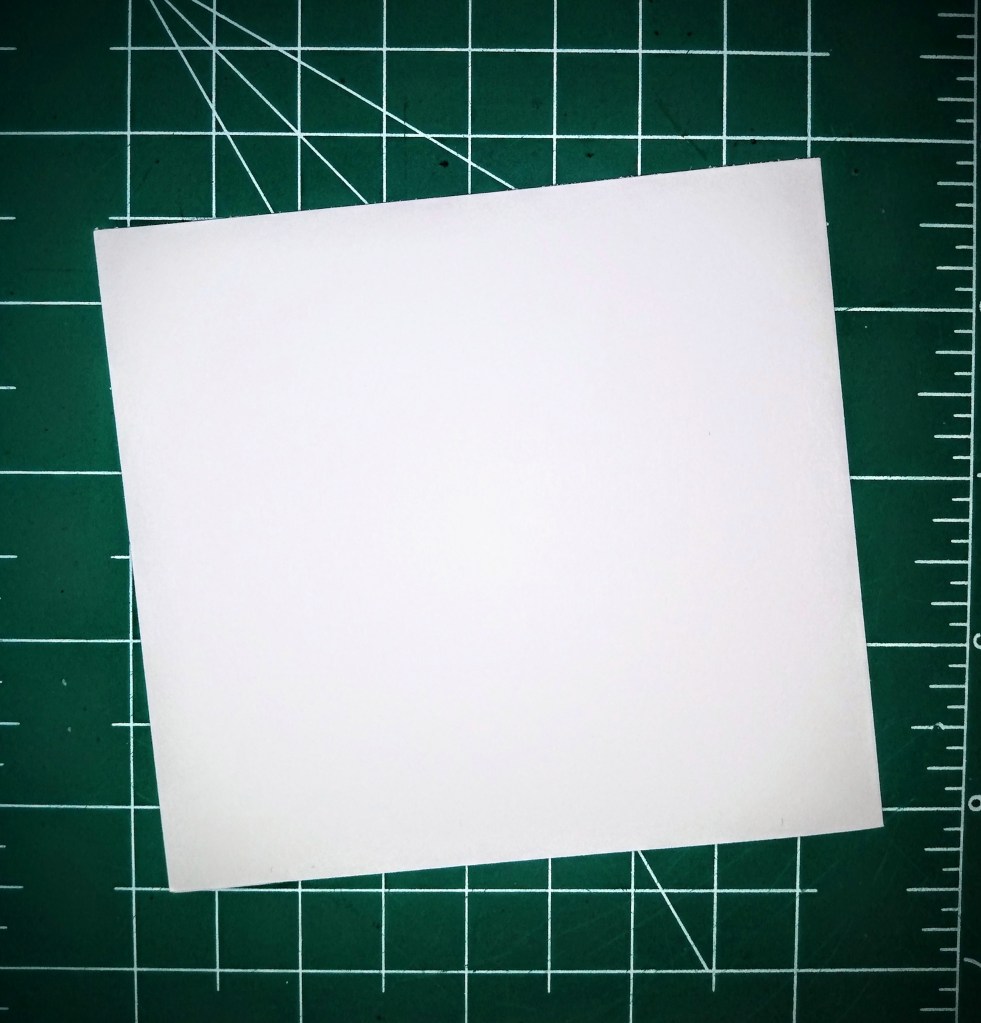
Here, I took a piece of 8.5 x 11″ sheet of card stock and trimmed along the short edge a strip 4″ wide. This strip I folded in half to make a blank card that is 4 x 4.25″.
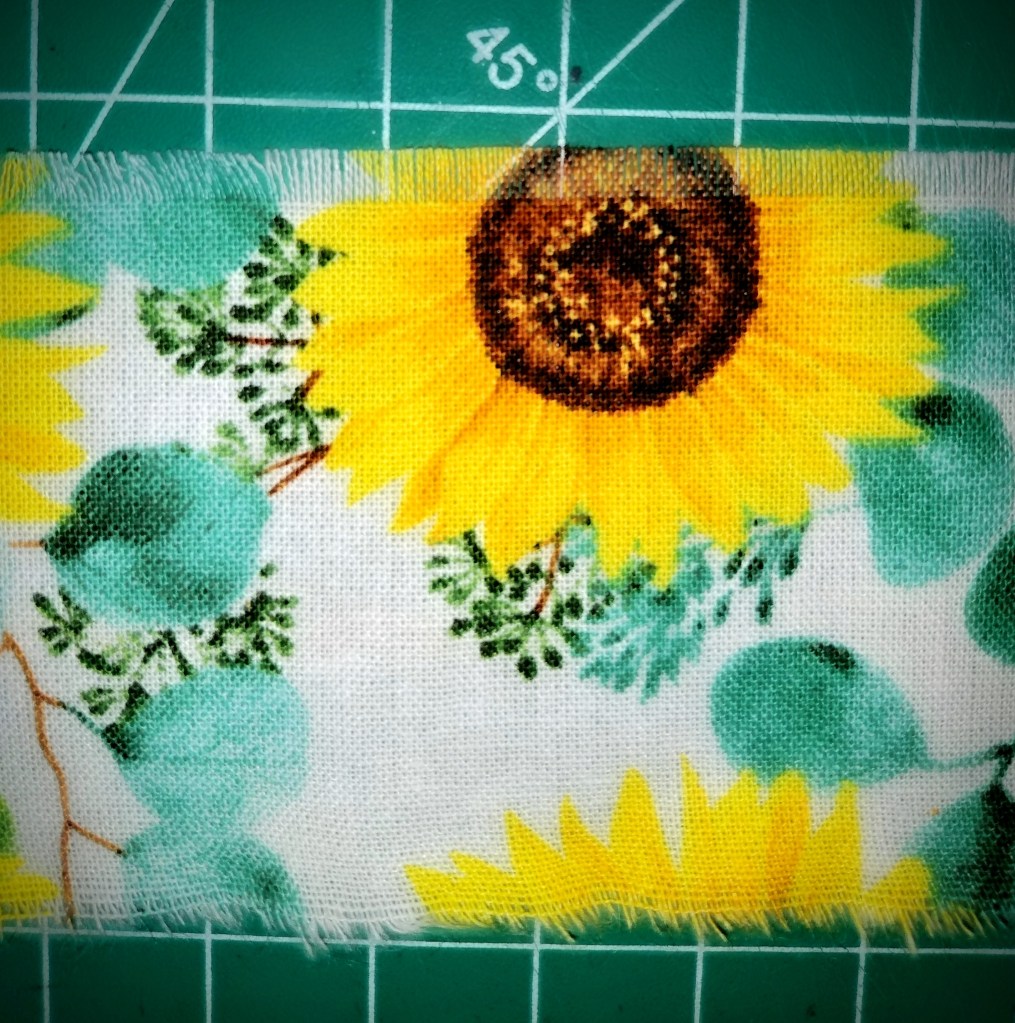
Using the left over sunflower fabric, I decided how wide of a ribbon I wanted to glue to the front of the card. You can be as precise as you want to be. I chose to wing it and just cut the fabric into a small strip.
This time I had to be careful about the edge because there’s no room for a folded seam. This fabric print looks good with a frayed edge, so I saved time by just removing the stray threads and embrace the fray. (As opposed to if I need to have a very clean edge and have to cut a straight edge.) Now the sides and bottom of the card need to have a straight edge, so I leave this ribbon large and will cut it down after I glue it to the cardstock.
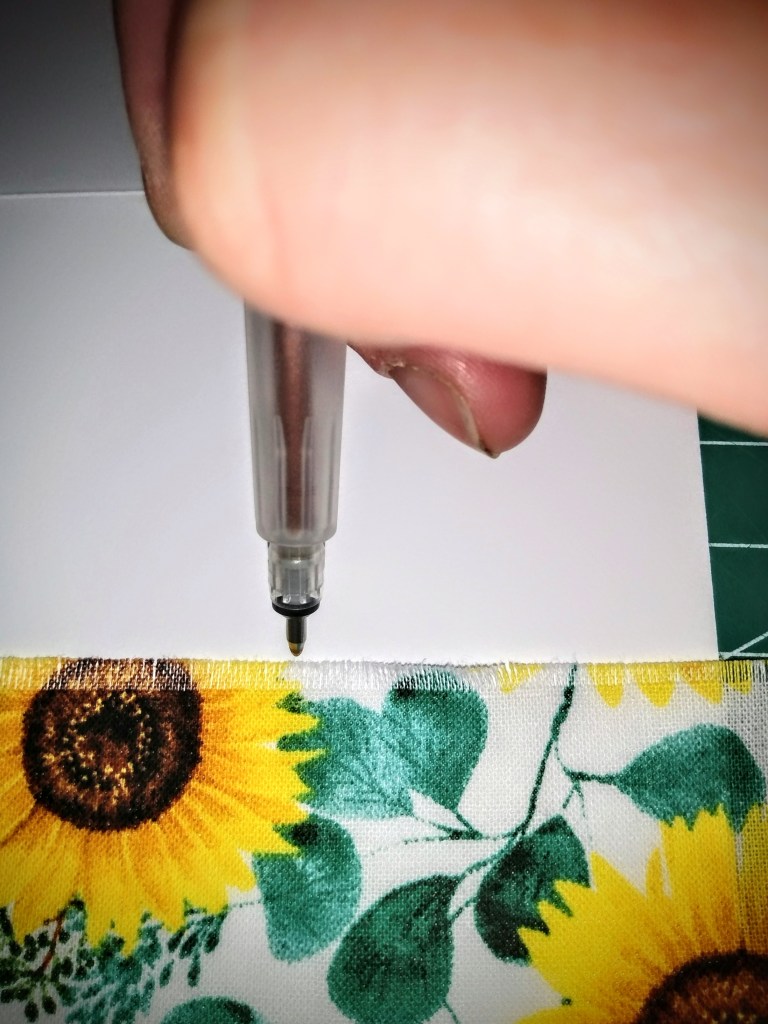
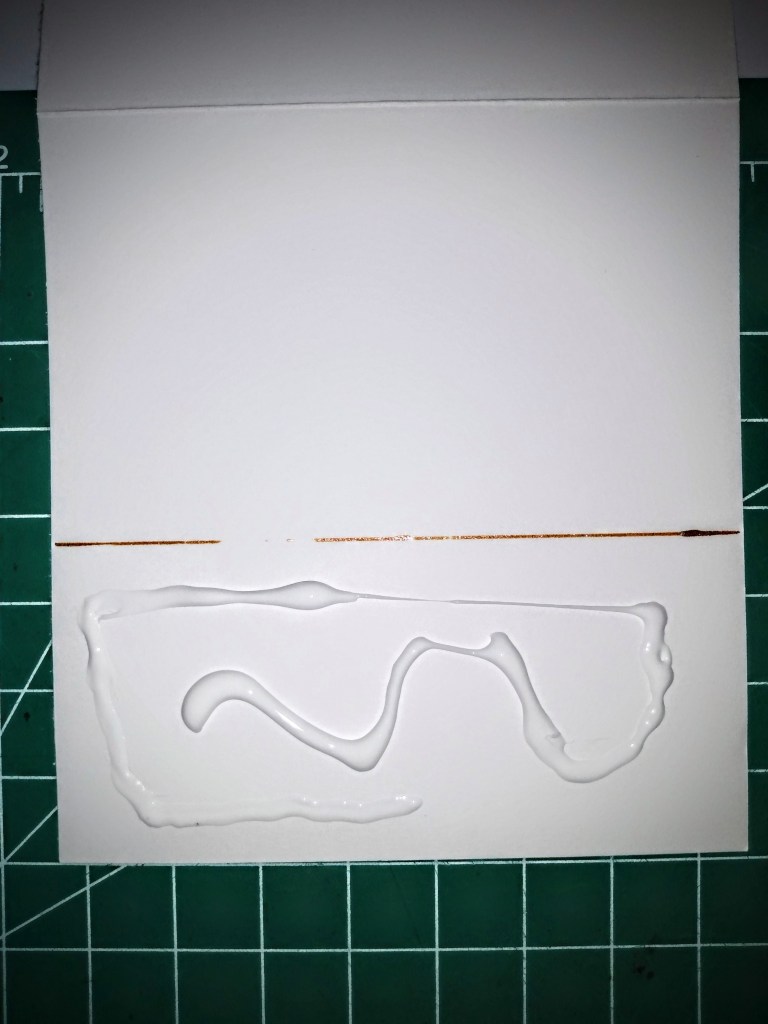
For gluing the ribbon down, you want to decide where you want to place it and mark off the area. You will need to liberally apply glue to prevent fraying on the card, so drawing a glue line is very important. Make sure that where you draw the line will be hidden behind the ribbon, so make sure the line is lower than where you want it. Apply the glue and spread it evenly across the whole section, even over the edges. If you don’t put glue on the edges, the fabric will lift from the cardstock.
Gently lay the ribbon on top of the glue and make any adjustments that you need. When you are satisfied, take a scraper or plastic card, place it in the middle of the ribbon and press it to the edge of the card. Then place the scraper/card in the middle and press down in the opposite direction. This will secure your fabric to the card and remove any air pockets that may have been present.
Now that your ribbon is secure, you can flip the card over. With a pair of scissors, trim off the excess fabric.
I trim from the back because I can see exactly where the edge of the cardstock is.
The blank card is now ready for you to write you message on.
By now, your pictures should be ready to pick up. Once you have them, you can place them in a picture frame and you’re ready to bag or wrap your present.
From this gift given, the part of the gift that meant the most was the blessing that I wrote inside the card.
In today’s world, a blessing spoken over another person is something that’s not talked about. But it’s the most powerful gift that we can give another person. And to have those words writing for the person you’re gifting to read over and over again is life changing.
If you are unfamiliar with a blessing, it’s what you tell someone that you see in them now, but you also what you desire for their future. Instead of “I hope you have a happy birthday” or anniversary, I tell the person what I want to see in their lives for this coming year or the years moving forward.
In a time where people are struggling to see their purpose in life, why they matter, the most important thing you can give a person is a vision of something to look forward to. And the best part about a blessing that you speak over a person is that it’s not something that can be bought. It shows the person that you see them, you value them, and that they have a purpose to live for.
Whether you’re looking for making a meaningful gift on a tight budget, don’t know what to give a person, need an impactful last minute gift, or any other reason, know that you can speak into a person’s life and it means more to them than anything else you give them. So no matter what your gift giving situation is, know that a blessing from you can be the most impactful thing that you can give another person.
Never underestimate the power of your words.
And don’t hesitate to gift a blessing!
Processing…
Success! You're on the list.
Whoops! There was an error and we couldn't process your subscription. Please reload the page and try again.
A few years ago, my oldest came home from school saying that he and one of his friends were BFFs. I asked him if he knew what that meant. He said, “Yes, mom, Bacon Friends Forever!”
I tried so hard not to laugh. He was serious. And it got me thinking about how no matter the culture people have always bonded together over food.
Today I want to talk about curing meat. If you are a non-pork eater (whether for religious or personal reasons) please stay with me here, because the curing of bacon is the same process as curing other meats. For example, Pastrami is made with beef using the same method (even with a different seasoning recipe). And you can even make Bacon using Beef as a substitute (there’s a recipe for this at the very end of the post).
The process of curing meat use to be common knowledge for all families before refrigerators were invented. In fact there are still many cultures around the world that still cure meat in their traditional ways. If you are interested in learning other methods 2 Guys & A Cooler is one channel that I follow. And what surprises me is just how similar all these other meat preserving methods are to making bacon.
Curing meats, in short, is the process of removing water from meat to make it shelf stable without refrigeration. This is done by using high amounts of salt.
The reason why salt works in preserving meat is because salt draws water out of the meat and creates a saline environment that makes the meat inhospitable to the growth of colonies of bacteria and mold.
Specific salamis are cured for a specific flavor brought from the controlled growth of certain mold. So, in this instance salt is the controlling agent to that mold growth.
I mention this before starting to show you how easy it is to cure meat because there are certain diets where it can be tempting to alter meat curing recipes. You need to keep the high salt content on order to not grow bacteria or mold on your meat, and making it dangerous to eat. There are methods to alter the saltiness of the meat later on in the curing process. So give me a moment, and I will come full circle back to salt levels.
Advertisements
Let’s Make Bacon!
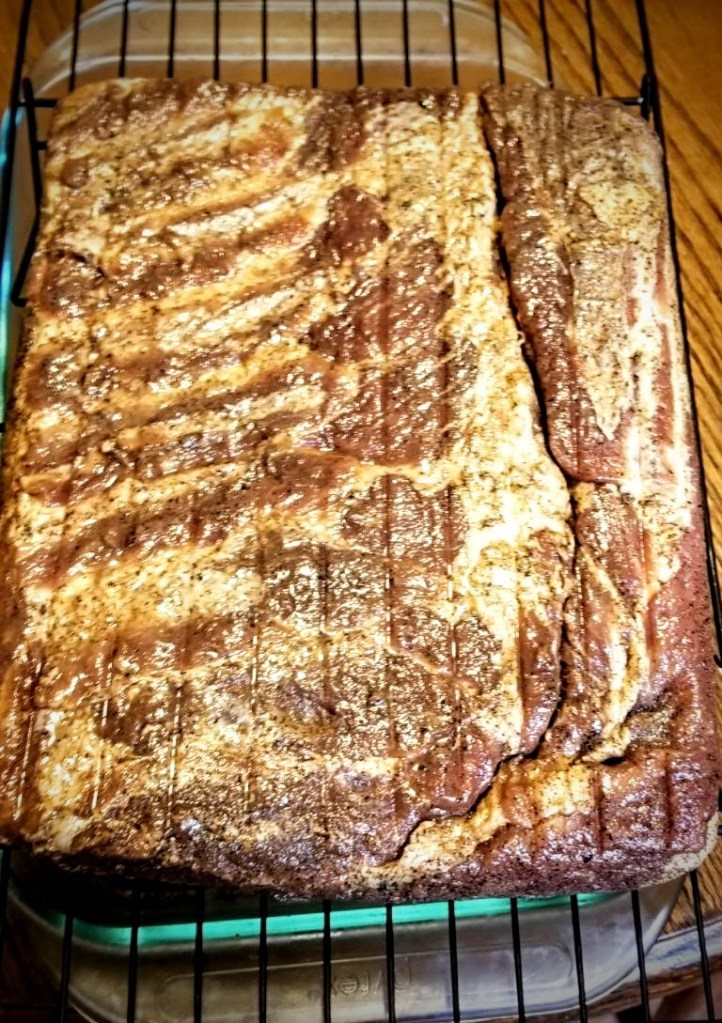
There’s many bacon recipes found all over the internet. My husband and I have tried at least half a dozen. And that doesn’t include the experiments we made in trying to make our own. None of them compare to the recipe made by Jess Pryles, which is our go to recipe. The easiest way of describing it is to think of your favorite grocery store brand and multiplying your love for it a hundred times. Or think of the best bacon you had in a restaurant, and this bacon turns out better than even the finest restaurant. That’s how much we love this recipe. So this is the one I’m going to share with you because it’s not too sweet, not too spicy, smokes without burning or sticking to your smoker/grill, and the level of saltiness is easy to manage for your preference–both at the beginning of the curing process and at the end.
This recipe can be multiplied in direct relation to the weight of the pork belly you are working with. See “Managing Saltiness” to see how you want to treat this ingredient as well as the pink curing salt.
Managing Saltiness
Before I move on to the process I want to briefly walk you through your first option of managing the saltiness of your bacon–or any cured meat for that matter. You have two options of salt to use: fine grain salt or rock salt.
Fine grain salt is your table salt, kosher salt, or any other salt that has been milled down to a fine powder. Because of how small the salt has been broken down into, the salt easily penetrates deep into the muscle tissue of the meat. This will give you a punch in the face saltiness level that you can further modify at the end of the curing process.
Rock salt is the crystal salt that you usually see in the store for sea salt or Himalayan salt. There’s a couple of other salt options out there that uses the crystals or rocks to put in your own spice grinder or mill. Because the rocks are obviously larger than the salt grains, it takes it longer for the saltiness to enter into the meat tissue. This process speeds up as the water is extracted from the meat and “melts” the salt crystal/rock. If you prefer cooking on the less salt is more spectrum if cooking, this is the salt you want to use. (I’m in this spectrum, so I always use this salt for curing meat.)
One more thing I want to address, before moving on to the process, is the pink salt ingredient. If you are nitrite or nitrate sensitive, you definitely want to leave out this ingredient. Pink curing salt is included in many recipes because it is preserving agent. Depending on how quickly you move (or don’t move) through a pork belly depends on if this is a necessary ingredient for you.
Without the pink curing salt, your bacon can be kept in your fridge for a couple weeks before spoiling. So if you go through a lot of bacon, that the pink curing salt really isn’t necessary. But if it will take you months to eat through pounds (however big your pork belly is) you will need to think of an alternative long term storage option, such as bagging up the bacon in your family’s serving sizes and storing in the freezer.
As a comparison note, we cured whole bellies with the pink curing salt, and life happened. We were unable to cook with the bacon like we thought we would and it took us almost three months to finish that batch. It’s instances like this where families might choose to use a pink curing salt. But making bacon has happened long before the manufacture and sales of pink curing salt.
Advertisements
Curing Container
There are a couple of different options you can go with when it comes to what you will contain your bacon in while curing. You can choose to use zip lock bags, closed container, or open container.
The open container is easy because everyone has one. There are a handful of drawbacks though. First, you keep the curing bacon in your fridge, so an open container leaves your meat vulnerable to flavor exchange with other foods. The bacon is also vulnerable to other contaminates, such as someone sneezing while looking in the fridge. And the water extracted from the meat gums up in the bottom of the container through the curing process.
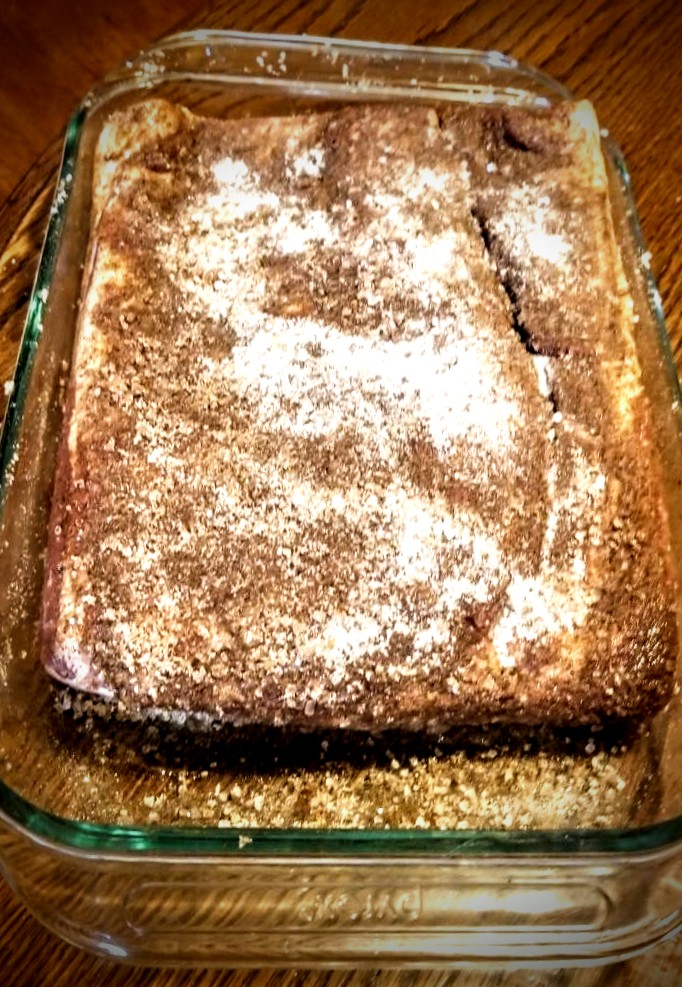
A closed container is by far better in regards that it prevents all the draw backs of the open container. Plus, if you are a family that eliminates or minimizes the amounts of plastics in your house, this fits in your lifestyle. But the drawback for the average home kitchen, is that you might not have a large enough reusable container for your meat to lie flat. I do have a Pyrex casserole dish (which has a lid) that’s the perfect size for a 5lb pork belly. However it comes out of meal cooking circulation for a week.
Both of these options are great for their own reasons. However it’s important to note that these two containing methods will require that you handle the curing meat by hand or other kitchen utensil such as thongs. So if you have any food handling aversions, this might be your determining factor.
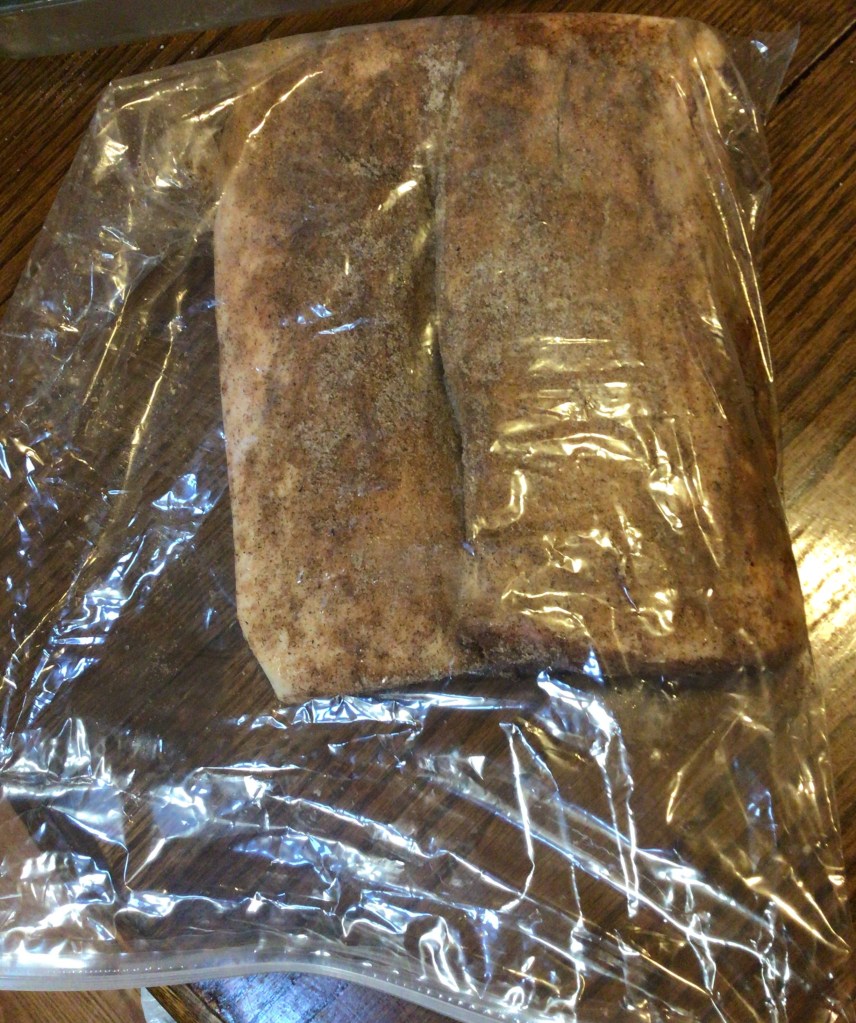
The other option is using plastic zip lock bags. You will have to cut the meat down to fit in a one gallon size bag. Or you can leave it whole if you have 2.5 gallon bags. This option gives you an automatic barrier for when it’s time to flip the meat and contain all the extracted water. It is also the most space saving method in the fridge, if space is the limiting factor. The drawback to this option is the dreaded bag failure. If the seal is not secure, you will have the extracted water leaking in your fridge.
If you are using a 3 lb pork belly, the 1 Gallon Zip Lock Bag will be large enough. We generally use a 6-9lb belly and need the 2.5 Gallon Bag.
This bag method has been my method of choice with littles in the house. It just minimizes the other potential could-go-wrongs that happen in a very active house where the kids love to help and be part of the cooking process.
The pictures you see throughout this post are from the bag method and closed container, but we have done all three. They all work. But the open container method also dries out the meat, so it definitely does not come out as tender as the other two methods.
The Process
Measure out your seasoning ingredients (in direct relation to the weight of your pork) and set aside.
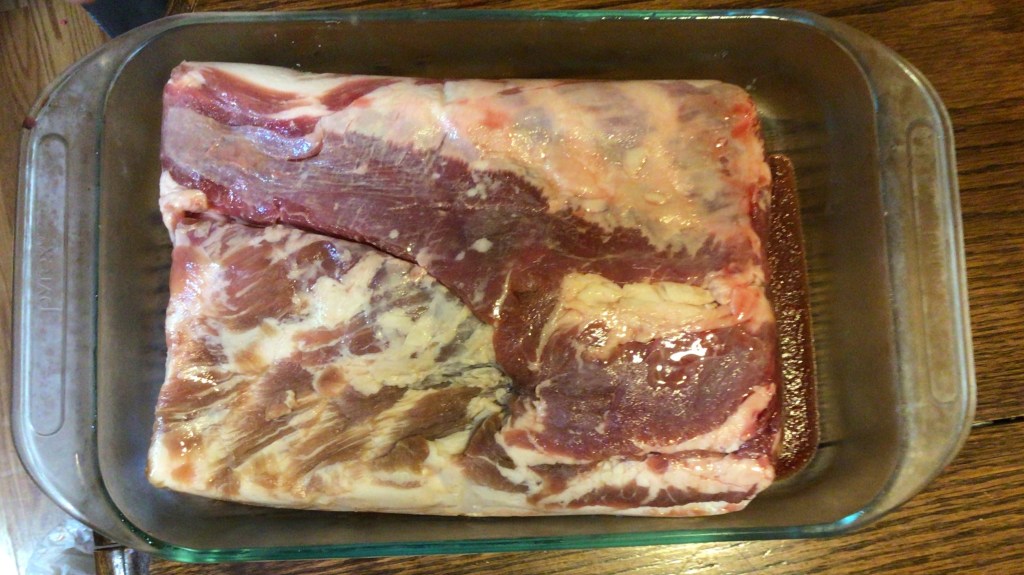
Remove your Pork Belly from it’s wrappings (whether direct from a butcher or from a wholesale meat provider) and rinse it off to remove any juices that it may have had in its packaging.
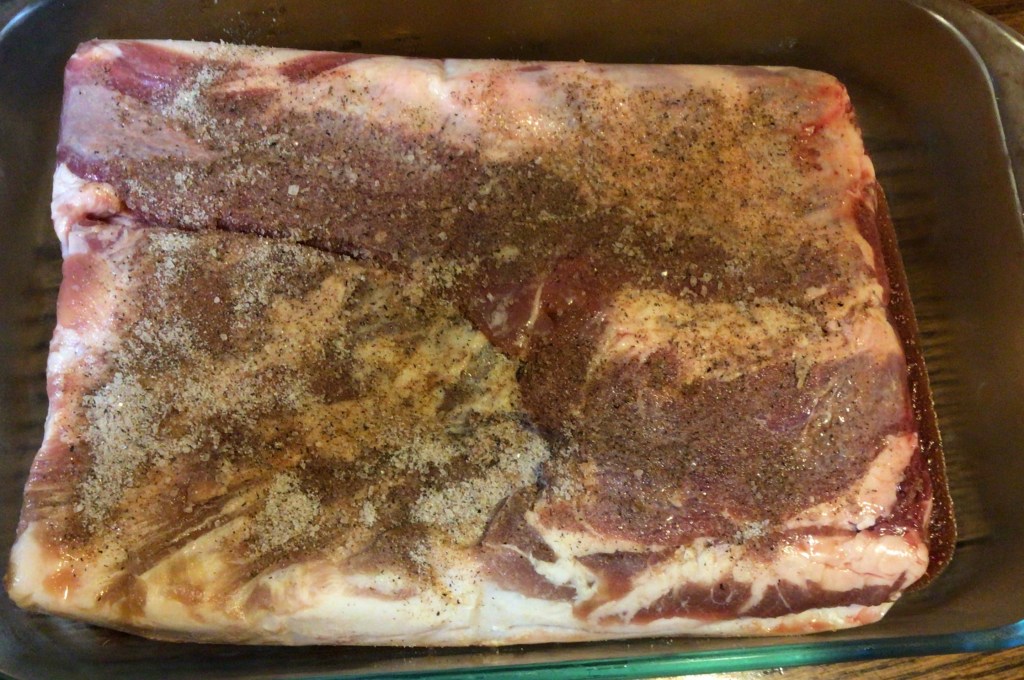
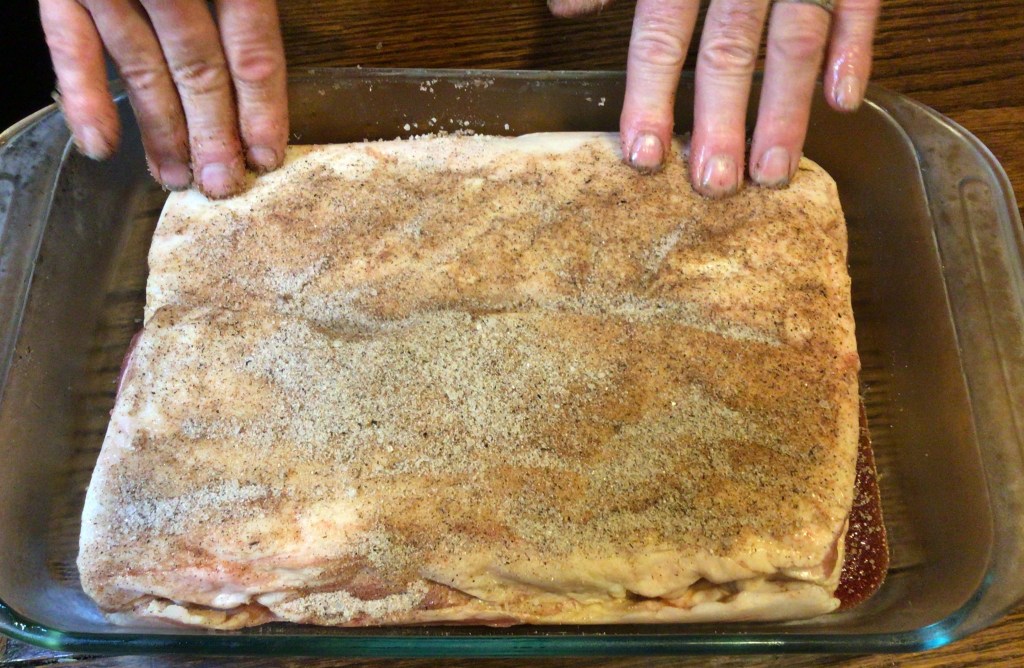
Season your meat with the seasoning ingredients, making sure that you have equal amounts on front and back, and all the ends. Be aware of all the creases in the meat and get the seasoning in there–the salt needs to be in here to make sure that all surface areas are covered in adequate salt. (If you are using the bag method, it’s easiest and cleanest to put the pork belly in the bag and season it in the bag. Seal up the bag once you’re finished.)
Close your bag/container and place the pork belly in the fridge.
For 7 whole days, flip the bacon over once in the morning and once in the evening.
Once the 7 days are up, can remove the cured bacon from the fridge or let it continue curing for a few additional days.
Remove the bacon from the bag/container and rinse off your pork belly. (See below for “Rinsing Advice”.)
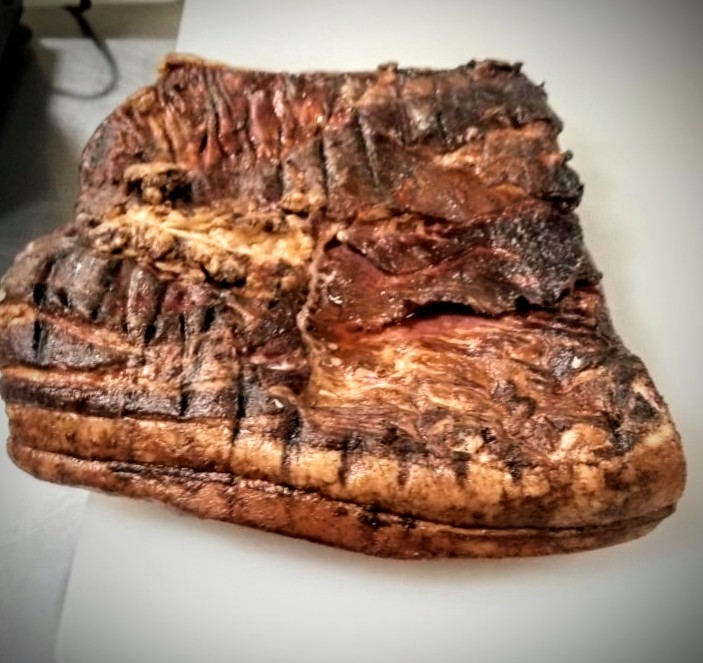
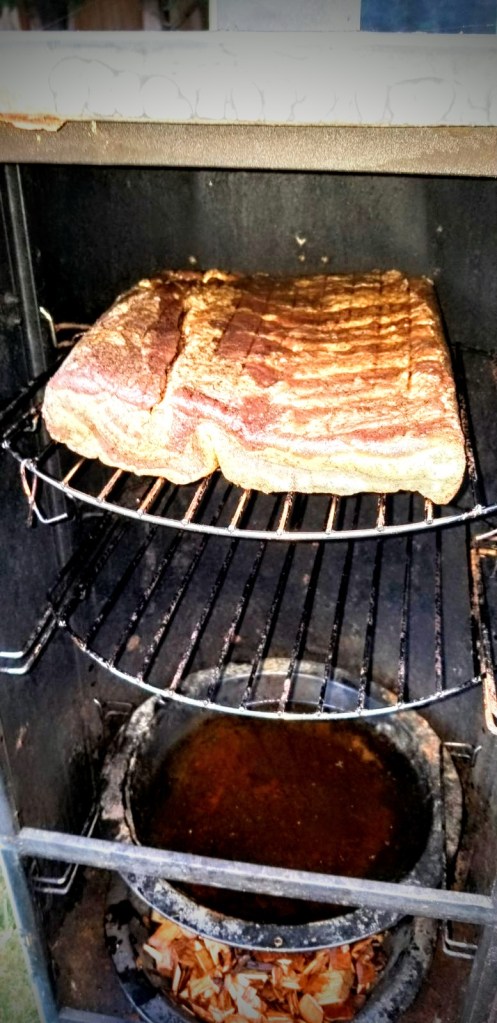
Now you will low and slow cook or smoke the pork belly, depending on what equipment you have available at your home. If all you have is your oven, set your oven on the lowest possible setting and cook the pork belly until you reach the internal temperature of 165°F. (See Below for “Cooking Options” to hear about the other ways you can cook/smoke the bacon.)
Once you’ve reached the correct internal temperature, you will remove it from the heat source and put it on a plate/tray and cover it with foil and let the pork belly come to room temperature. (See “Tenting Options” below.)
The room temperature pork belly can now be put in the fridge overnight. (See “Cutting Options” below)
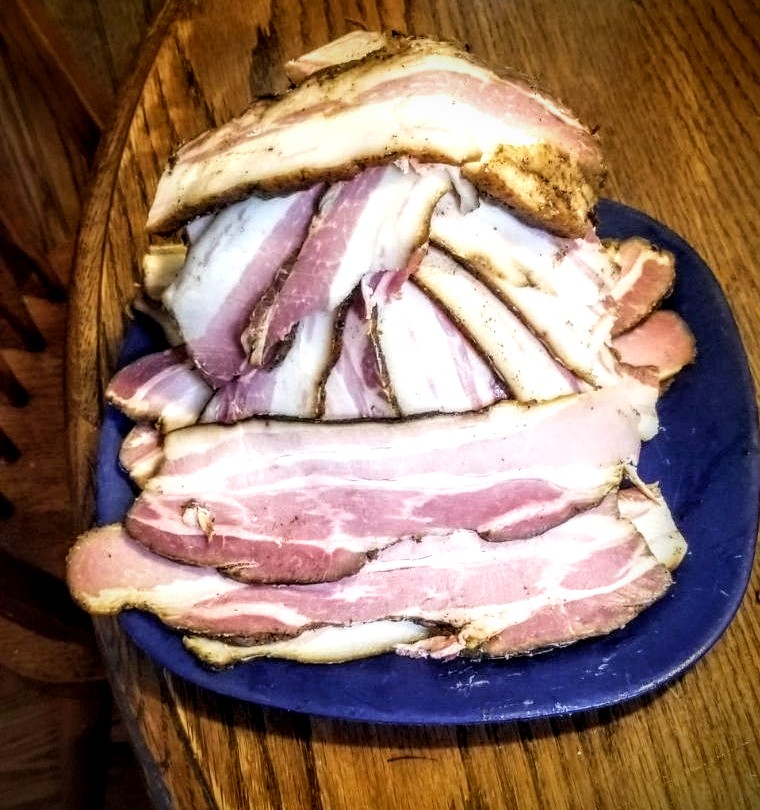
Slice the pork belly into the thickness of bacon you prefer, whether thick or thin.
You now have bacon!!!
Use this bacon just as you would with the bacon you’ve previously purchased from the butcher or local grocery store. If you are anything like my family, you will turn into a bacon snob and prefer the slices that you made over the store bought ones.
Rinsing Advice
This rinsing stage is going to look a little different for you depending on what type of salt that you chose to use.
As I mentioned above, my family likes the rock salt because we lean to the savory side of the food world, instead of the salty side. A generous rinsing off of the curing seasoning will leave a mild saltiness to it. A quicker rinse off is the maximum limit of our salt preference, but the starting off point for some of our family members.
If you choose to use a fine salt, a quick rinse is going to leave you with a salt bomb. (I did this once and that bacon was quickly reserved for soups and stews, and I don’t add any of the recipe’s called for salt. This bacon took care of the salt seasoning for the entire dish.) A generous rinse is what I consider a salt lover would prefer. But if you’re like our family of salt-less-is-more camp, but only have fine salt, I recommend filling a large bowl with clean water and letting the pork belly sit it for about a half hour or so. This is not going to undo the curing at all, but it will keep you from puckering from too-salty.
This is one ingredient that no one can tell you how to handle it, because everyone’s preferences are going to be all over the spectrum. So hopefully this section helps assists you in making salt choices that reflect your personal seasoning preference.
Advertisements
Cooking Options
We have cooked our pork bellies on our Traeger Grill and in a proper smoker. Both of these other cooking sources are great options, but our personal favorite is the smoker.
When it comes to grills, whether charcoal or propane, you want to use indirect heat. Even on the lowest setting/heat, it’s going to cook your bacon. This step should take no less than 3 hours. We are talking low and slow. And if you want to add that element of smoke flavor to your bacon, you can use a smoking chamber on your grill, like the one I have a link to below.
If you have a Traeger, or other grill that is a combo smoker, you want to keep your grill on the smoke setting and let the smoke cook your pork belly. It’s been a while since my husband smoked bacon on our Traeger, but he remembers it taking about 3-4 hours. Remember, this isn’t about time as much as it is about reaching that temperature of 165°F using just the heat from the smoke.
My husband loves the smoker that he found on a community “Free” page. This one allows you to customize your meat smoking experience better than a smoker/grill combo unit. His advice for using this cooking option is to soak your wood chips. At a bare minimum you soak them for 30 minutes, but 30-60 minutes is good. And in my ear, my husband is saying, “Do not soak grill pellets!” You definitely want the wood chips. And even with soaked chips, you still want to keep a tray of water in your smoker with your chips and meat. It keeps the humidity just right to keep the juices in your bacon.
The other advice that my husband popped in to give, is that if for whatever reason your pork belly just won’t come to temperature don’t worry. All you have to do is put it in your oven (lowest setting) and finish cooking it to 165°F.
Tenting Options
While this step can be omitted, you might consider to keeping it in your procedure. The tenting helps keep the steam in, instead of evaporating away while it cools down. My husband advocates that this is the secret that keeps his bacon from drying out.
If you want to tent your bacon but don’t want to use foil, you can use your lidded container (just don’t seal it).
Cutting Options
Here is where my husband and I have a slight difference of opinion. I have absolutely no problem slicing my bacon by hand. I’ve been slicing sandwich bread for over 3 years now, so I have a steady hand for this sort of thing. My husband prefers a meat slicer. Knife or machine, I’m an advocate for using what you have on hand.
We both do agree that letting the pork belly rest over night in the fridge is a huge step in your favor. If you slice your bacon at room temperature, you will more than likely find that it shifts on you and your blade slides out of place. By cooling the pork belly over night in the refrigerator, it firms the meat up and makes the slicing that much easier.
Why is it important to cure the pork belly for 7 days?
Depending on who you talk to, or where you look up information, you’re going to find a wide spectrum of curing time as an answer. But before I answer this question I want to make sure we’re on the same page about why we cure meat, in this case bacon.
All throughout history meat has been cured to preserve meat in a time before refrigeration was invented. In fact, many countries today still depend on curing to preserve meat. The enemy of meat (and food in general) is exposure to water, light, and heat. These three things degrade food, promote bacterial growth, and increase the chances of food borne illnesses. Salt is an amazing ingredient, because it changes (in this case) meat in such a way that water is removed and it creates an environment that bacteria does not like or live in.
In fact, in another scenario, I have the perfect example. The yeast that I use to make my bread, when I neglect it, starts to grow bacteria. The whole yeast culture is thrown off and smells horrible. However, this is the culture of wild yeast starter. You have a community here. When the community gets out of balance you have to make changes to bring it back into balance and make the community happy again. Salt does this. I toss in 2 tsp of salt into my out of balance starter, give it a good stir, and by the next day all is right in the world of my wild yeast starter. What happened? The salt changed the environment of the starter. The bacteria became unhappy and quit reproducing. Mean while, the yeast became happy and began to populate again or recovered from its illness (or however you want to look at it.)
Now a pork belly is so much larger than my quart size mason jar of yeast starter. It’s a thriving metropolis in comparison. It takes much longer for salt to infiltrate that pork belly and withdraw the water content of the belly. It takes time for the meat to cure and stabilize itself to withstand the threats to food preservation.
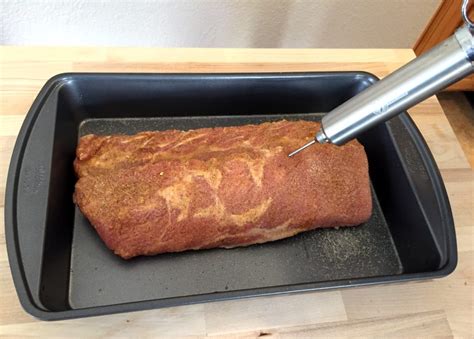
I saw one site say that it takes up to 24 hours to cure bacon using their method. The difference is that they have to inject the salt in deep throughout the pork belly. This method is not using an injection method. It is the meat bringing in the salt, and the salt working its way into the center of the belly. This takes time.
any2ndnow.com
There was another site that I saw claim that it only took 3 days to reach a “mild” cure. Food science being science, either it’s cured or it’s not cured. Cured meat is a process. It is a method. And the proof is behind the results on how the meat holds up over time. There’s nothing wrong with making salted pork. It doesn’t make it cured. It just means that it has a higher salt content that the meat that you pull out of your fridge or freezer. Please, let’s just call salted pork by its rightful name.
Can bacon be cured longer than 7 days? Absolutely! It’s not going to dry your pork belly out unless you’re using an open container. But that only happens because your fridge naturally evaporates water out of food that is left in there without being covered.
And let’s just be clear that evaporation or dehydration is not curing. Dehydration/evaporation is one method of preserving that is purely unique. Curing is an entirely different method of preservation, unique to itself. Every method has its own rules. Anything that doesn’t follow the rules is a different method for a different purpose.
I wanted to mention all of this because there were some friends of ours that we walked through the steps of how we cure our bacon. They stopped the curing step at three days and didn’t find the results that we said they should expect. There’s a couple of reasons why their first attempt of curing bacon didn’t turn out, so I can’t write definitively here what went wrong. I do know that we had shared from the same pork belly and the bacon had turned out with the above method. The two biggest suspicions I have is that not all the cuts and groves in the pork belly so the majority of the belly was working on becoming cured, but there were spots where bacteria had the opportunity to grow because the salt wasn’t there to make the meat an uninhabitable environment.
The other big potential of what went wrong is that the salt did not make it into the center of the meat. This is an important issue because remember, we are cooking low and slow. And since the center of meat is the last place to “cook”, this becomes a prime breeding ground for all sorts of potential food problems because salt wasn’t there to keep in check bad cultures. This then comes into realm of poor food handling.
I know that it’s tempting to take short cuts or speed things along quicker than described. We’ve all been there, especially when we’re excited to try a new skill and have great expectations. Please know that no matter how tempting it is, curing meats does take time. It can’t be rushed. And if you don’t believe me, you have to check out the link I have below for 2 Guys & A Cooler. They have amazing methods for making so many different cured meats that I can’t wait to get cracking to try. And what you see there just confirms what I’m saying that great meats take time.
Advertisements
Here are other recipes you may be interested in.
If you’re looking for a Beef Bacon (bypassing the pork all together), this is the recipe that I recommend. Disclosure, I have not tried this recipe yet. But this is the one that I have on hold for when I make that plunge.
If you’re interested in a Pastrami Recipe, this is the one that I have bookmarked.
2 Guys & A Cooler is definitely worth subscribing to if you’re looking at many other ways of curing meat. This link takes you to their video on making Biltong. I like their presentation because it all makes sense after making our own bacon for several years now.
This post contains affiliate links to products. We may receive a commissions on products purchased through these links, but at no extra cost to you. These items listed here are from Amazon but may be purchased at local markets.
If a smoker is not in your budget, this might be the tool to meet your needs.
Happy Mother’s Day to all the moms who are celebrating today with their children, the moms who are missing their children, the moms who have lost their babies far too early, those who shared an all too brief moment with their babies, the mothers who are in the middle of a season of making the dream of motherhood a reality, and those who love on the children from other mothers who lean on you to be the loving assurance in this season of their life. No matter what motherhood looks like to you, Happy Mother’s Day!
Depending on who you talk to, some people feel that holidays are too commercialized. Others find it difficult to find the perfect gift. And others find it difficult to gift a loved one while feeling the financial pressures of this season of world history. No matter where you personally find yourself on this spectrum, I want to help you find inspiration on how you can find a meaningful gift for someone. Whether it’s a belated mother’s day present, a birthday, anniversary, father’s day, grandparents’ day, teacher appreciation, graduation, or any other occasion, know that you can gift in a meaningful way.
I’m going to use the example of the mother’s day gift that I gave one of the mothers in my life. While this may not apply to the person in your life, the same principle can be applied in finding what you can gift that special person in your life.
This mom loves talking about her memories. For many years she’s shared her precious memories of when she operated a daycare. And one of those fond memories is when she grew gardens with the children under her care.
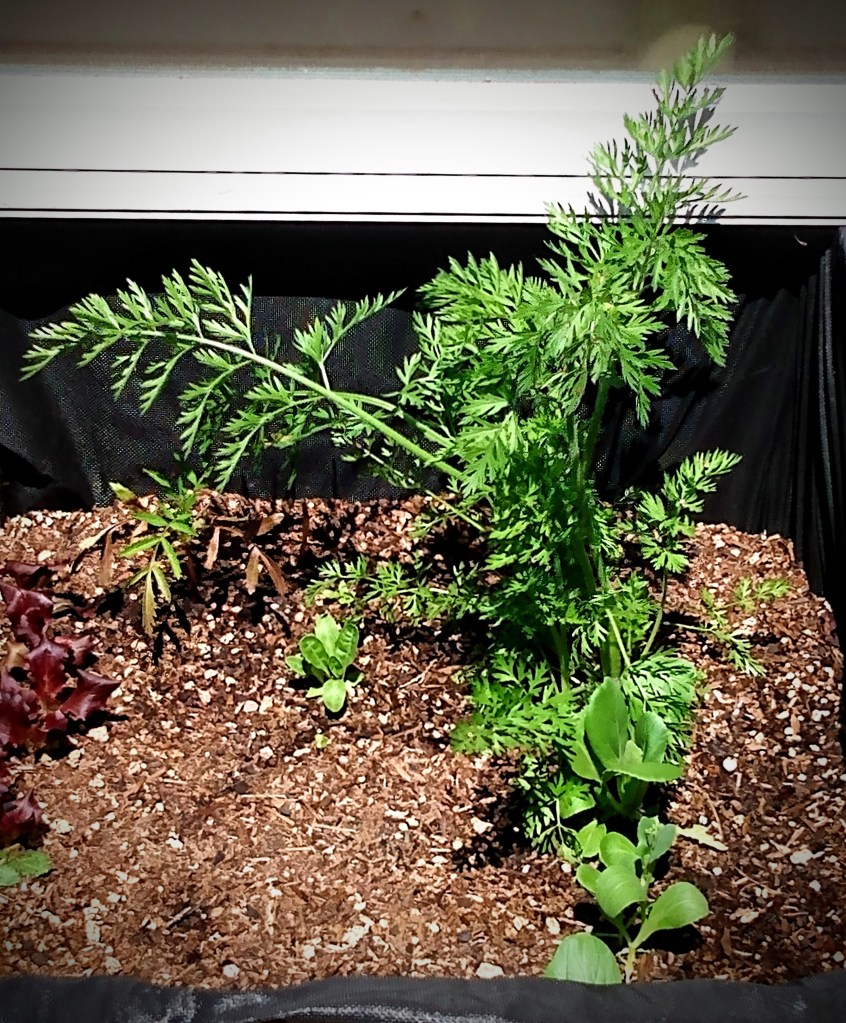
Growing salads in a container box.
One thing about moms, it seems pretty universal that sharing memories usually isn’t about the memory. It’s about reliving a moment in life that brought pleasure to them.
From this understanding, I knew that building a garden for this mom was a gift that would fill her love tank. Not only is it an opportunity for her to relive precious memories in the here and now, it also opened the opportunity to add more memories in association with these older memories. By building a garden and scheduling time to upkeep and tend to the garden, it was also guaranteeing visits and making time for her to spend time together.
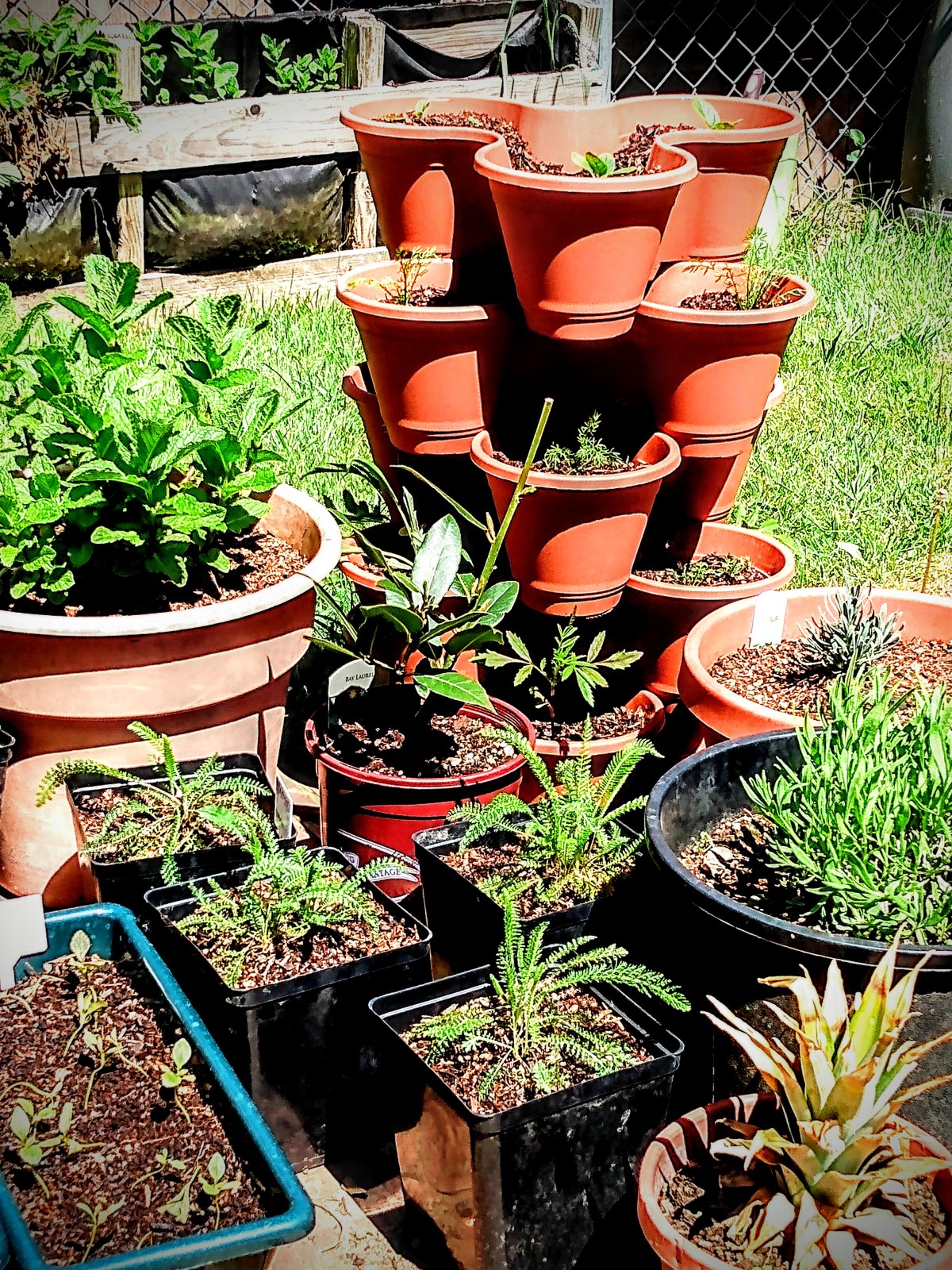
Container growing for small spaces.
For this mom, she has two love languages. Her primary love language is gift giving. Her receiving love language is quality time.
Making a deposit of part of this season’s garden was not just a simple arrive, dig holes, put in start, say good bye, and move on with the day.
Advertisements
For this Mother’s Day gift, it took in the appearance of leaving all the gardening supplies in the car and starting off with a sit down chat and getting caught up with all the news, even if it was only a day since we last saw each other. Then, I was able to go prepare the garden beds for this first plant installment.
Even before I could bring out the plants, this mom was already so filled with love that she wanted to spend some more talking. As much as I wanted to stay task driven (my personality is to knuckle down and get a project done quickly so I can move on to the next task), this day was all about showing love to this mom.
Pallet boxes for narrow spaces and hanging baskets on cyclone fence
So we had another chat session.
When I could find a polite moment to get back to the task of putting the starts back into the ground, I made that move. And with the final post plant watering, I went back and gave this mom one last extension to the gift I was giving her.
Remember, I said that this mom shows love to others by giving to them. So while I was building this garden for this mom, I know that the one thing that would bring her even more pleasure is by telling her upfront that the goal of this garden is primarily to meet her primary produce needs, I’m planting more than she will personally need so that she can give from the garden to others.
I wish I could share with you the look on her face, because she was bursting with love. Knowing that she was having a garden this year was more than enough to help her feel love, she felt seen and more loved because the gift was enabling her to show love to others without need to be reserved or anything else. It was a gift that was freely given so that she could freely give to others.
Growing herbs in repurposed gutters hung on a cyclone fence.
I know that this story may or may not show you specifically what you can give the hard to shop for person, but there is a valuable lesson here.
A good gift is designed to make a person feel loved because it speaks to how they most readily feel loved.
If you don’t know this love language, ask your person how they most feel loved. They will gladly tell you. It could be a tangible object or food that makes them feel loved. Or it can be a non-tangible activity, expression, or display.
A great gift is one that fills their love tank, but also doubles as a tool to enable them to share their love with others.
Container growing garden with DIY budget friendly or recycled components. Chicken wire trellis threaded through upright supports.
Maybe your loved one is not like this mother. Maybe they don’t show love to others by giving them things. Maybe they show love through acts of service. However their schedule is busy. By gifting them your time to do tasks for them or help them create time, this can free up time where they can show love to others by spending time with another person.
My encouragement to you today is to be inspired with a gift idea that doesn’t come from the shelf of a store. Yes, there are many store bought items that are amazing and meaningful. I want to strike the inspirational fire to give a gift out of love and seeing the other person at a core level. And also enable them to pass on love to others.
Advertisements
Right now we live in an interesting moment in history. It is an uncertain time for many families. But it is also a prime moment to celebrate others by giving to them in a way that shows them that you remember past conversations. Where you have heard and remembered things that could have easily been passed off as trivial information in the moment.
Let’s show our loved ones that we see them. And we celebrate them for who they are.
Again, Happy Mother’s Day!
publicdomainpictures.net
This post contains affiliate links to products. We may receive a commissions on products purchased through these links, but at no extra cost to you. This item link is to Amazon but may be purchased at local markets, and found at your local library.
If you are unfamiliar with Love languages, here is the book that started it all.
Originally this was written for understanding your mate. There are several other editions available to meet other relationship needs such as children, being single, and in relationship of a military service member.
Processing…
Success! You're on the list.
Whoops! There was an error and we couldn't process your subscription. Please reload the page and try again.
There’s one skill that I’ve wanted to learn from a friend of mine, incorporating mason bees into my garden.
Here in North America, mason bees are the indigenous bee. They pollinate 45 times more than honey bees. And if you have young children, you don’t have to worry about there being an altercation and your child (or pet) from being stung. (We’ve been teaching our kiddos about bees because one day I want to have honey bees for honey production. So they already know what’s expected of them when it comes to our pollinating friends.)
I can’t even begin how excited I was when I received an email from a family locally owned hardware store that they were doing a craft for Earth Day, which involved making a home for mason bees.
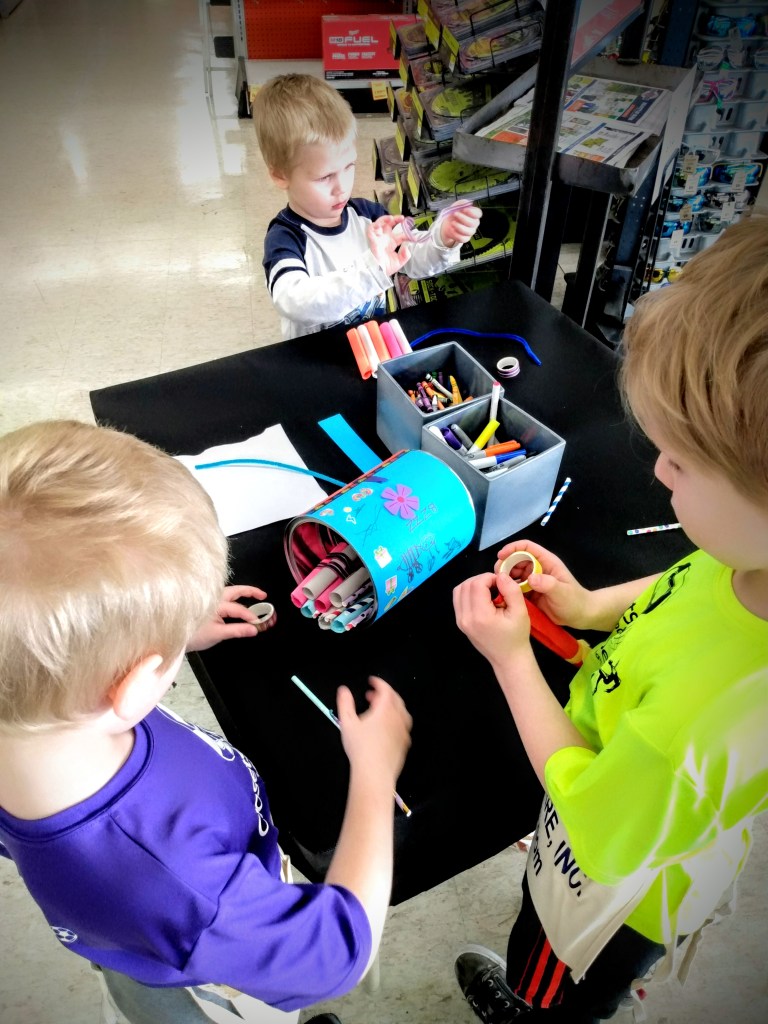
Today I’m sharing with you the process that my kiddos went through to make a home for mason bees.
We were instructed to bring a soup can or cardboard milk container. The hardware store supplied the craft materials to decorate and make the bee home.
All my milk cartons still had milk in them and I haven’t bout soup in a can for well over a year now. What I did have available was an empty ten pound can. So if you don’t have a small can, know that it’s possible to make a home with a larger can.
Things you will need:
(Feel free to modify with the materials that you have on hand.)
Milk carton or soup can
Construction paper (printer paper, non-toxic colored paper, recycled paper, whatever you have on hand)
Tape
Straws
Cardboard tubes: toilet paper or paper towel (optional)
Corrugated cardboard (optional)
Scissors
Glue
Stickers (optional)
Twine
Pens, crayons, or other decorating medium (optional)
Advertisements
If this is a kid’s project you’re setting up for, cut all rolled paper and straws to the length that fits from the back of the soup can to the front.
You can even prep other materials for your bee house. If you have scrap blocks of wood, you can several holes through the block.
I don’t know what you have in surplus in your craft room. But I have many wine corks that have been waiting for just the right project. When I get a free afternoon, I’ll make an adult version with rolled cardboard, drilled scrap wood blocks, and my collection of wine corks that will also be drilled.
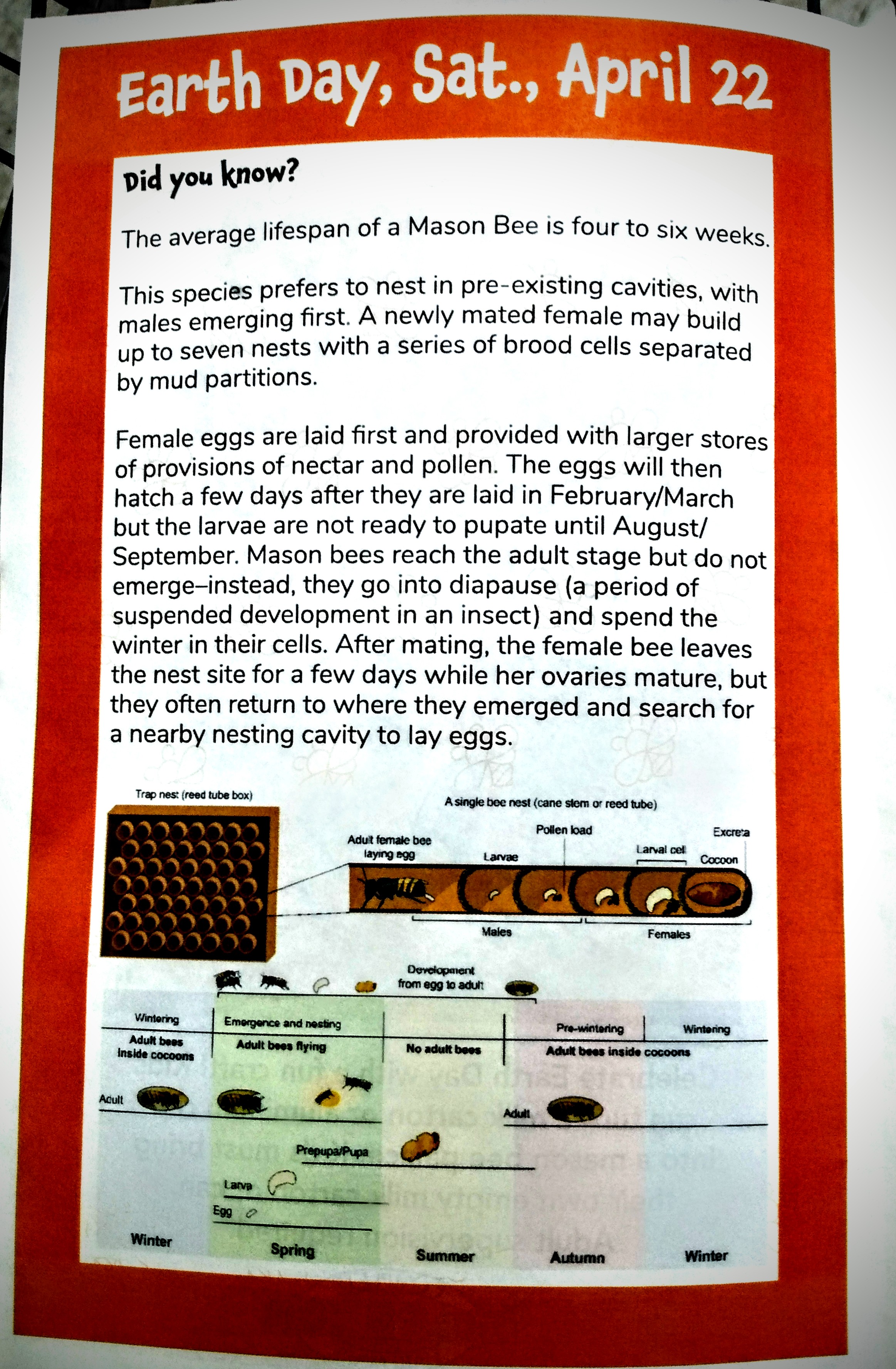
Here are some additional bits of information about mason bees, if you are unfamiliar with them.
Here is another resource to get you started on your path for creating a home for mason bees. If you want to buy mason bees to start your bee colony, I found this site which is still selling until May 22, 2023. They have a bee info page that can instruct you in how to care for mason bees to make sure that they remain healthy and happy.
If you’ve watched the movie The Pollinators (2020), then you understand the need to help support our local pollinating community. If you haven’t seen this documentary yet, it’s worth the time to understand what it going on with the bee population in the United States. And if it’s happening here, it’s very likely happening in other places.
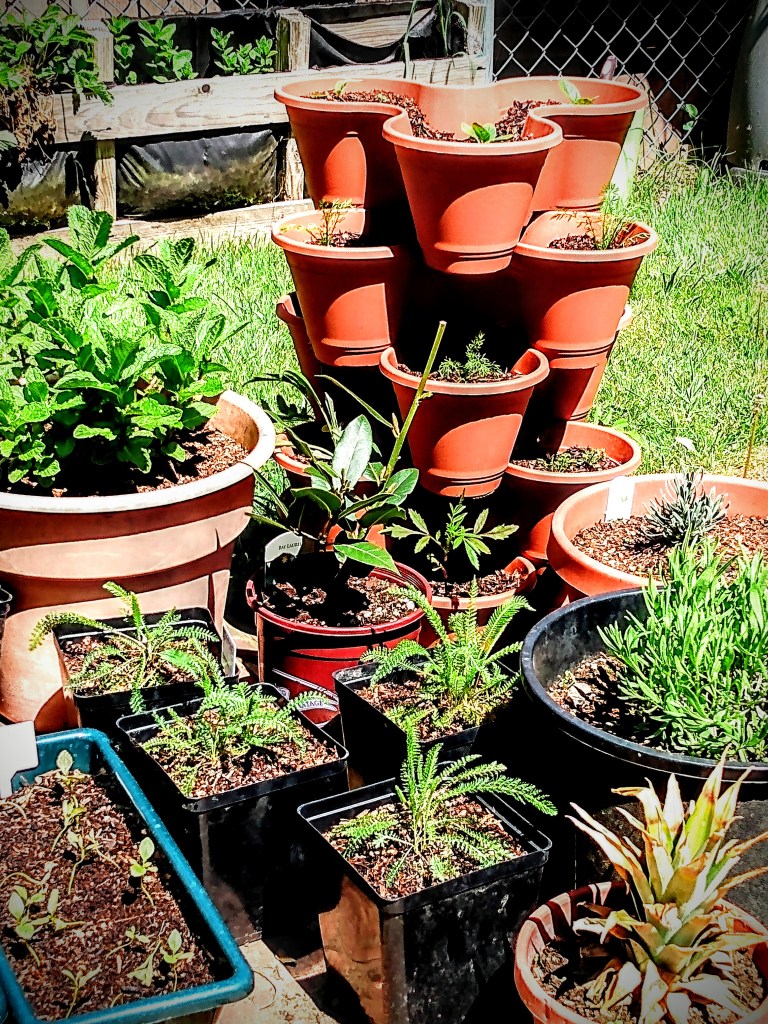
Last year (2022) was a bad growing season in the Pacific Northwest (PNW). To this day I still believe with my whole heart that the bees were what made my garden successful, when others in my local community found only hardship. So for my gratitude, I already planned on adding more flowers to my garden as well as being a more hospitable home for my pollinators. With that being said, I will leave you with the pictures of my family. And once the weather clears, I’m going to examine closely where our best place of hanging this mason bee home is going to go.
Happy Earth Day!
Processing…
Success! You're on the list.
Whoops! There was an error and we couldn't process your subscription. Please reload the page and try again.
The one thing about approaching holidays is that you really get smacked in the face with everything that needs to be done.
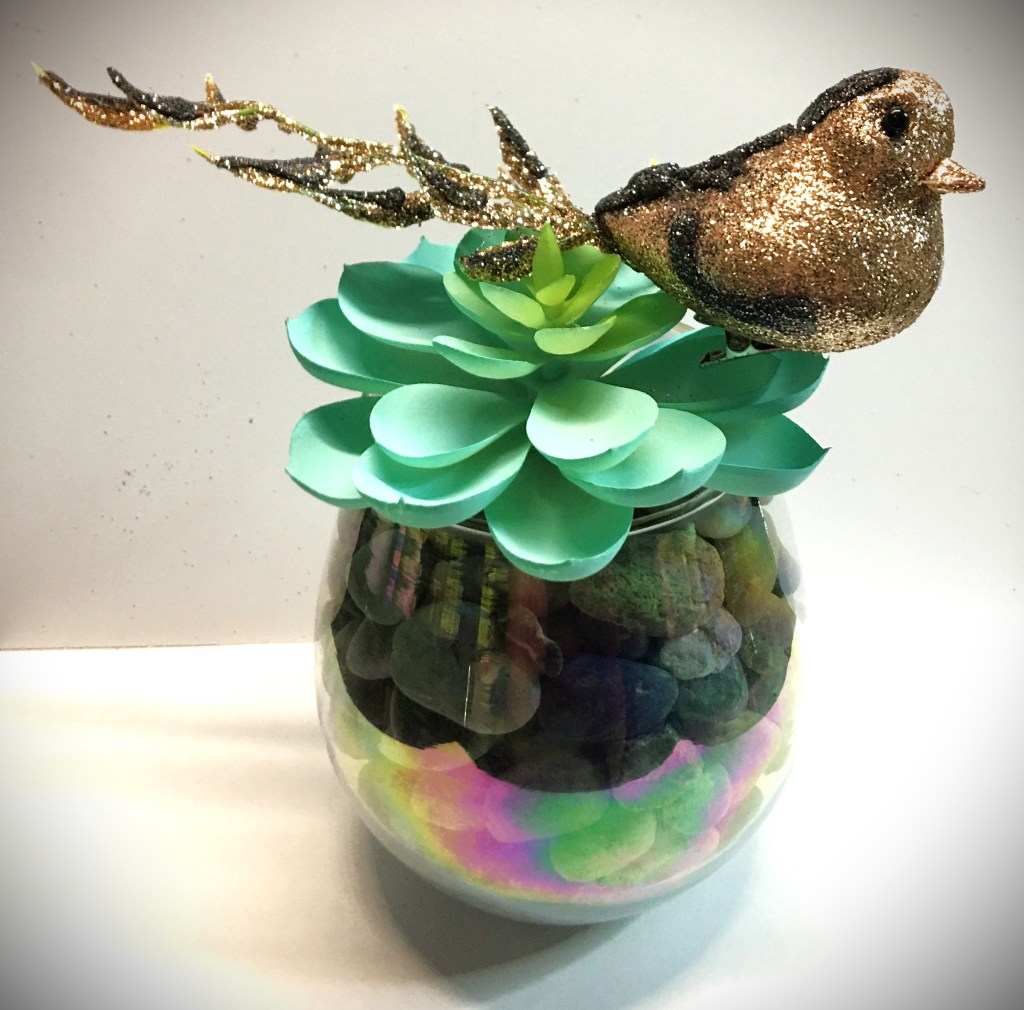
Whether you’re decorating sideboards for an Easter get together or just looking for something quick that fits in a space as small as a window sill to add a little color before spring finally unfurls. This quick craft is for you.
What you need:
1 Stemless Wine Glass
1 Bag of stones 18 oz/794 g
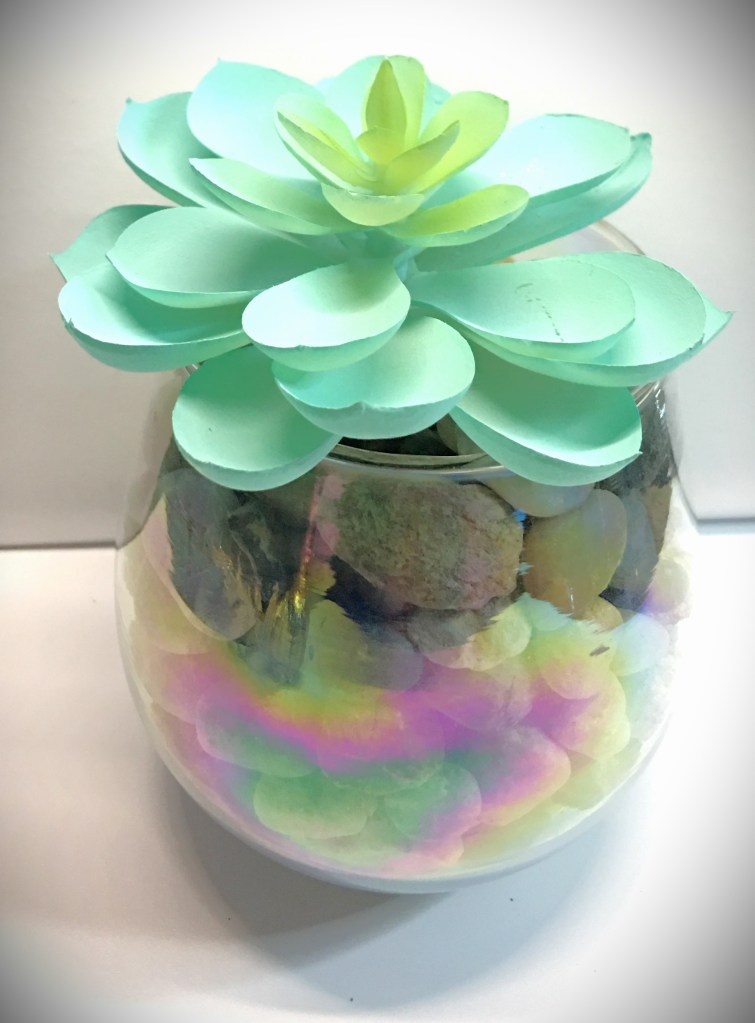
1 Faux Succulent
Any other accent piece that you would like to add (I chose a glittery bird)
Glue Gun
Accent Glitter
5 Minute Version
If you just want to toss something together, all you need is the glass, rocks, and succulent.
The succulent that I chose had a very thick stem. Because it was sturdy, I could pour the rocks in the glass and push the succulent stem into the rocks and moved on. (If the rocks have resistance, give the succulent stem a little swirl and it will sink right in.)
For whatever reason if the succulent just does not want to go into the rocks, never fear. Pour out the rocks with the exception of some in the bottom (or the level that you can easily push in the succulent). Then lift up the leaves on one side (and then the other) to add the stones in, around the stem.
Want to use real succulents?
You can do this using a real succulent of your choice. Make sure you verify if the succulent you want to use can life in rocks or if it needs cactus potting soil.
If your succulent needs soil, but you prefer the look of the rocks showing through the glass, you will need to take a little extra time layering the rocks outside and putting the soil in the center
Advertisements
Ten Minute Version
Follow the directions for the 5 minute version to get the glass filled and succulent set. The remaining time is dressing up accent piece that you are adding.
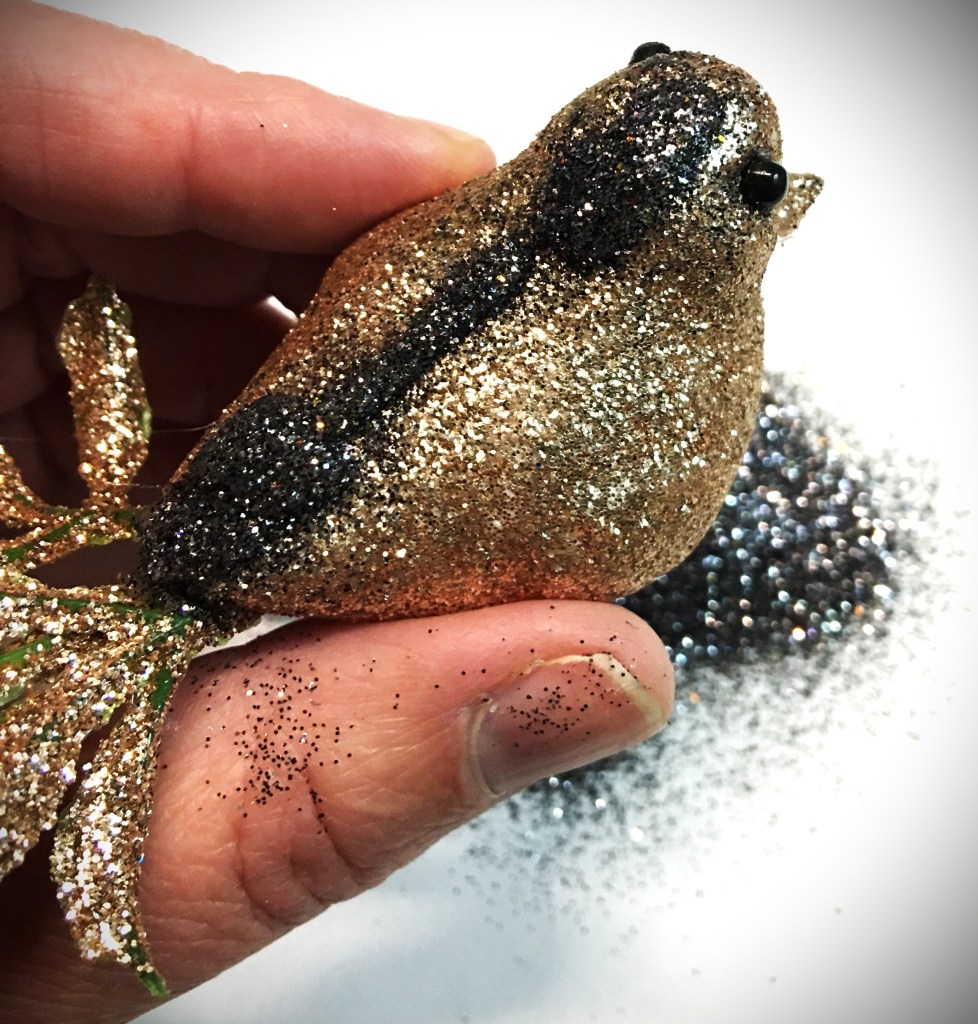
For example, the glitter bird that I’m using came from the dollar store and I wasn’t 100% satisfied with it. If I had feathers in my crafting room, I would have added feathers for the wings as well as the way it was set up with feathers on the tail. Unfortunately, I don’t keep feathers. So I needed to pull off the pink ones that came with the bird. The black eyes also seemed to stick out awkwardly. To remedy this, I grabbed my glue gun and black glitter and added glitter detail work to add dimension and character to the bird.
Thanks for spending a few minutes with me today. If you’re anything like me, you have a list as long as your arm to get done in less than 48 hours. My kiddos always look forward to a newly designed shirt. I haven’t got a fully developed idea for that yet. But I do have a spring edition ready to go dressing up some sock bottoms. They enjoyed the ones that I made for them for christmas. So I thought I would make a few more for them. You can check out sock designs here:



































 How I Can Do That
Leave a comment