Rosemary The New Christmas Scent

There’s something about the scent of fresh rosemary. I’m not talking about the dried needles that you find in the herb aisle. Those over priced dried herbs have nothing on the fresh branches you can harvest from the bush.

If you haven’t handled fresh rosemary, I encourage your to get you hands on some.

The first thing I noticed was that there was the classic rosemary scent, but there’s also a spruce/pine under note that surprised me.

For many years we’ve sported an artificial tree. That started because there was a season where my husband and I were going through a financially rough. I had an artificial tree that I used in the past for a Christmas tree decorating competition. But we took over into using that tree for our family in order to free up money that would otherwise be spent on a fresh tree. As much as we prefer fresh trees, it’s just made more sense to use the one time fresh tree money and put it toward a fake tree and reallocate that money each year toward some other area in our budget. (This by no means negates how the trees are made and that they just don’t disappear–but this is a whole other conversation for another day.)

I mention this not to enter the tree debate, but to highlight the point that when I first smelt fresh rosemary, it completely brought back all the childhood memories of having fresh Christmas trees in the house. And once I found this out, I’ve started taking some rosemary inside during Christmas time just for that scent during this time of year. And also because of the amazing health benefits that rosemary has for our bodies, especially during known cold and flu season.

Advertisements

Growing Rosemary

The first picture that I started with was taken last year when I attempted to root some rosemary sprigs for some free rosemary plants. I wasn’t successful with those sprigs. But as I look back at this picture I see that 4 of the 5 sprigs are wood growth instead of green growth. And just like lavender, there’s a difference in cloning these plants depending on if you’re using new/green growth or wood/brown growth. Once I’m successful in propagation of rosemary, I’ll make a new post on how to do it and eliminate the guesswork.

Until then…
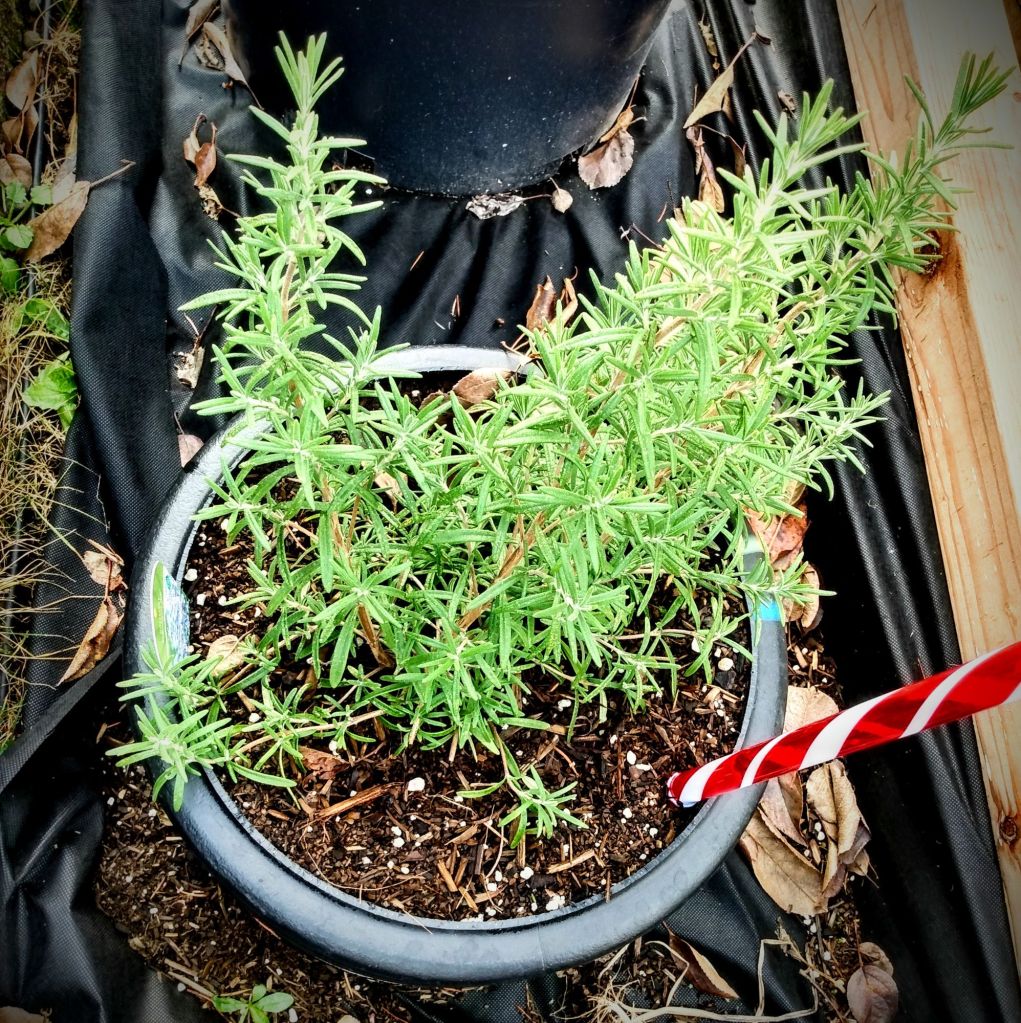
The rosemary on the left is a spraling variety. The plant on the right is an upright bush.

I found two plants at a local produce stand, at an amazing price, over the summer. One rosemary plant is more than enough for a family, with enough left over to share with friends, neighbors, and whoever else you can give it to. If you’ve seen the memes about zucchini season, warning people to lock their car doors before neighbors deposit excess zucchini in your vehicle, then you have an idea of how prolific that rosemary can be. I bought two plants because I’m a sucker for variety (thus the reason why I got a sprawling and an upright bush varieties). But rosemary is one of my favorite ingredients that I love putting into hair and skincare products and soaps that I’ve been making.

As you can see above, I’m in the process of making a new flower/garden bed. It wasn’t ready as all when I got the rosemary so I improvised. And I’m sharing this unfinished project because I want you to know that you don’t have to be finished with a build before you can get a plant “in the ground” and start establishing itself. I’ll come back to this in the future, when I have the build completed.

In the mean time… note that I used cylinder pipes and filled it with soil. When I planted these rosemary, the root ball literally fit in my hand, so the 12″ cylinder, that stand about 10″ tall were more than enough to set up these starts. There’s more than enough room for the root structure to grow over the winter. And in the spring, which I plan on having this bed finished, I can remove these pipes once the soil has been laid. In the mean time I need to lay some woodchips down to help insulate these plants before we get our expected snow in about a month or so. We live in a temperate area, so I’m not concerned about killing off the root system. I would be more concerned if we lived in an area with subzero winter weather.

One thing that I love about rosemary is that it is a drought resistant plant, as it is originally from the Mediterranean area. Once rosemary is established, it’s a plant that all you have to do is keep an eye on it to make sure that is free from pest and disease. One valuable resource for that information can be found here at Farmer’s Almanac. But this plant will be here for you for many years.

Advertisements

Health Benefits

This is absolutely one herb that you want to keep ready in your kitchen for not just maintaining your health, but also for food medicine.

Food medicine is alternative pharmaceuticals. If you are trying to reduce the amounts of chemical medicine (because of side effects or other complications), medicine from herbs and other foods are great for giving your body the building blocks it needs to maintain your health or boost your immune system to do the work it was designed to do.

Some of the benefits of rosemary are:

  • Contains antioxidants
  • Boosts mental alertness
  • Active studies on combating Alzheimers
  • Stimulate hair growth
  • Antimicrobial properties
  • Relieve indegestion
  • Promote metabolic health
  • Anti-Inflamatory
  • Studies in protecting against brain damage of stroke victims
  • Studies in slowing the spread of cancer cells
  • Relieve muscle and joint pain related to arthritis
  • Insect repelent
  • Increase circulation
  • Boost immune system
  • and so much more!

It was not so long ago that the pharmaceutical industry was created. Before then, families would treat themselves with food and herbs. This is not to say that pharmaceuticals don’t have their place. But what we are not told is that drug companies cannot patent plants, found in nature. So there is a huge industry in modifying plants. If a plant can be modified so that it cannot be grown in nature, then that plant can be patented and then be purchased at a premium price. The same goes with pharmaseudicals. They started out with plants found in nature and then the natural compounds are extracted and manipulated until they are at a point where they cannot be found naturally. These compounds can then be patented and sold at a premium price. These compounds are manipulated to be “fast acting”. So when you see “fast acting” on packaging on over the counter drugs, it is in comparison to natural compounds.

Advertisements

There is a large conversation that can be had on this subject. I bring it up because most people are not aware that the natural compounds are available in common plants and are just as effective if not more effective than some drugs because the natural compounds are not subject to being ineffective (drug resistance) by our immune system, as our body starts to recognize that these “medicines” are not natural/found in nature. So our bodies are not able to break the compounds down and fuel our immune systems to combat the situation we’re dealing with.

Again, this is not to negate or berate necesary pharmaceuticals. I just want to draw awareness of where drugs actually start from and why they might not be effective or stop being effective. And if this happens, it’s not the end all that causes you to stop having hope of being treated for whatever it is that you’re facing. So please do your own research and have conversations with your healthcare provider. There are always scientific studies on natural plants, like rosemary, and big health issues. It’s just that they aren’t publicized in commercials and the media because these natural plants are not and cannot be patented. So there’s not as much money that can be made from treatments from natural plants in comparison to what can be made off of patented medicines.

Identifying Rosemary

This past week I was at a party where the table decor was pine branches and rosemary sprigs were used on one of the appetizers. One of my friends happened to have one of the pine branches shed it’s needles on her plate and she couldn’t identify the rosemary to the pine needles.

If you remember what I mentioned above, about how rosemary smells like Christmas to me, smelling a pine and rosemary needle side by side may not help you decide which needle you want to eat. So I pointed out this one unique identification feature to my friend.

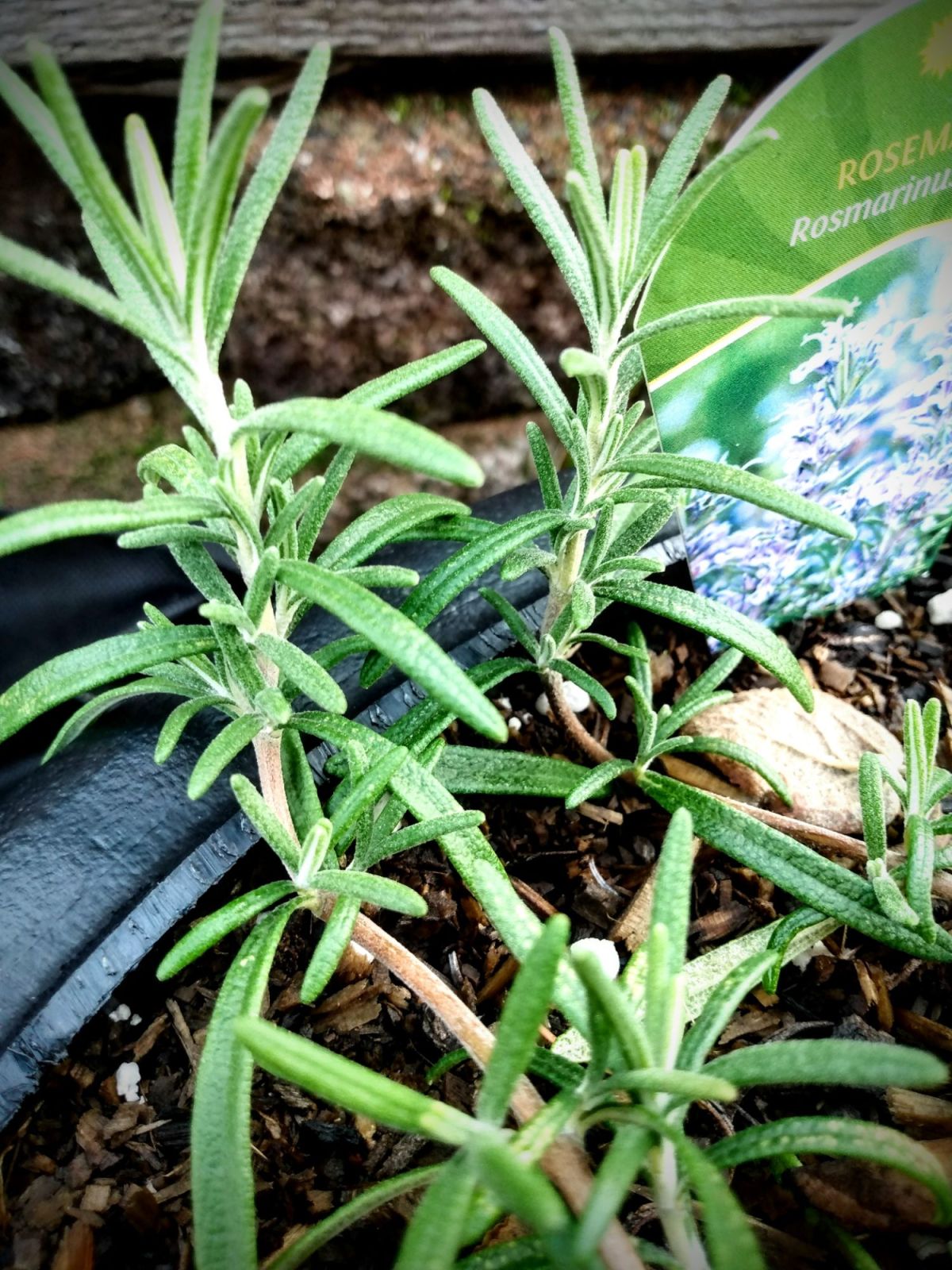
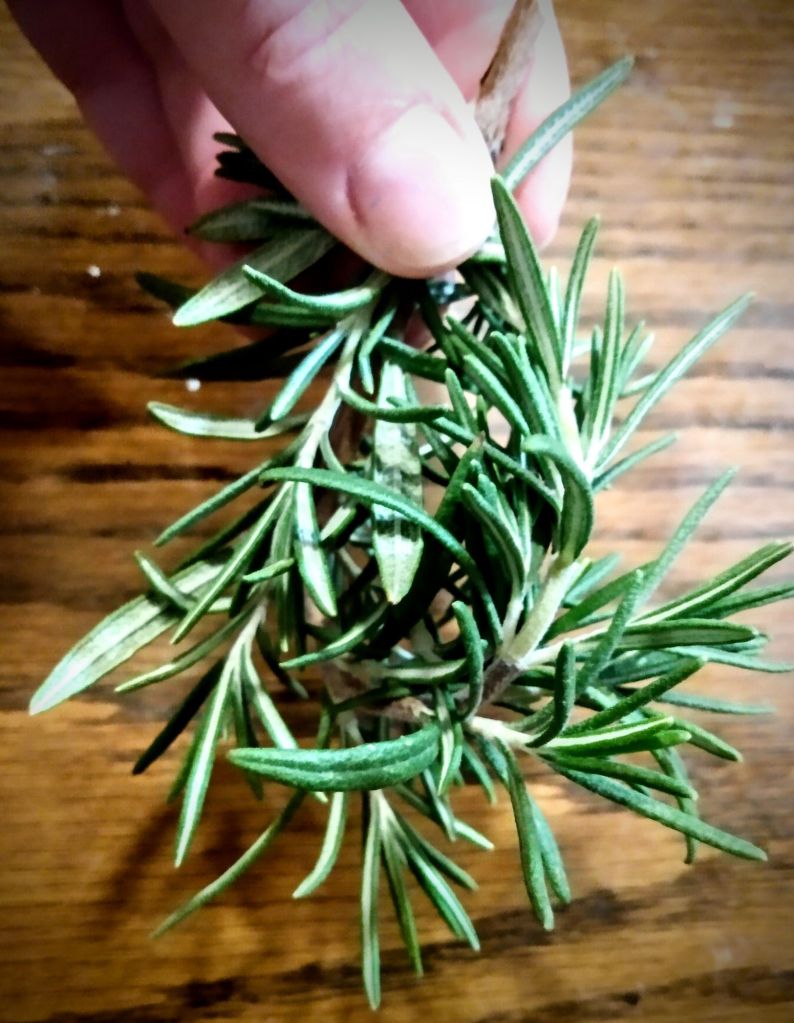
The underside of rosemary leaves have a white stripe down the middle.

In this case the misidentification of a pine or rosemary needle is not going to be a life threatening moment. Pine is known to have Vitamin C. In fact, during the spring I look for the new growth tips (bright yellow/green) of pine and spruce trees. The amount of Vitamin C found in this tips put citrus fruits to shame. So depending on what health needs you have, making tea from the tips of new growth pine and spruce trees, will give you far more vitamin C than eating citrus fruit or taking Vitamin C supplements/chewable.

With that little tid bit of information aside, another feature that you might want to know is the difference between the new growth of rosemary and the woody part.

With new plants, like what I have, it’s a little harder to differentiate between the two parts in comparison to an older plant. But as you see above, the new growth is white and the woody portion is a reddish brown. With a young plant like this, the woody part of the stem is still flexible. But in an older plant, the woody portion is very rigid like a tree branch.

The higher concentration of nutrients, and valuable compounds, are going to be found in these new growth portions of the branch. This is where the plant is sending all of its energy to. So if you’re looking to use your rosemary as a food medicine, this is the part of the plant that you are going to want to harvest and use.

That doesn’t mean that the rest of the leaves, lower on the branch are not useful. They still have the rosemary flavor that you want when you’re cooking with rosemary. They just don’t have as much of the active compounds that are found in the new growth region of the plant.

Advertisements

Useful Preparation of Rosemary

There are two ways that I preserve rosemary the most; dehydrating and infusing in oil.

For dehydration I’ve tried two different ways. I’ve left the leaves on the branch and dehydrated the branch with the leaves. And I’ve also removed the leaves. Dehydration time is the same either way, in my experience. But it’s easier to remove the rosemary from the dehydrator on the branch then collecting the individual leaves. So I’ve just left them on the branch and then when processing is down, I run my fingers down the limb, over a bowl, and quickly strip off the leaves. From there I save some leaves as is, which promotes the longevity of the healing compounds. Then I take some and grind it up into a powder in my herb grinder. In powder form, the compounds start to break down and become weaker around 6 months. So I only grind what I’m going to use in the near future. Otherwise I leave the leaves whole, where they retain their compound integrity for a year, upwards of two years (depending on who you talk to).

But I don’t use rosemary just for when I make my meals. I use them in the lotions and soaps that I make. In fact, the shampoo bar that I make for my hair has increased my hair health so much so that I cannot remember when my hair was this thick and healthy. It’s more healthy then even when I was pregnant with my children (which are one of the things that most pregnant women notice is that their hair health is improved). I use the leaves in the soap, but more importantly I use rosemary infused oil.

I use rosemary infused oil for everything; food and skin/health care products. So I use rosemary oil more than every other preparation. But one thing to note is that if you have more rosemary than you can process (either drying or infusing) rosemary freezes beautifully. Just leave the leaves on the branch, bag it and put it in your freezer. It will stay fresh and will not break down or wilt when you’re ready to use it.

Advertisements

Making Infused Oil

The first thing that you want to do after you cut the rosemary you will use is to rinse the branches off. Even though my plants are only a couple months old and I grow them organically, you can see below how much came off of my branches and they looked clean. All of this debris would have compromised my infusion and caused problems that are common when you read about mold and other issues people have when infusing herbs in oil.
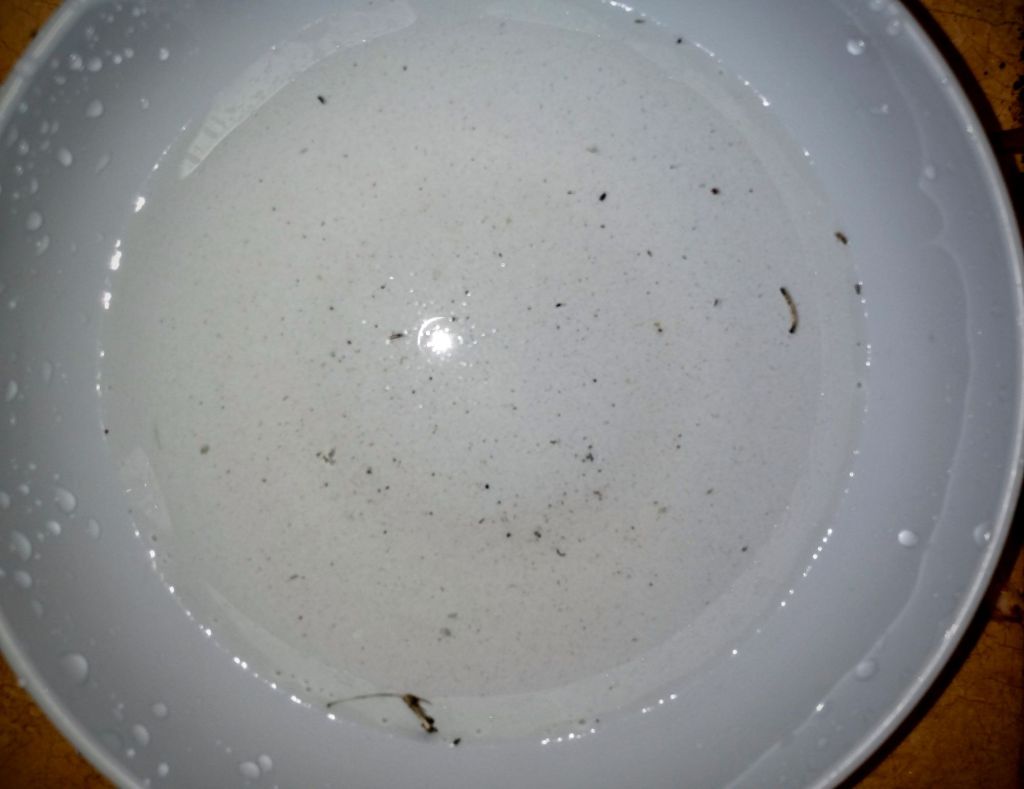
Another problem that people have when infusing is that they put wet herbs into oil. Please remember that oil and water do not mix. What happens with water is that it becomes the medium for mold to grow (which is usually jump started by the debris that’s not washed off).

The three components that cause organic materials to break down and spoil are water, heat, and light. These three things are what feed and promote bacterial and mold growth. So whether you’re preserving food or making infusions, you want to keep these things in mind.

After rinsing off the rosemary, I air dry off the water.

There is a whole other conversation around whether to use fresh or dried herbs for making an infusion. I won’t go into that conversation here, but for delicate leaves I dehydrate them first. Plants like rosemary and lavender I go ahead and infuse fresh because of these are drought resistant plants, have thicker branches and leaves that are designed to not release the water that they have stored up inside of them. That’s not to say that I haven’t had mold grown on an infusion with these hardier plants. The times that I have, it was when the branches were above oil level (access to oxygen) and I didn’t remove the branches 6 months after the infusion was supposed to end. (It took that long for a mold colony to grow where I noticed it.)

There are also two different type of infusion you can do: stovetop or solar. Both use heat as the extraction method of the plant compounds into the oil (which I use olive oil. This is a great universal oil for cooking and soap making.)

For stovetop (or crock pot/slow cooker) the important thing to remember is to keep the temperature on your lowest setting and let it process for a few hours. I don’t do this method, but if I did I would let it run for 6-8 hours.

I prefer using the solar method because I love how it looks. And more importantly I describe myself as a busy mom. Nothing is better, in my opinion, than to spend less than 15 minutes setting something up and letting it do it’s thing over a longer period of time that absolutely does not involve me.

So after my rinsed rosemary is dried, I put the sprigs (stems and leaves) into a jar. Tightly fitting in the plant material is great because it prevents parts from floating to the top, keeping everything fully submerged when you add the oil.

On the subject of oil, not all oils are made alike. And this is another one of those points that people have failed infusions. They chose inferior oils. When you pick your oil, keep in mind what material you are using. Olive oil, grape seed oil, and a few others come from plants that are not known to be modified and with less processing. Vegetable and Canola oils are both produced from crops that are known for being genetically modified and are heavily processed (an indication that their natural plant compounds have been changed and have less natural benefits). But when you also look into the history of their origin, you will realize that they were never created for human consumption. Canola oil was formulated for World War engine lubricant. After the war, the oil was then marketed as a cooking ingredient in order to make a return on investment and because it’s cheap to produce. (For a short history of Canola, and some comparisons to other oils, can be found in the article Rapeseed to Canola: Rags to Riches by R. Keith Downey.)

For today, I used smaller mason jars. And to keep most of the rosemary stems submerged for this solar infusion, I coiled the stems into a ring shape and placed them in the bottom of the jars.
Next I poured my olive oil to the top of the jars. Then I capped them with a lid and ring. (I prefer lids and rings because you can tighten the lids tight enough so that when you shake the jars, there won’t be a leaking of the oil.)

For the next 6-8 weeks I will shake the jars and make sure the rosemary stays submersed in the oil. During the summer, I leave them in a window sill. During winter, I put the jars on my south facing windows during the day and then move them to a warm space during the dark hours. Sunlight is what causes the heat that opens up the leaves to extract the compounds and oils from the leaves.

Solar infusion takes longer than a stove top or slow cooker method because the heat temperatures do not go as high or stay sustained like a controlled heat. But the one thing that I haven’t been able to find is an article that talks about the effect that the sun has on the oil compounds themselves. (For example we know that the sun has a bleaching effect on laundry. So what else is the sun capable of doing when using it a part of the oil infusion process?)

At the end of the infusion process, no matter which method you choose, you will want to strain out the rosemary. Store it in a clean glass jar and lid. And then keep it in a cool dark place.

As with all herbs, medicinal compounds start to break down 6-12 months. This doesn’t mean that they are empty of any good. It means that they lose their effectiveness. The flavor can still be there. So as long as rosemary (and other herbs) is properly stored, they are good to be used.
Leave a comment

Processing…
Success! You're on the list.
Advertisements
Advertisements
Advertisements
Advertisements

Crayon vs. Mom

(I’m going to pepper the pictures of results through this post. So this time the pictures are not directly linked to what I’m sharing with you in that immediate space.)

Nothing causes disruption in a family more than sitting down to the laundry and finding that someone went through the wash that shouldn’t have.

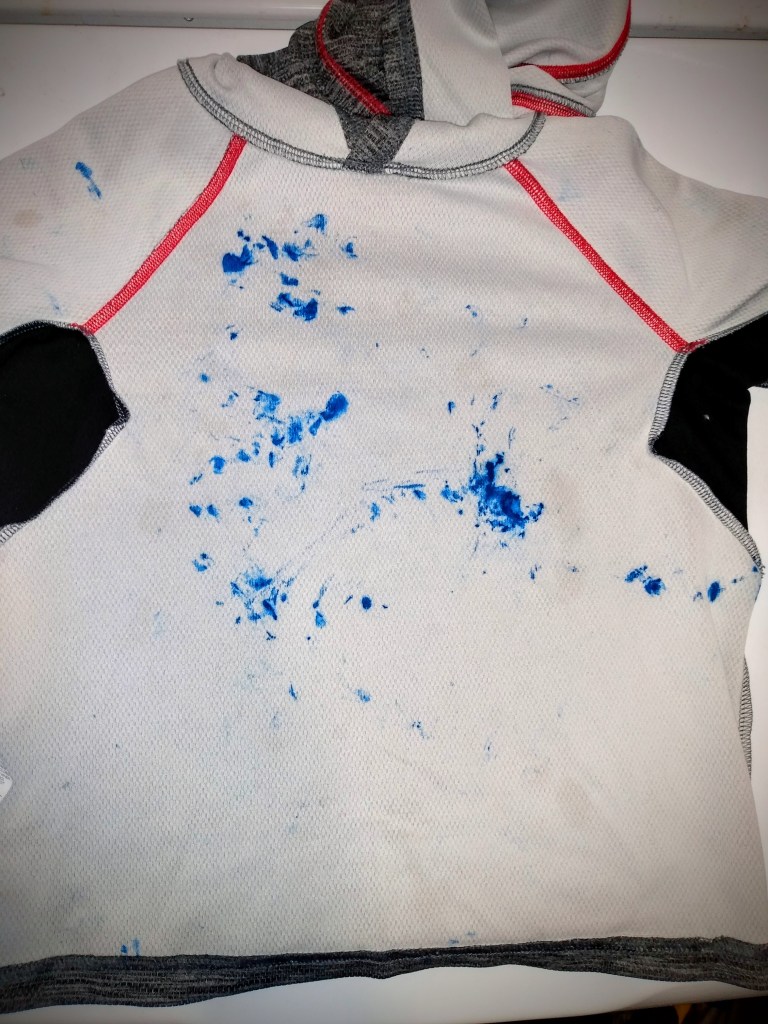
This past week, my disruption was a caused when a blue crayon high jacked a tumble in my drier!

My whole load of laundry was affected. And what made me cry the most was a sweater that was gifted to me and this was its first washing.

Did I mention it was a large load of laundry?

Cotton napkins: the tags were removed so if I remember right these napkins are 100% cotton. Later on I’ll talk more about why this may be important.

Fortunately my husband was brilliant and immediately started a quick search to see if there was a possible remedy… even a small chance of not having to throw out so many clothes to the scrap bin.

He never did tell me what he found out. But two days later (when enough time had passed), I ran my own search. The videos I found were either from other housewives (and one preschool teacher) who used items they found in their homes or ken using chemicals that may or may not eat your clothes if you used it (maybe a slight exaggeration but not far off).

The teacher used a toothbrush. And I wasn’t going to go through with a toothbrush on 50+ pieces of clothes and linens. And with the options remaining… you guessed it! I chose the house wife remedies.

The ingredients that were used by all videos were vinegar and Dawn dish soap. Half also added washing soda.

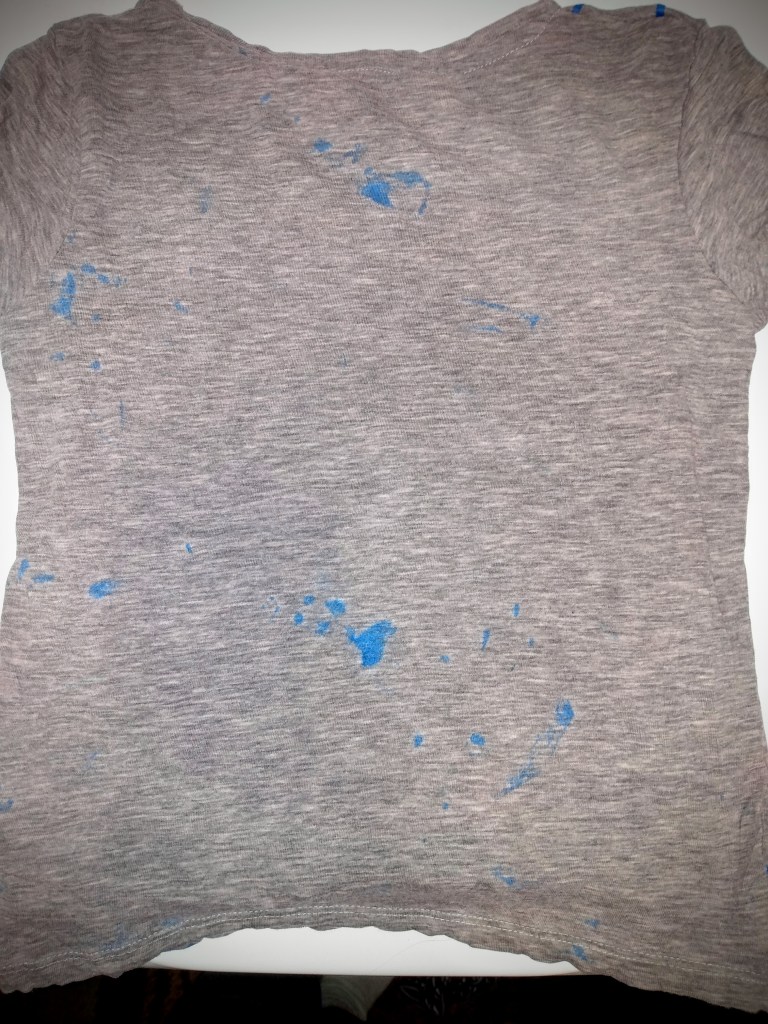
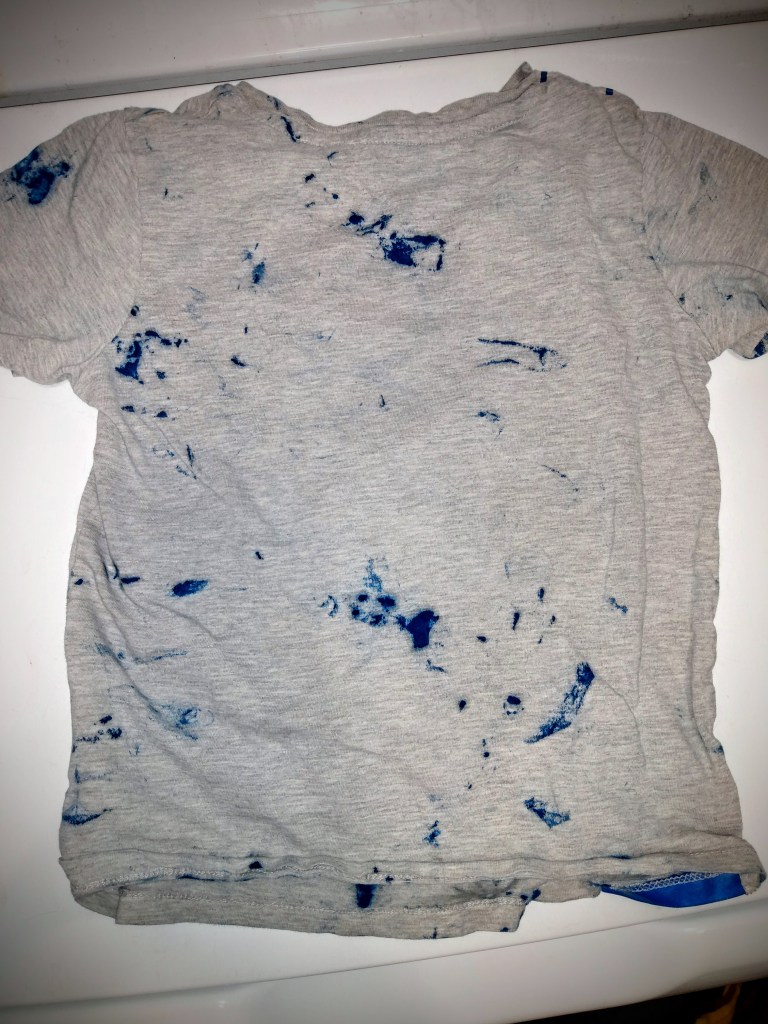
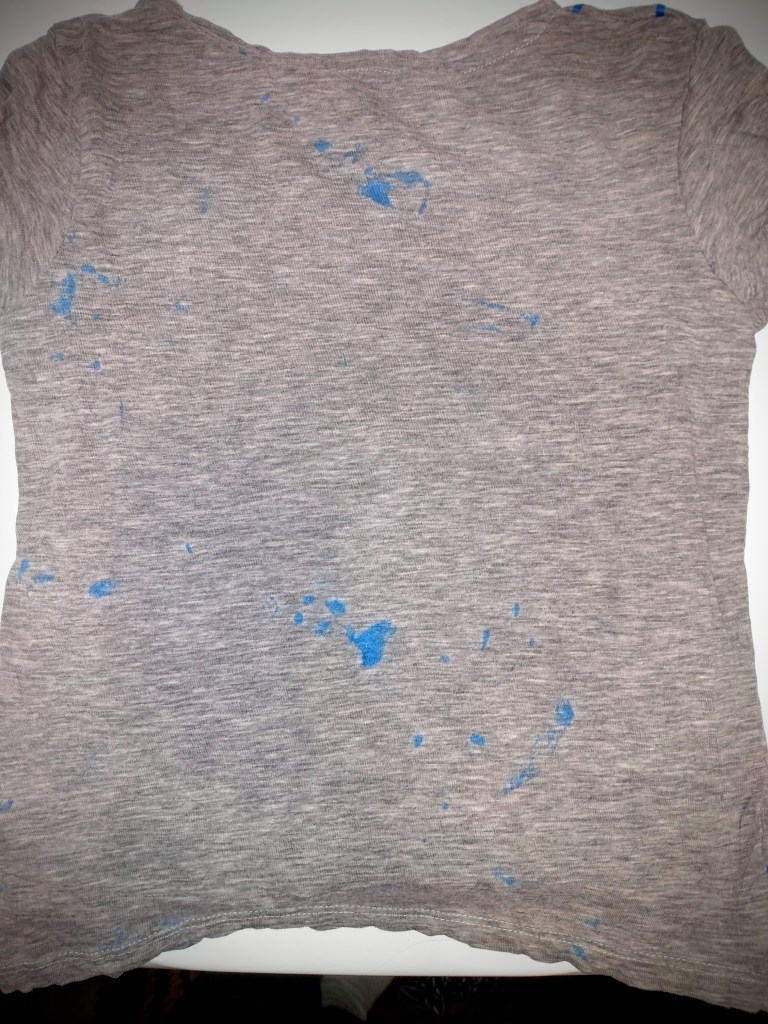
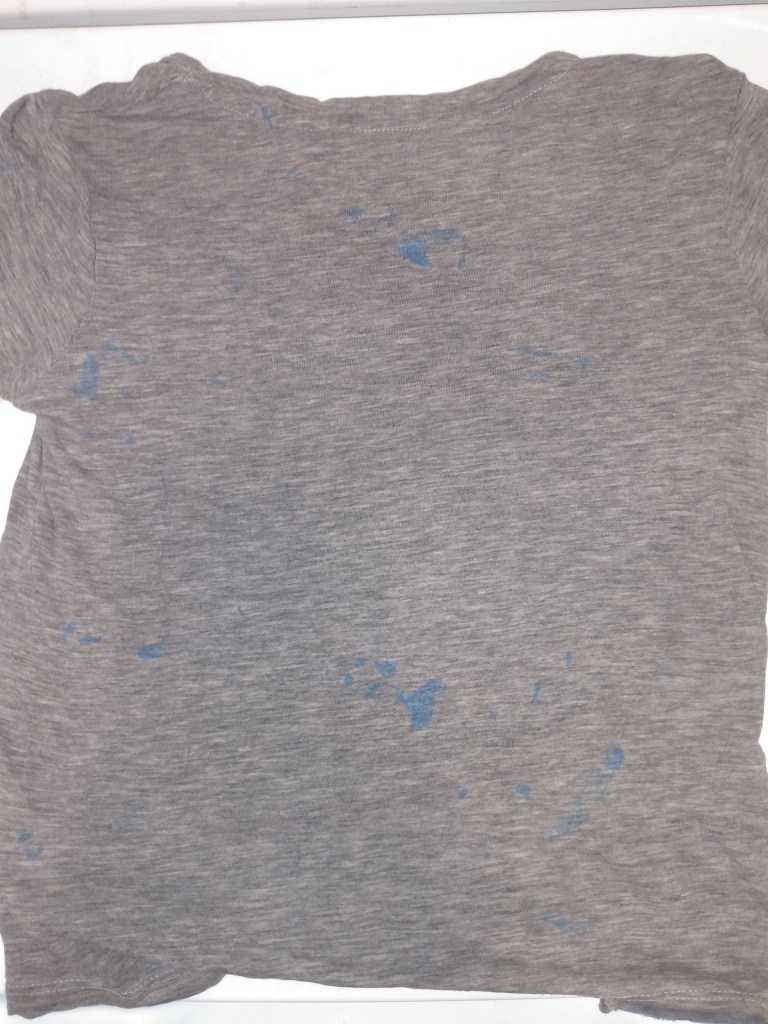
This is one of my kids’ shirts. This is a blend of cotton and polyester. The tag is worn out so I can’t give the percentages.

Advertisements

Why Dawn Dish Soap?

If you think about what makes up a crayon, you find that it’s in the wax/fat or oil based. Dawn is known for being aggressive with breaking down oils and fats.

Will any dish soap work?

Absolutely not! There are a lot of cheap dish soaps out there that doesn’t break down fats and oils. If you’ve ever used cheap dish soap where you have to scrub an oily dish with the soap and absolutely no water to dilute it, you know what I’m talking about.

However, for my experiment, I used Kirkland (store brand) dish soap that is marketed as having four times the grease fighting power. This is something that Dawn is always advertising in their marketing. So I have reason to believe that this is Dawn just relabeled as the Costco store brand. Even if I’m wrong, it’s this degreasing action that I’m going for because wax is oil based, whether natural or synthetic.

Out of the three ingredients the dawn dish soap is, initially, the one ingredient that I wouldn’t skimp on. My hypothesis is that this is the ingredient that is the make or break item for this science experiment to work.

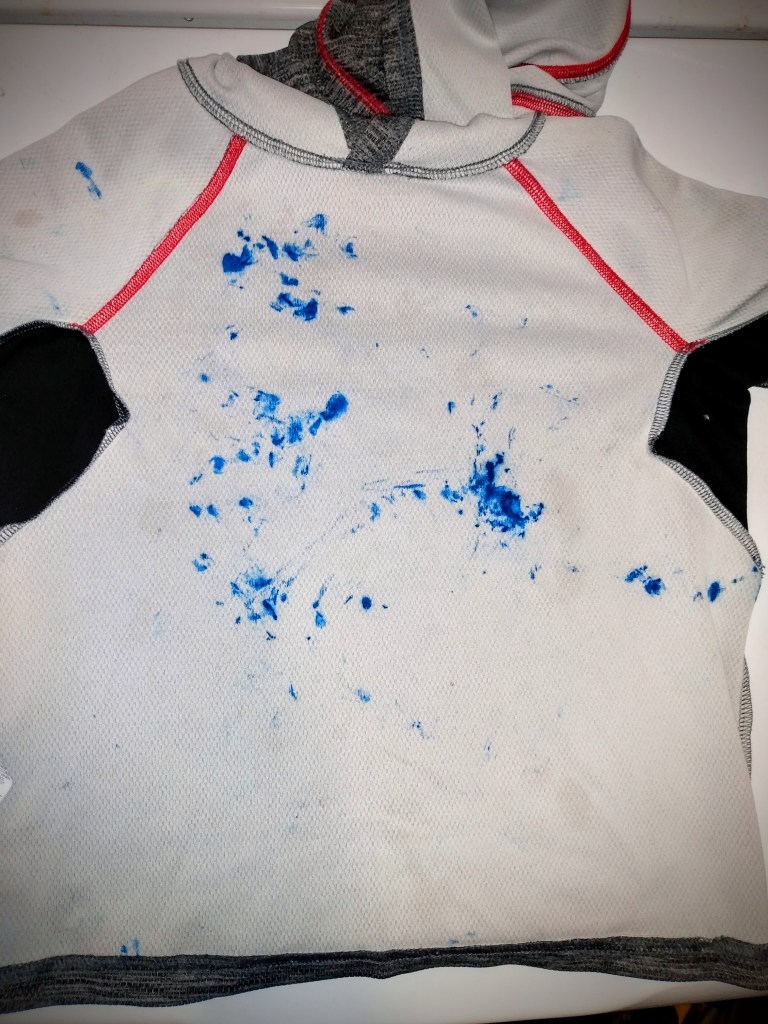
Here is another one of the kids’ shirts. This athletic shirt is also a poly blend with less cotton content than the previous shirt.

What about Washing Soda and Vinegar?

These two ingredients I’m not picky on brand and I use them interchangeable. So by all means if you have an opinion, please drop it below in the comments.

I am a homeschooling mom, but here is where my scientific knowledge is going to be lacking. We haven’t gotten to the lessons yet to understand why bicarbonates or vinegars do what they do in the laundry.

But for generations vinegar has been used when washing clothes to freshen them up (in the days before fabric softeners or laundry crystals) and give your laundry a little fluff. And that’s not even mentioning that vinegar is amazing for giving your washing machine a good little wash to break down laundry build up in the wash barrel.

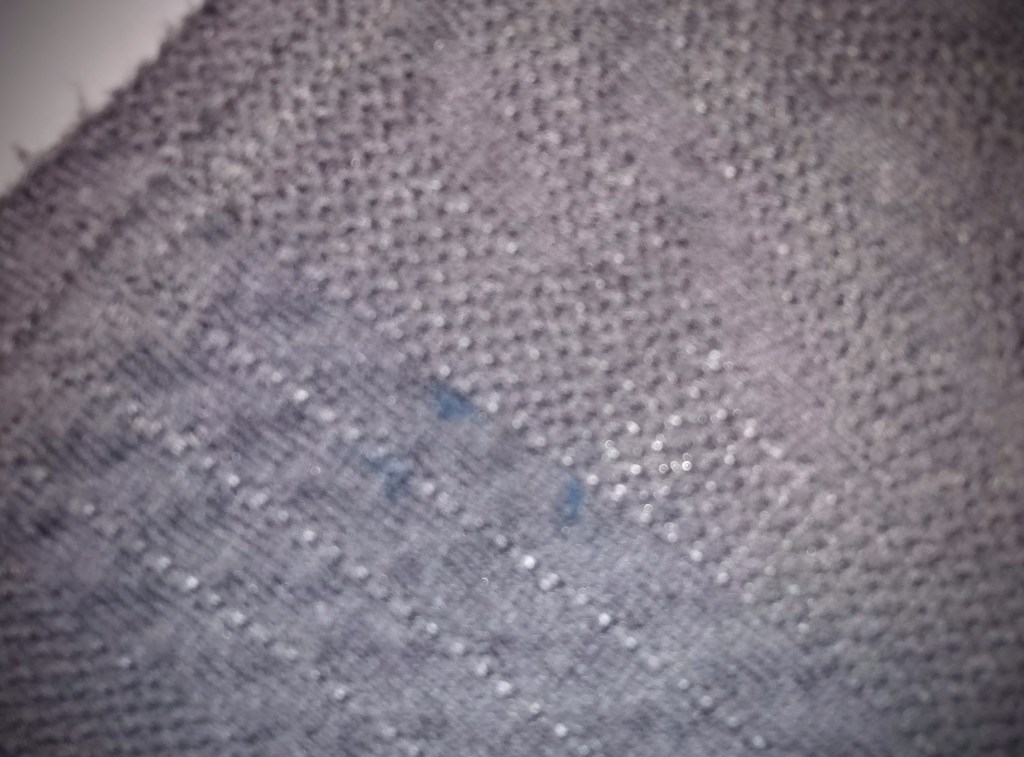
This sweater I wanted to include to show what happens with a woven texture.

I suspect that vinegar is a key component in this laundry remedy because it loosens and opens the fibers up from compression. So the vinegar works in concert with the dish soap by getting in there a opening up the space for the soap to get all around the crayon wax and break it up.

In my experience there’s been no noticeable difference between a 5% acidity vinegar and the vinegar I make from apple scraps or orange when it comes to how it behaves in my laundry. Of course there is the difference of scent that comes from the apples or the oranges. But other than that, both types of vinegar (commercial vs. home ferment) behave the same.

I’m not sure how the videos with only Dawn dish soap and vinegar works supposedly as well as the videos that use dish soap, vinegar, and washing soda. The reason for this is because I know that there is a chemical reaction that happens between the vinegar and washing soda. But I’ll come back to this point when I get down to what I found when I played with the measurements of these two ingredients. The combination of the vinegar and washing soda DID have direct correlation to how much of the crayon got removed from my laundry.

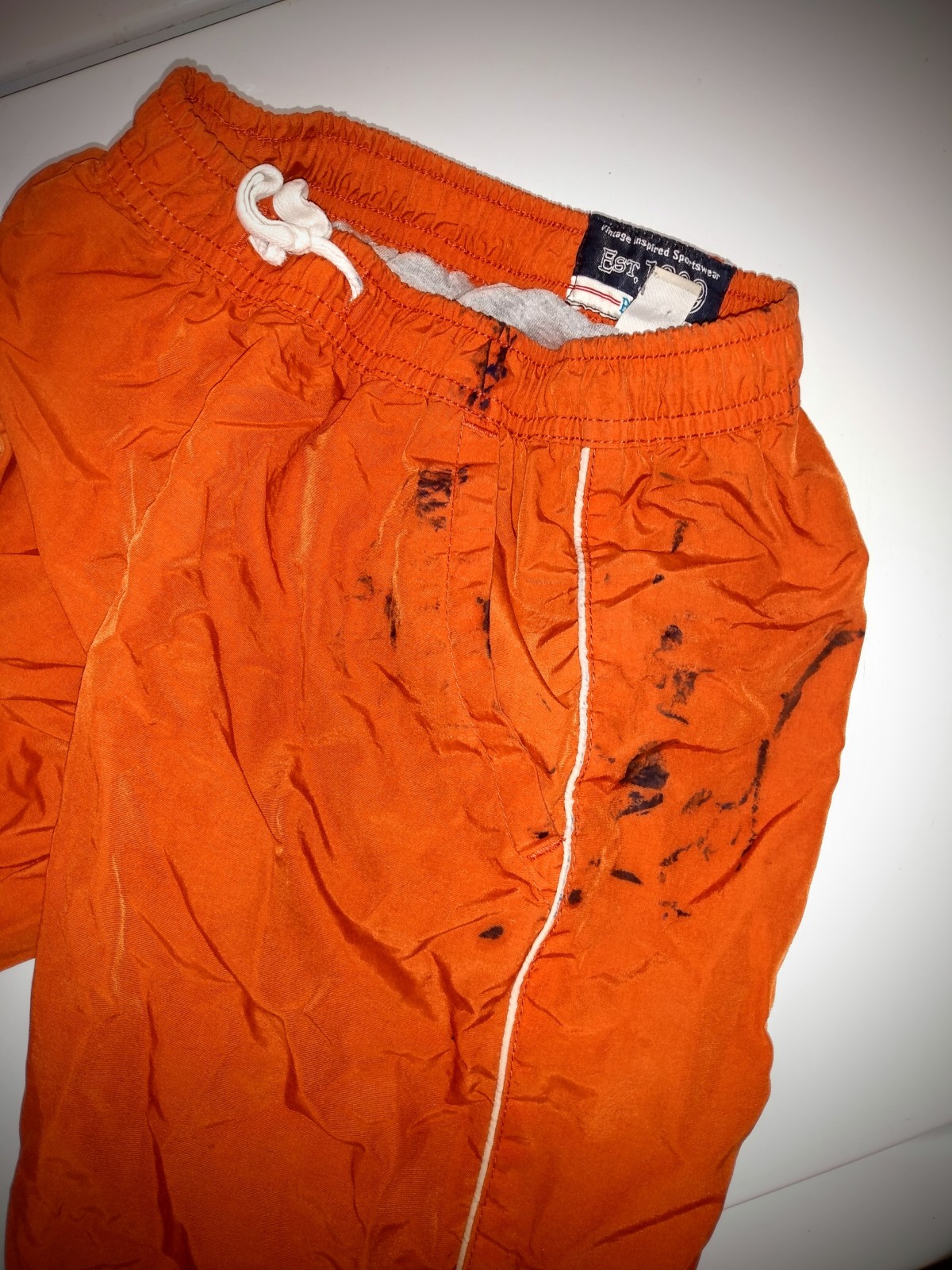
These athletic pants are a poly blend that includes rayon.

Advertisements

First Things First

Before you can go back and rewash everything, the first thing that has to happen is checking to make sure that your drier is clean from residual wax.

The drier pictures I wanted to keep with this section of text.

As you can see from the pictures that I took of my drier barrel, my load was so large that the clothes kept the barrel from being covered in the crayon wax. I did have one spot next to my lint trap.

So on the one hand, this is what you want your drier to look like. And on the other hand, here is what you’re looking for. I didn’t have to go through the hassle of running my drier empty to warm the barrel up and then wipe out the crayon wax. If I did have to I favored the video where people wiped the hot drier barrel with a drier sheet. I don’t use drier sheets with my laundry, so if I had to clean out my drier this time I would have warmed up my drier barrel and then use a rag sprayed so that it became damp with vinegar.

When you’ve verified that your drier is clean, you can then move forward with treating your clothes.

This is a pajama shirt is another example of a cotton poly blend.

What’s the Recipe?

That is the real question because no one tells you the measurements of what they use for their results. They eye ball it and tell you to be generous with the ingredients.

I’m telling you that there is a difference with the amount you use and the results you will see!

Without knowing the measurements that they used, you cannot truly recreate the results that they got. So I followed the eyeballing method that I saw in all the videos. BUT I also measured what it was that I was putting in.

Full disclosure, my washing machine has a larger barrel than the standard machine. So depending on the size of your washing machine you may need to adjust the amount of ingredients that you use when this issue happens to you.

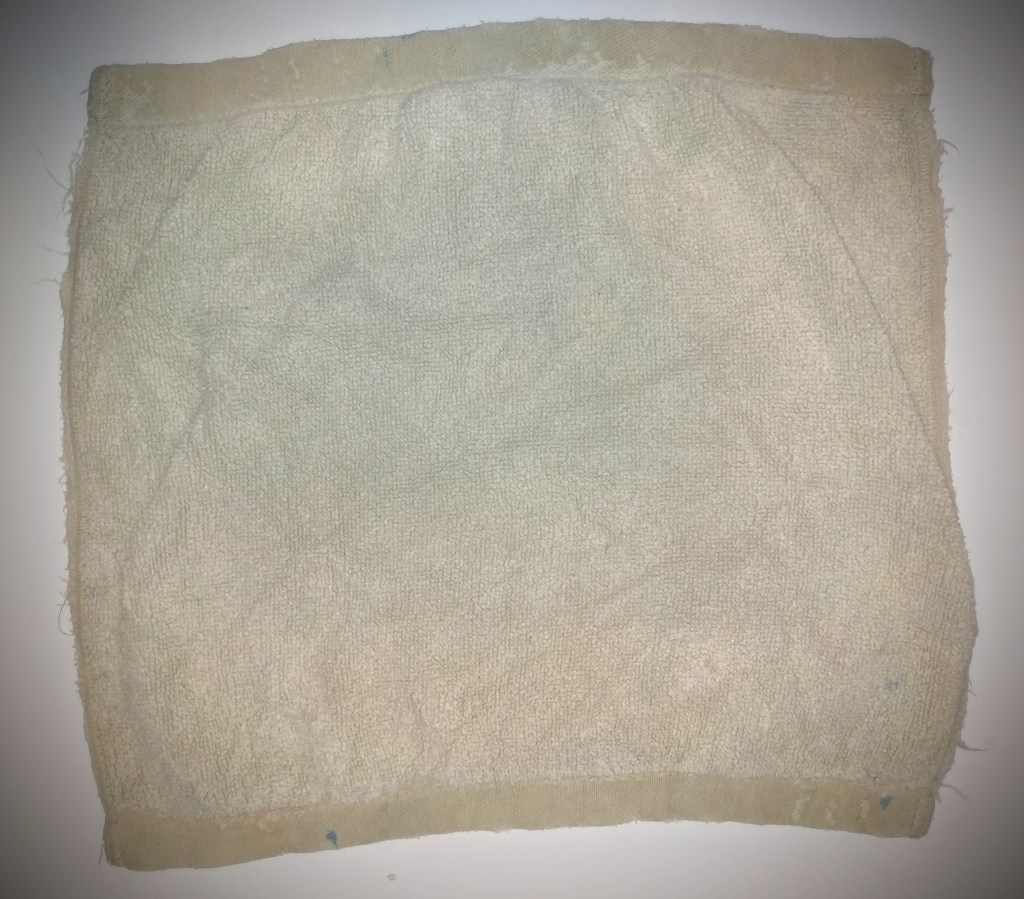
This is a 100% cotton wash cloth with a waffle weave pattern.

I split my ruined load in half to run two different batches.

For the first run of treatment (which you see the before and after two picture sets above and below) I used the following:

  • 1 Cup Washing Soda
  • 1 Cup Vinegar
  • 3/4 Cup Dish Soap

Before I put the clothes back into the washing machine I started running the water into my machine. It’s important to make sure that you run the water as hot as your machine will allow. The heat is what softens the wax and makes it easier for the cleaning agents work. I also put my machine on the setting that allowed for a deep clean (where the clothes can soak for a few minutes). With the water running, here is the order that I did everything else:

  1. Add the clothes
  2. Pour the washing soda evenly across the top of the load
  3. Pour the vinegar directly over the washing soda (you will see the washing soda start to foam)
  4. Pour the dish soap as evenly as you can on the top of everything
  5. Close the lid and let the machine run its wash cycle

This washcloth is a blend with a nap weave.

All of the pictures that you have seen above have been the worst of the worst of what got hit by the melted crayon. Everything else came out of the treatment with the wax removed.

Below this point you’ll see what the second run, with a modified measurement of ingredients. Please note that I did not run these clothes through the drier unless I was happy that they were free from was (or as you will soon see that I gave up and just accepted the fact that I wasn’t going to get the wax out).

For the second run of treatment I put in the second half of the laundry for its first laundry/treatment run PLUS the articles from the previous attempt that I wasn’t happy with. This second test, in the end, was run with a 3/4 load instead of a 1/2 load that I previously ran.

The second run of this athletic shirt removed minimal amounts of crayon wax that was left on after the first run. I resolved that I wasn’t going to be able to get any more out.

I followed the same procedure above.

Here is the change of ingredient measurements.

  • 2 Cups Washing Soda
  • 2 Cups Vinegar
  • 3/4 Cups Dish Soap
Advertisements

The Results

From the second load, there was nothing that I needed to rewash a second time (like I had to do with the first treatment load). And you see the results of the first treatment load that went through the second treatment.

I hope there’s not a second time where a crayon goes through my laundry. But let’s be honest. I still have young kids so there’s still a chance.

There was an improvement on this t-shirt. However I was unable to get everything out. But my kids have worse stains from pens and paint that this was livable.

Should I need to deal with crayon damage, this is the recipe that I’m going to use and why.

  • 2 Cups Washing Soda
  • 2 Cups Vinegar
  • 1/2 Cup Dish Soap

For treating the crayon damage, the washing soda and vinegar proved to be the combined more active ingredient over the dish soap. The increased dish soap amount made the clothes crispy in clothing feel when I pulled everything out of the washing machine. This is classic for when you’ve used too much soap/detergent on your clothes.

More does not necessarily mean better. And in this instance, my initial thoughts, expectations, and hypothesis were wrong.

I was most happy that this sweater had all the crayon wax removed. After all, this was the gift that I spoke about at the beginning of the post.
With the dish soap, even with the first load the fragrance was so strong that even a half cup was either already too much or at the top end of how much I should have used for the size of my washing machine. And if you’ve ever washed dishes by hand, you are aware of how little of a good soap that you need to use in your sink. I’m going to say that the same is true with using it as a treatment for your clothes in a washing machine.

Advertisements

Does the fiber content of your clothes make a difference???

I literally had no idea that I was even going to be answering this question when I set out to fix my laundry. But I did notice a difference.

What I found extremely noteworthy is that crayon wax does not want to let go of natural fibers!

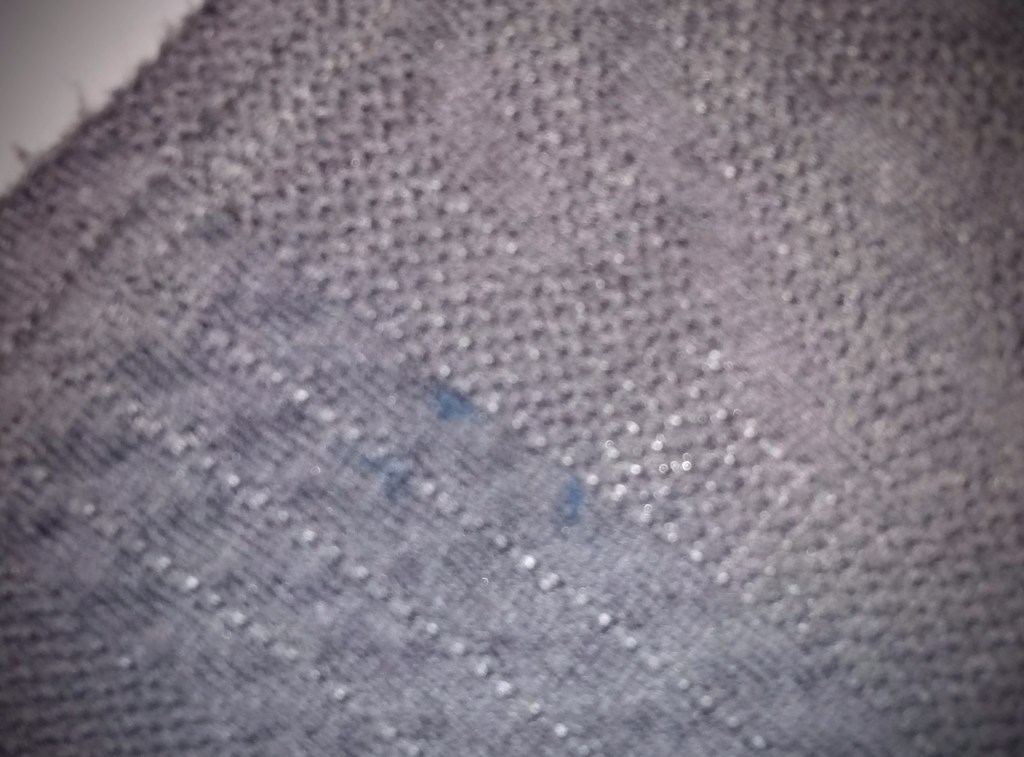
The athletic pants was the most synthetic of the clothes that were most damaged by the crayon. And even with the first treatment, it pretty much came out. The cotton shirts did not want to release all of the wax. And one item I didn’t document (because I didn’t catch them until after I was done and folding all the laundry after being dried) was my bamboo socks. The socks were 100% bamboo and did not let go of any of the wax that it got from blue crayon.

I don’t have the answer for different fiber content of your affected clothes. But I did want to mention that this one fact will play in how easy or difficult it is get crayon wax out of your clothes. Synthetic fibers appear to let the wax go the easiest. Natural fibers appear to need more aggressive modes of getting the wax out, if you’re looking to fully remove it.

Advertisements

Other Options

There are other options out there that people say work for removing crayon wax from your clothes. They seem to mostly comprise of using chemicals to remove them. I’ve seen people use industrial strength degreasing cleansers (primarily used on clothes usually being cleaned from automotive oils stains) and acetone nail polish.

For me, I’m not willing to test these ones out on my clothes because I don’t want to accidentally burn a chemical hole in my clothes. And I’ve been in the process of trying to remove any chemicals from my clothes and skincare products because our world is inundated with chemicals that bombard our skin and health.

I know that not everyone shares this sentiment. So I wanted to put out the other options out there for those who do not have those issues with using those products and want to try to fully remove crayon wax. Or maybe you do share the same sentiment, but a beloved heirloom table cloth or baby clothes got damaged by crayon. Sometimes there are just instances where the personal risk is justified over your everyday choices.

What are you go to remedies for damages done in the laundry?

Paint, pen, grease, wax, etc.

Leave a comment

Processing…
Success! You're on the list.
Advertisements
Advertisements
Advertisements
Advertisements

More Than Arm Candy

I have to love my husband who loves to give practical gifts. Usually he stays away from gifting flowers because they last for a few days before they’re composted. However, there are so many uses for not just roses but other flowers as well. While I’m going to be talking about roses here, there are so many other flowers that can be used in the exact same way!

For those who are unaware, roses are edible. (Before you do eat rose petals, make sure that they haven’t been sprayed with chemicals, pesticides, insecticides, or anything else that is harmful to you.) Roses contain vitamins A & C, Niacin, Potassium, Iron, Calcium, and Phosphorus. Some places where you’ll find fresh petals are on a dessert/cake or in beverages such as teas.

Advertisements

It’s not just the petals that are usable to our bodies. Rose hips (the bulb at the bottom of bud, harvested at the end of the rose season from the rose bush) is used in the beauty industry and baby products for the benefits it has to the skin.

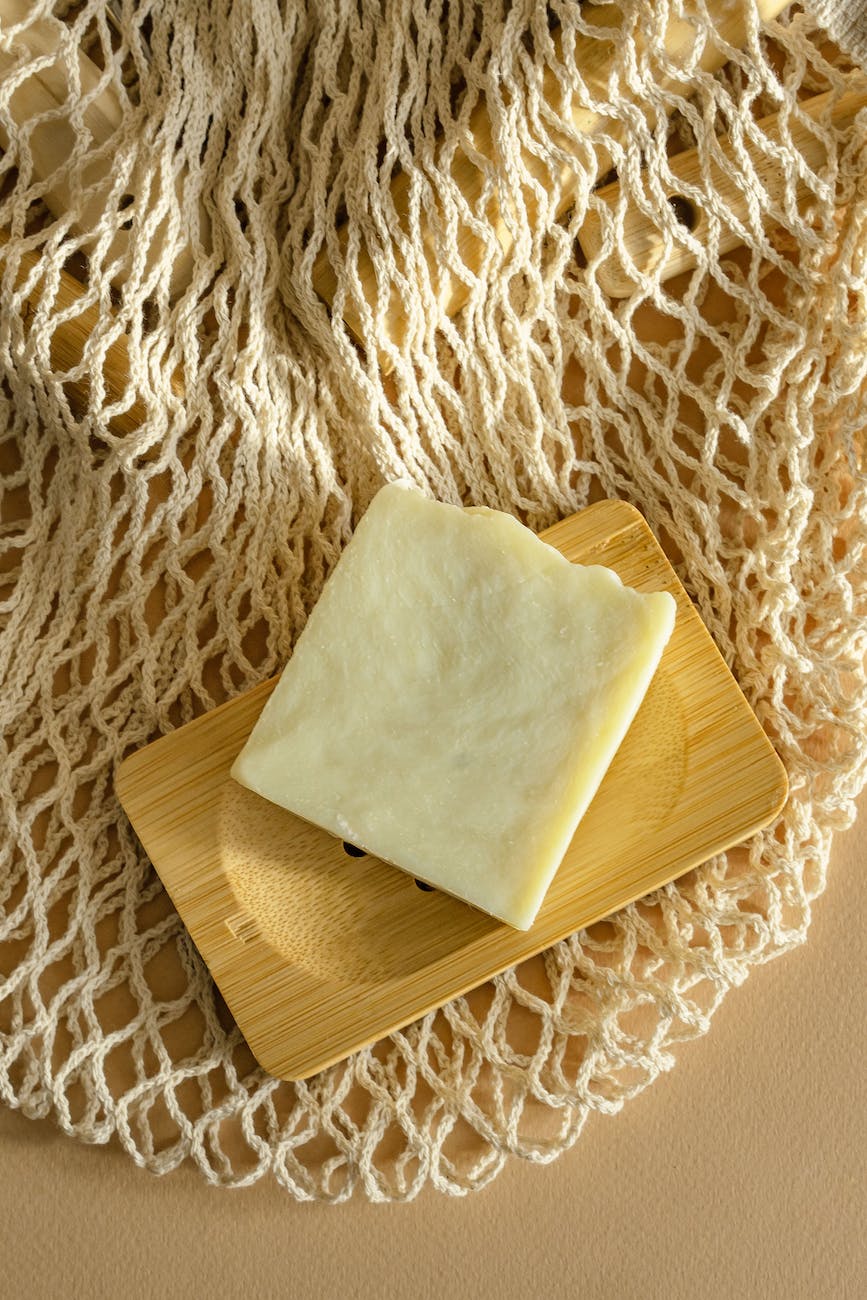
The benefits to the skin is the primary reason why I decided from this last bouquet of roses that was given to me that I was going to use the petals for my next batch of soap.

I started making soap because I’m not okay with all the chemicals that are being used in soaps in the commercial market. Other than using soap dyes (which I’ve had my tub and skin discolored from bath bombs and other products) the mission I’m on is finding natural dyes to color my soap. For pink soap, I’ve seen soap makers use dyes or French clay.

Now Calendula is a well known floral natural food grade colorant. For red/pink colorant, Beets can be used in food. But anyone who’s worked with beets knows that your skin and clothes can be discolored. So I wanted to find a different red/pink colorant for my soap that I can grow in my garden. So I came to roses.

Advertisements

How to Process Roses

There’s two easy ways of doing this.

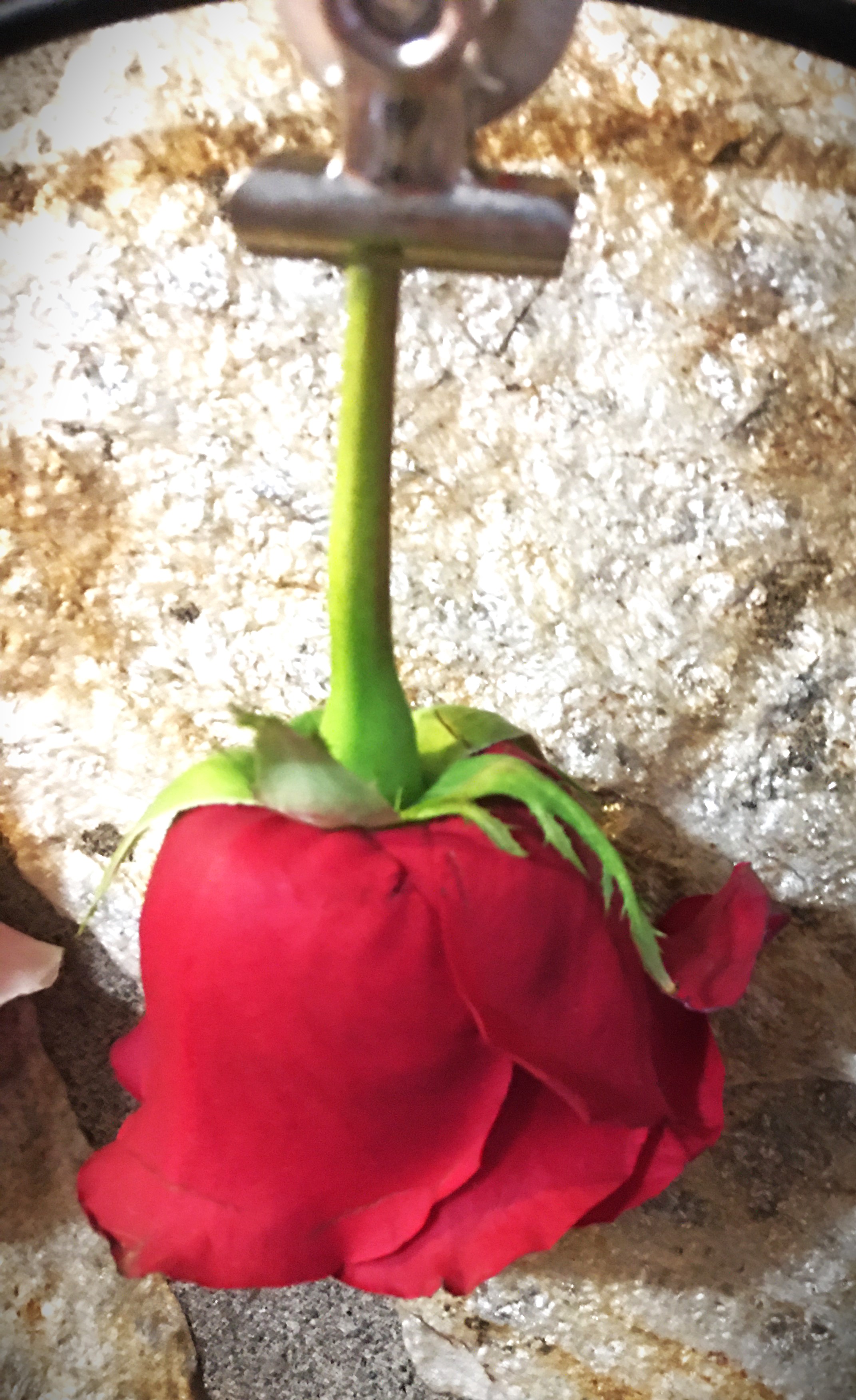
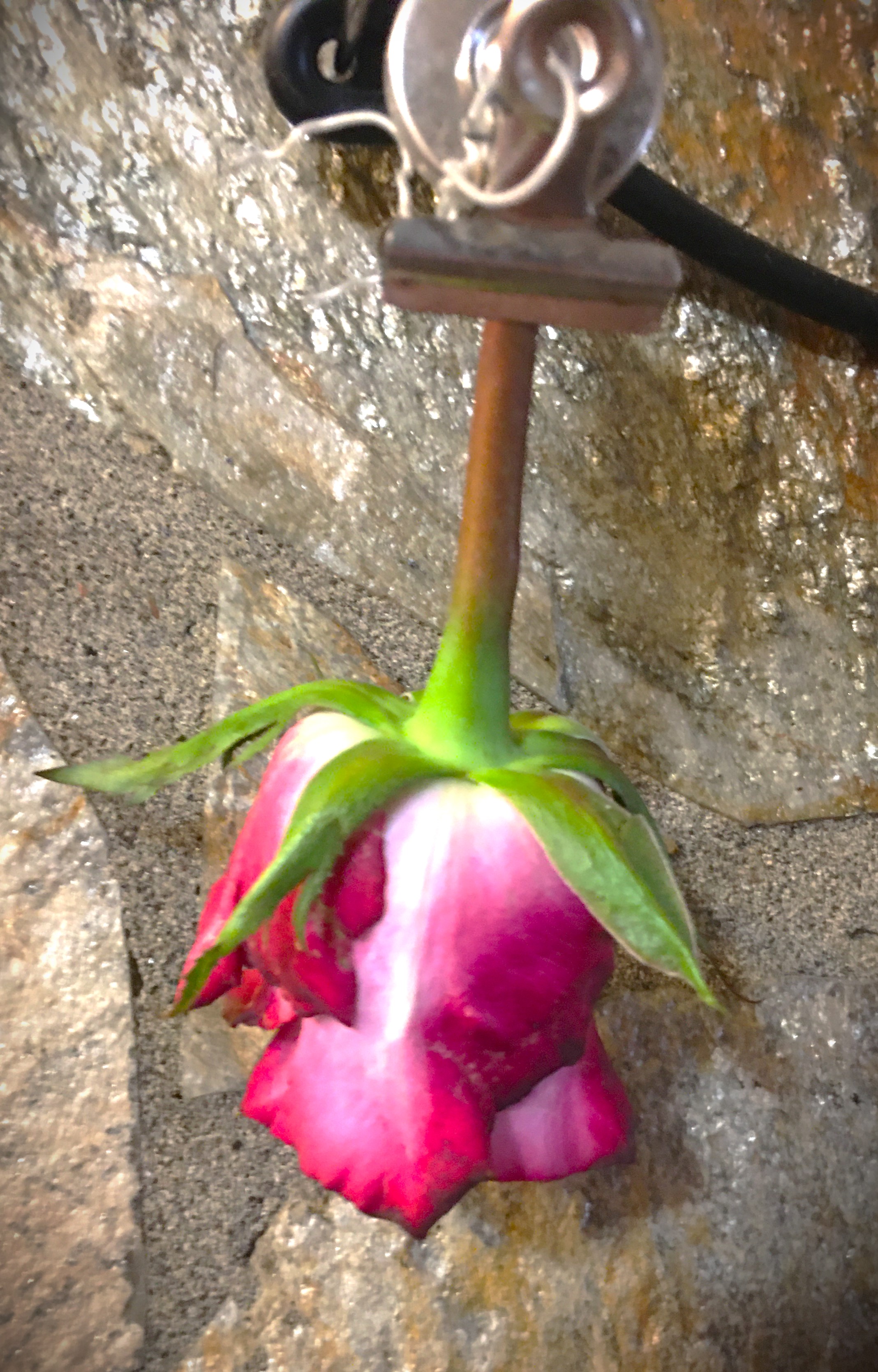
The first is to hang the roses upside down to slowly dry them out. The benefit of this method is that all the vitamins and natural compounds that our bodies benefit from are at a higher concentration when they are dried at a low temperature and slowly.

Ideally, the most benefit would come from using the petals fresh. And while it is possible to use fresh ingredients in soap making (I make orange colored soap using pumpkin puree), there’s no way of breaking down the petals for a smooth and consistent colorant unless you want to use a blender and puree it with the water content of your soap. While it’s not a bad idea, unless you grow roses year round (which I don’t) you have a limited supply due to the window of fresh flowers available. (This is the reason why dried petals are best for me.)

This drying method is slow and takes time. Also any white component will yellow as it dries out. This can affect your over all final color depending on which rose you use. With the red rose, not so much. But the other two, the tinge will be noticible.

So there’s the second method, using a dehydrator.

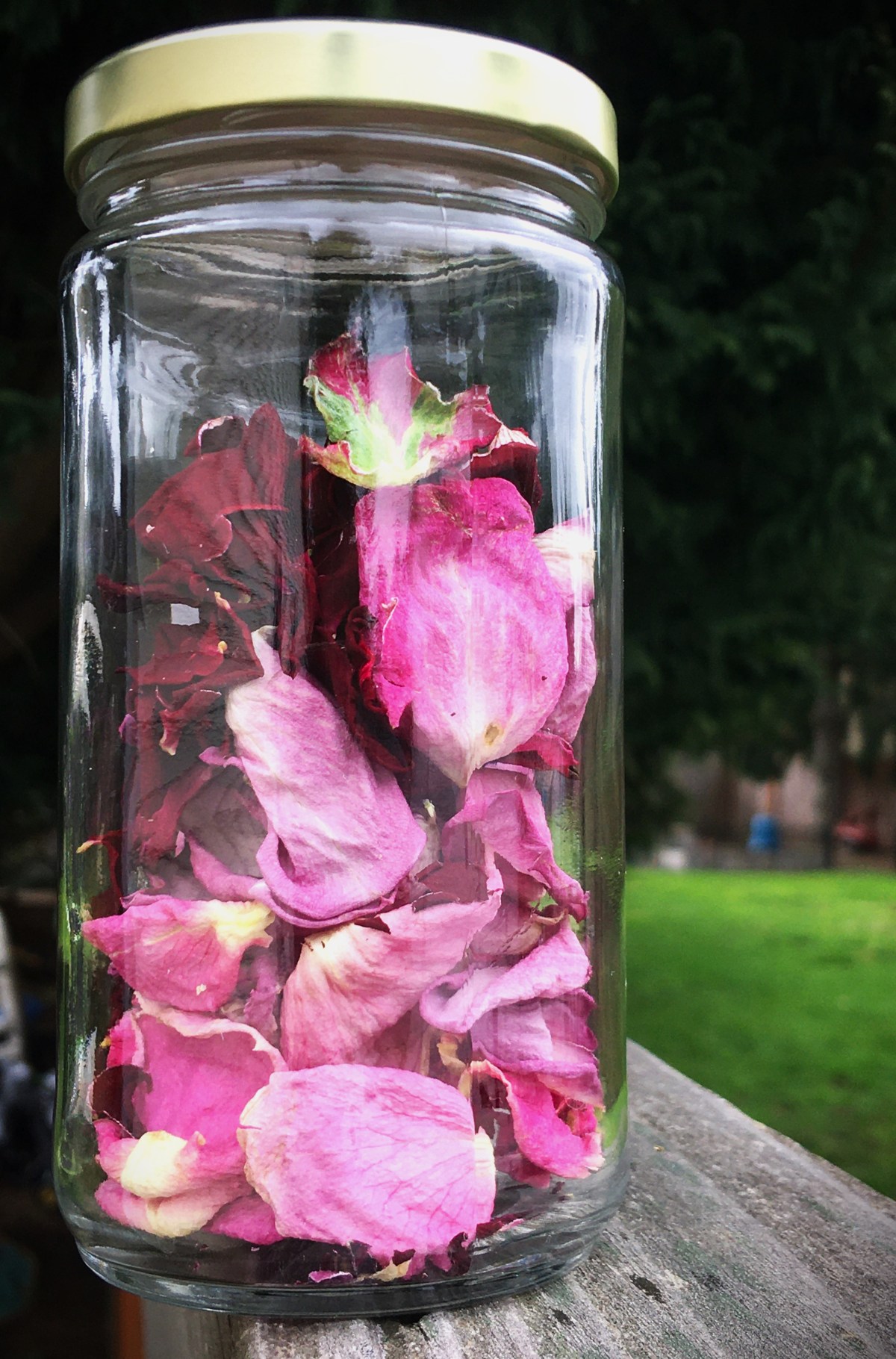
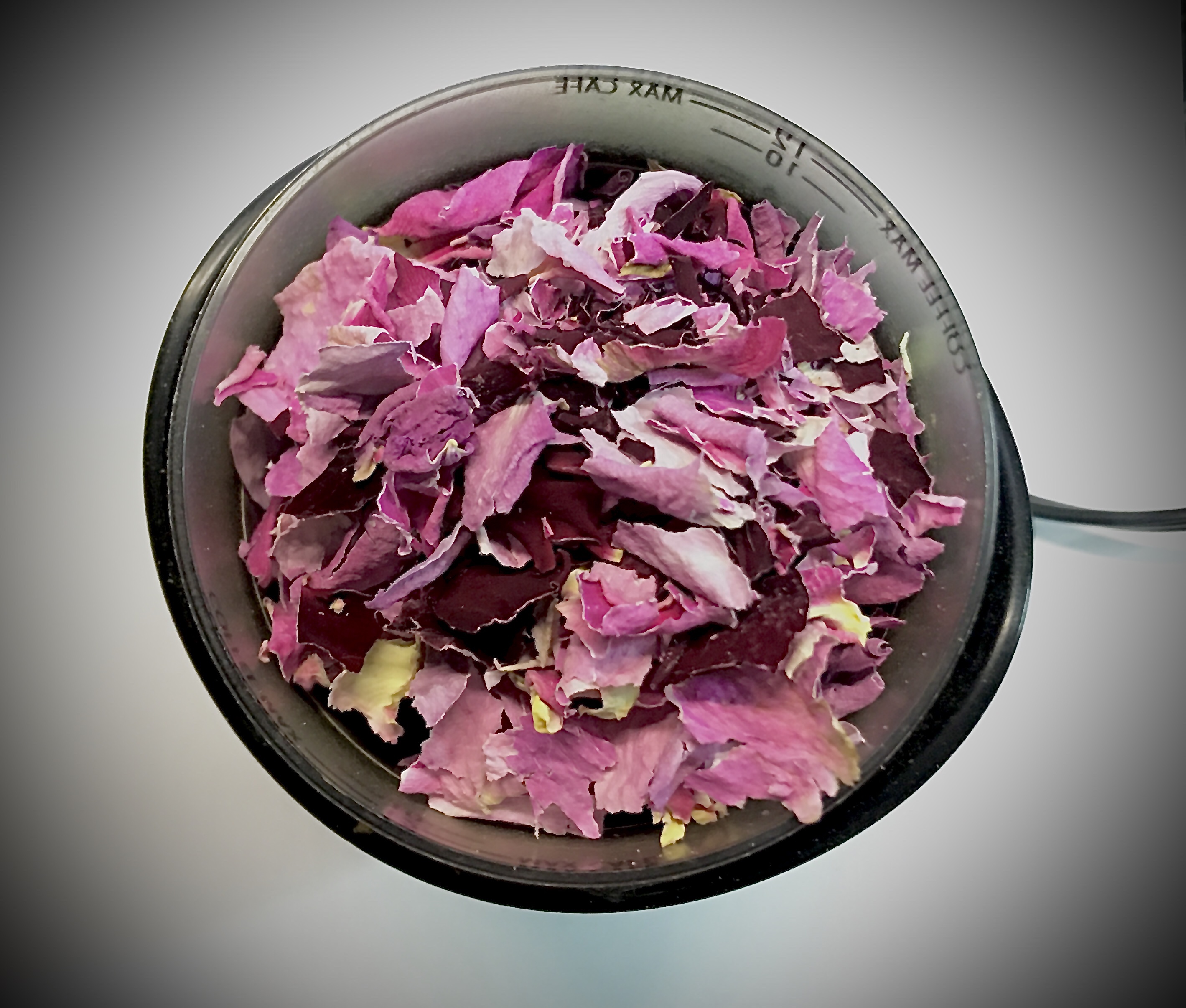
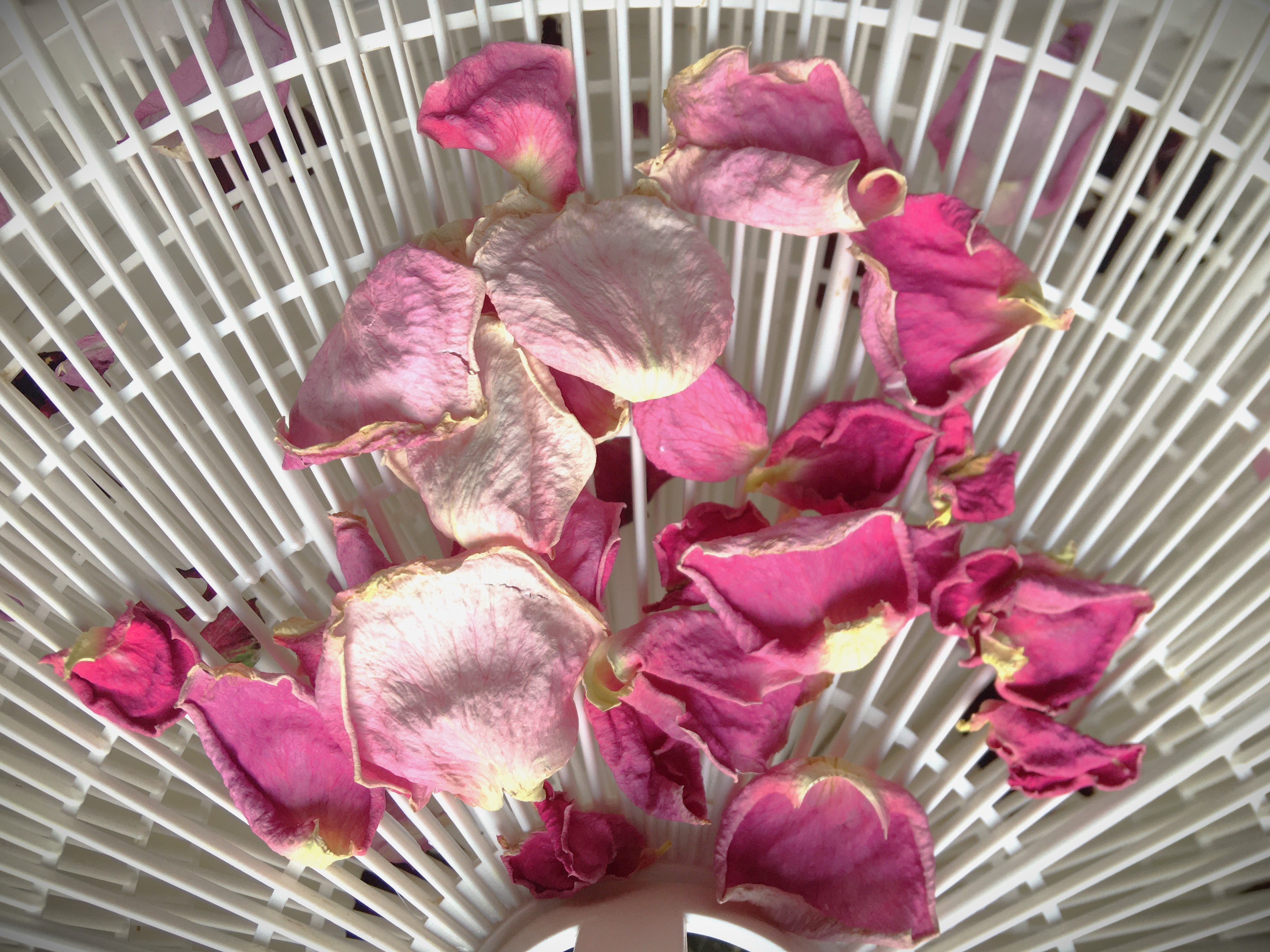
The benefit from using a dehydrator is that petals are finished drying in about 24 hours (at 90°F, the lowest setting on my dehydrator) and their colors are only affected by growing darker.

As you can see here, the white component on the pink flowers have not discolored too much. This is great because when I turn these petals to powders, I’ll retain a pink like quality.

Before I move on to finishing these petals, I want to mention that if you want to make a natural confetti for cake decorations or throwing for a party/wedding celebration, all that you need to do is crush your dried petals by hand and store them in an air tight container (like a lidded glass jar) to prevent them from rehydrating due to humidity in the air.

As you can guess, with the fact that there were lavender inner petals on the second rose (the one with the variegated pink and white outer flowers), this is the reason why I blended in the red petals with the pink ones, to keep the pink and stop the transitiontoward purple (although I’m not opposed to purple soap.)

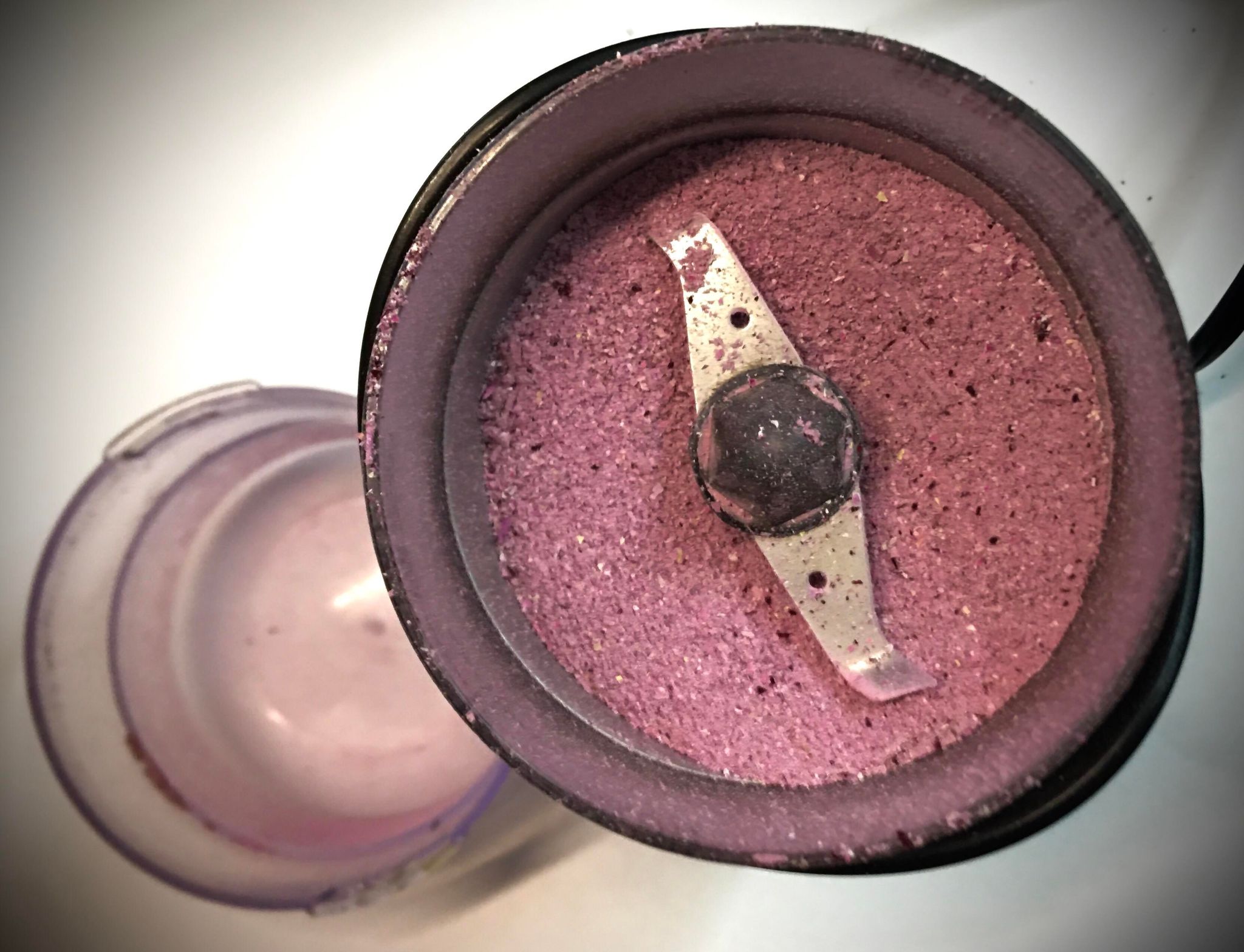
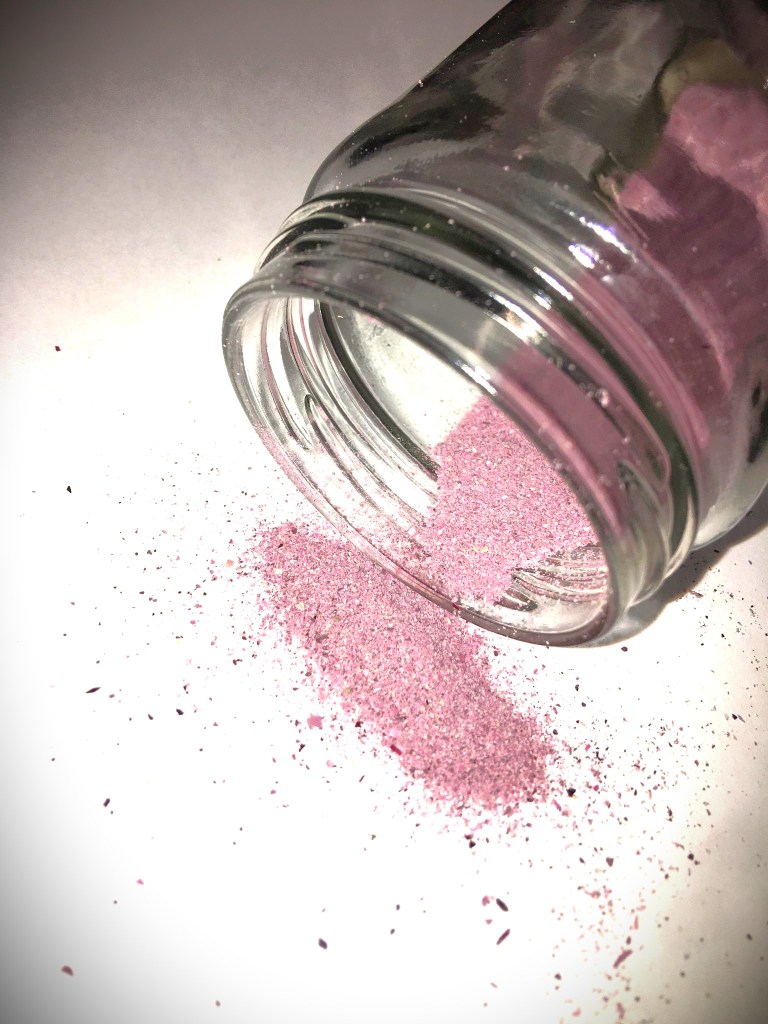
To make Rose Powder, all you need to do is put the crushed petals into a coffee or herb grinder and run it until you get the consistency that you are looking for. Because I’m looking to make a colorant for my soap and don’t want to have flower chunks in it, I took the powder down to a very fine grind.

The fun part about Rose Powder is that you’re not limited to use it as a natural dye or colorant. You could dust this on the icing of a confectionary dessert. If you want to make pink pasta, use this powder as part of your dry ingredients. Mix the powder with a sugar or salt and you have a pink sugar or salt rim to your favorite beverage.

No matter what celebration you have coming up, keep this idea in mind. If you want to dress put your Easter cup you can make a sugar rim using all sorts of different colored edible flowers. Calendula gives you yellow/orange, Violets blue/purple, Hibiscus yellow/orange/pink/blue/purple, there are so many other flowers. If you want to see a quick list of different edible flowers, here’s a jumping of point here.


What unique way do you use flowers?

Processing…
Success! You're on the list.

Leave a comment

Advertisements
Advertisements

Does it really matter???

Before I answer this question, I should put it in a framework. In some instances no, it doesn’t matter if you don’t follow directions on a recipe, or do things out of order. And in other instances, YES it absolutely matters if you do things in the right order AND measurements.

What is the determining factor?

The item you are making.

For example, cooking and baking. I will absolutely advocate experimenting. Yes, even with bread (which we’re always told is a science and should never be deviated from). I’ve gone in left field with bread recipes and have had success.

How can you have success?

Photo by Ron Lach on Pexels.com

Know the science. If the ingredient is not part of the active component, it’s just there for flavor. Experiment away. Yeast (going back to the example of bread) is a living organism and has preferred temperature and environments for optimized leavening activity. This is the science part that you cannot change no matter what you toss in the bowl. Kill your yeast, there’s nothing you can do (even following the recipe perfectly) that will get that bread to rise.

So by all means, if you want some fancy bread with herbs tossed in to complement a meal you’re making, do it! Use a recipe you’re familiar with and add the herbs you want to add. Go ahead and baste the bread with salted garlic butter right before cooking it. Modify to your heart’s content.

Advertisements

When does it really matter?

Soap making is definitely one of those times where you must follow the recipe.

Mind you, I’ve been less than precise where I’ve added a couple of grams more or less of the fat/oil components of the recipe and the bars have turned out fine. Some fat/oil are known for making a softer bar, so be prepared that if you use more of a softening fat/oil, your bar is going to turn out softer than if you were more precise. But the soap is still soap and still becomes firm when you cure the soap.

Just because I brought this subject up, here are fat/oils that affect the hardness of your soap: Sunflower oil will make a softer bar. Harder bars of soap can be obtained by using Cocoa Butter, Lard, Palm Oil, or Tallow.

Take the time to do a quick search and learn what all the different fat/oils do. Many contribute multiple attributes to your soap. Some attributes you can find are lather, shine/conditioning, oil control for acne, helping dry skin, and so many other factors. It really is fascinating to see what can contribute or irritate your skin’s health!

And when you make soap, the ingredient that it absolutely matters how you use it is Lye (sodium hydroxide for bar, potassium hydroxide for liquid)!

Of course there are the standard safety warnings: use in a well ventilated area; wear long sleeves, gloves, and eye protection; and use equipment that are least reactive to this caustic chemical (use glass or plastic).

But this particular ingredient, it absolutely matters how you use it!

Here’s one way that I messed up!

Disclaimer: At no point in time am I ever encouraging you to go against directions with caustic ingredients. At all times use safety equipment and be aware of what you are doing. Understand what you are working with, what reactions are happening, and never leave a project at a volatile moment in the process. Be present. Be aware. And have safety equipment and procedures in place. And always work in an environment free from distraction.

Even know I don’t know why I thought I could make soap during the day when the kiddos were awake. There’s a reason why other women also tell you to focus on soap making after you put the kids to bed for the night. I knew exactly why and I still chose to give into the illusion I could do this and it would turn out all right.

Nope. Even nap time is not a good time to make soap.

Photo by Mikhail Nilov on Pexels.com

After the frazzle of getting the kiddos to go to sleep, I forgot that the recipe I was using did not call for water (to react with the lye). Instead I was using Aloe Vera liquid (which acts like water in this recipe). I put the Aloe Vera in the bowl that I was melting down my solid fats (coconut oil being one). I caught this accident when I grabbed my Olive Oil to measure out.

I so wanted to kick myself!

Instead of wasting all these ingredients, I decided to move forward and see what happens when you make the mistake and proceed with the batch.

The first thing I learned, you can’t sub out a fat/oil for your “water” ingredient.

This comes back to science–which you cannot change no matter how much you wish you could. Olive Oil did not dissolve the lye. The chemical reaction with the lye never took place until I added the fat/oils into the bowl and started mixing. The Aloe Vera finally came in contact with the lye and the reaction could proceed.

And this is why soap recipes are broken up into two components: lye and fat/oils!

When your lye and water start to react it produces heat. If you have your whole recipe in a bowl when this happens, your fat/oils are instantly heated by the reaction. What follows is the accelerated rate of saponification. And if this happens before your fat/oils are emulsified with the lye solution, then you are faced with all the problems of soap making.

In this particular instance, my soap broke. I had an oil slick on my hands. And I know for a fact that my soap wasn’t set up because it hadn’t had the time needed to emulsify everything together.

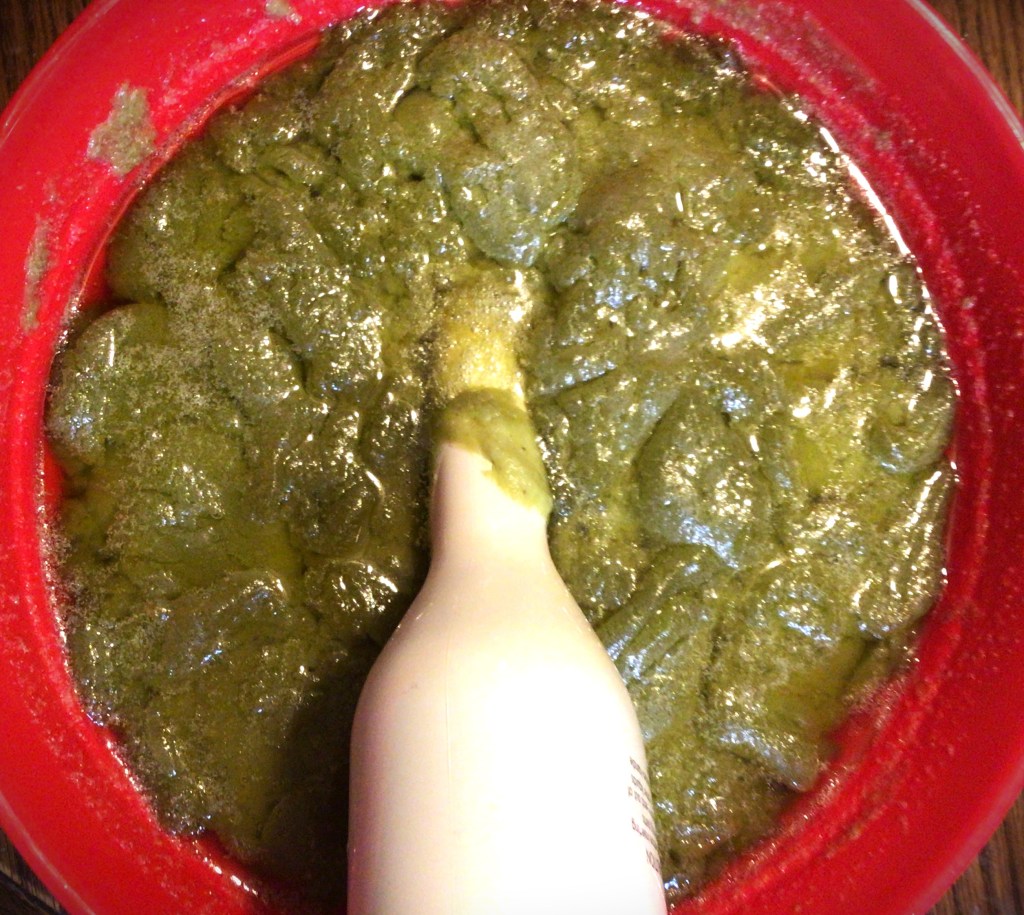
And the more that I blended the soil back into the soap version of cottage cheese, the problems didn’t go away. By the time I got the oil slick to disappear, my soap seized up!

At this point there were only two options. One, I could throw everything away and start again. Or Two, I could see if this would work.

Normally, everyone tells you to take the blending of your cold press soap to a light trace. I’m not like everyone else. I find that a light trace gives me a soft soap (even when following a recipe to utter perfection). So my comfort zone is to take my soap to a medium trace. It gives me a firm soap that doesn’t melt in the shower thanks to young hands who sometimes leave the bar in the water. And it still allows me to make bars without air bubbles. (I’ll come back to that trick in just a moment.)

I kept blending that seized soap past my usual medium trace and prayed to see the final signs of emulsification. This one is hard to describe in words, because this is just where experience comes into practice–you know when you’ve emulsified.

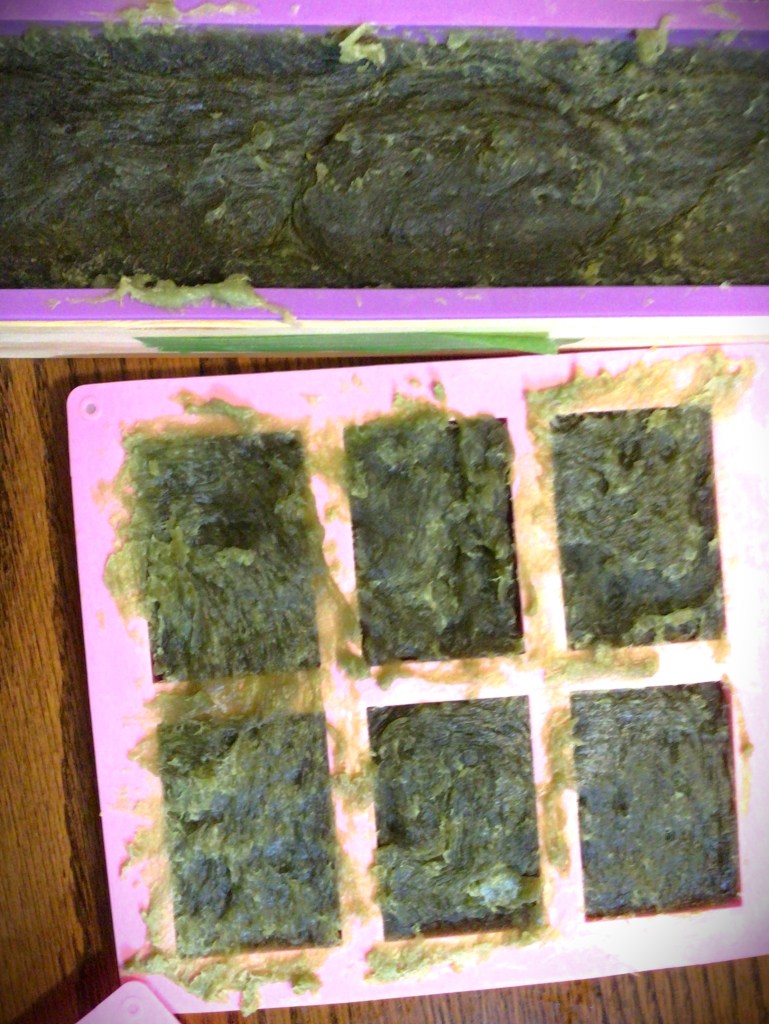
At this point the soap was so thick from seizing and still being worked that I only had a few minutes before complete loss. And I didn’t even have time to stop and put in my scent. So I stopped and immediately transferred into my individual soap molds and my loaf mold.

Tip for Removing Air Bubbles: This one is taken directly from the baking world of cake making. Have you ever seen someone drop a cake or cupcake pan down on the counter several times? They were removing the air bubbles to keep an even crumb. I use this same trick for soap making, especially with the batches of soap with a heavier trace.

I dropped my molds like there was no tomorrow, to remove the air bubbles. I knew they were there. And because of how I could or could not drop the molds, both types had different outcomes.

The individual molds were not rigid and could only use a light drop. The silicone wouldn’t hold up to much gravitational help. As a result, you can see here how these soaps turned out to have a cratered texture.

On the other hand, the loaf mold has that beautiful wood frame (thank goodness for jointed corners!) which definitely could withstand a little help from gravity. I dropped that loaf mold several times until the soap started lying flat in the mold and no more air bubbles came to the surface. And as you can see here, no one would ever know that I had trouble with this batch of soap. (These ones again will be for family use because I didn’t include the scent.)

Advertisements

What if recovery is not possible?

This time I was able to pull soap out of that massive mistake. But I already had a backup plan in my back pocket in case I unmolded the soap and there was total devastation.

  • Melt down the soap and mix it with a correctly formed soap mixture. This is what soap makers do all the time when they forget to mix in a scent or even a couple of other errors. Especially when you do a cold process of soap making you have a little more time to decide if you want to fix this mistake by melting down and trying again.
  • Cube or shave the soap down into decorative pieces and add it into a soap batch that worked out better. If you’ve ever seen soap that has another color “floating” in the bar of soap. This is the technique they use. The day that you unmold these soaps and cut them down, they are solid enough to add to a fresh batch of soap. You will just cure the bars on the time scale of this fresher batch of soap. (Tip: make sure that this fresh batch of soap is stopped at a light trace. This will help get around all the corner/curves and get into any craters without the need of dropping the mold to remove air bubbles–which would throw off the suspended look.)
  • Use it for other DIY projects. Make sure that you still cure this soap because you don’t want the lye to cause problems with your other projects. But you can use this soap to grease that sticky glass slider track or any other trick that you’ve seen elsewhere.

Just because this mistake had a “happy” ending…

I want to give this disclaimer one more time.

Disclaimer: At no point in time am I ever encouraging you to go against directions with caustic ingredients. At all times use safety equipment and be aware of what you are doing. Understand what you are working with, what reactions are happening, and never leave a project at a volatile moment in the process. Be present. Be aware. And have safety equipment and procedures in place. And always work in an environment free from distraction.

Sometimes, you just need to know the reason why you’re told “this is the way that you do this”. As I said earlier, in instances where you accidently gravitate away from a recipe, you’re not going to start a fire or blow your house up by adding herbs or seasoning in a recipe that you’re told to stick to. But when you’re working with chemicals, the process that you’re told to follow is there to prevent serious issues from happening. There’s no doubt a long list of possible things that could happen by mixing soap out of order, most of them causing harm to your body.

Advertisements

How can you prevent mistakes from happening?

  • Make sure you’re in the right headspace for your project. (You’re not distracted or sleep deprived as examples.)
  • If you’re rushed, stop and find a different time to do this project. (You are in control.)
  • Rewrite your ingredients in the order that you will use them.
  • Rewrite you steps in precise order (short and easy to read).
  • Before you start your project, organize your materials in groupings of what you’re adding together, in the order that you will add them.
  • Pre-measure out everything into separate containers.
  • Even if you’re used the recipe before, reread through the ingredients and steps and make sure you remember what you’re doing.

Even when you do prepare, mistakes are still going to happen. Know in advance what you’re going to do. Have plan B, C, and D already in your head. This allows for quick thinking and recovery. One of these plans needs to include what you do when you need to dispose of a failed project.


Here’s the final cut

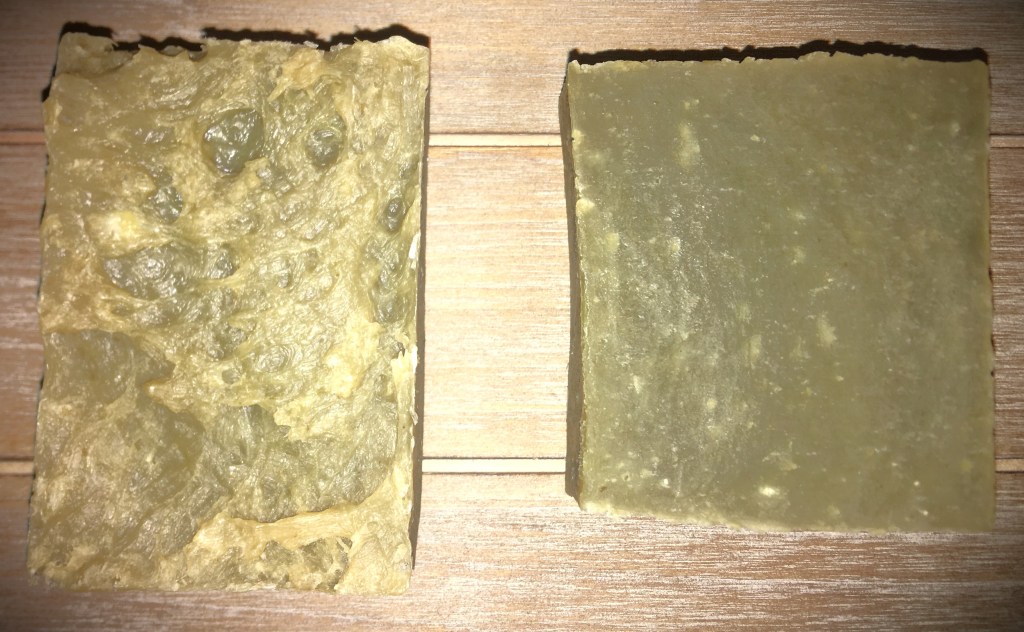
As I walk back through all that happened, I’m actually still surprised by how things worked out in the end, having dealt with broken soap and fixing it until it seized. When you look at these pictures you will see that the bar on the left (the soap I put in individual molds) definitely show the war that took place. However the bar on the right (cut from the loaf mold) looks like the only issue was minor cosmetic issues.

Most of the issues on the loaf mold soap are really seen from the side view. And the worst of the individual mold is seen in the face picture.

As a point of reference, if you ever hear a soap maker describe a problem as looking like brain matter, what they are describing is the face shot of the individual mold. It doesn’t literally look like a brain, but it has webbing and crater like surface.

Hopefully you never have to go through any of this while making soap of your own. But here’s at least some conversational information that you may or may not hear from anyone that you’re learning soap making from or in any of the countless videos on YouTube.

Above all, at least now you have some information and images to go with everything else that you are learning elsewhere.

Processing…
Success! You're on the list.

Leave a comment

Advertisements

Lather Up

How was your Christmas? Were you able to spend time with those you love?

In my house the whole month of December is difficult. But that’s the life of having a handful of young children in the house. I use to think that starting to decorate at the beginning of December and putting out presents as soon as they were wrapped was adding to the incessant build up of excitement and driving mom bonkers.

Nope.

We did things differently and things didn’t improve. My gift making still happened at night. Or should I say lasting into the wee hours of the morning. Lets just say that coffee is my friend.

But….

This gift, especially the soap, was probably my favorite gift to give.

I didn’t know how many people were having skin issues this year. And most people don’t talk about what they quietly suffer with. Part of it is the “I’ve tried everything” and no product on the market works.

The truth is that the local grocery stores have aisles dedicated to soap. And when you’re in that aisle you grab what you’ve purchased in the past (which may have been the brand that you grew up using) or it’s a sale based off of the label and its marketing claims. And we think that these area our only options.

Advertisements

You have another option

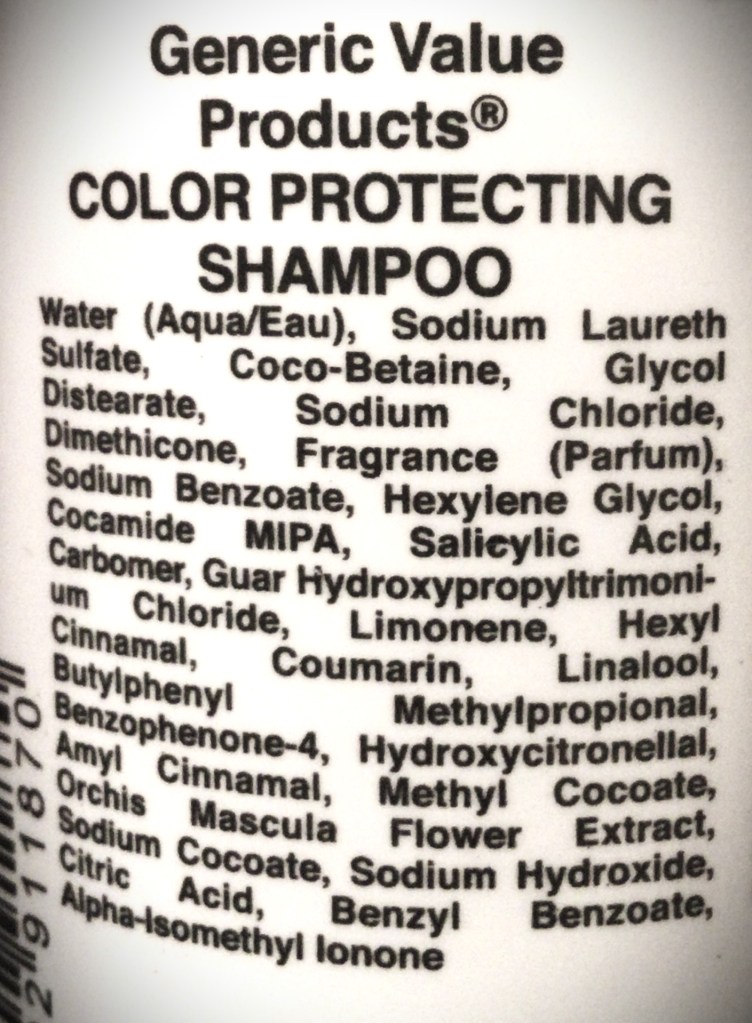
This is the video (three ingredients) that I watched that set me on the path of making my own soap, almost 3 years ago. It was an empowering feeling for me to make my first soap, Goat Milk Soap (4 ingredients), and stop buying the store bought soaps which have an ingredient list that looks something like this:

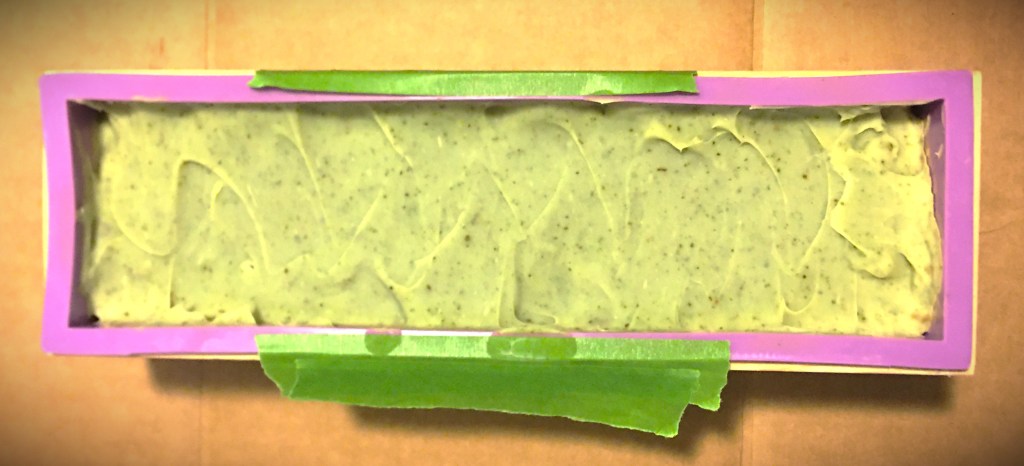
The comfrey soap in its mold.

Even though I took many chemistry courses in college, I can only tell you half of what is on product labels like this. If my children can’t sound out what the words on these kinds of labels have, that means that those ingredients are stuff made in the product labels of these soap corporations. Companies do this (take organic or natural items and change one chemical compound in the chain) they have made something they can patent and prevent other people from recreating (by pain of legal actions).

Soaps are made out of three items and three items alone: water, lye, and fats.

Yes, even those soaps that people claim are made without lye are actually made with lye. There’s a product on the market, melt-able soap base, that people claim is lye free but that is not true. This soap base is where the emulsification of the lye and fats has already happened for you. The lye and fats have already gone through the process of combining and so the lye has become safe to touch and no longer corrosive like in its original form (whether you use a crystalline lye or wood ash).

Advertisements

Here’s an example of a soap base. The first 5 ingredients are fats, followed by water, and then lye (sodium hydroxide). The end of the list is all the little extras that they added in to make their soap base unique from the others on the market.

In essence, this is an already made soap that a person at home can reshape and have the option of adding other things into for further personalization.

If you’re nervous about using lye, a soap base is going to be a good option for you. It’s not the best thing for your skin but definitely better than all the major brands on the store shelves.

Note: When making soap from scratch, with lye, you will need to cure your soap. This means that after you remove it from its mold (after it’s solidified for 24-48 hours), it will need to cure. This means that the soap sits for 4-6 weeks to dry out. While the soap dries, this allows the chemical transformation through emulsifying the lye and fats, to finish its work. When completed, they lye is no longer corrosive. The lye and fats molecular structures are completely joined and stable

Advertisements

Ingredient list from the soaps I made for Christmas

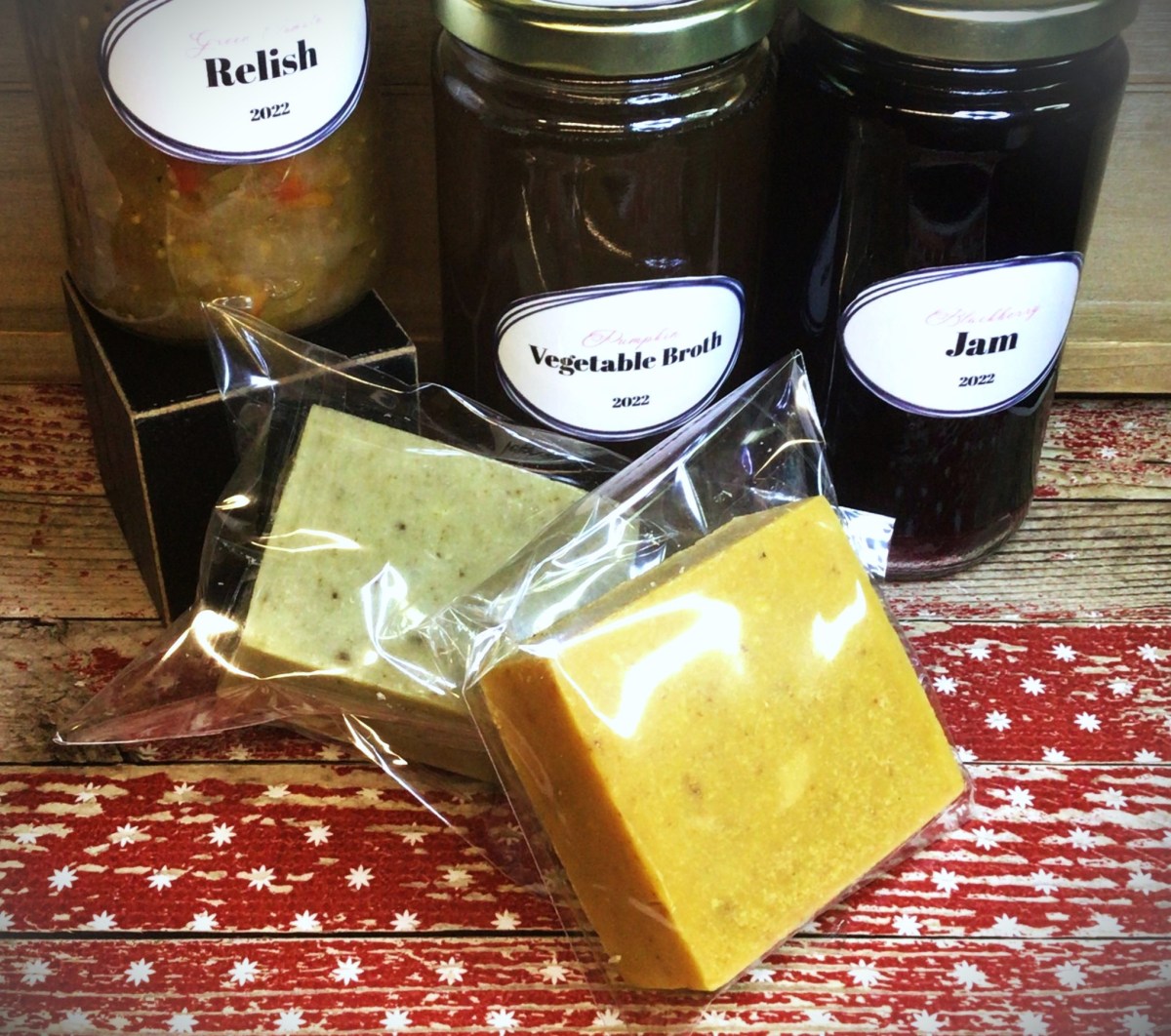
The two soaps that I made this year were Pumpkin Oatmeal and Comfrey Tea Tree.

Comfrey Tea Tree: Olive Oil, Aloe Vera, Coconut Oil, Avocado Oil, Lard, Sodium Hydroxide (Lye), Comfrey, Bentonite Clay, Tea Tree Oil

Pumpkin Oatmeal: Coconut Oil, Olive Oil, Distilled Water, Lard, Sodium Hydroxide (Lye), Almond Oil, Pumpkin Pure, Rolled Oats, Honey

Both soaps have only 9 ingredients that anyone can understand, colors of the soap come from the natural ingredients, and I can tell you the purpose of each of these ingredients and why they are good for your skin. You don’t need the lab chemicals to create lather or bar hardness. You don’t need the lab fragrances to give you a pleasant scent to wash with.

Note: “Fragrance” listed on an ingredient list of a mass produced soap, approved by USA FDA regulations, is all that has to be noted on a label even though it can include up to 200 different “fragrances” to make the scent of your soap. This is allowed because it’s modified in the lab and falls under proprietary patent laws.

Some of the comfrey soap after I cut it and before I set it aside to cure.

I know that not everyone approves of lard use in soap, usually for religious beliefs, but this fat can be switched out for tallow (beef, goat, or deer) which can align with religious beliefs. Or these animal fats can be omitted completely for the wide world of plant oils.

The variety of fats, found naturally in the world, each have different properties for your skin health and how it functions in a bar of soap. For example, lard is a single ingredient that adds hardness to the soap bar, creates lather, and adds to the shine and conditioning/softening of skin and hair.

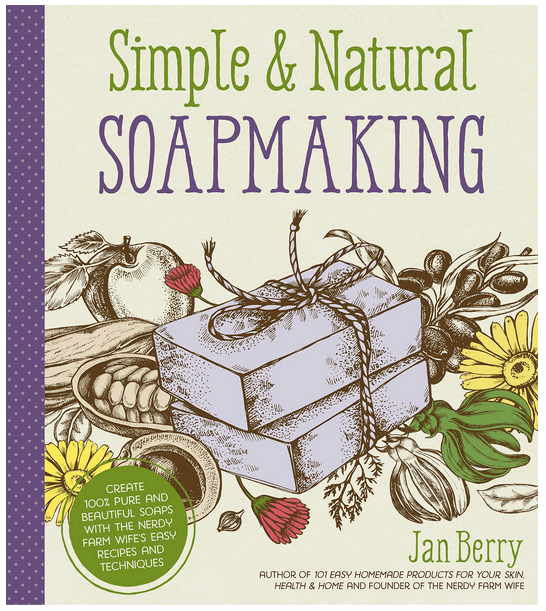
One book that I highly recommend for understanding how fats work in soap making and benefits to your skin and hair is Simple & Natural Soapmaking by Jan Berry

Advertisements

Origin of the fats is also going to play a part in how it reacts with your skin.

Shea Butter is not all the same. In fact, this week I just learned that not only is there a difference in quality of Shea that comes from heat vs. cold pressed processed Shea, but also the region. If I remember the documentary correctly, Uganda Shea butter is absorbed quicker into the skin than the Shea produced from other regions. And I never would have thought it, but the beauty industry is already capitalizing on the difference of absorption rates of the Shea butter produced from eastern and western Africa. It’s not all the same.

So if you by chance tried Shea butter beauty products and felt like the fat just sat on the top of your skin instead of being absorbed as you were promised, the reason isn’t because Shea failed you. It’s because you used a product that had a lesser quality of Shea.

In this instance, if you can afford to purchase a higher quality of Shea butter, all evidence shows that this purchase for a higher quality is most definitely well worth it. I’m all for finding the deal, but moving forward I’m now going to purchase a better quality of Shea.

With animal fats, whether the animal grazed on foods naturally available to the animal vs. grain fed and various injections will all be passed on to you through your skin.

Why what you put on your skin matters

It took me going through my second quarter of Anatomy & Physiology to learn that your skin is your largest organ in your body. Your skin keeps all your insides in, but it also is a filter from the outside world trying to come inside you.

I really don’t know why I was so surprised by all this because growing up we all have the conversations about needing lotion for our skin. We already know that we can correct some conditions by adding lotion or medication, depending on what’s wrong with our skin. But we never think about what we are adding to our skin daily that’s potentially causing the problems to begin with.

An example of a soap label. Notice the difference in readability and ingredients compared to a bar of soap I made (my shampoo bar, currently curing, is the same ingredients that the bar of soaps listed above).

We’re told to wash our hands regularly, especially during cold and flu season (not to mention the marketing for this habit over the last three years). With this increase reminder to wash your hands, how long is that ingredient list? How many of those ingredients do you know how to say, let alone identify what they do in the soap? Is it your hand soap that is adding to your cracked hands during the winter?

For example, my hands crack and bleed every winter. There has never been a lotion that I could find to ease the pain, let alone prevent the cracking in the first place. Christmas was when my Comfrey soap finished curing and I could use this recipe for the first time. Just by the first use alone, the redness of my irritated skin cleared up. The cracks decreased in size by half and by the next day they were all healed. I still have dry knuckles because I stopped using the Comfrey soap (leaving it for my son who has more sensitive skin in need of good soap). The Pumpkin soap isn’t as healing, but it’s still preventing the cracks. The Comfrey soap has aloe vera in it (which the pumpkin does not), so I might have to change that recipe to add some aloe in.

But I think you can start to see just by how your ingredients work, the natural function of things found in your garden, you can easily make a soap for yourself, family or loved ones that meet your skin type needs and not have to spend hundreds or thousands of dollars on store products that just don’t work.

Advertisements

There’s just so much to talk about with soap making. I will have to come back to this subject in upcoming posts. But I wanted to start the thought in your mind that you really can make your own soap. You don’t have to just survive and live with the condition(s) that you currently have. The first step is to start by cutting that ingredient list in half. The fewer the ingredients and shorter the syllables of the words mean that you understand what you are putting on the largest organ of your body. You can pinpoint what irritates your skin and you can pivot by switching out a fat or other ingredient that offers a vitamin or mineral that your skin actually needs.

Leave me a comment below if you’re looking for a solution to an issue.

In 2023 I’m looking forward to talking more about how herbs and garden ingredients can benefit your body. And all you have to do is add them as a seasoning to the foods you already cook, which benefits your body from the inside. And you can already start now with making soap to help your body from the outside. Skip the lab ingredients and start using luxurious soap that uses all natural ingredients which can eliminate all the extras that you need to “fix” what other products are doing to you.

For example, one lifestyle change for my family is that we are switching to homemade shampoo bars. My goal is to find the recipe that makes a shampoo bar where I don’t have to use 3 different conditions to combat the dryness that I’m convinced is caused by the long ingredient list on my shampoo bottles.

Happy New Year!!!


Products that were either mentioned in the post or items that you may find valuable in making your own soap.

This post contains affiliate links that give us commissions on products purchased at no additional cost to you. These items listed here are from Amazon but may be purchased at local markets. These products were paid for by us and are not the only products available.

Simple & Natural Soapmaking by Jan Berry

After watching videos and reading different books, this is my personal favorite resource for recipes, ingredient information, and general soap making information.

Soap Mold Making Kit

I prefer cutting my own bars of soap and this is the set that I wished I would have bought the first time. The cutting block takes the guesswork out of eyeballing a uniform and straight cut.

Silicone Soap Mold

This is great for just getting started and you don’t want to think about portioning out bar sizes. The disadvantage is that the silicone is very flimsy under the weight of the soap. So make sure that you have cardboard or another hard surface to tansfer the molds to a different location while the soap solidifies.

Processing…
Success! You're on the list.

3 responses to “Lather Up”

  1. Cassandra Avatar
    Cassandra

    Valid information worded in layman’s terms. Thank you.

    Liked by 1 person

    1. Jihn baker Avatar
      Jihn baker

      My granny made lye soap, used it all her life, never had skin problems, i make basic lye soap myself, 3 lbs of greese, bacon preferably, but the drainings off cooked meat, 2 gallons of water, and one can lye, , i greate up some for clothes soap, i use it in place of aal types of soap, melt it and mix with water for dish soap, works better than cascade in the dish washer, the only problem is aquiring the lye, it extreamly hard to get in the stores because it is one of the main ingreidants in the manufacture of meth, and everytime i make soap i have to call the police and noify them, so i dont get charged with making meth, it smells the same, making meth or making soap,

      Like

      1. Pacific Northwest Event Design Avatar

        There shouldn’t be any fear in purchasing lye. I’ve been purchasing it for a few years now and have never had to report to a registery. There are certain over the counter medications that I’m aware of that there is a registry because of of it being associated with drug manufacturing. And in the instance of that product registry, there is a notation of who is buying what and at what quantity. For the manufacturing of drugs there is a specific amount that law enforcement starts paying attention to. For the average person, making soap at home, they are not going to come close to hitting that limit. I mention all this to prevent unnecessary fear from being spread.
        Thank you for sharing how you make your soap! And also sharing how you use it to also to clean clothes and dishes.

        Like

Leave a comment

Advertisements