Saving Seeds

I know this isn’t talked about in early spring, because the focus is putting seeds in the focus is on planning and putting into ground right now. BUT….

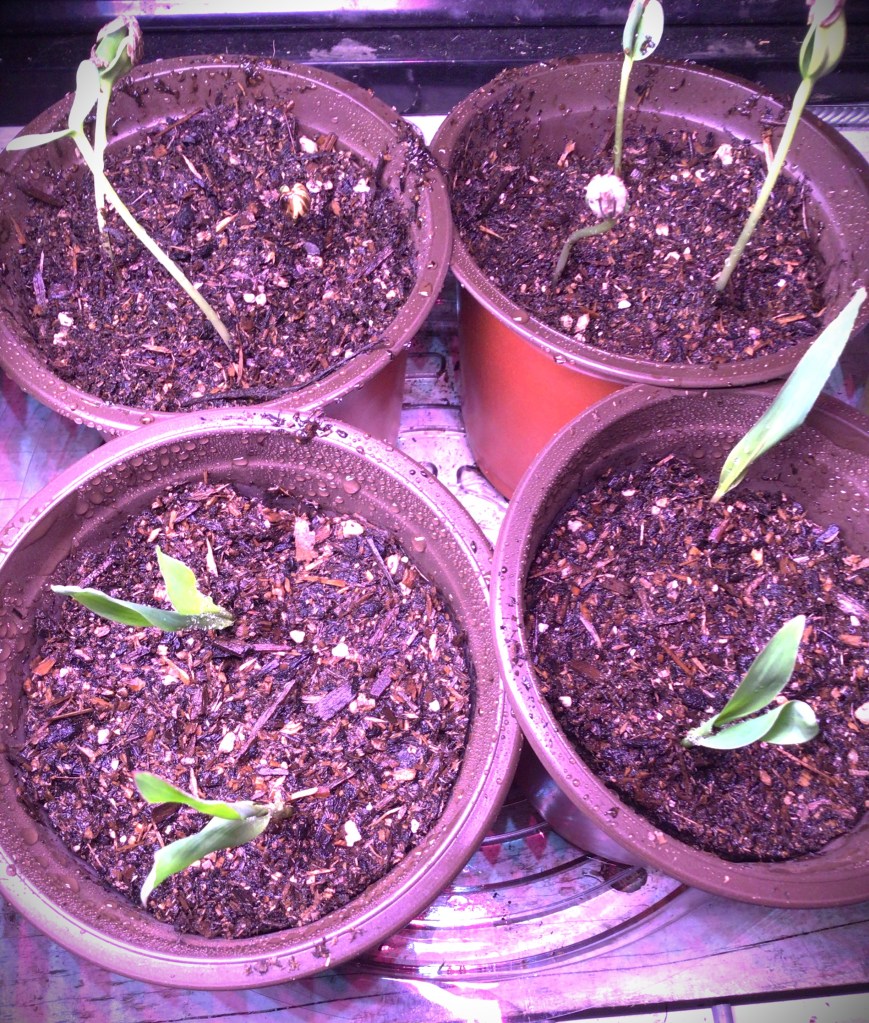
Here’s my garden right now. Even before the seeds go in the ground, I still have seeds that are preparing to be ready to harvest.

Talking with others who are expanding their seed saving skills, they haven’t yet experienced saving seeds from the Brassica family (cabbage, kale, cauliflower, broccoli and others). One reason for this is most likely because we grew up being told to clear out garden beds at the end of the year. But for gathering these seeds, you need to leave the plant in the ground after you’ve harvested.

In previous years, I harvested cabbage in the spring after the pods have formed and dried. But when I let this bed go fallow, I left the cabbage in for a second year. Mainly it was to see what the life cycle of cabbage looks like after I’ve long pulled mine.

Advertisements

In the second year with cabbage, any additional heads that grow are much smaller than the original year (for growing purposely, definitely not the best use of garden space). What I hadn’t counted on was a second gathering of seeds.

Why might you consider these seeds?

The general rule of thumb is that you save the seeds from successful plants–the biggest and best. But as I said, this second year cabbage didn’t really produce heads of quality in the second year.

Seeds are the memory of the plant.

The seeds of this second year cabbage not only contain the memory of the first year head growth AND it remembers the bad growing season this past year (unseasonably cold and wet that made me question if I’d grow anything).

Originally I wasn’t going to save these second year seeds because the potential passing on of tiny cabbage heads is not what I’m looking for. However the seeds do contain the memory of surviving through an uncharacteristic cold year.

So after going back and forth on what I’m going to do, I’ve decided to keep these seeds. I’m going to perform a comparison of first and second year seeds to see what the difference in performance will be.

This will be a future post since the seeds are not ready to do the comparison this year.

Advertisements

What is the life cycle of Brassica and their seeds?

Whether you’ve allowed your Brassica family plants go to seed or they just bolted on you when the heat of summer came, you may have seen something like this:
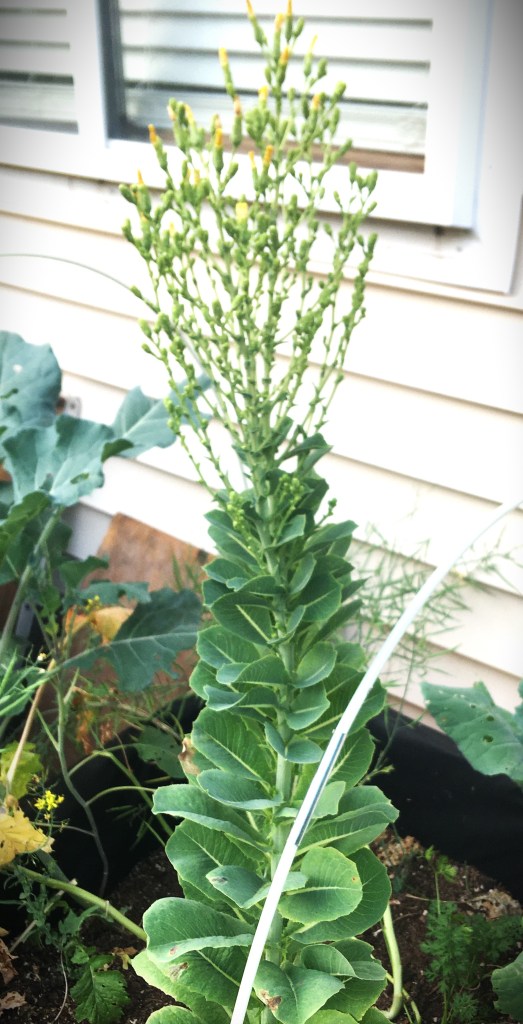
This was one of my rapini that bolted on me. The first thing that you see is the bolt.

Next, the flowers (which form the seed pods) grow for pollination. While there are still flowers you will see some of the seed pods developing.

Out of all the plants that I’ve collected seeds from, I think the Brassica family is the one that I’m most impatient with. I don’t know if it’s just my grow zone or everyone starts tapping their toe asking their plant, “Are you done yet?”

These pods remind me so much of beans. And I honestly expected them to bulge out more than you see above. But this is what the end of the seed maturing stage looks like, immature beans. Even though these pods are fully grown, they still aren’t done yet. They will turn beige.

Everyone I’ve heard always described them to turn brown. I translated that to mean that they would darken. But the first time that I saved these seeds, they started bursting open when they were beige in color. So once you start seeing the green fade from these pods, you know it’s almost time to pull the plant and collect the seeds.

What you are waiting for is the pod to turn papery dry. If you go out each day to check on your seed pods, you will get the feel for it when you see the first one pop open. The pod will look very much like this threaded hook:

Do you see how the center of this hook has a frame and then there is negative space?

Theseed pods of Brassica have the exact same structure. There is this frame like structure with negative space in the middle.

When the pod bursts, it’s the dry skin that cracks open and falls away. The seeds live in this center portion of the frame. So when the pods open, the seeds fall out and the frame remains on the Brassica stem.

The goal is to catch your Brassica with fully mature branches, dry beige skin, before they release their seeds. Once you accomplish this, you cut the branches off or uproot the whole plant.

If you can’t open a pod by rubbing it between your fingers, you will want to hang your branches/plant upside down in a cool dry place. This can take a week or two. But the pods will crumble.

Advertisements

Removing the Seeds from the Pod

Once the seeds opened in my hand, I chose to put the branches into a pillow case and tie off the open end. Then I gave the pillow case to my kiddos and told them to hit the pillow case against the deck!

This was perfect timing for this project because my kiddos were at each other and I couldn’t keep them from hitting each other. So I gave them an alternate action of being aggressive. After each one had a turn, the pods had all broken open and the seeds were all released inside the pillow case.

To separate out the seed from the chaff (stems and pods), I just used the traditional method of winnowing. I modified this by using a little modern convenience of a box fan on high speed. Because the chaff was so thoroughly dried out, they blew away with ease. And even though the seeds are small, they really do drop back down into the pillow case that I kept at the porch in front of my box fan.

Advertisements

If you want to see how this type of winnowing process is done, there are countless videos on YouTube. There are some that do this winnowing with Brassica seeds, but the majority is in relation to wheat and other grains. The process is the same. So whether you watch how grains or Brassica are winnowed, you will understand this process. There’s no need to invest in a winnowing box or other tool unless that is the path you want to go down. All you need is your seeds on a cloth and a wind source (whether natural or manufactured).

There’s no further step that you need to take in processing your seeds. Just store


Even though now is the time to plan and plant in your garden beds, I wanted to talk about saving Brassica seeds now. Where you plant your Brassica now for a spring crop, it will stay there for the rest of the growing season. And in some locations, it will need to overwinter to give your plant enough time to make its seeds and mature them.

This is a slow process. But it so worth it when you can grow hundreds upon hundreds of seeds in a single season and not be dependent on what’s available in future market sales.

What are your tips for saving Brassica seeds?

What other seeds do you save from your garden?

Processing…
Success! You're on the list.

4 responses to “Saving Seeds”

  1. Cary Avatar

    This post answered some questions I was having, thanks.

    Like

    1. Pacific Northwest Event Design Avatar

      I am so glad that I was able to help!

      Like

  2. Andre Avatar

    Love the unique perspective you bring to this topic.

    Like

    1. Pacific Northwest Event Design Avatar

      Thank you for reading! I hope you enjoy other posts as well.

      Like

Leave a comment

Advertisements
Advertisements

More Than Arm Candy

I have to love my husband who loves to give practical gifts. Usually he stays away from gifting flowers because they last for a few days before they’re composted. However, there are so many uses for not just roses but other flowers as well. While I’m going to be talking about roses here, there are so many other flowers that can be used in the exact same way!

For those who are unaware, roses are edible. (Before you do eat rose petals, make sure that they haven’t been sprayed with chemicals, pesticides, insecticides, or anything else that is harmful to you.) Roses contain vitamins A & C, Niacin, Potassium, Iron, Calcium, and Phosphorus. Some places where you’ll find fresh petals are on a dessert/cake or in beverages such as teas.

Advertisements

It’s not just the petals that are usable to our bodies. Rose hips (the bulb at the bottom of bud, harvested at the end of the rose season from the rose bush) is used in the beauty industry and baby products for the benefits it has to the skin.

The benefits to the skin is the primary reason why I decided from this last bouquet of roses that was given to me that I was going to use the petals for my next batch of soap.

I started making soap because I’m not okay with all the chemicals that are being used in soaps in the commercial market. Other than using soap dyes (which I’ve had my tub and skin discolored from bath bombs and other products) the mission I’m on is finding natural dyes to color my soap. For pink soap, I’ve seen soap makers use dyes or French clay.

Now Calendula is a well known floral natural food grade colorant. For red/pink colorant, Beets can be used in food. But anyone who’s worked with beets knows that your skin and clothes can be discolored. So I wanted to find a different red/pink colorant for my soap that I can grow in my garden. So I came to roses.
Advertisements

How to Process Roses

There’s two easy ways of doing this.

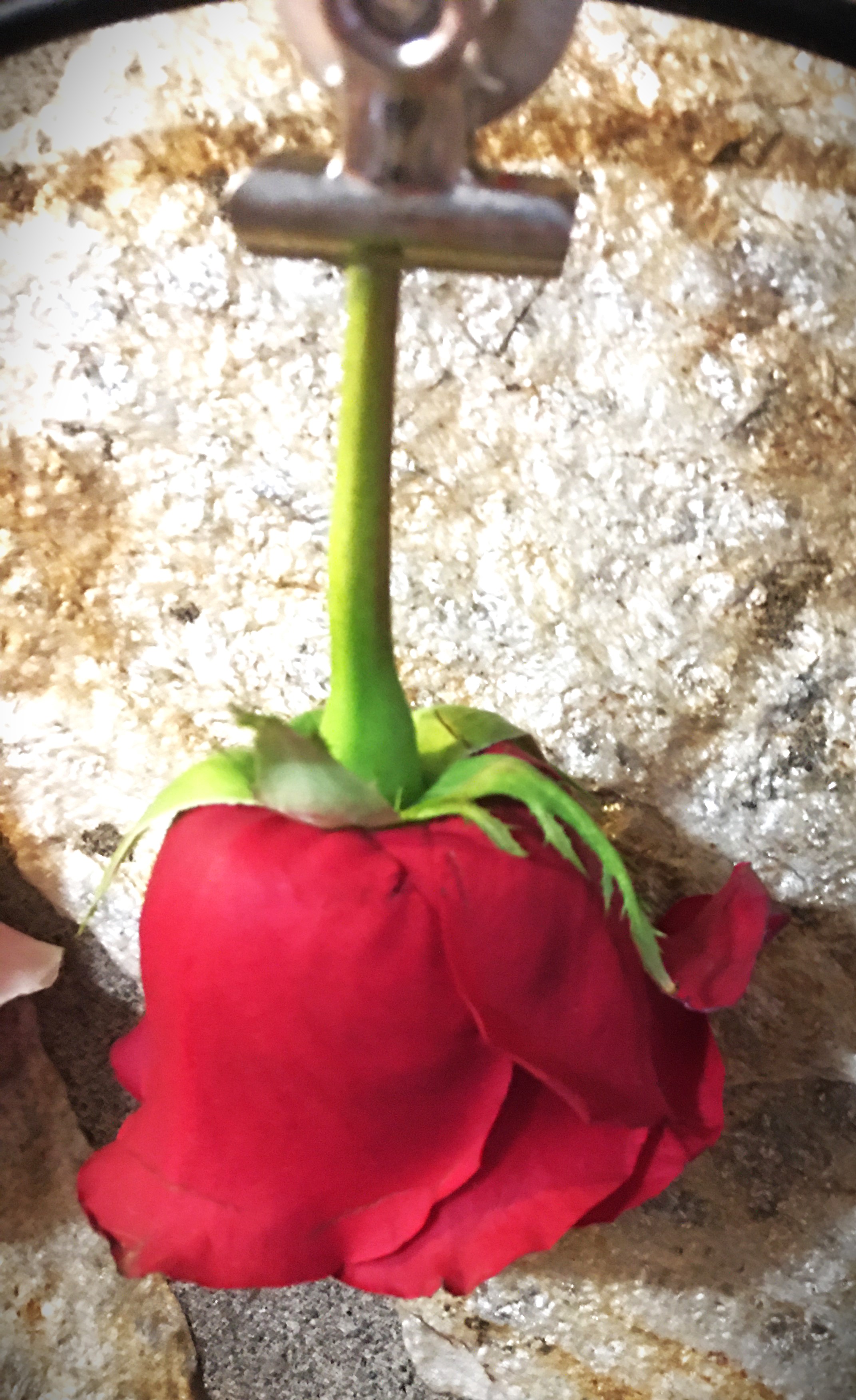
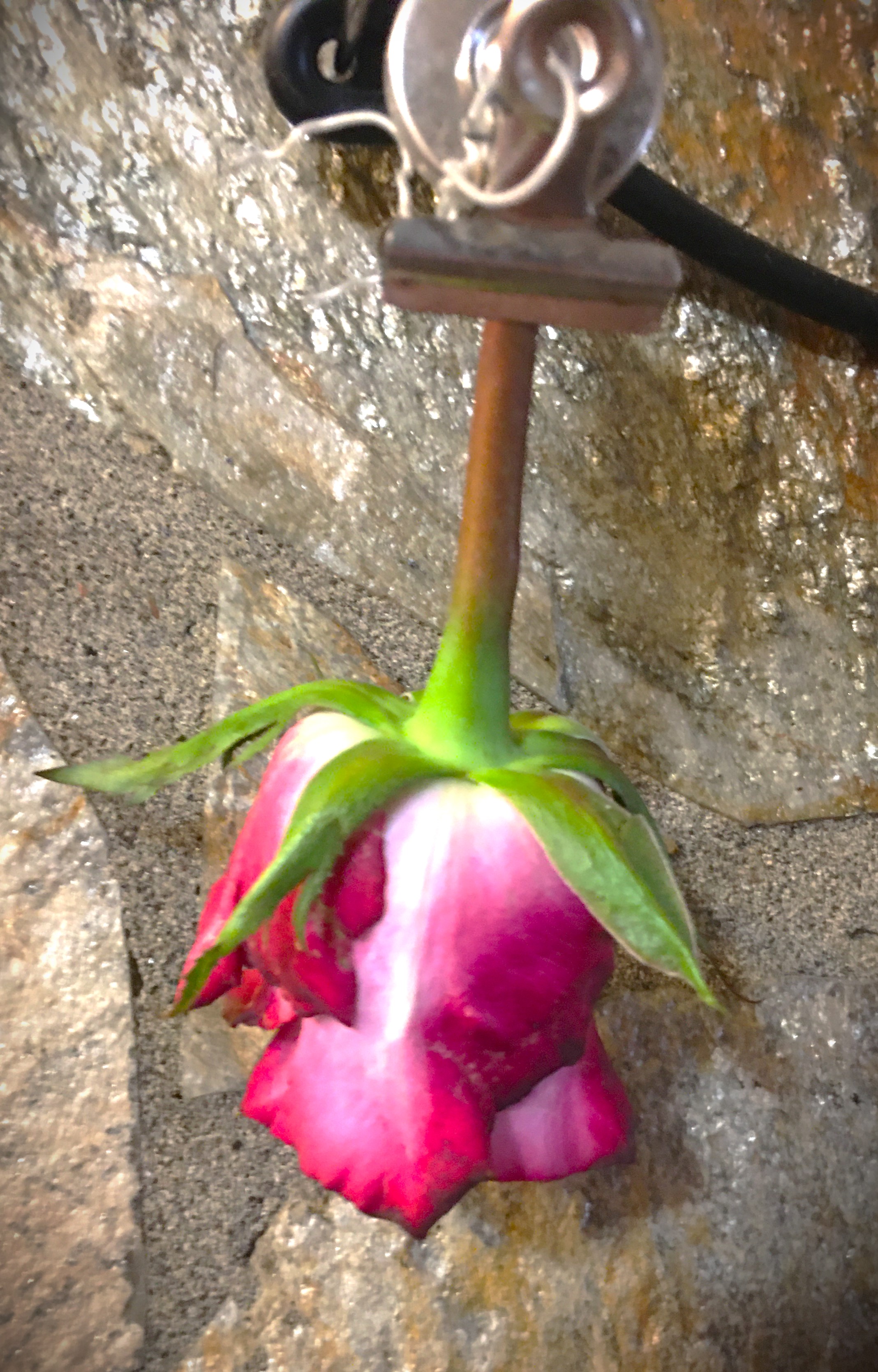
The first is to hang the roses upside down to slowly dry them out. The benefit of this method is that all the vitamins and natural compounds that our bodies benefit from are at a higher concentration when they are dried at a low temperature and slowly.

Ideally, the most benefit would come from using the petals fresh. And while it is possible to use fresh ingredients in soap making (I make orange colored soap using pumpkin puree), there’s no way of breaking down the petals for a smooth and consistent colorant unless you want to use a blender and puree it with the water content of your soap. While it’s not a bad idea, unless you grow roses year round (which I don’t) you have a limited supply due to the window of fresh flowers available. (This is the reason why dried petals are best for me.)

This drying method is slow and takes time. Also any white component will yellow as it dries out. This can affect your over all final color depending on which rose you use. With the red rose, not so much. But the other two, the tinge will be noticible.

So there’s the second method, using a dehydrator.

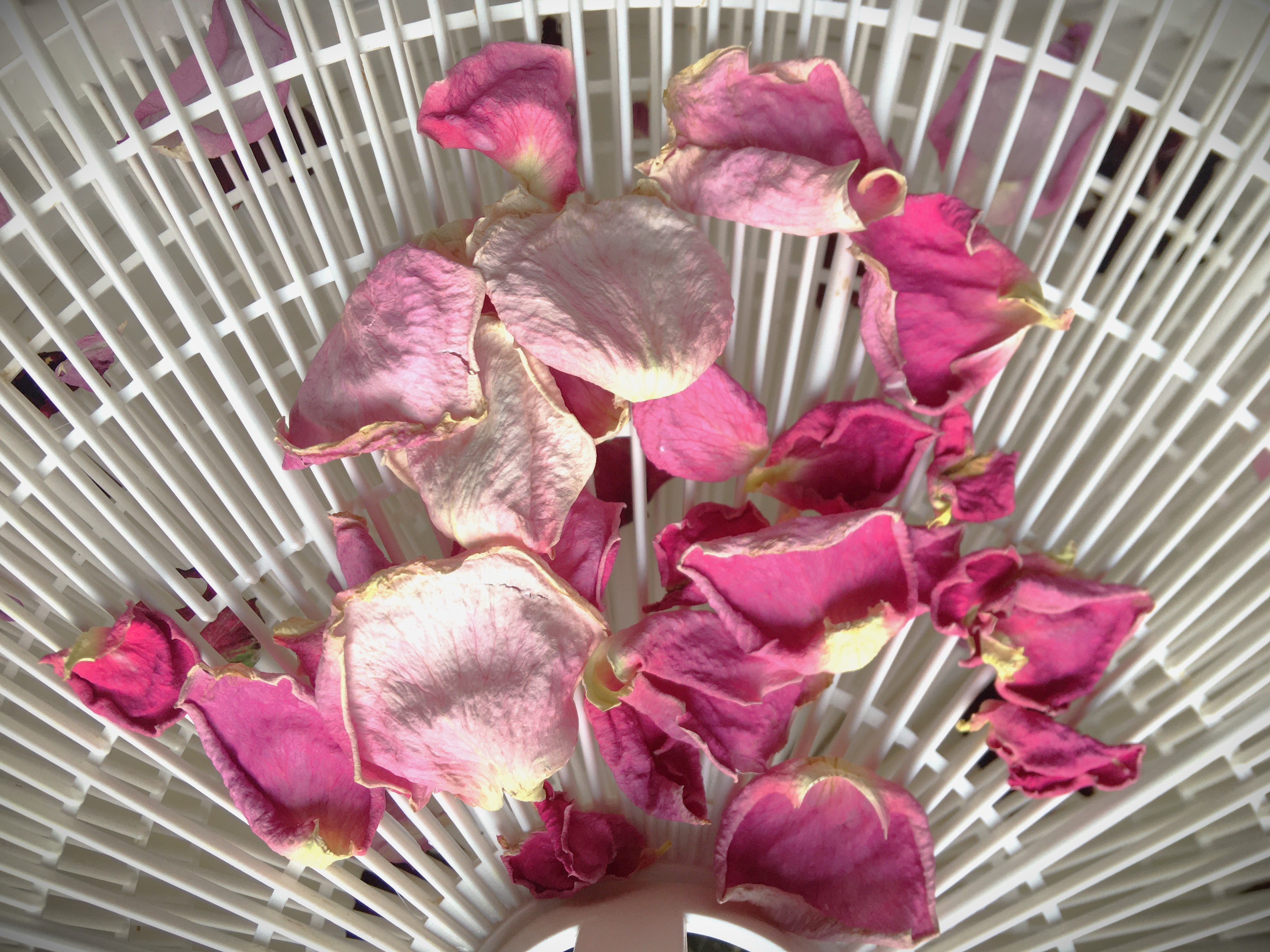
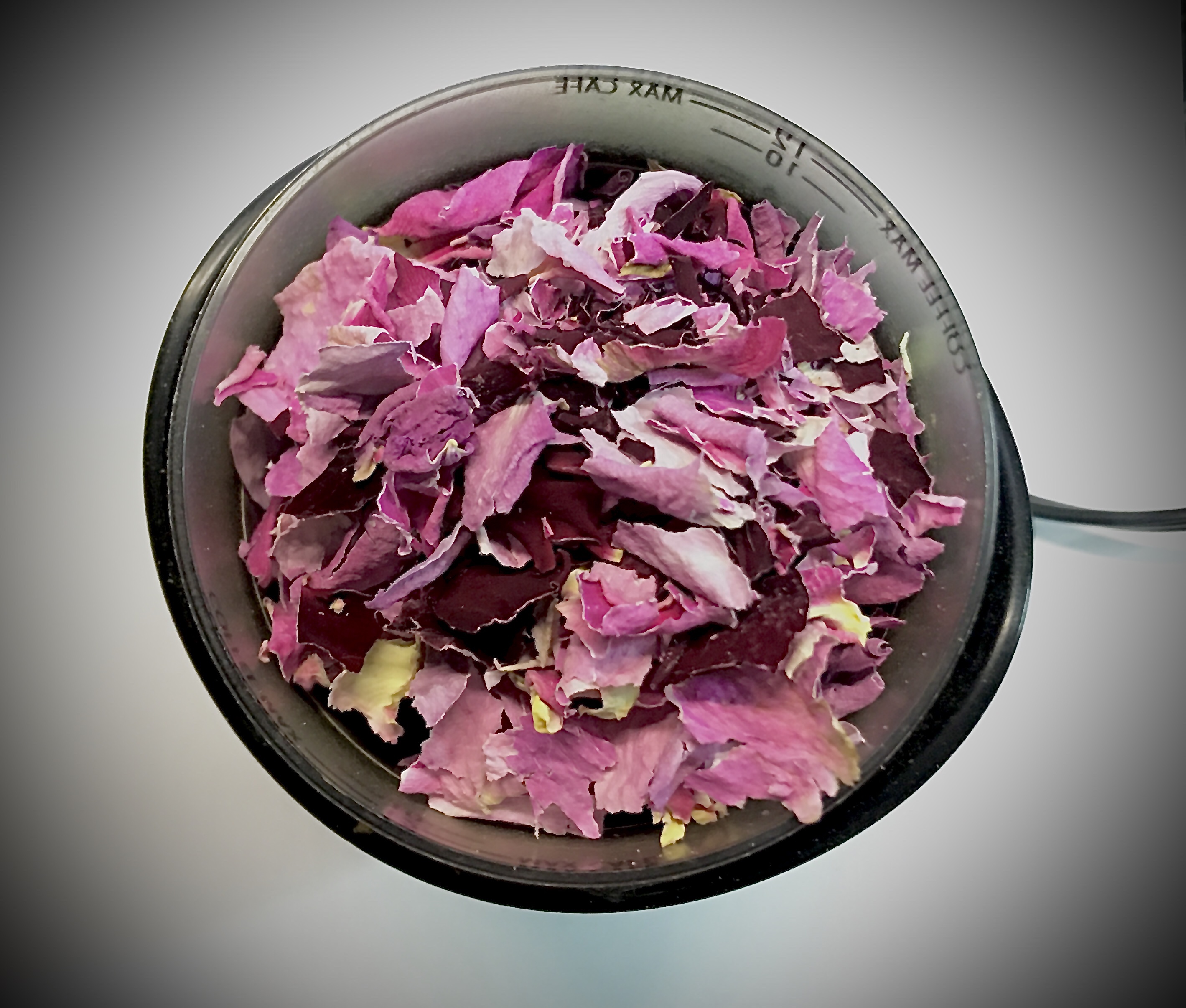
The benefit from using a dehydrator is that petals are finished drying in about 24 hours (at 90°F, the lowest setting on my dehydrator) and their colors are only affected by growing darker.

As you can see here, the white component on the pink flowers have not discolored too much. This is great because when I turn these petals to powders, I’ll retain a pink like quality.

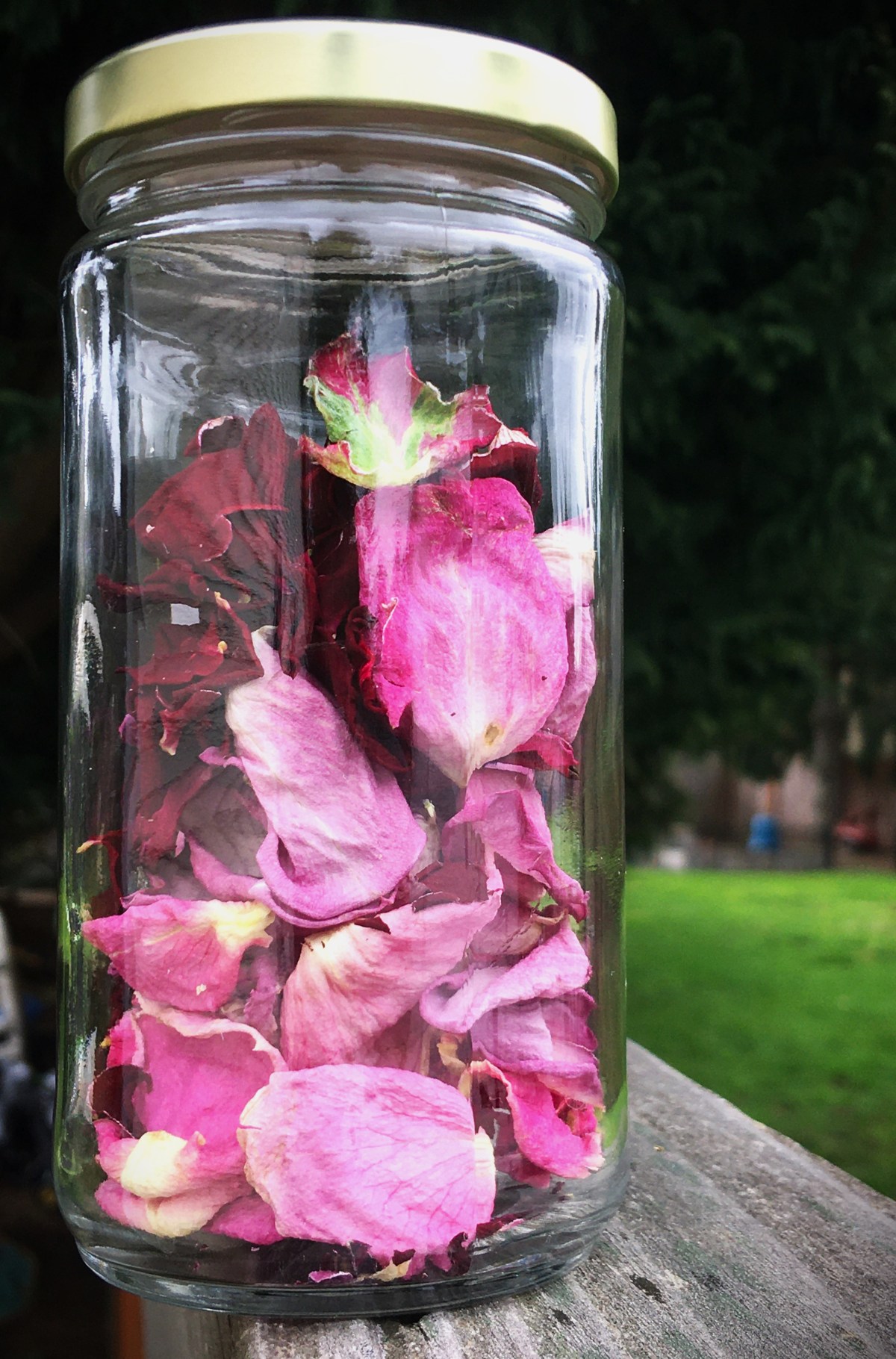
Before I move on to finishing these petals, I want to mention that if you want to make a natural confetti for cake decorations or throwing for a party/wedding celebration, all that you need to do is crush your dried petals by hand and store them in an air tight container (like a lidded glass jar) to prevent them from rehydrating due to humidity in the air.

As you can guess, with the fact that there were lavender inner petals on the second rose (the one with the variegated pink and white outer flowers), this is the reason why I blended in the red petals with the pink ones, to keep the pink and stop the transitiontoward purple (although I’m not opposed to purple soap.)

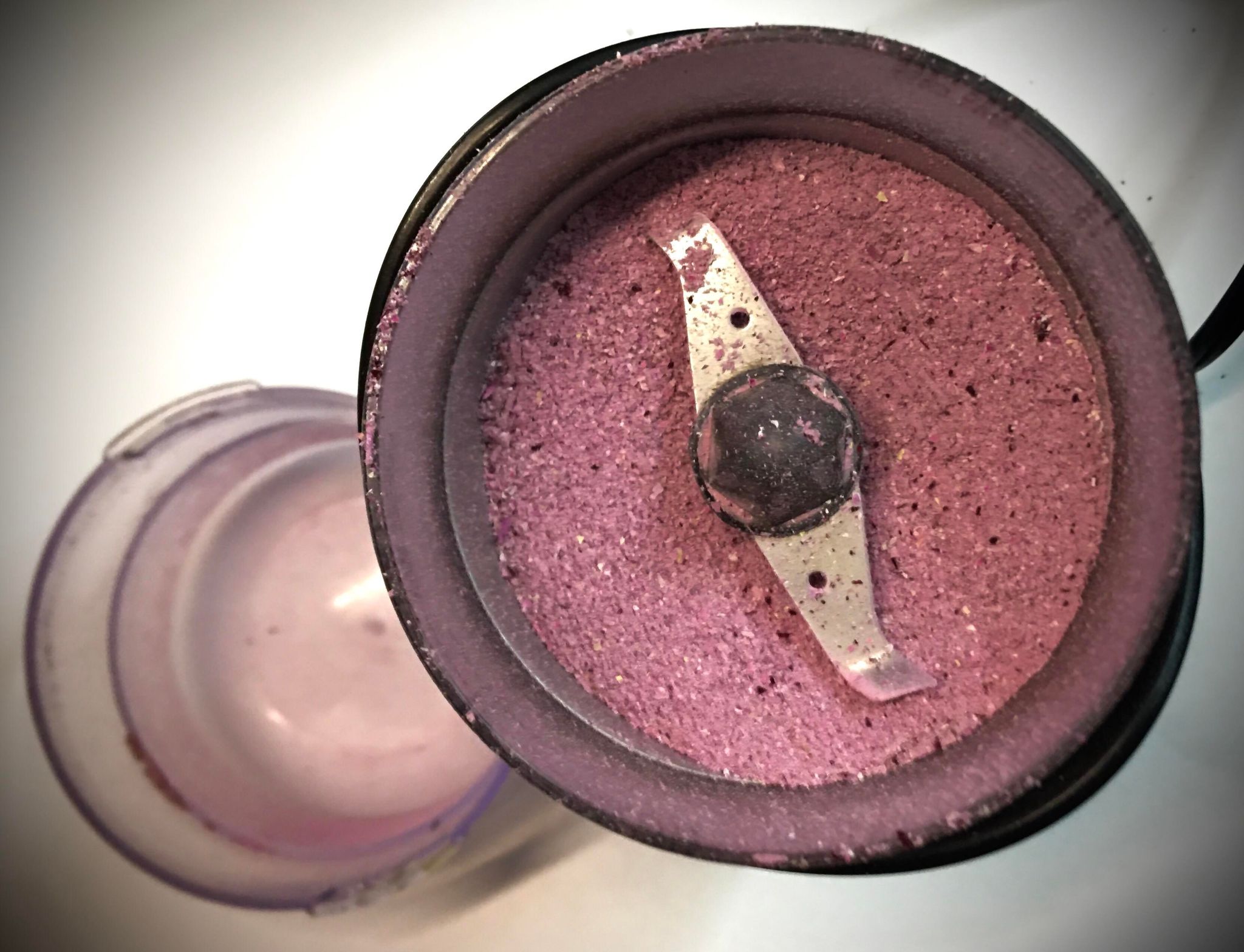
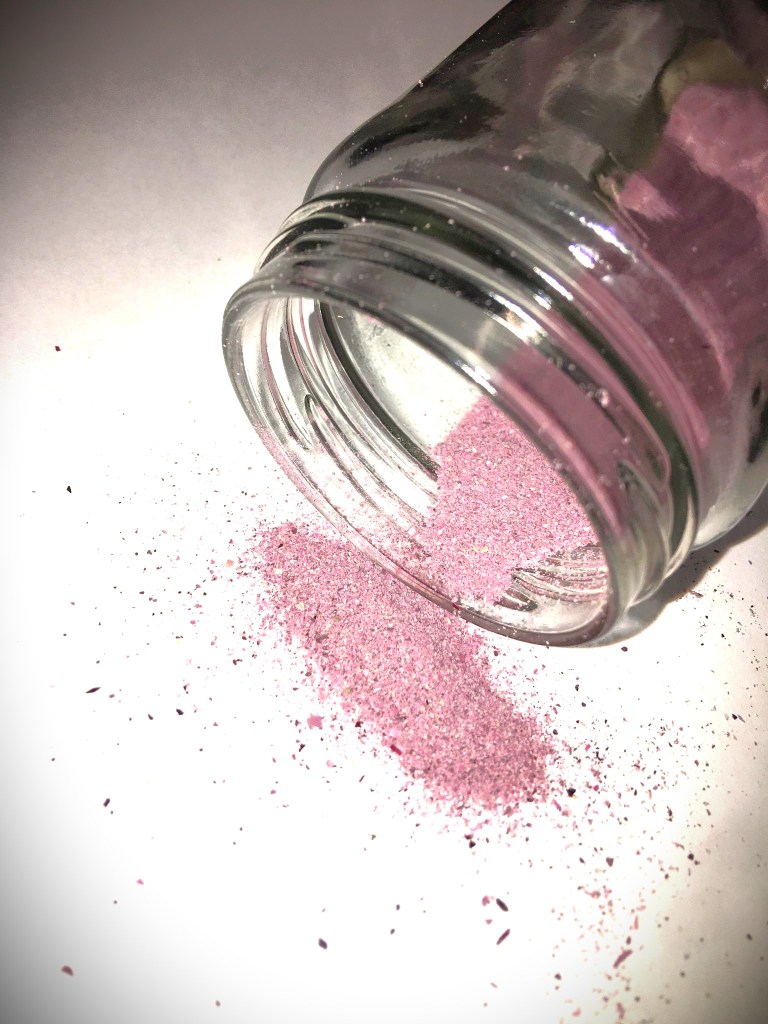
To make Rose Powder, all you need to do is put the crushed petals into a coffee or herb grinder and run it until you get the consistency that you are looking for. Because I’m looking to make a colorant for my soap and don’t want to have flower chunks in it, I took the powder down to a very fine grind.

The fun part about Rose Powder is that you’re not limited to use it as a natural dye or colorant. You could dust this on the icing of a confectionary dessert. If you want to make pink pasta, use this powder as part of your dry ingredients. Mix the powder with a sugar or salt and you have a pink sugar or salt rim to your favorite beverage.

No matter what celebration you have coming up, keep this idea in mind. If you want to dress put your Easter cup you can make a sugar rim using all sorts of different colored edible flowers. Calendula gives you yellow/orange, Violets blue/purple, Hibiscus yellow/orange/pink/blue/purple, there are so many other flowers. If you want to see a quick list of different edible flowers, here’s a jumping of point here.


What unique way do you use flowers?

Processing…
Success! You're on the list.

Leave a comment

Advertisements
Advertisements

Ginger After Failure

I don’t know about you, but I’ve seen too many videos talking about how to propagate ginger, all promising success. And yet I failed a few times. I followed all the directions. I tried rooting in water and just putting the root with node in soil. And following all the advice nothing happened.

Now a person not secure in their gardening skills will think that they have a black thumb, they can’t grow grow ginger. But I want to tell you that you absolutely CAN grow ginger!!! It’s not that you’ve failed. It’s just that you didn’t find a method that works for you.

Before you check out on growing ginger, take a read here and see if this method will fit you.

Advertisements

The problem I had with all the standard methods is that I have absolutely no idea why I failed.

Can you relate?

If I knew how I failed I could make corrections. But when I don’t know I’m flying blind. And in all actuality I had chalked it up that I would just have to buy ginger for the rest of my life. And so I bought ginger.

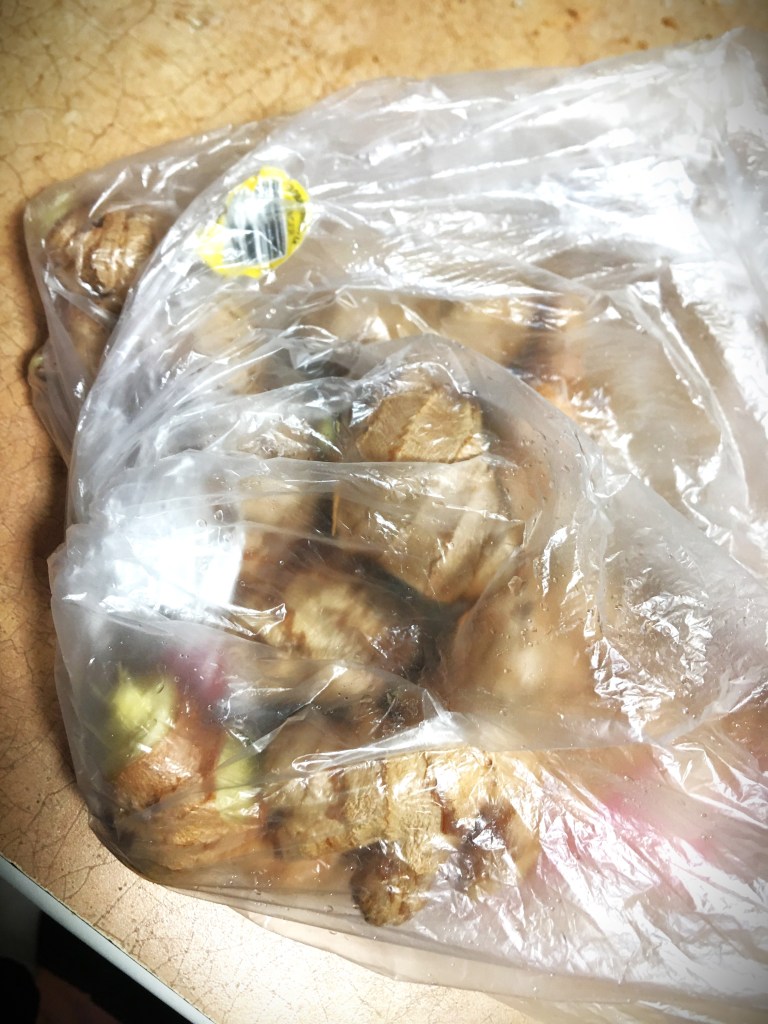
Unfortunately I forgot my ginger, because I still had my two ginger seasonings on hand (coarse ginger and ground ginger). It wasn’t until I was running low that I remembered that I had bought a root and it was finally time to process that root to renew my herb stash.

Imagine my surprise when my neglected ginger, still in the produce bag, had about a dozen nodules with red tips on them! While I had convinced myself that I would not do another ginger experimentation to grow, I seriously couldn’t resist what I had accidentally done in my kitchen, just by being a busy mom and letting something fall through the cracks.

Instead of trying one of the other methods that I had already failed at, I decided to try something that I was already successful at, this time around. I let the ginger tell me what we were going to do. As a massive bonus, I entered a botany lesson that I never learned in any college course.

Success #1 was simply letting the ginger sit in plastic, room temperature on my kitchen counter.

When I say “success” I want you to know that it doesn’t mean that I actually grew a ginger plant. For the first time I actually grew roots in the nodes!

I don’t know where I thought the roots would come from. If I had to guess, I would have thought the roots would have come from the brown scaled portion of the rhizome. I never would have guessed that the roots would come from the nodes themselves! So when I saw these first glimpses of roots, that was what made me commit to seeing this through one more time.

Advertisements

So at this point, I cut the sections that had the nodes with emerging roots from the original rhizome. I washed them and soaked these pieces in water for about 15 minutes before putting them in the lidded tupperware. Because the produce bag was enough to grow these nodes and roots, I wanted to continue this environment. And because I know that terrariums are viable grow environments, I switched from the plastic bag and moved toward a terrarium. With wetted skin and a semi closed system (setting the lid down on the bowl without pressing it sealed shut), I moved forward to see what would happen. (The rest of the rhizome with rootless nodes, I left them in the produce bag to see if the roots would grow.)

The bonus of continuing in this exposed manner, I have full control to make choices based off of observation. If the root dries out, I simply spray some water in the bowl and “close” the system again. If the rhizomes start to shrivel, I have the option of placing these bits into some soil to supplement nutrients. (However that was a last ditch effort in my mind because I’ve grown potatoes over successive season and have seen how depleted a potato can become with sprouts and still successfully grow a potato plant and a new generation of potatoes. And I’ve taken it down to where a potato has little left inside the skin.)

If you can see in the upper right corner of the picture, the top node has obvious growth that occurred in the time I had it in the plastic container. I was concerned that these roots were being infected with mold and that I was losing the ginger. I didn’t necessarily smell mold but I also didn’t know what it was that was making my root look more like an enlarged moth antennae.

Taking the node with the largest “moth antennae” root, I tried to “wash” the white fuzz off. It didn’t want to come off. So I took a knife and tried to gently scrape the fuzz off. It flaked off. And it was then that I understood that this phase of “fuzzy root” is normal. The part that flaked off showed an exposed root similar to those pictures that you can find online that strips the enamel off of a tooth and show you what the dent, underneath, looks like.

My translation of this observation is that the stage of rooting was ready for soil. It just seems natural that the filament extension of the root is the ginger’s way of seeking out nutrients to grow. Wanting to have success this time around, I put the rhizomes into potting soil. But first I had to cut the rhizomes down to orientate the nodes so that they face up.

Why did I cut the rhizomes???

It’s a legitimate question! My original thought, when doing this was that I only had a shallow dish to plant these in. Hind thought, this probably wasn’t the best idea. The whole point in growing ginger is to get roots that you can harvest in a year. The small bits that they were before would have made it for a successful harvest in a year. These small of pieces probably won’t. I probably hamstringed myself and extended my time to harvest because ginger is a slow grower to begin with.

Advertisements

The good news is that as of time of time writing, all my ginger is thriving and doing quite well. Not a single piece has died. I’m just anxious for some growth to take off. But I’m ahead of myself.

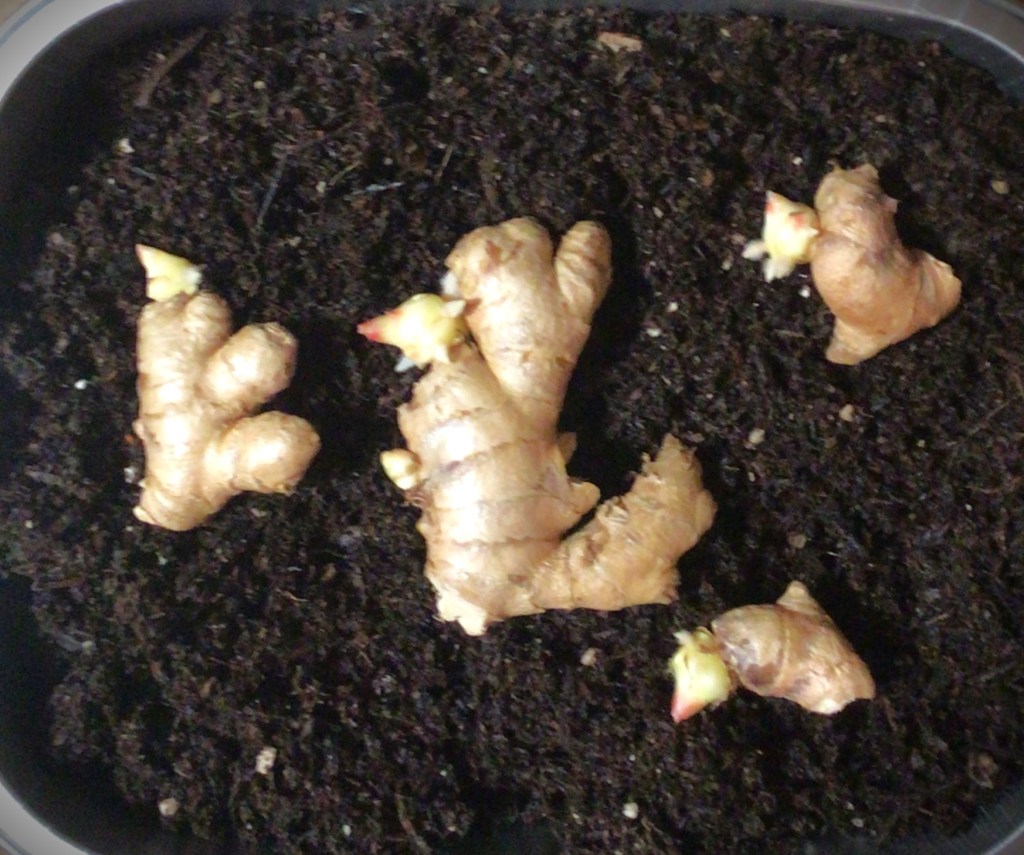
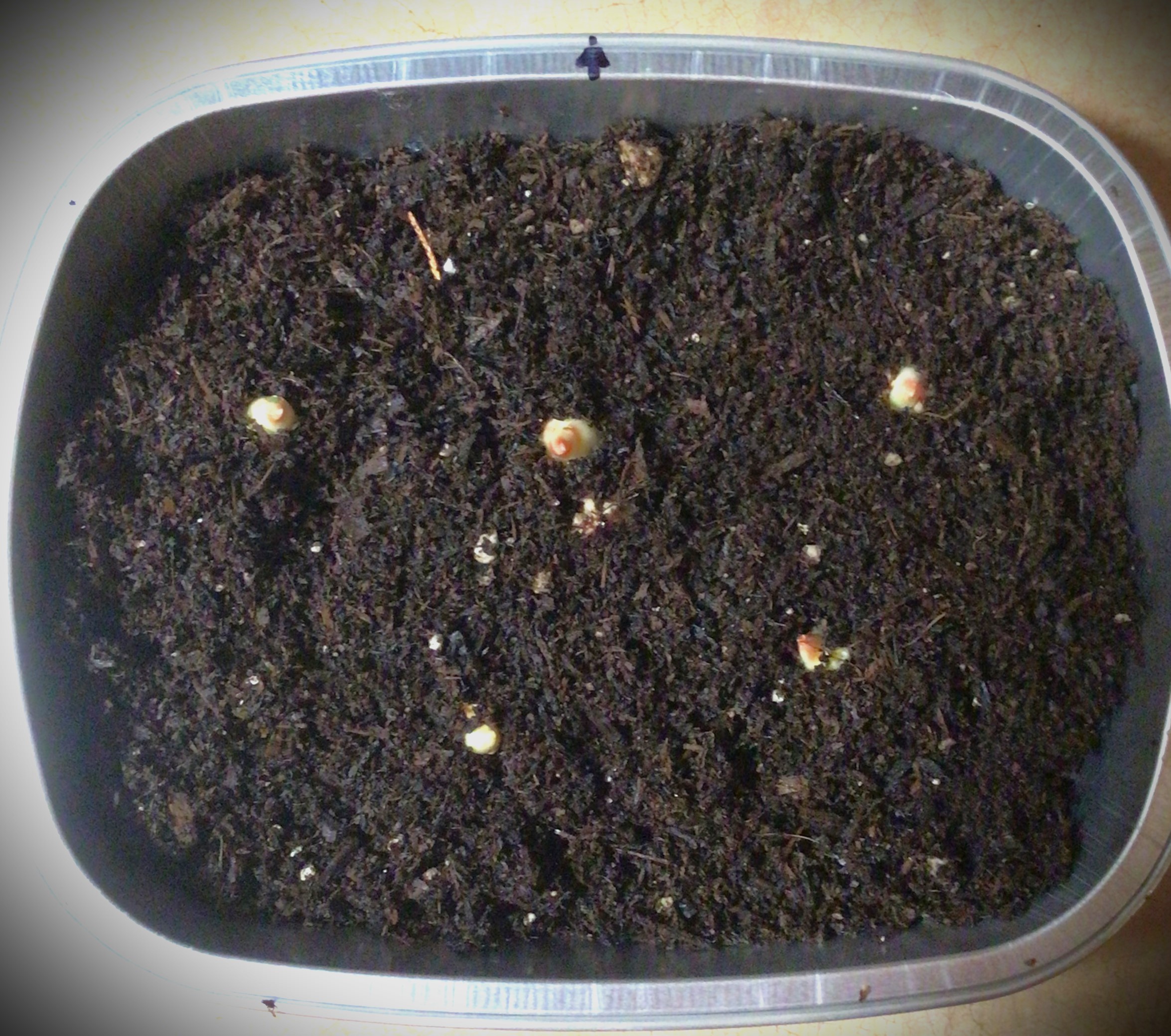
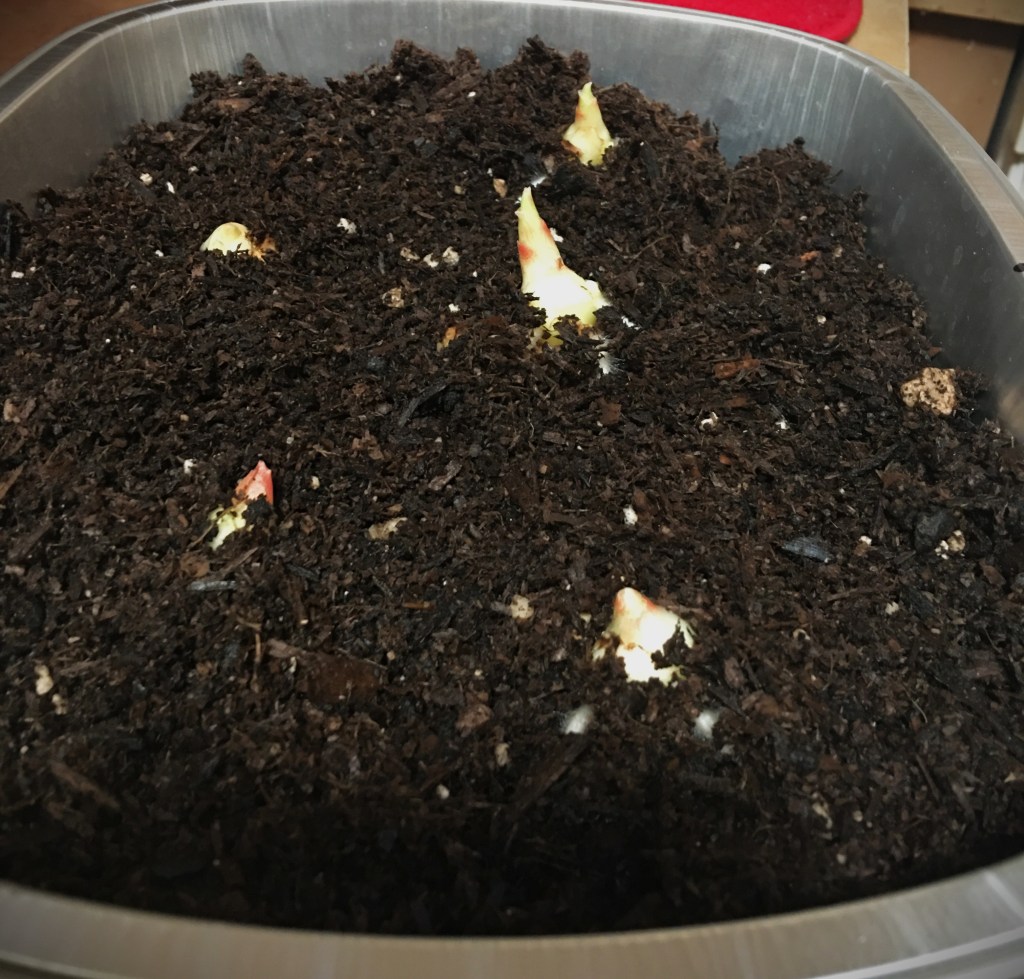
Once I positioned the nodes facing upward, I went ahead and added a layer of potting soil up on top and left the node tips pointing out.

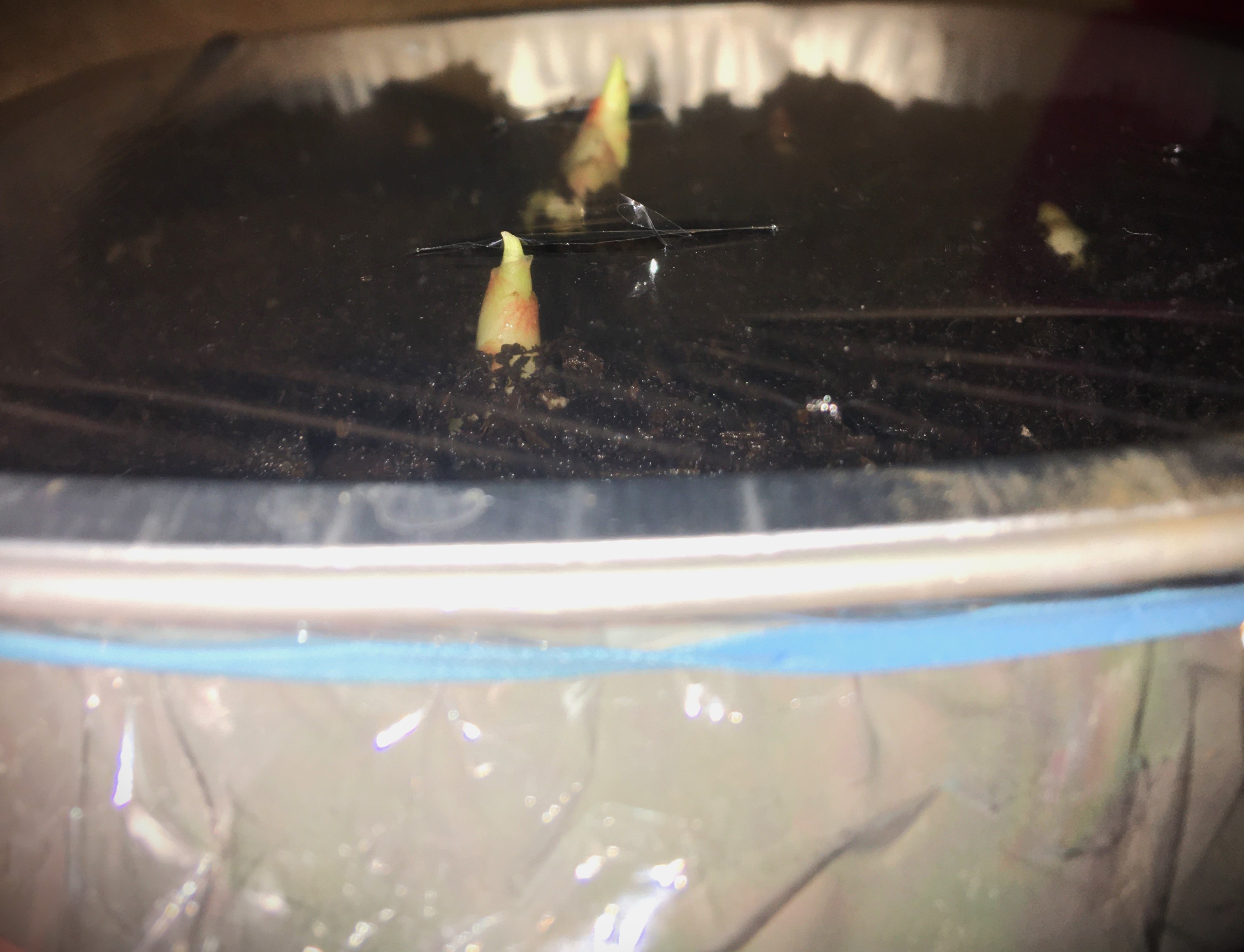
To keep their terrarium feel still going, I took a sheet of plastic wrap and created a layer on top of this cooking sheet. That central node and one other was above the rim level, so I sliced holes in the plastic wrap for the nodes to poke up through.

The slices in the plastic also double as a slight air flow to keep the potting soil from growing mold as well.

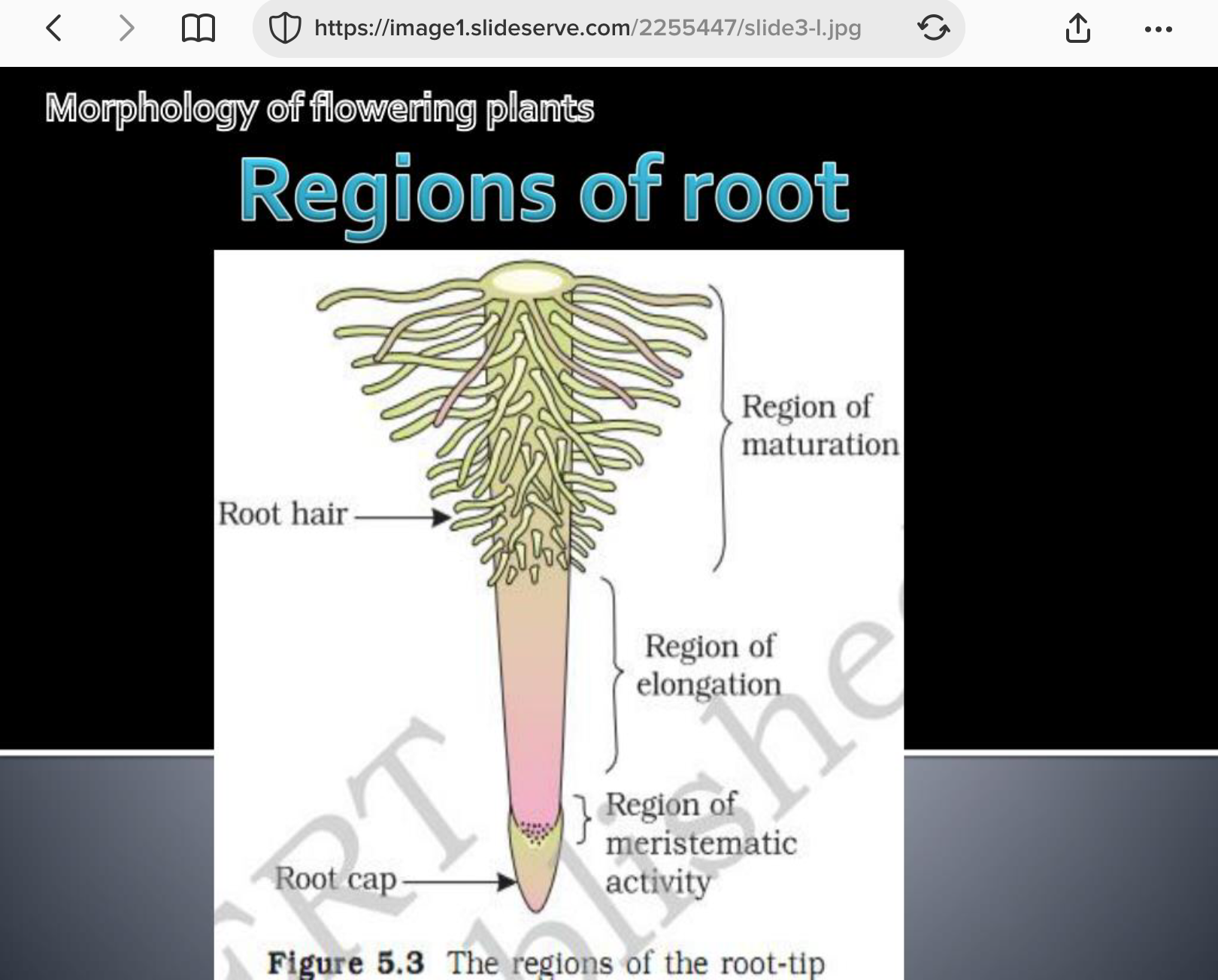
At this point I set the ginger aside to have some more grow time. And in the mean time I set out to understand the “fuzzy roots”.

I didn’t get my answers until I came across someone’s dissertation and posting of slides for their report. If you want to get to know ginger like you’ve never seen before, check out these three pictures! All of a sudden it made sense why the roots were coming out of the node and that “fuzzy roots” are part of the anatomy of ginger. (Full disclosure, the third picture is not ginger. In this dissertation, ginger was barely mentioned in comparison to the other plants. I include this diagram though because it’s the perfect depiction of what I was seeing in the “fuzzy roots” of my ginger. It gave me the assurance that I absolutely needed to know that what I was observing is natural and part of the growth process of ginger.)

About two weeks later is when I couldn’t keep my patience any longer. I had to take a look at the root growth again. As you can see from the tip growth that things were progressing. But seeing how I’ve delved into understanding the root growth of ginger, curiosity was just getting the better of me.

I can’t tell you how excited I was!!!

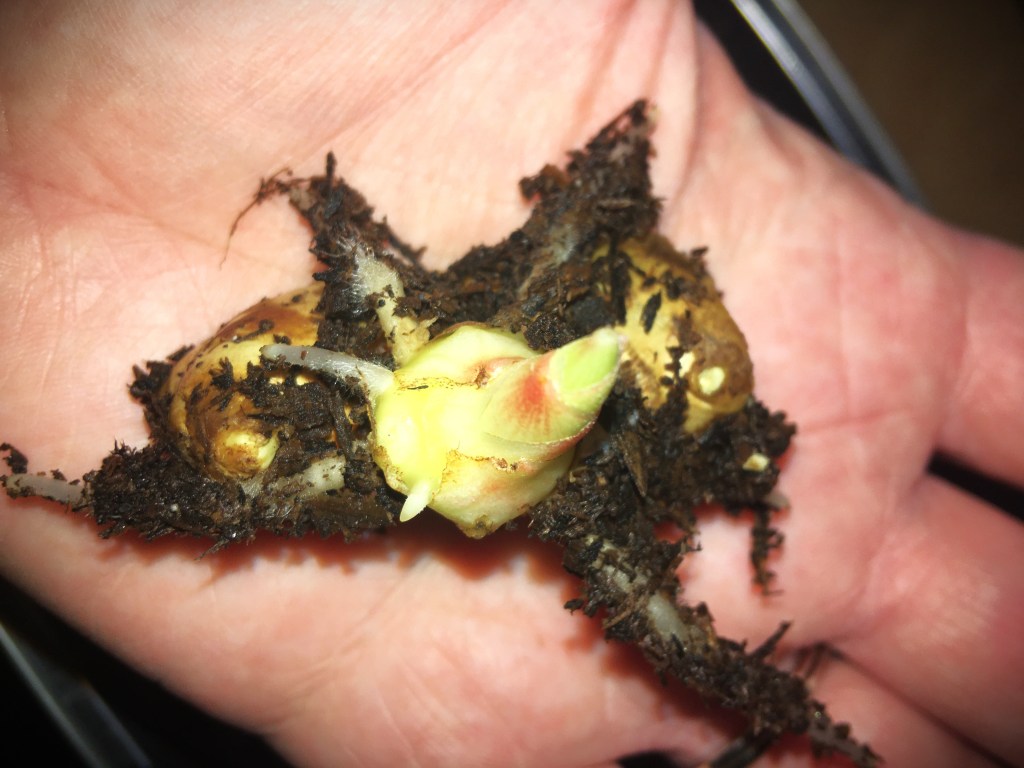
All thoughts of ginger consumption set aside just look at this picture.

This is what we are missing when we grown ginger underground!!!

Look at that beautiful root growth!

I wish I knew what to say at this point. I’m still in awe and amazement at what this ginger decided to show me about itself. It honestly is discouraging at seeing excruciatingly slow scale leaf growth. Even now, if I didn’t have the commitment to study the root growth of ginger, I would have questioned this round of ginger growing. I would have questioned if this stalling meant that I was going to lose yet another round of ginger propagation. BUT when you take a look at those roots!

At this point I decided that I could rest assured that my ginger was going to thrive. I planted this start and the others I had made in the process (including the slow arriving ones that I had left in the bag at the beginning of this post).

Advertisements

If you have failed with growing ginger in the past, using other methods, see if doing something different creates different results for you. If you’re discouraged, set up your own trial where you too can look at the full life of ginger. If you want to have options in order to help your ginger grow, this might be the method for you. I haven’t seen anyone else try this method of ginger propagation, so I’m going to call it Root Growth Observation because you watch who the roots are growing in order to move on to the next step and support your ginger in its growth.


If you’ve had difficulty propagating ginger, what worked for you?

Have you tried something like this?

Tell me all about the process you went through.


Processing…
Success! You're on the list.

2 responses to “Ginger After Failure”

  1. Personalised Teacher Gifts, Avatar

    What a thoughtful means to show appreciation for the instructors in our lives.

    Thanks for sharing these gift ideas.

    Like

    1. Pacific Northwest Event Design Avatar

      Thank you for commenting. I try to regularly work in some gift ideas throughout the year. So I hope you catch those and enjoy them just as much!

      Like

Leave a comment

Advertisements
Advertisements

Garlic Love

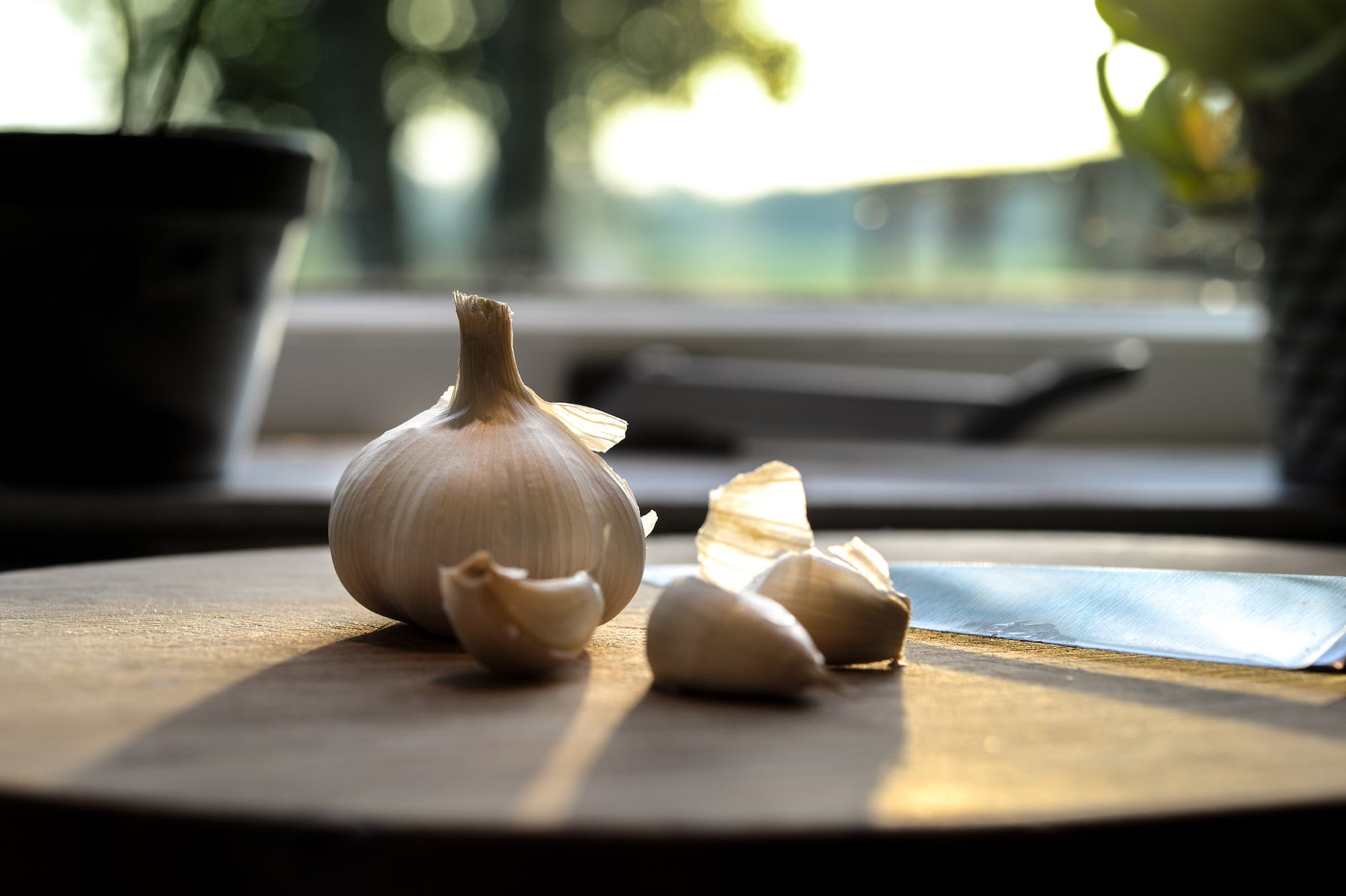
Photo by Skitterphoto on Pexels.com

I don’t know about you, but the one ingredient that buy a lot of is garlic. In fact, if a recipe calls for garlic cloves, I always add in more if not double, just because I find that most recipes under season with garlic.

There has only been one problem in my house. Okay two problems. When I look for cloves I either don’t find any or I find mummified cloves that somehow managed to make their way into the back of my spice cupboard.

This past year my question to myself was, how do I preserve garlic so that it’s ready for me when I need to use it? Followed up with the question, is it possible to buy garlic in bulk and not have it stout on you and you lose it before you can use it.

The answer to the first… you can ferment garlic and extend its shelf life.

The answer to the second se question is, yes!

At the end of the last farmer’s market season, I took advantage of the end of the season clearance sale at my local vendor. I bought garlic in bulk (at least from the perspective of a single family for personal use. If I remember right, I bought somewhere near the vicinity of 7 pounds worth of garlic. Needless to say it was a far cry higher than any other time I’ve purchased garlic.

Before the purchase, I had looked up different ways to ferment garlic just to make sure I had at least one way of doing this and I was going to use/eat it. (When it comes to pickling and fermenting the flavors generally don’t taste good to me.) There we’re two that I wanted to try. Both were simple—just two ingredients each. One was garlic and water and garlic with honey.

Now the garlic and water ferment I had a general idea what to expect because I’ve fermented cabbage with water and salt. The honey sounded a bit out there and was a mystery to me.

If you’re like me and already asked, can you ferment with honey? The answer is yes! I was surprised and even excited. Especially when I did more research and found that garlic fermented in honey is a great home remedy for colds and coughs. The garlic clove has compounds that equip your body to fight off common colds. The honey, from this fermentation, is a great natural cough syrup.

Advertisements

During the time of this fermentation (this past fall) there was a time when local parents were having. She’s time hunting down children’s cough syrup. But fortunately, I don’t have to worry about that now because I’m keeping honey fermented garlic in stock at my house. (My way of freeing up resources for other families, who have not yet learned about natural medicine and need those resources for their kiddos.

Fermenting garlic is very simple.

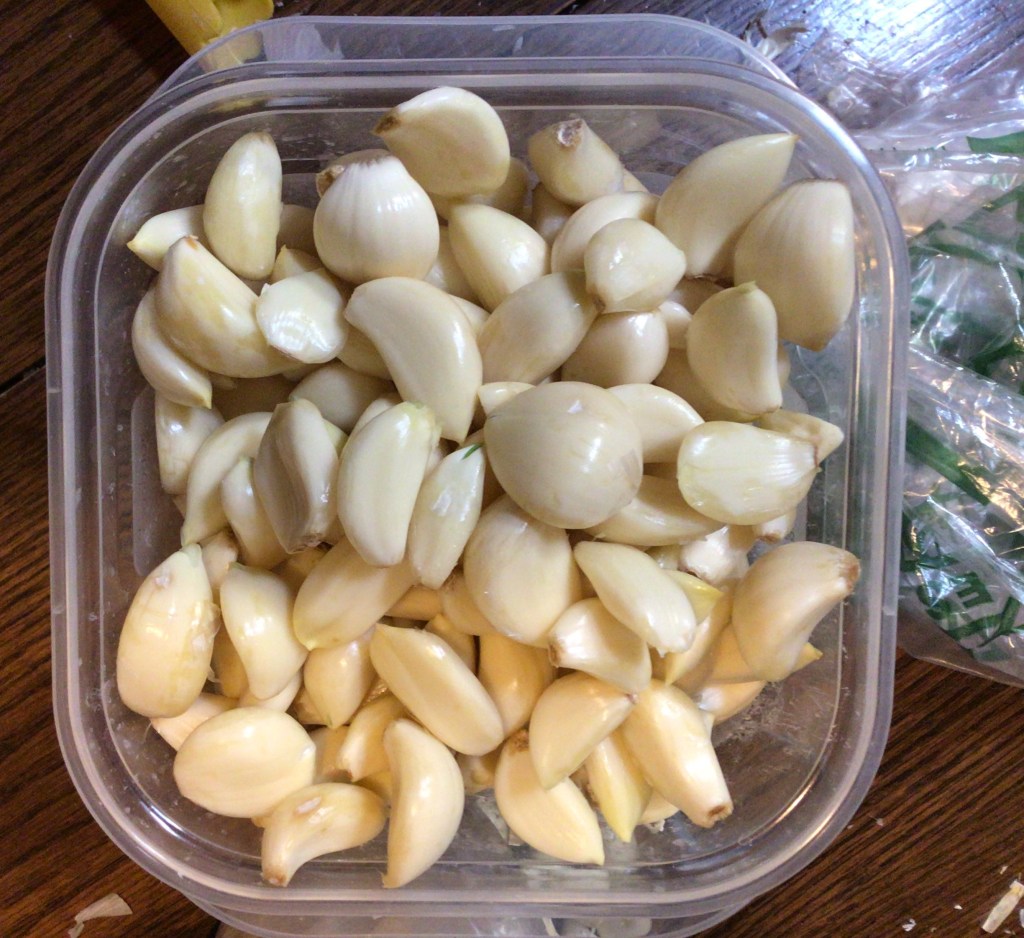
  • Peal garlic cloves.
  • Put the cloves in a mason jar with 2” of head space.
  • Fill your mason jar with your fermenting liquid so that it covers your garlic.
  • Remove air bubbles and add more liquid as needed.

This step is particularly important for honey because of how thick it is. It oozes between cloves but doesn’t really thoroughly get in and around all the cloves. So I use a wooden chopstick and move the cloves around to get the honey to get in all around the cloves. Even with the honey levels well above the cloves, when I did the first stir, the honey level dropped by half. I had to go through the process of adding more honey and stirring about three times. I knew I had gotten all the air out when I stirred the cloves and the honey level did not drop a bit.

  • Place a fermenting weight on top of the cloves.
  • Lightly secure a canning lid on your mason jar. (Better yet, use a fermenting lid which allows the ferment to “burp” on its own.
  • Keep in a cool dark place where you can remember to burp the jar.
  • Garlic is fermented and ready for use in 4-6 weeks.

TIP: During active fermentation, it’s a great idea to keep the jar in a bowl. There’s a great chance that the ferment will bubble over while you’re not looking. And a bowl is your best friend when it comes to cleaning up.

TIP 2: The aroma of garlic is going to be very strong during active fermentation. So make sure the place where you keep it is one where you won’t mind the smell. (At first I had it in our pantry, but my husband was not okay with the smell. I relocated it to another location. The good news is that the garlic smell in the pantry was gone in a couple days.)

Peeling In Bulk

There are a couple of options that you have available.

You can peel the garlic the classic way with a paring knife. It’s long and tedious (particularly when you have young children under foot).

I don’t know if this next idea is still making the circuit around social media–putting cloves in a mason jar and shaking the skins off. I wished that this “trick” worked. Let’s just say that I raced my husband. He tried the jar method and I used a paring knife. The jar is fail if you fill the jar halfway or a quarter full with garlic cloves. The only time it semi worked was when the amount of cloves just covered the bottom of the jar. In the end, my husband shoved the cloves over to me when I out counted him with my paring knife. There were still the last layers of skin on the cloves that I had to peel off with the knife.

My preferred method of peeling garlic is with a silicone garlic peeler tube. With a dry tube and properly dried out garlic, it only took 1-2 rolling presses in my hands and all the layers were peeled away.

Unfortunately we only have one tube in my house and my husband and I fought over it. So we turned it into a competition. How many cloves could we peel in the amount of time it took the other to break down one bulb into cloves ready to go. We actually didn’t keep score because we were too busy laughing and working quickly on whatever end of the competition we were on!

Advertisements

How did the garlic turn out?

The quick answer is that I did not prefer the flavor of the finished garlic that was fermented in water. It has an acidic flavor that I have to cook out of the garlic. At this point, all health benefits from making fermented garlic is long gone, because it’s cooked to death. (I’ll come back to this.)

Originally I wasn’t sure if I would like the honey fermented garlic at all. But let me tell you this, I will never preserve garlic any other way!!!!

At the end of the fermenting process, the honey looks lighter in color and its thickness looks like it was watered down. When you taste the honey, it’s not honey sweet anymore. There’s still some sweetness present but it’s been dulled down remarkably. The garlic itself takes on a slight nutty flavor and is slightly sweeter. The pungent snap that we’re use to experiencing when eating raw garlic is greatly reduced. The garlic is still firm, but not as firm as garlic fresh from the garden.

The honey garlic is perfect to mince and add raw to a salad, especially if you drizzle a little honey on top as part of the dressing. You will not regret using honey garlic as a finishing touch on Italian or Asian inspired dishes. In fact, I can think of many many more applications for this form of garlic than I can with its raw counterpart.

Benefits of Fermented Garlic

The most famous compound that Garlic is known for providing is Allicin. If you need a jumping off point for the health benefits that allicin provides for our bodies, check out this article. In short it’s good for helping your Immune System do its job and reducing inflammation.

Fermentation brings its own benefits to any vegetable that you bring through this process. The most talked about benefit is improving your gut health by feeding the good bacteria that resides in your Gastrointestinal System. Here’s a good place to start seeing all the other benefits available to our bodies.

These two reasons are enough to send you on a well rewarding researching adventure for understanding why garlic and fermented foods are both important to being added into our diets.

Advertisements

Why Should I Ferment Garlic?

Whether you grow your own garlic are want to take advantage of garlic that you find at a great price, fermenting garlic is a sure way of preserving your garlic.

Over the years, I’ve tossed out garlic because it turned into mummified cloves, had mold, or started sprouting before I could use it. By fermenting, you get to stop the clock on the life of your garlic. The common practice of braiding garlic and storing it in a cool dark place slows down the clock on the garlic, but it will still approach a time where those bulbs and cloves also start to sprout. By fermenting, you’re adding more time that you have available to use the garlic that you have in your kitchen.

And in the instance of the honey garlic, you have the added bonus of having a home remedy cough medicine. Over the last two years there have been many things on the store shelves that have been out of stock. Cough syrup, especially for children, was one of those things this past fall and winter. I haven’t even bothered checking the shelves to see if that situation has fixed itself. But I can rest assured that a dose of the honey with a clove of garlic will not only treat coughs in my family, it will give our bodies added nutrients which help our immune systems fight off whatever cold or virus that we are dealing with.


What do you love using garlic for???


Products used today:

This post contains affiliate links to products. We may receive a commissions on products purchased through these links, but at no extra cost to you. These items listed here are from Amazon but may be purchased at local markets.

Processing…
Success! You're on the list.

One response to “Garlic Love”

  1. 664 Avatar

    I read thiks piece off writing fuloly on tthe topic of the differenc of hottest
    aand previous technologies, it’s reemarkable article.

    Liked by 1 person

Leave a comment

Advertisements
Advertisements

Starting On Your Own

Now that a new planting season is about to knock on our door, I’m beginning to hear more and more from those venturing into gardening the discouragement of last year’s grow season in the Pacific Northwest.

I’ve mentioned before that last year, we didn’t have a spring. We had back to back winter that went off the deep end and nose dived right into summer. We were cold and wet and literally missed a season. My garden didn’t know what to do. Even when I direct sowed at the proper time everything stalled for 2 months and it felt like I was the only person in my community that was grateful for the 6-8 weeks of extended summer weather. I needed it to finish off some of my vegetables, like my tomatoes.

And throughout the area of 4 or so cities, a good number of people said their vegetables gardens failed to produce anything.

I get it. The vegetables that I planted in May were harvested at the same time as what I planted in July.

This year I’ve already started in on my plan of getting ready for this spring. And I’m treating it like I’m going to have another cold, non-existent spring. Everything I overwintered is indication we’re not going to have a repeat this year, but I’m not taking chances. Food prices are insane. I need to offset my grocery bill by growing more than I have in the past. So I’m going to share with you what I’m doing this year to give my garden a leg up on what may or may not happen.

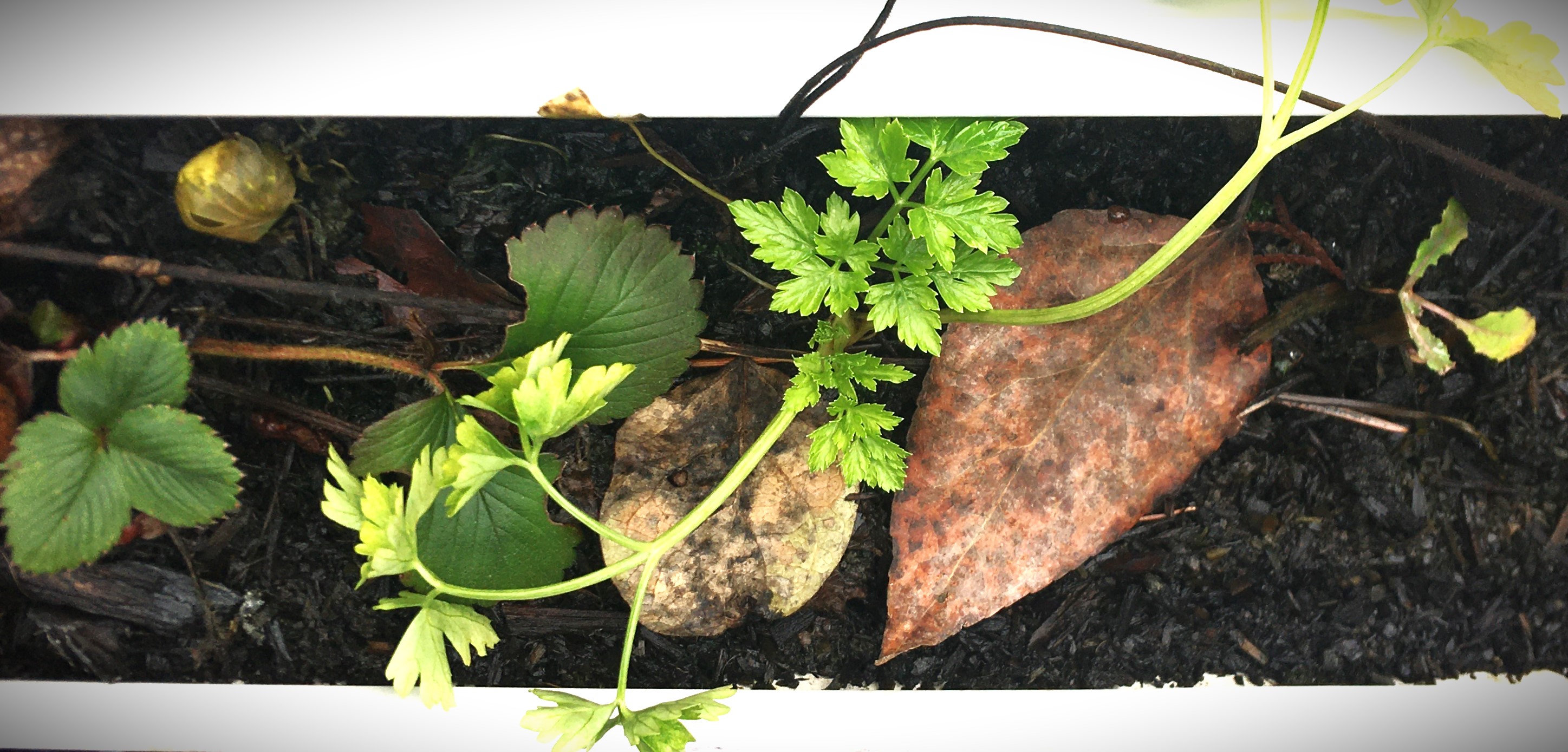
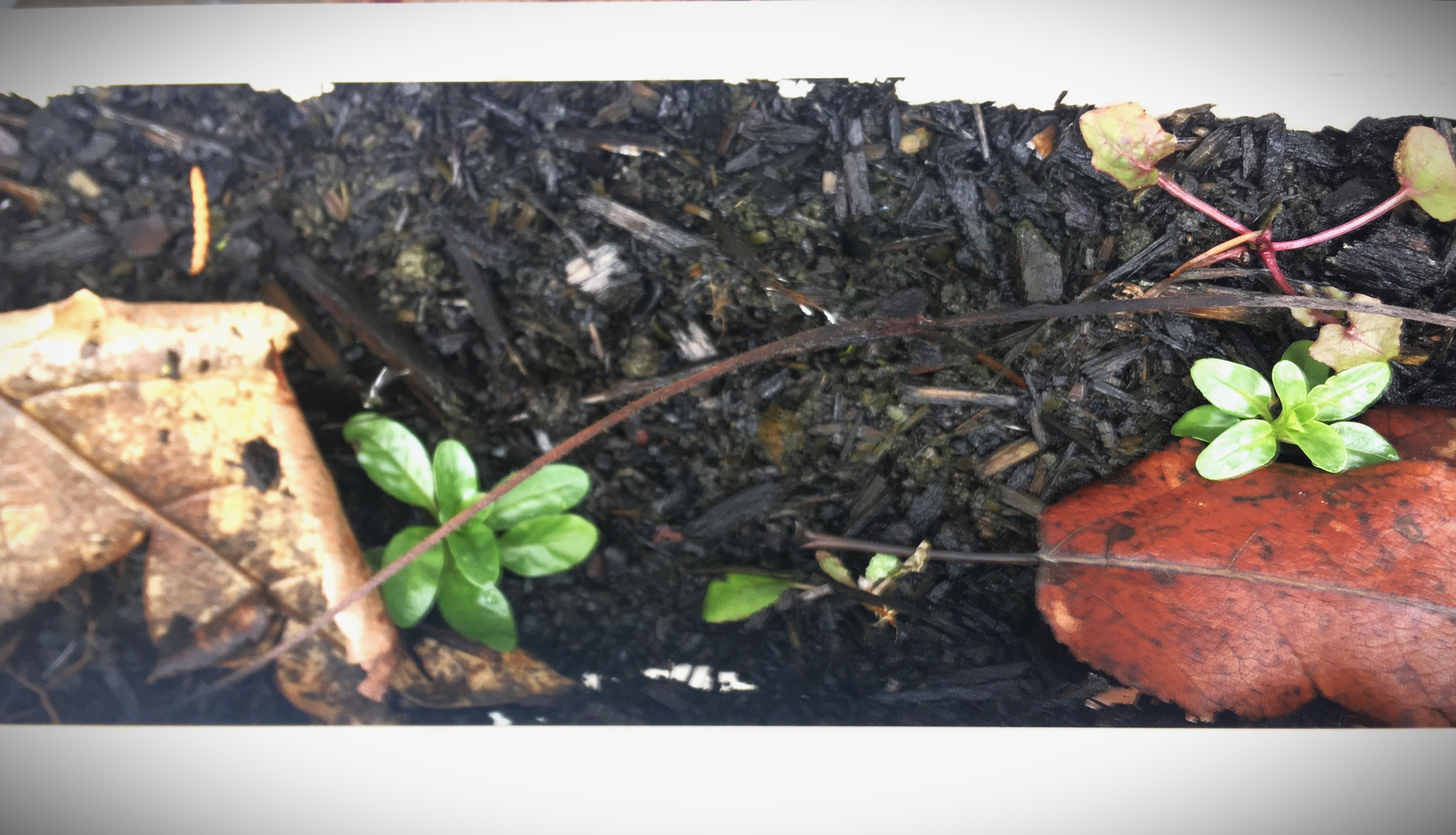
The Big Leaf Parsley and Oregano that I planted last year, which did not germinate at all last year, all of a sudden decided this winter that they were going to germinate and sprout. I’m looking forward to a lovely spring this year.

Advertisements

Uneven Germination Rates

If you have a small garden that you work, one of the frustrations that you have is when you plant your seeds according to the proper measurements and seeds just don’t germinate. You start off thinking that you’re going to get a certain amount of starts of one vegetable, and in the end you find out you get a small fraction of that.

I’ve tasted that bitterness. In a normal year you can successive plant a new seed where there’s gap. But last year that didn’t work at all.

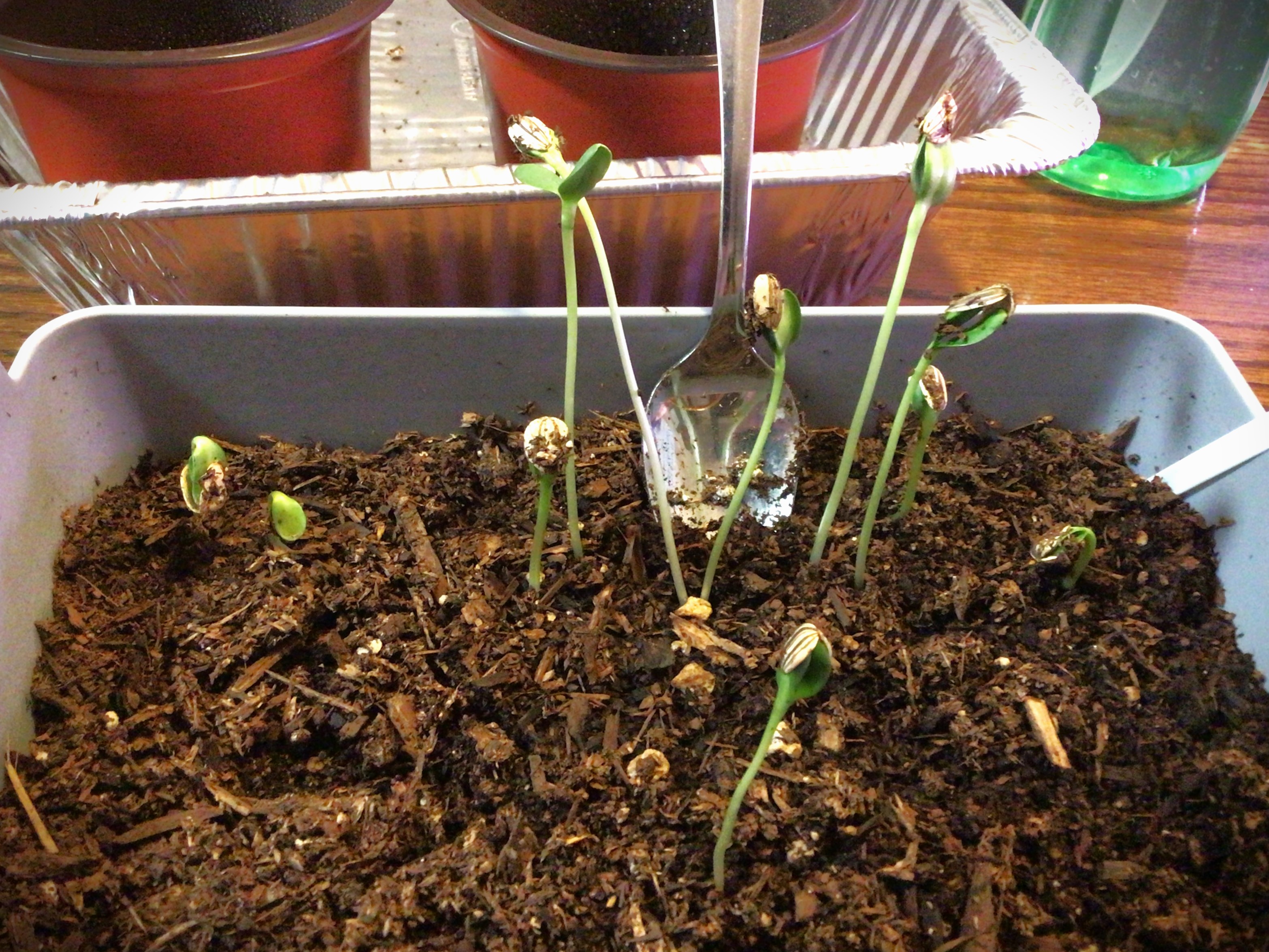
So this year I’ve started off my seeds indoors in small flats.

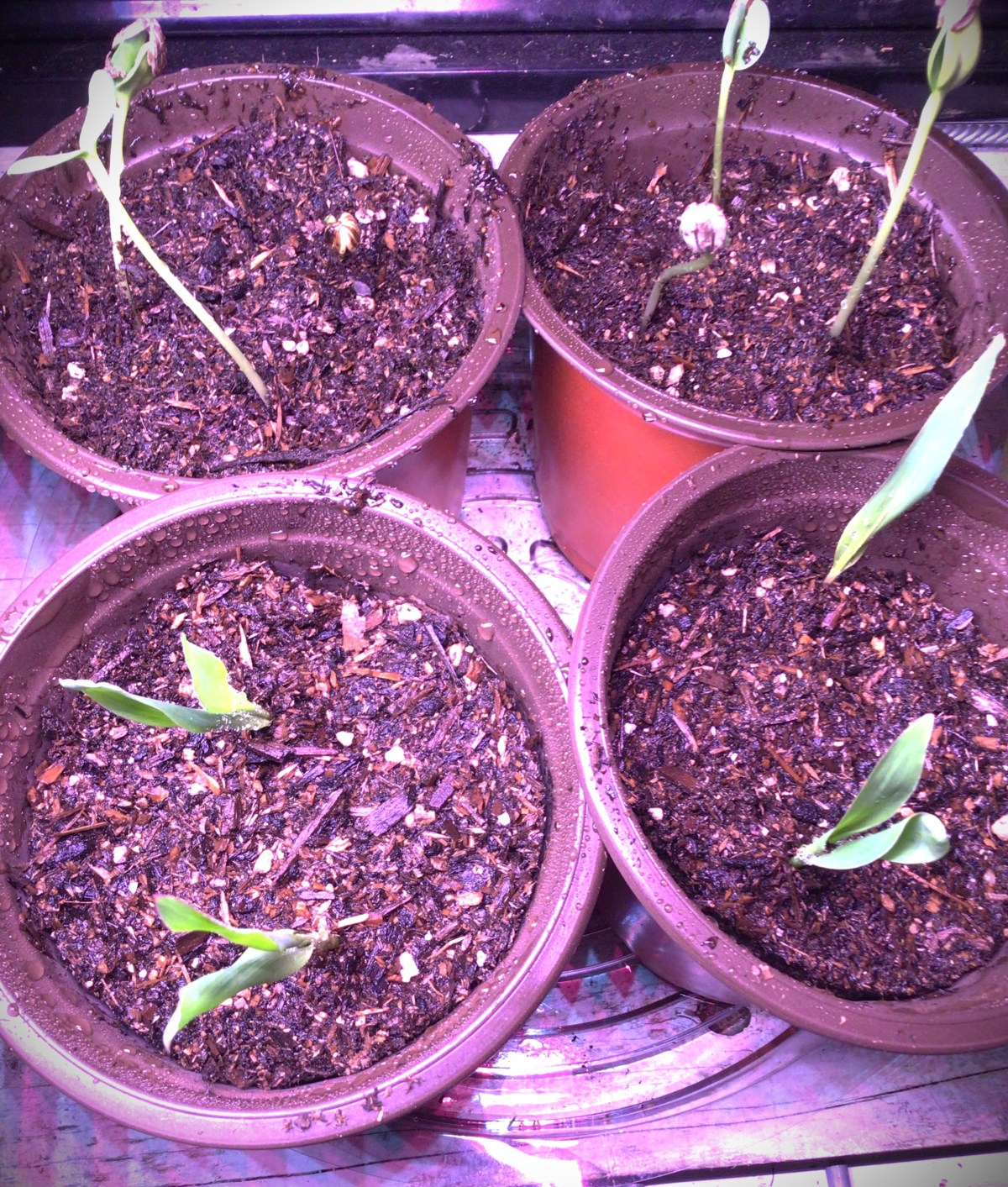
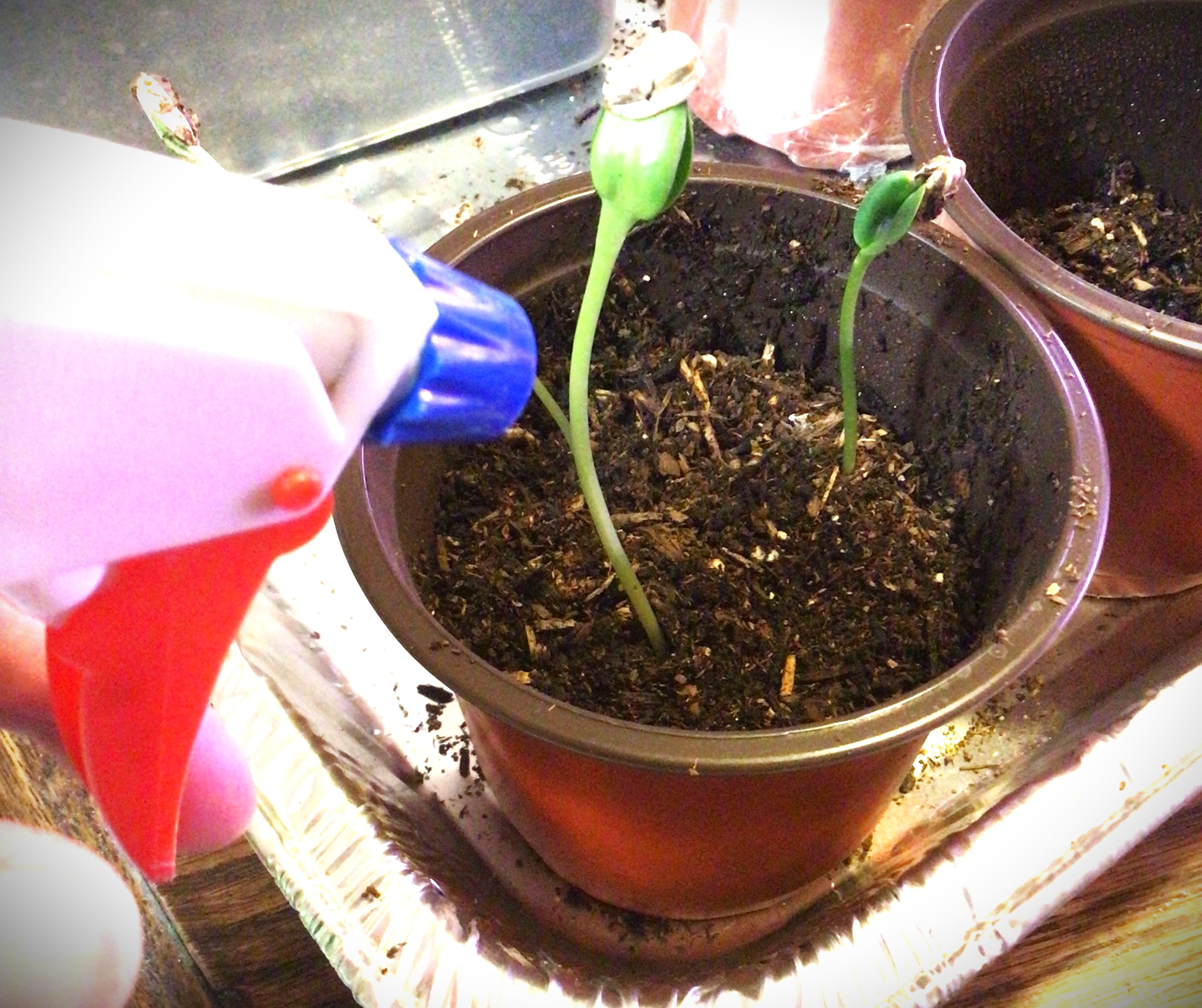
I’ve already repotted four other bunches of these sunflowers. You can see here that the seeds just didn’t want to sprout at the same time. I’m okay with that. I’m starting my seeds this way, because if none want to sprout, I won’t waste my limited garden space.

With how shallow this flat is, once these sunflowers get to a certain height, it’s time to repot them. They want to spread their roots and grow. And as much as they love this loose soil, it’s time to get these tall fellas into a pot where I can thin them out and give them more space.

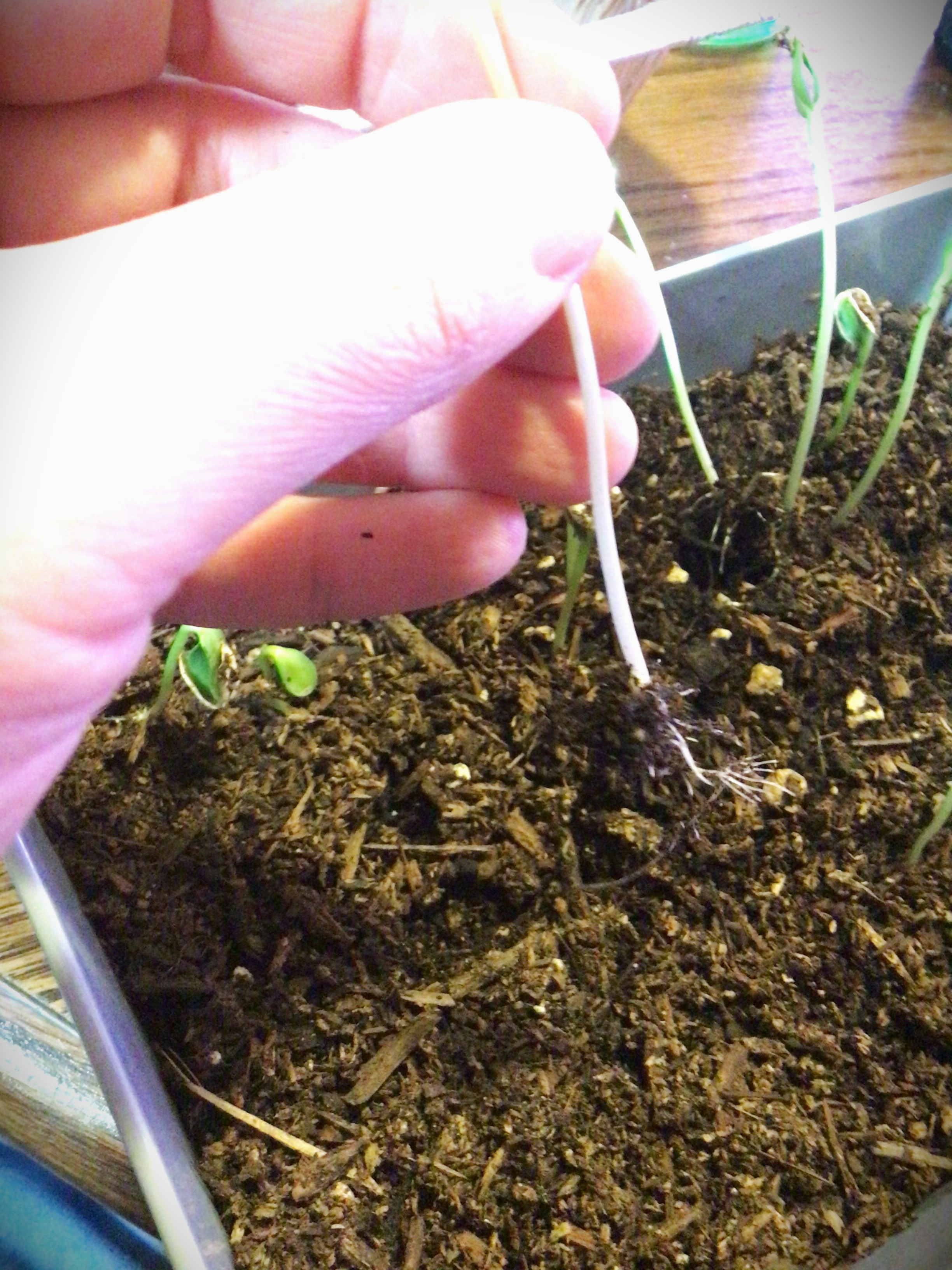
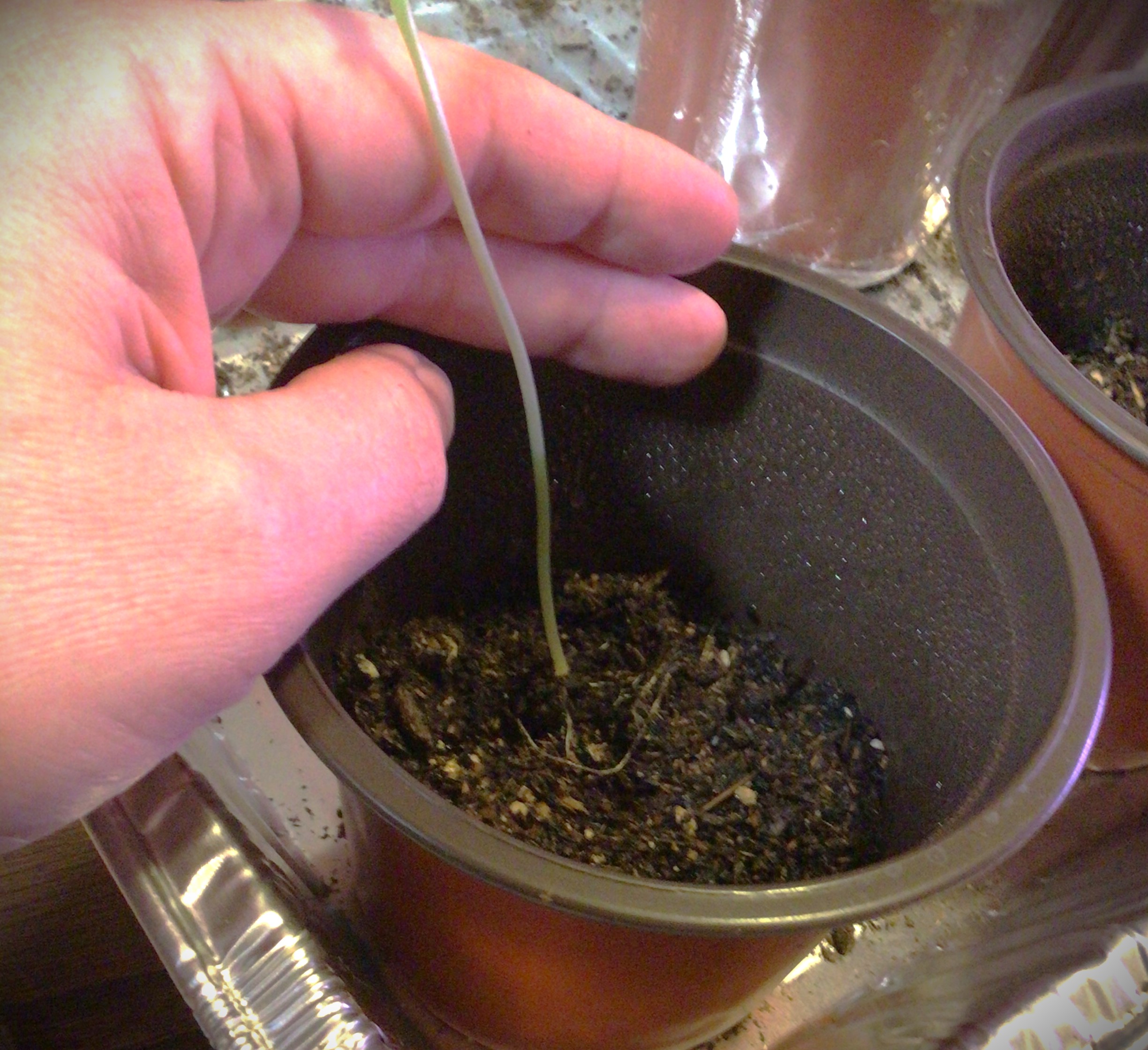
With my pots a third full I sprits the soil with some water so that it has a little moisture to start the seedling off. Next I go to my flat, with a spoon, and insert it off on the flat’s wall and gently lift up on the roots. With the roots free, I set the seedling on top and put soil around it so that it can stand on its own again. I’m putting 3 of these seedlings into this 6 inch pot.

Yes, this is not at the final spacing on the seed package. But if you’ve purchased plant starts, the majority of the time all the seedlings are crammed packed. You’ve also learned how to massage the roots apart. And you’ve also learned that you end up snapping roots. The plants do live and do grow.

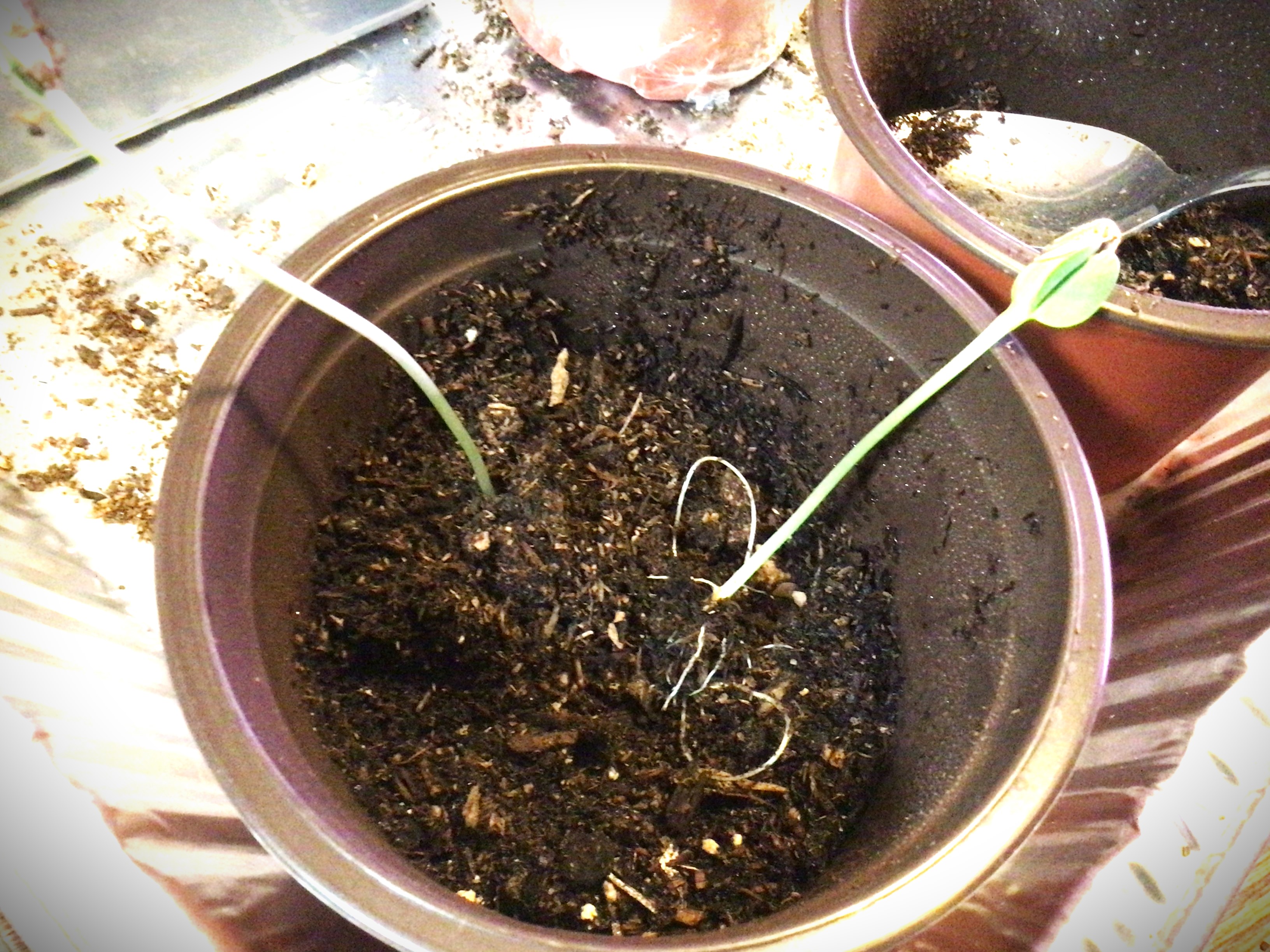
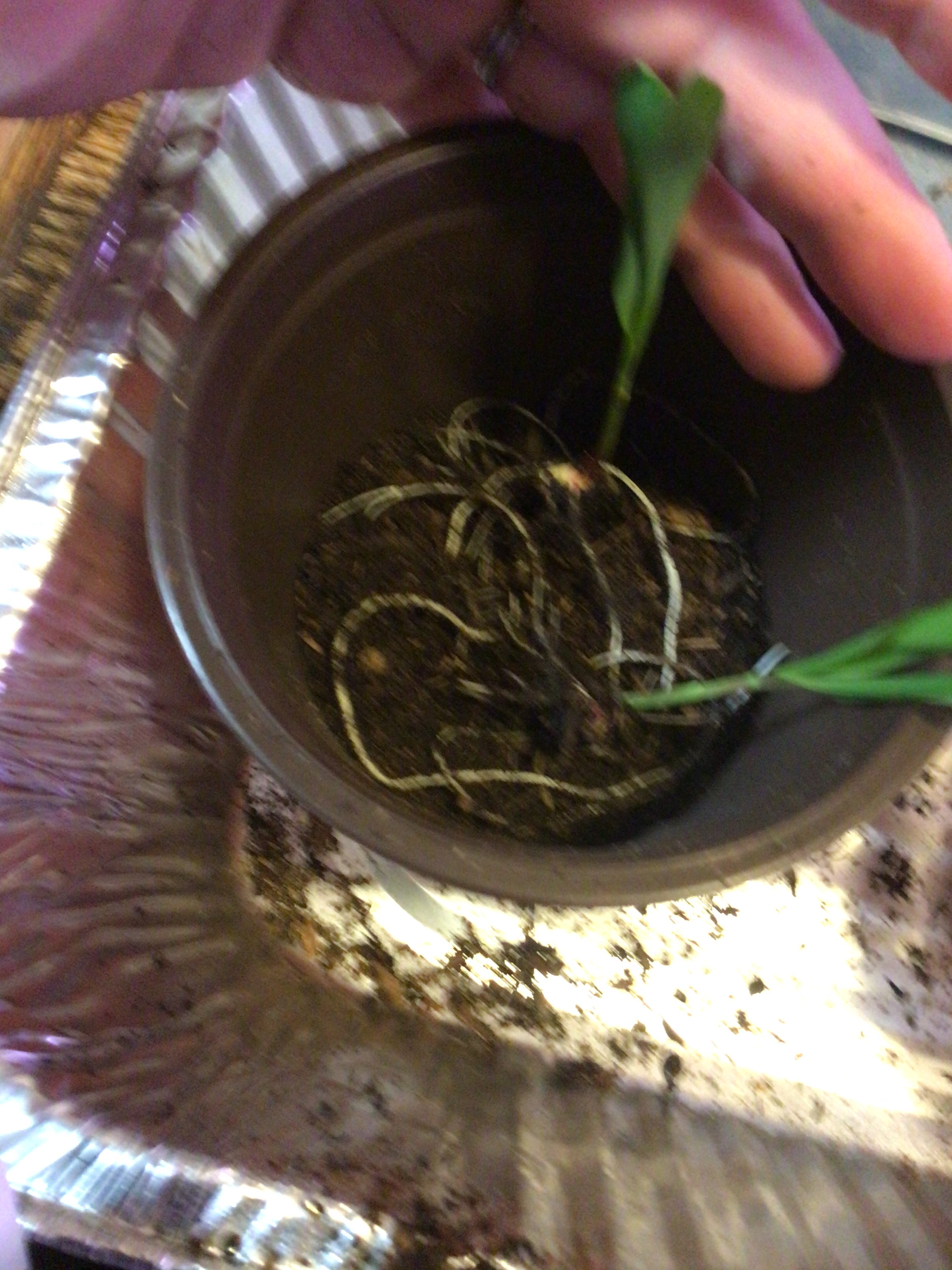
To minimize this breakage, if the primary root is long (you’ll see this shortly really well with some corn that I repotted), then I loop it on top of the soil as I get it settled into this new pot. The roots will still grow out and spread to fill this pot, but with the central heart of the roots a little more compartmentalized it should keep the greater heart portions of the roots of each of the plants more separate and easier to knead apart when it’s time to put them in the ground.

With each layer of soil I put down, I give it a spray of water.

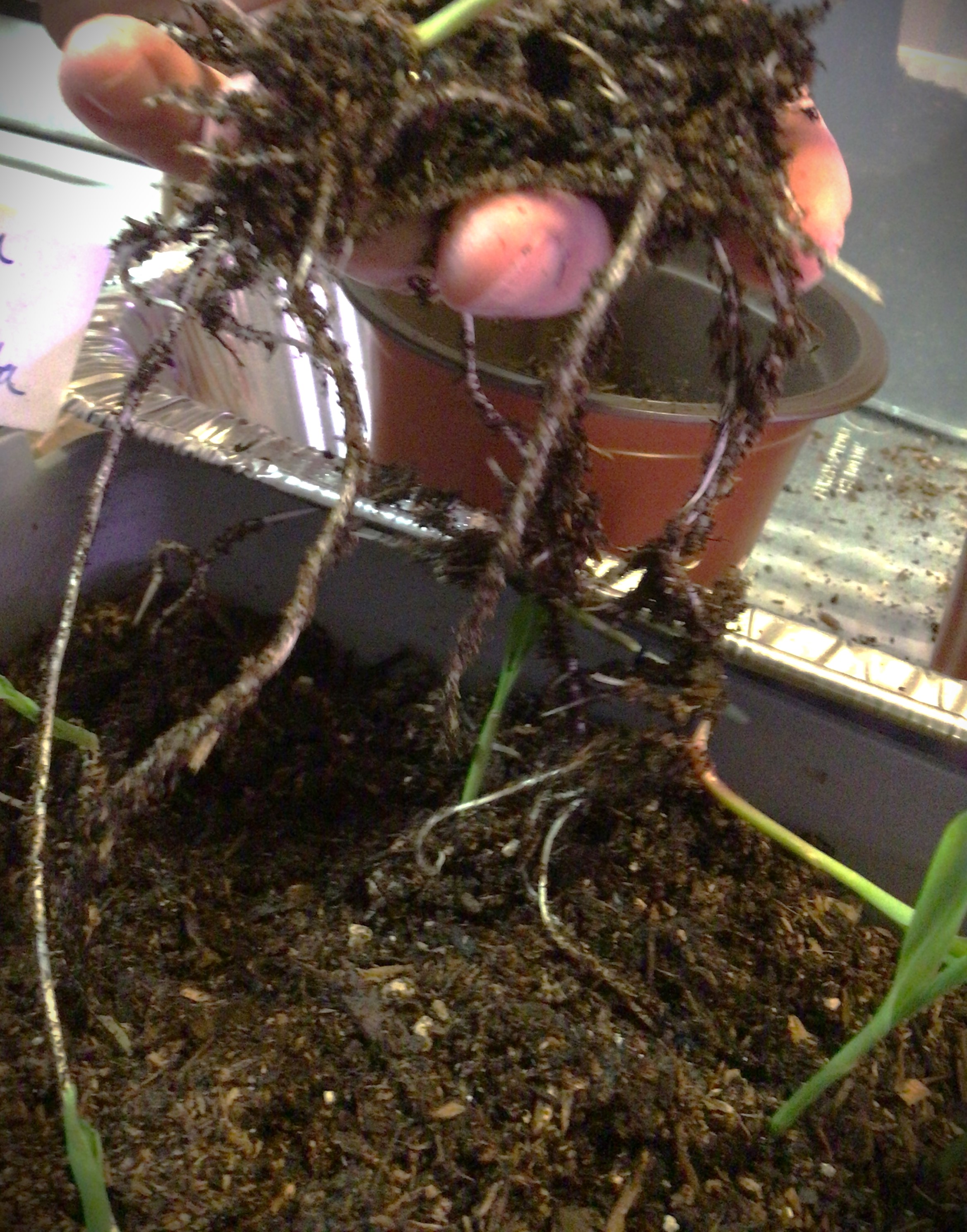
The corn on the other hand, I’m finding that their root system has vastly out performed in growth in comparison to the sunflowers.

Ok, I have to pause here and say that I was blown away with this root system growth, because I’ve uprooted my corn at the end of the seasons that I’ve grown it, and my direct sow root systems were maybe a handful at the end of a season.

So here I have three seedlings in my hand and their main roots were already trying to wrap around the smaller ones that I didn’t want to bring out yet. These ones needed massaging already to separate. Originally I was going to put three seedlings in the pot, just like the sunflowers. But I still have frost going strong and I need more time in the pots. So I’m only putting two seedlings in the pot so that I can maximize root growth now.

Even with the fact that these roots are already large, they’re definitely going to fill the pot before it’s time to plant. So a weekly diluted spray of fertilizer is going to be necessary to keep these starts healthy and not eat through all the nutrients in the soil before it’s time for the roots to get adjusted to their new home in their final resting place of my garden bed.

I’m actually looking forward to seeing how these starts perform this year, because a few years ago I always bought corn starts and so many were crammed pack together in a pot of equal size. Those corns always underperformed.

But that’s the beauty of growing your own starts. You can do things differently.

If you talk with anyone who pour their lives into perennial plants, you will always hear them talk about their success comes from healthy root system. If perennial plants grow healthy with focus on their season of root growth (during the winter), it really makes sense that annual plants really benefit from root growth as well. Yes, their life span is short. But if you’re looking to get a good return, in the form of produce, attention to root growth is necessary. If a plant has a healthy root system, their rest of the plant is going to be healthy too.

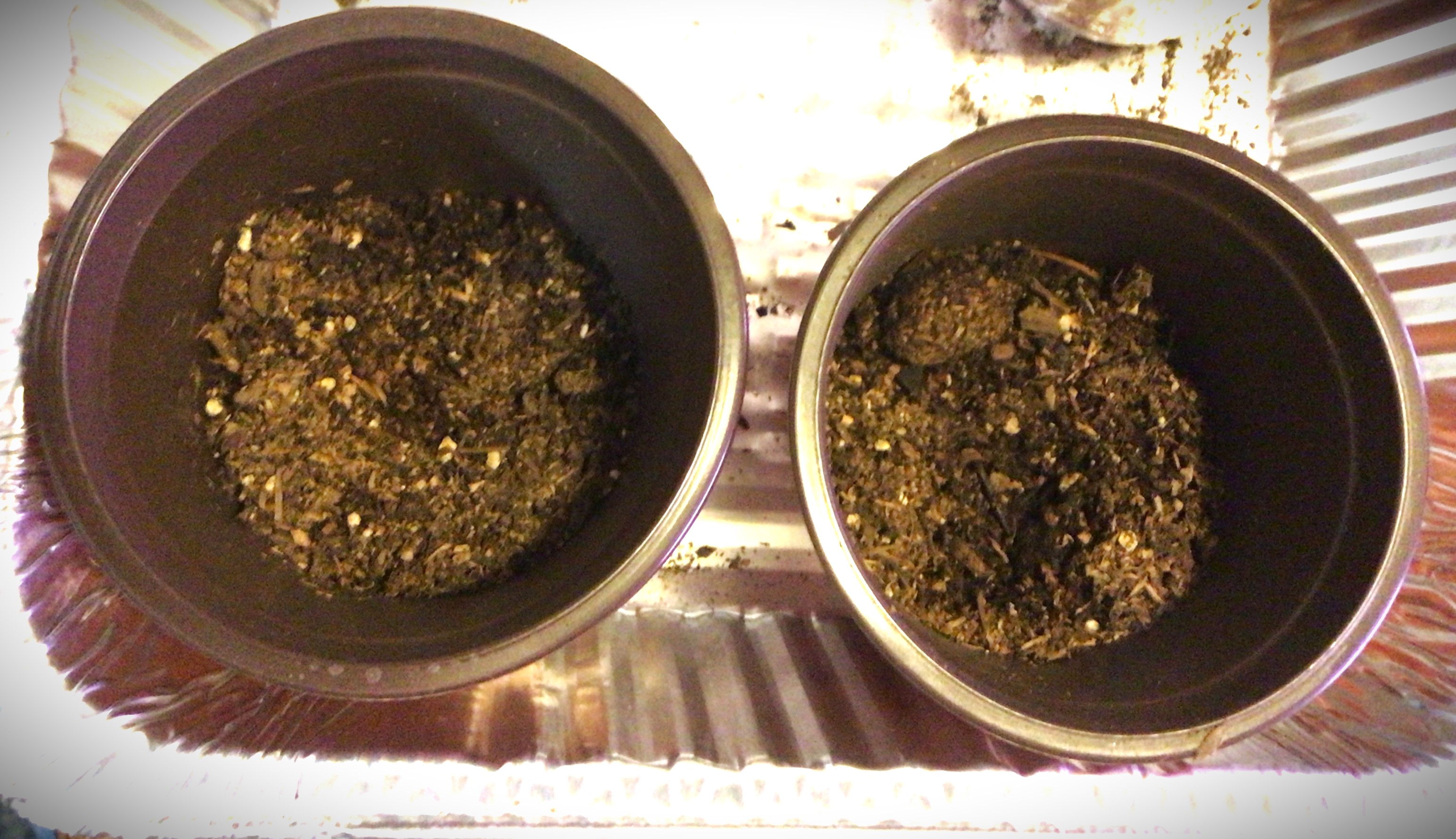
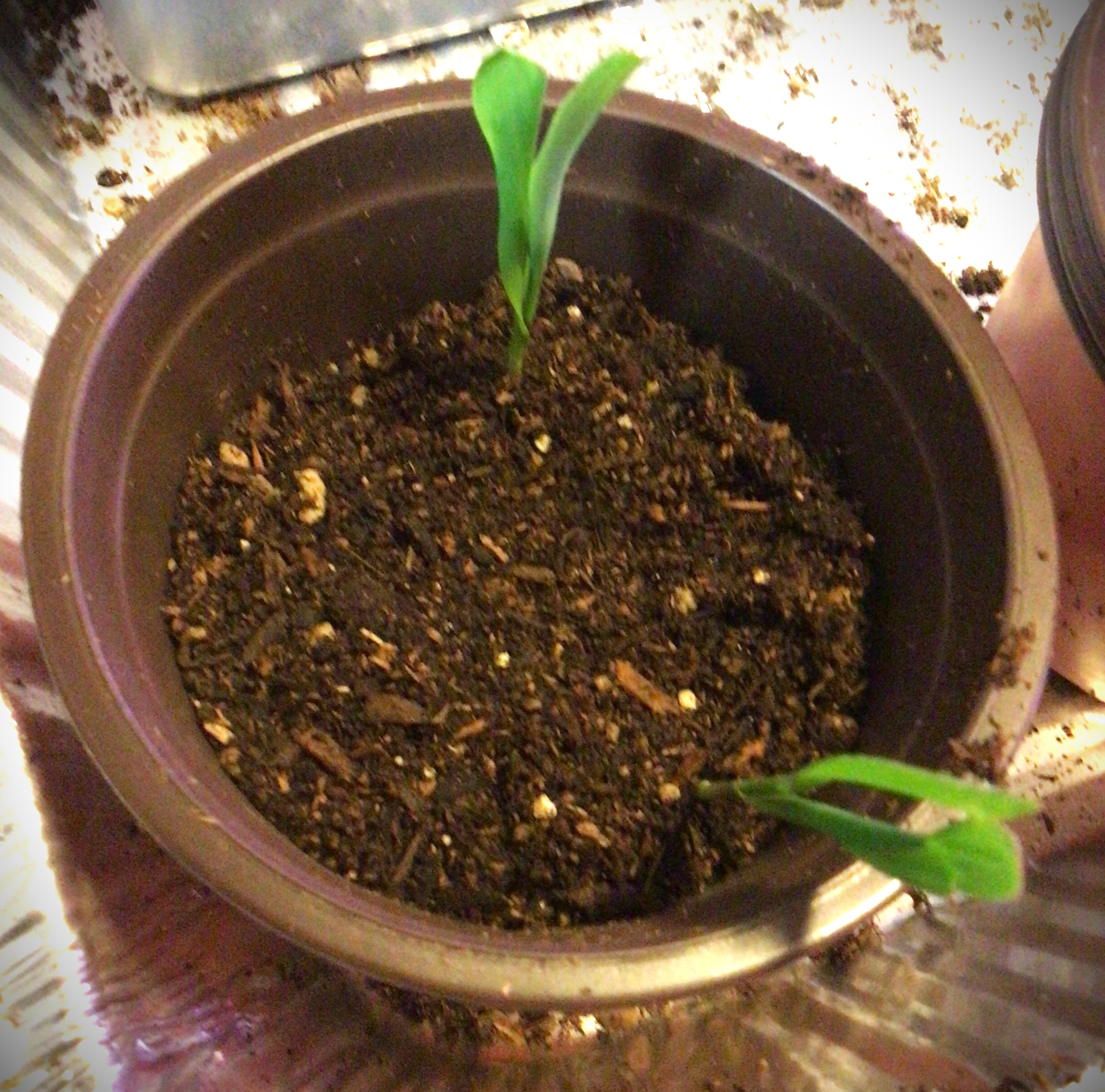
Here’s the new home of these sunflowers and corn. I have a whole lot more starts to repot. Some will be repotted into different size pots, and some in different composites. I’m currently experimenting for what’s going to work best for my garden and me. Just like not all parents share the same parenting style, neither to plant parents (or gardeners). Our soil isn’t the same. Our touch and interaction with plants aren’t either.

As I leave you today, I just want to let you know that it’s okay if your garden didn’t do well last year. It could have been the fault of the weather. It could have been the seeds, starts, or root health of the plant. It could be a combination of so many things. But I want you to know that you are empowered to do things differently. There’s not one set way of doing things successfully with your garden. You really do have your own science experiment that you perform each year, because the variables will change. Last year my changing variable was the weather. And I learned a lot. A LOT.

This year I choose to do things differently to see what happens differently. I’m pushing through more seeds than I have in the past. But I’m also growing out my long maturity plants so they have more time. I’m choosing to thin the least healthy starts even before they go into the ground and maximizing the use of my small garden.

How are you doing your garden different this year?

Advertisements

Processing…
Success! You're on the list.

Leave a comment

Advertisements
Advertisements