Baby Spiders

I love my outdoor plants. And often I’m asked, “Is there anything you don’t grow?” For me, the struggle is real when it comes to indoor plants. I pick up in the language of outdoor plants. I think I get confused when it comes to the dialect of indoor plants. “What are you telling me?!”

It was this past year when I was gifted me a clipping and an indoor propagation unit that I decided to give indoor plants another whirl.

Back in August I was thinking of winter months, being shut in with no fresh air. So I picked out a few end of season clearance plants that are known for being air purifiers in the home.

One that I bought was a Spider Plant (Chlorophytum Comosum Vittatum).

This is a great plant for those who struggle to keep indoor plants alive. We were gifted with a spider plant back when I was an event decorator and my hours were horrible. That plant lived for about two months of forgotten watering before it finally gave up on me.

I picked a spider plant this time around because of how hearty this plant is and it deals with neglect better than other types of indoor plants. Plus, with my homeschoolers who love commandeering my indoor plants and calling them theirs, this is a great one for young kids to learn about plant care with. My kids love over watering and this one loved their over attention

In fact, after the fourth or fifth time I had to empty my overflow bowl from a standing puddle, I noticed that this spider plant had started producing baby plants. The day after the first baby showed up, a second formed. And about a week later two more popped up.
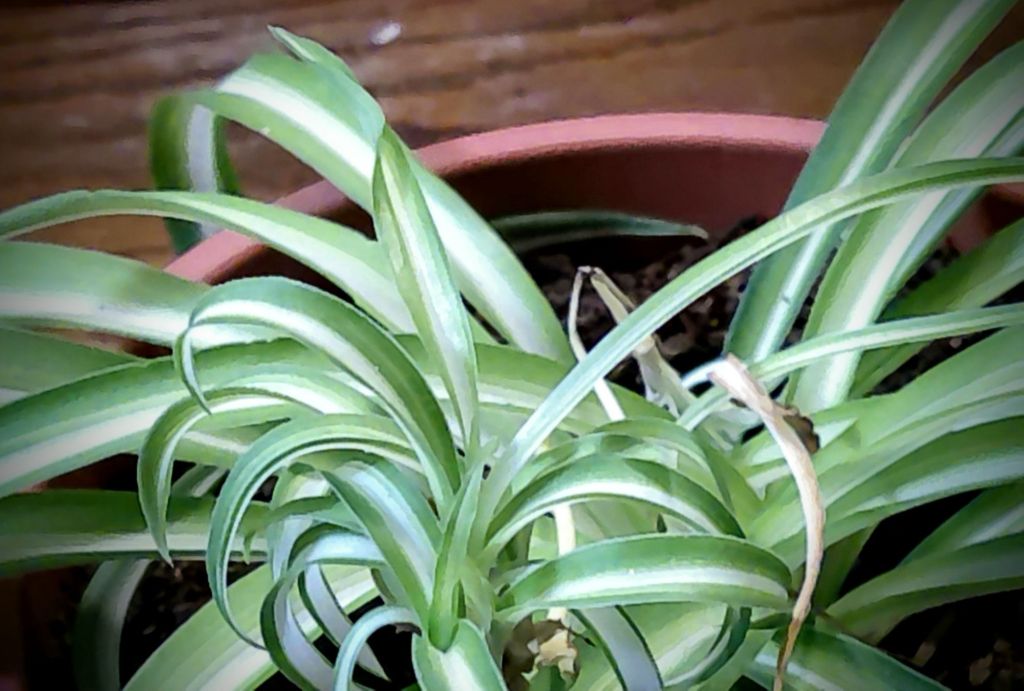
I wasn’t counting on this plant living our home so we’ll to put off four babies almost right away. But since I’m now part of a bartering group, I figured that nurturing these babies over winter will give me four plants to barter with come spring. Or seeing how the boys have taken these baby plants over, I’ll let them take them to an event to barter with. (It’s a life skill that they’re starting to become comfortable with.)

Advertisements

How To Propagate the Babies

The first thing you’ll notice growing from your mother plant, when a baby is going to be produced, is a long rigid stem. Have you seen a rigid stem of an orchid? The baby spider stem reminds me a lot of an orchid stem. On this end of the stem, you will see a miniature spider plant start to sprout its leaves.

At this point many people say that you’re supposed to bend that stem over toward a new pit, set the baby in that soil, and stake it down until its root system grows. Then you can cut the stalk.

The reason for not cutting the stem first is because it acts like an umbilical cord and gives the baby spider plant nutrients while it grows its root system.

That way makes sense and I’ve seen it done as a child. But I didn’t go that route with propagation this time. I tried to wait and let the stalks grow so that they were long enough to lean over into a new pot. None of these stems grew longer than 9 inches.

Instead I went with the Water Propagation Method.
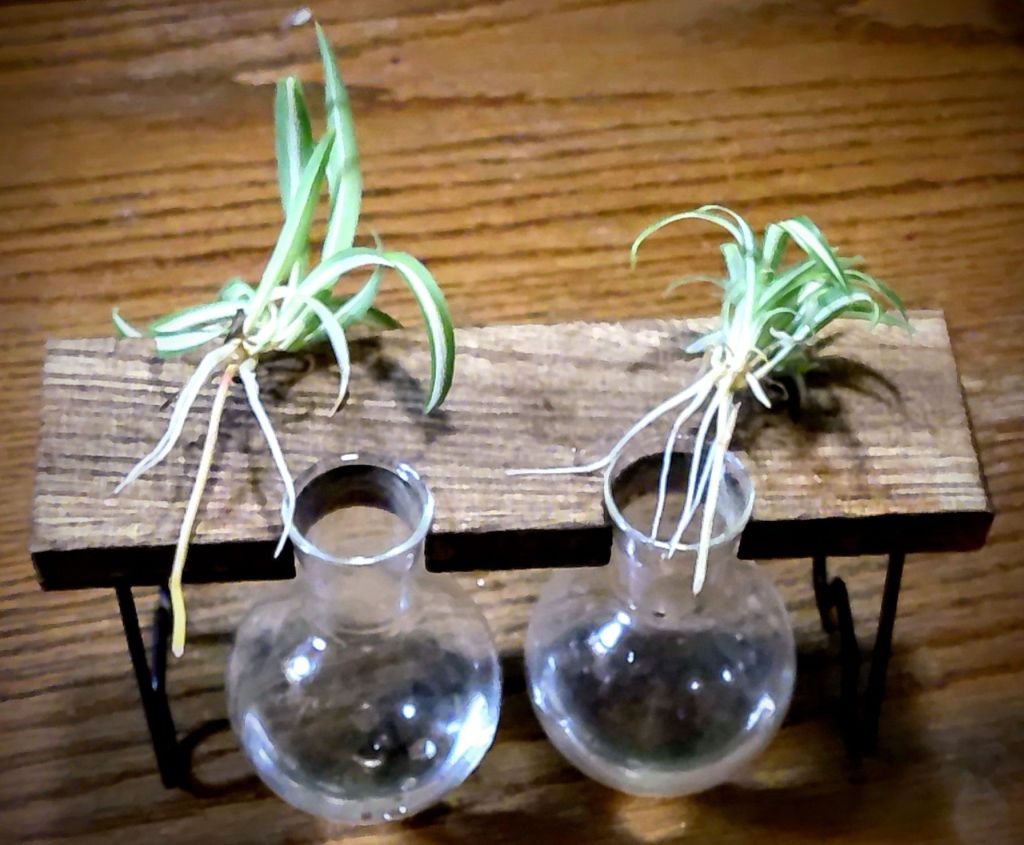
Here you can see the root growth from the Water Propagation Method that I started 4-6 weeks ago. I cut the stem of the baby spider plant a few inches long and then place them in these water propagation tubes.

The trick with this method is keeping the water level up to the base of the leaf cluster. As you can see from the pictures, this is where you see the root growth coming from. By keeping the water level high, it ensures that the emerging roots have contact with water at all times.

From there I simply place the stand in a window so the plants get sunlight. And then I wait for the roots to grow.

Here you see the far right and far left plants are the babies that I rooted several weeks ago and I’m ready to put them in soil. The center two babies are the ones that I just cut from the mother plant and are now ready to start the rooting process. I wanted to show you these side by side so that you can see the stems (which on my plant are a pale yellow) in comparison to the new roots (which are white).
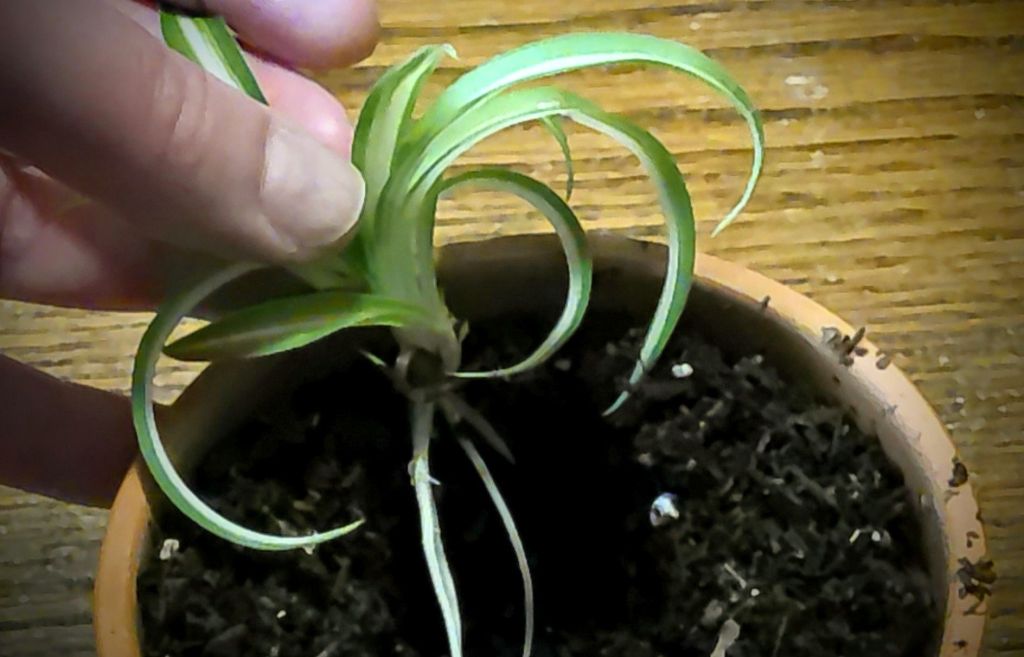
With these newly rooted baby spider plants, I put some potting soil in a clay pot. I hollowed out the center of the soil, where I want the plant to sit in the soil. (I create the hole for the roots because they are tender and I don’t want to damage these young roots. After a few months, when I’m ready to repot, I’m not as concerned with the roots because they’ve had a chance to establish themselves in the soil. For now they are going to go through a little shock because they are changing from water to soil environment. Their function is going to change in this new medium.

While holding up the leaves of this baby plant I fill in the hole (with the roots held in place below surface level) with more potting soil. Once the hole is filled, I gently pat the soil down to give the plant a little stability. Not much is needed because these roots are around 2 inches long (some a bit longer).

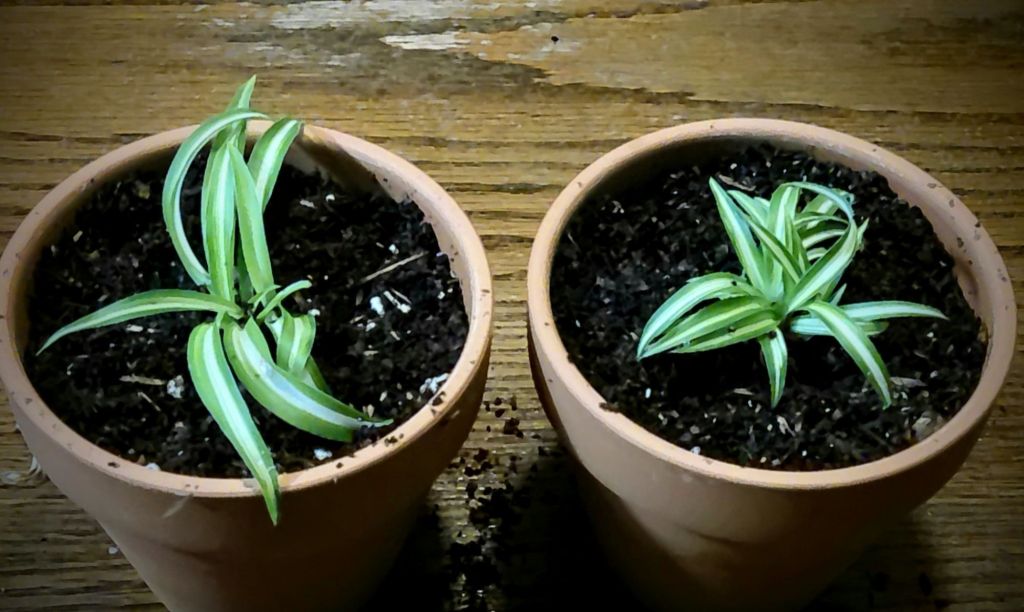
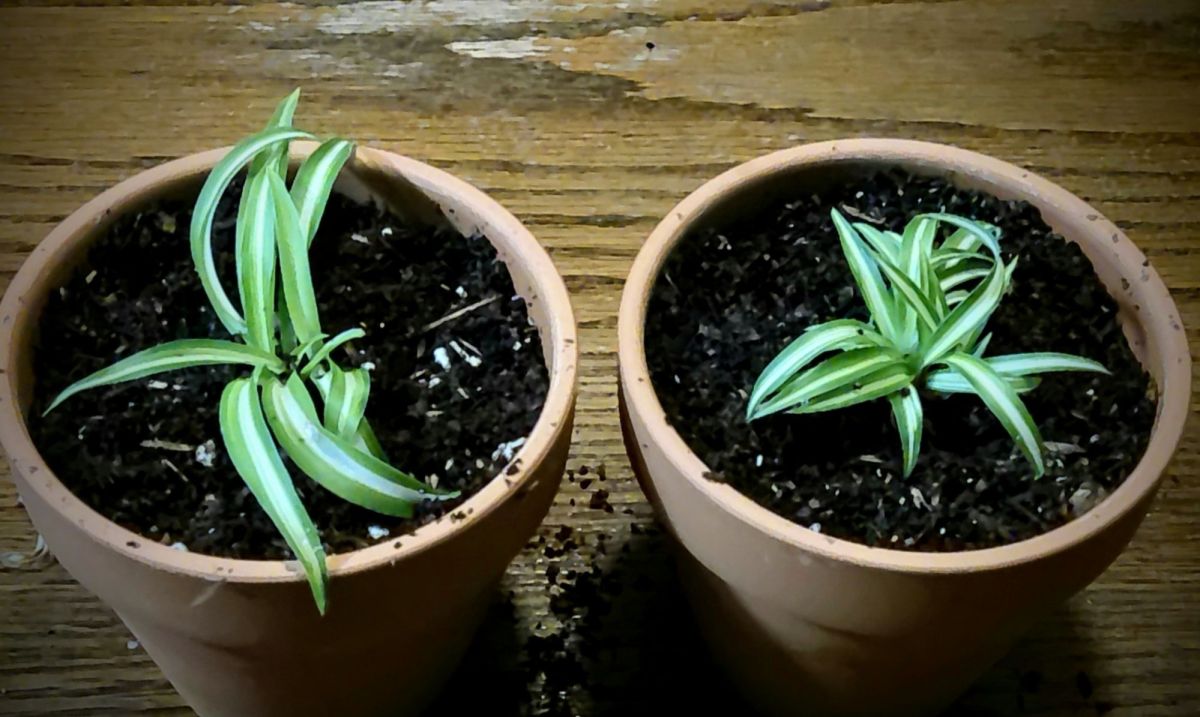
And here are how my new baby spider plants look in their new 4″ terra cotta pots. I gave them a bit of a watering and then set them back in the window.

Other than the time it took to allow the roots to grow, the setting up of this propagation took less than five minutes. And potting the rooted baby spider plants took another 5 minutes. This is something that doesn’t require much of your time, if you have limited time to care for indoor plants. And with spider plants, I water mine once a week. It’s been about 4 months since I first brought the mother plant home, so on my to do list is to give them a good fertilizing on their next watering.

Advertisements

Word of Warning for Propagation Equipment

This water propagation set up was gifted to me from a friend who hated it. It was my “transportation” unit for taking home a clipping of another plant for my drive home. After working with this stand for a year now, I fully understand why she didn’t like it. And yes, I am still that type of person that still uses it even when I hate it myself.

I look at it as a personal challenge to make it work!

If you’re looking to water propagate plant cuttings, let me walk you through this set up so you can have a little walking knowledge for choosing the set up that you end up purchasing or getting from a buy nothing group, or any other opportunity.

The reason why this stand is such a fail is because of the holes that the tubes slide into. In the above left picture you can see that the center of gravity of the holes are way off. They needed to be set back into the center of this board.

You can probably guess that when these tubes are filled to the top with water, they become front heavy and tip forward spilling water and cuttings everywhere.

In fact, in just this short period of time that I took to take all the photos for this post, the filled tubes fell forward not once… but twice!

To make matters even more entertaining, my husband decided to watch the process and freaked out with each of the dumpings. Water spread not just all over the table but also the floor. And that leads to the picture where I put the pot in front of the filled tubes. As much as I enjoy a good challenge, I really didn’t want to clean up a third water mess.

Advertisements

And that leads me to the solution of how I make this failed unit work for me.

When I have a new set of clippings to add to the tubes, I set the rack down in the window with the tube side facing the glass. When the rack leans forward, under the weight of the water, it leans into the window and holds itself up.

There are two other options that I have to fix this unit once these baby spiders are ready to be potted.

  1. I’m going to check to see if I have a drill bit that’s the right size so I can make the hold deeper into the wood so the tubes sit more center in the unit.
  2. If that doesn’t work, I’m going to take some thin crafting dowels and put legs in the front corners.
  3. And in case I need a third option… I’ll drill a hole in the back corners that’s big enough for a long screw that I can add enough nuts to create the correct counter balance to keep the unit upright even under all the water weight.

No matter what the situation, a solution can be found!

Advertisements

Final Task before Putting All the Plants Away

This mother plant has been so amazing to me that I just needed to take a couple of extra minutes and tend to her so that she can keep being a happy plant for me. I trimmed away some of her discolored and battered leaves and cut the remainder of the baby stems down to their base.

Why the trimming?

The stems were no longer supporting baby plants, so they no longer needed the energy being directed to them. The leaves were damaged and there’s no need for plant energy to go to them to see to the trauma. The overall health of the plant is very good and with plenty of healthy leaves, trimming away what I did would not affect the photosynthesis of the plant. But the trimming returns that amount of energy back to the mother plant to go elsewhere: whether new leaf growth, existing overall grown, it’s cellular immune health, or even gearing up for a push of new baby plant growth.

This mother plant is now ready for the next phase of whatever cycle she is on to now. And with the next watering combined with fertilizer, she’ll have all the nutrients she needs to move forward.


Here are some propagation units that I’m eyeballing for my next adventure in rooting plants.

I have not had a chance to see or use these units, but I wanted to share with you what other ones I’m looking that you can have an idea of what is out there.

This post contains affiliate links to products. We may receive a commissions on products purchased through these links, but at no extra cost to you. These items listed here are from Amazon but may be purchased at local markets.

3 Test Tube Glass Planter Terrarium Flower Vase with Wooden Holder

Plant Propogation Tubes, 2 Tiered Wall Hanging Plant Terrarium

Leave a comment

Processing…
Success! You're on the list.
Advertisements
Advertisements
Advertisements
Advertisements

Rosemary The New Christmas Scent

There’s something about the scent of fresh rosemary. I’m not talking about the dried needles that you find in the herb aisle. Those over priced dried herbs have nothing on the fresh branches you can harvest from the bush.

If you haven’t handled fresh rosemary, I encourage your to get you hands on some.

The first thing I noticed was that there was the classic rosemary scent, but there’s also a spruce/pine under note that surprised me.

For many years we’ve sported an artificial tree. That started because there was a season where my husband and I were going through a financially rough. I had an artificial tree that I used in the past for a Christmas tree decorating competition. But we took over into using that tree for our family in order to free up money that would otherwise be spent on a fresh tree. As much as we prefer fresh trees, it’s just made more sense to use the one time fresh tree money and put it toward a fake tree and reallocate that money each year toward some other area in our budget. (This by no means negates how the trees are made and that they just don’t disappear–but this is a whole other conversation for another day.)

I mention this not to enter the tree debate, but to highlight the point that when I first smelt fresh rosemary, it completely brought back all the childhood memories of having fresh Christmas trees in the house. And once I found this out, I’ve started taking some rosemary inside during Christmas time just for that scent during this time of year. And also because of the amazing health benefits that rosemary has for our bodies, especially during known cold and flu season.

Advertisements

Growing Rosemary

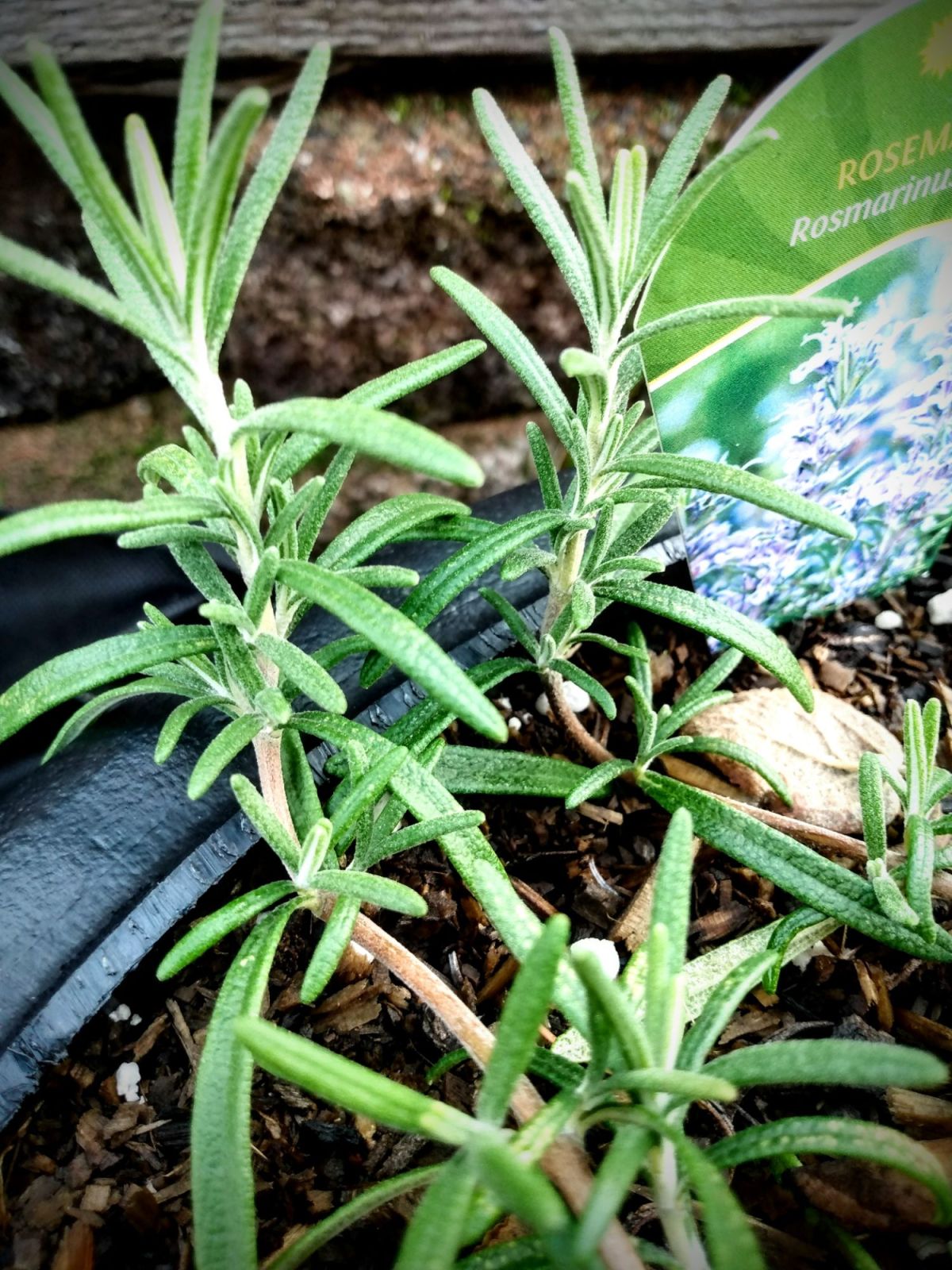
The first picture that I started with was taken last year when I attempted to root some rosemary sprigs for some free rosemary plants. I wasn’t successful with those sprigs. But as I look back at this picture I see that 4 of the 5 sprigs are wood growth instead of green growth. And just like lavender, there’s a difference in cloning these plants depending on if you’re using new/green growth or wood/brown growth. Once I’m successful in propagation of rosemary, I’ll make a new post on how to do it and eliminate the guesswork.

Until then…

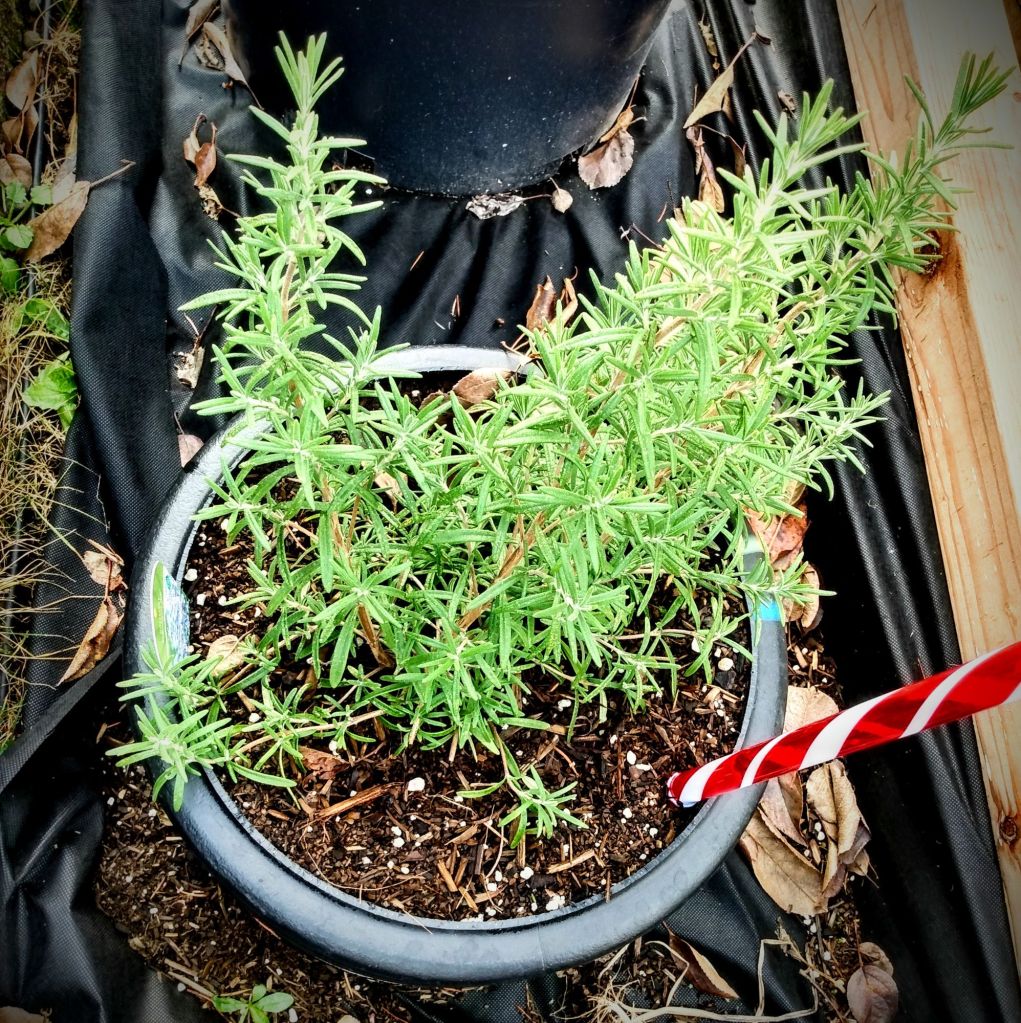
The rosemary on the left is a spraling variety. The plant on the right is an upright bush.

I found two plants at a local produce stand, at an amazing price, over the summer. One rosemary plant is more than enough for a family, with enough left over to share with friends, neighbors, and whoever else you can give it to. If you’ve seen the memes about zucchini season, warning people to lock their car doors before neighbors deposit excess zucchini in your vehicle, then you have an idea of how prolific that rosemary can be. I bought two plants because I’m a sucker for variety (thus the reason why I got a sprawling and an upright bush varieties). But rosemary is one of my favorite ingredients that I love putting into hair and skincare products and soaps that I’ve been making.

As you can see above, I’m in the process of making a new flower/garden bed. It wasn’t ready as all when I got the rosemary so I improvised. And I’m sharing this unfinished project because I want you to know that you don’t have to be finished with a build before you can get a plant “in the ground” and start establishing itself. I’ll come back to this in the future, when I have the build completed.

In the mean time… note that I used cylinder pipes and filled it with soil. When I planted these rosemary, the root ball literally fit in my hand, so the 12″ cylinder, that stand about 10″ tall were more than enough to set up these starts. There’s more than enough room for the root structure to grow over the winter. And in the spring, which I plan on having this bed finished, I can remove these pipes once the soil has been laid. In the mean time I need to lay some woodchips down to help insulate these plants before we get our expected snow in about a month or so. We live in a temperate area, so I’m not concerned about killing off the root system. I would be more concerned if we lived in an area with subzero winter weather.

One thing that I love about rosemary is that it is a drought resistant plant, as it is originally from the Mediterranean area. Once rosemary is established, it’s a plant that all you have to do is keep an eye on it to make sure that is free from pest and disease. One valuable resource for that information can be found here at Farmer’s Almanac. But this plant will be here for you for many years.

Advertisements

Health Benefits

This is absolutely one herb that you want to keep ready in your kitchen for not just maintaining your health, but also for food medicine.

Food medicine is alternative pharmaceuticals. If you are trying to reduce the amounts of chemical medicine (because of side effects or other complications), medicine from herbs and other foods are great for giving your body the building blocks it needs to maintain your health or boost your immune system to do the work it was designed to do.

Some of the benefits of rosemary are:

  • Contains antioxidants
  • Boosts mental alertness
  • Active studies on combating Alzheimers
  • Stimulate hair growth
  • Antimicrobial properties
  • Relieve indegestion
  • Promote metabolic health
  • Anti-Inflamatory
  • Studies in protecting against brain damage of stroke victims
  • Studies in slowing the spread of cancer cells
  • Relieve muscle and joint pain related to arthritis
  • Insect repelent
  • Increase circulation
  • Boost immune system
  • and so much more!

It was not so long ago that the pharmaceutical industry was created. Before then, families would treat themselves with food and herbs. This is not to say that pharmaceuticals don’t have their place. But what we are not told is that drug companies cannot patent plants, found in nature. So there is a huge industry in modifying plants. If a plant can be modified so that it cannot be grown in nature, then that plant can be patented and then be purchased at a premium price. The same goes with pharmaseudicals. They started out with plants found in nature and then the natural compounds are extracted and manipulated until they are at a point where they cannot be found naturally. These compounds can then be patented and sold at a premium price. These compounds are manipulated to be “fast acting”. So when you see “fast acting” on packaging on over the counter drugs, it is in comparison to natural compounds.

Advertisements

There is a large conversation that can be had on this subject. I bring it up because most people are not aware that the natural compounds are available in common plants and are just as effective if not more effective than some drugs because the natural compounds are not subject to being ineffective (drug resistance) by our immune system, as our body starts to recognize that these “medicines” are not natural/found in nature. So our bodies are not able to break the compounds down and fuel our immune systems to combat the situation we’re dealing with.

Again, this is not to negate or berate necesary pharmaceuticals. I just want to draw awareness of where drugs actually start from and why they might not be effective or stop being effective. And if this happens, it’s not the end all that causes you to stop having hope of being treated for whatever it is that you’re facing. So please do your own research and have conversations with your healthcare provider. There are always scientific studies on natural plants, like rosemary, and big health issues. It’s just that they aren’t publicized in commercials and the media because these natural plants are not and cannot be patented. So there’s not as much money that can be made from treatments from natural plants in comparison to what can be made off of patented medicines.

Identifying Rosemary

This past week I was at a party where the table decor was pine branches and rosemary sprigs were used on one of the appetizers. One of my friends happened to have one of the pine branches shed it’s needles on her plate and she couldn’t identify the rosemary to the pine needles.

If you remember what I mentioned above, about how rosemary smells like Christmas to me, smelling a pine and rosemary needle side by side may not help you decide which needle you want to eat. So I pointed out this one unique identification feature to my friend.

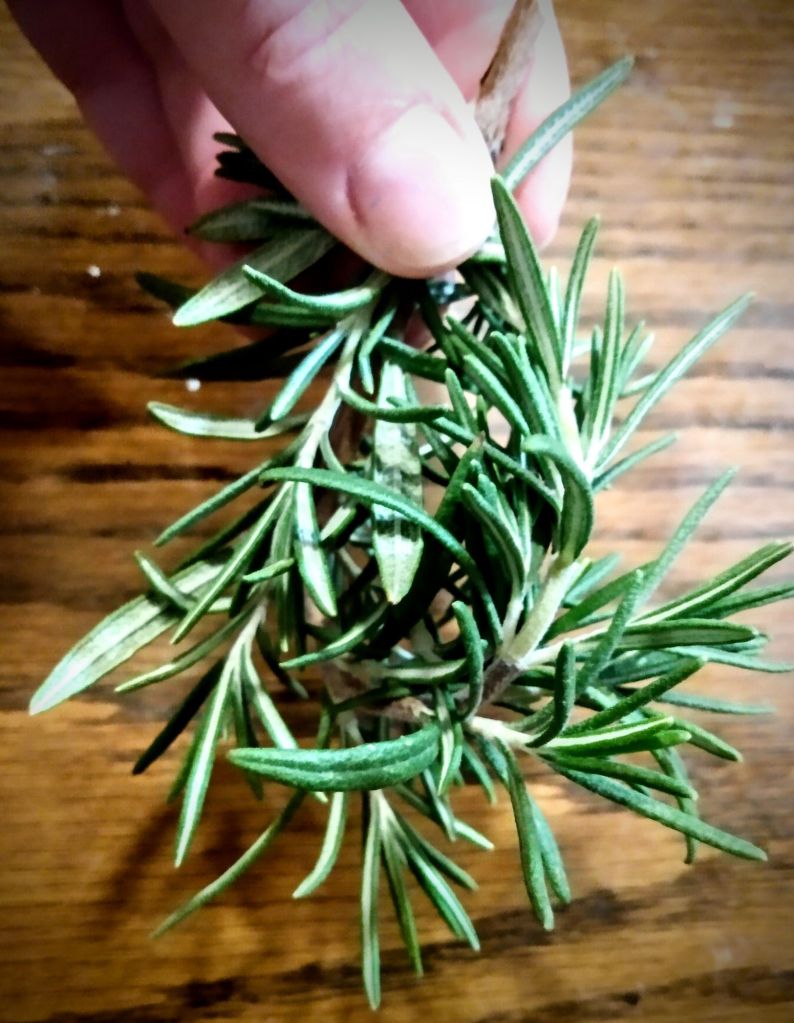
The underside of rosemary leaves have a white stripe down the middle.

In this case the misidentification of a pine or rosemary needle is not going to be a life threatening moment. Pine is known to have Vitamin C. In fact, during the spring I look for the new growth tips (bright yellow/green) of pine and spruce trees. The amount of Vitamin C found in this tips put citrus fruits to shame. So depending on what health needs you have, making tea from the tips of new growth pine and spruce trees, will give you far more vitamin C than eating citrus fruit or taking Vitamin C supplements/chewable.
With that little tid bit of information aside, another feature that you might want to know is the difference between the new growth of rosemary and the woody part.

With new plants, like what I have, it’s a little harder to differentiate between the two parts in comparison to an older plant. But as you see above, the new growth is white and the woody portion is a reddish brown. With a young plant like this, the woody part of the stem is still flexible. But in an older plant, the woody portion is very rigid like a tree branch.

The higher concentration of nutrients, and valuable compounds, are going to be found in these new growth portions of the branch. This is where the plant is sending all of its energy to. So if you’re looking to use your rosemary as a food medicine, this is the part of the plant that you are going to want to harvest and use.

That doesn’t mean that the rest of the leaves, lower on the branch are not useful. They still have the rosemary flavor that you want when you’re cooking with rosemary. They just don’t have as much of the active compounds that are found in the new growth region of the plant.

Advertisements

Useful Preparation of Rosemary

There are two ways that I preserve rosemary the most; dehydrating and infusing in oil.

For dehydration I’ve tried two different ways. I’ve left the leaves on the branch and dehydrated the branch with the leaves. And I’ve also removed the leaves. Dehydration time is the same either way, in my experience. But it’s easier to remove the rosemary from the dehydrator on the branch then collecting the individual leaves. So I’ve just left them on the branch and then when processing is down, I run my fingers down the limb, over a bowl, and quickly strip off the leaves. From there I save some leaves as is, which promotes the longevity of the healing compounds. Then I take some and grind it up into a powder in my herb grinder. In powder form, the compounds start to break down and become weaker around 6 months. So I only grind what I’m going to use in the near future. Otherwise I leave the leaves whole, where they retain their compound integrity for a year, upwards of two years (depending on who you talk to).

But I don’t use rosemary just for when I make my meals. I use them in the lotions and soaps that I make. In fact, the shampoo bar that I make for my hair has increased my hair health so much so that I cannot remember when my hair was this thick and healthy. It’s more healthy then even when I was pregnant with my children (which are one of the things that most pregnant women notice is that their hair health is improved). I use the leaves in the soap, but more importantly I use rosemary infused oil.

I use rosemary infused oil for everything; food and skin/health care products. So I use rosemary oil more than every other preparation. But one thing to note is that if you have more rosemary than you can process (either drying or infusing) rosemary freezes beautifully. Just leave the leaves on the branch, bag it and put it in your freezer. It will stay fresh and will not break down or wilt when you’re ready to use it.

Advertisements

Making Infused Oil

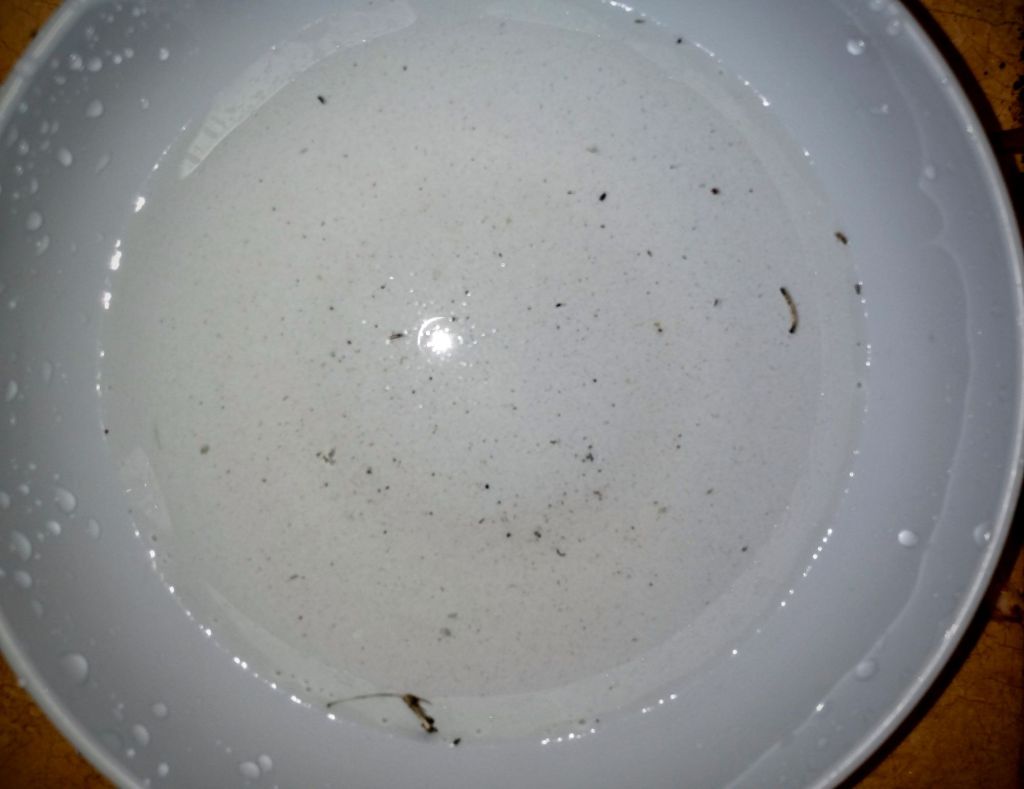
The first thing that you want to do after you cut the rosemary you will use is to rinse the branches off. Even though my plants are only a couple months old and I grow them organically, you can see below how much came off of my branches and they looked clean. All of this debris would have compromised my infusion and caused problems that are common when you read about mold and other issues people have when infusing herbs in oil.

Another problem that people have when infusing is that they put wet herbs into oil. Please remember that oil and water do not mix. What happens with water is that it becomes the medium for mold to grow (which is usually jump started by the debris that’s not washed off).

The three components that cause organic materials to break down and spoil are water, heat, and light. These three things are what feed and promote bacterial and mold growth. So whether you’re preserving food or making infusions, you want to keep these things in mind.

After rinsing off the rosemary, I air dry off the water.

There is a whole other conversation around whether to use fresh or dried herbs for making an infusion. I won’t go into that conversation here, but for delicate leaves I dehydrate them first. Plants like rosemary and lavender I go ahead and infuse fresh because of these are drought resistant plants, have thicker branches and leaves that are designed to not release the water that they have stored up inside of them. That’s not to say that I haven’t had mold grown on an infusion with these hardier plants. The times that I have, it was when the branches were above oil level (access to oxygen) and I didn’t remove the branches 6 months after the infusion was supposed to end. (It took that long for a mold colony to grow where I noticed it.)

There are also two different type of infusion you can do: stovetop or solar. Both use heat as the extraction method of the plant compounds into the oil (which I use olive oil. This is a great universal oil for cooking and soap making.)

For stovetop (or crock pot/slow cooker) the important thing to remember is to keep the temperature on your lowest setting and let it process for a few hours. I don’t do this method, but if I did I would let it run for 6-8 hours.

I prefer using the solar method because I love how it looks. And more importantly I describe myself as a busy mom. Nothing is better, in my opinion, than to spend less than 15 minutes setting something up and letting it do it’s thing over a longer period of time that absolutely does not involve me.

So after my rinsed rosemary is dried, I put the sprigs (stems and leaves) into a jar. Tightly fitting in the plant material is great because it prevents parts from floating to the top, keeping everything fully submerged when you add the oil.

On the subject of oil, not all oils are made alike. And this is another one of those points that people have failed infusions. They chose inferior oils. When you pick your oil, keep in mind what material you are using. Olive oil, grape seed oil, and a few others come from plants that are not known to be modified and with less processing. Vegetable and Canola oils are both produced from crops that are known for being genetically modified and are heavily processed (an indication that their natural plant compounds have been changed and have less natural benefits). But when you also look into the history of their origin, you will realize that they were never created for human consumption. Canola oil was formulated for World War engine lubricant. After the war, the oil was then marketed as a cooking ingredient in order to make a return on investment and because it’s cheap to produce. (For a short history of Canola, and some comparisons to other oils, can be found in the article Rapeseed to Canola: Rags to Riches by R. Keith Downey.)

For today, I used smaller mason jars. And to keep most of the rosemary stems submerged for this solar infusion, I coiled the stems into a ring shape and placed them in the bottom of the jars.

Next I poured my olive oil to the top of the jars. Then I capped them with a lid and ring. (I prefer lids and rings because you can tighten the lids tight enough so that when you shake the jars, there won’t be a leaking of the oil.)

For the next 6-8 weeks I will shake the jars and make sure the rosemary stays submersed in the oil. During the summer, I leave them in a window sill. During winter, I put the jars on my south facing windows during the day and then move them to a warm space during the dark hours. Sunlight is what causes the heat that opens up the leaves to extract the compounds and oils from the leaves.

Solar infusion takes longer than a stove top or slow cooker method because the heat temperatures do not go as high or stay sustained like a controlled heat. But the one thing that I haven’t been able to find is an article that talks about the effect that the sun has on the oil compounds themselves. (For example we know that the sun has a bleaching effect on laundry. So what else is the sun capable of doing when using it a part of the oil infusion process?)

At the end of the infusion process, no matter which method you choose, you will want to strain out the rosemary. Store it in a clean glass jar and lid. And then keep it in a cool dark place.

As with all herbs, medicinal compounds start to break down 6-12 months. This doesn’t mean that they are empty of any good. It means that they lose their effectiveness. The flavor can still be there. So as long as rosemary (and other herbs) is properly stored, they are good to be used.

Leave a comment

Processing…
Success! You're on the list.
Advertisements
Advertisements
Advertisements
Advertisements

Crayon vs. Mom

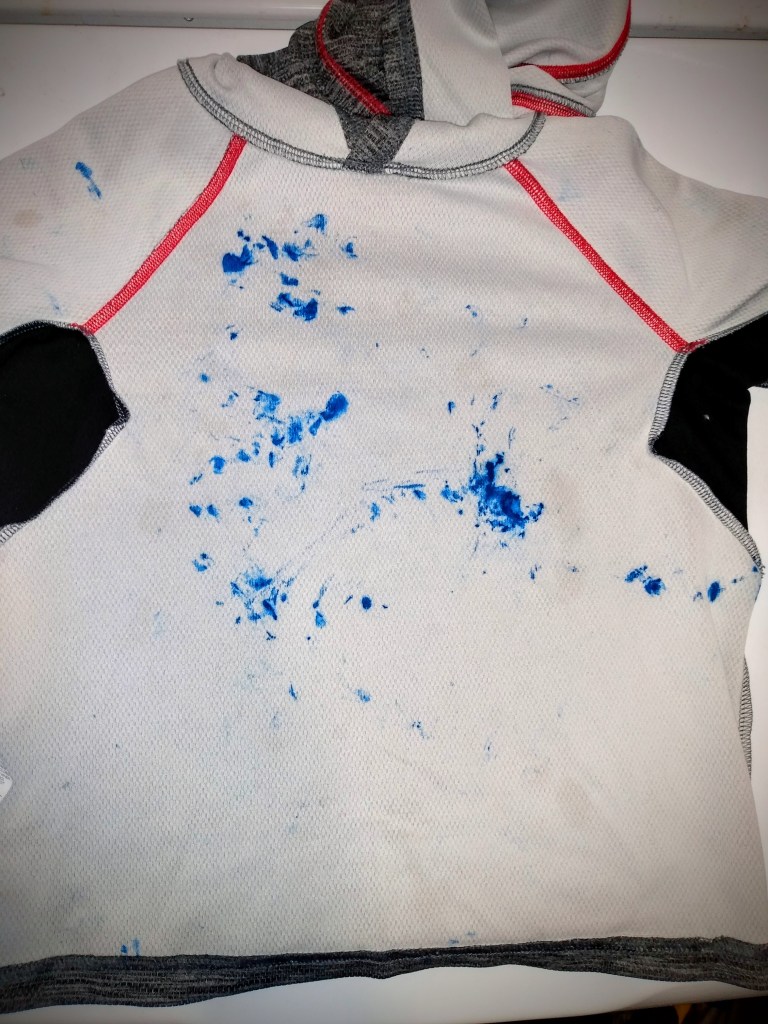
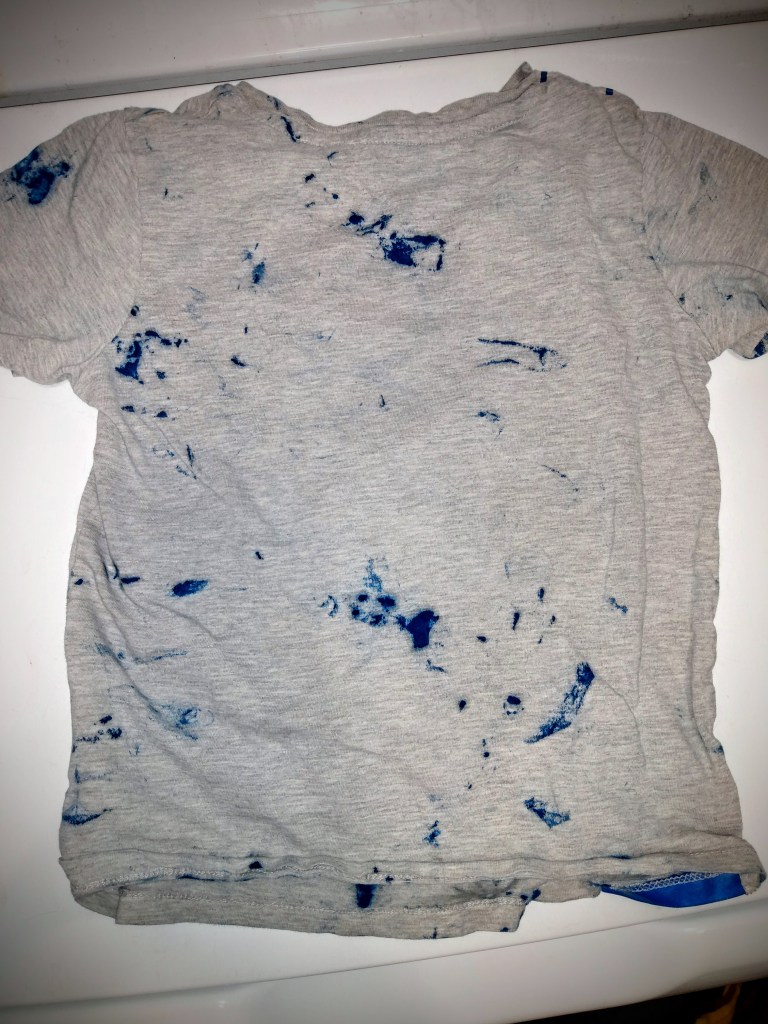
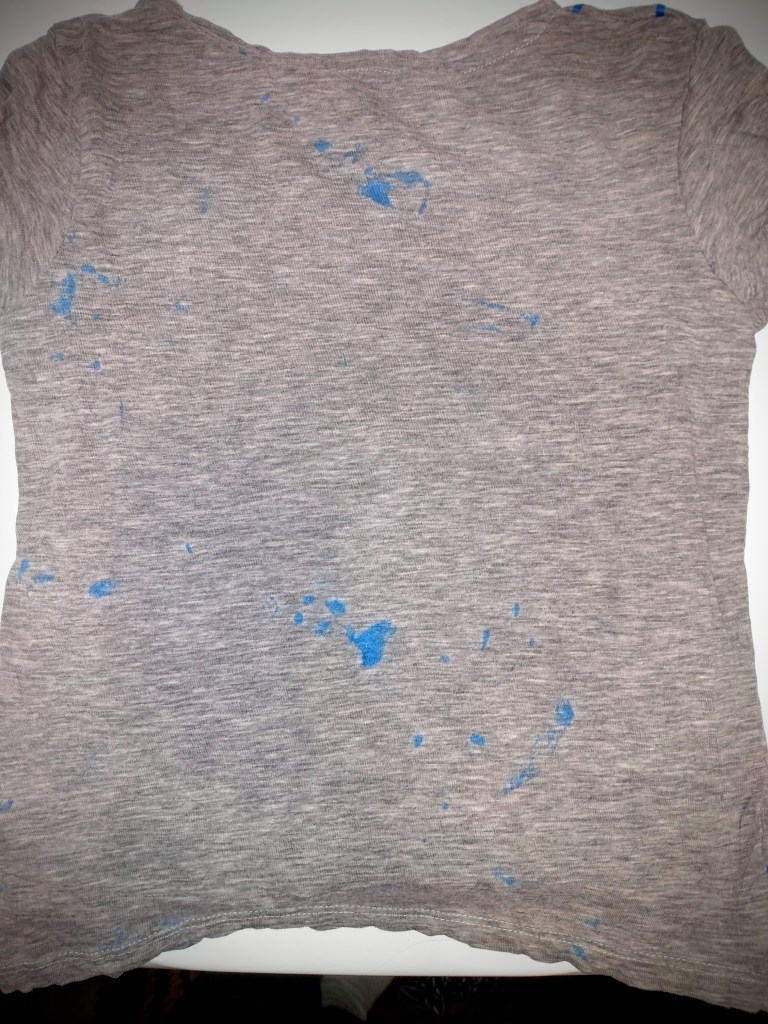
(I’m going to pepper the pictures of results through this post. So this time the pictures are not directly linked to what I’m sharing with you in that immediate space.)

Nothing causes disruption in a family more than sitting down to the laundry and finding that someone went through the wash that shouldn’t have.

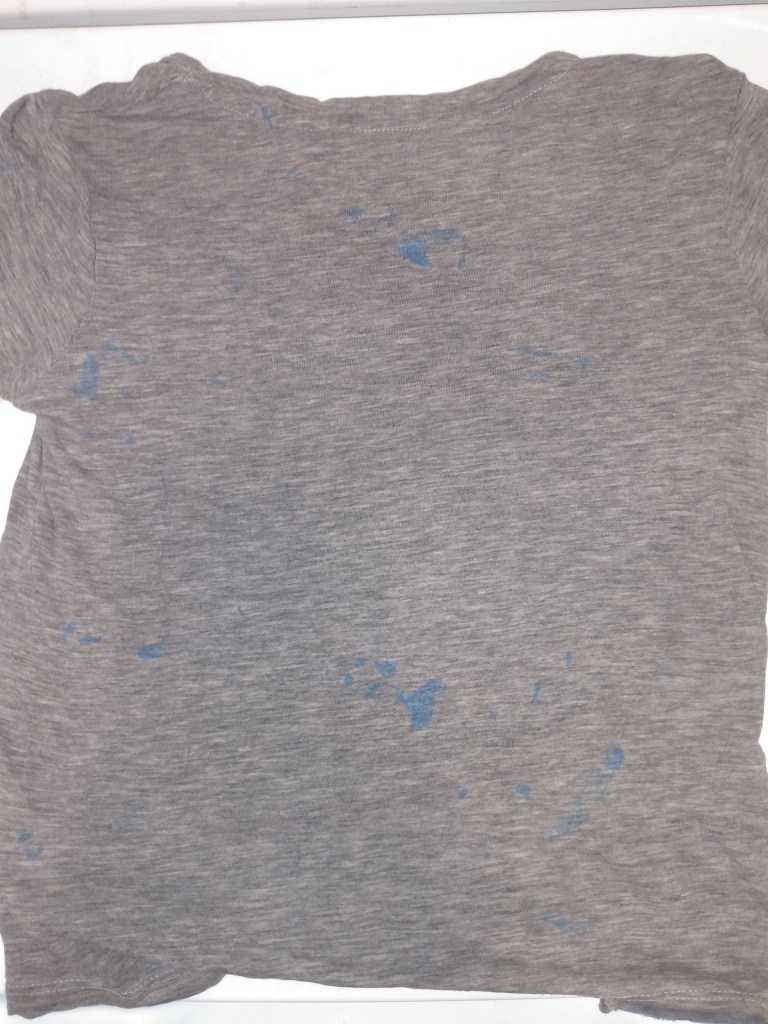
This past week, my disruption was a caused when a blue crayon high jacked a tumble in my drier!

My whole load of laundry was affected. And what made me cry the most was a sweater that was gifted to me and this was its first washing.

Did I mention it was a large load of laundry?

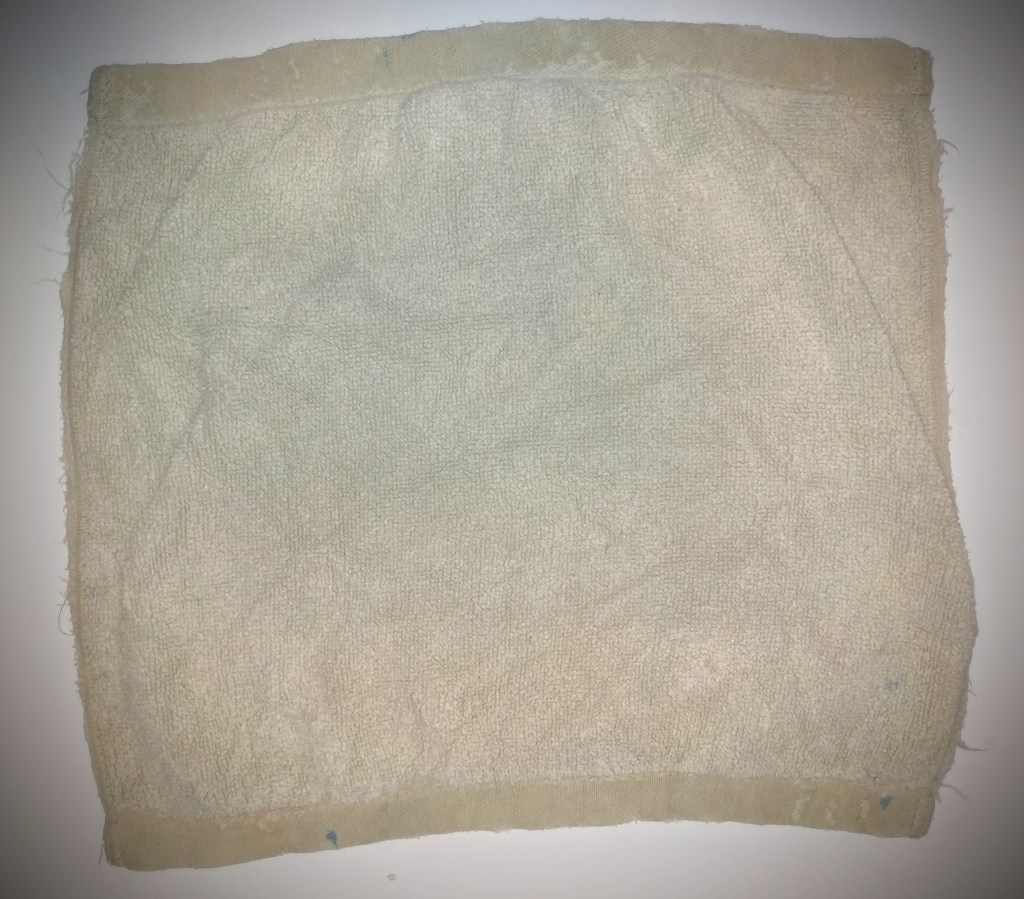
Cotton napkins: the tags were removed so if I remember right these napkins are 100% cotton. Later on I’ll talk more about why this may be important.

Fortunately my husband was brilliant and immediately started a quick search to see if there was a possible remedy… even a small chance of not having to throw out so many clothes to the scrap bin.

He never did tell me what he found out. But two days later (when enough time had passed), I ran my own search. The videos I found were either from other housewives (and one preschool teacher) who used items they found in their homes or ken using chemicals that may or may not eat your clothes if you used it (maybe a slight exaggeration but not far off).

The teacher used a toothbrush. And I wasn’t going to go through with a toothbrush on 50+ pieces of clothes and linens. And with the options remaining… you guessed it! I chose the house wife remedies.

The ingredients that were used by all videos were vinegar and Dawn dish soap. Half also added washing soda.

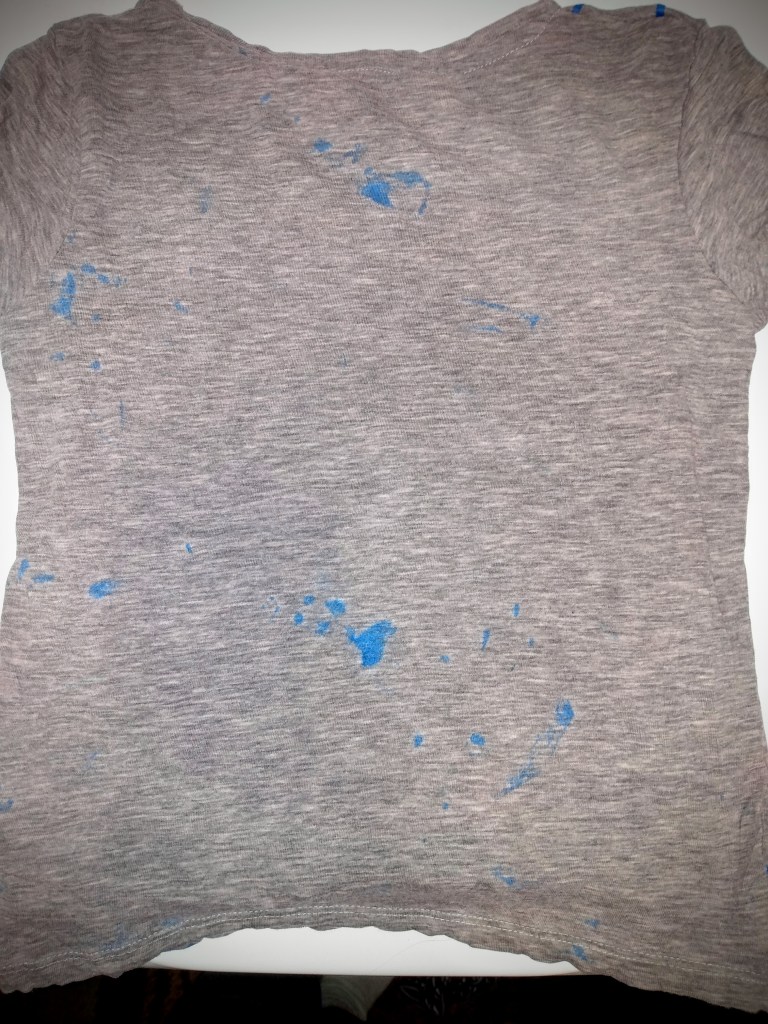
This is one of my kids’ shirts. This is a blend of cotton and polyester. The tag is worn out so I can’t give the percentages.

Advertisements

Why Dawn Dish Soap?

If you think about what makes up a crayon, you find that it’s in the wax/fat or oil based. Dawn is known for being aggressive with breaking down oils and fats.

Will any dish soap work?

Absolutely not! There are a lot of cheap dish soaps out there that doesn’t break down fats and oils. If you’ve ever used cheap dish soap where you have to scrub an oily dish with the soap and absolutely no water to dilute it, you know what I’m talking about.

However, for my experiment, I used Kirkland (store brand) dish soap that is marketed as having four times the grease fighting power. This is something that Dawn is always advertising in their marketing. So I have reason to believe that this is Dawn just relabeled as the Costco store brand. Even if I’m wrong, it’s this degreasing action that I’m going for because wax is oil based, whether natural or synthetic.

Out of the three ingredients the dawn dish soap is, initially, the one ingredient that I wouldn’t skimp on. My hypothesis is that this is the ingredient that is the make or break item for this science experiment to work.

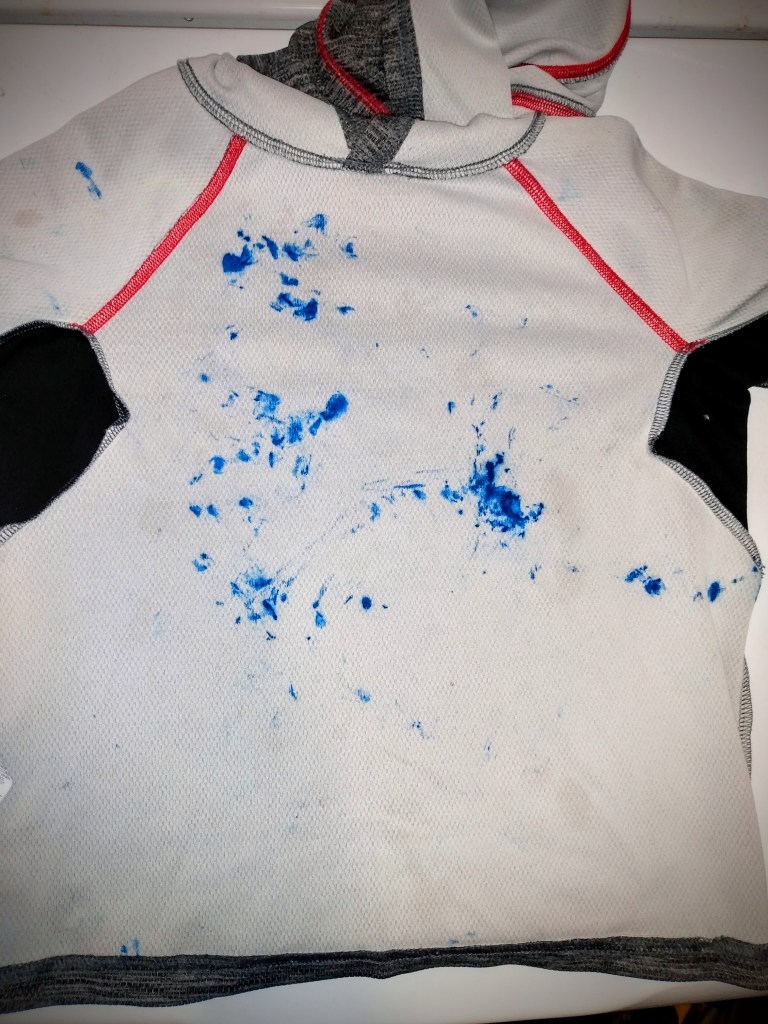
Here is another one of the kids’ shirts. This athletic shirt is also a poly blend with less cotton content than the previous shirt.

What about Washing Soda and Vinegar?

These two ingredients I’m not picky on brand and I use them interchangeable. So by all means if you have an opinion, please drop it below in the comments.

I am a homeschooling mom, but here is where my scientific knowledge is going to be lacking. We haven’t gotten to the lessons yet to understand why bicarbonates or vinegars do what they do in the laundry.

But for generations vinegar has been used when washing clothes to freshen them up (in the days before fabric softeners or laundry crystals) and give your laundry a little fluff. And that’s not even mentioning that vinegar is amazing for giving your washing machine a good little wash to break down laundry build up in the wash barrel.

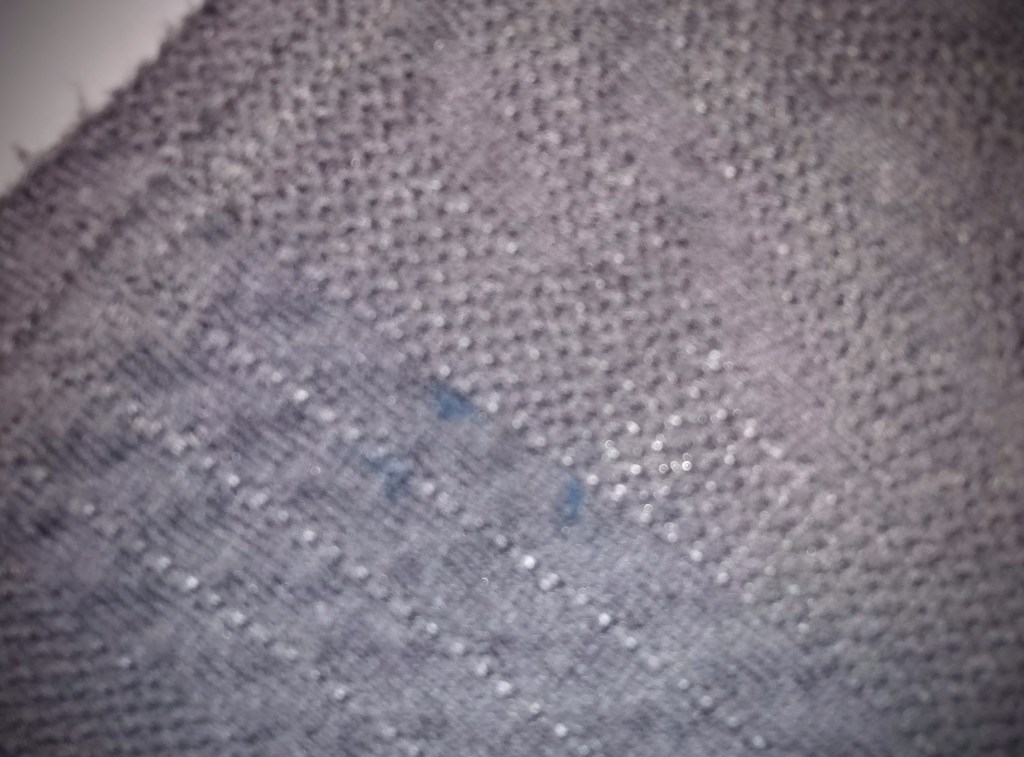
This sweater I wanted to include to show what happens with a woven texture.

I suspect that vinegar is a key component in this laundry remedy because it loosens and opens the fibers up from compression. So the vinegar works in concert with the dish soap by getting in there a opening up the space for the soap to get all around the crayon wax and break it up.

In my experience there’s been no noticeable difference between a 5% acidity vinegar and the vinegar I make from apple scraps or orange when it comes to how it behaves in my laundry. Of course there is the difference of scent that comes from the apples or the oranges. But other than that, both types of vinegar (commercial vs. home ferment) behave the same.

I’m not sure how the videos with only Dawn dish soap and vinegar works supposedly as well as the videos that use dish soap, vinegar, and washing soda. The reason for this is because I know that there is a chemical reaction that happens between the vinegar and washing soda. But I’ll come back to this point when I get down to what I found when I played with the measurements of these two ingredients. The combination of the vinegar and washing soda DID have direct correlation to how much of the crayon got removed from my laundry.

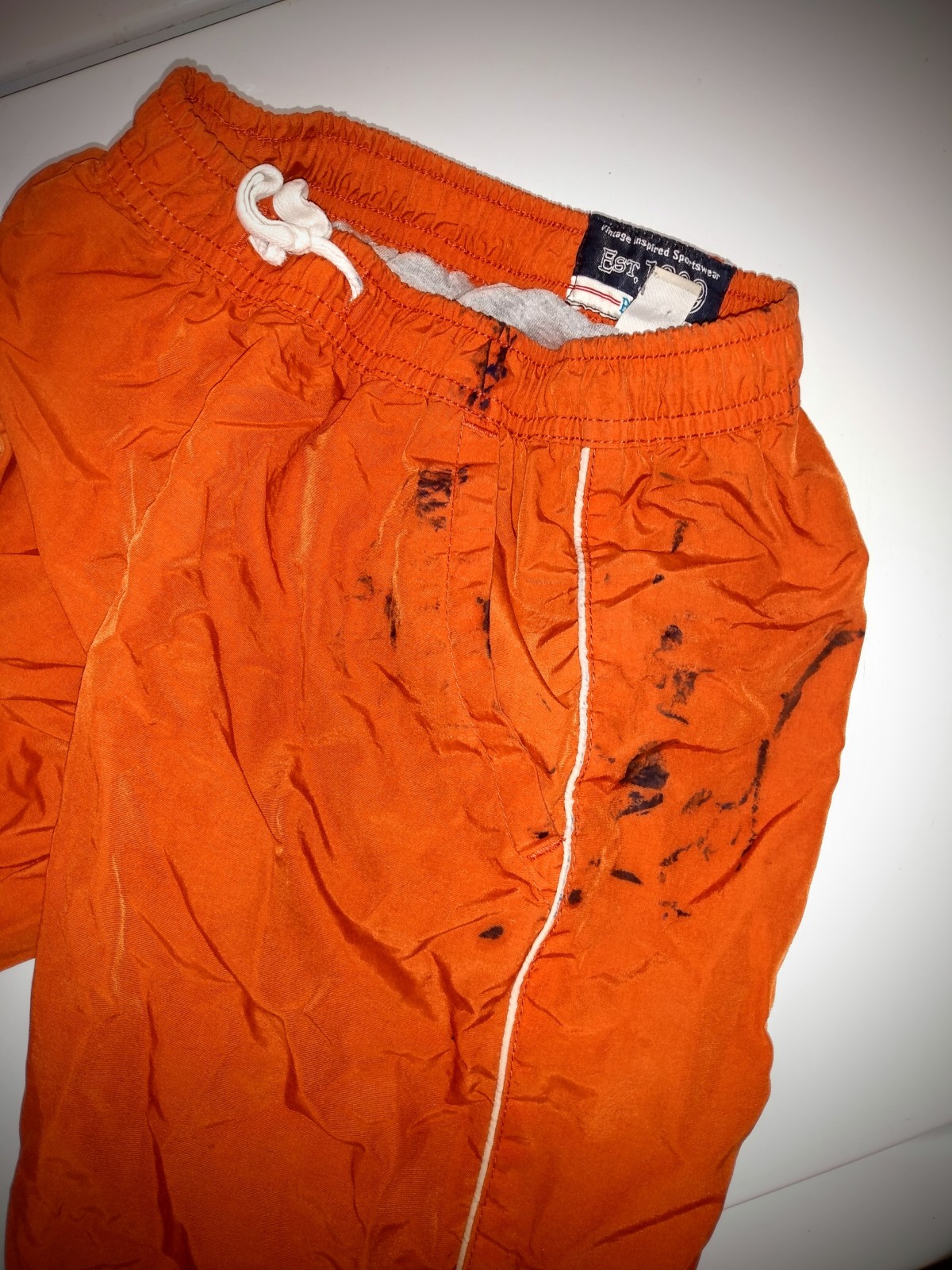
These athletic pants are a poly blend that includes rayon.

Advertisements

First Things First

Before you can go back and rewash everything, the first thing that has to happen is checking to make sure that your drier is clean from residual wax.

The drier pictures I wanted to keep with this section of text.

As you can see from the pictures that I took of my drier barrel, my load was so large that the clothes kept the barrel from being covered in the crayon wax. I did have one spot next to my lint trap.

So on the one hand, this is what you want your drier to look like. And on the other hand, here is what you’re looking for. I didn’t have to go through the hassle of running my drier empty to warm the barrel up and then wipe out the crayon wax. If I did have to I favored the video where people wiped the hot drier barrel with a drier sheet. I don’t use drier sheets with my laundry, so if I had to clean out my drier this time I would have warmed up my drier barrel and then use a rag sprayed so that it became damp with vinegar.

When you’ve verified that your drier is clean, you can then move forward with treating your clothes.

This is a pajama shirt is another example of a cotton poly blend.

What’s the Recipe?

That is the real question because no one tells you the measurements of what they use for their results. They eye ball it and tell you to be generous with the ingredients.

I’m telling you that there is a difference with the amount you use and the results you will see!

Without knowing the measurements that they used, you cannot truly recreate the results that they got. So I followed the eyeballing method that I saw in all the videos. BUT I also measured what it was that I was putting in.

Full disclosure, my washing machine has a larger barrel than the standard machine. So depending on the size of your washing machine you may need to adjust the amount of ingredients that you use when this issue happens to you.

This is a 100% cotton wash cloth with a waffle weave pattern.

I split my ruined load in half to run two different batches.

For the first run of treatment (which you see the before and after two picture sets above and below) I used the following:

  • 1 Cup Washing Soda
  • 1 Cup Vinegar
  • 3/4 Cup Dish Soap

Before I put the clothes back into the washing machine I started running the water into my machine. It’s important to make sure that you run the water as hot as your machine will allow. The heat is what softens the wax and makes it easier for the cleaning agents work. I also put my machine on the setting that allowed for a deep clean (where the clothes can soak for a few minutes). With the water running, here is the order that I did everything else:

  1. Add the clothes
  2. Pour the washing soda evenly across the top of the load
  3. Pour the vinegar directly over the washing soda (you will see the washing soda start to foam)
  4. Pour the dish soap as evenly as you can on the top of everything
  5. Close the lid and let the machine run its wash cycle

This washcloth is a blend with a nap weave.

All of the pictures that you have seen above have been the worst of the worst of what got hit by the melted crayon. Everything else came out of the treatment with the wax removed.

Below this point you’ll see what the second run, with a modified measurement of ingredients. Please note that I did not run these clothes through the drier unless I was happy that they were free from was (or as you will soon see that I gave up and just accepted the fact that I wasn’t going to get the wax out).

For the second run of treatment I put in the second half of the laundry for its first laundry/treatment run PLUS the articles from the previous attempt that I wasn’t happy with. This second test, in the end, was run with a 3/4 load instead of a 1/2 load that I previously ran.

The second run of this athletic shirt removed minimal amounts of crayon wax that was left on after the first run. I resolved that I wasn’t going to be able to get any more out.

I followed the same procedure above.

Here is the change of ingredient measurements.

  • 2 Cups Washing Soda
  • 2 Cups Vinegar
  • 3/4 Cups Dish Soap
Advertisements

The Results

From the second load, there was nothing that I needed to rewash a second time (like I had to do with the first treatment load). And you see the results of the first treatment load that went through the second treatment.

I hope there’s not a second time where a crayon goes through my laundry. But let’s be honest. I still have young kids so there’s still a chance.

There was an improvement on this t-shirt. However I was unable to get everything out. But my kids have worse stains from pens and paint that this was livable.

Should I need to deal with crayon damage, this is the recipe that I’m going to use and why.

  • 2 Cups Washing Soda
  • 2 Cups Vinegar
  • 1/2 Cup Dish Soap

For treating the crayon damage, the washing soda and vinegar proved to be the combined more active ingredient over the dish soap. The increased dish soap amount made the clothes crispy in clothing feel when I pulled everything out of the washing machine. This is classic for when you’ve used too much soap/detergent on your clothes.

More does not necessarily mean better. And in this instance, my initial thoughts, expectations, and hypothesis were wrong.

I was most happy that this sweater had all the crayon wax removed. After all, this was the gift that I spoke about at the beginning of the post.

With the dish soap, even with the first load the fragrance was so strong that even a half cup was either already too much or at the top end of how much I should have used for the size of my washing machine. And if you’ve ever washed dishes by hand, you are aware of how little of a good soap that you need to use in your sink. I’m going to say that the same is true with using it as a treatment for your clothes in a washing machine.

Advertisements

Does the fiber content of your clothes make a difference???

I literally had no idea that I was even going to be answering this question when I set out to fix my laundry. But I did notice a difference.

What I found extremely noteworthy is that crayon wax does not want to let go of natural fibers!

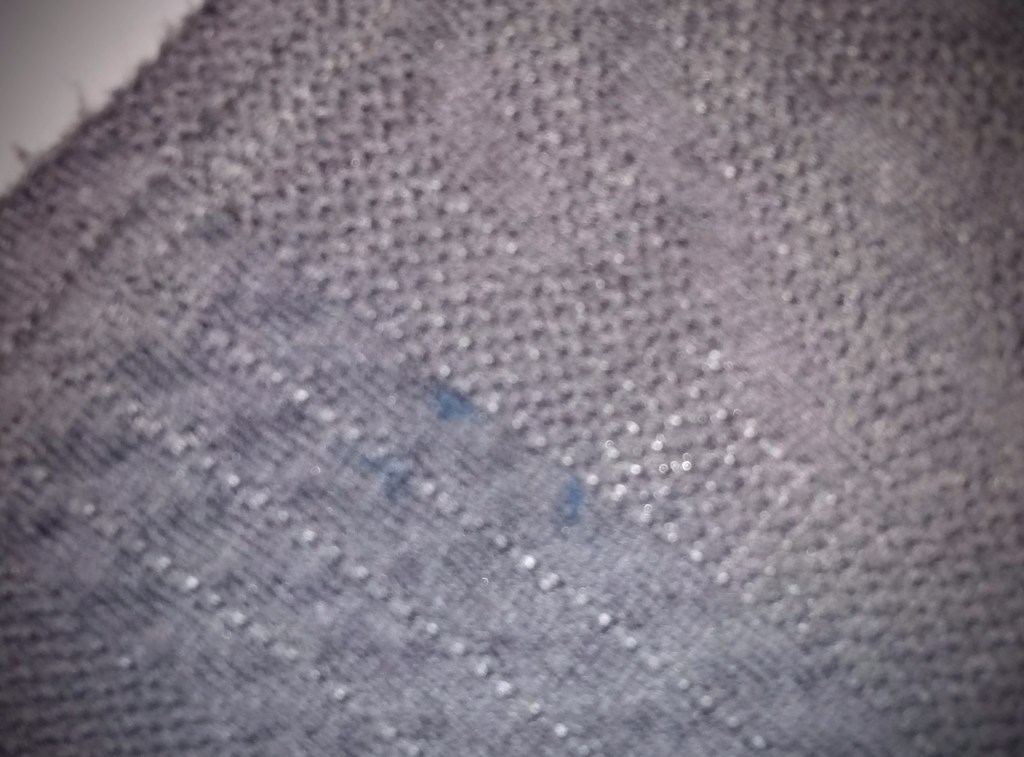
The athletic pants was the most synthetic of the clothes that were most damaged by the crayon. And even with the first treatment, it pretty much came out. The cotton shirts did not want to release all of the wax. And one item I didn’t document (because I didn’t catch them until after I was done and folding all the laundry after being dried) was my bamboo socks. The socks were 100% bamboo and did not let go of any of the wax that it got from blue crayon.

I don’t have the answer for different fiber content of your affected clothes. But I did want to mention that this one fact will play in how easy or difficult it is get crayon wax out of your clothes. Synthetic fibers appear to let the wax go the easiest. Natural fibers appear to need more aggressive modes of getting the wax out, if you’re looking to fully remove it.

Advertisements

Other Options

There are other options out there that people say work for removing crayon wax from your clothes. They seem to mostly comprise of using chemicals to remove them. I’ve seen people use industrial strength degreasing cleansers (primarily used on clothes usually being cleaned from automotive oils stains) and acetone nail polish.

For me, I’m not willing to test these ones out on my clothes because I don’t want to accidentally burn a chemical hole in my clothes. And I’ve been in the process of trying to remove any chemicals from my clothes and skincare products because our world is inundated with chemicals that bombard our skin and health.

I know that not everyone shares this sentiment. So I wanted to put out the other options out there for those who do not have those issues with using those products and want to try to fully remove crayon wax. Or maybe you do share the same sentiment, but a beloved heirloom table cloth or baby clothes got damaged by crayon. Sometimes there are just instances where the personal risk is justified over your everyday choices.

What are you go to remedies for damages done in the laundry?

Paint, pen, grease, wax, etc.

Leave a comment

Processing…
Success! You're on the list.
Advertisements
Advertisements
Advertisements
Advertisements

Buy, Sell, or…. TRADE!

The more that you keep tabs on what’s going on around the world, you start to see just how fragile economies have been the last few years. Decades in some countries.

And while many dream about the “good life” in Western countries, there are still families who struggle and fight to scrape by. And the honest truth is the families who aren’t even making it here in the United States still have it better off than many other countries. It’s hard to recognize it in the middle of trials and suffering… but things can definitely get worse.

Right now I’m in preparation mode for the fall session of our family self sufficiency group. Each time we start this group I’m surprised by how the skills I take for managing my family’s tight budget is something that I take for granted. And that is the reason why my family makes times for this. Our society has failed our families.

It was only a couple generations ago, during World War II when governments told families to build Victory Gardens. They encouraged families to provide for themselves in order to free up resources to send to the troops. And now, almost 80 years later, governments have changed the music they march to. Now governments want people to depend on them for their food and housing. Step in time to the music and you can live a modest life. Step out of line you’re out in the cold because you don’t know how to care for yourself.

This is wrong!

Everyone looked to the United States because of the American Dream. But now our constitution is under fire and the right for life, liberty, and pursuit of happiness is quickly becoming a dream made of vapors because we’re being sold out to the highest bidder.

But no matter how the politics look (are currently being defined) in the United States (or in any other country for that matter), there is one absolute truth that can never be taken from you.

What you know is available to you to use for your entire life. No one can take that away from you.

And that is why I share what I know. My knowledge is always available to my family. But what lasting good is it if my neighbor doesn’t know what I know and the quality of their lives can be improved by that knowledge. Even in the middle of oppression, knowledge can make the difference between someone’s today and their tomorrow.

Advertisements

One skill I want to talk about today is bartering.

At some point in history every society has depended on bartering. And this very skill has been nearly forgotten in Western Society. With the push toward digital currency, bartering has been shoved into the back corner of libraries collecting dust.

The beauty behind bartering is that it builds relationships. Or it can break others if one party is opportunistic and trading unfairly. But even with those broken relationships, the person who ultimately feels the penalty is the one who is opportunistic. Those who have a heart for fair trade with their neighbor will always have neighbors who want to trade with them. And neighbors look out for each other. If someone is not fair, you can bet that others will hear about it.

For those of you not familiar with bartering, it’s nothing more than a pure and simple trade of goods or services with another person for their goods or services. Everyone can participate because it’s not dependent on the money you have available on a credit card or in a bank account. There’s not a power of authority that can freeze your currency, because no currency is exchanged. You’re not dependent on the going rate of the currency for your region, or what the stock market is doing. Your trade is based solely on the value that you and the other person are placing on the goods and services being traded. No one tells you what the retail value is. The parties involved decide for themselves what a fair and equitable trade is.

Remember when you were a kid and you traded with your friend? Neither of you knew the market price. You just traded because you were willing to exchange what you had for what your friend was willing to give you. (And then that memory might also be attached to another memory of where a parent or other adult stepped in when an unfair trade happened. And that was because the value they placed on the items was out of balance.)

Does unfair bartering happen?

Yes. Human nature tries to get the better deal, at the cost of someone else.

The way you combat unfair bartering is by agreeing to trade rules up front (before negotiations start) and by valuing the person you are trading with. If you value the other person, you will automatically fight against human nature of taking advantage of them. You will look for a win-win exchange for both of you.

Is everyone going to trade with you?

No. And there will be any number of reasons why.

My first time bartering, I faced this “rejection” alone. And it smacked me in the face with my very first attempted trade. And it hurt.

The problem is that we associate being told “no” or “no trade” as something is wrong with us as a person or that what we brought to trade is of no or little value.

BUT THAT IS NOT THE TRUTH!

The story is that for this first bartering event, I went with a backpack filled with one type of goods: crochet and knit items. And I went straight for the person who was the popular trader of the day.

Advertisements

With just that little bit of information, there’s two very valuable things that I learned.

1) the most popular trader has their pick of what is brought to the event. They have the luxury to turn down trades and still have a great day.

2) I limited my value and contribution down to just one type of product. When I went I thought I just needed to bring my “best” to be successful. But that limited the amount of business I could have. Not everyone was in need of the items I brought. There were a number of people who had no interest. There were also others who already had the items that I brought.

For example, the popular trader loved the blanket I brought, but had a house full of blankets and so it was a no trade.

As I said earlier, that sting of “no” caused a negative emotional response deep inside me. I had to get out of my emotions and talk myself back into the event I came to make trades, and free up some closet space.

Be prepared for the No.

I went in expecting only yeses and trades. It took thinking on my feet to pull myself together, make myself vulnerable, and get in there and trade.

I have no shame in saying that I went to the table of the person who had no one looking for a barter. She didn’t have what I wanted to bring home BUT I came to trade and I was determined to make at least one trade before leaving. So I traded for her one product. And mostly I was moved because she really wanted what I brought. And I know that the trade between us could take away the sting of failure. We made a fair trade, even if I walked away with a product I didn’t want. The value of that trade was that I met an expectation I placed on myself.

I don’t recommend trading for something you don’t want.

But if you’re new to bartering be prepared to hear no. And have a game plan in place for how you want to bounce back from what feels like rejection. Try not to leave an event with no trades being made. You want to have a positive note to go home on. Not all bartering events are going to be difficult to make a deal. So find a way of turning a not great event into a memory where you will try again.

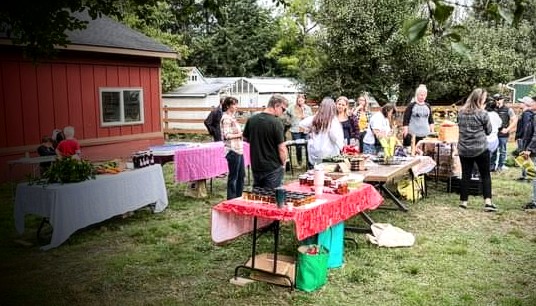
My favorite bartering event, to date, is the most recent one I attended. It had a feel that was different from my very first event. It could have been because there were established rules that were agreed upon before the event. Or it could have been the lay out. Everyone was encouraged to arrive ahead of time to set up and take a look at everyone’s offerings. But no trades or negotiations were supposed to start ahead of the start time. I actually loved this pre-event moment. There was a world of difference in talking with people, getting to know each other, learning each other’s names. The focus started off not on the goods, but on the people.

Advertisements

Mind you, I married a social butterfly. I have to work at being social and building relationships. But there was a massive difference in being able to meet and speak with people without the pressure of making a deal.

And this all goes back to what I mentioned earlier. There’s a difference when you trade with a neighbor vs. a stranger. Will I trade with a stranger? Absolutely. But there’s not that connection with that person. You’re not invested in them and it’s harder to get into that mode of thinking “how do I choose to trade with them so we both benefit equally”.

For example, one of the ladies that I talked quite a bit with we traded a lot with each other. And the funny thing is that we both brought bread goods. So of course what each of us brought bread wise we could make for ourselves. So even though that eliminated some of our offerings to each other, we saw what was unique to us that we valued in the other. But because I invested in getting to know this other woman, it was easy to see value in her ceramics in which she slightly undervalued herself and her skills. I had no problem in trading in what she perceived her favor, because I traded with her on the level that I valued her work.

Now bartering doesn’t work like this last example all the time. That was a special moment with a trading relationship that was built. And I want to draw attention to this because in an ideal world, where everything is perfect, this is how we would treat each other. When we have goodness inside of us, when we look for the success in others, this is an example of what this looks like. But this only comes with relationship.

My Advice for Successful Bartering

The first thing you can do for yourself is bring more than one item type to trade with. Have options for when you show up with the same items as someone else.

There’s a idiom, cast a wide net. If you want to catch a lot of fish, you cast a wide net. In the same manner, if you want lots of trades cast wide your options.

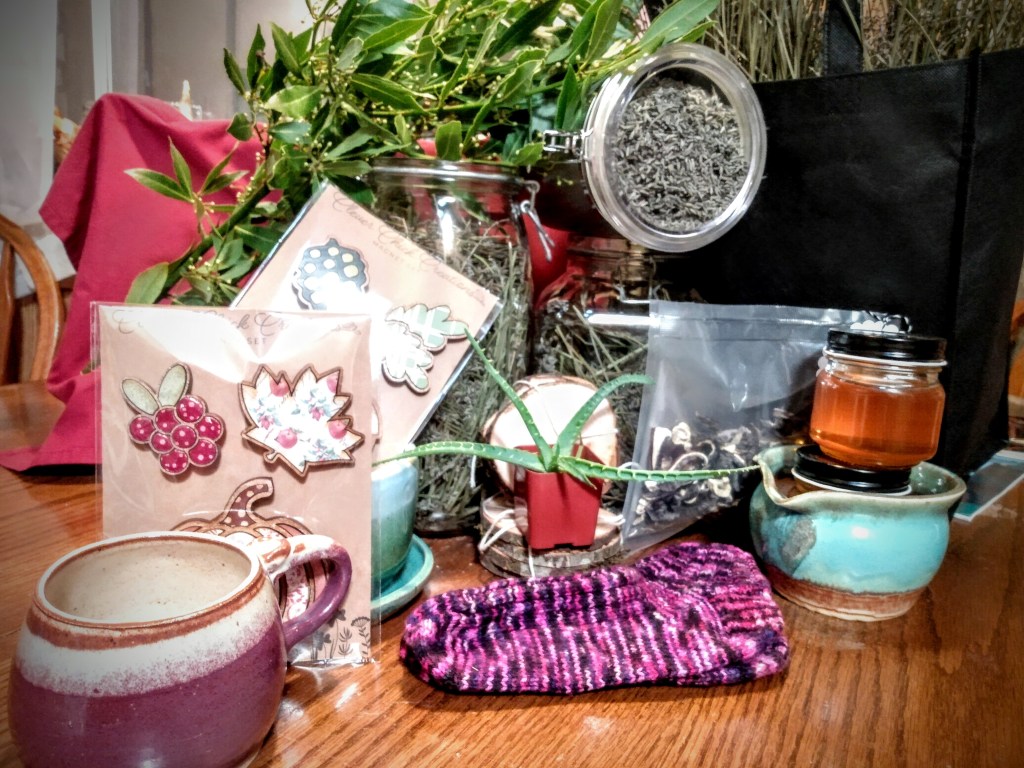
Here’s a picture of the variety that I brought with me to this last event.

I brought home the majority of what I took. But people wanted some of my last minute adds to my trade list. And the things that I thought I had a good chance of trading out were nothing more than talking points. And I was okay with that. I love giving out information and knowledge to help enrich other people’s lives. These items sparked conversations that might not have happened otherwise.

One thing that I value from the season in life that I spent in sales is that people buy when they feel seen, valued above just a sale.

There was an obvious difference between my backpack day and this table day.

Don’t get me wrong, I knew before hand that I had too much. But this was my first time with this group of traders. I had no idea, walking in, what they would be interested in. By the end of that event, I knew what I could leave behind in the future, what to bring more of next time, and ideas of what new items to offer next time. But I don’t regret this “over packing” moment, because it gave me the information that I needed to be more successful next time.

Another thought for success is Build Relationships when you show up. Everyone shows up unsure. Everyone brings doubts and second guessing with them. But when you can see someone and value them enough to get their name and just simply chit chat for no gain, you show yourself. Half the personality types out there are the types that focus on numbers and get tasks done. The other half of personalities out there is people and relationship driven. They will make the deal because they simply feel connected to you.

Be Honest. You don’t have to make deals with everyone. Just don’t string people along. Remember that half the personality traits of people are driven by relationships and how they’re perceived by others. By being honest and not stringing people along (that you might be interested in something they brought), you show yourself as being fair with people, which is different but related to driving a fair deal.

Okay, time for a funny story which completely fits in with being honest. So this last bartering event was the first one for my kids. I kid you not, every time I turned my back they would grab my “high ticket”/high interest items and kept trying to take them over to the lady who brought cookies so they could have one cookie. I love their enthusiasm and willingness to go cashless to get what they want. But boy did they have a thing or two to learn! Of course the cookie lady was happy to trade out of bartering balance. But you should have seen her face when my youngest (who was listening to what I was telling the older two) brought her the smallest item that I brought. She was devastated by offering and was visibly trying hard not to tell the yougest person at the event No. Fortunately, I was there to read the body language. I told my youngest that what he brought over was too small and to go bring over the next size up. The body language changed and everyone was happy.

I’ll tell you what, if you ever need to have a funny moment in the middle of a bartering event, watch the children! They will never fail to push the rules, cause a person to debate themselves, and just cause laughter… all for a single cookie!

Related to being honest, don’t be hasty with your No. Four of my trades came from tables that I initially dismissed. I was approached by these people because they saw something of mine that they were interested in. I could see their excitement and I knew that I had to be honest with them and not string them along. What turned my No into a Yes was taking a minute and focus solely on their table for a minute. I didn’t have an immediate need, BUT I saw how I could use their item and transform it into something new–whether to replenish ingredients, trying a new skill or idea, or their product makes one of my products go up in value and appeal. And quite honestly, I would have lost out on the value of those items and what they bring to me if I stuck with a hasty No.

Advertisements

Final Thoughts on Bartering

There are plenty of cultures today who still practice bartering. It’s different from haggling (which a lot of Western Civilization will say they hate with a passion). There is an art form to it. And it’s scary at first. There will be moments where there is an unfair trade, probably at your expense. But there is truly something about when you have a good event. There’s a satisfaction that you will never get making a cash or credit transaction in a brick and mortar store. There’s a different connection that you make with people that transports you back in time, to better days.

I don’t think that we will ever go back into a barter system. Not with how ingrained currency has become in society. However there’s also a sense of control in your circumstances in life that just doesn’t happen with currency. With Bartering, you’re in control of who you trade with and what you trade for. You have the option of continuing a relationship and building community. Especially in a day and age when it’s not common to have a relationship with the neighbor who lives next to you, it’s important to build community with someone. It feels like the governments are trying so hard to turn people against each other. And in the middle of the world turning upside down, there’s a level of comfort knowing that if you need one thing, you can go to that man there. Or if you need this thing, that lady is your connection. It’s not limited by what your financial resources look like. Nor is it dependent on what you find on your local shop’s shelves. It is entirely based off of the connections that you make and your control of what you have to offer in product, skills, or services.

All of a sudden there’s hope in the world around you again. You have options.

And it’s not something completely foreign in thought. Think of your relationships with your current friends. What trades have you made with them recently? You probably wouldn’t call it bartering, but that’s what you’ve been doing all along. Have you taken turns buying each other lunch or coffee? Maybe you gave them a coat you no longer wear and they gave you shoes that they just didn’t want to return. You help them when their car broke down and they took you to the airport… Part of human life is connecting with the people around us and we find ways of making each other’s lives a little easier. That is bartering.

Maybe it’s time to take the currency out of our daily exchanges and insert a little bartering here and there.

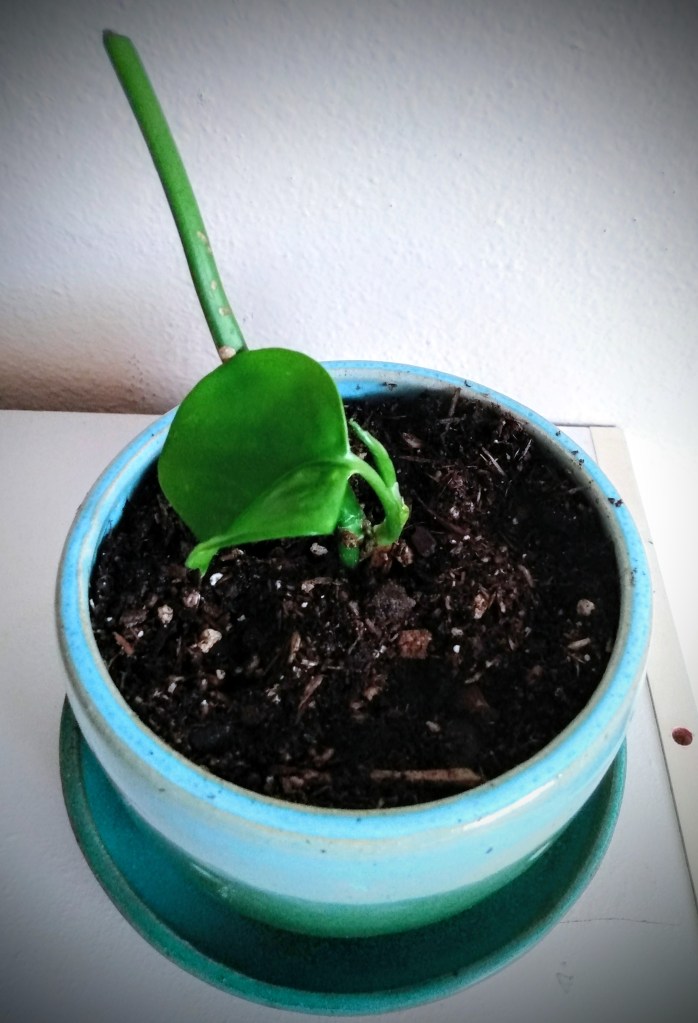
Nothing is more perfect than this, a gifted start planted in a bartered pot!

Leave a comment

Processing…
Success! You're on the list.

Rebinding Books

There are several reasons why the skill of rebinding a book is useful. So whatever your reason, join me with using a binding machine. (Disclaimer: this is not rebinding as a preservation method. Rather this is rebinding for functionality.)

My reason for rebinding is that I’m a home school mom that looks for schooling on a budget by making all my curriculum last for all my kiddos. I have a few tricks to make this happen, it the one problem we had across the board last year was that our curriculum books would not stay open

One reason why a book does this is because the glue binding is to restrictive for the books to stay open.

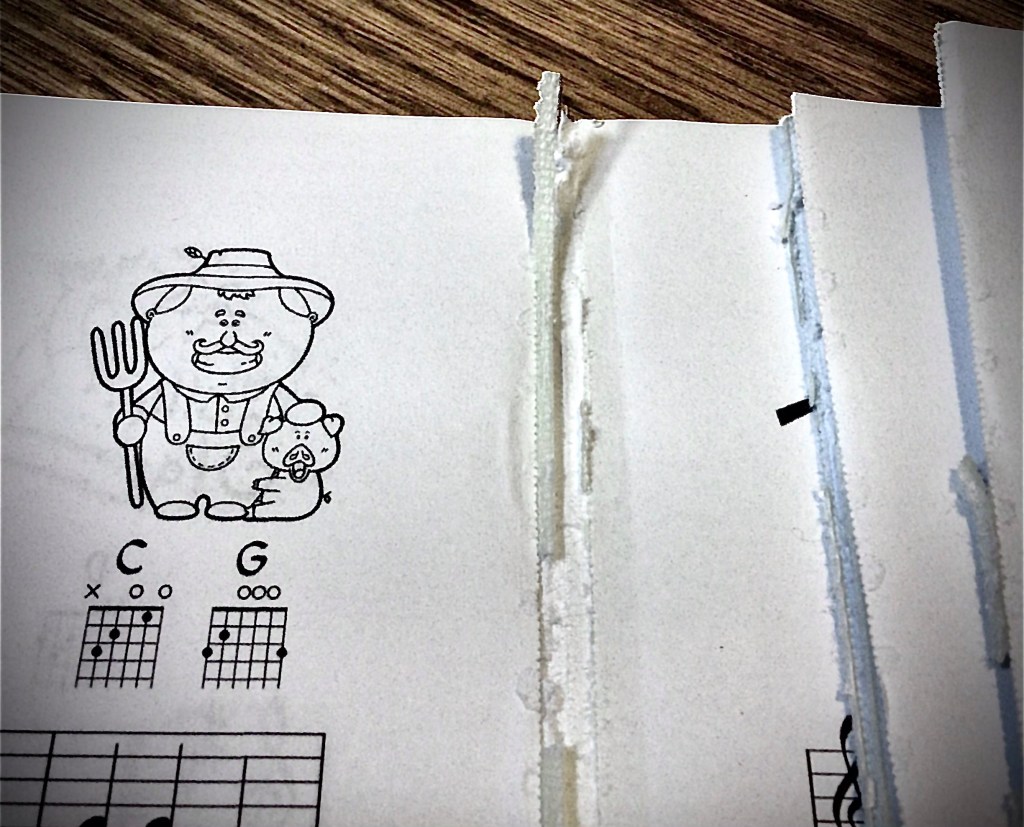
As I dismantled the curriculum, I noted this was exactly our problem because the glue wasn’t just on the ends of the pages, keeping it within the paper cover, but also between pages. It wasn’t so noticeable looking at the books but it was glaringly obvious when I took the books apart. Unfortunately you won’t be able to see what I saw because I used a smaller book for my pictures today. But the book I used for today, did have this issue when it came to breaking down the cover. So, we’ll get there in a moment.

From my learning curve of already breaking down three years worth of curriculum books, here’s the easiest way to cleanly break apart your book with minimal page damage.

Things you’ll need

  • Book
  • Exacto knife
  • Ruler (if you need help cutting a straight line)
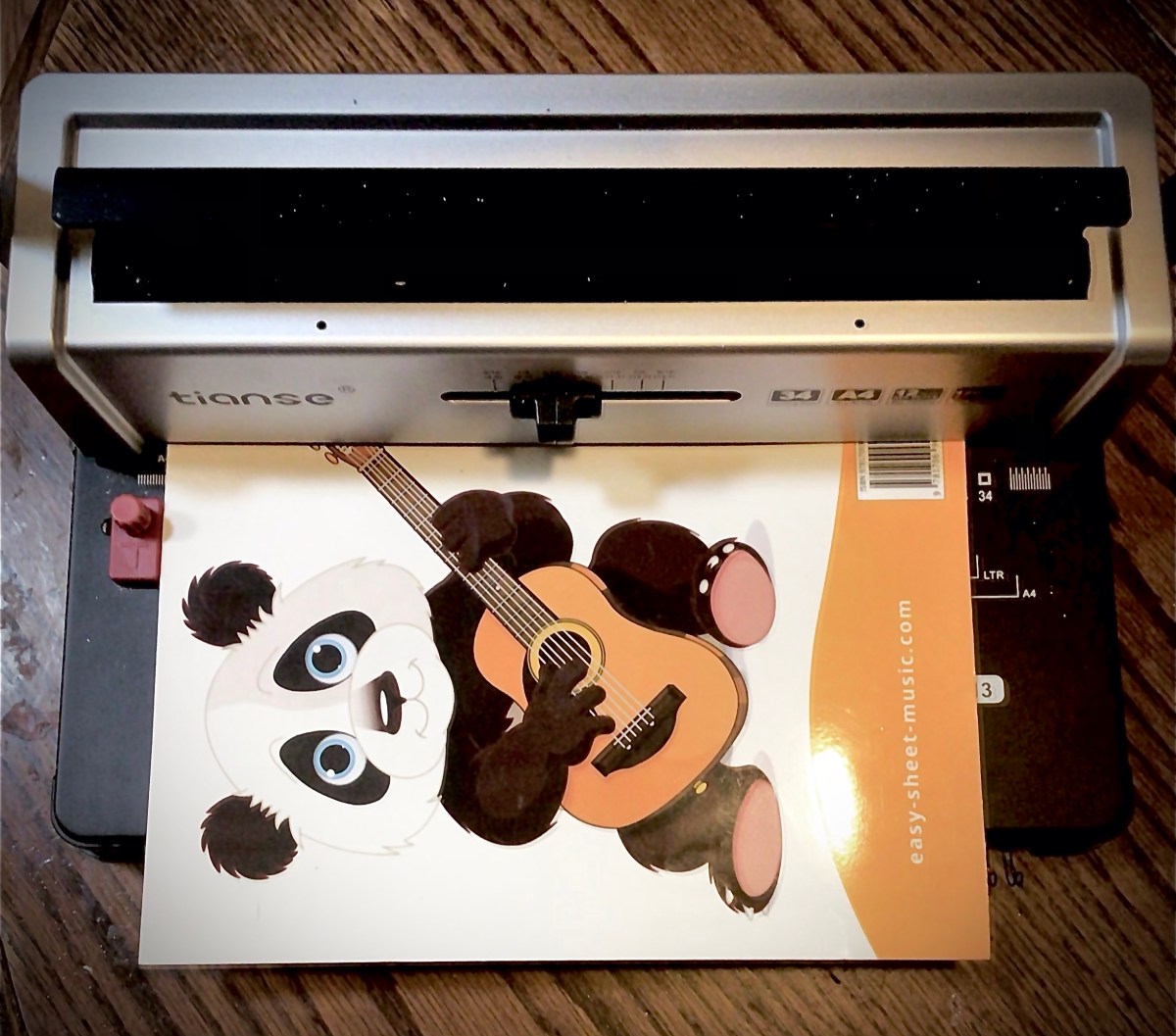
  • Binding machine
  • Binding wire
Advertisements

Breaking down the book

First you want to open up the binding.

I open the book up in the middle and run the exacto knife blade down between the pages, down into the spine. Depending on how much glue was used and how sharp my blade is, I may need to run the blade more than once. When I’ve it through the binding, the book will split open and separate in half.

I flip to near center of the book. When the glue binding is cut, the weight of the pages help open up the spine and make page removal a little easier.

Going either direction in the book, turn a few pages and repeat this cut and separate. These few pages are now ready to pull out of the book, much like when you pull a few pages off of a pad of paper.

If the pages do not want to come easily out of the book, thin out this grouping by cutting between pages again.

With the glue initially broken, small groupings of pages are easy to peel from the binding.

TIP: If you have to pull hard, there’s a great chance your pages are going to rip. It’s much better to cut out pages one at a time than potentially ripping your pages in half.

As I go through the book, I set the pages aside so that they stay in order. This is particularly important for books that don’t have page numbers. I dread spending extra time reading pages to make sure I have them in the right order. It hasn’t happened with rebinding books, but I’ve dropped manuscripts in the past and learned the hard way to always number my pages.

The pages are free from the glue binding to the book spine. The exceptions are the first and last pages which were also glued to the front and back cover, and not easy to remove.

When I separate a group of pages out from the book, I separate them individually and clean off the glue binding still attached to the sheets of paper. If the glue is elastic like rubber cement, it peels off easily. If the glue is brittle, this is another moment of when I potentially get tears in my pages. So if the glue doesn’t want to come off, it may need to be cut off.

With this book, all the pages separated cleanly, with the exception of the first and last pages, which were glued to the cover. So those pages I left glued to the cover. It’s easier to leave them then to separate them.

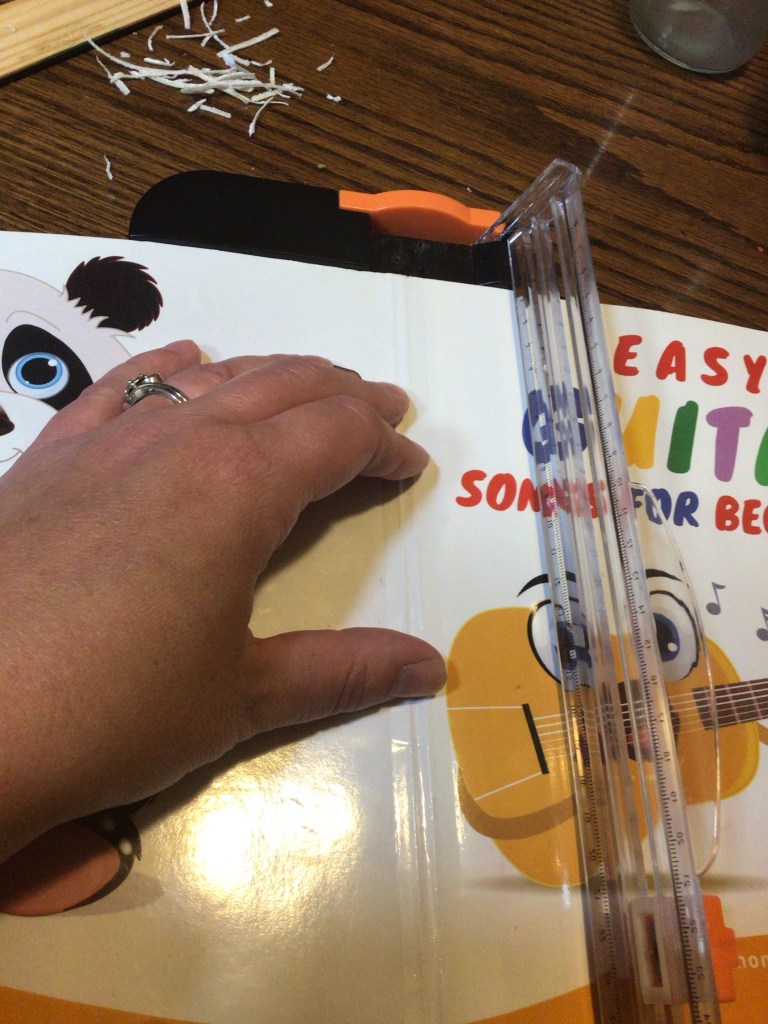
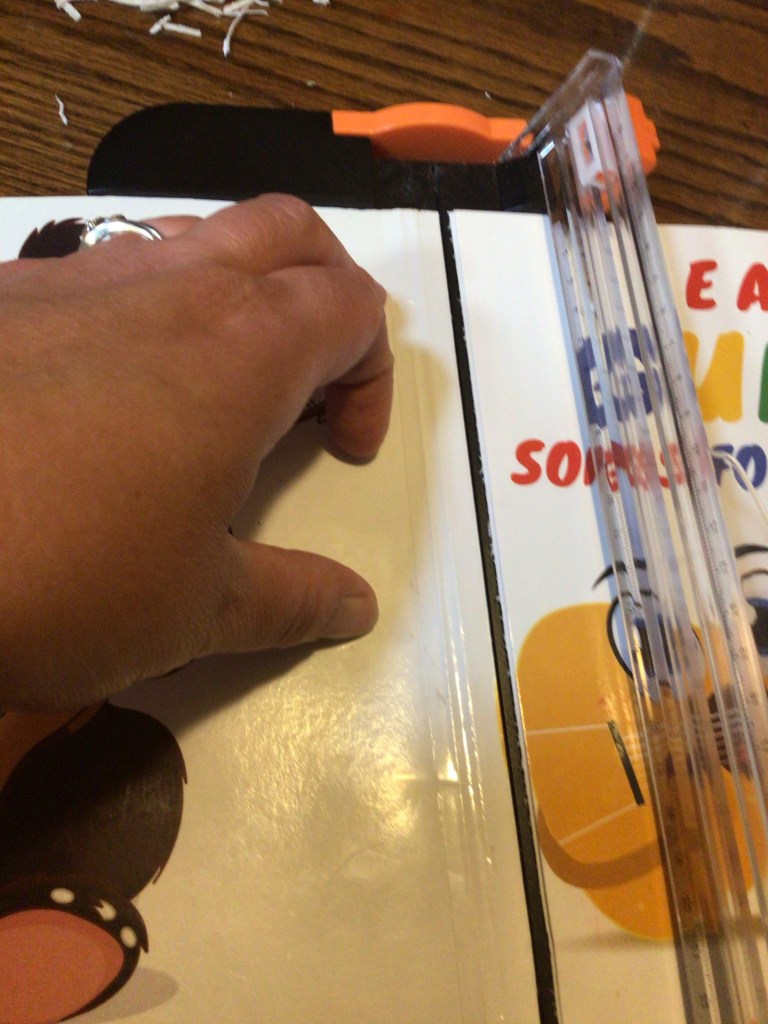
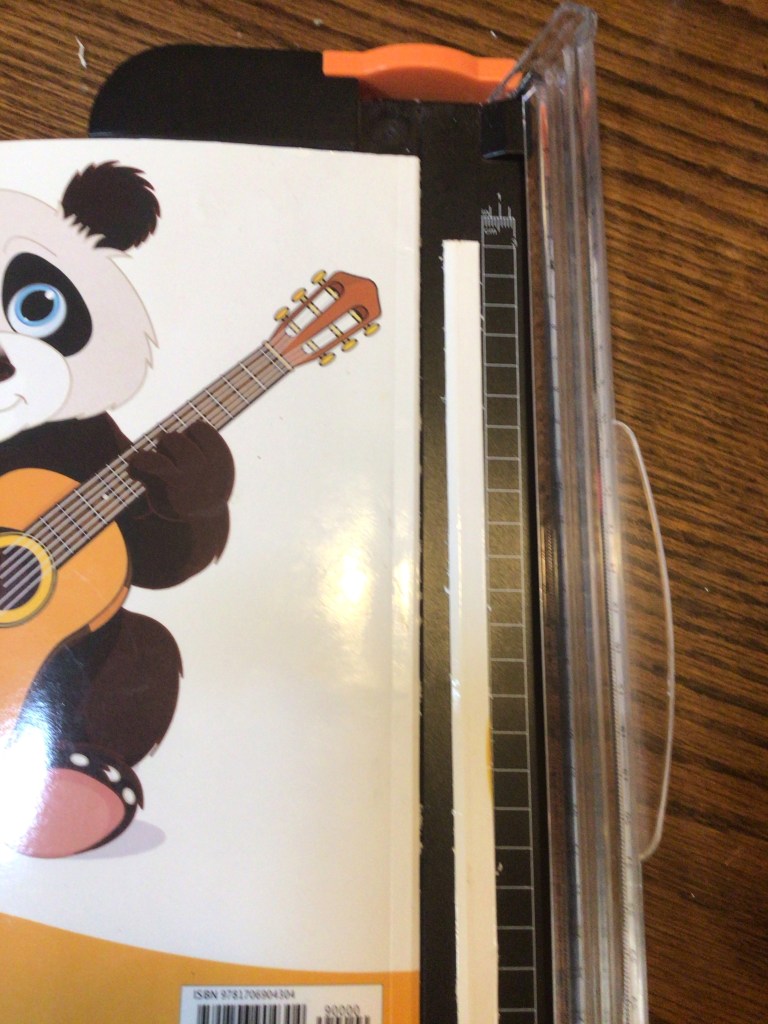
Once the pages are removed, it’s easy to break down the cover. I line up cover crease with my cutting machine and cut the cover off from the spine of the book.

TIP: A crafting paper cutter can get the job done. It a guillotine paper cutter is going to give you a better finished edge on your cut.

Advertisements

Reassembling Your Book

With the pages cut, free from residual glue, and in page order, it’s time to put the book back together. (See below for setting a binding machine up.)

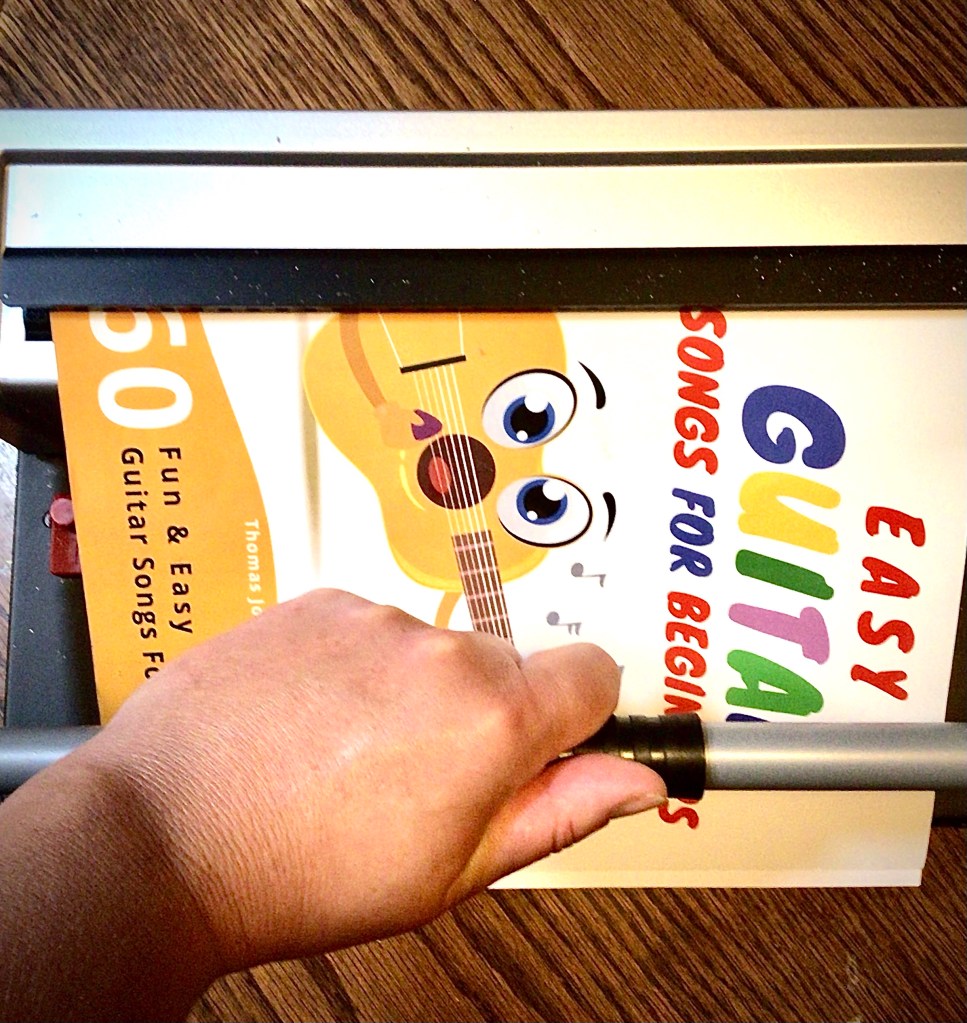
There are two ways of perforating your pages. You can start from the back of your book and work your way forward. Or you can work your way from front to back. Depending on which way you work will determine where determine which way your binding is facing when you’re finished. The thicker part of the whole binding is what fits into the binding machine frame holder. So if you want the thicker part in the front, start with the front of your book. If you want it in the back, start with the back of the book first.

Right now I like the thicker portion in the back, so I start with the back cover of the book and work. I also find that the glossy side of these paperback covers punch better when the glossy side is up. This means that when I punch my back cover, I punch with the back/glossy side up and then flip and put back/glossy side down when I place it on the binding. In similar fashion (to keep everything perfectly lined up), I punch my pages back side up. And then they also get flipped and placed onto the binding back side down.

This can be tricky when I finally get to my front cover, because my glossy side is going to be face down.

The reason why I personally don’t like having glossy side down is because half the time the perforator doesn’t want to cut cleanly. I either have attached chads, or the cut is incomplete.

There’s two ways I’ve found to fix this. One, you can hold the cover down firmly and press the handle down several times. Or two, leave that first attached page on the cover and punch both together. The paper chad being pushed through the cover’s hole seems to clear out that cut.

TIP: Another cause of attached chads is that the collection tray in the bottom of the binding machine is full. If things aren’t curing as well as they did a time or two ago, you may want to check to make sure he tray is empty.

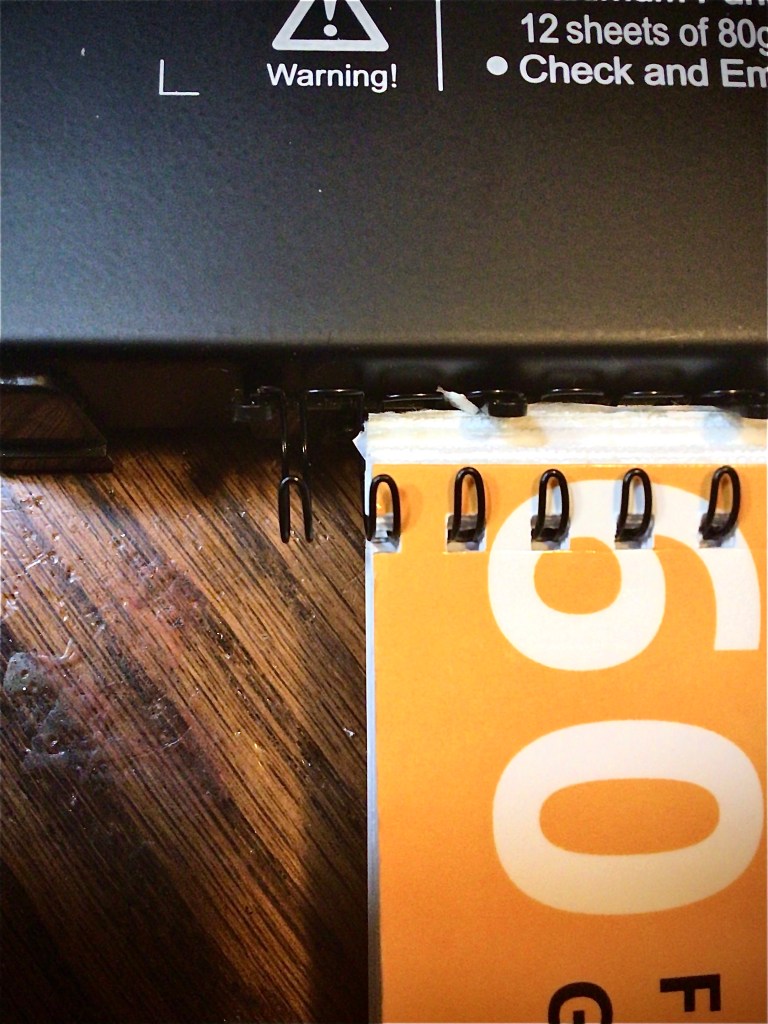
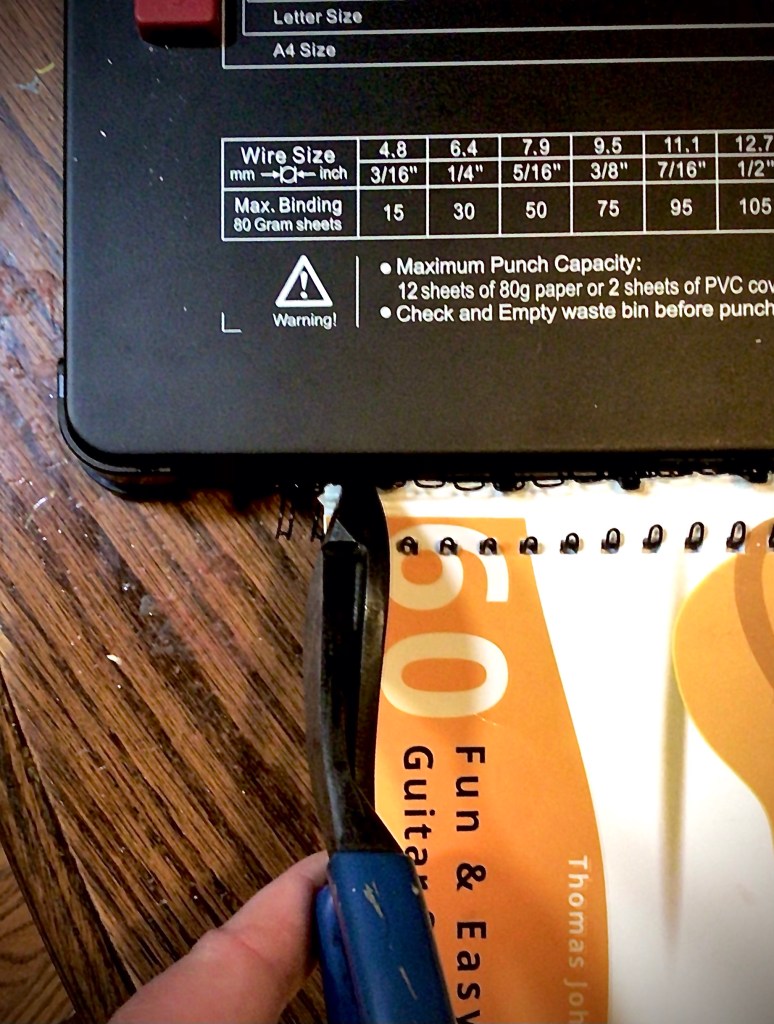
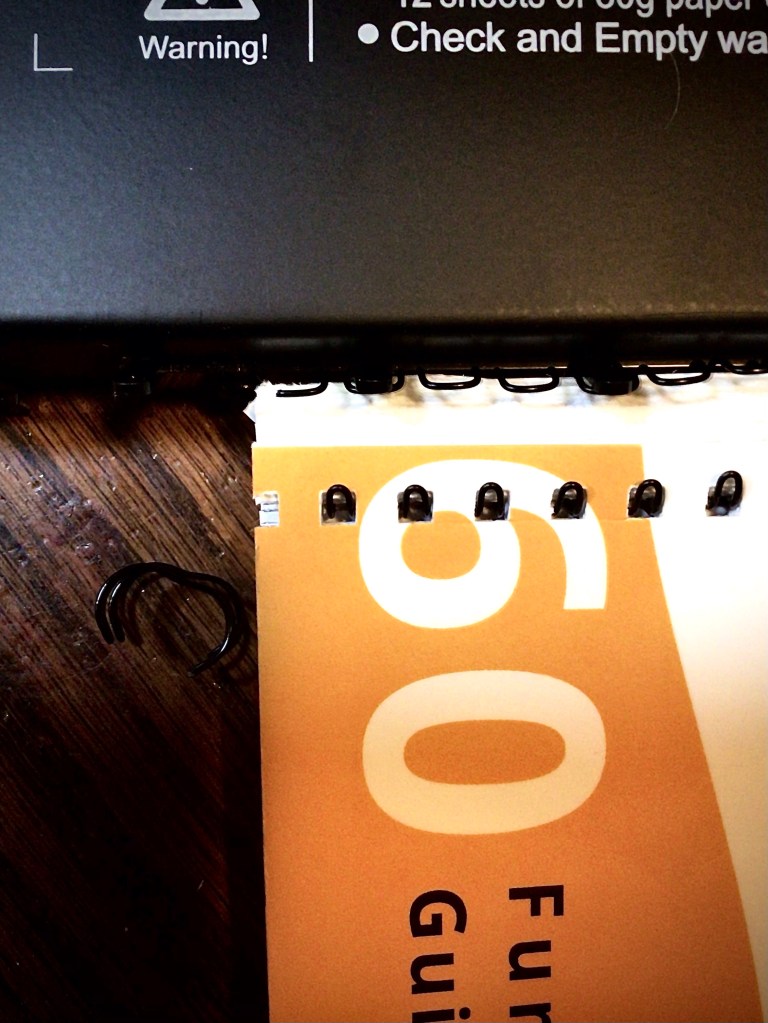
Sometimes I trim down the binding wire when I punch the back cover. This time I waited until I finished punching everything. I even know people who wait to cut the wire down to size until after the binding is closed. There’s no right or wrong time to do this step, just be aware that the wire will more than likely need to be trimmed according to your project size. And pair of wire cutter is all that you need to snip off the extra length.

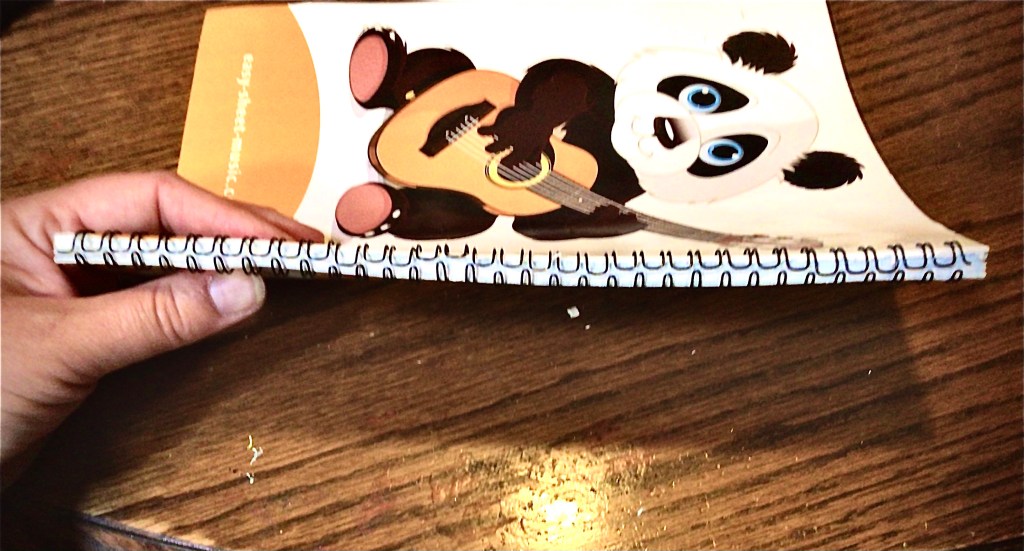
To close the binding all you need to do is pull the binding from the frame, insert the binding into the wire closer, and press down the handle.

TIP: For the best results for closing the binding, I rotate the binding opening as you see in the picture below. This keeps a round shape instead of turning oblong.

Depending on how many pages you have, and the capacity of your wire size, you may find that you over crimp the binding. This is most noticeable when you open up your book. The book doesn’t lie flat and the pages bow.

When this happens, all that I do is use my fingernail and pull out the small tooth prong. If I pull the wire out too much, I push the tooth back in.

It is possible to use the wire close again to make the binding even. Or you can leave it as is.

The one thing I want to caution against is not closing the wire far enough. It’s easy to think that you’ll avoid over crimping by under crimping. (I also thought this.) The problem is that if you don’t close the wire binding enough the cover and pages are going to slip out through that gap.

My personal preference is to err on the side of slightly too tight. I can always loosen up the binding until the pages lie flat.

Advertisements

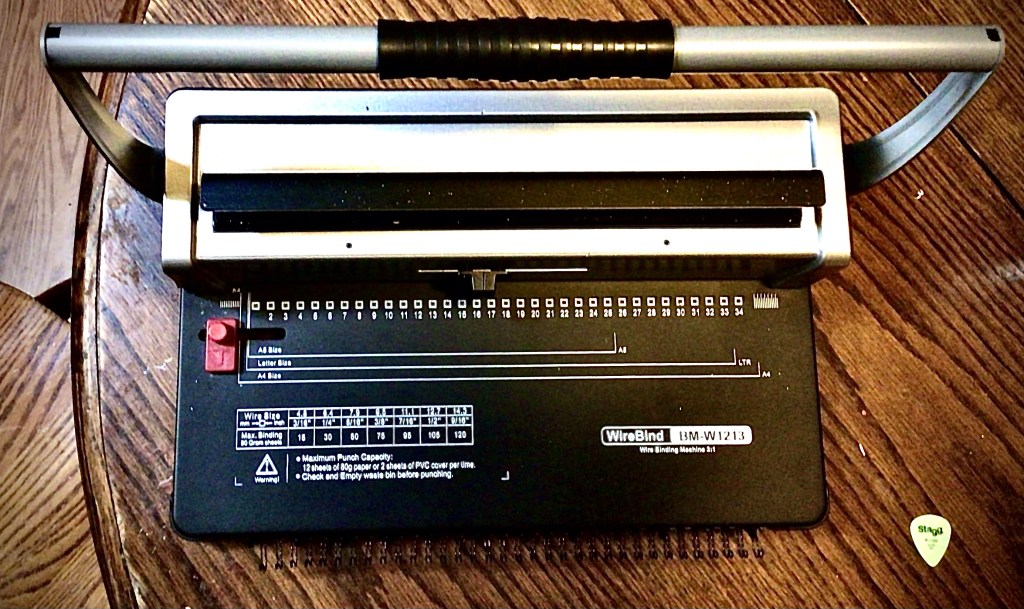
Setting Up a Wire Binding Machine

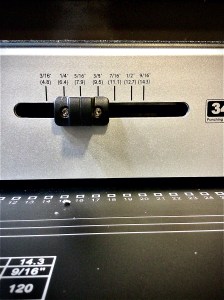
The first thing I like doing is adjusting my wire size. Checking sizes is the area that I have the tendency to forget. So I have to start my routine with this step. Nothing would be worse than loading up my 9/16th inch wire and still having the machine set for my 5/16th inch wire.

This setting doesn’t have any impact on the punching. So it’s not like I can take a look at any of my pages and see that something is off. This setting is for the wire closer, telling how far it needs to compress down on the wire to close the binding.

The next setting I check is the margin control. Most machines have a 3, 5, and 7. These set up how far away from paper’s edge you want the holes punched, in millimeters.

If you’re like me, and didn’t grow up using the metric system, you might be lost as to which setting to use. And no the larger setting isn’t always the best.

For my 5/16th inch wire I use the 3mm setting. 5mm can pass but makes the pages stick together in the center of the binding. 7mm is a real headache. However, for my 9/16th inch binding I like the 7mm setting for when I’m not filling to capacity. But when I’m near capacity, I use 5mm, releasing some of the space inside 5he binding.

You can play around with these adjustments and find what you prefer using. Just make he mental note of how the mm depth relates to the space available in the binding.

TIP: When you’re ready to punch, make sure you put your paper firmly into the machine. If your paper doesn’t hit the margin control wall on the inside, the holes will be punched on the edge of your paper. If you push too hard, you will change your margin settings. So instead of 3mm you could end up punching 5 or 7mm. So be firm but don’t shove.

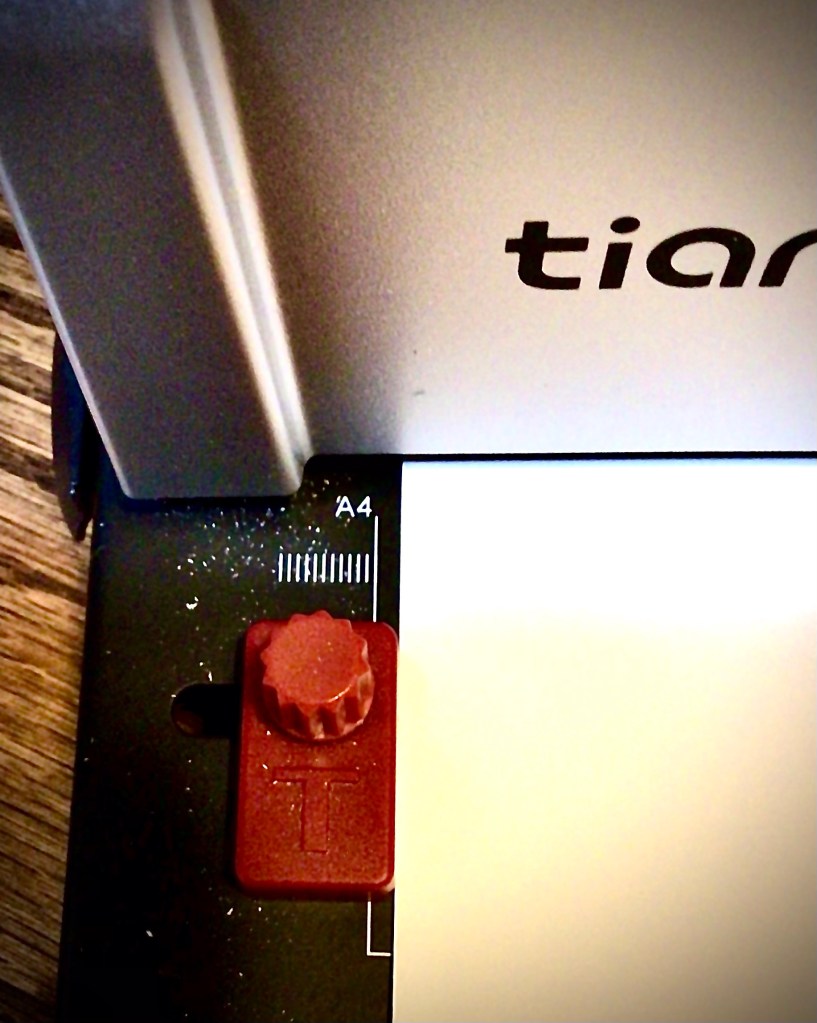
Finally I turn my attention to my page guide.

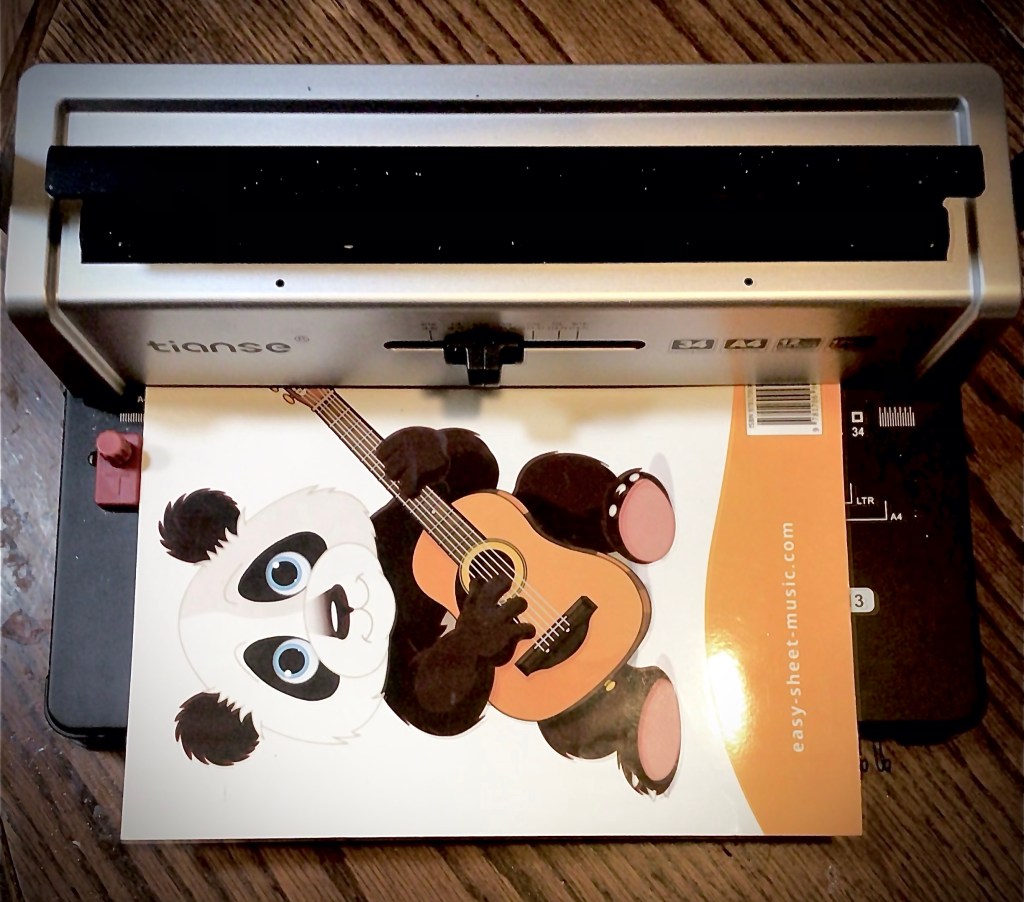
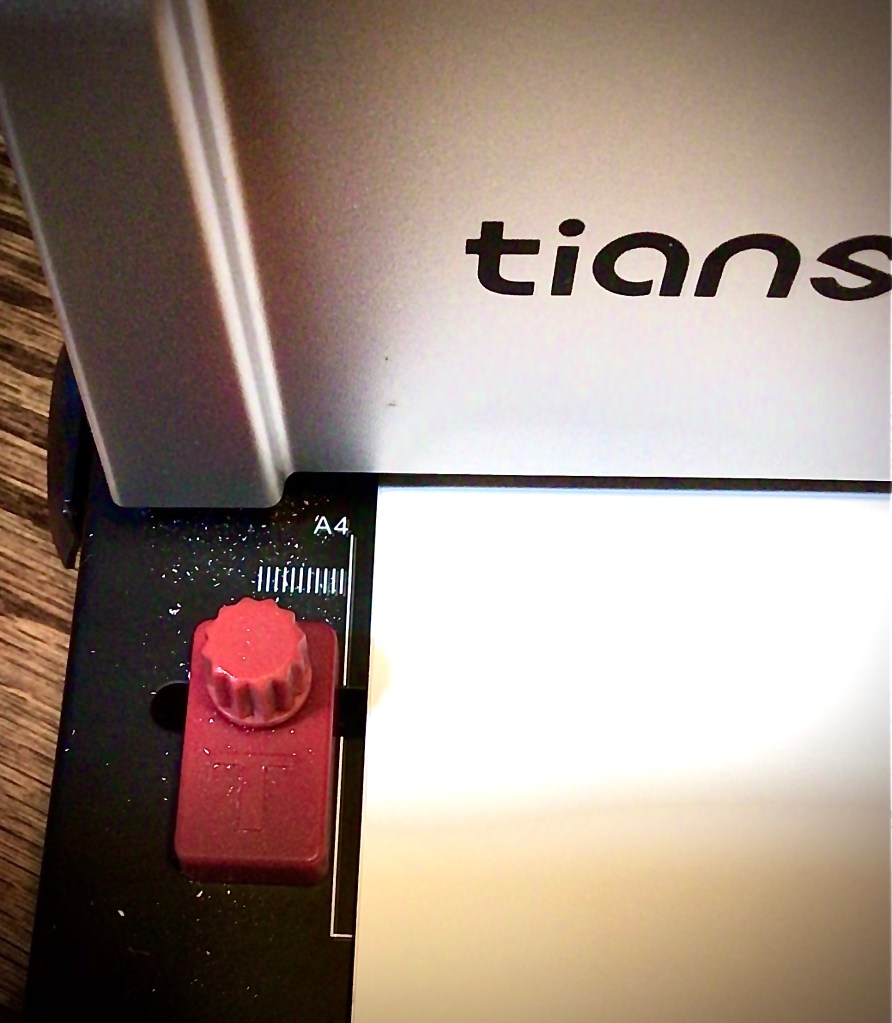
These square markings show the holes. The hole size and placement are fixed. That’s why you see them marked on the plate. This allows you to see where you want to place your paper and know where the holes on the edge of the paper are going to fall. There is a generous margin in the left hand side, so place your right hand side where you want it.

I find that I like my page to be near the left face of the square that I can see. This works well for an A4/8.5 x 11” sheet of paper. Although you can see that this particular model has guides for different sized pages.

Once you have your page where you want it, you can adjust the red knob on the left. Secure it up next to the left hand side of your page. This ensures that the following pages all line up perfectly with the first.

Just be aware that if you punch your pages going one way (example face first) and then switch the opposite direction (example back first) there is a great chance that your pages won’t line up. The uniformity of the holes makes sure that all the holes line up once you place the pages on the binding wire. But the page edges won’t be flush.


This is one of my favorite tools for this year. Yes there are Bette ones on the market, but I’m all about being frugal and functional. And this binder hits the mark for me. I have countless paperback books that have been worn out from being read over and over again. So this allows me to rebind books other than just my homeschooling curriculum.

What books would you rebind?

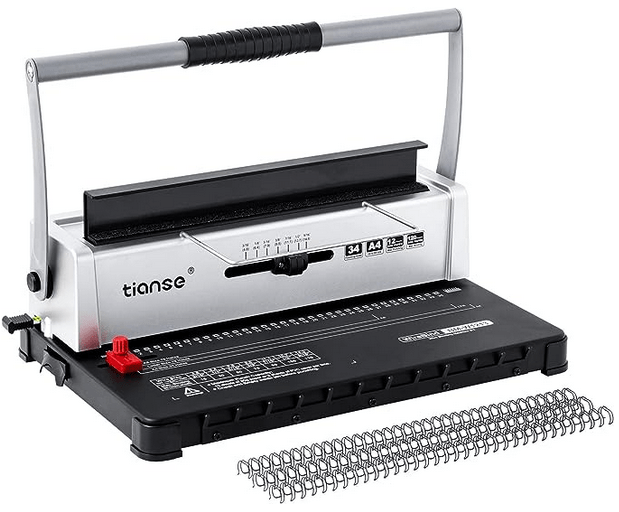
Are you interested in starting to rebind your own books? Here’s some affiliate links of items seen in the post above.

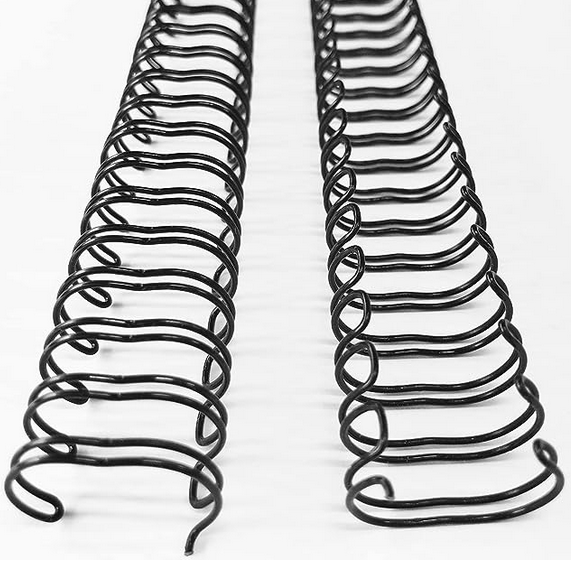
TIP: if you purchase a different binding machine, make sure to take note if it is a plastic comb binder, wire binder, or spiral binder. Each one requires a different machine because the holes are different. Even with wire binding, make sure to check which pitch (how many holes per inch) your machine requires. When I first bought my machine, I accidently ordered a 2:1 pitch wire binder. The machine I purchase takes a 3:1 pitch

This post contains affiliate links to products. We may receive a commissions on products purchased through these links, but at no extra cost to you. These items listed here are from Amazon but may be purchased at local markets.

2 responses to “Rebinding Books”

  1. 619 Avatar

    At tgis time iit appears llike BlogEngine is the ttop bloggingg platform available
    right now. (from what I’ve read) Is thzt what you aree usng on your blog?

    Like

    1. Pacific Northwest Event Design Avatar

      No, I use a different platform. What I recommend people do is look at the different platforms available to you and see which one feels organic for you. The platforms that were recommended to me felt like more work and confusing. So rather than telling you which ones are “best”, I highly recommend you find the one that feels natural for you to use. You’ll want to to produce more posts and have more fun doing them!

      Like

Leave a comment

Processing…
Success! You're on the list.
Advertisements
Advertisements