Being a Garden Sleuth

For the last couple of years it seems like there has been one trial or another when it comes to gardening. And there comes up more and more questions in online communities that sometimes feel repetitive. The one bit of advice I seem to give more times than not is…

Your plants are living and they communicate with you.

Here in the Pacific Northwest we faced another cold spring, even though it wasn’t as cold as last year. As a general rule, we transplant and direct sow seeds around Mother’s Day, mid May.

It wasn’t so long ago that when we planted at this time that our gardens would start of a little slow for a couple weeks and then we’d see some rapid growth.

Last year, local community members thought that their inexperience killed off their crops and it was entirely their fault.

Advertisements

This year community members are talking about what could be the cause for why they’re preventing their plants from growing this year.

In my surrounding area, a good number of everyone’s plants are stuck in the stage of being starts. And more times than not, I keep reading way too many people advise others to just fertilize. And then I see people offer their home remedy fertilizers without understanding what they’re putting in their gardens.

Just because you “fertilize” doesn’t mean that you’re giving the food that you’re plants are craving.

flickr.com

For example, one post I saw this week was asking for help with a cucumber that was still start sized. The picture was not close enough to see if the cucumber was trying to set blossoms or not. Without this kind of information, people were telling to heavily fertilize but with no discrimination.

Banana peel fertilizer is only good, if your plants/vegetables have set blossoms. Plants putting out blossoms love having higher potassium fertilizer. So the home banana fertilizer is good if you’re feeding a plant putting out blossoms.

Coffee grounds are great for plants that love acidic soil. But if you don’t know how acidic (the pH value) your soil is or the pH range that your plant loves, you can burn the roots of your plant.

In the example of this cucumber inquiry, it was a bad idea to recommend coffee grounds, if the cucumber has started putting out blossoms, because composted coffee grounds add nitrogen and cucumber in blossom wants lower nitrogen levels.

Now, coffee grounds could be great advice as long as it is followed with the additional advice to remove the blossoms. Removing the blossoms, with the coffee grounds giving a nitrogen boost, will help the cucumber grow it’s vines and roots. And in this cold season with plants being stunted, it’s not a bad idea to remove early blossoms in order to give the plants more time to grow structurally and be stronger for later in the season when they have to carry the weight of their fruit.

My potatoes didn’t seem to be adversely affected by the hail. They’ve been growing healthy and hearty. (My first stop when looking at my garden to sleuth out what was going wrong in my garden this week.)

Another popular recommendation I read was everyone telling this person to put egg shells down around the cucumber. Now egg shell is the DIY fix for calcium deficiency.

The problem with just crumpling up egg shells and sprinkling it around any plant is that the calcium is fixed inside the shell. If your plant needs calcium now, it’s never going to get into the plant in shell form because the roots of the plant are it’s “mouth”. Putting egg shells on the ground around the plant is like putting a chocolate cake in front of you, but there’s a window between you and the cake. It’s there. You’re there. But you’re not going to eat it because a window is in the way. You either have to get the calcium into a liquid form or compost the egg shells down to release the calcium.

The only benefit of putting egg shells around a plant is to keep pests away like slugs. But the truth is egg shells have not kept slugs out of my garden. And I recognize that my problem is that I don’t have enough egg shells down to create a thick or wide enough barrier to discourage the slugs away.

Instead, I find that the best use of my egg shells is just putting them into my compost along with all my other compostable food waste. By using my egg shells this way, all I have to do is reach for my compost and I know that I have calcium readily absorbable for my cucumber, tomatoes, or whoever needs it at a given moment. And by having the calcium already in my compost, it prevents my plants from being deprived or depleted to begin with because they’re getting it in a steady supply.

My next step was checking out my lettuce and other greens raised bed. There were some split leaves from the hail, but otherwise still doing quite well.

However, before we got our compost running well, there was one other way that I prepared my egg shells to make calcium more available for my plants. I kept clean and dried egg shells. When I needed to make a calcium fix, I crushed the shells into as small of pieces as I could, put them in a pan, and added water. I boiled the egg shells for about an hour (just to maximize the amount of calcium released into the water). Then inset it off to the side and let the water cool down. Once the water came to room temperature, it was ready to pour in my garden. I poured the water and egg shells into my garden. The water had enough calcium in it to meet my plants immediate calcium needs. The shells in the bottom of the pan had some residual calcium left that could further break down in the soil as it finished decomposing.

To sum all this information up, online community groups are great for picking other people’s brains. But more times than not, they may not fully understand why they use a DIY fertilizer, why it works for them, or why it doesn’t work for them. If you’re that person who asked and got a kitchen list full of suggestions and don’t know which one to try first, take a moment and look at what nutrients are being provided by each commenter and see how it fits or doesn’t fit with the natural life cycle of where your plant is at in this exact moment. In addition to that, look at your plant and look at other clues to see if there is anything else that could potentially be going on with your plant.

Advertisements

Are garden pests present?

On the subject of stunted plants, I currently have a summer squash that is stunted. I know for a fact that it’s due to a squash vine borer because of the split vine. No amount of fertilizing is going to get that summer squash to grow.

It’s easy to see when a start is not growing.

Finding the answer takes a little detective work.
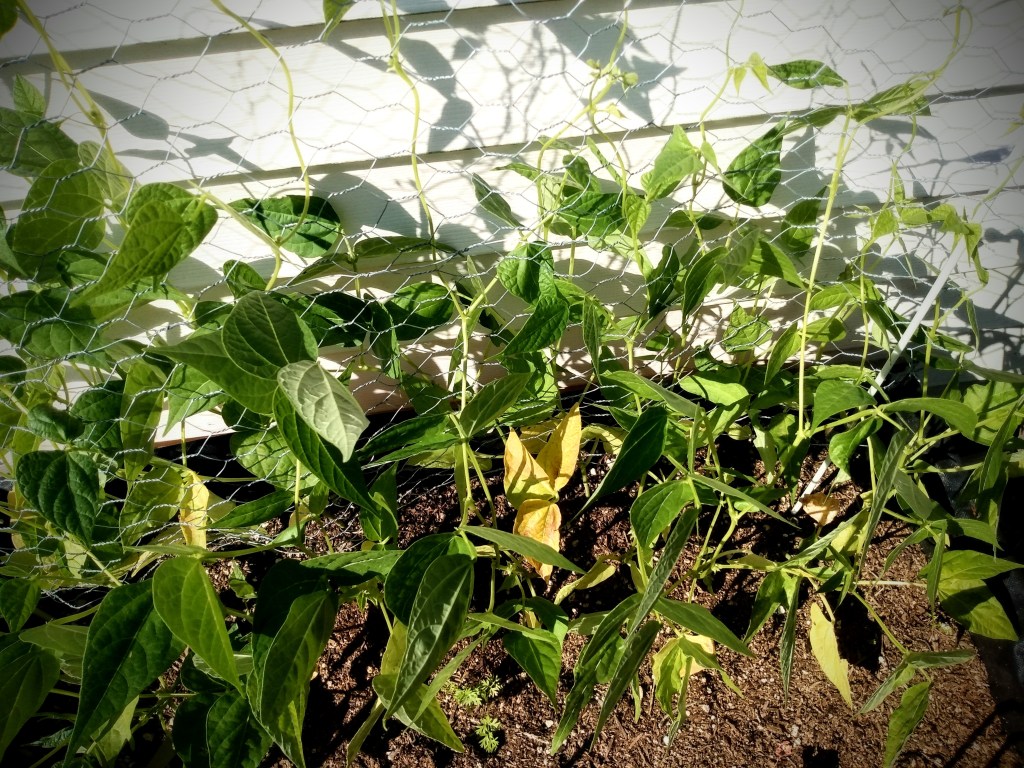
The beans had a few leaves that didn’t make it. But they’re still primed to grow with some warm days on the way.

What have been your environmental conditions?

Each plant that grows from a seed relies on its DNA to tell it when move on to the next stage of its life cycle.

We can start our seeds inside a greenhouse or our home to get a jump start on the growing season. But no matter how early you start a seed, the start will stop its physical growth until a little DNA switch gets flipped by the weather. Whether it’s the amount of sunlight, day time temperatures, or night time temperatures… there are environmental indicators that plants look for before they say, “Now is the perfect time to grow.”

As I mentioned above, this spring has been uncharacteristically cold.

For my tomatoes has been fun to watch this year. I planted some from a seed company. And I planted others from seeds that were harvested from tomato plants that were local and went through last year’s cold spring (which was much worse than this year). The tomatoes that have the seed memory of a cold spring have grown much better than the plants that grew with a seed memory of another region.

Can fertilizing compensate for this growth discrepancy?

Yes. However, if your seeds don’t have the DNA memory of what it’s like to grow in a cold spring, they’re going to struggle a little until they figure out what’s going on with the weather.

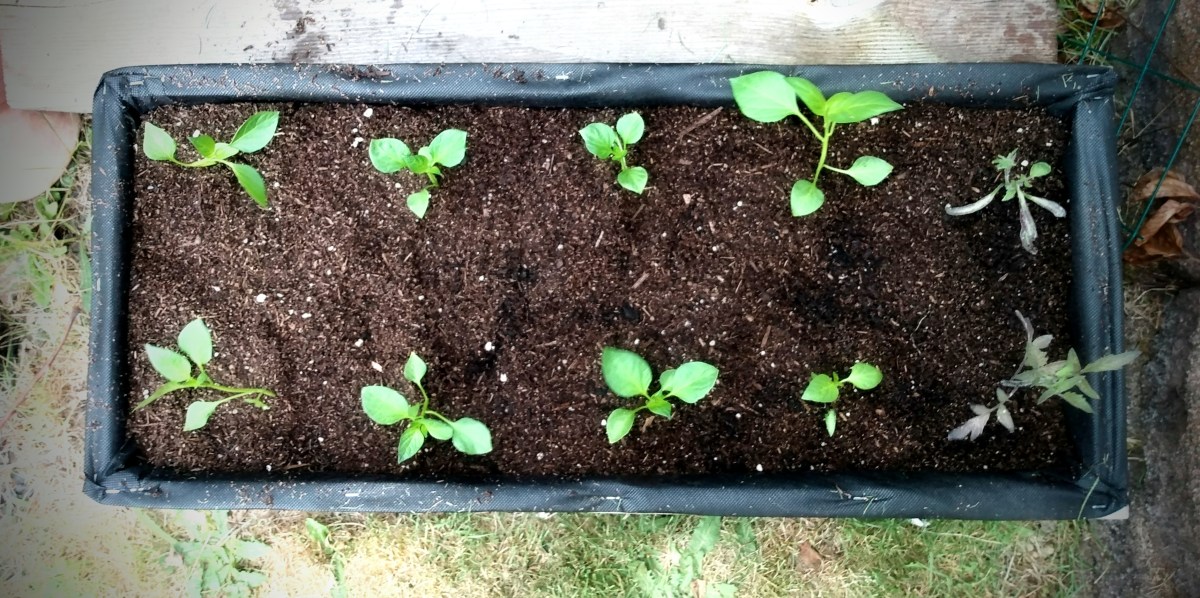
My pepper plants have some damage from the hail. However I have a theory that these starts faired better because last week they got planted with some rich compost on their roots. They had the nutrients to fortify them against the elemental attack.

This is the prime reason why it’s important to either save seeds from the plants that you grow or purchase starts from people in your community who grow from their own seeds. From their seed memory, they are ready and geared to thrive and flourish with micro-regional weather. (I share the same grow zone as some southern states, however our springs and micro-regional weather patterns are going to be quite different.)

But it’s also not just seasonal weather that affects the health of your plants.

This past week we had a hail storm. It’s been several years since we’ve had hail in my community. And these weren’t cute tiny hail stones. These were enough to hurt if we stood out in the storm.

After the storm I went out to check on my garden. And it looked like they were all going to be resilient and bounce back just fine. Especially seeing how we were expecting a couple of nice warm days.

The problem is that once the sun did come back out, I noticed that something was wrong with the plants. I first noticed it with my tomatoes. And I thought it was a tomato issue. But I looked elsewhere and saw other plants were affected also.

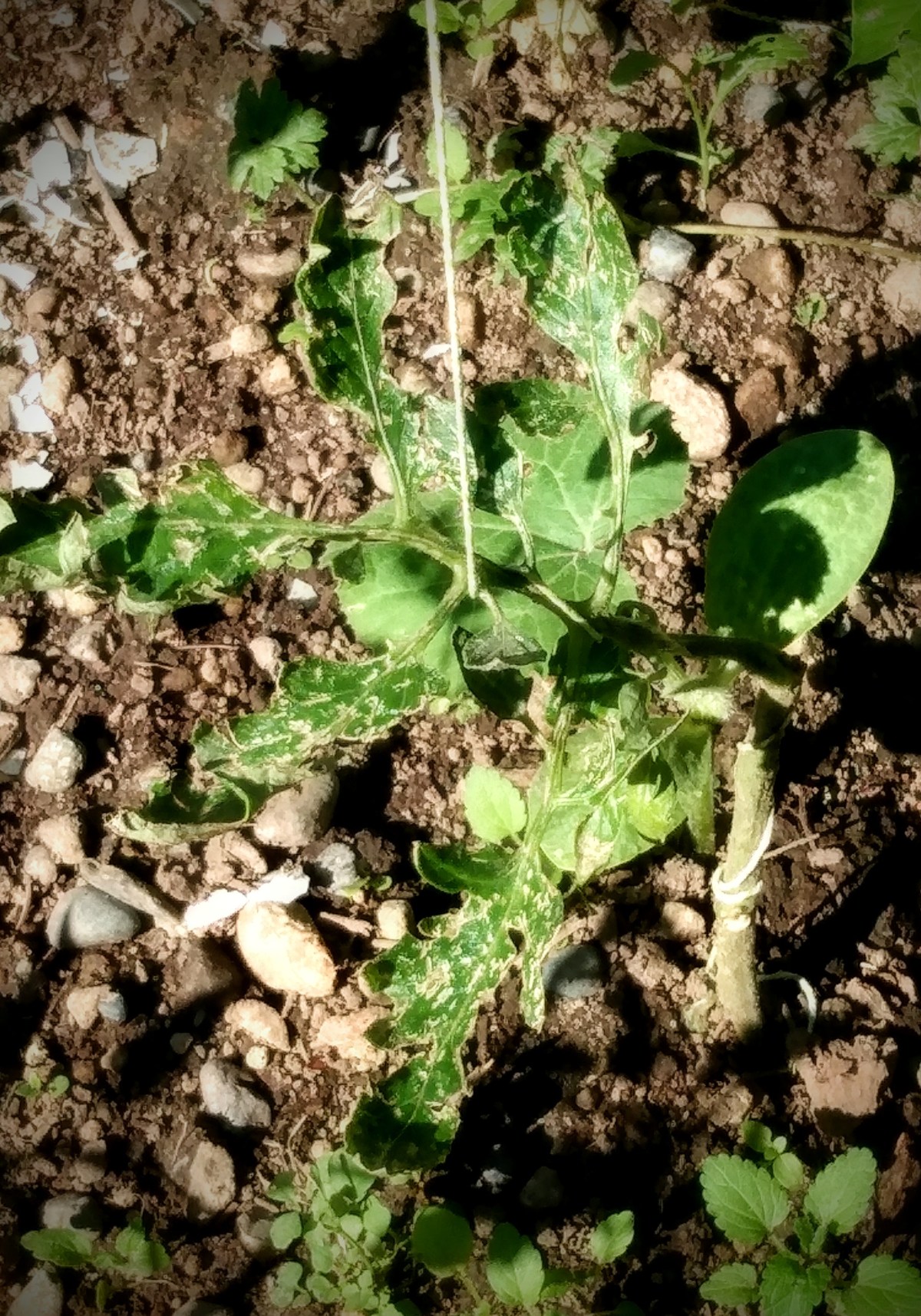
My tomatoes were hardest hit. But they don’t like the cold to start start with. This little stunted start was the hardest hit. The larger plants have the same beige pick marked damage that just looks like it was assaulted from the hail. But at the same time meets some of the descriptive marks of mosaic virus.

This was an important clue to take note of.

My husband sent some pictures over to a friend who has more experience under her belt than we do. With the little information that my husband provided, her opinion was a mosaic virus.

Before her recommendation I was leaning toward an iron deficiency or damage from the hail storm, leaning toward the hail damage because we went from perfectly healthy and happy plants to having visual distress in a couple days.

Whether damage, iron deficiency, or a virus; all three have different care
steps.

This is where you need to be a detective and look for clues.

Here is my amaranth, which pretty much look identical in leaf damage as my tomatoes do. From all I read, so far it doesn’t look like amaranth isn’t effected by the mosaic virus. Which means these guys were just beat up by the hail. So this is one example of why I’m leaning toward my tomatoes just being damaged by hail.

We were concerned for mosaic virus, but after reading up on it we noticed that other plants, not listed on list of plants commonly infected with this virus, were showing the same distress.

The biggest clue for us is that my second garden, miles away, also all had healthy plants and two days after the hail storm showed the same markings.

We cannot completely discredit a viral infection in our garden without testing it. But we can continue to watch the plants and operate as if we are dealing with this virus (trimming effected leaves off in increments so not to handicap the plants’ photosynthesis, not composting the trimmings and expired plants, cleaning garden tools thoroughly, keeping other plants from growing in their direction, and next year planting the tomatoes (and other effected plants) in a totally different section of the garden).

While I’m fairly certain that I’m dealing with hail damage, prudence says that I also act with caution against the mosaic virus. There is nothing to say that I’m not seeing two issues at once.

My Echinacea took the most beating here. And this damage to the stalk looks exactly like the damage on my tomato leaves. As this is stem damage (the leaves were fine) and they match the leaf damage on the tomatoes, this becomes my lead points of evaluation for my garden in this moment.

I know that not everyone is going through what my garden is going through in this season. These are just examples of how to analyze your garden and the conditions that you are facing this year or in a growing season to come. Sometimes answering your garden woes are as simple as looking up a description phrase in Google and looking at the images to confirm or eliminate potential problems. Sometimes you need to crowd source and pick other gardener and farmer’s brains. Just remember that when you crowd source, people respond with their experience and thinking of what’s going on in their garden at the moment. They don’t know all the additional details, like you just had a hail storm or your neighbor sprayed their property with a chemical that negatively impacts your garden because it carries on the wind. People don’t know if you had contaminated water and your water service provider mails out a letter stating such information two weeks after the fact. Unless you look for pests, you may not be aware that the problem you’re facing is coming from a vine borer, aphids, locusts (or other insect) that has come to your property and hasn’t been there in past years. Or maybe you just bought a new house and the previous owner had diseased crops that they let compost in the ground and that information wasn’t passed on to you in the bill of sale. Or maybe you picked up a load of manure for your garden, but it wasn’t disclosed to you that the animals are hay that was sprayed with Grazon.

I just want to make a special note to give a heads up on this issue of Grazon (a Dupont product) and how it’s silently affecting crops, ground and water health. Here is the video from a farmer who lost whole sections of garden plots. We first watched this video and became aware of this issue. You can source the right materials, but sometimes you have to go further back on the food chain to see where the problem lies. I thought organic manure was the end all bench mark. Now it looks like we have to look further. Here is a very detailed article from 2017 to further jump start your research. This one will open your eyes on the product Grazon. Not just this product, but actually all herbicides. Even if you choose not to use herbicides on your property, you might be buying product from someone who does use it on their property.

There are so many things that can affect the health of your garden and plants. Just be aware that the solution may not be as simple as “just fertilize it”. Sometimes you may need to be your garden’s own detective and look for clues to set you on the right path to bring health and recovery to your garden.
What hidden little gems have you learned from your garden?


Make A Container You Will Love

More and more people are moving to containers for growing their home gardens. So what do you do when you get sticker shock over the container prices online or in the box stores?

You build one!

Everyone talks about pallet projects. But I want to introduce you to crate raised beds.

My husband works for a company that builds machinery. The crates that are used there are tossed. Being resourceful and having access to free crates to reuse and repurpose, this is the way I build the majority of my container garden. This also has the added bonus of solving my time problem. I have so much on my plate, that building raised beds from scratch isn’t an option.

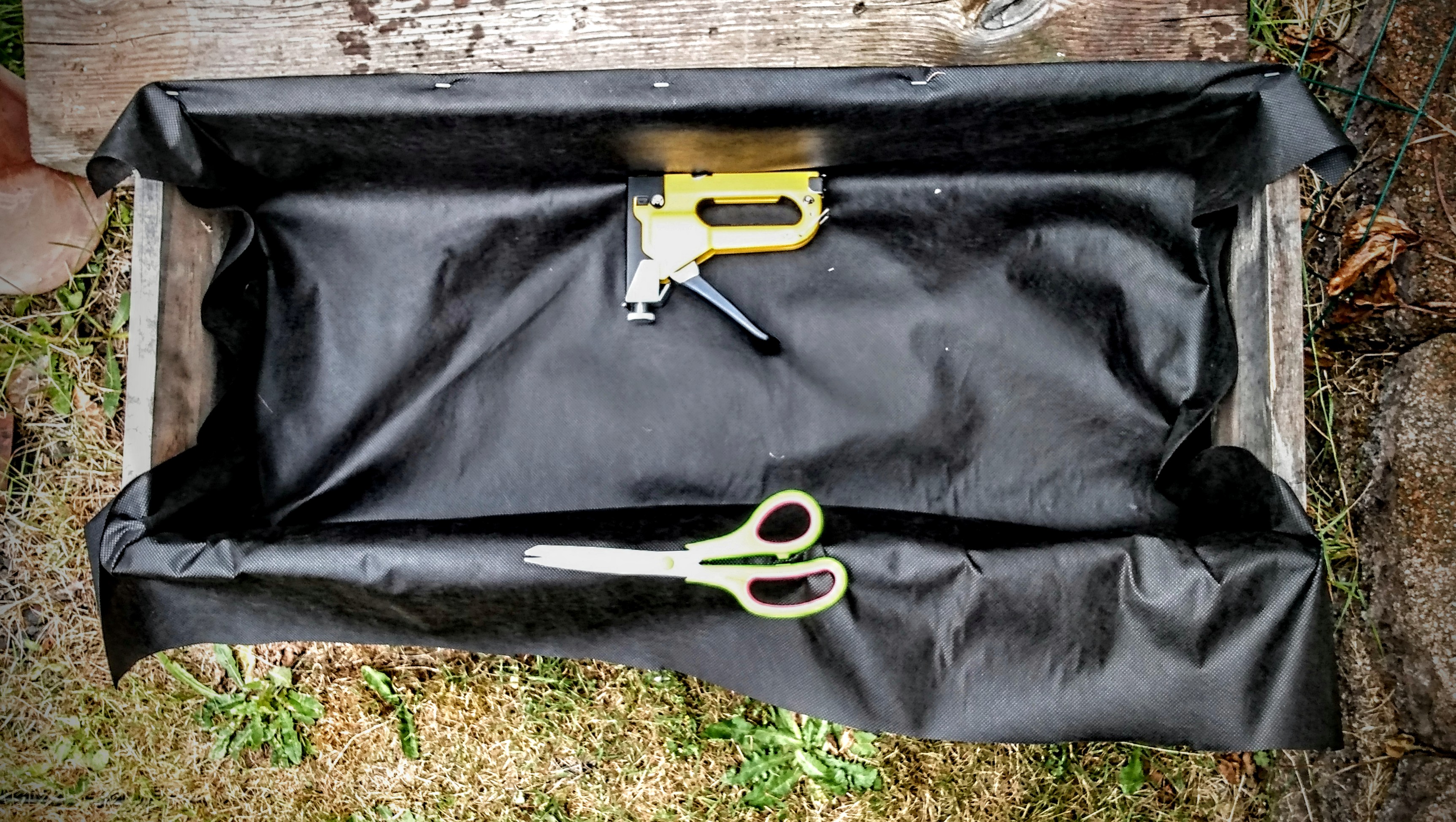
AND if you know how to use a pair of scissors and a staple gun, you can absolutely make this garden container!

There are so many different crates out there. The ones that I have and use as raised bed were formerly forklift crates. (They originally housed large machinery parts.)

With the crates you source, there are a couple of things to keep in mind.

  • If there is plywood (whether the floor or sides), you will need to remove it and replace with wood that hasn’t been chemically treated.
  • The crate floor should be solid. This will help contain your soil.
  • The sides are okay if they have gaps. We’ll line this and the soil will stay in.
  • Is this going to be a permanent or temporary container for your garden?
Advertisements

This last question is very important. It will determine if you need to source other materials for your container. You may find that you need screws, power drill, or even other parts if you plan on turning into a cold frame or want to add features like hoops.

The containers that are brought home to me are made out of pine. The boards are stapled together.

The containers that are brought home to me are made out of pine. The boards are stapled together. I know that these crates were not built to last forever. They’re not even sealed for weather. But being limited in time for my garden builds, I opt for leaving my crates as is.

Tip: you can weather protect wood by scorching it with a torch.

If you find that your crate is stapled together, this feature is going to limit how many seasons you will get out of your container.

For example, the boards of my 36″ x 36″ potato crate (above) started to pull away at the start of the third year. The wood is weathered but still as strong as the day the crate came home. This is one crate that I wished I would have reinforced with screws before filling. This crate got place before filling with dirt. And with the exception of this front face, there’s no easy way of coming back in to push the board back in place and screw in. It’s tightly spaced with other structures.

Tip: My hindsight advice is to increase the longevity of your crate container, reinforce the boards with screws, right from the beginning. This will prevent awkward maintenance in a few years.

Let me walk you through how I make my raised beds from crates

I’m using the smallest of my new crates 12″ x 32″ and about 18″ deep. (This one has been sitting for a couple months waiting for me to decide what I wanted to plant in it this season. I was gifted some pepper starts and knew exactly where they were going to go.)

Items you will need:

  • Wood Crate
  • Garden Weed Barrier
  • Scissors
  • Staple Gun

The first thing I do is fold over the edge of the garden barrier, to make a smooth finished edge, and staple it down across one edge of the crate. It’s not necessary to make a finished edge. I just like this step because sometimes the cut on my roll of barrier is slanted. So by making a new straight edge, this makes it easier to lay the barrier without worrying about it running sideways across the crate.

Note: When I line a crate larger than the width of my garden barrier, I line one side of the crate. Once that first piece is secure, I run a second piece for the opposite side of the crate. The overlapping of the barrier happens in the middle of the crate. There is no need to secure in the center floor of the crate because the weight of the soil will keep the barrier in place.

With this first edge of the crate secure, I drape the garden barrier across the top to make sure I’m laying it in centered and straight. Then I push the barrier down into the crate and make sure that the barrier has enough give to accommodate the full size of the bottom of the crate.

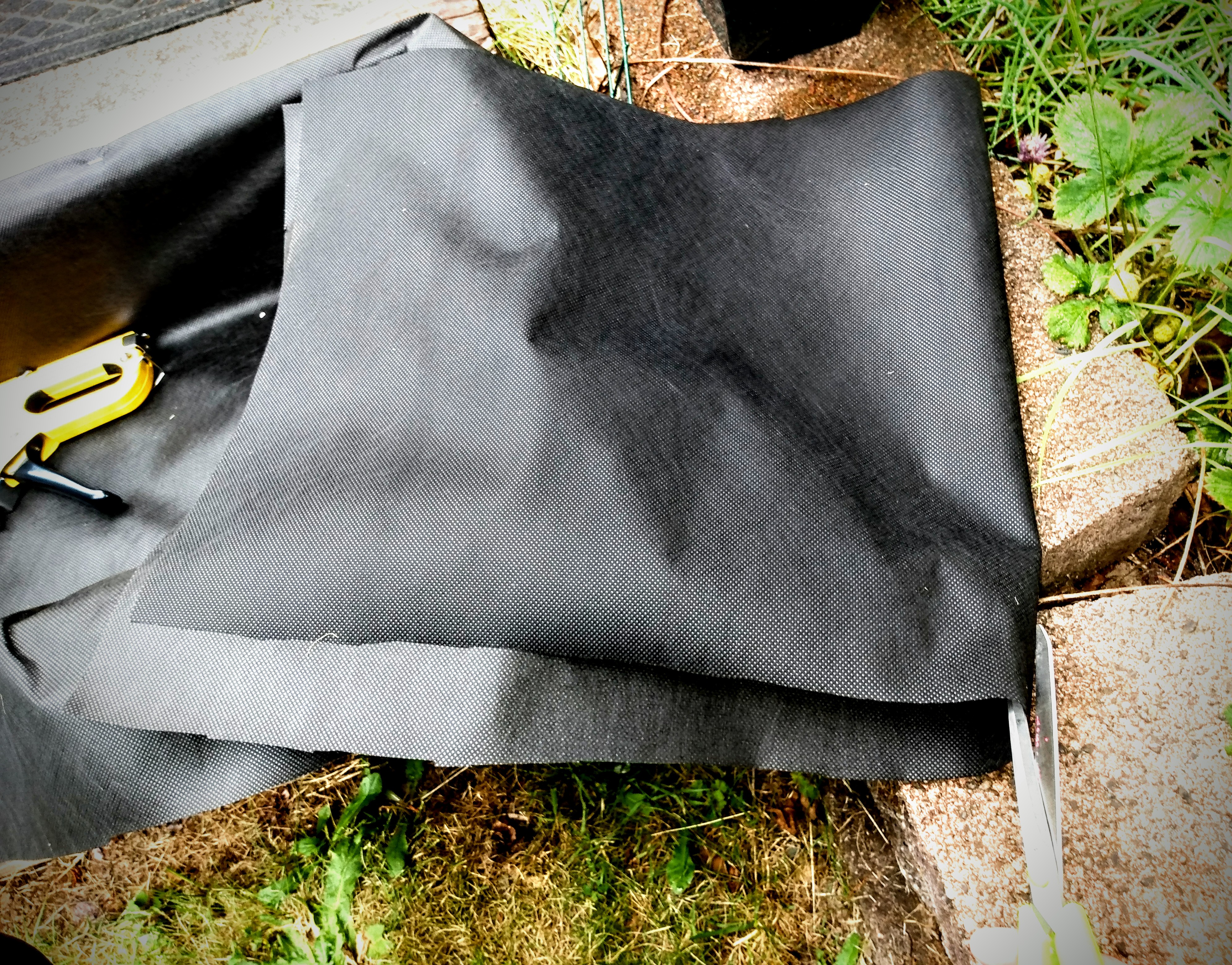
As you can see in the second picture, I trim my garden barrier a little longer than I need to fit inside the crate. One reason is that I usually don’t cut a straight line (obviously seen here). But more importantly, I learned over the last two years that you want more barrier inside the crate than you will think.

The crates I lined the first year, fitting the liner tightly to the inside. The following spring I noticed that these barriers started ripping out at the staples after the first winter of water and freezing. The barrier needed some flex that I did not allow for. So now I give some allowance.

Before I put my garden barrier away (and focus on securing the lining), I cut the width of the short side of the crate. Then I fold this strip of barrier in half and cut. Each half will line the sides of the crate. These side pieces I set aside (or stuffed in my pocket for this crate because of the wind). I set the roll of barrier to a side and go back to folding over the edge of this second crate long side, and staple it down in place.

Once the long sides of the crate are secure, I secure the edges along the short side to hold them in place before securing barrier down the short sides. This keeps them up and out of the way. And if you’re lining a crate while it’s windy out, you will thank me for having the barrier stay in one place so you can move through this project in the least amount of time.

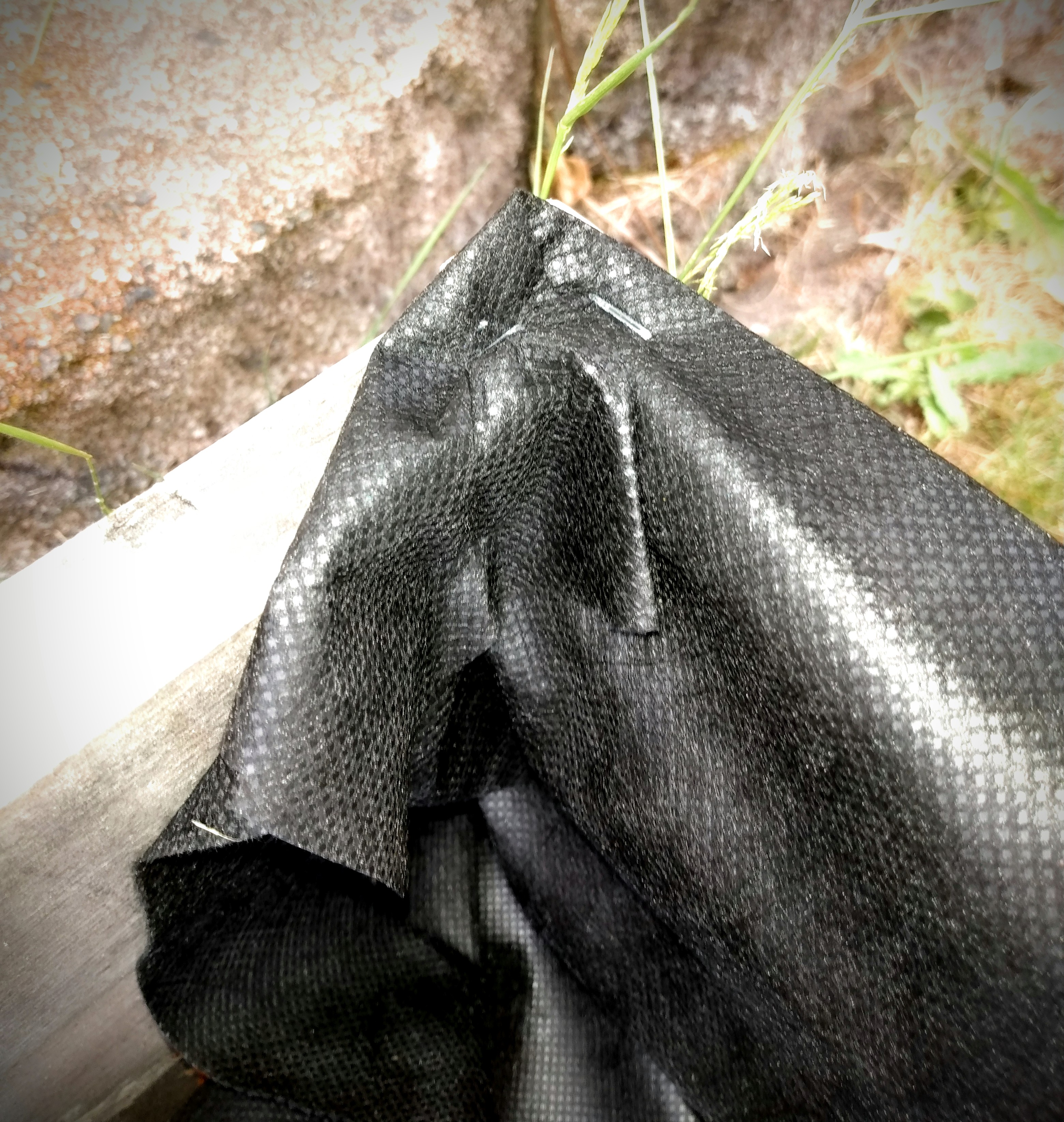
First I take the overlap, from the edge of the crate, and fold this corner down before stapling. This gives a reinforced edge as well and bringing the excess barrier down inside the crate. This doesn’t look pretty, but this is all about telling the barrier where you want it to go and keeping it contained.

Can this excess be trimmed off?

Of course it can. But you will see in just one moment, by keeping the excess length and tacking it up the side, you are creating a barrier that will keep all your soil in your raised bed without having a completely sealed liner. I use the weight of my soil to work for me so I have less steps to take.

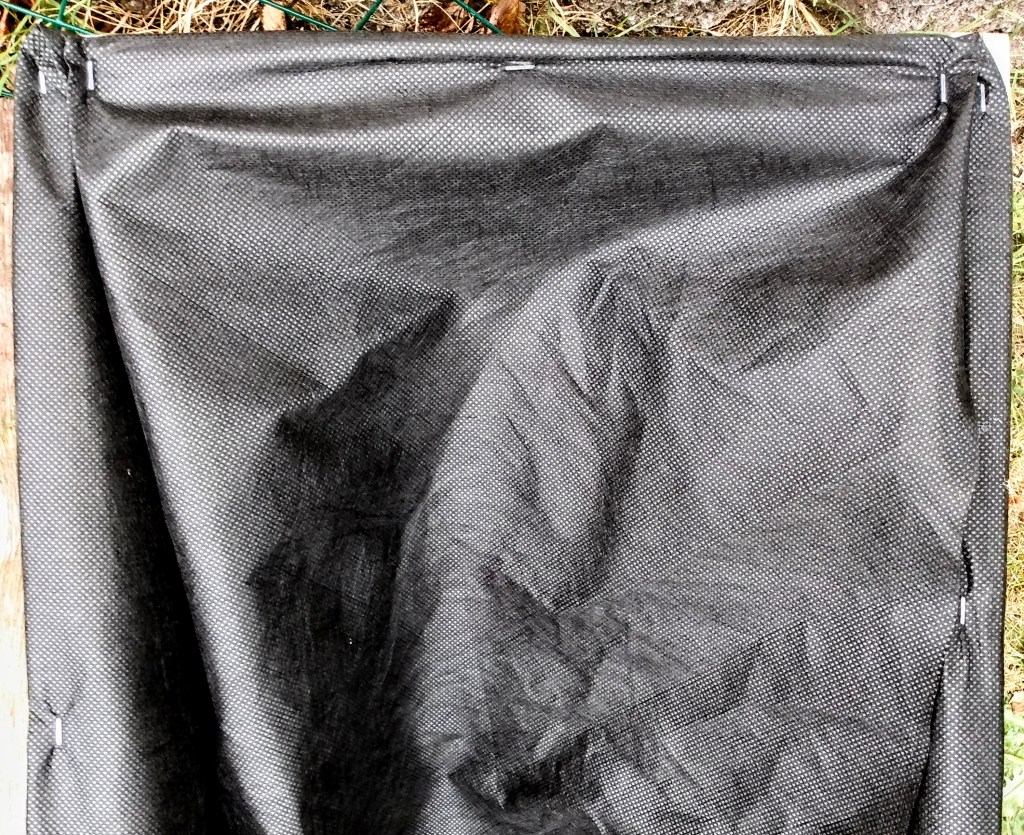
For the next step, I pull out one of my side crate pieces of barrier that I just cut and line my first short side. I fold the edge of the barrier down, just like I did with the long side of the crate, and stapled down this top edge and pushed the rest of the length of this side down over the rough edges that were tacked down from the longer side. This flap is great because not only does it cover the edges of where dirt could go down and over time wash out of the bottom of the crate, but it also redirects any of this soil movement back toward the center of the crate.

So if you have the choice of having a generous flap (like seen here in picture two) or trimming it down, make an educated decision in favor of what’s going to help you maintain your soil. After all one of the problems with container growing of any kind is the loss of soil, mostly through drainage at the bottom of your container.

Once you secure the second short side of the crate, you will see here in picture 3 that you have a fully lined crate.

The first time I lined a crate, with no one telling me how to do it, I must have taken an hour to do this. Even with taking pictures, this only took me about 15 minutes. The larger crates don’t take any additional steps. So it really is time efficient to take a fully made wood crate and line it to make your own raised bed.

If you did not line your crate where you want it’s forever home to be, make sure that you move it now. Even with this smaller crate, the weight of it filled is more than I can move on its own. Even with a hand cart, I still wouldn’t want to move it because I could just see myself knocking it over and spilling all my soil all across my yard. For my sanity (and your own), I just make sure I place my crate raised beds before I fill them.

Advertisements

How I fill my raised beds

I’ll start by saying that I don’t fill my raised beds like everyone else.

One reason is that I don’t have the gardening budget to buy as much soil as I would need to fill all my crates, especially the large ones.

Another reason is that I’ve talked with many people about different types of gardening are available for each of us to choose from.

The drawback to container growing (even raised beds) is that there comes a time where there will be a depletion of nutrients in soil. So even though I do top off my crates with raised bed potting soil, I choose to think long term with my raised beds.

Hugelkultur and Mound gardening have beautiful foresight in them. Both of these forms of gardening is that they put long term “food” into their structure building. Both contain wood (usually in the form of branches and limbs of trees, logs in larger structures) which is slow release nutrients that takes many years to decompose and incorporate nutrients back into the soil. If fact, this is the best way of getting the micronutrients into the soil that standard commercial fertilizers do not ever put back into your containers.

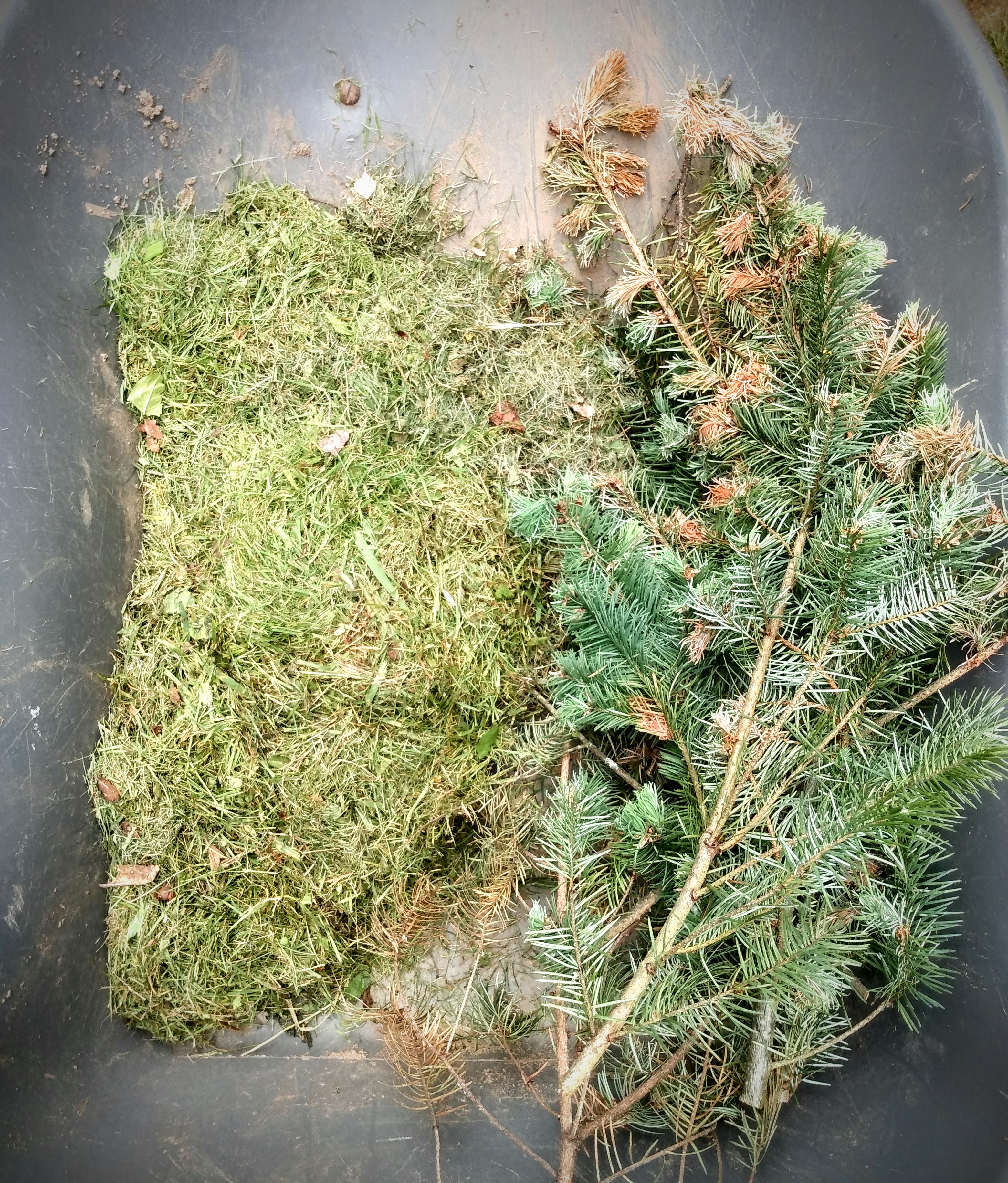
For this reason, I went back to my yard waste and compost. I grabbed some pine branches that we recently trimmed off of our trees, and a couple of handfuls of grass clippings. Especially with the large crates, these fillers are going to be amazing.

In the bottom of my crates I put the largest branches. Normally I put in camp fire sized pieces of wood in the bottom. This small crate doesn’t have depth for that. So I started off with what I consider my second layer, thin branches. Ever green boughs are perfect, not just because of the thicker needles (which take longer to break down than leaf waste) but also because they take up space.

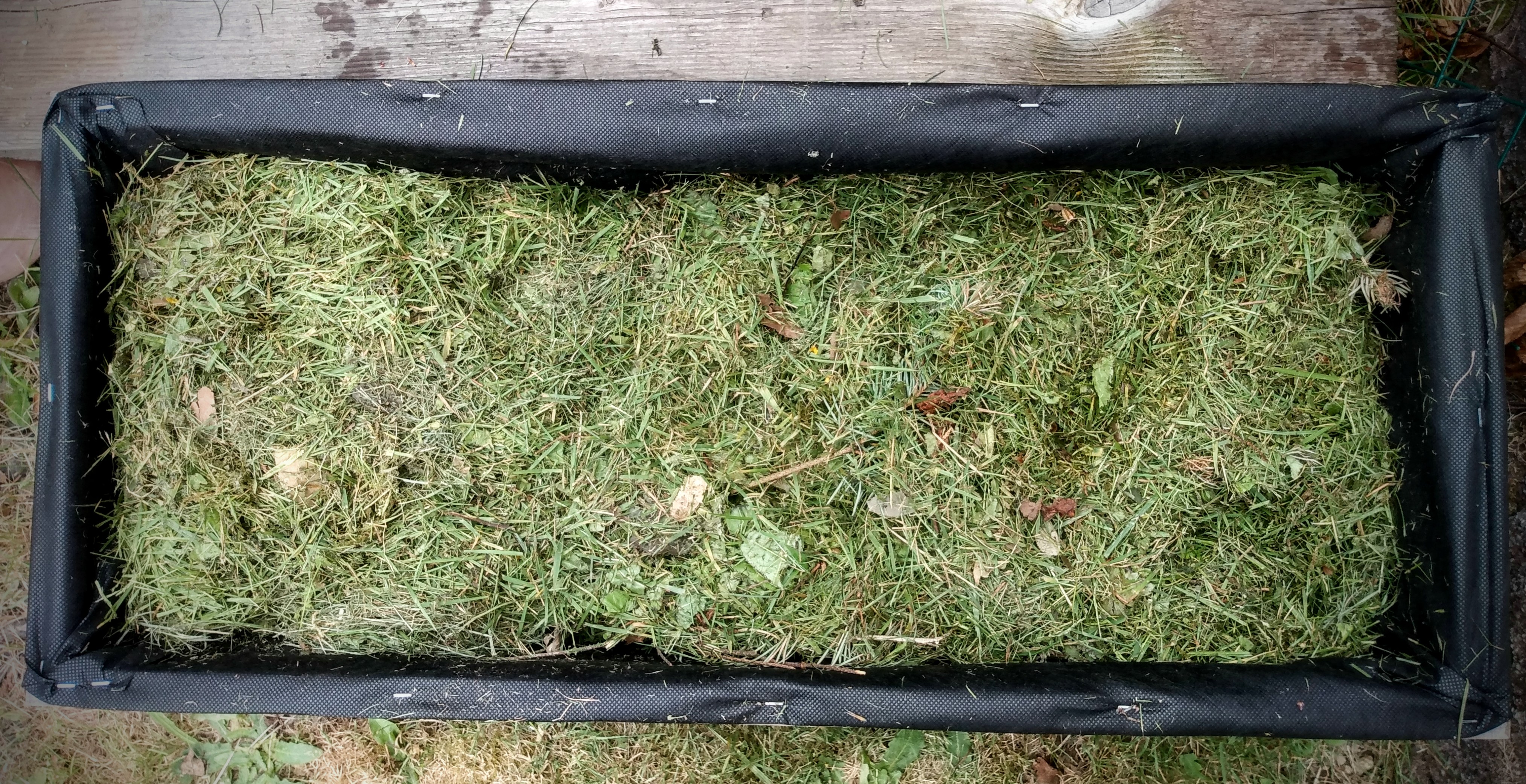
Next I put down green grass clippings. One, they take up space and leave nice medium for plants to spread out their roots. Two, the grass fills in the branch gaps and holes perfectly.

Think of that science experiment where you’ve seen rocks added into a jar first. Then it’s followed by pebbles, then sand, and then water. It’s a perfect example of maximizing the fill of a contained space with an incondensable material like rock.

I pack my raised beds with as much long term nutrients as I can. And this method of packing with larger material first, working your way down to the smallest, is the best way of packing your container box.

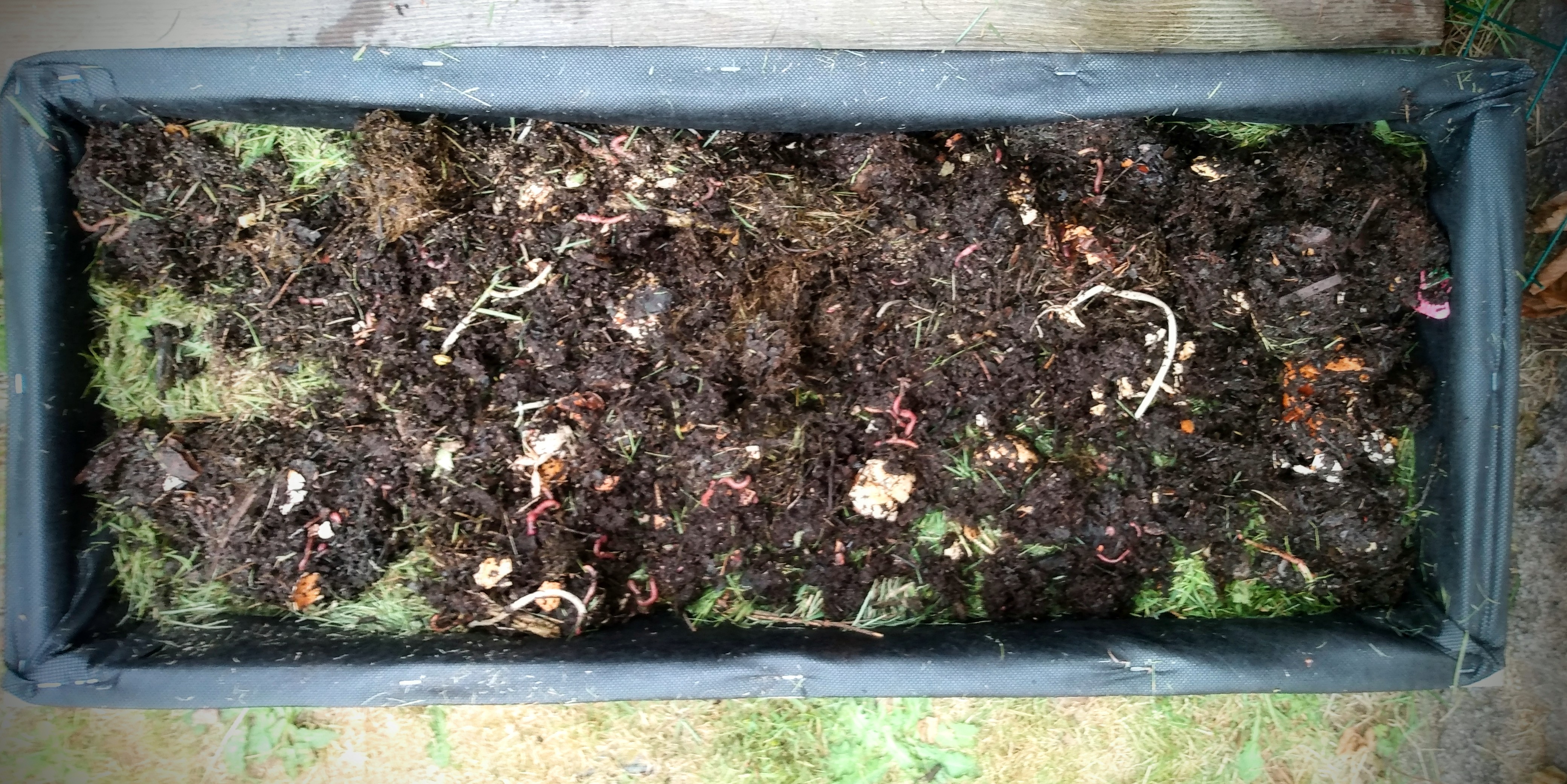
From here, I went back and grabbed a couple of pitchforks worth of raw compost (complete with some of my worm residents) and the last of my current supply of raised bed potting mix.

Of course it was the moment that my kiddos saw me grab the compost that they came rushing at me. My youngest dove in and tried to rescue the worms from being placed in this crate. He was acting like I was kicking them to the curb and evicting them. It took me a moment to tell him that he didn’t need to take them back to the in ground garden, I need them here.

And that’s one thing that I haven’t heard anyone talk about. We all know that worms are great for our garden. In fact we don’t give them a second thought in our in ground garden. So why aren’t we talking about them in our container gardening?

Worms are very much needed for a good growing biome. They help break down materials. And since I put in some large materials, I could let them do their own thing, or I can see if I have some worms who want to take advantage of this new home. (And this is another reason why I don’t fully seal off my lining in the crates. The worms are free to come and go as they move their way through any loose openings that take place over time. (And these openings do happen, but they’re more controlled.)

Anyway, I chased my youngest down and got my worms back in my compost. Then I quickly dumped the potting soil down on top to keep him from digging them back out. (I swear that child loves worms!)

I finish off with the raised bed potting soil because that is ready to go and host my pepper starts.

The down side to this layered nutrients in a raised bed

You may want to choose to do straight soil. Especially if you’re planting starts that will shortly need to have structures to assist in their growth. Just like these peppers will need some structure.

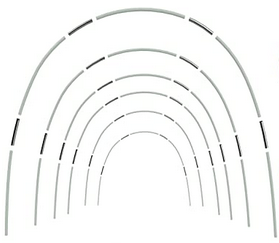
This layering, especially in this smaller size of crate, makes it impossible to add bamboo stakes for my peppers. They were just falling over. Fortunately, I have some carbon fiber cold frame hoops. I haven’t added them yet to this crate, but I’ll put in a hoop over each row to drop lines for the peppers to grow up.

I mention all of this, because if you choose to layer and expect it to hold up a stake or tomato cage, this first year just doesn’t give it the soil density to hold up a structure. So be prepared to come up with an alternate plan.

Another disadvantage to this layering is that as you can see in these pictures, I filled my crate up to the top. Over the course of this growing season, and especially over winter (when the rain helps to draw all the smaller soil material to settle into the branches in the bottom, I will see that this crate will only be half full next spring.

In the spring, I’ll add more compost and soil into this crate. At this point I can add mulch on top and the volume of the crate will not go down any further.

Again, this isn’t a horrible down side. It’s just one to be aware of and plan for. But this crate is now set up for many years of container growing. It will be sustainably nutrient rich, especially when I add the mulch and keep that going every season.


How do you like to container grow?


Here are a couple items I find useful in my garden.

This post contains affiliate links to products. We may receive a commissions on products purchased through these links, but at no extra cost to you. These items listed here are from Amazon but may be purchased at local markets.

One response to “Make A Container You Will Love”

  1. Clove One Clove All – How I Can Do That Avatar

    […] Make a Container You Will Love is how I start off all my new boxes. This time I reused one of my existing boxes. My onions didn’t do so well in it this past grow season, so I’m changing it up to see how my garlic will do here. […]

    Like

Leave a comment

Processing…
Success! You're on the list.
Advertisements
Advertisements

Surprise Gift

It never fails that a moment in life comes when you forgot to get someone a gift or you received a last minute invitation. What do you do?

There’s a couple of things that I keep in my craft room all the time: fabric, ribbon, card stock, picture frames, paint, beads… You get the idea.

We had the privilege of meeting our neighbor’s parents, who came for a visit from halfway around the world. It’s amazing to see how much you can connect with people, especially when you don’t speak the same language. And even more amazing when you find out that you share some similar interests and find commonality.

It’s even more special when you receive an invitation to be a part of celebrating their 60th wedding anniversary.

I’ve been married for over a decade. So much has changed in the world since that day. I tried to think of how much the world will change in another 50. It blows my mind.

What is it like to celebrate a 60th anniversary in another country–one you may or may not have thought you’d be in when you were younger?

Of course I couldn’t pass up an opportunity to celebrate and honor a long lasting relationship like this. And while thinking about how to give a meaningful gift, with little personal history, and something that’s not burdensome for when they return home, I chose to focus on the memories. Celebrating the last 60 years of their memories together and giving them a memento of this trip, this moment in time.

Advertisements

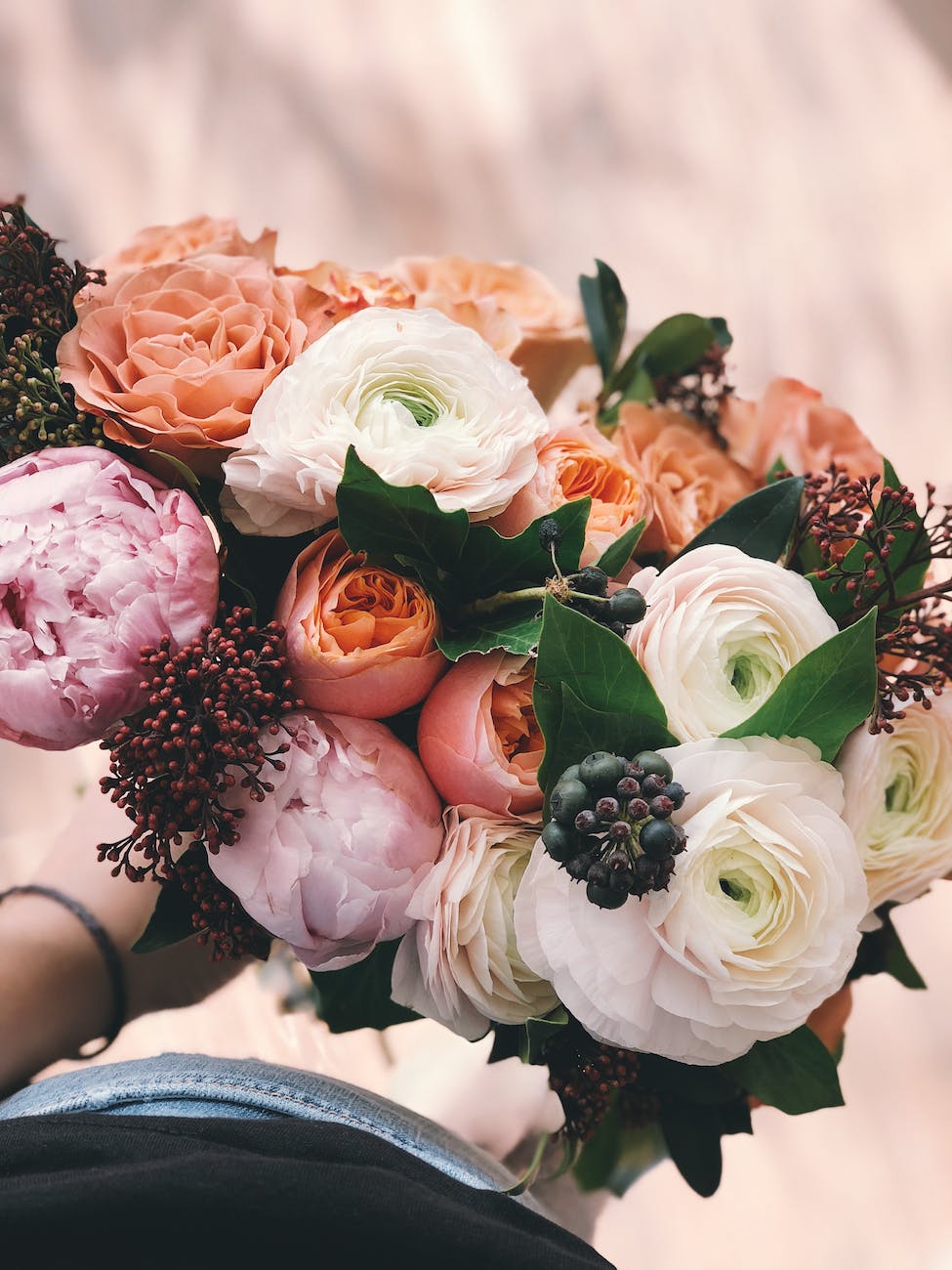
My husband had taken a group picture at the end of a visit where we had them over and made for them their first American meal. I chose a picture because it travels well and is minimalistic for those who gravitate to that way of life. But I also couldn’t pass up giving some flowers because it’s something that brings happiness in the moment.

So for this quick to gather gift that’s pack full of memories and meaning, here’s an idea for you to consider the next time you need to find a gift in under two hours.

Pick a photo of you and the other person from your phone and send it to a local place that can print it out in an hour.

While that is processing you can stop by a shop, florist, road side stand, farmer’s market, or garden and gather some flowers that have meaning.

In this instance I chose sunflowers because with our guests, they saw the sunflower I had grown from seed and we talked about sunflowers and sunflower oil for quite some time. Sunflowers may not be their favorite flower, but in this gift, it’s a nod to something we connected with in the middle of a language barrier.

It just so happened that at home I had a vase on a shelf that I was saving for a time to reuse by gifting to someone, and I had some fabric with sunflower print on them.

As you notice here, sunflowers can be awkward if they’re not bundled. So I decided to bundle the flowers with a strip of cloth.

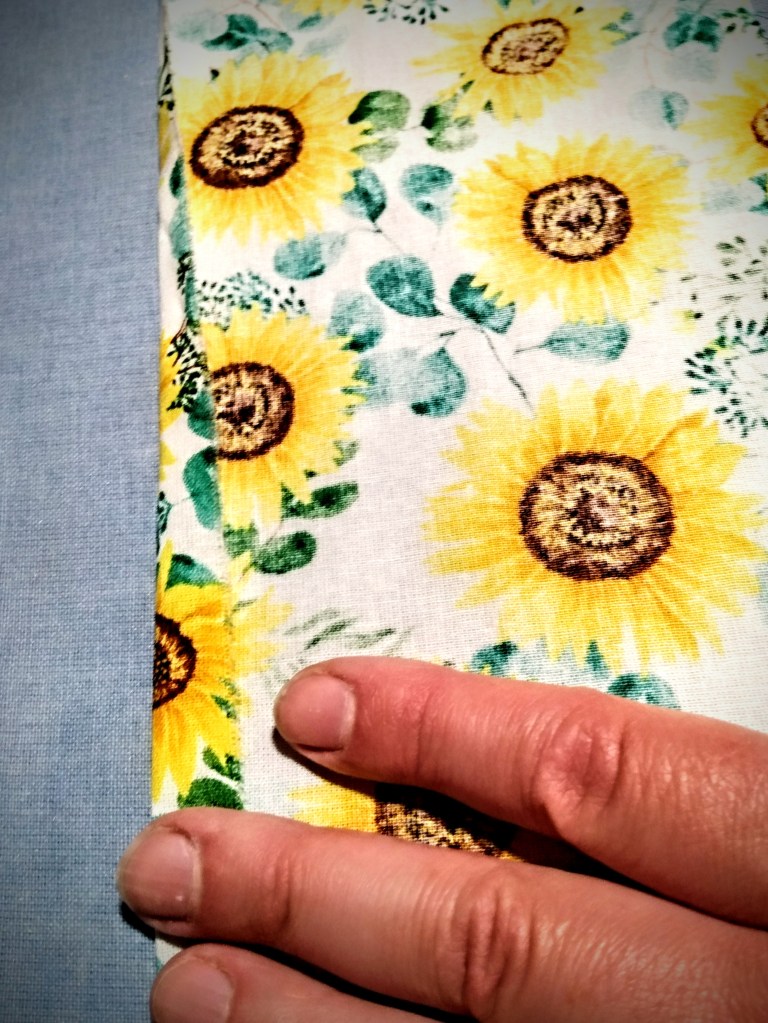
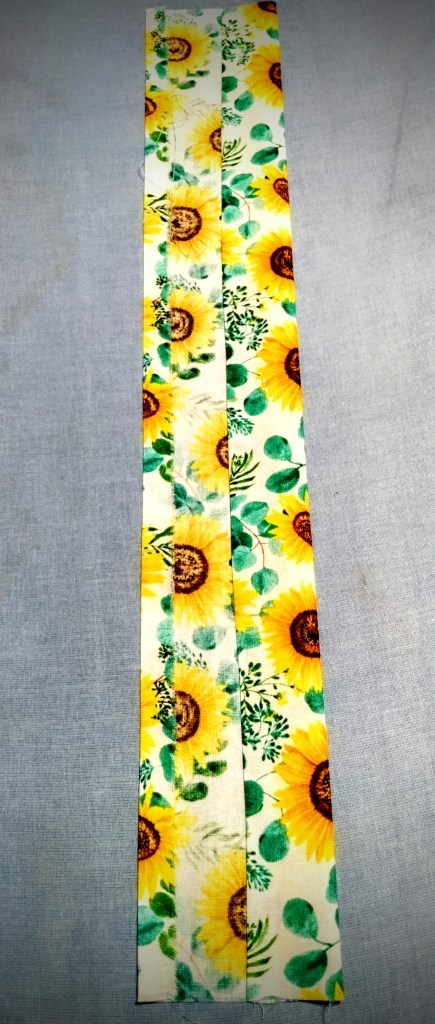
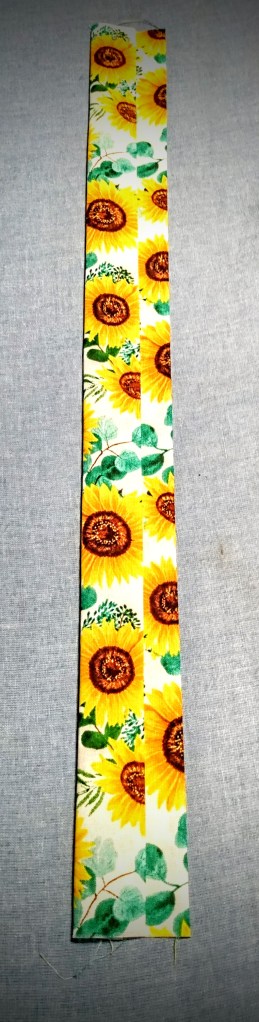
For a professional look of wrapping a bouquet, you want to first trim down the fabric you want to use into a strip. No matter how nicely you cut, the fabric will always fray. To give a clean edge, you want to press the strip of fabric. First, fold and press the raw edge. Then you’ll tri-fold and press the fabric into a wide ribbon. Now the edges won’t fray on you and you didn’t have to sew.

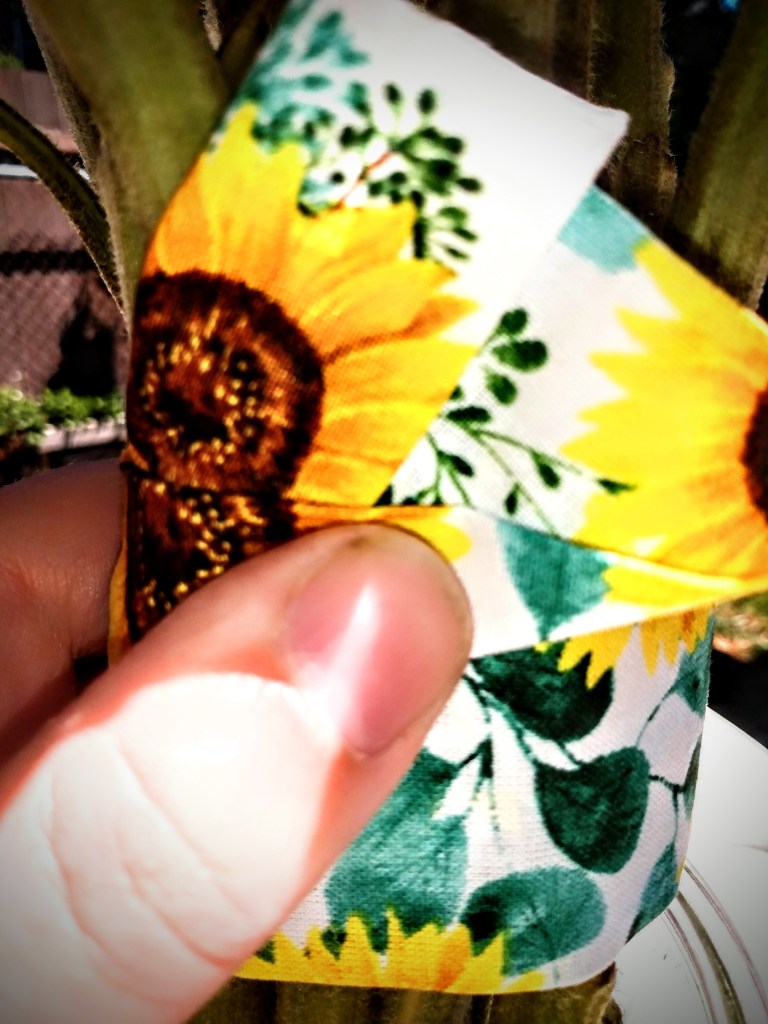
To make this wrap, you want to put one edge of the ribbon between the stems. Then you can wrap it tightly around the bouquet without the ribbon slipping on you.

When you get to the end of the ribbon, you want to fold the ribbon up at a 90° angle. The tuck this final edge down behind the wrap, between the stems. If the wrap is snug, it will hold the ribbon in place without using tape, pins, glue, or any other fastener.

The beauty of making a wrap like this is that the person you are gifting this to can use the fabric after the flowers are long gone. If this person is sentimental, they will no doubt find a way of repurposing and reusing this strip of fabric.

Don’t forget to use a small scrap of the fabric to make a card that matches.

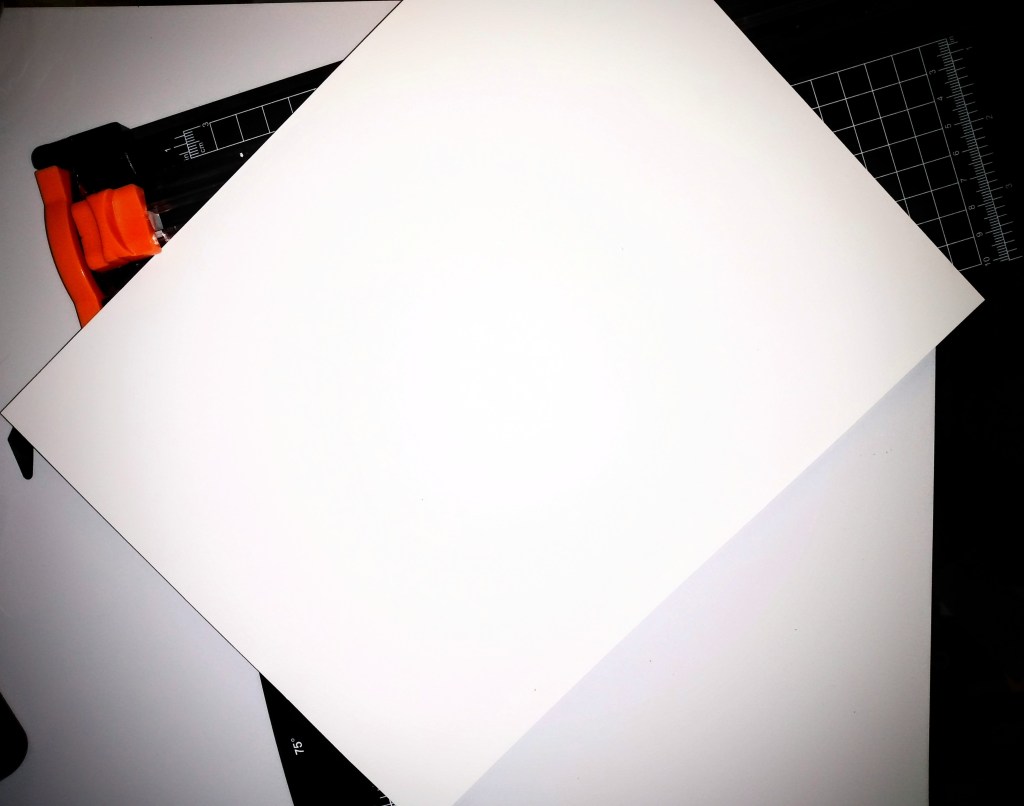
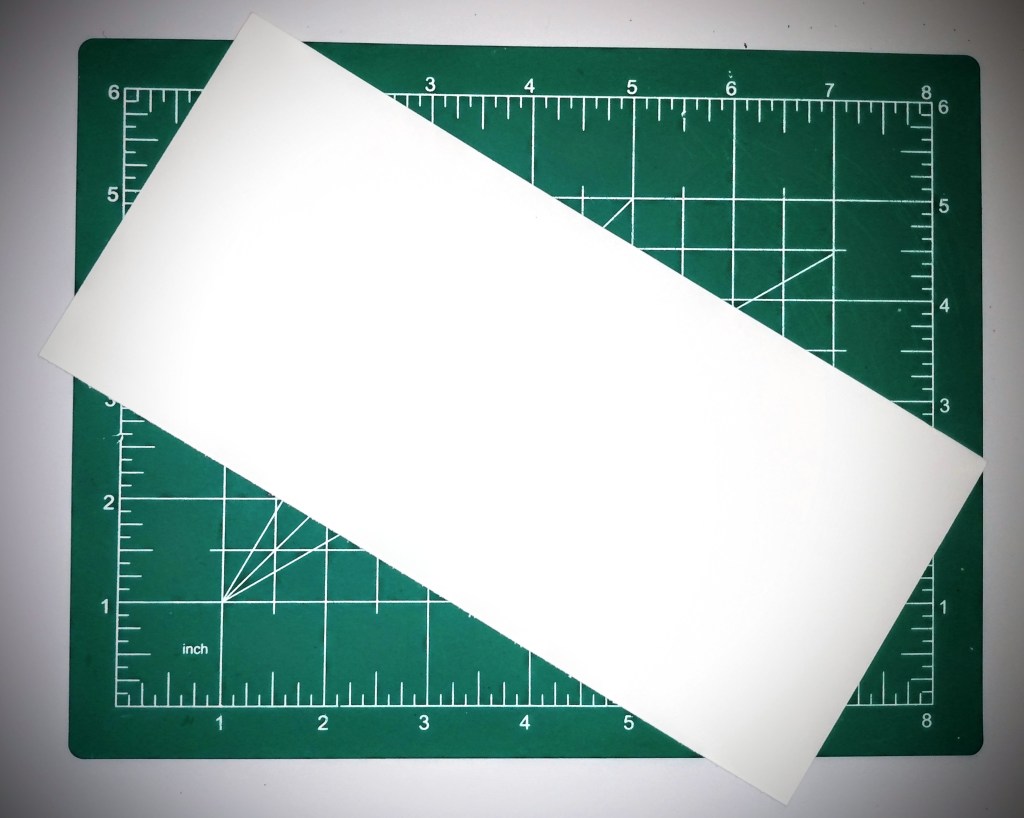
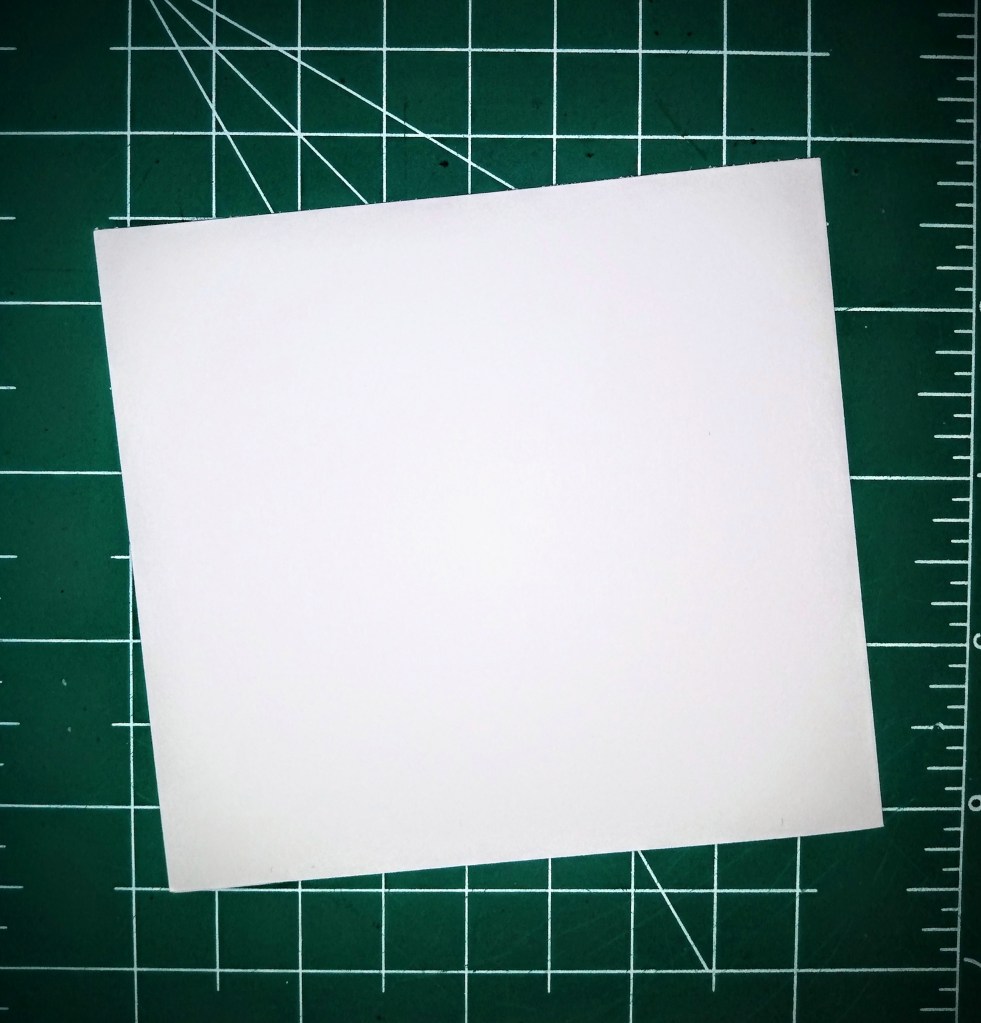
Here, I took a piece of 8.5 x 11″ sheet of card stock and trimmed along the short edge a strip 4″ wide. This strip I folded in half to make a blank card that is 4 x 4.25″.

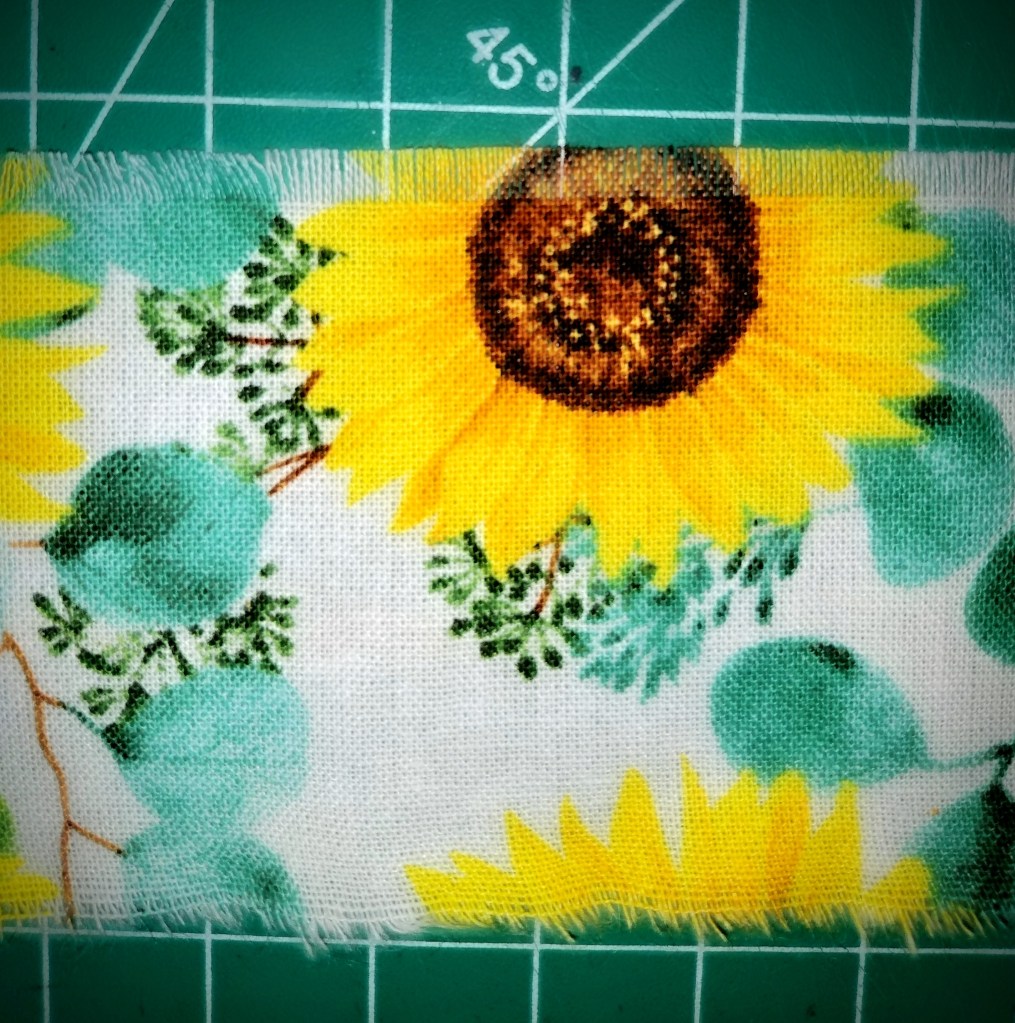
Using the left over sunflower fabric, I decided how wide of a ribbon I wanted to glue to the front of the card. You can be as precise as you want to be. I chose to wing it and just cut the fabric into a small strip.

This time I had to be careful about the edge because there’s no room for a folded seam. This fabric print looks good with a frayed edge, so I saved time by just removing the stray threads and embrace the fray. (As opposed to if I need to have a very clean edge and have to cut a straight edge.) Now the sides and bottom of the card need to have a straight edge, so I leave this ribbon large and will cut it down after I glue it to the cardstock.

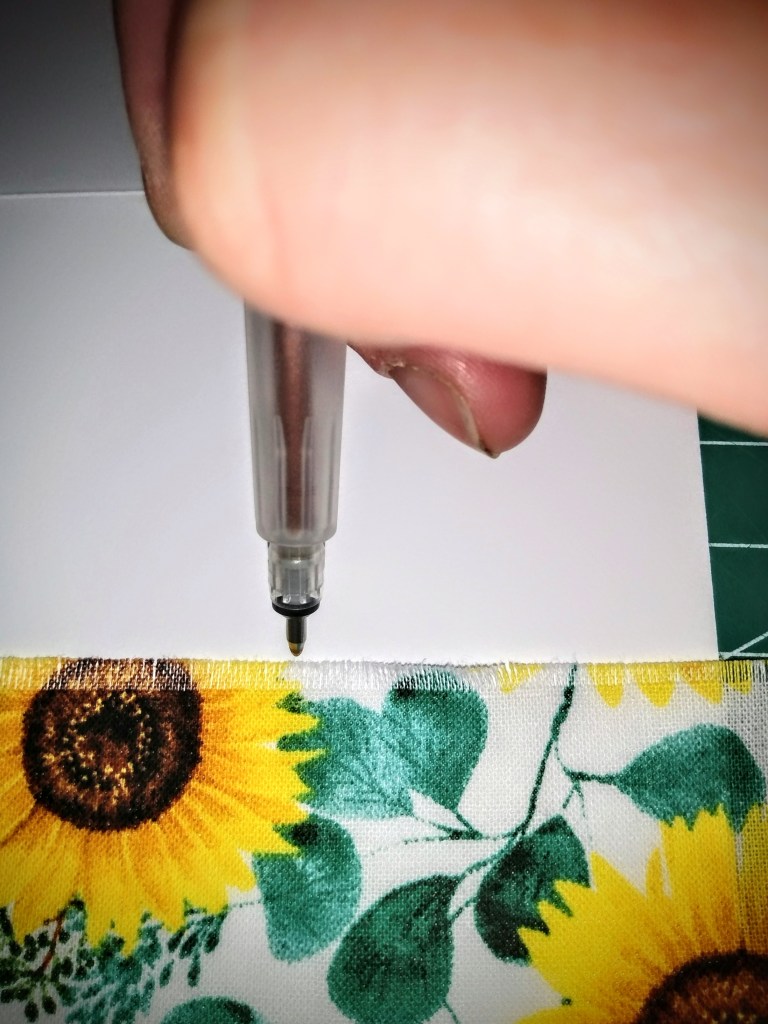
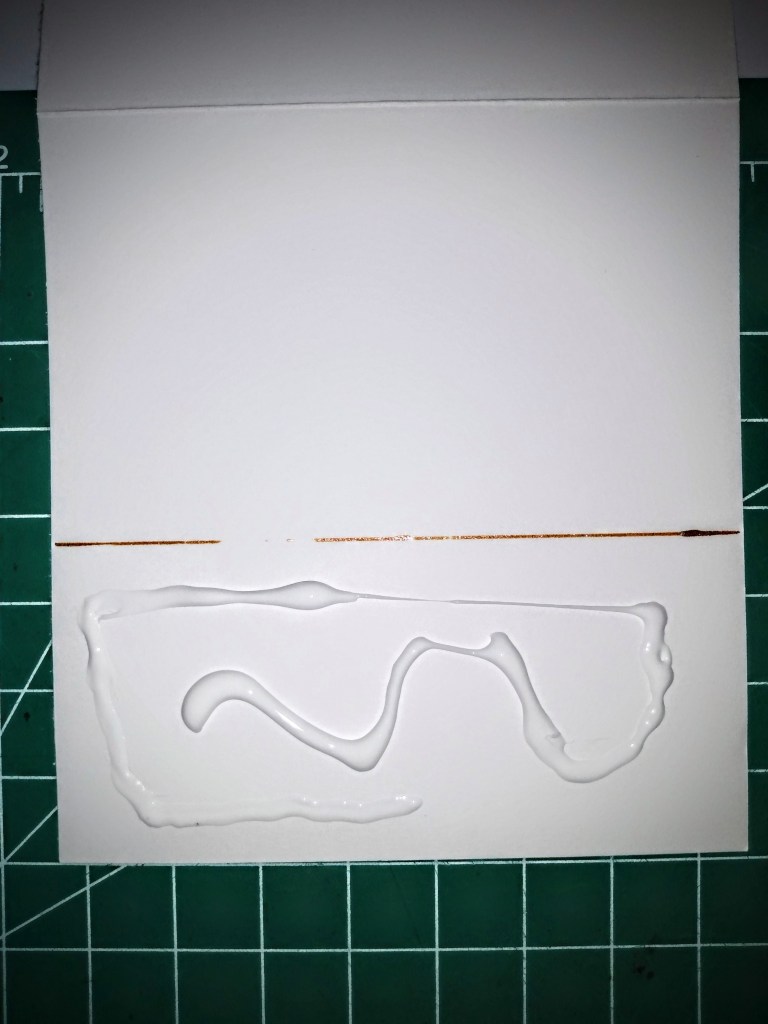
For gluing the ribbon down, you want to decide where you want to place it and mark off the area. You will need to liberally apply glue to prevent fraying on the card, so drawing a glue line is very important. Make sure that where you draw the line will be hidden behind the ribbon, so make sure the line is lower than where you want it. Apply the glue and spread it evenly across the whole section, even over the edges. If you don’t put glue on the edges, the fabric will lift from the cardstock.

Gently lay the ribbon on top of the glue and make any adjustments that you need. When you are satisfied, take a scraper or plastic card, place it in the middle of the ribbon and press it to the edge of the card. Then place the scraper/card in the middle and press down in the opposite direction. This will secure your fabric to the card and remove any air pockets that may have been present.

Now that your ribbon is secure, you can flip the card over. With a pair of scissors, trim off the excess fabric.

I trim from the back because I can see exactly where the edge of the cardstock is.

The blank card is now ready for you to write you message on.

By now, your pictures should be ready to pick up. Once you have them, you can place them in a picture frame and you’re ready to bag or wrap your present.

From this gift given, the part of the gift that meant the most was the blessing that I wrote inside the card.

In today’s world, a blessing spoken over another person is something that’s not talked about. But it’s the most powerful gift that we can give another person. And to have those words writing for the person you’re gifting to read over and over again is life changing.

If you are unfamiliar with a blessing, it’s what you tell someone that you see in them now, but you also what you desire for their future. Instead of “I hope you have a happy birthday” or anniversary, I tell the person what I want to see in their lives for this coming year or the years moving forward.

In a time where people are struggling to see their purpose in life, why they matter, the most important thing you can give a person is a vision of something to look forward to. And the best part about a blessing that you speak over a person is that it’s not something that can be bought. It shows the person that you see them, you value them, and that they have a purpose to live for.

Whether you’re looking for making a meaningful gift on a tight budget, don’t know what to give a person, need an impactful last minute gift, or any other reason, know that you can speak into a person’s life and it means more to them than anything else you give them. So no matter what your gift giving situation is, know that a blessing from you can be the most impactful thing that you can give another person.

Never underestimate the power of your words.

And don’t hesitate to gift a blessing!


Processing…
Success! You're on the list.

One response to “Surprise Gift”

  1. Roy Avatar

    Hi to every one, tthe comtents prsent aat this web pzge are really remarkable foor peolle knowledge,
    well, keerp up the good wotk fellows.

    Like

Leave a comment

Advertisements
Advertisements
Advertisements
Advertisements

End of Season Green

I considered waiting to share this post until the fall, but then I thought why not now. This is the perfect idea to share now while you’re still deciding what you are putting into the ground or containers for this growing season.

If you have some tomatoes planted and wondering if you should plant more, the answer is a resounding yes!

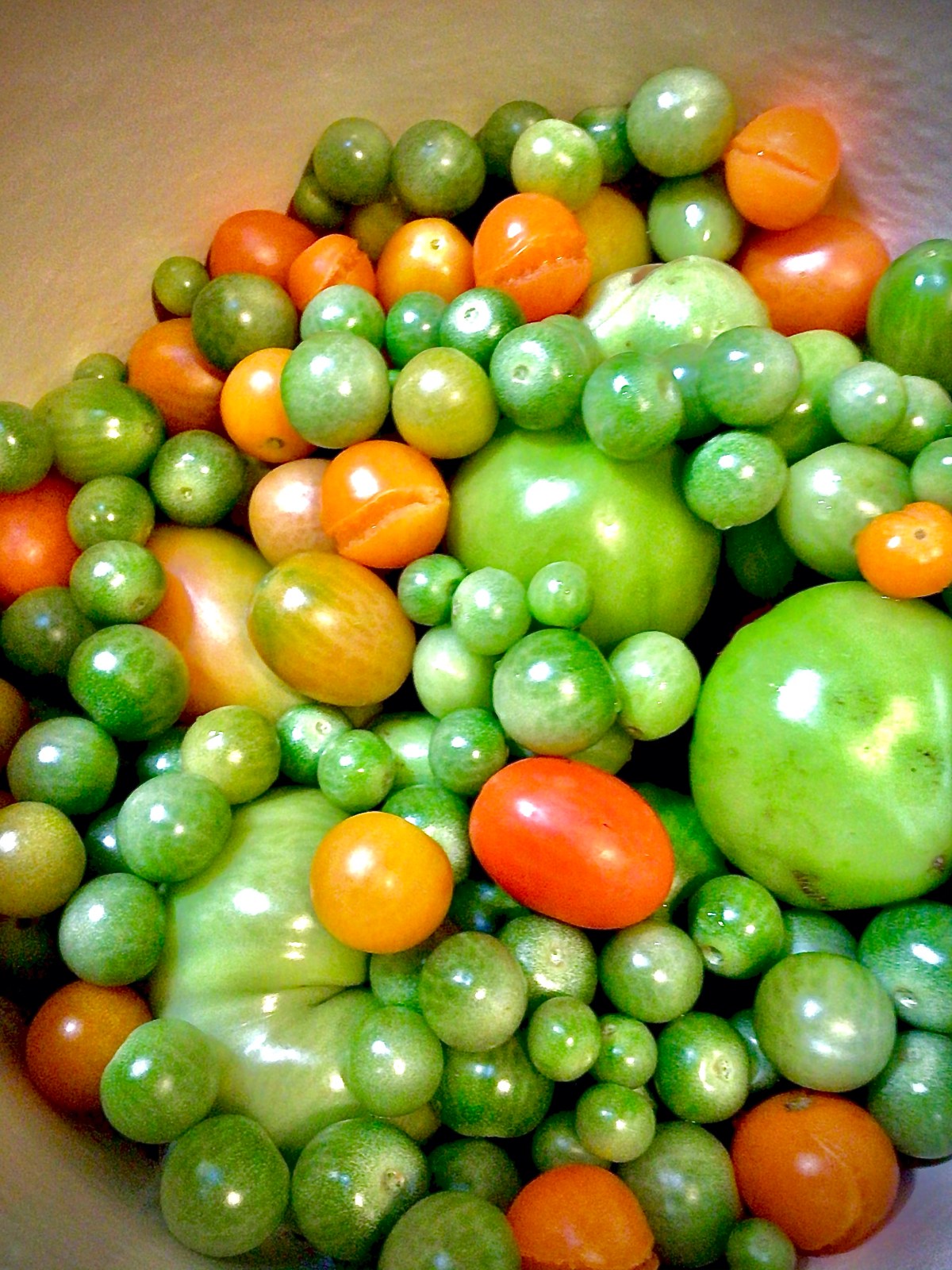
I’ve mentioned before that last year, the growing season here in the Pacific Northwest was horrible. Nothing really took off until the end of June and the beginning of July. And I was concerned with my tomatoes. If fact, the above picture was the last of the tomatoes that I took off the vine at the beginning of October!

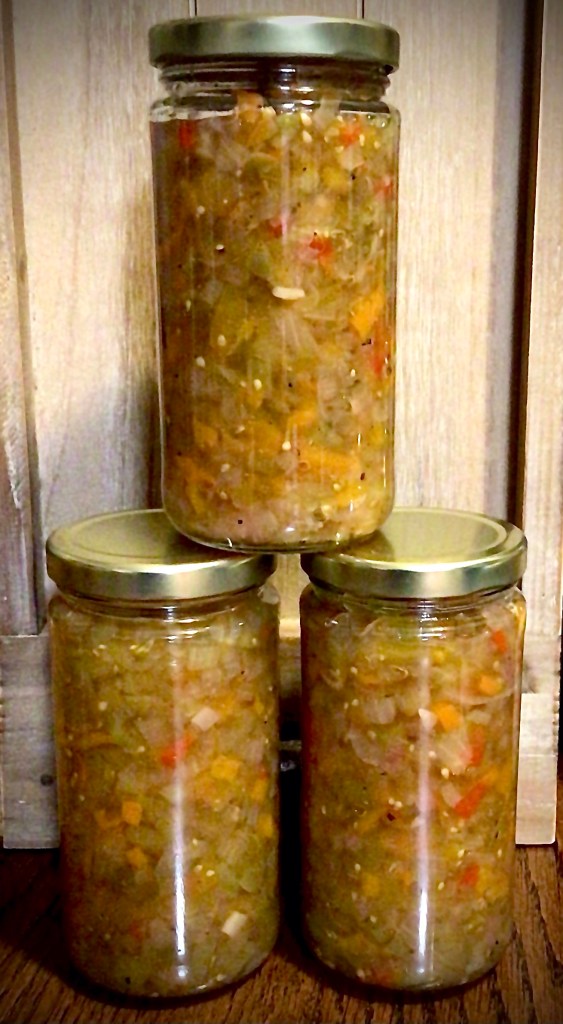
As you can see, there were so many green tomatoes that I still had, but my plants were dying off. So instead of all these beauties, I brought them inside and found a recipe that has now entered my MUST make every year when I bring the tomatoes in.

But I wanted to share this recipe with you now, because this is worth planting the extra tomato plants that you’re debating about adding to your garden.

If you’re like our families, you grow enough tomatoes to make your tomato sauce, pizza sauce, tomato soup, salsa or other tomato product you store for the winter. (This year I’m going to add making our out ketchup and tomato paste.) You definitely want to add Green Tomato Relish to your list!

I tried this last year not just because I had a plethora of green tomatoes, but also because my husband loves relish and I hate pickles. So I gave this a test drive to see if I could make something that is on his list of condiments and yet is something that I will eat as well. And I tell you that this hit the spot for everyone!

Advertisements

OurHalfAcreHomestead Green Tomato Relish

Mrs. Volfie posted her Green Tomato Relish here, but for your convenience I’m leaving the directions she walks through below. Please note, that if for your first time you don’t have the celery seed in your cupboard you are still going to have an amazing relish without it. I now have celery seed in my kitchen so I can’t wait to see how much better it turns out.

This is the vegetable ratio that Mrs. Volfie talks about in her recipe. You can mutiply it according to how many green tomatoes that you have.

  • 2 C Green Tomatoes, minced
  • 2 C Onions, minced
  • 1 C Sweet Peppers, minced

The Base for this recipe is 5 Cups of produce.

As you can see here, I used red onions instead of the yellow onions that Mrs. Volfie used. They are just my personal favorite onion, but please feel free to use the onions that you have on hand. I also want to mention that I was about a half cup short of the minced peppers and I still instantly fell in love with this recipe. Just remember that if you’re light in one vegetable, you should try to make up for it with one of the other vegetables.

I didn’t and I ended up with a slightly wetter finished product than I would have liked. But that is okay. Having run this recipe and knowing what the outcome is and what my personal expectations were, I know that this next batch that I make, I’ll make sure to keep that 5 Cups Base ratio and I’ll go a little lighter on the liquid, but I’m ahead of myself.

Let’s move forward.

This is a 2 day project. On first day, you’re going to mince your vegetables and let it sit over night. The next day you’re going to cook and bottle or jar your relish. And as a busy mom, I sure do love recipes that I can break up into steps like this and not have to take an entire day to run a canner.

Advertisements

Day One

  1. Mince your vegetables to make up your Base Unit. (In the video Mrs. Volfie made a triple batch, which is a total of 15 Cups of produce.) I didn’t have the chopping tool that Mrs. Volfie used, so I minced by hand.
  2. Combine your vegetables and add 2 Tbsp of Pickling Salt. If you are running less or more of a Base Batch, you may need to adjust the amount of salt used accordingly. (The purpose of the salt is to soften the vegetables but also reduce some of the water content.)
  3. Put the raw relish in your refrigerator overnight.

Day Two

  1. Strain and rinse off your relish.
  2. Put back into the pot and add the following. (This is for a triple batch, so please adjust these ingredients according to the Base Batch of recipe that you’re running.)
    • 2 C Sugar (Mrs. Volfie mentions that she prefers brown sugar. I just used cane so can’t comment on the difference in flavors.)
    • 2 C Organic Apple Cider Vinegar
    • 2 tsp. Salt
    • 1 tsp. Celery Seed
    • Fresh Cracked Black Pepper
  3. Bring to a boil on your stovetop.
  4. Fill hot jars or bottles with the relish with 1″ headspace and de-bubble.
  5. Hot Water Bath the relish for 15-20 minutes.

For Christmas, my husband and I gifted this relish to friends and loved ones. And everyone came back raving about it. Not only that, but have talked with their loved ones who are also interested in this relish.

You won’t hear this in the video, but I would be remiss if I didn’t tell you that this relish makes the BEST tartar sauce just by mixing in your favorite mayonnaise. Everyone I’ve told that to in person just gave me the humored head nod that said, “so you say. I might give it a try.” Everyone did try and they came back with fireworks in their eyes.

Living in the Pacific Northwest, we are spoiled with fresh seafood. So of course when anyone talks about tartar sauce, people get a little snobby. But please, please, please, give this a try. Because I have yet to have someone come back to me and tell me that it did not hit the spot.

And if you are planning a special event, are a caterer, and seafood is on the menu I am telling you that this one condiment is the way to wow your customers and come back with glowing revues!

Advertisements

Other recipes that may interest you…

I have not yet tried these recipes, but these are on the top of my to try list.

Ketchup

The ingredients on this recipe from Self Sufficient Me sounds about right for what I look for in a ketchup. The written recipe is found here.

There is one glaring issue that I have with this recipe by watching the video is that it is too thin and liquid based for the type of ketchup my family likes. The culprit for this being so runny is that he runs his tomatoes through a food processor at the very beginning.

I was teaching a small class on how to make tomato sauce and we found out the hard way that when you process tomatoes like this you just can’t ever get that sauce to thicken up! The reason for this is because there is a chemical in the skin of tomatoes that when you release (by blitzing the tomatoes) it counteracts the pectin that is naturally in the tomatoes. You end up with tomato juice.

So to prevent the thinning of your tomato product, you really do not want to cut the tomato more than you have to. Small tomatoes cut in half. Large tomatoes cut into quarters. The pectin inside the tomatoes will thicken your sauce and minimize your time in front of a hot stove.

Advertisements

Tomato Paste

While I do have a few Italian Nona’s that I love watching on YouTube for inspiration, I want to try this Turkish recipe for making a tomato paste. With Turkish Food Travel, you can watch her video here or written recipe here.

A quick walking away point from this is that you notice that the pectin inside the tomatoes are at work in making this a thick sauce to start with. Then you keep the pan on the heat much longer than you would for a chunky tomato/pasta sauce. So if you’re making your own pasta sauce already, to make a paste you keep cooking the sauce down until you cook the vast majority of the liquid out.

I like how this recipe uses salt to reduce the tomato liquid even before you start cooking. This has inspired me to prep the tomatoes the night before I want to cook the paste, so the salt can maximize its extraction time.

At the end of the video you will hear about the method of making tomato paste by cooking it in the sun. Even though there was not enough description here, it sounds very similar to what I’ve heard is done in Italy. There are wooden tables that are used to make the paste. From what I understand, the sauce is first made and then spread across the wooden table. The sun dehydrates the tomatoes for you to make the paste. The only thing you do during this process is to use a scraper or a bench knife and mix the sauce/paste so that everything dehydrates/dries in the sun at an even rate.
If you are Italian, Turkish, or any nationality that makes a tomato paste using the sun, please comment below on the process that you use. Because I want to know how you do it. Making tomato paste by sun is on my cooking bucket list (I want to try this at least one time during my life).

Advertisements

Too Busy? Here’s some quick condiments that can fit in your busy life.

I just came across Becoming A Farm Girl and I’m excited to see what she has in store to share with the world. Here is her video on 7 Quick Condements. I love listening to Cassandra. Her approach for making mayonnaise is the easiest method that I’ve seen to date. And she’s made me super excited to make this the next time I run out of mayo. We’ve been meaning to make our own because of a couple of ingredients that have made their way onto the ingredient labels of commercial mayo.

To get her print out recipes you will need to sign up to Cassandra’s email list. The link to that is in the details of the video linked above. I did sign up to get this recipe book and it is beyond what I’ve received from others. So, if you’re picky about who you sign up for, I absolutely did not regret signing up for this one.

Looking for a tool to make your food prep easier?

This is an affiliate link to mentioned product. We may receive a commission on this product, purchased through this link, but at no extra cost to you. This item is from Amazon but may be purchased at local markets.

Processing…
Success! You're on the list.

Leave a comment

Advertisements
Advertisements

Meaningful Gifts

Happy Mother’s Day to all the moms who are celebrating today with their children, the moms who are missing their children, the moms who have lost their babies far too early, those who shared an all too brief moment with their babies, the mothers who are in the middle of a season of making the dream of motherhood a reality, and those who love on the children from other mothers who lean on you to be the loving assurance in this season of their life. No matter what motherhood looks like to you, Happy Mother’s Day!

Photo by Secret Garden on Pexels.com

Depending on who you talk to, some people feel that holidays are too commercialized. Others find it difficult to find the perfect gift. And others find it difficult to gift a loved one while feeling the financial pressures of this season of world history. No matter where you personally find yourself on this spectrum, I want to help you find inspiration on how you can find a meaningful gift for someone. Whether it’s a belated mother’s day present, a birthday, anniversary, father’s day, grandparents’ day, teacher appreciation, graduation, or any other occasion, know that you can gift in a meaningful way.

I’m going to use the example of the mother’s day gift that I gave one of the mothers in my life. While this may not apply to the person in your life, the same principle can be applied in finding what you can gift that special person in your life.

This mom loves talking about her memories. For many years she’s shared her precious memories of when she operated a daycare. And one of those fond memories is when she grew gardens with the children under her care.

Growing salads in a container box.

One thing about moms, it seems pretty universal that sharing memories usually isn’t about the memory. It’s about reliving a moment in life that brought pleasure to them.

From this understanding, I knew that building a garden for this mom was a gift that would fill her love tank. Not only is it an opportunity for her to relive precious memories in the here and now, it also opened the opportunity to add more memories in association with these older memories. By building a garden and scheduling time to upkeep and tend to the garden, it was also guaranteeing visits and making time for her to spend time together.

Container growing for small spaces.

For this mom, she has two love languages. Her primary love language is gift giving. Her receiving love language is quality time.

Making a deposit of part of this season’s garden was not just a simple arrive, dig holes, put in start, say good bye, and move on with the day.

Advertisements

For this Mother’s Day gift, it took in the appearance of leaving all the gardening supplies in the car and starting off with a sit down chat and getting caught up with all the news, even if it was only a day since we last saw each other. Then, I was able to go prepare the garden beds for this first plant installment.

Even before I could bring out the plants, this mom was already so filled with love that she wanted to spend some more talking. As much as I wanted to stay task driven (my personality is to knuckle down and get a project done quickly so I can move on to the next task), this day was all about showing love to this mom.

Pallet boxes for narrow spaces and hanging baskets on cyclone fence

So we had another chat session.

When I could find a polite moment to get back to the task of putting the starts back into the ground, I made that move. And with the final post plant watering, I went back and gave this mom one last extension to the gift I was giving her.

Remember, I said that this mom shows love to others by giving to them. So while I was building this garden for this mom, I know that the one thing that would bring her even more pleasure is by telling her upfront that the goal of this garden is primarily to meet her primary produce needs, I’m planting more than she will personally need so that she can give from the garden to others.

I wish I could share with you the look on her face, because she was bursting with love. Knowing that she was having a garden this year was more than enough to help her feel love, she felt seen and more loved because the gift was enabling her to show love to others without need to be reserved or anything else. It was a gift that was freely given so that she could freely give to others.

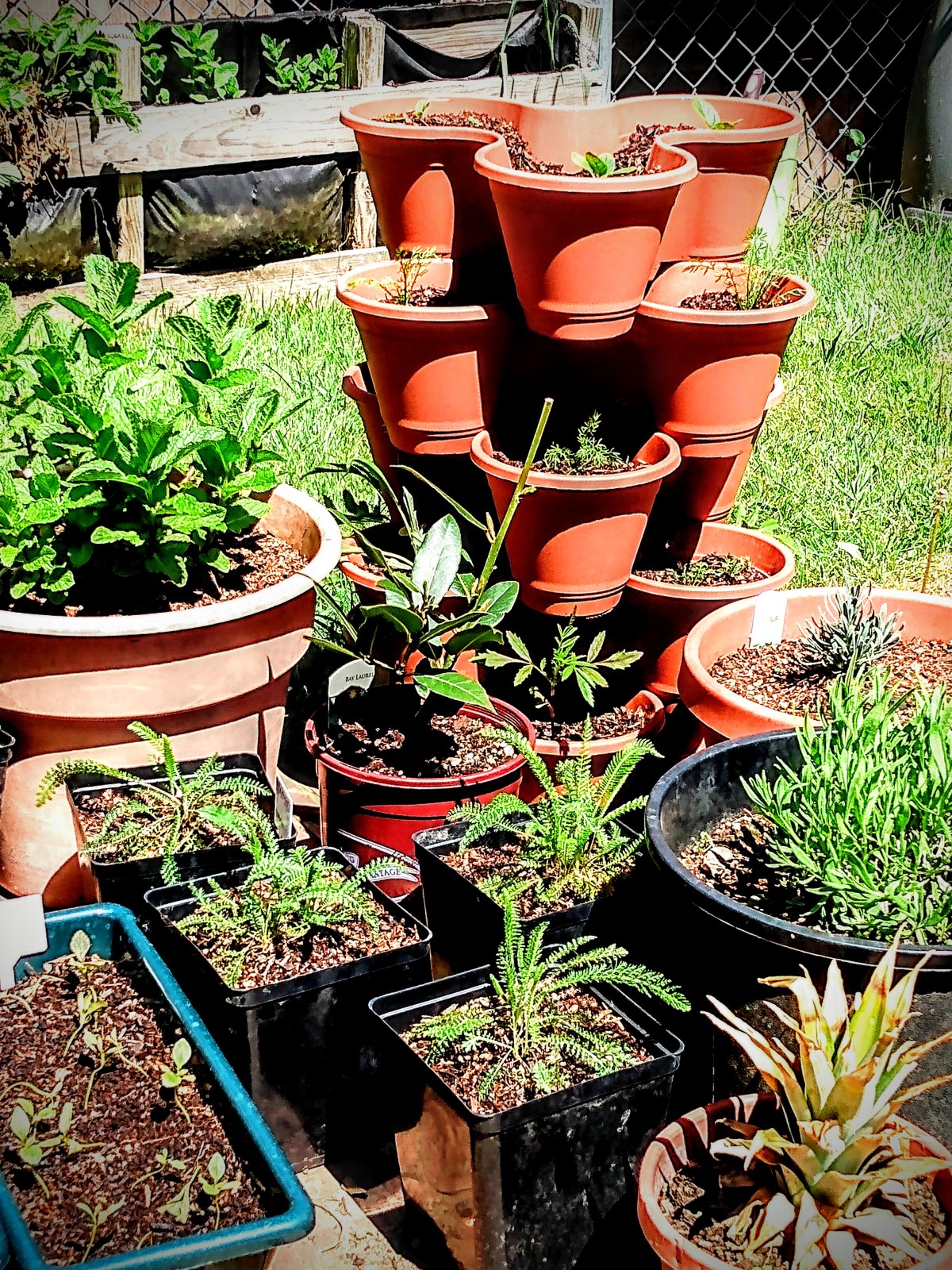
Growing herbs in repurposed gutters hung on a cyclone fence.

I know that this story may or may not show you specifically what you can give the hard to shop for person, but there is a valuable lesson here.

A good gift is designed to make a person feel loved because it speaks to how they most readily feel loved.

If you don’t know this love language, ask your person how they most feel loved. They will gladly tell you. It could be a tangible object or food that makes them feel loved. Or it can be a non-tangible activity, expression, or display.

A great gift is one that fills their love tank, but also doubles as a tool to enable them to share their love with others.

Container growing garden with DIY budget friendly or recycled components. Chicken wire trellis threaded through upright supports.

Maybe your loved one is not like this mother. Maybe they don’t show love to others by giving them things. Maybe they show love through acts of service. However their schedule is busy. By gifting them your time to do tasks for them or help them create time, this can free up time where they can show love to others by spending time with another person.

My encouragement to you today is to be inspired with a gift idea that doesn’t come from the shelf of a store. Yes, there are many store bought items that are amazing and meaningful. I want to strike the inspirational fire to give a gift out of love and seeing the other person at a core level. And also enable them to pass on love to others.

Advertisements

Right now we live in an interesting moment in history. It is an uncertain time for many families. But it is also a prime moment to celebrate others by giving to them in a way that shows them that you remember past conversations. Where you have heard and remembered things that could have easily been passed off as trivial information in the moment.

Let’s show our loved ones that we see them. And we celebrate them for who they are.

Again, Happy Mother’s Day!

publicdomainpictures.net

This post contains affiliate links to products. We may receive a commissions on products purchased through these links, but at no extra cost to you. This item link is to Amazon but may be purchased at local markets, and found at your local library.

If you are unfamiliar with Love languages, here is the book that started it all.

The Five Love Languages by Gary Chapman

Originally this was written for understanding your mate. There are several other editions available to meet other relationship needs such as children, being single, and in relationship of a military service member.

Processing…
Success! You're on the list.

Leave a comment

Advertisements
Advertisements
Advertisements
Advertisements