Clove One Clove All

The frost has come to my neck of the woods. And that means that it was time to get some of my fall gardening work done. I pulled out the wood chips that I bought on sale at the beginning of summer.

Originally the wood chips was supposed to go over our garden beds this past season, along with some drip irrigation, to start us on the path of water conservation. However a cold summer and life happening just kept pushing that task lower on the to-do list. Not that I’m sad about that. It meant that I had the materials to winterize my garden in a way that I was not planning almost half a year ago.

A lot of our projects turn out being out way of adding to our grow space without taking up more yard space. And this should be encouraging to you, because it means that you also have permission to make your own grow space one small project at a time. There really is no need to wait until you have farmable land to start growing your garden. Start in your urban or suburban area, one space at a time, building up what you can grow, however you can grow it.

We started off with one small garden plot with a blueberry bush, a few raspberry canes, and two different types of vegetables.

Today, I worked on expanding my grow space for garlic. Up until today I was growing garlic in one garden plot about 2 feet by 4 feet. And we wanted to grow more garlic to become self sufficient in that produce. We love it as a seasoning and main ingredient in the foods we eat throughout the year. But we’ve also come to appreciate it more as a food that is also a medicine. So it was time to grow more because we can control how it’s grown.

Advertisements

Growing Concerns

Something you may not be aware of is that in the US market most heads of garlic, in the grocery stores, are being imported from China. And depending on how you view your food choices, Chinese garlic may not line up with how you want your food to be grown.

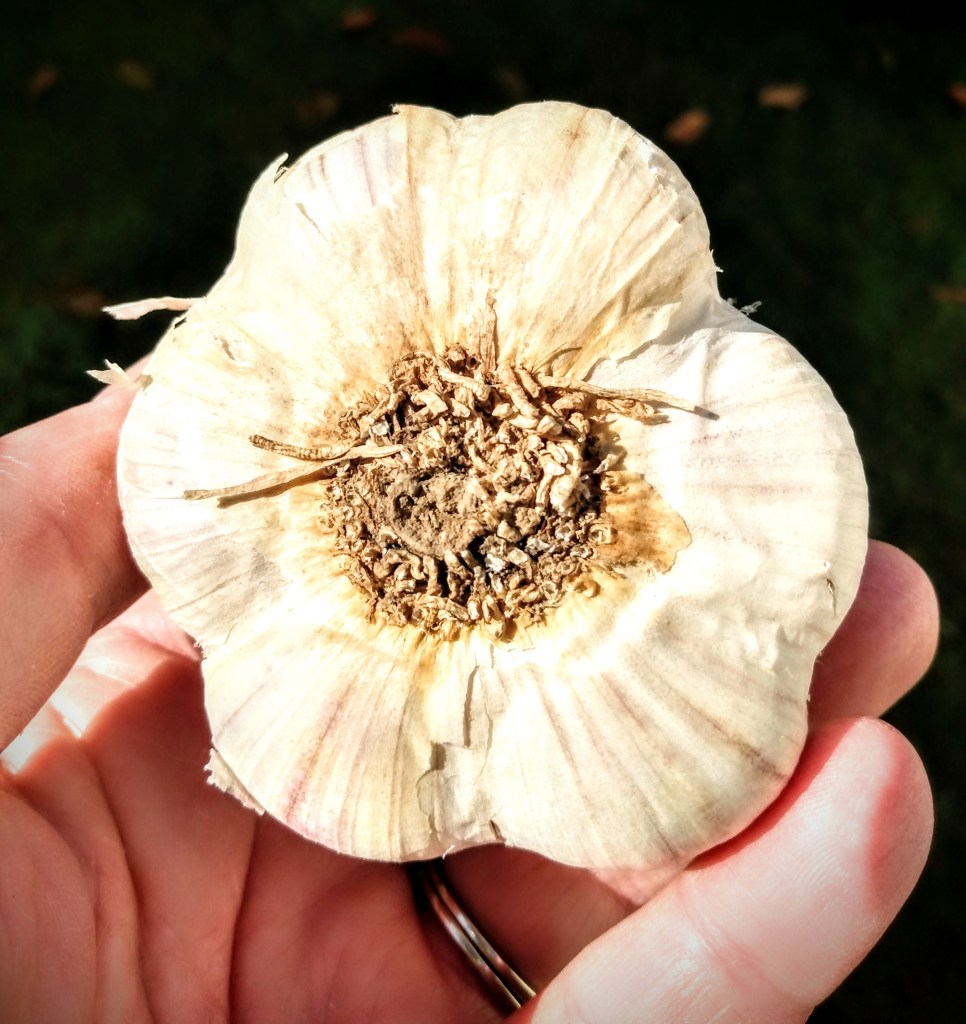
Note: garlic grown locally will still have some of the roots still visible in the bottom of the garlic head. Garlic that is imported from China, the roots are shaved off so that you have a smooth, flat surface where the roots should be.

Another concern with foods bought at US grocery stores is what you can find on the produce ID code. On the stickers placed on produce, you can learn what type of product you are buying. If the four digit number starts with a 3 or 4, it is conventionally grown. Pesticides have also been used on those products. (Dangers of pesticides can be seen here. Although this is a huge conversation and this is a brief mention in this post. But I do want to note that food is being brought in from less regulated countries.) If the number is 9, it is organically grown.

But there are other numbers to be aware of. A five digit PLU code starting with a 3 means the fruit was either irradiated or electronically pasteurized. (Dangers of irradiation can be found here.) A five digit code, starting with an 8, means that it was genetically modified.

These are just a few points of interest that overlooked that the average consumer may not be aware of. And growing your own produce gives you awareness of how your food is grown from start to finish.

Advertisements

Setting up Garlic Grow Boxes

A few months ago I had fixed loose boards by using a power drill and screwing the boards back to the frame. Had I not done that earlier, this is the time of year that I would normally to that mending job. But the best time to mend grow boxes is when you have one crop harvested and right before you put in the next one.

Make a Container You Will Love is how I start off all my new boxes. This time I reused one of my existing boxes. My onions didn’t do so well in it this past grow season, so I’m changing it up to see how my garlic will do here.

Before I put the garlic in, I needed to break up the compacted soil, remove some grass that had started to grow, and more importantly, mend the box. After three full seasons of growing, the liner in the grow box had started to rip away. So once the weeding was done, I pulled the black liner back up and staple it in place with a staple gun.

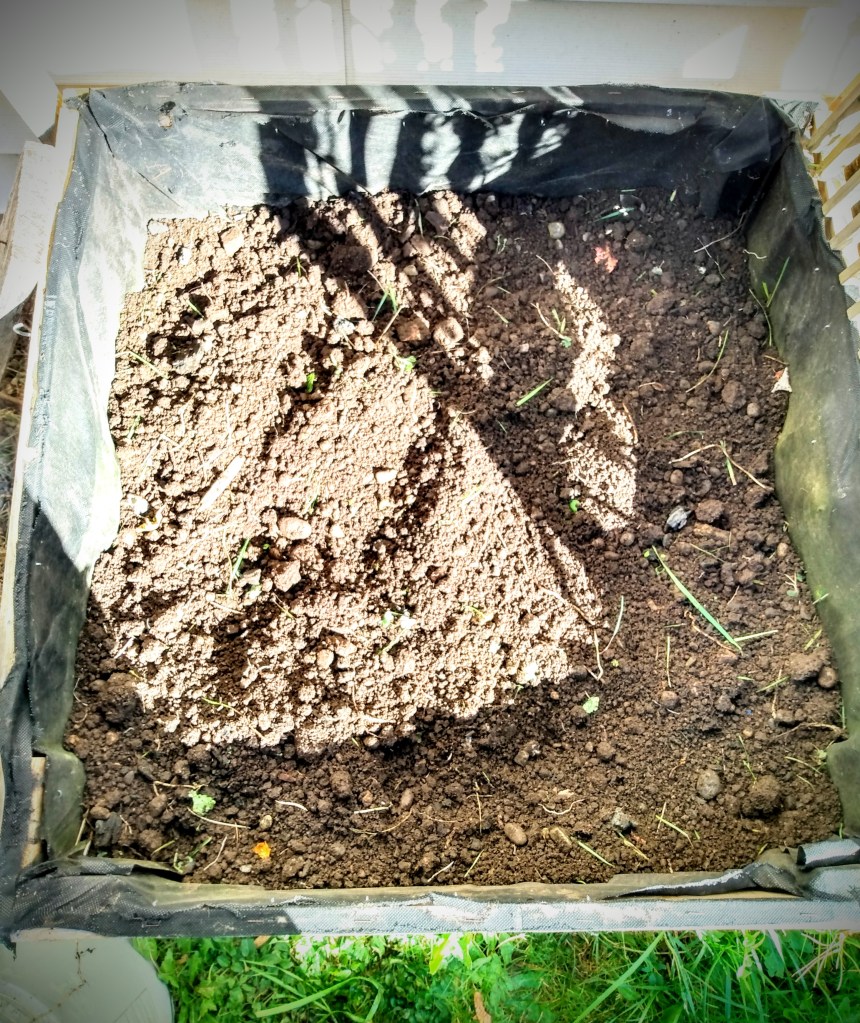
With the liner secure, this frees me up to really dig into the soil to fluff it up and move it around and break up all the compacting that has happened over the last couple years.

Once the soil was ready to go I reached for the new garlic that I ordered to plant this year. In this box I’m planting German Extra Hardy Garlic (a hard neck variety).

Earlier I mentioned looking at the roots of the garlic head. Here you can see the roots (trimming the roots is part of the curing process, but you can see the individual roots. This is what you want to see when you buy garlic).

Now that I’m ready to plant the garlic, I break the head down to individual cloves. Once they’re broken down, they’re ready to plant.
When planting garlic, the general rules are:

  • Plant the cloves 3″ below soil level
  • Plant each clove pointy side up
  • Plant each clove 6″ away from each other
  • Add an additional 1″ soil over your whole plot
  • Then add 3-6″ of mulch on the very top

I have modified and moved away some of these rules in the past. In the previous location that I grew garlic, it was in a sheltered garden bed next to the house. So I never mulched those garlic and they grew perfectly fine in my climate.

The cloves that I planted in previous years did well when the tips of the bulbs were 1″ below soil level. If I put them 2-3″ deep, they remained dormant until I moved the soil around and those cloves were brought higher up.

Advertisements

If, when spring comes, you don’t see the shoots of the garlic popping through the soil, then you may want to consider pushing away a little bit of the soil. But garlic is one of the produce that has been one of the easier crops to grow and there shouldn’t be problems at all.

Seeing how I’m growing new garlic varieties, and in raised beds, I set up the boxes closer to the “rules”. The only modification that I’m making is the spacing between each clove. As you see below, I’m offsetting the rows. By offsetting, this allows me to plant an additional two rows that I wouldn’t have had room with if I kept the cloves is a perfect grid like pattern. This is something I’ve learned from other gardeners and have applied with other produce that I’ve grown. And seeing how I grow with limited areas, this is a smarter way of using space and maximizing harvest.

Once all the cloves were placed where I wanted them (larger cloves more to the center of the box and smaller ones towards the edges–larger cloves are expected to grow larger heads) I put soil over the top, about an inch or two, and leveled it off.

Then to finish off the box, I topped it off with bark mulch.

This year I mulched my boxes because I have more containers that I’m using over the winter than I’ve used in the past. And since I don’t have enough greenhouse plastic to cover everything, I’m going to use the mulching method which is more commonly used. I do have a few small, new, boxes that I’m using this year that is away from a warm shelter. So I will be keeping an eye on these boxes in particular. If it looks like the soil is going to freeze over too much, the plan is to set up some carbon fiber hoops and surround the boxes with greenhouse plastic. (I have one variety of garlic and my ginger that I definitely don’t want to lose.)

Always have a backup plan!

One brief thing that I want to mention is to be aware of what kind of material that you are using for mulch. Always look at the Ingredients on the bag.

Most people are at least aware of looking on ingredient labels when they are going out to buy food from the store. Whether it’s a food allergy or just awareness that some gross things are being put into our food that effect our overall health, more and more people are beginning to take on this practice.

The same is true about what you put on your garden!

I bought this mulch, on sale, about 6 months ago. The original mulch that I was going to buy had a better sale. But when I found the ingredient list on the bag of wood chips I saw more than a handful of chemicals that were used in the product. It was advertised to prevent weeds from growing. But the reason why they could make that promise was because of what they were using in the wood chips. There was not just herbicide, but also chemicals that kept the wood color treated. Nothing of what I saw on that label reflected how I try to keep my garden as natural and organic as I can.

If you take a look at the picture above, on the left, you will notice that this ingredient list is listed with only one thing–aged forest product. For me, this was a better choice than the one that had well over 20 ingredients. I didn’t mind spending an extra $1 a bag when it meant that it fit a closer to my gardening philosophy.

Advertisements

Prepping an Existing Garlic Bed

Earlier I had mentioned that we’ve been growing garlic for several years, before we became aware of the wonders and beauty of different varieties. My earlier garlic bed is kind of funny because we grew so many different varieties in there that we have no idea what kind of garlic they are. That is other than Elephant Garlic. There’s no mistaking that variety with the others that we have grown.

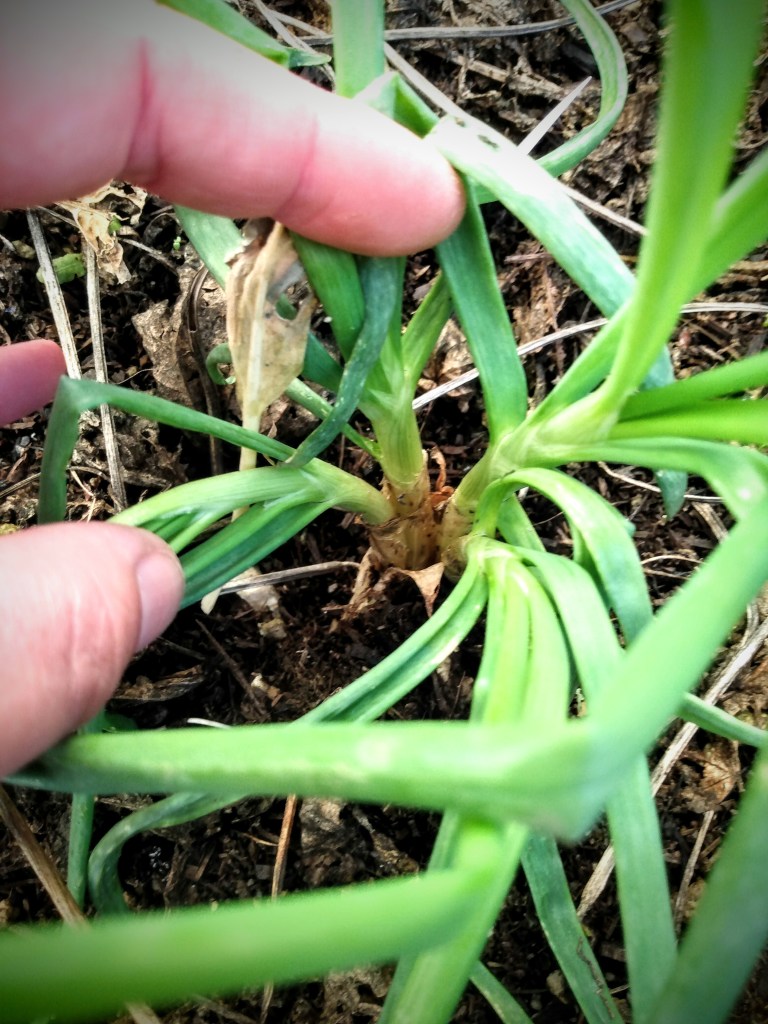
This past growing year, I let this garden bed go fallow (something that I will talk more about in the future). As you can see here, you will notice the shoots of the garlic already coming up.
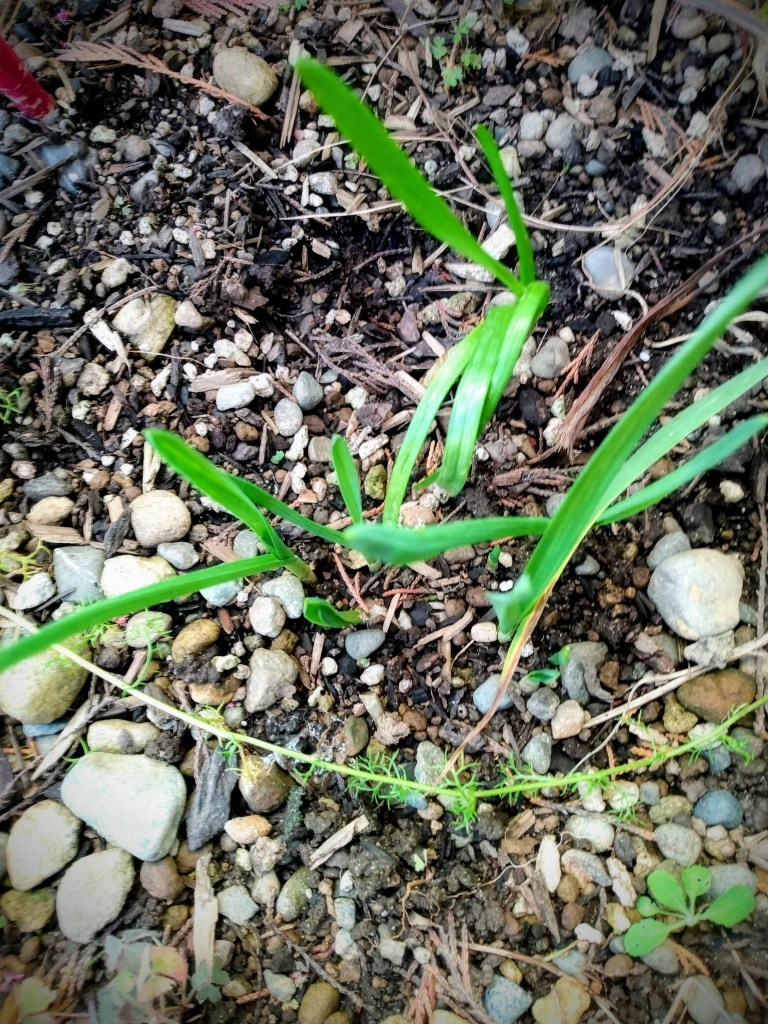
When I say that we had a crazy grow season, I’m not joking. We had two springs instead of a spring and a summer, so quite a few of my plants are off on their cycle. But these shoots are great when it comes time to getting garlic beds ready for the winter.

With how close these shoots are, my guess is that these were some of the cloves that had been planted too deep and didn’t get a chance to grow because other things were growing near them. With this bed allowed to go fallow, these cloves were able to have the opportunity to sprout.

Each year I take these clumps, dig around them to loosen the soil, and separate out the cloves that had at one time been a whole garlic head. Once they are all dug out, I loosen the whole bed and mix in some compost. Then I replant all the cloves with the proper distance.

I’m beginning to think that my garlic bed acts much the same as where you plant potatoes. Once you plant them there, they will keep growing back.

Advertisements

Another Theory for Garlic that Keeps Growing Back

When we first started growing garlic, we were told that we needed the garlic to go to seed before harvesting. So for a few years that’s what we did. We even tried to harvest the seeds. I just couldn’t seem to sync by time right with the seeds.

Then we learned that harvesting the scapes (the part that develops and grows the seeds) changes the flow of the plant. Instead of making seeds, energy is redirected to the bulb to enable the bulb to grow larger than it would if left to go to seed.

So my other theory for garlic growing back year after year, when I pull all the garlic that grows, is that the seeds that fell to the ground germinated and started to lifecycle of new garlic, not from planting cloves, but from seed.

Photo by Pixabay on Pexels.com

Closing Thoughts

The amazing thing about growing garlic is that it is one of the easiest things you can grow and least demanding. You can work a full time job and have busy weekends and still successfully grow garlic.

If you’ve wanted to try and grow something, I highly recommend garlic.

It is forgiving. And it tells you when it’s ready to harvest. Through the season the garlic grows a tall stalk. When it’s finished growing, the stalks will brown and fall over. And that’s not even talking about how many different resources are available if there’s a specific question you have about growing garlic.

If you’re looking for something new to grow or found that the garlic cloves you have in your kitchen starting to grow a green sprout, go ahead and plant it in some soil and grow your own garlic!
Leave a comment

Processing…
Success! You're on the list.
Advertisements
Advertisements
Advertisements
Advertisements

First Year With Grow Bags

For a few years now I have heard many of my growing friends sing the praises of grow bags and how wonderful they are. Not to mention that if anyone does not have land to grow a garden, this is a great substitute for growing on decks and patios. So I put it to the test.

My 2023 potato growing season, I put my raised bed (which I’ve grown potatoes in for the last four years) vs. 10 gallon black grow bags to see how they stacked up against each other. And this was great timing for this challenge because I wanted to up my potato crops to see if I could get that produce off of my shopping list and on my self sufficiency list.

Below I will tell you the results and my thoughts on the process. But first I wanted to start off by showing how I set up my grow bags. A lot of people set them up with just putting in potting or raised bed soil. I wanted to go a different route because with my family we try to go with natural fertilizers that fall into the organic farm spectrum of growing.

Setting up the Grow Bags

I set up these grow bags like I do with my brand new raised beds. But I structured it differently, aligning with how I’ve seen other people use their grow bags for growing potatoes. Those people layer their bags with soil on the bottom and top and hay in the center. The rumor is that this hay section allows the potatoes to grow large because they have less resistance from soil, which can compact down around the tubers. Keeping this in mind, here is how I layered my grow bags (from bottom of the bag working up):

  • Raised Bed Soil
  • Compost
  • Pine fronds
  • Small Pine branches
  • Pine Fronds
  • Compost
  • Raised Bed Soil

This spring we had pruned back our pine trees. Normally these go into our compost pile. But as you can see below, these fronds had new growth tips on them, which have the most vitamins available. I didn’t want those nutrients to go to waste. So I separated out the softer fronds from the more rigid branches. As you see below.

These branches were then cut down to fit inside the grow bags without puncturing the sides.

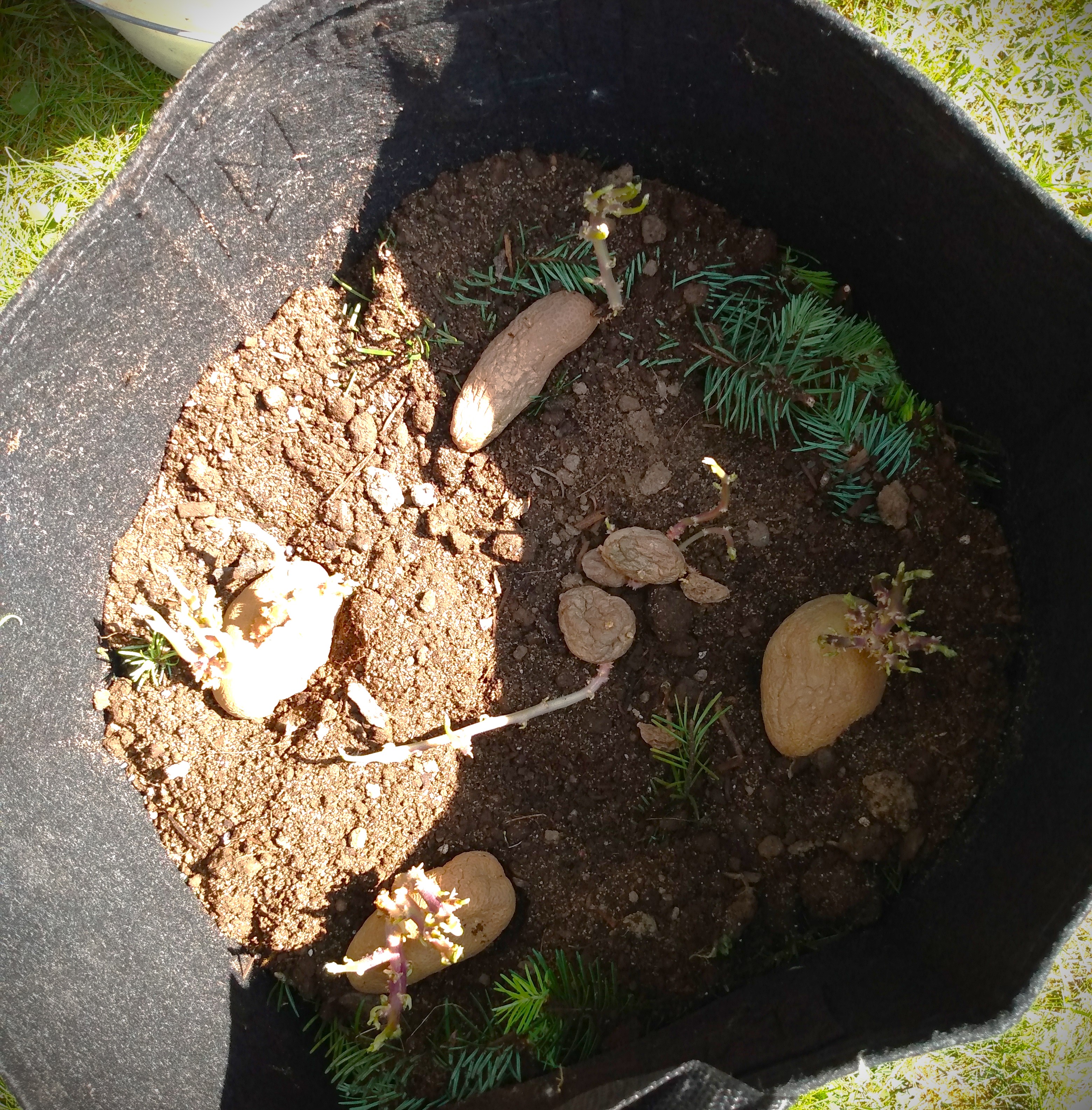
With all my components prepped for work, I built up my grow bags. Right after I laid down my pine layers, I put down a fine layer of compost to set my potatoes down on. Once I placed my potato seeds down, then I covered them with the layer of compost and final layer of raised bed soil.

The pine branches and fronds were added primarily for slow release nutrition for my potato plants. But I placed them in the grow bags, like other growers place hay, because the thick layer of fronds (theoretically) gives them the tubers the ease of growth without the soil compounding around them from watering and rains.

To finish this experiment, I placed the grow bags near the same area that my raised bed potatoes were growing so they could receive the same amount of heat and light.

Advertisements

Sweet Potato Side Note

I haven’t yet harvested my sweet potatoes. But I prepared their grow bag the same way as my potatoes. I’m trying to give them the most time to grow and the vines haven’t died back yet.

That being said, the sweet potatoes are a first time experiment because I haven’t grown them before. So I may post about what happened this year, or I may wait to talk about them until I gain a few more seasons of growing them. But I did want to post this picture of my rooted slips before I planted them.

Out of everyone I watched in videos to learn about growing sweet potatoes the one bit of information I wasn’t able to see was what a good rooted structure looked like. This was mostly because those growers cut from harvesting slips to already having them in the ground.

So if you’re like me and you want to bench mark to compare what you’re growing next to, here is a picture of my slips before I put them in the grow bag.

The method of growing slips that worked best for me, was sitting the bottom (fat) end of the sweet potato in a glass of water. This method gave me strong slips about a month before the method of laying the sweet potato on its side in a container of soil. Everyone I watched swore by the soil method, but I honestly found the water method better for me.

The lesson for this side note: when first starting to grow something for the first time, try a few different methods at the same time to see which one provides better for you. What works for one grower may not work for you. And vice versa.

Advertisements

End of Season Results

It took a while for me to get to this point because even though the potatoes were started at the same time they didn’t finish as the same time.

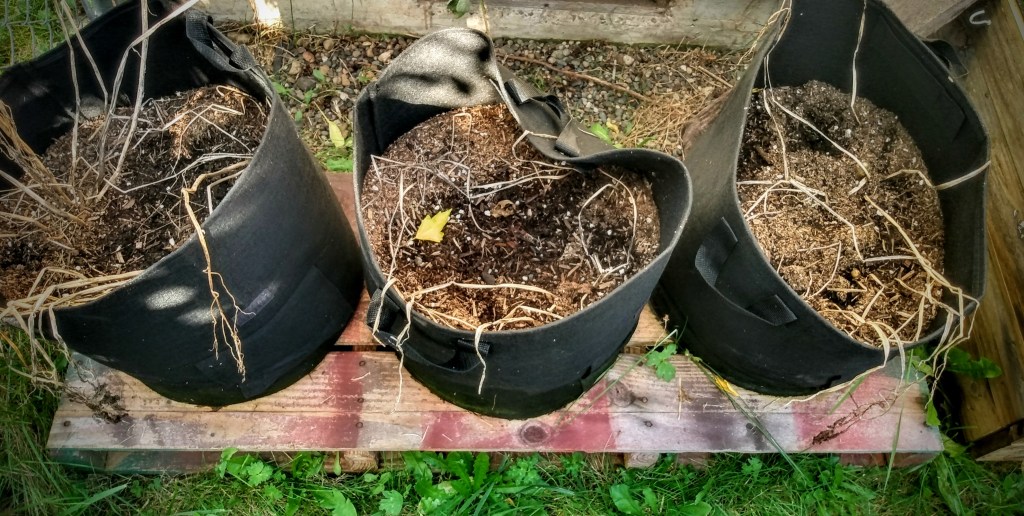
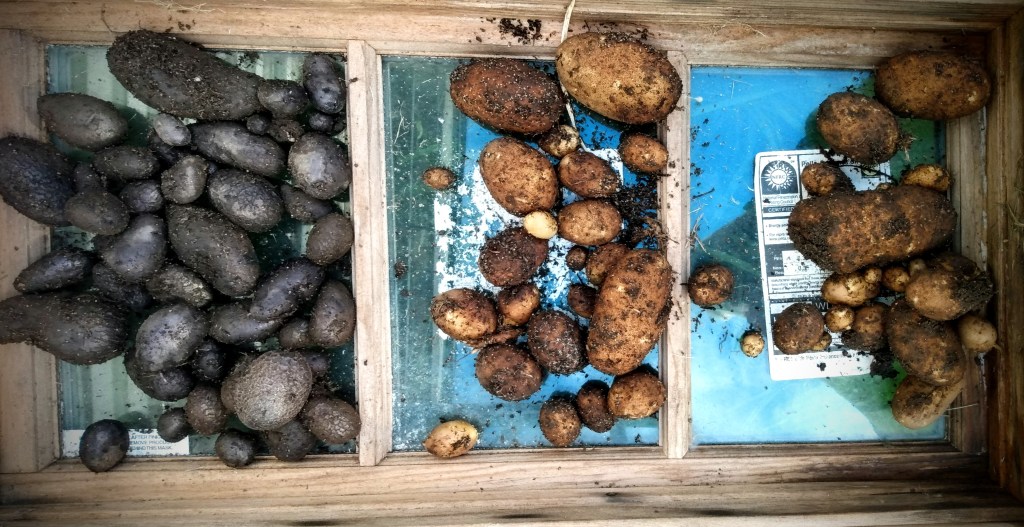
Starting from left to right, the first container I grew purple potatoes. The middle and right were my russets that had sprouted on me over the winter.

My purple potatoes grew seed flowers. I allowed the flowers to grow to see what that process was like and if I could collect the seeds. However my blossoms kept falling off. So I don’t know if the flowers were being trimmed by little garden helpers or if the flowers were falling on their own. Needless to say that I didn’t see how the seeds grow or if the plants even grew them. As soon as I learn that process, I will share that information with you. But for now I have nothing more to say other than flowers grew on the plant portion of the purple potatoes.

And true from those I watched from those who did have information on the flowers, when your potato plants grow flowers, it does delay the whole growth cycle. My two russet bags never grew flowers and the plants started dying back maybe 6 weeks before the purple potatoes did.

I wanted to keep these grow bags to use in the future. And since I didn’t want to lose the velcro integrity on the bottom, I didn’t use that “door” at all. Instead I brought over my wheelbarrow and dumped my bags in one at a time.

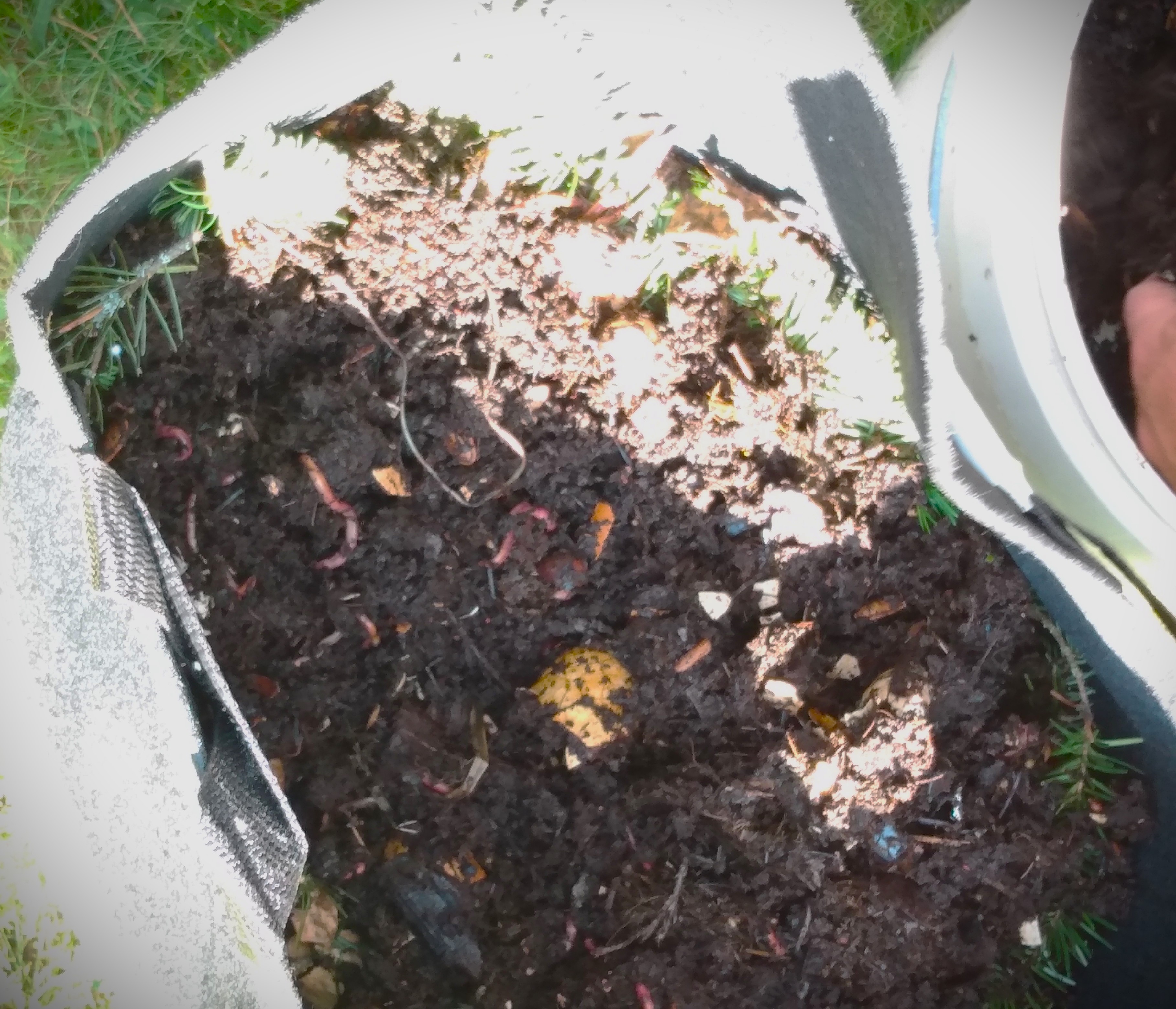
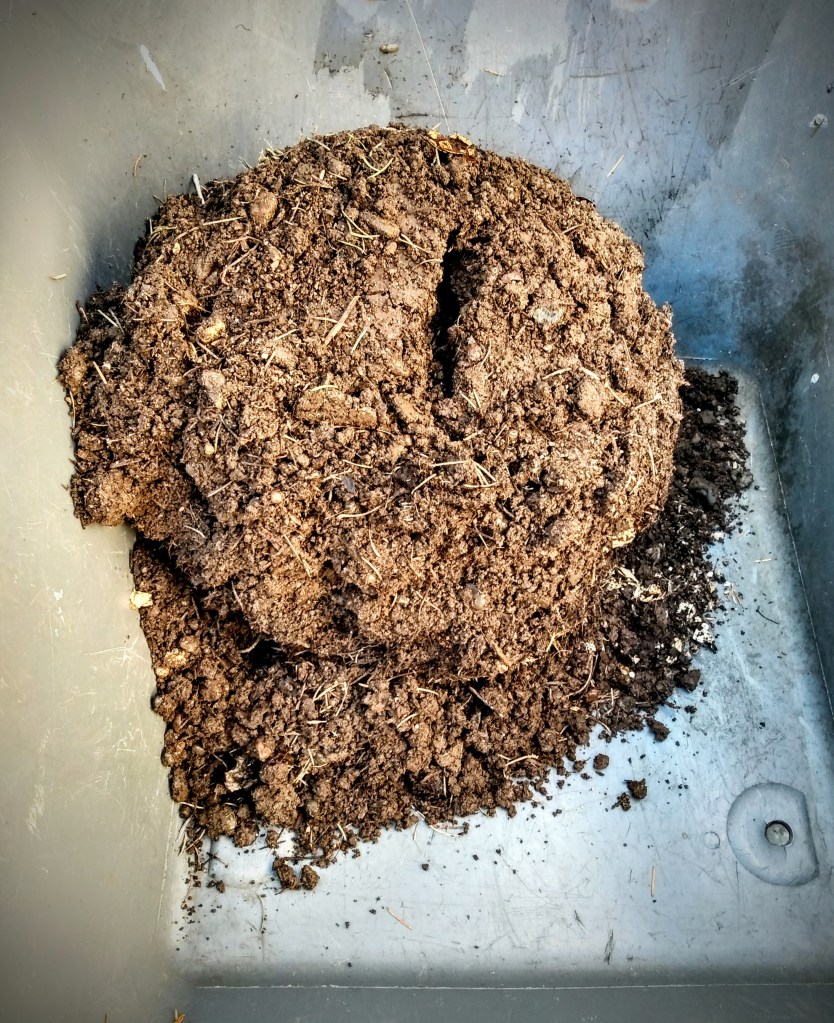
As you can see here, the soil still compacted. So even when you do take measures to prevent compacting, gravity is still going to work. This was the bag from the right side. I didn’t add any sand into this bag and that might have what made this one compact more than my other two bags.

Originally we had added sand to our compost for bags two, three, and sweet potatoes, in order to make the compost stretch between all the bags. The sand did keep the “soil” of the grow backs more loamy than the one that was straight compost.

Having seen what sand did for me in these grow bags, I will more than likely continue to add some soil with the fresh compost to prevent a clay like clumping from beginning to end of season.

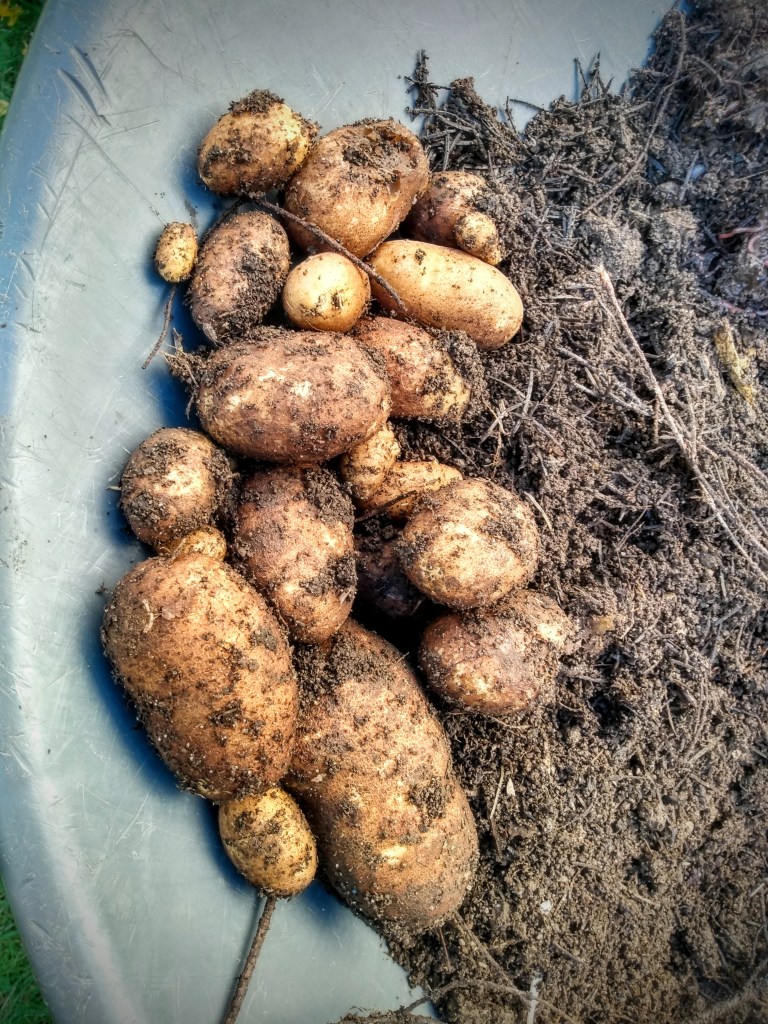
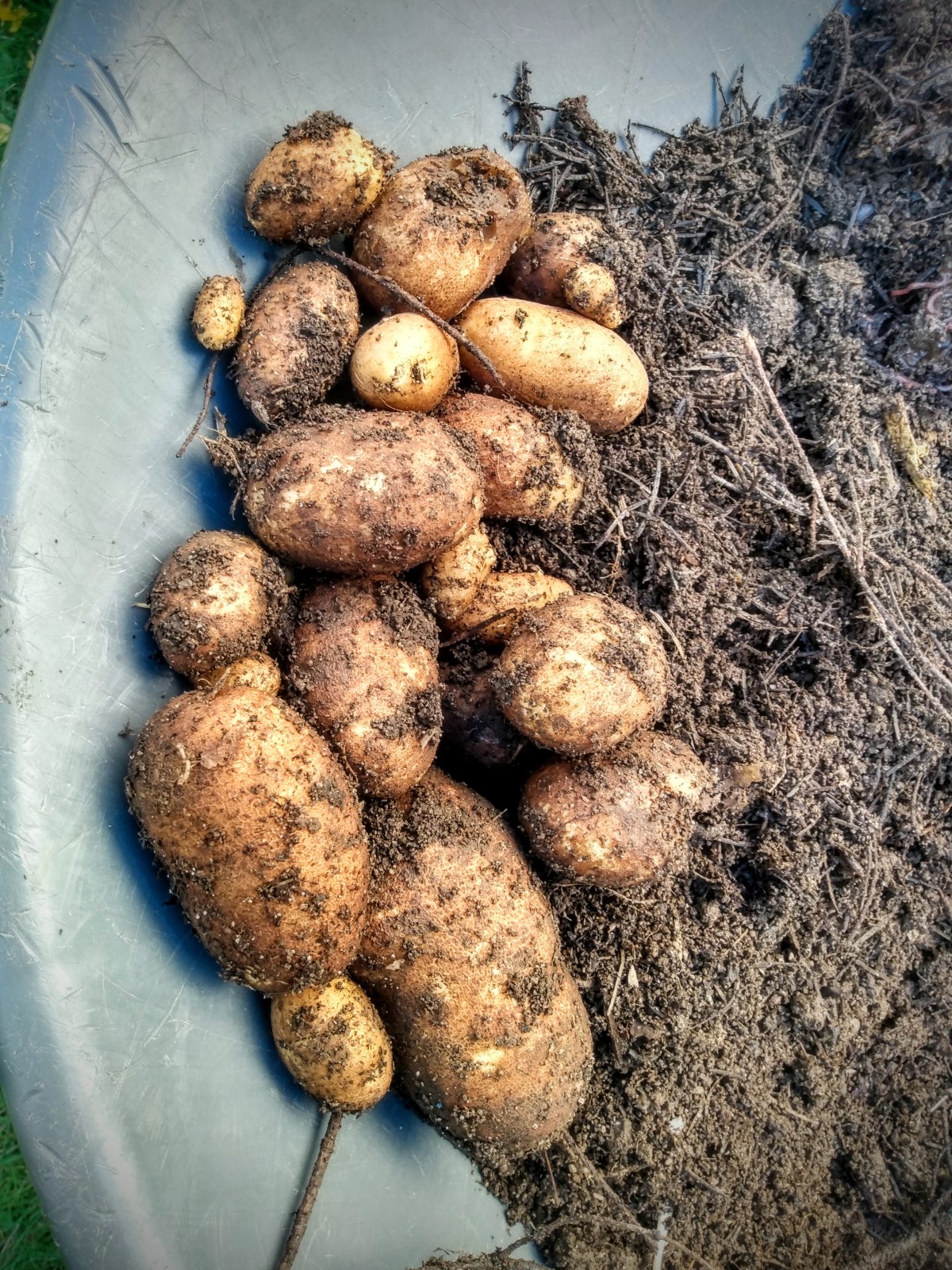
That being said, if you look at the picture with the potatoes that I harvested from the first bag, you will see what didn’t compost down during the grow season. So if you’re worried about adding sticks into your grow bags, you can see that they will break down over the course of the season.

This was my first time growing purple potatoes. I chose them for some fun colors to make dinner with. And there’s the fact that dark purple fruits and vegetables have a higher antioxidant property and more vitamins and minerals than same fruit/veg families that are lighter in flesh color.

I wanted to make a quick mention on them, because as soon as I upturned the grow bag and started troweling through the soil I was asking myself, “Where are the potatoes?!”

As you can see above, these beauties hide with the soil. The way that I identified them was that they had an opal like sheen to them. So I pushed the soil to the side looking for anything that didn’t have the same matte finish as the soil.

I’m super excited for these potatoes to cure so that I can see my kids’ reactions to having purple potatoes for dinner. That and even more to the point, I want to eat something colorful that I haven’t eaten before!

Advertisements

Grow Results

Back this spring, I wasn’t too sure what I expected. Obviously I expected potatoes, but I didn’t know how these grow bags were going to work out.

Here are the results of what each bag grew, in the same orientation as the bags were placed in the above picture; purples on the left and the ones that grew in compost/sand mixture on the right and middle.

For the russet potatoes it looks like the number of potatoes were not limited by sand or no sand added. Even though I did get larger russets that grew in both bags, it seems like I got a better return on size by adding some sand to the compost. (Both had the pine branches and fronds, the only difference was sand in the compost.)

The purple potatoes outperformed the russet potatoes in quantity and overall size. This surprised me the most.

What I learned between the different varieties of potatoes is that I need to get some more different varieties and try them out to see if there are other potatoes that will grow better for me, like the purple ones grew better for me.

Side Note: red potatoes don’t grow well for me. Below you’ll see a single red. Not everything has to grow well for you. Half the fun with growing your own food is seeing which varieties grow well for you and which ones don’t. As it is, even when my neighbors grow the same vegetables as me, there’s often times variations in performance even when we have the same microclimate. But when you select and grow what grows best for you, you not only put food on your table, you have something to exchange with your neighbors who grow something else better than you.

Advertisements

One Final Comparison

As I mentioned at the beginning, I grew potatoes in a raised bed and the grow bags. I wanted to see the comparison on how things grew for me. Before I give the results, I did want to mention that I couldn’t go through my entire raised bed because I had a lone tomato plant that I couldn’t find any other home for, so I planted it in the corner of my raised bed that had a gaping hole. Once my potato plants started to die off, my cherry tomato plant took off and outperformed all of my other tomato plants. So out of respect for that super grower, I tried not to disturb its roots too much. That means that there could potentially be some potatoes under the tomato plant, but I couldn’t thoroughly check there. As it is that tomato plant is still producing even though I had already harvested and uprooted all my other tomato plants.

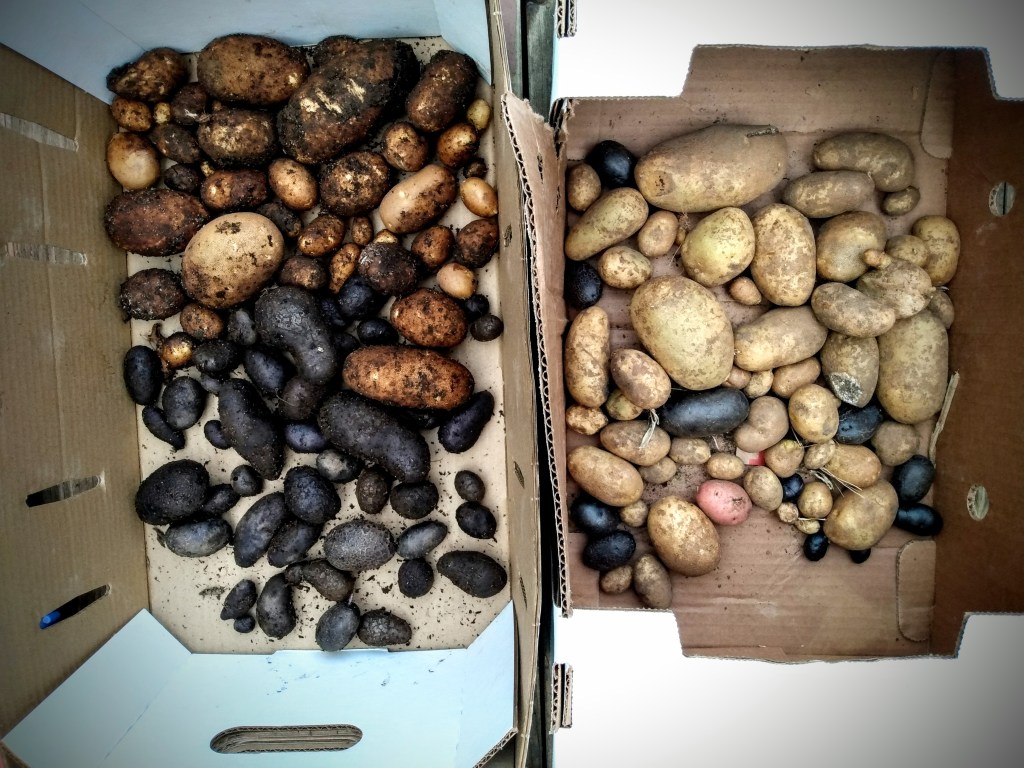
Here are the pictures of my grow bag (box on the left) and my raised bed (box on the right), taken side by side.

The raised bed might have had a couple less seed potatoes than I used in the grow bags, but we’re only talking about somewhere around a 2 plant difference if that is the case. So as far as quantity of potatoes go, the grow bags seemed to have done better. This result could be because the bags had the extra compost and pine trimmings that the raised bed didn’t have. But to be fair, the raised bed had seed potatoes planted about two months before I planted the grow bags, so the pine trimmings weren’t available for those plants. (The raised bed was harvested about two months before also.)

The sizes of potatoes seem to be about the same. But my largest potatoes did come from the raised bed.

I’m actually glad that I took the chance on the grow bags for my potatoes. I definitely think that it is a viable option for people to use if growing crops for your family is a challenge or not possible because you don’t have land to use to grow. I’ll post an affiliate link for the grow bags that I used below. And if you’re interested in using grow bags next year, but space is limited, if you can find a space to fit a 5 gallon bucket, you have the space to use a 10 gallon grow bag (which is slightly bigger, but you have a general idea of how much space you need.)

Things to remember when growing in a grow bag is that you will need to have a way of feeding your plants. Soil will have nutrients in it. But it won’t last forever. Compost is always a great option for feeding your plants because you’re putting nutrients back into your ground or plants that would normally just be sitting in a landfill, it’s an inexpensive way of feeding your plants, and you know or have more control with what is going into feeding the food you’re going to eat. If compost isn’t an option for your family, choose a fertilizer and/or compost product that works for you. The fewer chemicals that you choose to feed your plants means the fewer chemicals that enter the food that you eat. Take the time to read the ingredients label. If you can’t pronounce what you are reading, you probably don’t know what that ingredient is, and the chances are high that it’s something that you don’t want in your body.


Hopefully seeing this little adventure of mine has helped fill your curiosity of grow bags or give you another option that you might not have had before when it comes to you growing food for your family in a very limited space. And whatever you can grow means that you’ve saved that much money to apply elsewhere in your family budget.

Products I Use

This post contains affiliate links to products. We may receive a commissions on products purchased through these links, but at no extra cost to you. These items listed here are from Amazon but may be purchased at local markets.

In case you need to grow inside, LED Grow Light Strips for Indoor Plants, the red light gives you an option for growing plants that bloom.

Leave a comment

Processing…
Success! You're on the list.