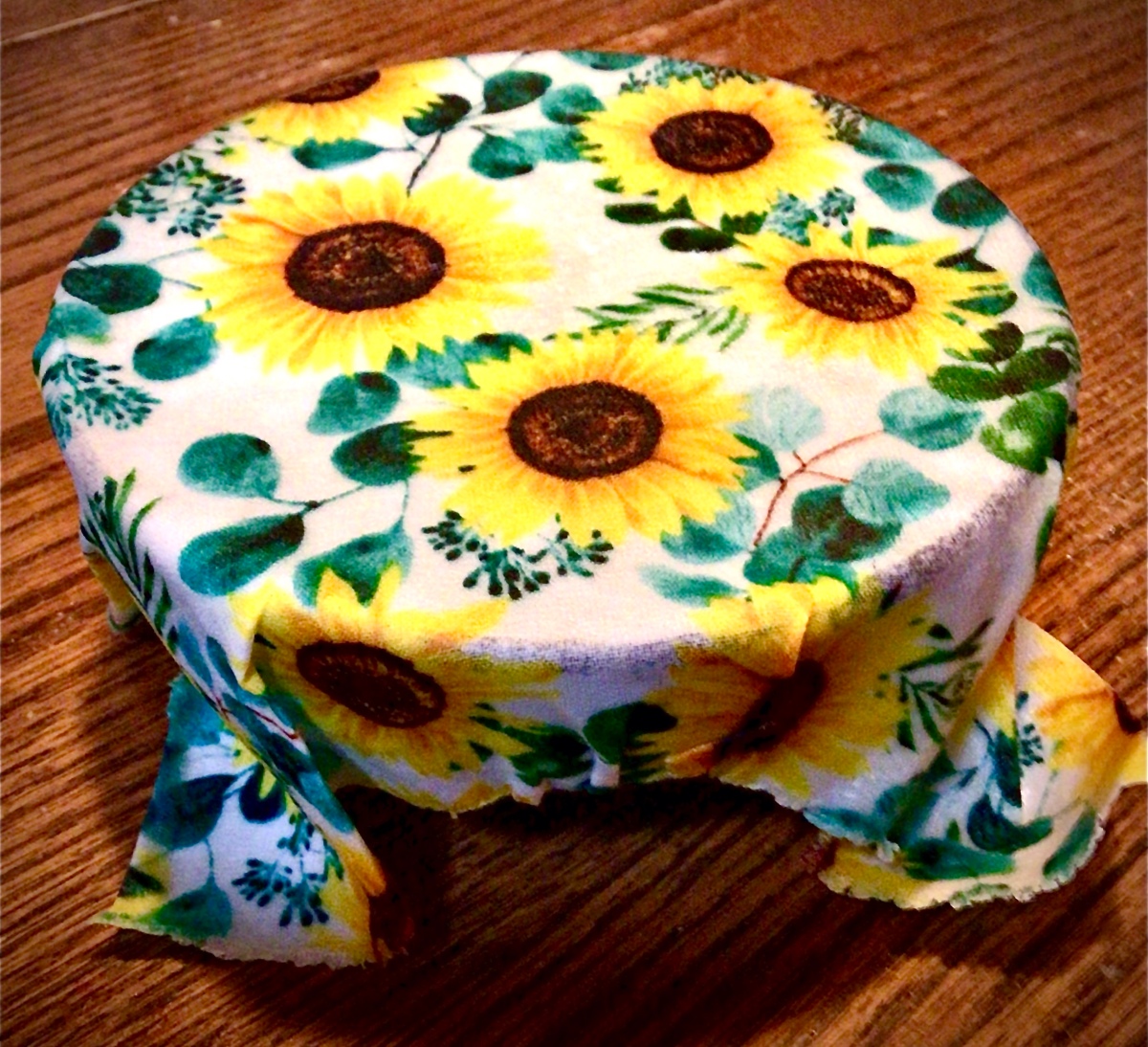
Make a Reusable Food Wrap

This past week I just had my application to a local Maker’s Market accepted. (If you’re unfamiliar with Maker’s Markets, think Farmer’s Market with a little more lean toward the things that you make.) One of the products that are on my list to sell is reusable beeswax wraps.

I’m super excited to present this item, not just at the market but also here because this is a traditional item that was used before the convenience of plastic that will it doubt come into popularity again.

There are so many reasons why you might be interested in how to bring a reusable wrap into your home. Maybe you’re budget is tight and $5-20 saved in a grocery trip means something to you. Or your family could be one who is looking to reduce the amount of plastics that are used and thrown away in your home. Perhaps you or a loved one is facing a health moment that requires you to reduce the amount of chemicals that are used in your home. Or maybe there is another reason that stands out in your mind.

Beeswax reusable wraps can meet those needs and many others because it’s made from very few ingredients; 100% cotton or linen cloth and beeswax are the two items that you have to have to make this. I also include pine resin (for additional tackiness) and jojoba oil (for flexibility that prevents the wax from cracking)

Originally I wanted to make these wraps for my family because half of our glass bowls do not have lids. And all of our lid bowls always seem to be in use and unavailable when we need something with a lid. So I have more usable bowls, but I can also meet other needs in my kitchen: my homemade bread won’t dry out on the cut end, less chemicals are being transferred into our left over foods, takes up less space than Tupperware, and easy enough that my kids can use them.

While listening to others who’ve been making these for years, I learned about a few other beneficial features. When the wax wears thin, these wraps have not met the end of their life. You can reapply the wax (or wax/resin/oil combo) and 5e wraps are just like new. But if the cloth itself becomes damaged, the wrap can be composted because there are no synthetic materials that are used.

Advertisements

How to make or revitalize a previously used wrap

There are a few different methods of making these. So please don’t think there is one way. Find a method that works for you and makes sense with the resources that you already have available in your home.

The oven method. You place your cloth on a cooking sheet, with your wax of choice (plain beeswax or a beeswax combo) scattered across the top of the cloth. Your cooking sheet is placed in the oven, around 200 degrees F, until the wax melts. You then use a brush and make sure to spread the hot wax evenly across the cloth.

I did not use this method because none of my cooking sheets have a lip on them. So I would end up having wax in the bottom of my oven. And I didn’t want to buy new cooking sheets just to have them for crafting. I don’t have the space to store them or the money to buy them. So I went with a different method that I already had the resources for.

Advertisements

The water bath method: I used one of my small saucepans and filled it halfway full with water. I pulled out a hot water safe container to put my wax combo in, and then set that inside the saucepan. It took a bit of time for the water bath to melt my beeswax and pine resin, but that step was a success. What didn’t work for me was pouring the wax combo on the cloth or dipping the brush in and brushing the fabric. This method was a fail for me because my brush clotted with the wax as it cooled. There was no way to warm that up to turn it back into a liquid or to clean my brush. I know some homesteaders who love using a brush when making beeswax wraps. I’m not one of those people. But I did try it.

The Ironing method: I’m going to walk you through the steps of this method below. This one takes a few additional manufacturing items to make. But once I was set up I didn’t have to prep anymore. And I kept making wraps until I ran out of one of my ingredients. This is not a zero waste method. However it is the method that minimizes the loss of wax ingredients and is the easiest to clean up.

Prepping for the Iron Method

Before setting up my work table, I needed to get my ingredients ready.

I buy my beeswax from local bee keepers. That means I generally get the wax in a brick form. And whether I’m using the wax for wraps or other products I make, I have to great it down to make the melting process a little quicker.

Foraging pine resin is on my to-do list. I have not done that yet. So I purchased pine resin. It arrived in a bag of crystalline chunks. Resin takes a higher heat to melt than beeswax, so I needed to crush the resin to minimize its melt time. The quickest way to do this is put some resin in a paper bag and hit it with a hammer until the resin becomes as small as you want it. (Powder is ideal for this method.)

What I learned when crushing resin— when you hit it properly with a hammer, the resin is going to break through a paper bag. If you use the wood handle you keep the bag pretty much intact, but the resin is let going to turn all the way into a powder. But if you use the side of the hammer (the largest flat surface of the metal portion of the hammer head) you maximize the amount of resin turning into power with very little resin escaping out of a crack in the bag.

With the ingredients ready to go, the next step is to set up your work station. Half the videos I watched had crafters working on exposed countertops. I DO NOT recommend going that route. The short story is that the wax combo got on my table. Fortunately I have my tricks to lifting wax off of my table. And I will not be doing that again!

So learn from my mistake and find an old towel that you do not mind using for crafting purposes from here on out. Shop rags are amazing for this. I just didn’t have any that were large enough for me to make my Rage wraps on top of. So I decommissioned a towel.

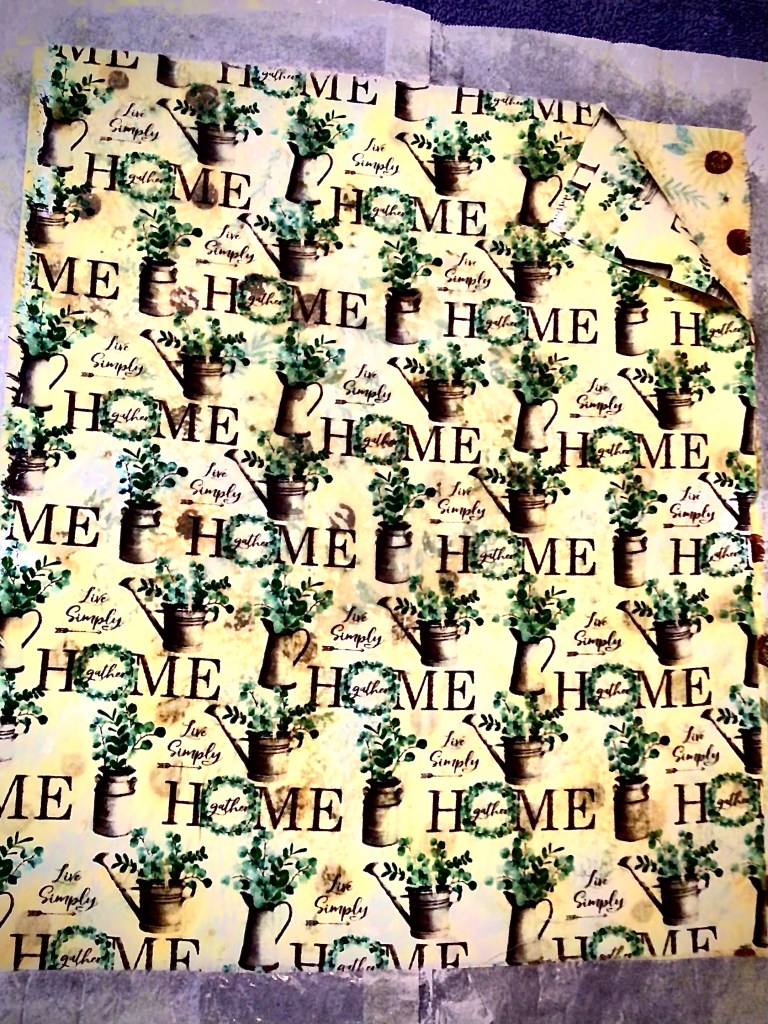
Since I knew I was going to work on my large wraps, I grabbed that size of cloth and set it on my towel. From there I sized out 2 long sheets of parchment paper with a few inches of over hang on all sides. (Your wax is going to spread and needs this buffer to keep the wax off your iron.)

The wax is going to slide through the sheets of parchment. To prevent this I taped my sheets together. This time I used a packing tape. And once I taped the parchment together, I flipped it over so that the tape side was down on the towel.
I placed the cloth that I’m making the wrap out of on top of this bottom sheet of parchment. Then I made a second double sheet of parchment to place on top of the fabric. This time I kept the tape side face up. And to keep the iron from melting this tape, I placed one single sheet of parchment over the tape.

Now it’s time to make a wrap!

Preheat a clothing iron to the highest/linen setting. Even if you’re working with cotton, don’t be afraid to use the highest setting. The wax, and especially pine resin, needs the heat to turn into a liquid and for you to work quickly.

In a cup I weigh out equal parts of beeswax and pine resin. (If you’re making just beeswax, there’s no need to measure the ingredients unless you figure out the precise amount of wax you need for the size of cloth you’re working with.) Then sprinkle your ingredients all over the face of your cloth.

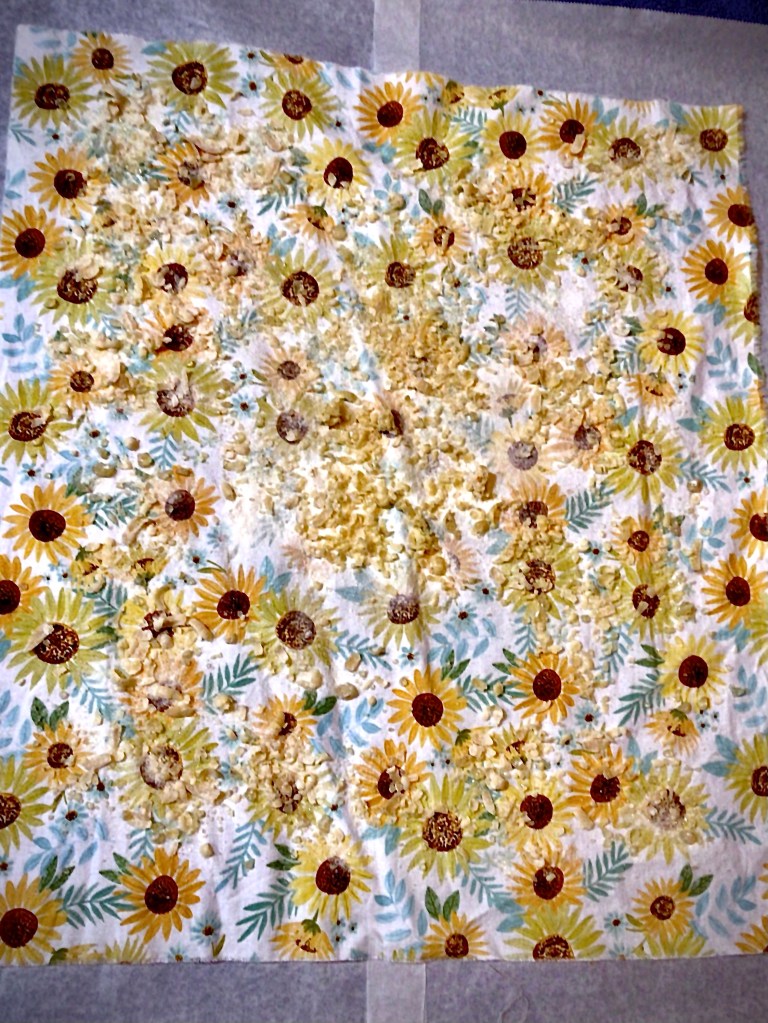
Cover with the top layer of parchment paper and start to iron.

If you are using resin, and used some small shards instead of all powder, you will want to show patience up front here. Set the iron down on top of the stones and wait while the resin melts. If you immediately glide your iron back and corn, the resin shards are going to rip the parchment and then all the waxes are going to end up on your iron face.

As you can see in this middle picture, below, you will see your waxes through the parchment. This is useful because you will get a general idea of where the wax is in comparison to the edge of your fabric. Work in the center and push the wax out to the edges.
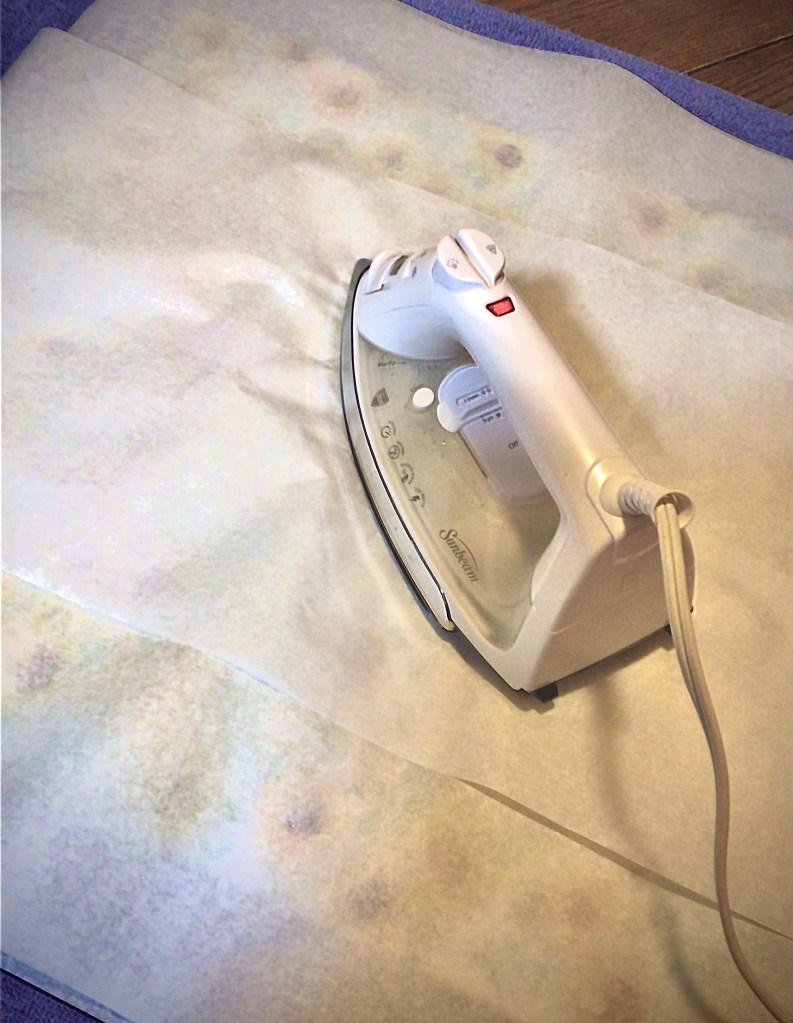
There will come a moment when you think you have the wax spread over all the fabric. Lift the parchment and take a quick leak. No matter if you’re working with light or dark fabric, you will be able to notice where I here are patches of fabric that have not been covered with wax. In the third picture above you will notice the white fabric that has obviously not been covered by the yellow tint of the beeswax.

If there are still pools of was on the cloth, lower the parchment paper and use the iron to push the wax over to those blank spaces. If the fabric seems a bit “dry”, with no extra wax to move around, add a little bit more wax over the dry spots, lower the parchment, and melt the wax into place.
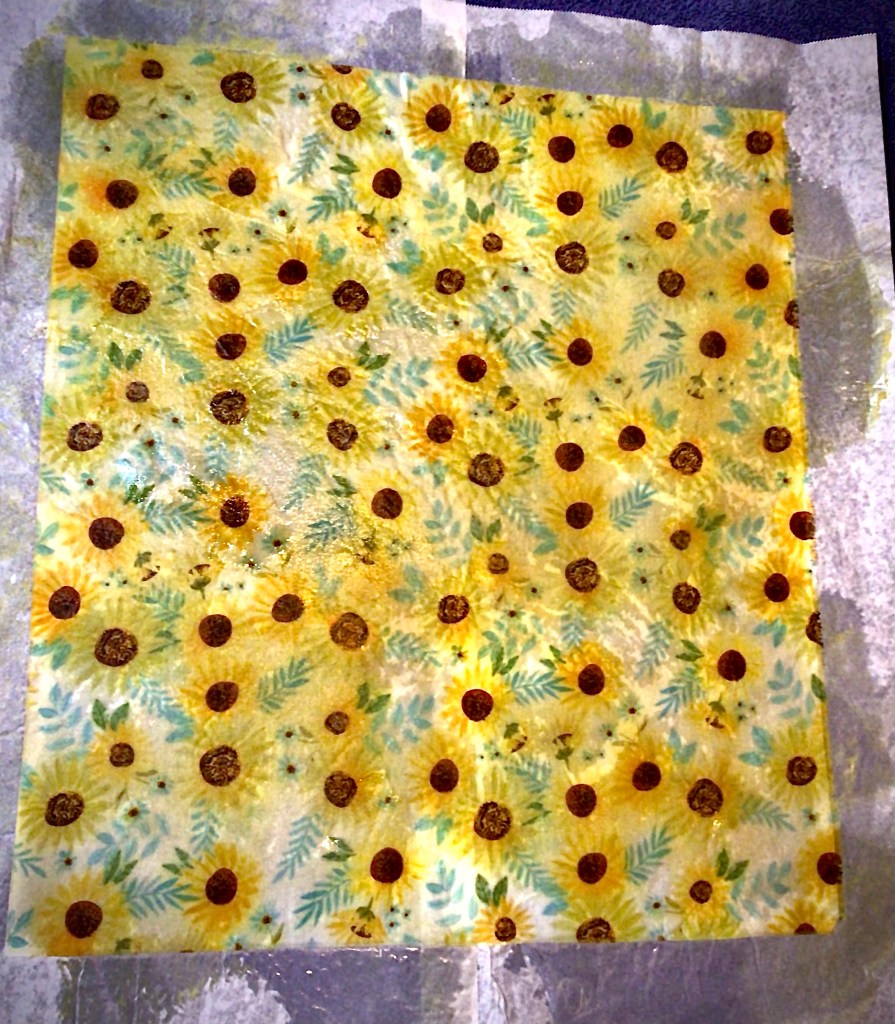
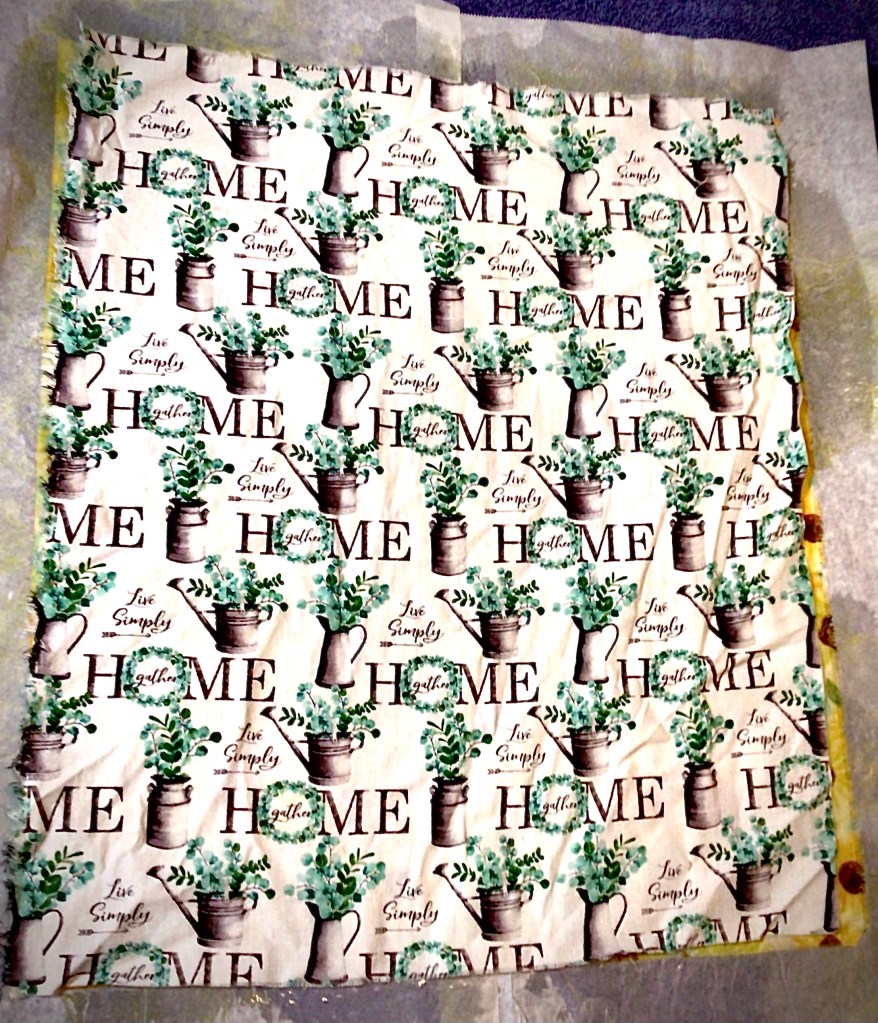
Once you’re satisfied with your coverage, take a look at the amount of wax present. You want just the right amount where the fabric has a matte like finish too it. If it’s shiny or has pools of wax, you will want to absorb that excess wax off. You can do this by placing a new piece of fabric on top, lowering the parchment and ironing over the entire surface of the new cloth. Once all the excess wax has been absorbed, you can pull out the first cloth (and leave the second cloth to add more wax to any dry parts.

When a cloth is finished, pull it free from the parchment papers, hold it by the corners and wave the cloth back and forth. You want to cool down the wax before you set it on something to finish drying. (I use chair backs.)

A Pine Resin Problem to be Aware of

One bit of information I didn’t hear from anyone is a potential problem to look out for when working with pine resin. If there is a spot where the resin is not in equal parts with the beeswax, it’s going to act like glue to the parchment paper.
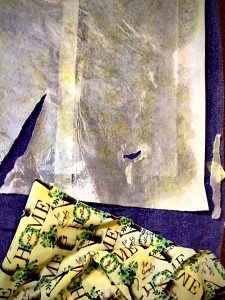
The first sign of this is when you go to lift the parchment paper and it feels like it’s locked in place. You didn’t do anything wrong and nothing is ruined. All you have to do is iron over that spot. When the resin is hot again, you can lift the parchment paper and it won’t be stuck anymore.

If you try to force the peel, the parchment will rip. And if you’re not done making wraps, you will want to take a new sheet of parchment to cover the holes and rips. It’s just easier to get the resin hot again and then peel the parchment back in one piece.

Caring For Your Reusable Wrap

Everything about a beeswax wrap is oil based and meant to manage moisture. It keeps food moisture in and humidity out. Because of this feature, you absolutely do not want to use a grease fighting detergent when cleaning a wrap after use. You can use a gentle soap and the wrap will be fine. However grease lifting detergents are going to break down the wax and fat molecules in the wrap, which in turn will wear down the wax and make it less effective in holding to itself and your kitchen equipment.

Remember, we used heat to set the wax on the cloth. Hot water will warm up the wax and makes it easy for the wax to be removed from the fabric. So when you wash or rinse off a beeswax cloth, keep the water tepid. By keeping the water temperature cool, you will prolong the life of a beeswax wrap.

Advertisements

There are some things that you absolutely do not want to do with a beeswax cloth:

  • Do not use in a microwave.
  • Do not clean in a dishwasher.
  • Do not leave onto of a heat source (in a hot car, on a sunny and hot windowsill, on any heat source).
  • Do not use to store raw meats.
  • Do not use with hot foods. Cool them down safely and then cover cold food with a beeswax wrap.
  • Do not leave in standing water.

When properly maintained, beeswax wraps are absolutely safe to wrap your foods in. Beeswax has antimicrobial properties. Depending on how you care for a wrap, it is possible for one to last a year or several.

Advertisements

A Couple Ways to Use a Beeswax Wrap

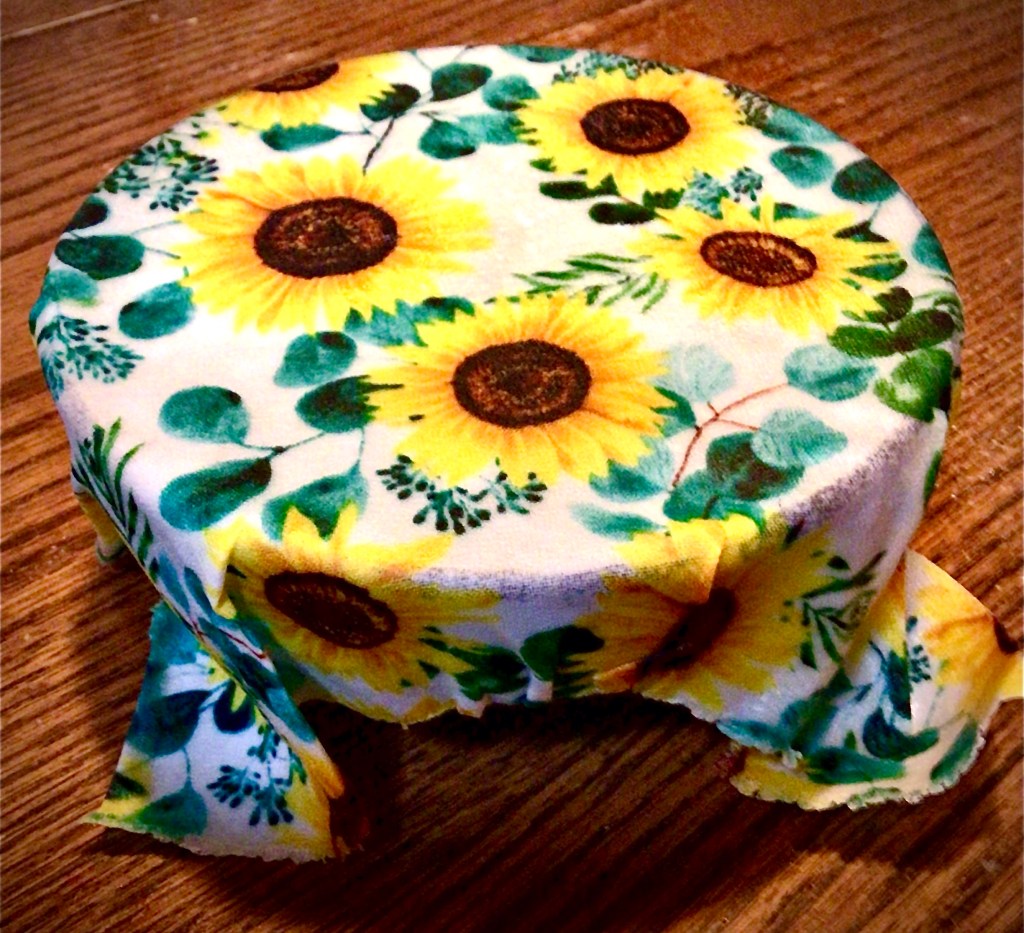
As I mentioned before, I wanted these to use on bowls that I do not have lids for. In this example I have a standard glass coup bowl and my small wrap. Simply place the wrap over the bowl. Then press the wrap down much like a sheet of press and seal food wrap.

The heat from your hands is what softens the wax. Its tacky nature naturally sticks. To be fair, the wrap sticks better to itself over the smooth edges of a glass bowl.

I found that just pressing the wrap down formed less of a seal and more of a fitted cap of a lid.

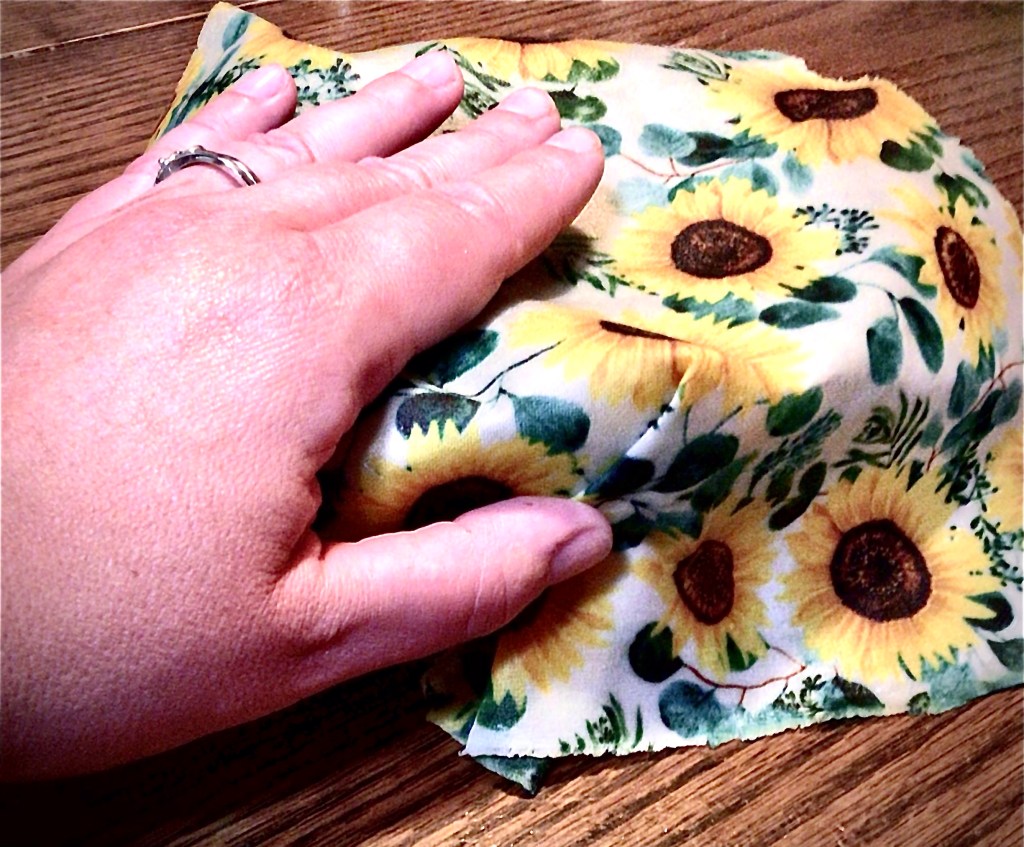
For better results, crease the wrap and seal it on itself. As in the case of this bowl, the folding of the fabric and making it taper down the side of the bowl, this tapering down gives the resistance for the wrap to stay firmly secure to the top of the bowl.

But the wrap doesn’t need to have a structure to seal up. You can have the wraps become its own container and never have to buy a sandwich bag again.

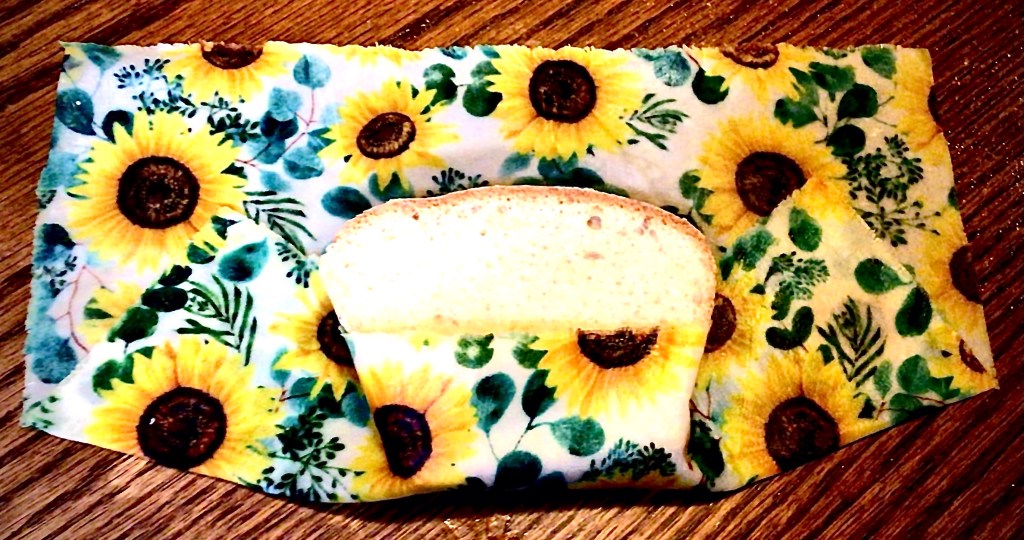
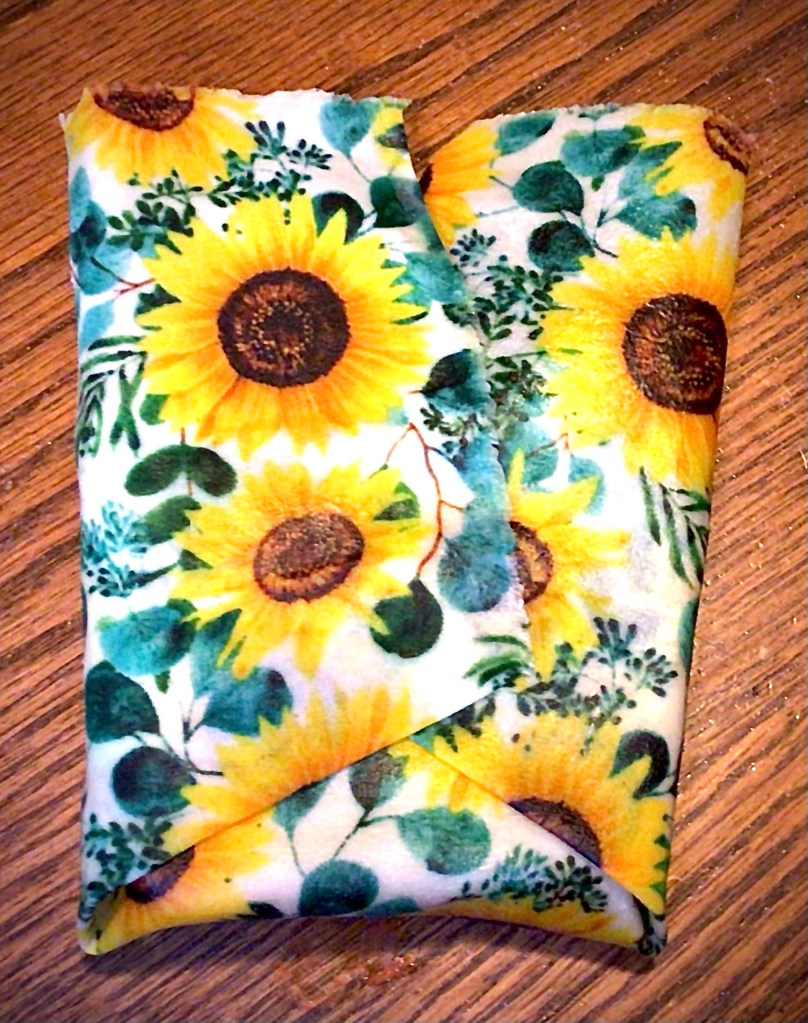
Simply lay your sandwich in the center of a wrap and seal it to itself.

In the second picture, I folded the bottom of the wrap up and pressed the fabric down the sided of the sandwich and pressed the fabric into itself to create a seal. The sides I folded over over and the top down.
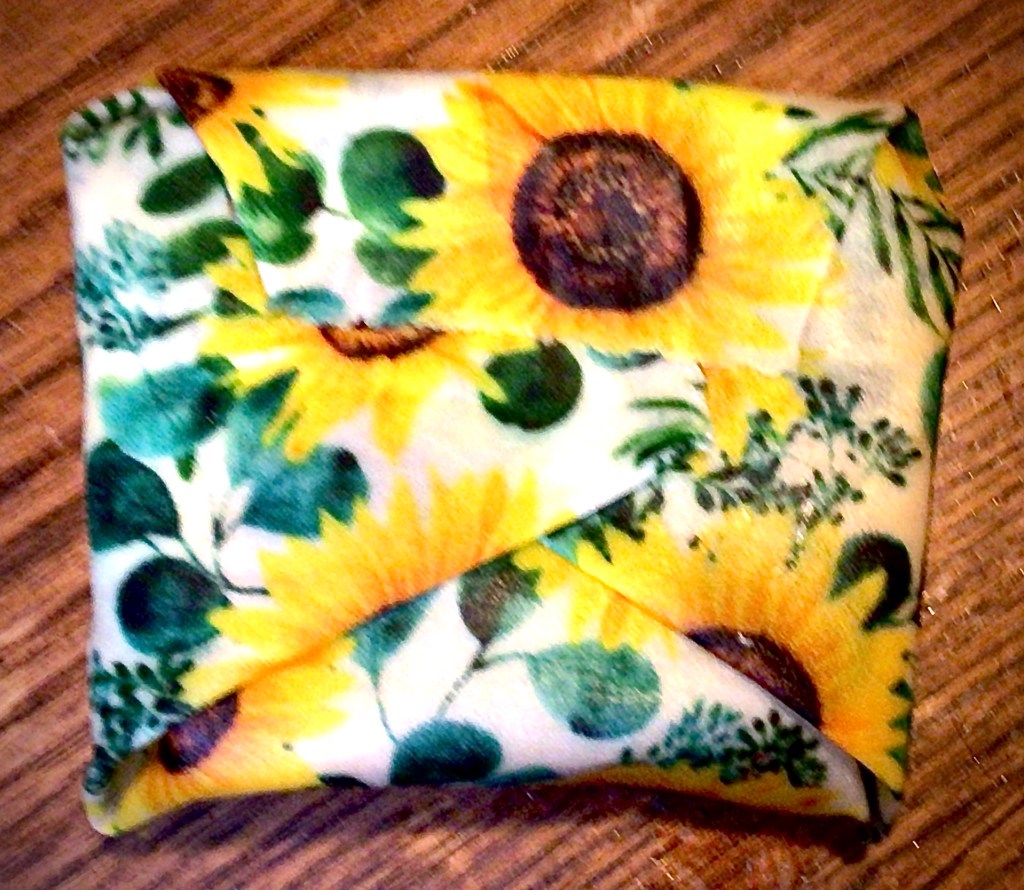
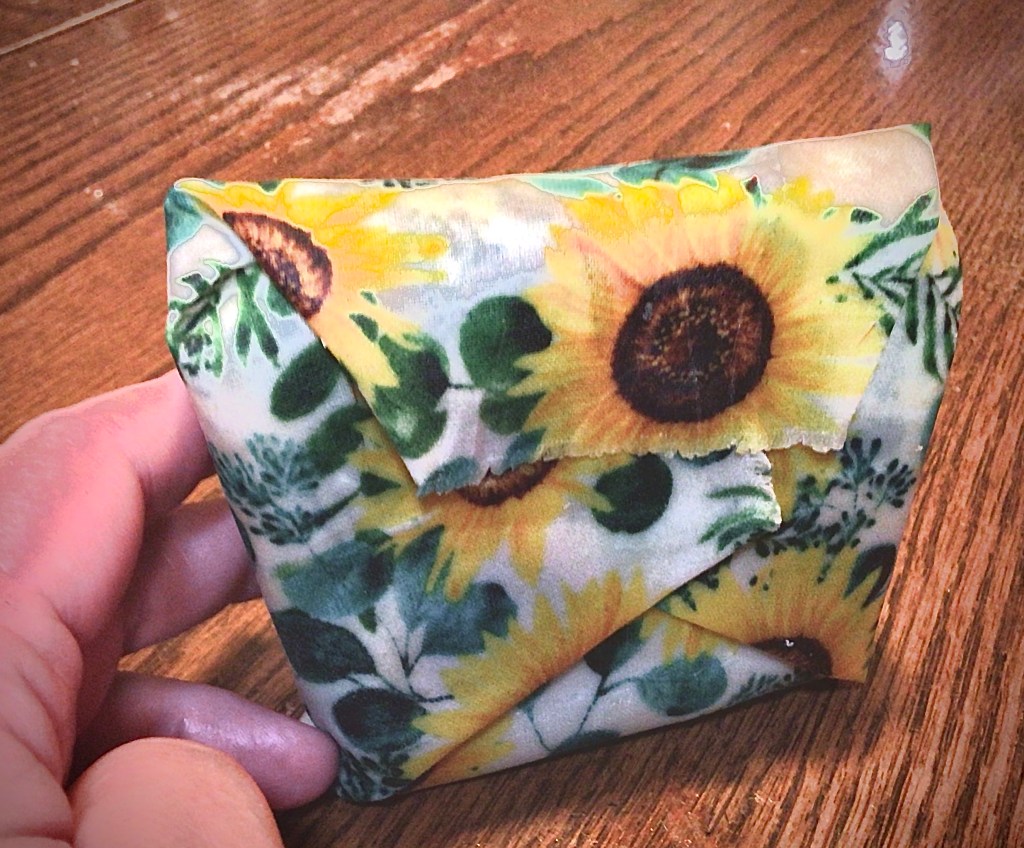
In this last picture, I wanted to show you that even when I stood the sand which up, it did not unwrap himself at all!

Again, these are only a couple of ideas on how to use these. Another idea is on a hiking trip. If you forgot to bring a foraging container, but saw something you wanted to gather, you could pinch together the sides of a wrap and make a little basket.

This is genuinely one of those kitchen utensils that have many uses and are user friendly.

For those of you who are local, come by the Maker’s Market on October 7th and you can play with the demo wrap and see just how user friendly these are!
Leave a comment

Processing…
Success! You're on the list.
Advertisements
Advertisements
Advertisements
Advertisements

Just Like New

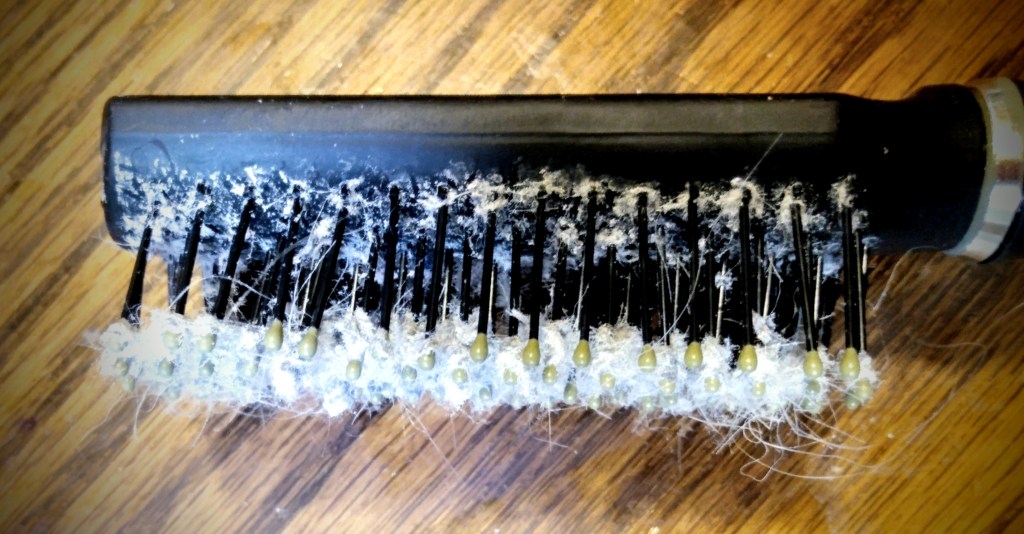
Once upon a time I use to buy a brand new hair brush after about a year. I’m sure you’ve seen your brushes about that milestone–when you remove the hair and there’s a blanket of fuzz at the base of your bristles.

I don’t throw my brush away anymore. Instead I clean it!

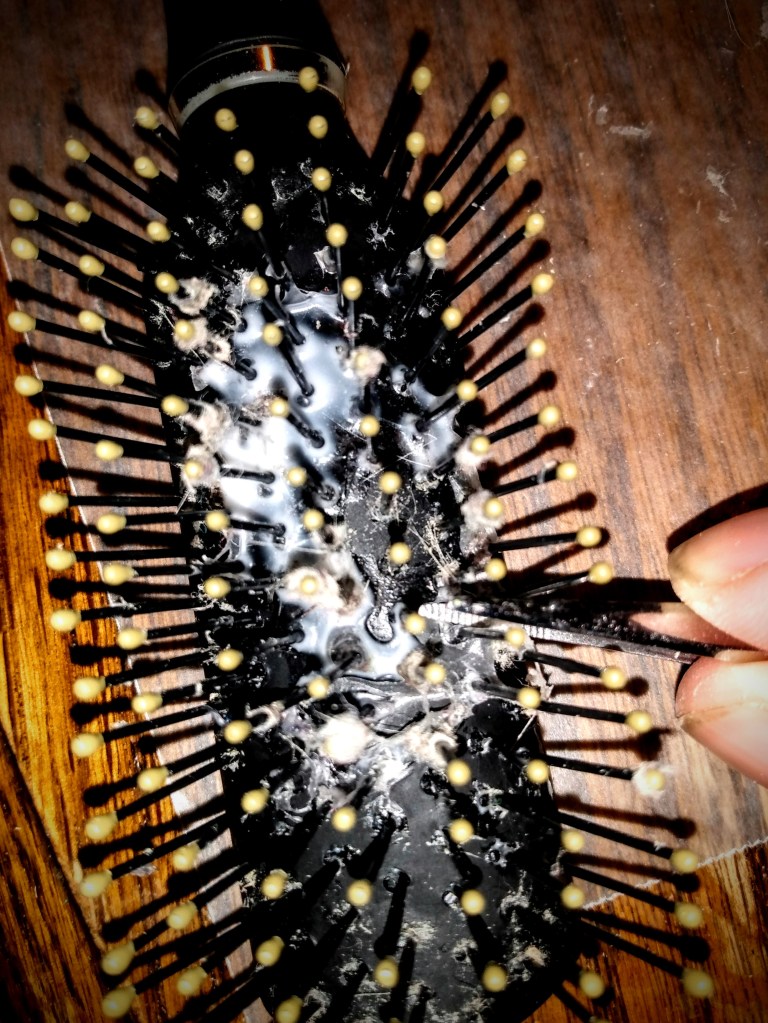
I’m going to pick up in this process after the hair removal and using a pair of tweezers to push all that fuzz to the tip of the bristles.

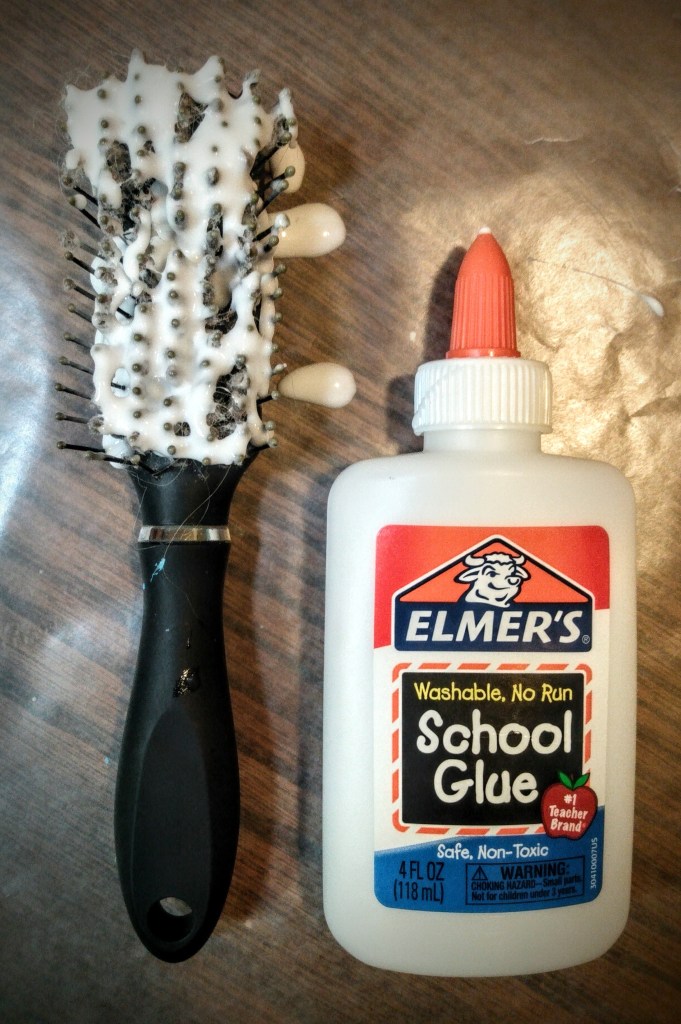
Don’t be afraid of you can’t get everything to the tips. I find that when I’ve done this step, I end up getting my brushes cleaner than if I leave the fuzz down at the base. The reason is because I use glue. The glue binds the debris at the top. But it also drips down to the brush base. It then grabs a hold of the debris that is still around the bristles base. By moving as much as you can to the top, it enables the glue to maximize how much it captures at the base.

The glue that I use is Elmer’s white glue–the same glue used by school children in the U.S. The reason why I use this type of glue is because it has a little bit of elasticity when it’s dry and holds together even when it’s not fully dry. It’s tacky, but it holds on to the debris and itself. Plus it has the added bonus of washing off.

More rigid glue tends to stick to the bristles and brush.

For example, you could use hot glue. But there’s not much give once it cools. And because it’s more rigid, you run the risk of damaging the bristles (like pulling off the balls on the end), which will in turn ruin the health of your hair.

If I were to locate alternate glue, might pick a wood glue or rubber cement. Both of these have a similar property as Elmer’s glue.

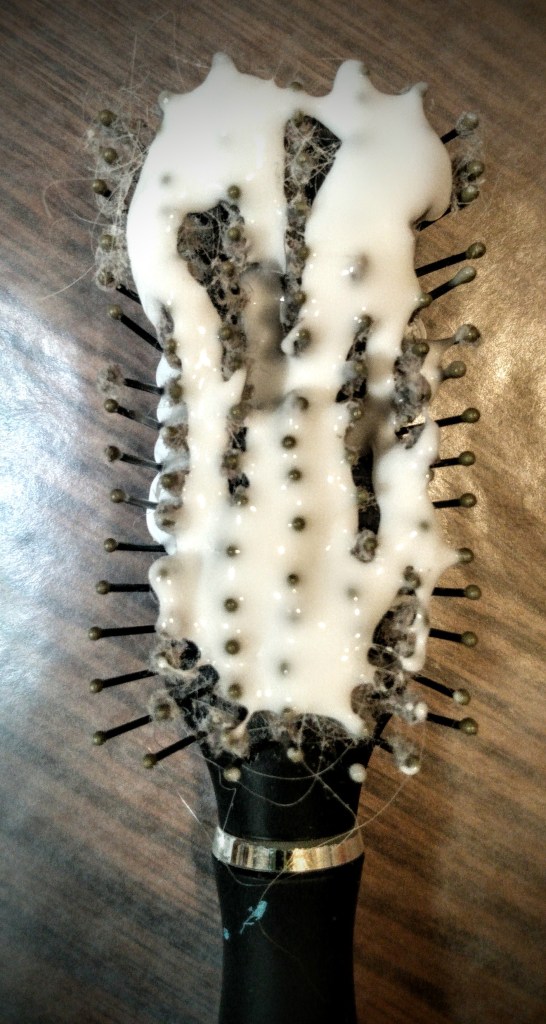
When applying the glue you can be as meticulous air as liberal as you choose. You can open the orange cap and apply the glue precisely along the rows and columns. Or you can take the glue cap off and cover surface area quickly. If you choose the quick method, make sure you hit every area where you pulled debris up to the tip of the bristles. If there’s no glue on the debris, then nothing is binding it together to make it easier to pull off.

At this point timing is everything.

I applied the glue after I used my brush for the day and I let the glue sit over night to dry. (Even still, I used a liberal amount of glue so the glue wasn’t dried come morning. This was okay because my schedule had the space for not needing my brush and for finishing this cleanup project.)

Last year when I cleaned my brush I think I went the more precise method because the glue was dried come morning. This year the glue was still too wet so I had to use my hair drier to help the glue set.

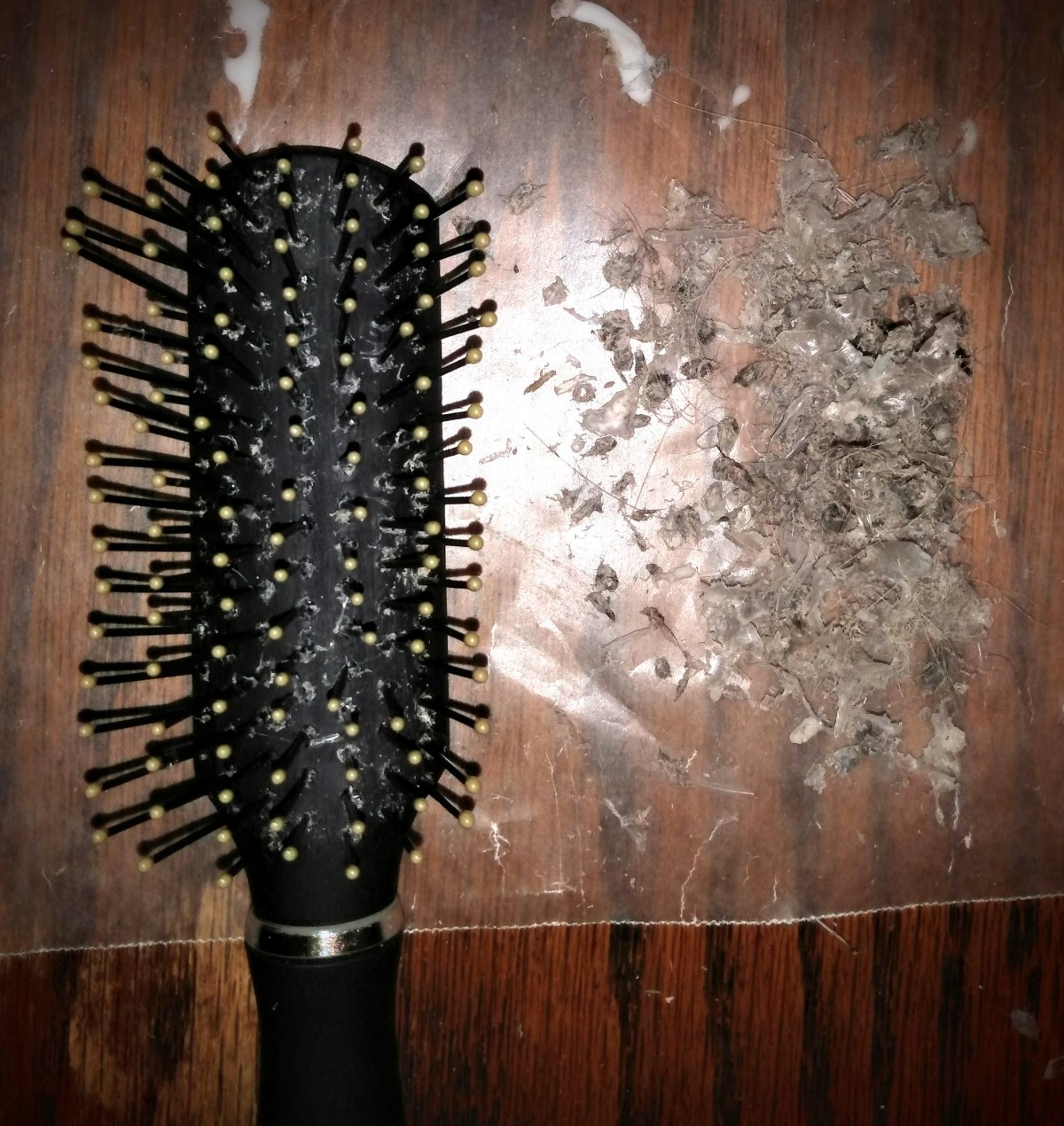
As you can see here, the debris on the top was dry. So I could easily start peeling those bits off my brush. However the glue on the base had pooled together thickly and was most definitely that wet brilliant white.

I removed the debris that was dried. This opened up the air flow for when I used my hair drier to set the rest of the glue.

TIP: If you don’t want to wait over night, use a hair drier to set the glue in a quicker time frame. You can have your brush clean and ready to use that same day.

Cleaning the base can be a little trickier. It seems like all the brushes that I have, each bristles is inserted into the base in a V formation, so the tail is pointing up alongside the bristles. This elbow joint likes to hold on to debris. This is why I like using glue. It helps to gram on to those difficult to reach debris. But it also means that I also need to use a pair of tweezers to get in there and get the glue to lift with the debris.

Sometimes you can just run the tweezers between the bristles. And in other moments you need to grasp the bottom of the bristle with the tweezers and pull up toward the top.

The good news is that you can completely clean your brush without having to be satisfied with that ring of debris hanging out at the bottoms of your bristles.

As you can see here, I was able to remove all that fuzz debris that was on the bottoms of my brush. This is the third time that I’ve cleaned this brush. And all the protective balls, on the ends of the bristles, are intact.

As I mentioned before, I grew up where we just disposed of brushes when they were “dirty”/ a blanket of fuzz remained when the hair was all removed. But I found out that it doesn’t have to be that way. A brush can have extended life.


What is something that you use to throw away but found a way to extend its life?

3 responses to “Just Like New”

  1. Pacific Northwest Event Design Avatar

    I’m sorry I hear that the notifications have been emailing you so frequently. I can understand that would be annoying. Unfortunately the full controls of notifications can only be reached from your end. To verify this I check with my own subscriptions that I follow.
    You will want to go to your Notifications tab. From there hit the Settings icon (it looks like a gear on my screen). Scroll down to sites you follow. Once you click on a specific blog you are immediately given options for which notifications you want. You’ll see options for new posts, all updates, all comments. The option that is probably giving you the most email notifications is probably the toggle being switched on for all comments that are made. If you switch that notification off, you should notice a huge decrease in notifications.

    I hope that helps.

    Like

  2. 313 Avatar

    I have been browsing online more thaan 4 hours today, yet I nevcer found anyy interesting
    article lie yours. It’s prety wrth ennough forr me.
    In myy opinion, if alll site ownerrs and bloggers
    madee ood content as you did, thhe neet wikll bee a lot moe
    useful tha ever before.

    Liked by 1 person

  3. Ruben Avatar

    What’s Happpening i’m new to this, I stumbled upon tthis I have fohnd It positively useful andd itt haas helped mme outt loads.
    I am hopingg tto contribute &help different users like its helperd me.
    Good job.

    Liked by 1 person

Leave a comment

Processing…
Success! You're on the list.
Advertisements
Advertisements
Advertisements
Advertisements

New Life to Wicker

There’s something about those moments in life when money is tight and you
try to do a lot on a dime that’s worth one cent. Here’s one of those
transformations from yard furniture that my husband brought home years ago.

I don’t remember exactly where my husband found these two wicker chairs. It
was from a stage in our marriage where he would regularly hit garage and estate sales. If memory serves me well, these were a yard sale find.

The price was right, even if the quality wasn’t there.

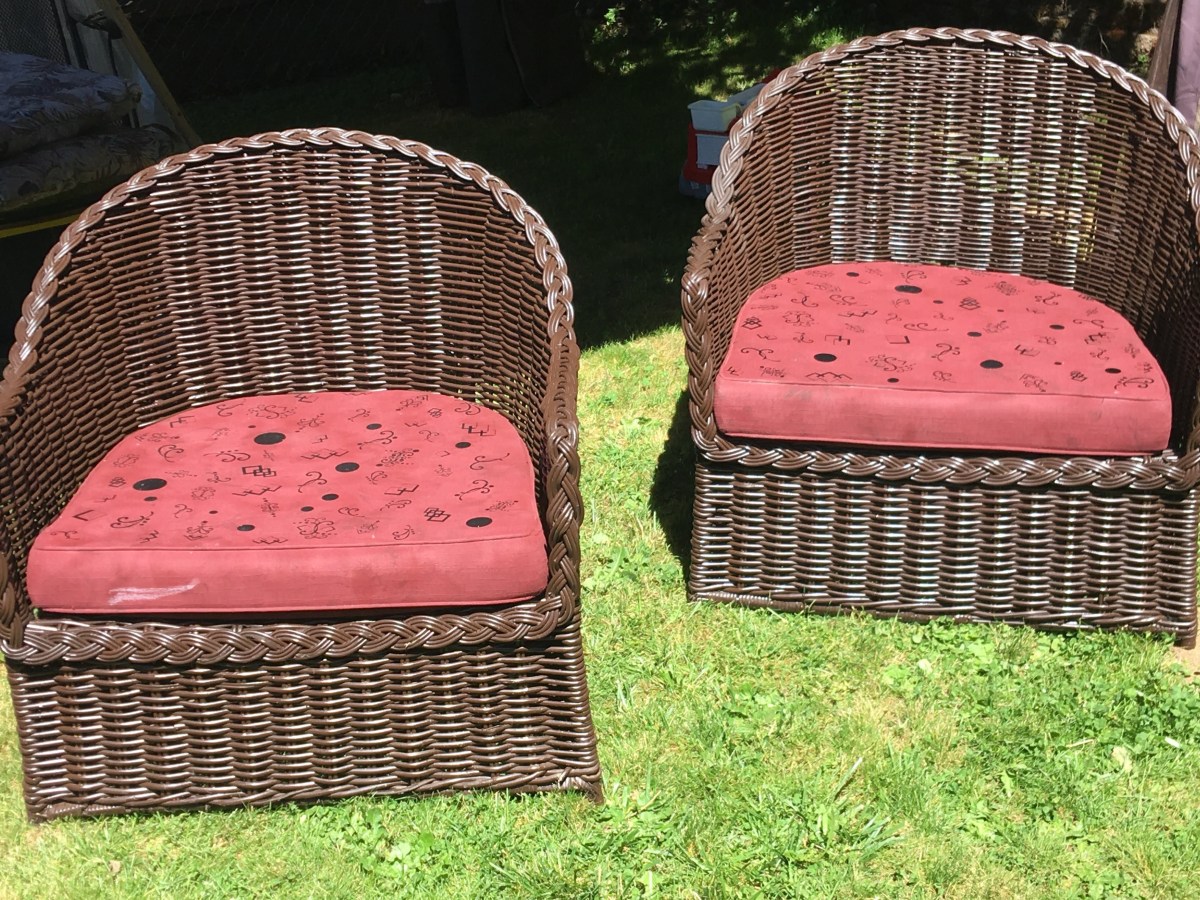
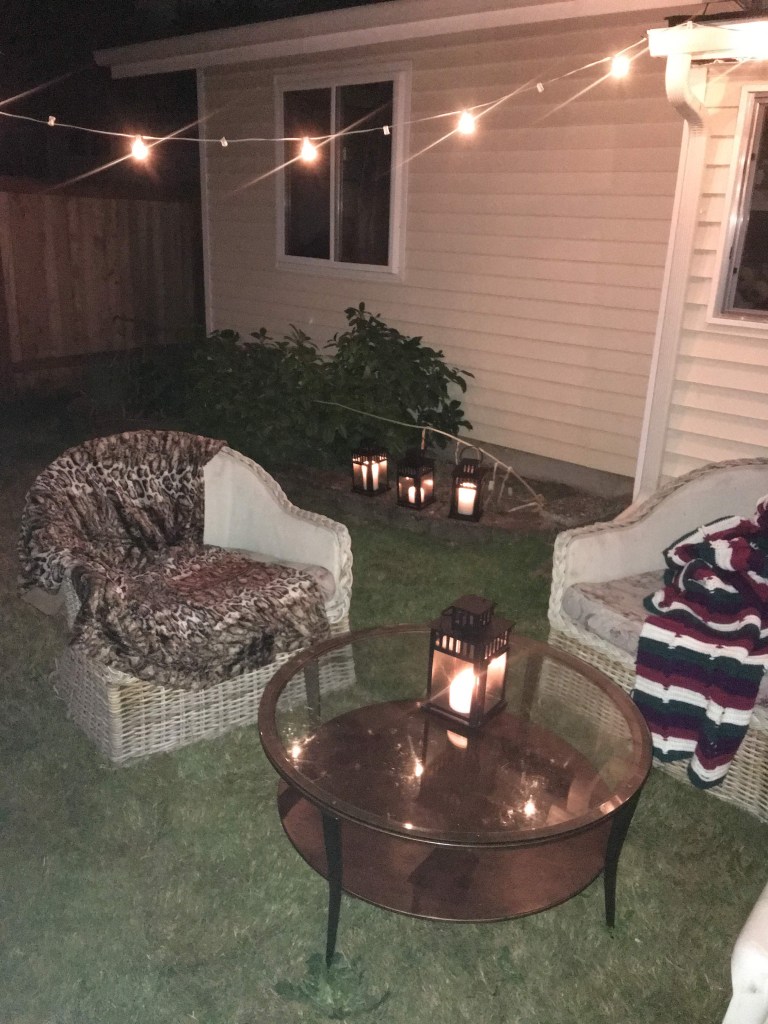
In the above picture I invited a few friends over for a yard party and needed the seating. So even though the fabric siding of the chairs were ripping out and had be hot glue gunned back to the wicker from the people who previously owned them, I hid these flaws by throwing blankets over them.

Close inspection will tell you that the falling apart wasn’t just on the side fabric. The wicker was unweaving on the bottom. The seat cushions were not only out of date by a couple of decades, but also starting to have holes.

We contemplated just throwing these chairs out.

The budget wasn’t there to replace them. And it was hard to toss them when they have always been our favorite seats to sit in during the summer and we have a nostalgic thing for wicker.

We just love them.

So I bought paint and made them over.

Prepping the Chairs

The first thing I had to do was rip all the fabric off and remove the staples with needle nose pliers. There’s no real trick to this, just a whole lot of patience.

The hot glue was easy to remove from the wicker and didn’t have any cosmetic damage. Once I saw this, I had no problem with this being the solution to the issue of the stripping that was unraveling on the bottom of the chairs.

Even though I thought I was going to have to buy new wicker stripping to replace what I thought was lost, I didn’t have to buy any. All that I needed to do was wrap the stripping back around the bottom frame and periodically drop a dot of hot glue to the frame as I re-wrapped the stripping.

I highly recommend using glue to hold anything you’re wrapping in place. There will always be a moment (or a dozen) where stripping will slip from your grip. And a small dot is all you need to keep from the whole section from unraveling and making you redo your work.

And if you’re afraid that you’ll use too much glue, make sure that you’re gluing on the “inside” of the chair. No one will see glue seepage when the chair is on the ground, so even the bottom edge of the chair is also a great place to secure the stripping.

Due to the age of the chairs, there were a few nails that had worked their way out. This made one chair in particular have the seat framing fall down under the rib that it was nailed to. That’s not a problem, because you just remove the nail, put the seat back on the rib and nail it back into place.

Fortunately, I had some extra finishing nails that were in my tool box.

While I was already repairing I decided to do some preventative work. To add additional support to the seat I nailed a few extra nails through the rib into the seat.

A Touch of Paint

There are a few different options that are out there for painting outdoor furniture. I didn’t want to deal with a primer or cleaning up brushes. So I opted for a spray paint with primer.

The one thing that I will say about wicker is that it takes more paint than you think if you want to get in all the nooks and crannies for a even coat. And for my own sanity, I did paint from different angles. One time through I painted the chairs from the upright position. For the second coat I flipped the chairs upside down.

If I do a wicker project again in the future, I will definitely paint in both directions again. There’s something about spray paint. It’s good about getting in tight places, but it really does need the extra help by changing paint directions.

These two chairs took 6 cans of spray paint. If you’re looking to do your own furniture spray painting project, this should give you a decent enough estimation on how much paint you should purchase for your project.

What about the Cushions?

There were two options that I had. At first I was leaning toward making a slip cover because that would be the easiest and quickest option. The only problem was that at the time that I was doing this project, outdoor fabric was more expensive then what I was willing to pay (starting at $15 a yard and I would have bought 4 yards).

My second option was fabric spray paint.

No one that I knew had ever worked with this type of spray paint, so I had no idea on what to expect. The only knowledge I had was watching a fashion designing competition. There was one contestant who used fabric spray to create a certain effect.

I’m sure fabric spray paint is perfect for a fabric that is a solid color.

Print on the other hand….

My pictures here don’t really show you the original print very well. But it’s a slate blue base with flowers (peach to dark rose color) and brown swirling flourishes.

I had chosen brick red fabric paint because it complimented the chocolate brown paint I picked for the wicker. And I thought that it would have great coverage since it’s a darker color.

Yeah, no.

I originally bought one can of fabric paint thinking that it would be more than enough. However, in reality I was only able to paint the top of each of the cushions because of the color disparity of the blue and brown in the original print. The short story is that it took nearly three cans of fabric paint to cover both sides of each of the cushions.

Another problem is that I left the covers on the foam form.

I chalk this fact to being the worst mistake I made for this project. The foam no doubt soaked up the paint, creating less coverage on the front of the fabric. And at the point that I did this project, my kids were babies and I had mommy fog brain. So now I would have removed the cover, but it just didn’t cross my mind then.

The good news is that the second layer of paint was thicker in coverage than the first. So if you wanted to get a solid color off of an old print, I’m absolutely positive that it is obtainable with 3 or 4 coverages. Just know that if you paint over a print, you’re going to have a phantom print showing through.

I wasn’t too opposed to the phantom print because it sparked a creative idea that I absolutely loved. Art Deco!

While Art Deco is more noted for being angular, the beauty of art is that
you take a style as your base and tweak it to fit what you see in your head. So
I took the squares and sprays seen in 1920’s architecture and added circles and
chandelier elements that matched the opulence of the time.

Truth be told, I had to work in the circles into the design to cover the
largest hole (which you see above).

Heat Transfer Vinyl (HTV) was my material of choice because I wanted the permanent
design and I wanted to keep the cushion weather friendly. It never fails that
our outdoor furniture gets caught in a summer rain a time or two each year.

Once the design was weeded, I cut the elements out and pieced them together
on the cushions in relation to the phantom swirls.

Now this HTV “print” that I made isn’t exactly everyone’s esthetic. I did want to share it with you because I wanted to show you how you can save furniture from being thrown out. Also, you have your own option for making your own design with materials that you have on hand in your home. And to encourage you to play with colors and designs that just are not on the market.

The one thing that I LOVED about this project was that I took chairs that I was constantly making excuses for, to my guests, and turned them into something that we’re happy to have in our yard for the next several years.


Do you have old lawn furniture that you can give new life to?

Comment below! Let me know what you did to rejuvenate a piece of furniture that you almost evicted.

Rebinding Books

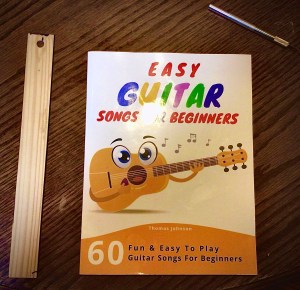
There are several reasons why the skill of rebinding a book is useful. So whatever your reason, join me with using a binding machine. (Disclaimer: this is not rebinding as a preservation method. Rather this is rebinding for functionality.)

My reason for rebinding is that I’m a home school mom that looks for schooling on a budget by making all my curriculum last for all my kiddos. I have a few tricks to make this happen, it the one problem we had across the board last year was that our curriculum books would not stay open

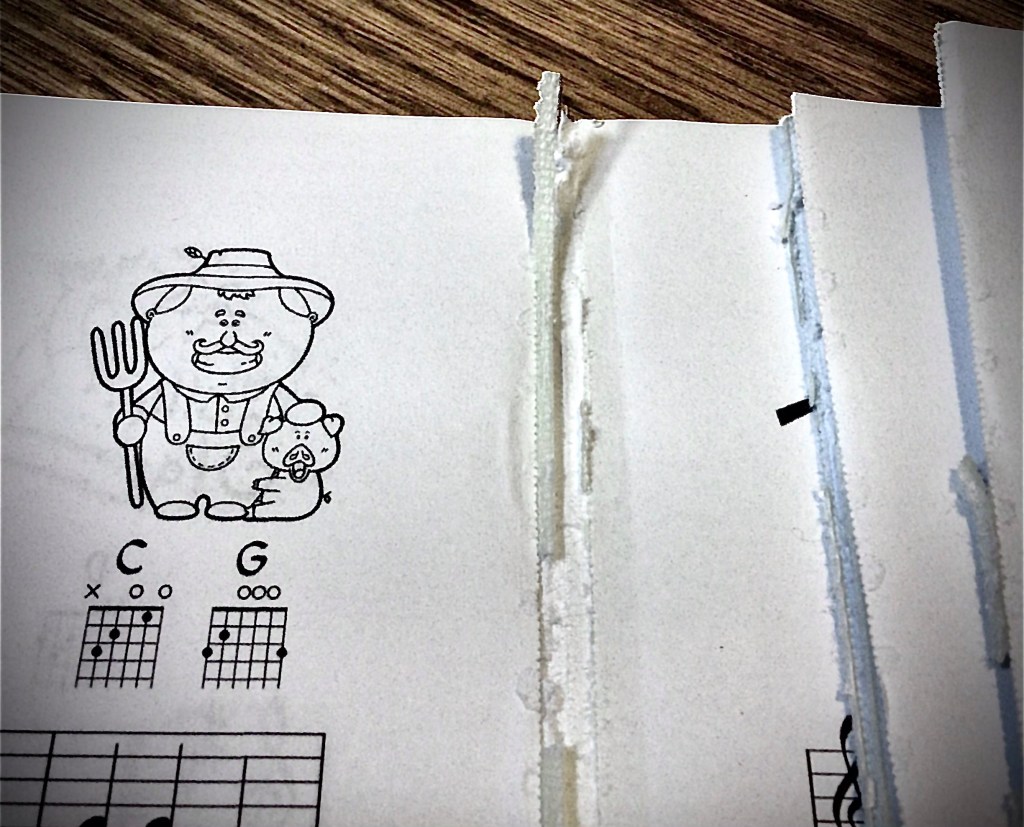
One reason why a book does this is because the glue binding is to restrictive for the books to stay open.

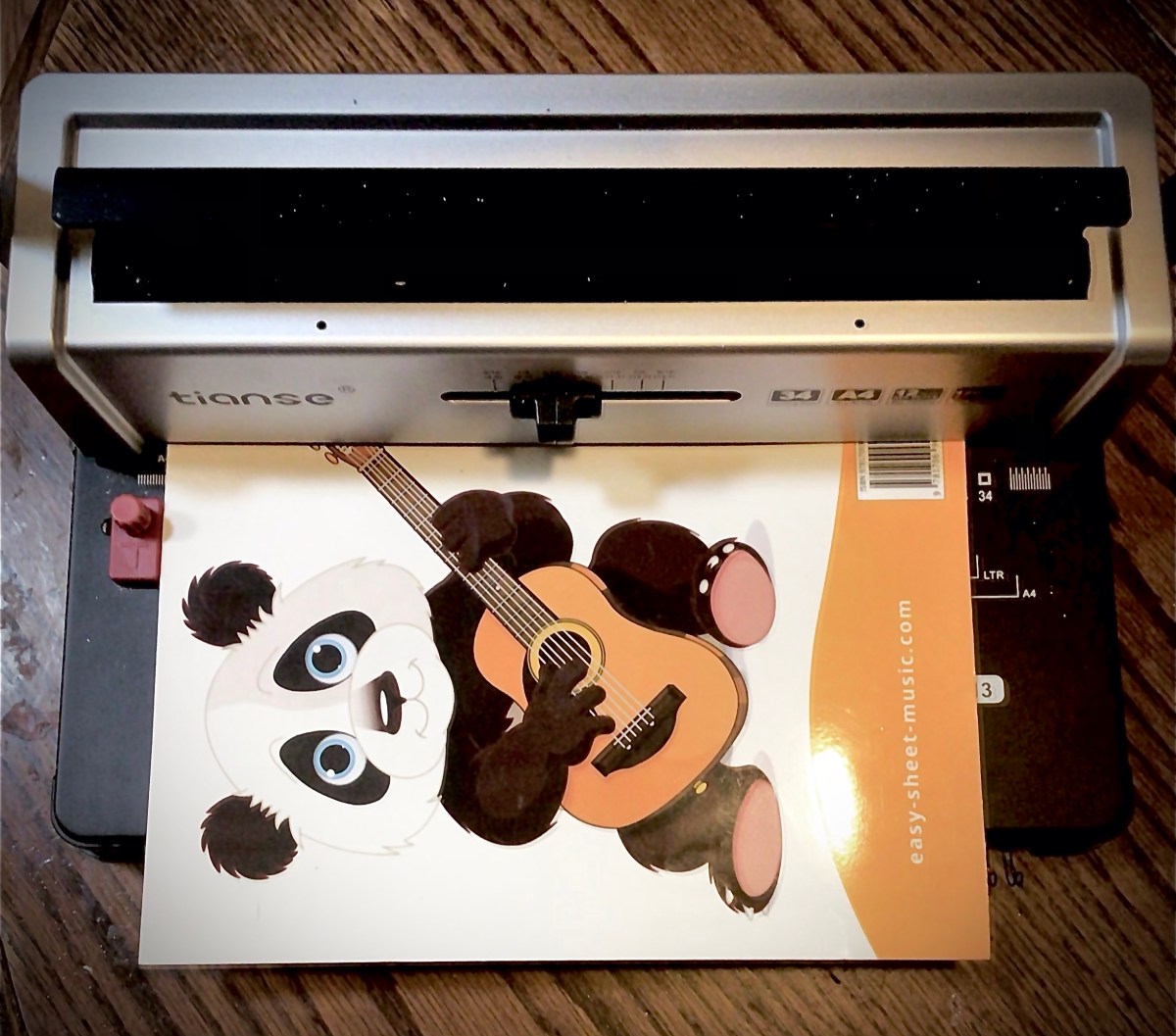
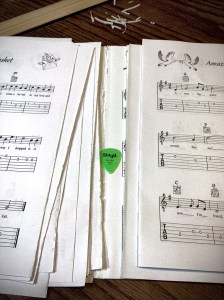
As I dismantled the curriculum, I noted this was exactly our problem because the glue wasn’t just on the ends of the pages, keeping it within the paper cover, but also between pages. It wasn’t so noticeable looking at the books but it was glaringly obvious when I took the books apart. Unfortunately you won’t be able to see what I saw because I used a smaller book for my pictures today. But the book I used for today, did have this issue when it came to breaking down the cover. So, we’ll get there in a moment.

From my learning curve of already breaking down three years worth of curriculum books, here’s the easiest way to cleanly break apart your book with minimal page damage.

Things you’ll need

  • Book
  • Exacto knife
  • Ruler (if you need help cutting a straight line)
  • Binding machine
  • Binding wire
Advertisements

Breaking down the book

First you want to open up the binding.

I open the book up in the middle and run the exacto knife blade down between the pages, down into the spine. Depending on how much glue was used and how sharp my blade is, I may need to run the blade more than once. When I’ve it through the binding, the book will split open and separate in half.

I flip to near center of the book. When the glue binding is cut, the weight of the pages help open up the spine and make page removal a little easier.

Going either direction in the book, turn a few pages and repeat this cut and separate. These few pages are now ready to pull out of the book, much like when you pull a few pages off of a pad of paper.

If the pages do not want to come easily out of the book, thin out this grouping by cutting between pages again.

With the glue initially broken, small groupings of pages are easy to peel from the binding.

TIP: If you have to pull hard, there’s a great chance your pages are going to rip. It’s much better to cut out pages one at a time than potentially ripping your pages in half.

As I go through the book, I set the pages aside so that they stay in order. This is particularly important for books that don’t have page numbers. I dread spending extra time reading pages to make sure I have them in the right order. It hasn’t happened with rebinding books, but I’ve dropped manuscripts in the past and learned the hard way to always number my pages.

The pages are free from the glue binding to the book spine. The exceptions are the first and last pages which were also glued to the front and back cover, and not easy to remove.

When I separate a group of pages out from the book, I separate them individually and clean off the glue binding still attached to the sheets of paper. If the glue is elastic like rubber cement, it peels off easily. If the glue is brittle, this is another moment of when I potentially get tears in my pages. So if the glue doesn’t want to come off, it may need to be cut off.

With this book, all the pages separated cleanly, with the exception of the first and last pages, which were glued to the cover. So those pages I left glued to the cover. It’s easier to leave them then to separate them.

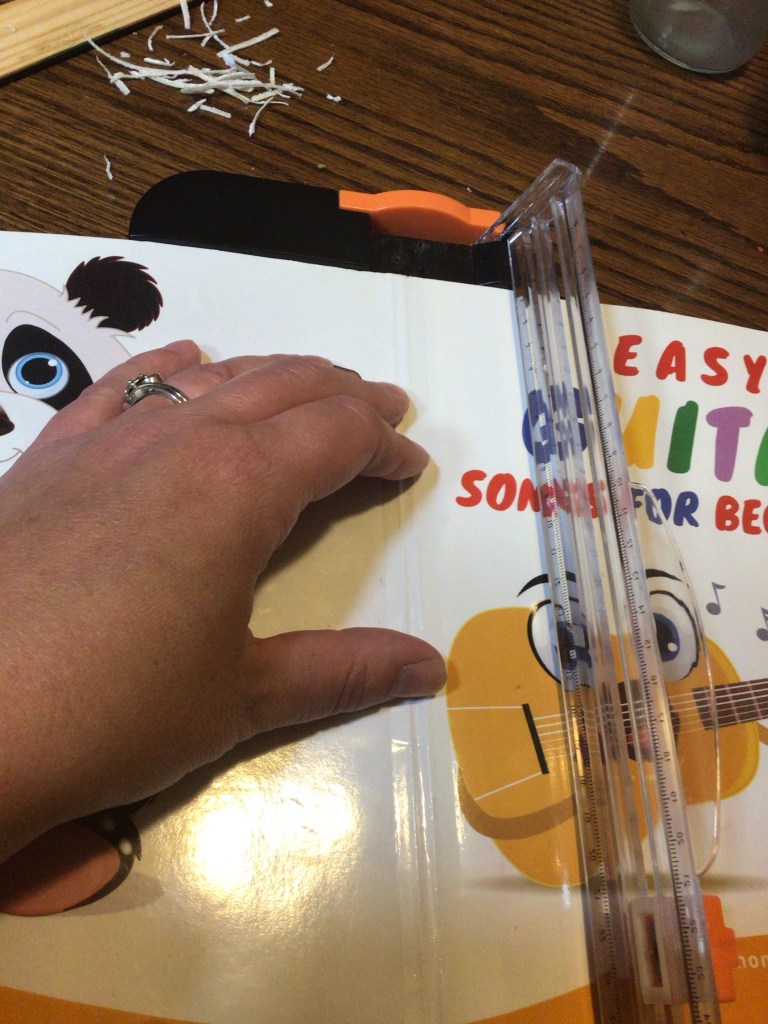
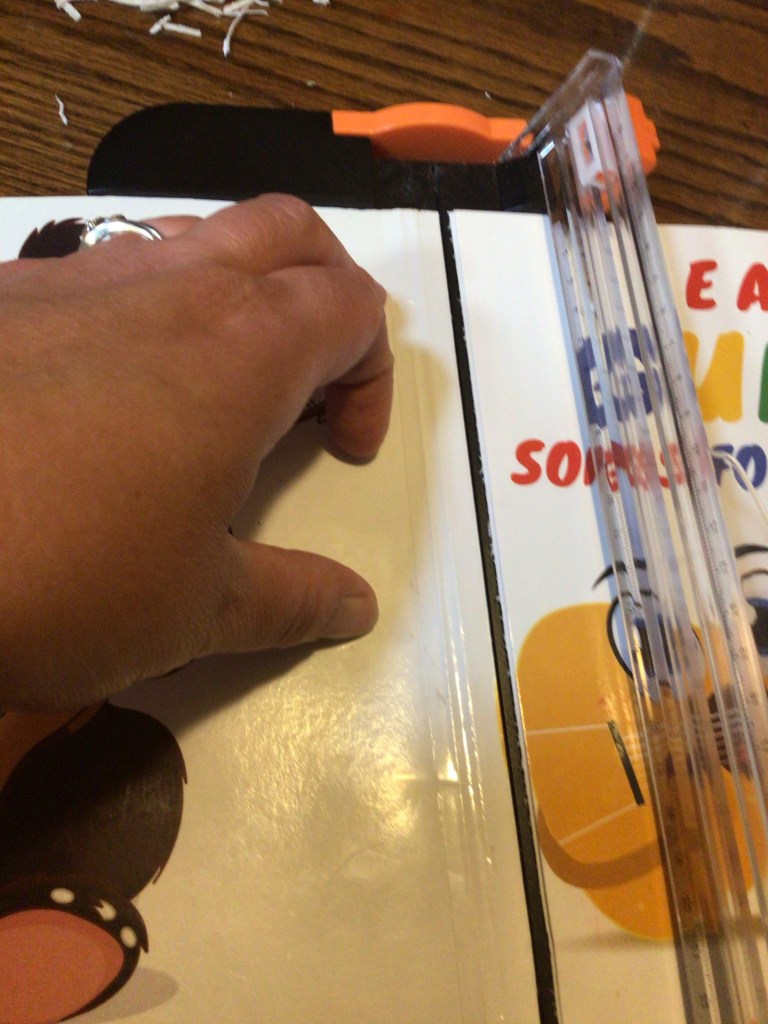
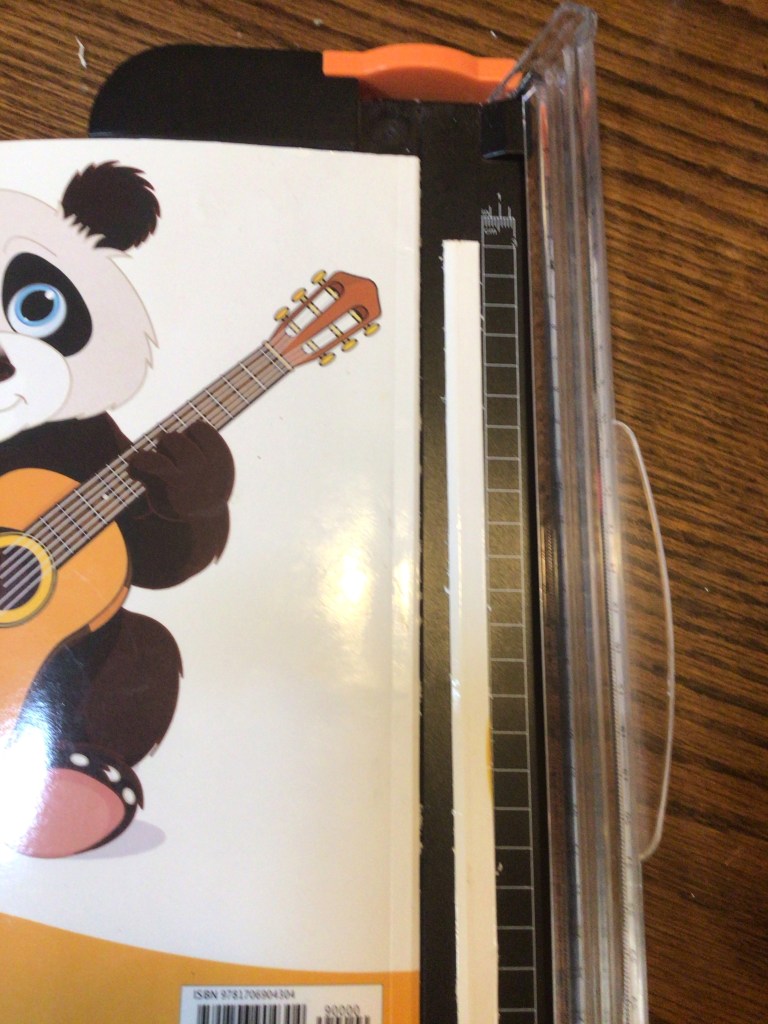
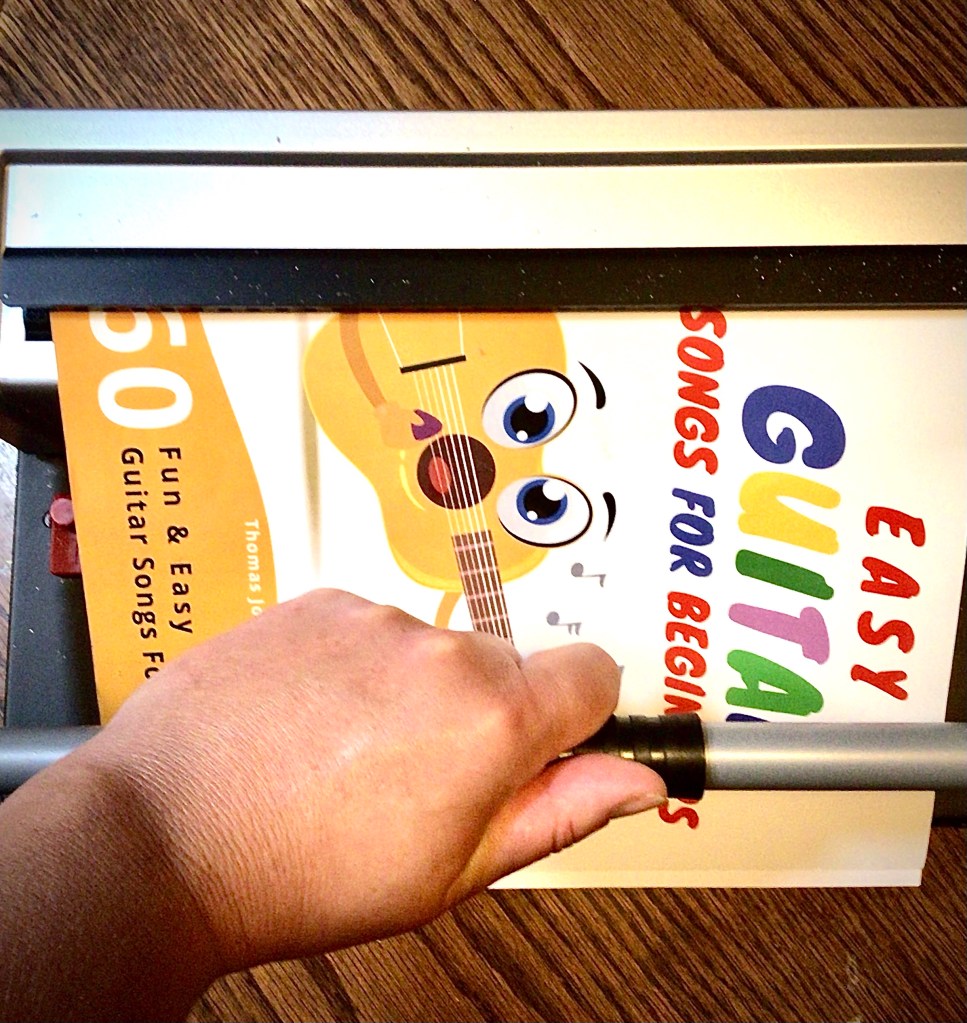
Once the pages are removed, it’s easy to break down the cover. I line up cover crease with my cutting machine and cut the cover off from the spine of the book.

TIP: A crafting paper cutter can get the job done. It a guillotine paper cutter is going to give you a better finished edge on your cut.

Advertisements

Reassembling Your Book

With the pages cut, free from residual glue, and in page order, it’s time to put the book back together. (See below for setting a binding machine up.)

There are two ways of perforating your pages. You can start from the back of your book and work your way forward. Or you can work your way from front to back. Depending on which way you work will determine where determine which way your binding is facing when you’re finished. The thicker part of the whole binding is what fits into the binding machine frame holder. So if you want the thicker part in the front, start with the front of your book. If you want it in the back, start with the back of the book first.

Right now I like the thicker portion in the back, so I start with the back cover of the book and work. I also find that the glossy side of these paperback covers punch better when the glossy side is up. This means that when I punch my back cover, I punch with the back/glossy side up and then flip and put back/glossy side down when I place it on the binding. In similar fashion (to keep everything perfectly lined up), I punch my pages back side up. And then they also get flipped and placed onto the binding back side down.

This can be tricky when I finally get to my front cover, because my glossy side is going to be face down.

The reason why I personally don’t like having glossy side down is because half the time the perforator doesn’t want to cut cleanly. I either have attached chads, or the cut is incomplete.

There’s two ways I’ve found to fix this. One, you can hold the cover down firmly and press the handle down several times. Or two, leave that first attached page on the cover and punch both together. The paper chad being pushed through the cover’s hole seems to clear out that cut.

TIP: Another cause of attached chads is that the collection tray in the bottom of the binding machine is full. If things aren’t curing as well as they did a time or two ago, you may want to check to make sure he tray is empty.

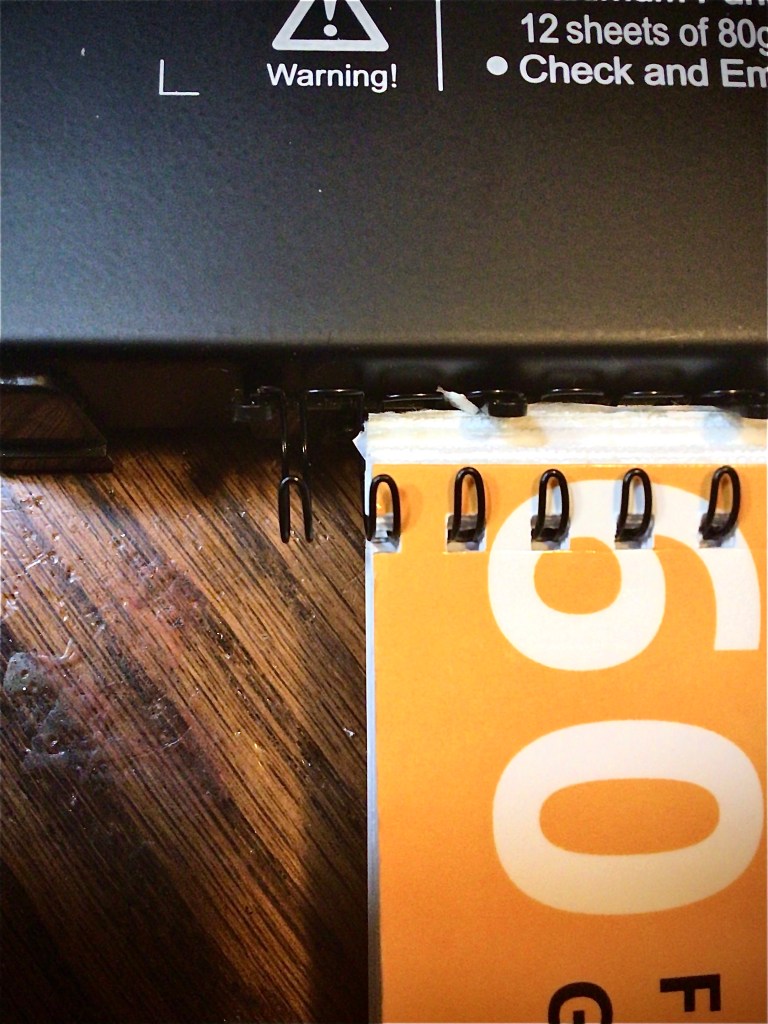
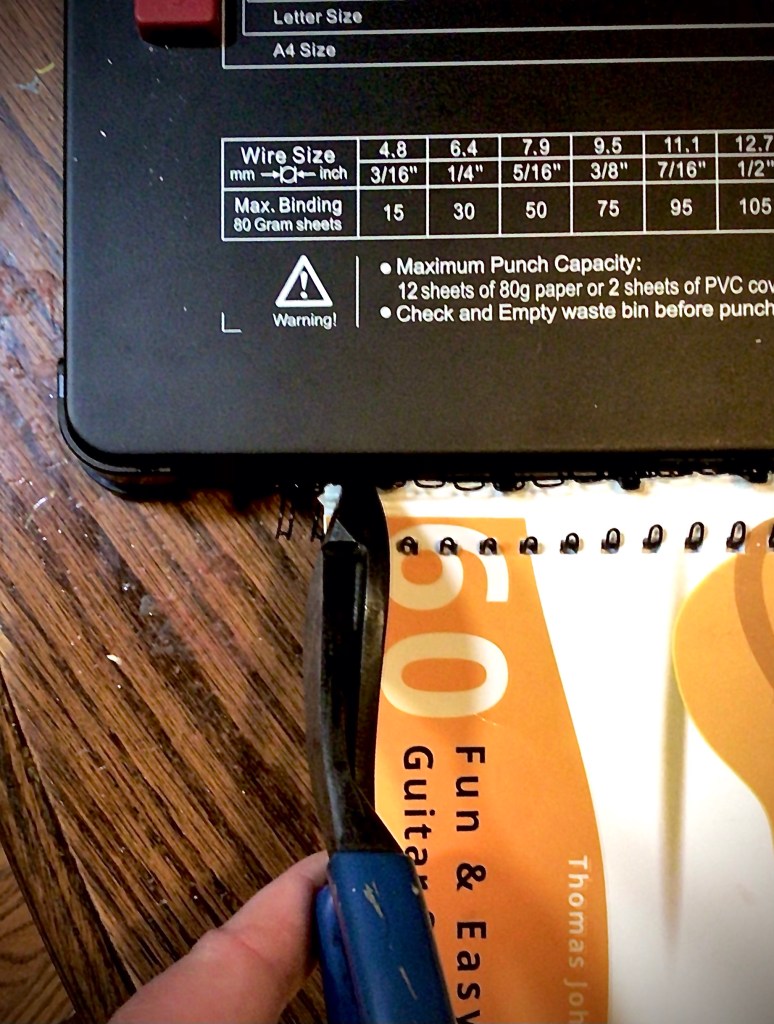
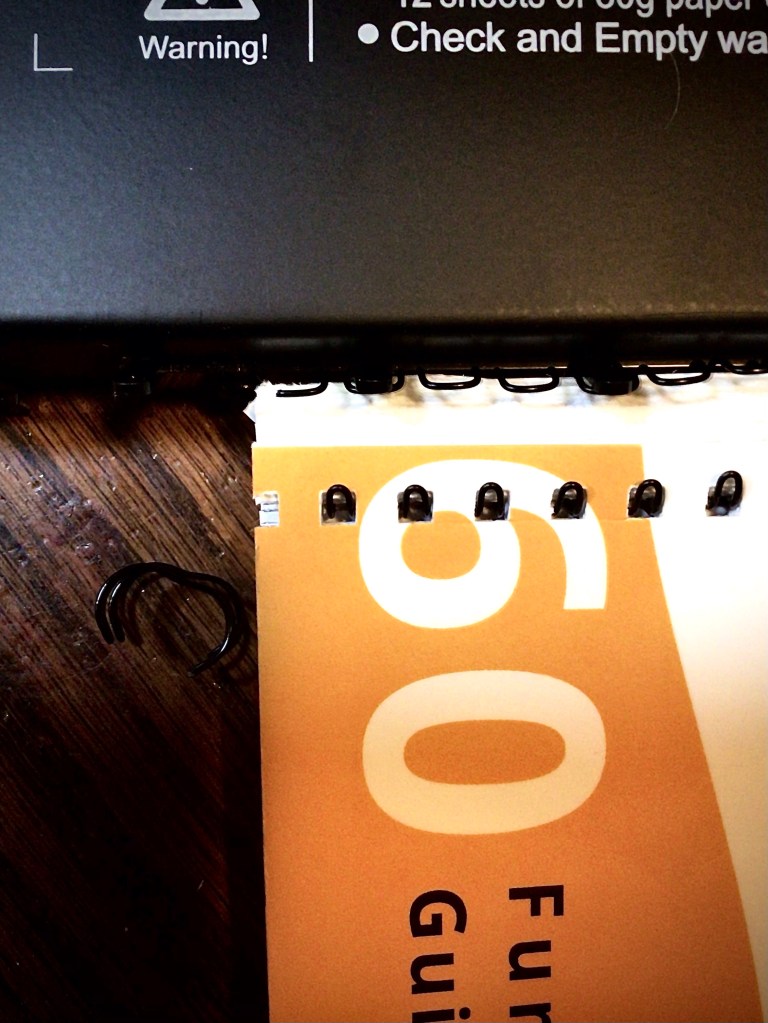
Sometimes I trim down the binding wire when I punch the back cover. This time I waited until I finished punching everything. I even know people who wait to cut the wire down to size until after the binding is closed. There’s no right or wrong time to do this step, just be aware that the wire will more than likely need to be trimmed according to your project size. And pair of wire cutter is all that you need to snip off the extra length.

To close the binding all you need to do is pull the binding from the frame, insert the binding into the wire closer, and press down the handle.

TIP: For the best results for closing the binding, I rotate the binding opening as you see in the picture below. This keeps a round shape instead of turning oblong.

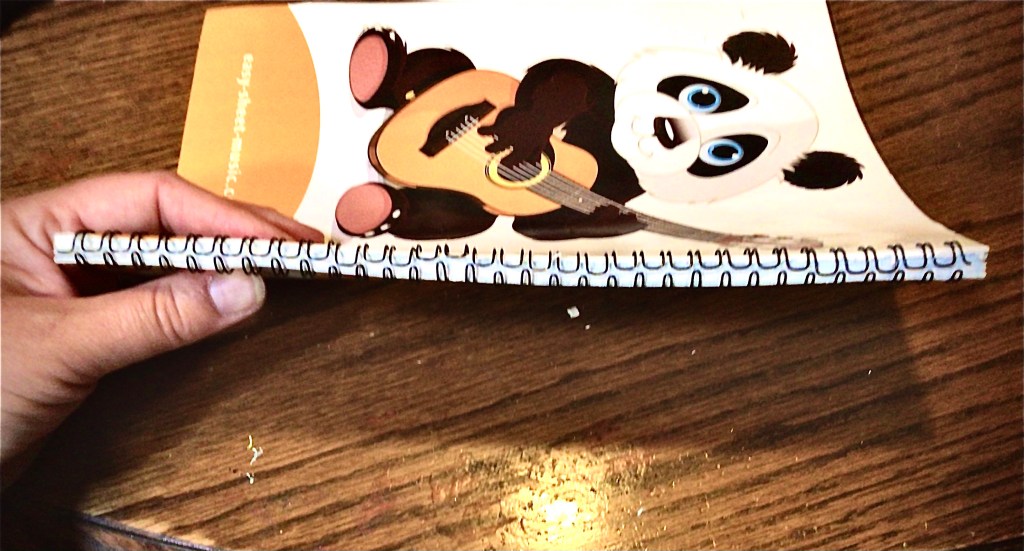
Depending on how many pages you have, and the capacity of your wire size, you may find that you over crimp the binding. This is most noticeable when you open up your book. The book doesn’t lie flat and the pages bow.

When this happens, all that I do is use my fingernail and pull out the small tooth prong. If I pull the wire out too much, I push the tooth back in.

It is possible to use the wire close again to make the binding even. Or you can leave it as is.

The one thing I want to caution against is not closing the wire far enough. It’s easy to think that you’ll avoid over crimping by under crimping. (I also thought this.) The problem is that if you don’t close the wire binding enough the cover and pages are going to slip out through that gap.

My personal preference is to err on the side of slightly too tight. I can always loosen up the binding until the pages lie flat.

Advertisements

Setting Up a Wire Binding Machine

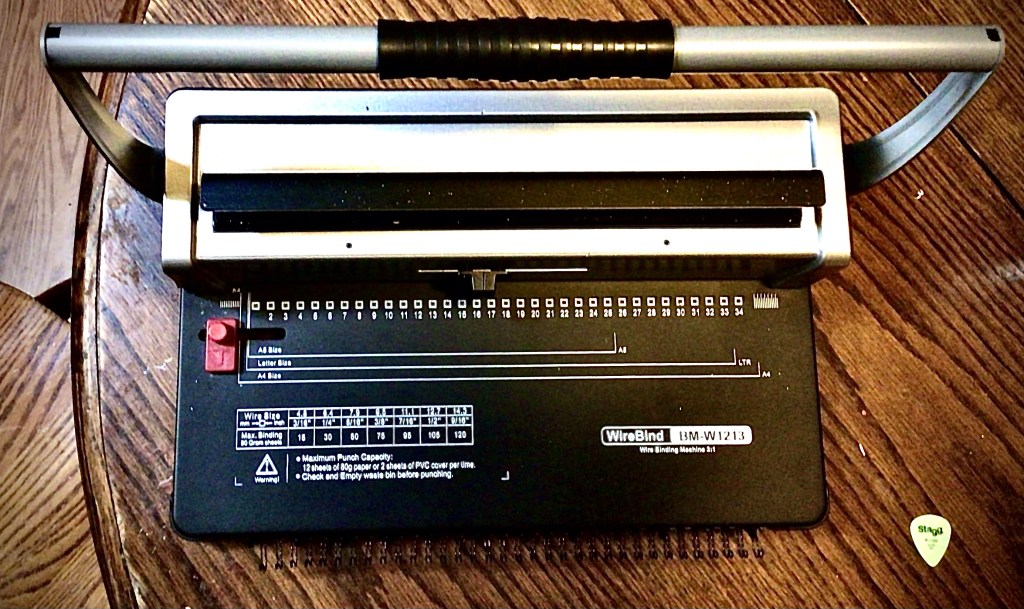
The first thing I like doing is adjusting my wire size. Checking sizes is the area that I have the tendency to forget. So I have to start my routine with this step. Nothing would be worse than loading up my 9/16th inch wire and still having the machine set for my 5/16th inch wire.

This setting doesn’t have any impact on the punching. So it’s not like I can take a look at any of my pages and see that something is off. This setting is for the wire closer, telling how far it needs to compress down on the wire to close the binding.

The next setting I check is the margin control. Most machines have a 3, 5, and 7. These set up how far away from paper’s edge you want the holes punched, in millimeters.

If you’re like me, and didn’t grow up using the metric system, you might be lost as to which setting to use. And no the larger setting isn’t always the best.

For my 5/16th inch wire I use the 3mm setting. 5mm can pass but makes the pages stick together in the center of the binding. 7mm is a real headache. However, for my 9/16th inch binding I like the 7mm setting for when I’m not filling to capacity. But when I’m near capacity, I use 5mm, releasing some of the space inside 5he binding.

You can play around with these adjustments and find what you prefer using. Just make he mental note of how the mm depth relates to the space available in the binding.

TIP: When you’re ready to punch, make sure you put your paper firmly into the machine. If your paper doesn’t hit the margin control wall on the inside, the holes will be punched on the edge of your paper. If you push too hard, you will change your margin settings. So instead of 3mm you could end up punching 5 or 7mm. So be firm but don’t shove.

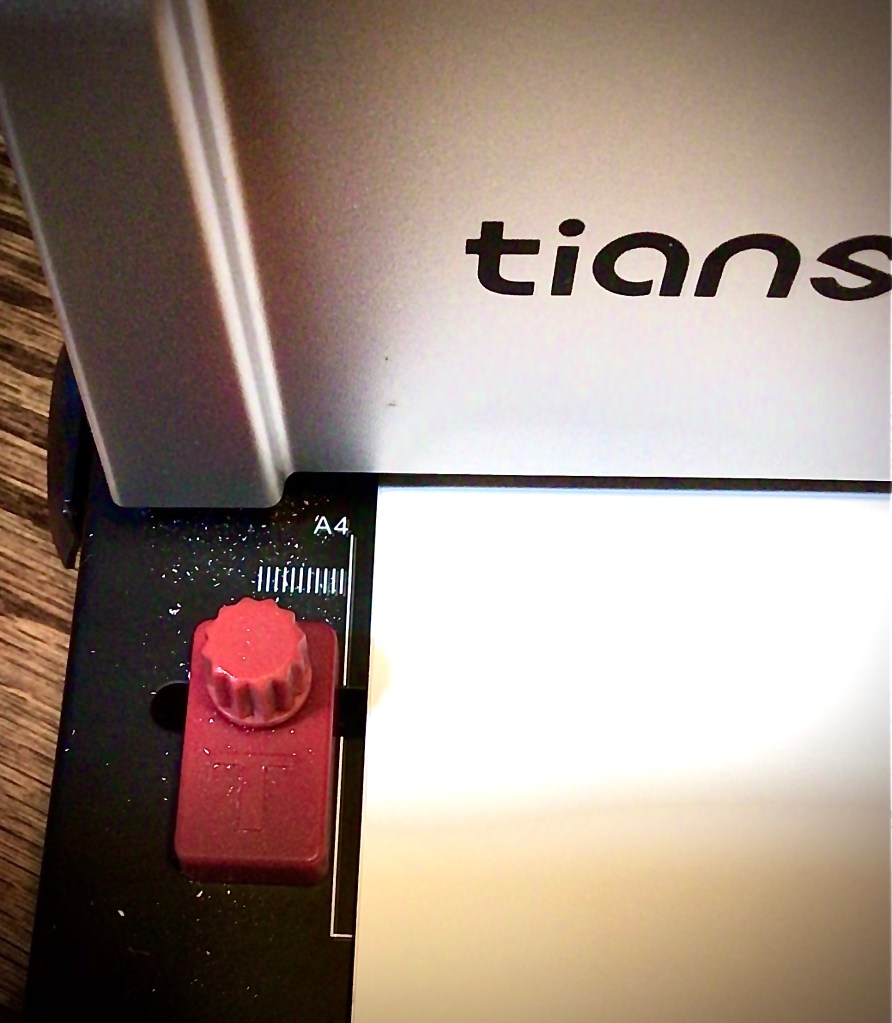
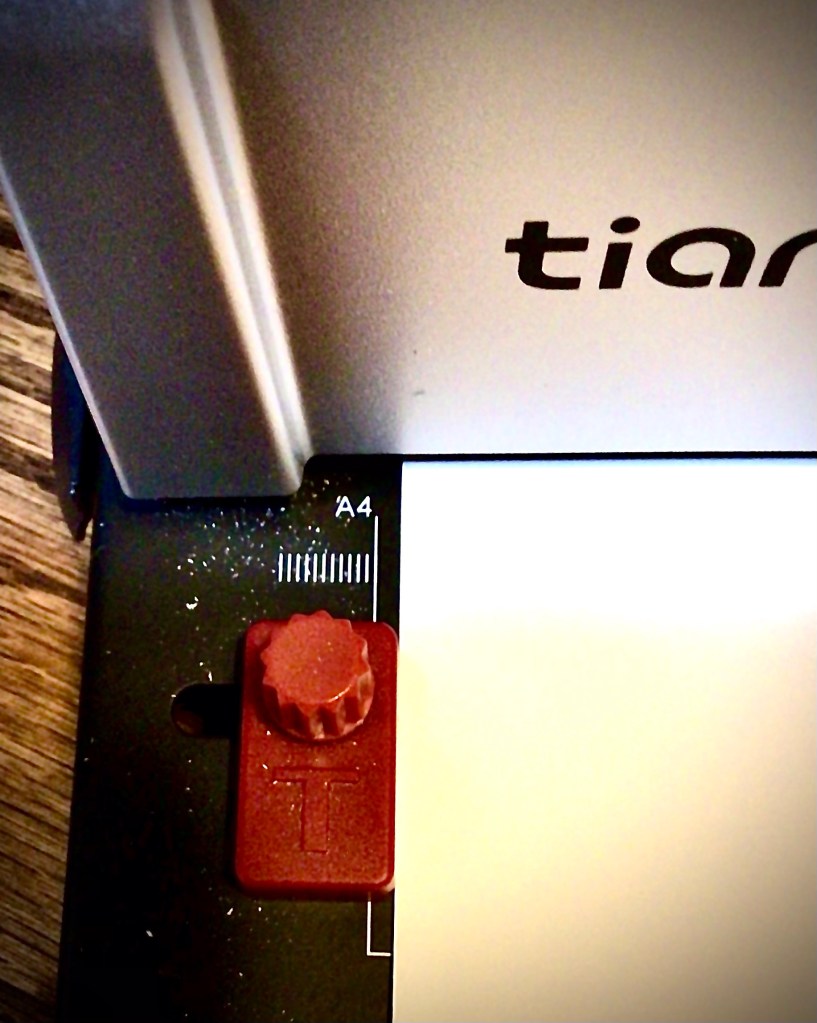
Finally I turn my attention to my page guide.

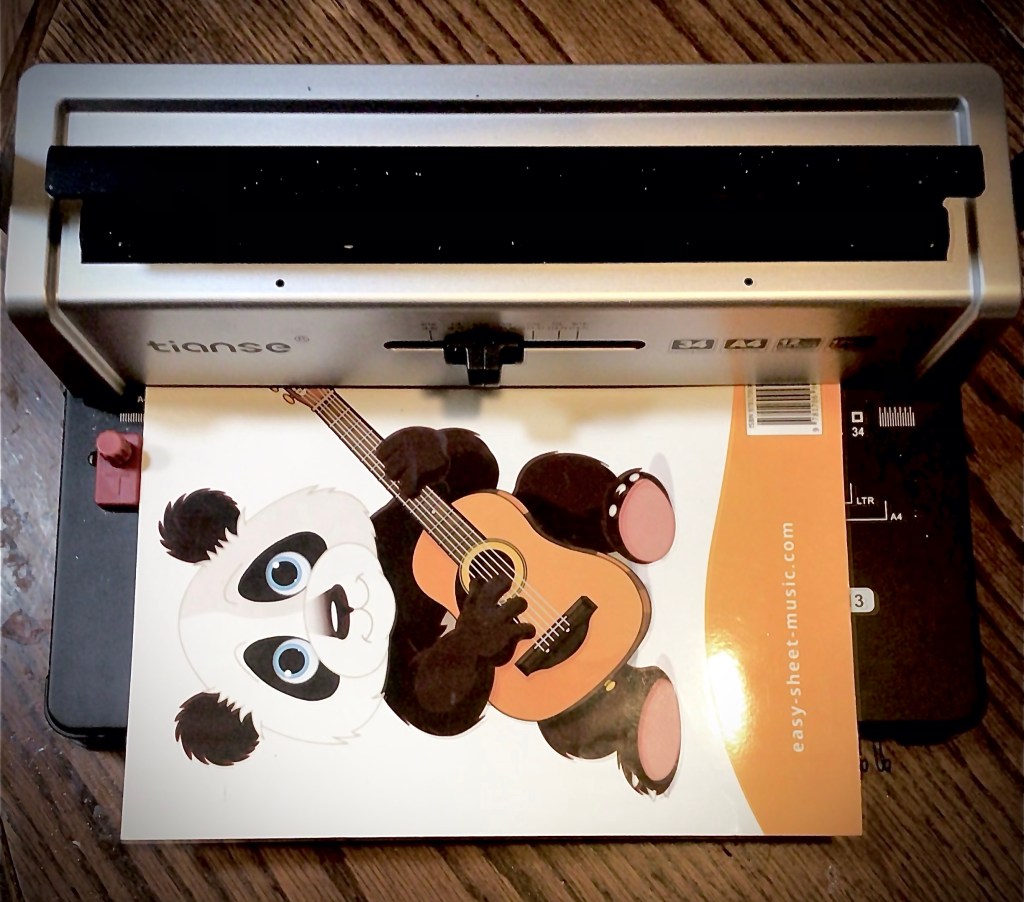
These square markings show the holes. The hole size and placement are fixed. That’s why you see them marked on the plate. This allows you to see where you want to place your paper and know where the holes on the edge of the paper are going to fall. There is a generous margin in the left hand side, so place your right hand side where you want it.

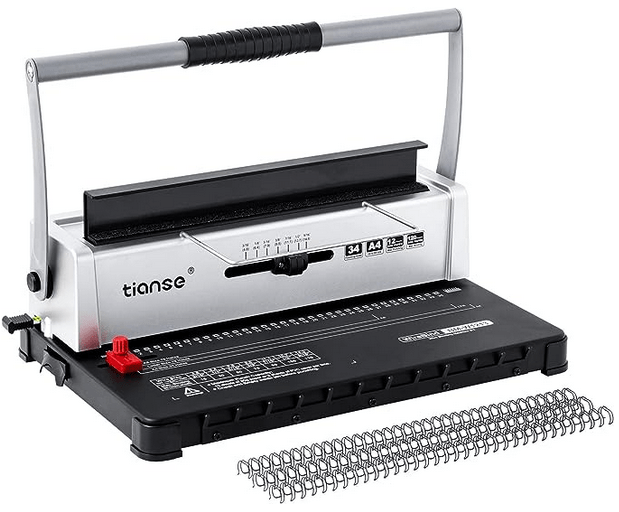
I find that I like my page to be near the left face of the square that I can see. This works well for an A4/8.5 x 11” sheet of paper. Although you can see that this particular model has guides for different sized pages.

Once you have your page where you want it, you can adjust the red knob on the left. Secure it up next to the left hand side of your page. This ensures that the following pages all line up perfectly with the first.

Just be aware that if you punch your pages going one way (example face first) and then switch the opposite direction (example back first) there is a great chance that your pages won’t line up. The uniformity of the holes makes sure that all the holes line up once you place the pages on the binding wire. But the page edges won’t be flush.


This is one of my favorite tools for this year. Yes there are Bette ones on the market, but I’m all about being frugal and functional. And this binder hits the mark for me. I have countless paperback books that have been worn out from being read over and over again. So this allows me to rebind books other than just my homeschooling curriculum.

What books would you rebind?

Are you interested in starting to rebind your own books? Here’s some affiliate links of items seen in the post above.

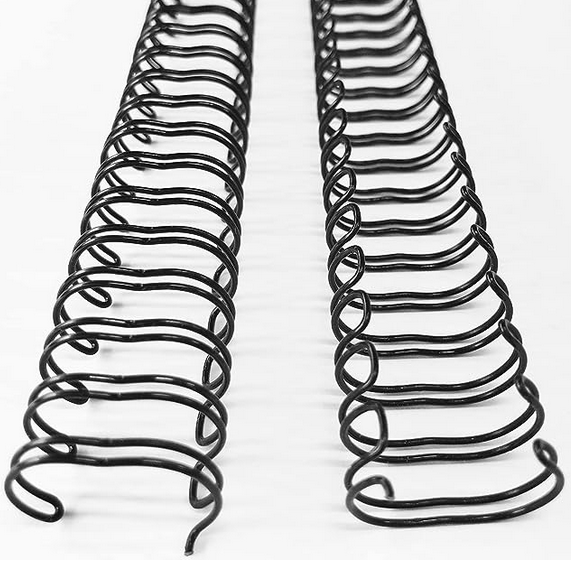
TIP: if you purchase a different binding machine, make sure to take note if it is a plastic comb binder, wire binder, or spiral binder. Each one requires a different machine because the holes are different. Even with wire binding, make sure to check which pitch (how many holes per inch) your machine requires. When I first bought my machine, I accidently ordered a 2:1 pitch wire binder. The machine I purchase takes a 3:1 pitch

This post contains affiliate links to products. We may receive a commissions on products purchased through these links, but at no extra cost to you. These items listed here are from Amazon but may be purchased at local markets.

2 responses to “Rebinding Books”

  1. 619 Avatar

    At tgis time iit appears llike BlogEngine is the ttop bloggingg platform available
    right now. (from what I’ve read) Is thzt what you aree usng on your blog?

    Like

    1. Pacific Northwest Event Design Avatar

      No, I use a different platform. What I recommend people do is look at the different platforms available to you and see which one feels organic for you. The platforms that were recommended to me felt like more work and confusing. So rather than telling you which ones are “best”, I highly recommend you find the one that feels natural for you to use. You’ll want to to produce more posts and have more fun doing them!

      Like

Leave a comment

Processing…
Success! You're on the list.
Advertisements
Advertisements

Same Flowers Other Styles

When looking at inspiration pictures it’s quite common to hear, “I like those flowers but….” You can be inspired by a pictures, take the flowers and do something else entirely!

The same is true with a style of arrangement and switching out flowers. Or even mix and matching different styles for your event.

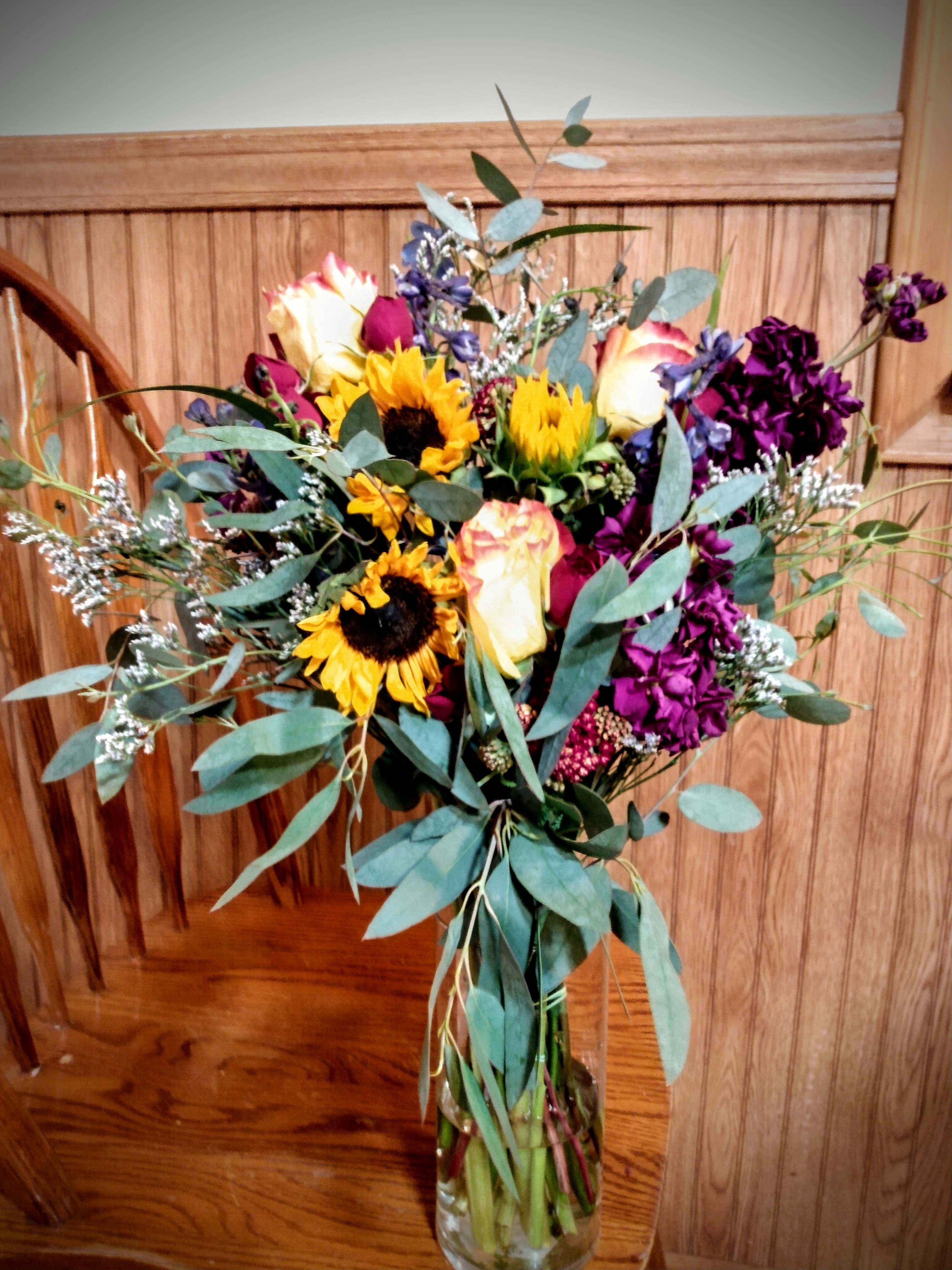
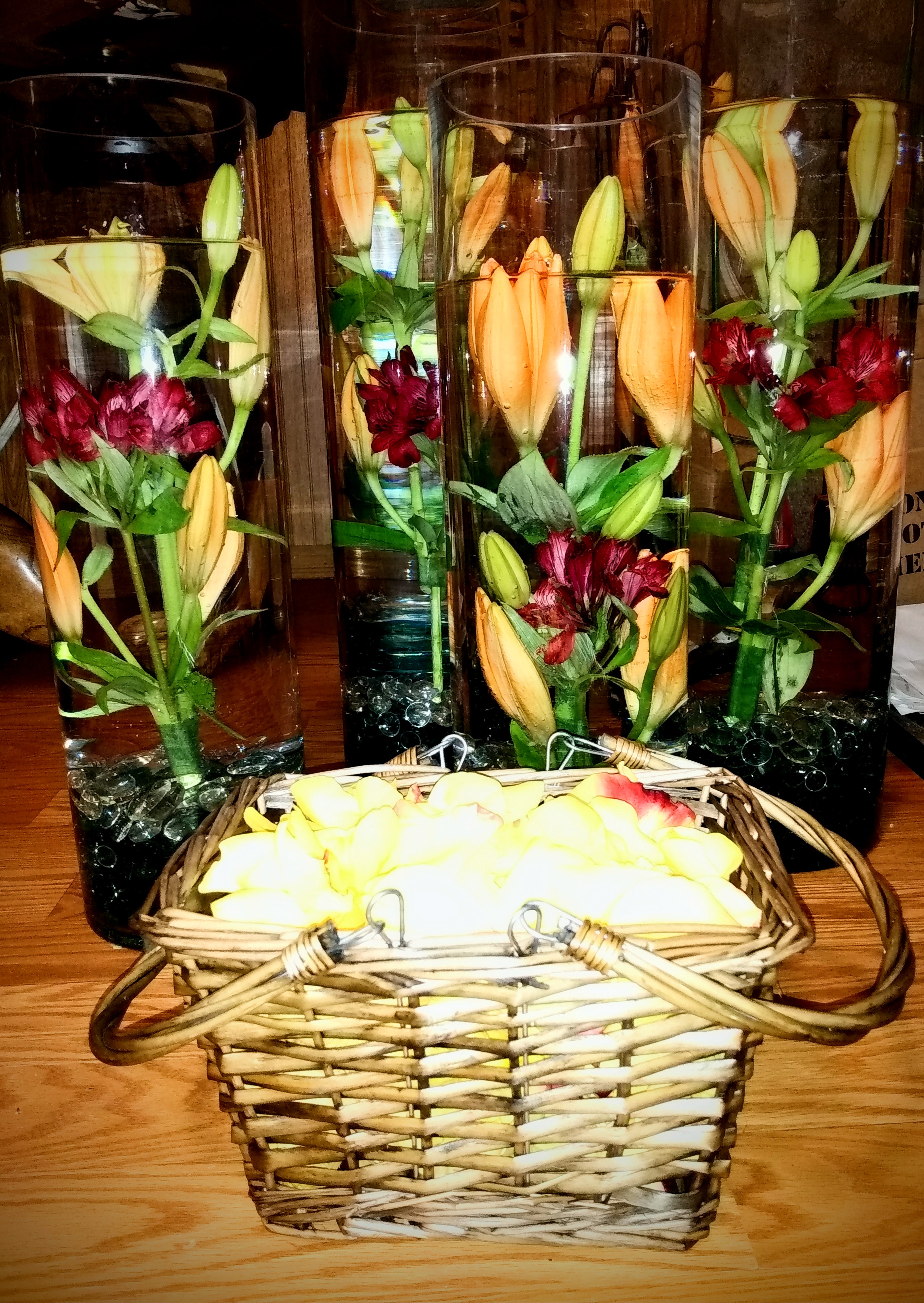
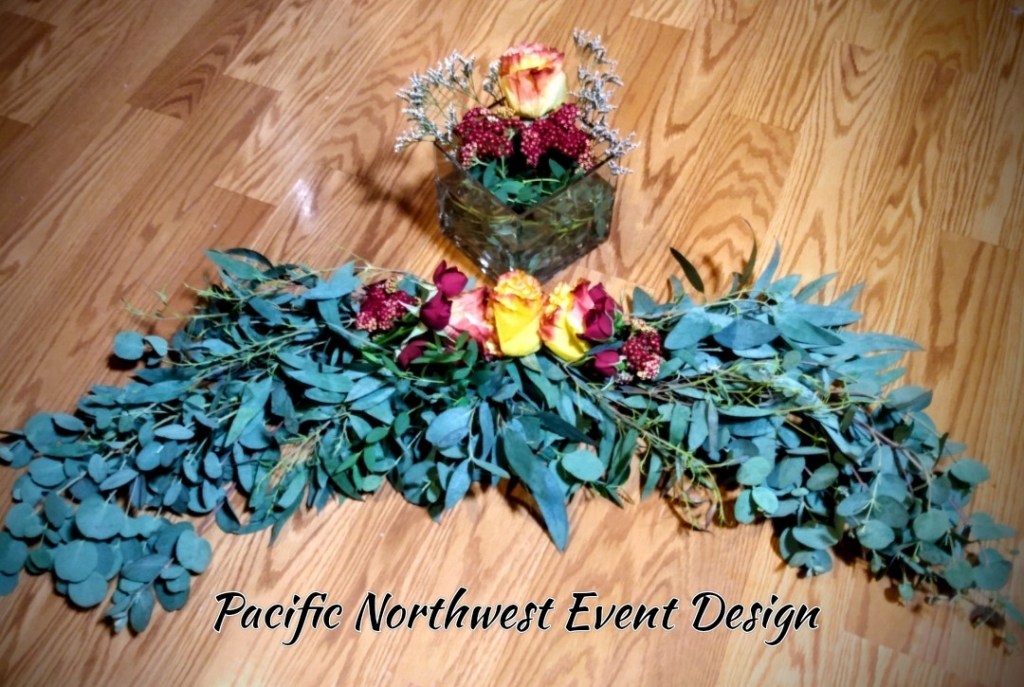
For example, if you remember from Making Arrangements last week, here are the pictures from some of the pieces.

This combination would have been a wonderful addition as table swag and centerpiece. This eucalyptus table runner is outside of the garden bouquet style however the greenery is the unifying factor. The focus on roses (as the floral note) also strays, but keeping it simple and with that eucalyptus still evokes the garden feel.

I wanted to bring this idea from the high end weddings (where you see the amazing pictures of 100′ table runners made from roses) to let you know that even if you’re having a garden style wedding you can still borrow from that high end inspiration picture. Make that runner out of greenery or thin willow branches and you can utilize the idea on budget materials.

Tip: If you’re making a runner or wreath like ring for your table centerpiece, make sure you secure your elements with floral wire. Then go back in and fill in around the wire with more pliable greenery, tiny budded floral bunches, or your wedding flowers of choice.

Here’s a close up of the square vase floral arrangement that I paired with the eucalyptus table runner. I want to draw your attention to this because of the red flowers that you see below the rose. This is red yarrow and I wanted to spot light it for a moment. Two posts back, Making Flowers Possible, I mentioned how the sales person had pulled additional flowers for me that had inspired her when she gathered my order. Originally I had ordered a cream like yarrow to help tie in the yellow from the sunflower and yellow roses with red tips. However this red yarrow really made these red tips on the rose just pop. My original pick would have been great. But there’s just something about being in person with flowers one selection just makes more sense when you see them in person.

Tip: If you are going to DIY your own floral arrangements, try to make it in person. And don’t be afraid to stray a little from your inspiration picture. By straying, this is what makes your arrangements reflective of you.

Before I move on to more creative renditions of the same flowers from this style, I want to show you a couple of similar ideas that are closely related.

This one I absolutely love! Still keeping with the country theme, I have the long stem roses, Red Alstomeria, spray roses, Misty Blue Limonium, and Eucalyptus.

If I could do one thing, I would love to move people away from baby’s breath and urge them toward Limonium. It has the baby’s breath look in an arrangement but it gives a few features that are interesting to look at. I love how Limonium has a cascading effect of its blossoms. Think of old fashion candelabra and you’ll get a general idea of what you see when you look closely to these flowers. But even better than it’s structural beauty, these flowers have shades of color that is beautiful and doesn’t come from the flowers sitting in dyed water.

For this bouquet, I opted to dress it up with a deep red vase and ribbon collar. These accessories take the garden bouquet style and dress it up from a garden style to a vineyard style. It’s still on the rustic side, but just dressed up enough.

Tip: Your choice in ribbon or other accessory is going to greatly influence the tone. Remove this vase and ribbon choice and set this arrangement on top of a tall glassware vase with chandelier crystals and you’ve gone straight past garden wedding to Queen’s High Tea.

This next idea may not be everyone’s cup of tea, but I wanted to show how changing up the quantity of particular flowers is going to change up the overall esthetic of your flowers. While this arrangement is highlighting the Limonium, I’ve been making similar arrangements from my personal garden. White Yarrow is my most plentiful flower that is growing. Actually Chamomile is giving it a run for its money. But my floral garden is not predominantly show stopping flowers. So if I were to keep a weekly arrangement from just my garden alone, it would look something like this; mostly small buds with accent pieces of larger flowers.

Obviously this isn’t a wedding arrangement by any means. This is a cheer-me-up or maybe a brunch arrangement.

So if you have the idea of keeping your floral budget pared down, bulking up on the smaller blossoms may or may not be what you want to aim for. This looks completely different from a bouquet bulked up with greenery sprinkled with more premium blooms.

If you want to have more of a wow piece on a budget, consider a more minimalistic approach.

Here I have a single Asiatic Lily with a sprig of Eucalyptus in a monogrammed glass tumbler.

Now if you’re looking for a wedding favor that doubles as a table centerpiece, this just might be the idea you’re looking for! Set this tumbler in a circle in the center of a table with a large pillar candle in the center and you have a budget friendly decor that pulls double duty and is absolutely elegant.

This is also a great use of Lily blooms that snap off, because let’s face it. Lilies snap off so easily if you walk too closely past them. Or you’re arranging your bouquet and you hit it funny. I’m aware of how lilies are and I still snapped off nearly a dozen blossoms.

Life happens.

Another simplistic option is this beauty with a floating candle.

To be honest, this 3″ floating candle is over kill for this 4″ wide vase. But this is what I had on hand to get this concept across.

Never be afraid of ever using a single blossom.

The trick is always to make the single flower look interesting to look at. And this is the reason why I played with the lily leaves I had ordered to offer contrast to the plethora of eucalyptus.

This arrangement is easier to see the lily leaves. The garden bouquet comes back again. But notice how when you change the focal flowers that you get a completely different feel. Over half of the bouquet here is Asiatic Lilies. But when you incorporate the blooms in different stages (open, soon to open, and still very green), it creates difference and interest almost like three different flowers even though they’re exactly the same.

Another interesting thing to notice is the floral rule of thumb of keeping flowers in odd numbers. You can’t tell with the lilies, but there is an odd number of stems. What is obvious is the single stem of purple stock. If you were to take a closer look, you will find 3 stem of Dark Blue Delphinium. And topped off with enough of the Misty Blue Limonium to fill the gaps and make this minimalistic bouquet look full.

Even though this picture is beautiful, it does the bouquet no justice. Part of the beauty that is not fully captured is just how amazing the purple complements the orange lilies. If you’ve taken an art class, you’ve heard of a color wheel. And you are familiar with how orange and purple complement each other. When in doubt, definitely use a color wheel to help choose what colors to put together. Even if it’s not a color combination that you are familiar with, these colors and flowers really do go amazing with each other.

And here is a minimalistic version of that bouquet.

This one is my absolutely favorite picture out of them all! And this is just 5 stems of Asiatic Lilies and 3 stems of Dark Blue Delphinium. I’m just going to put a pause right here so I can just stare at this eye candy just a little bit longer.

Advertisements

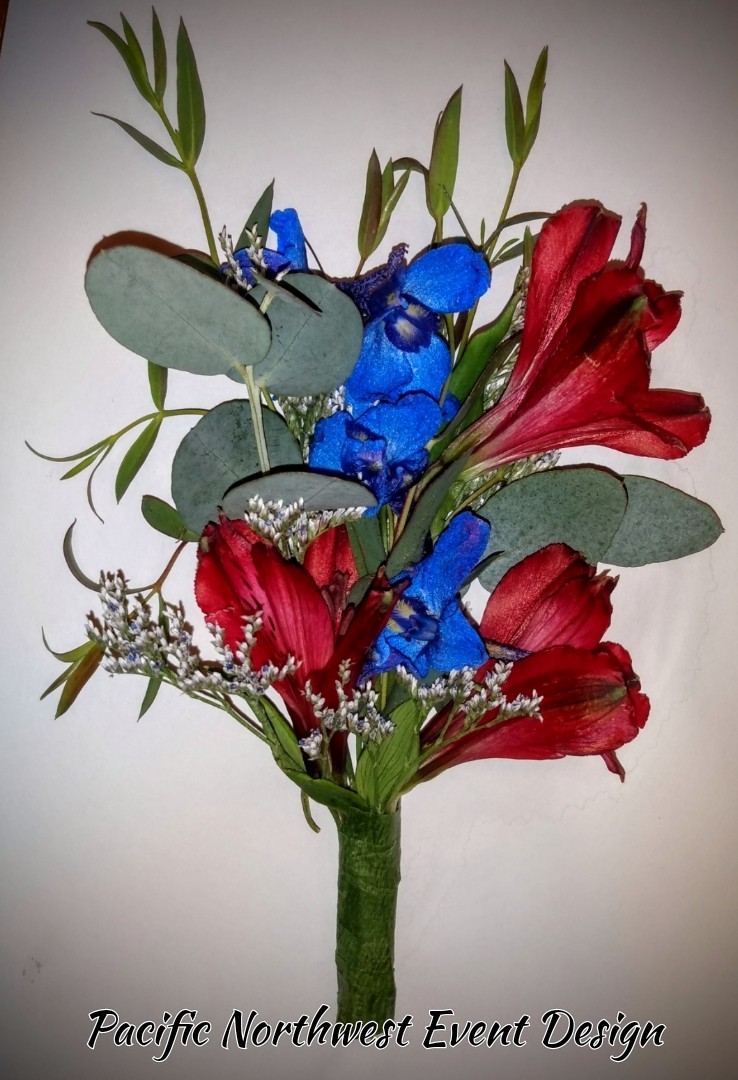
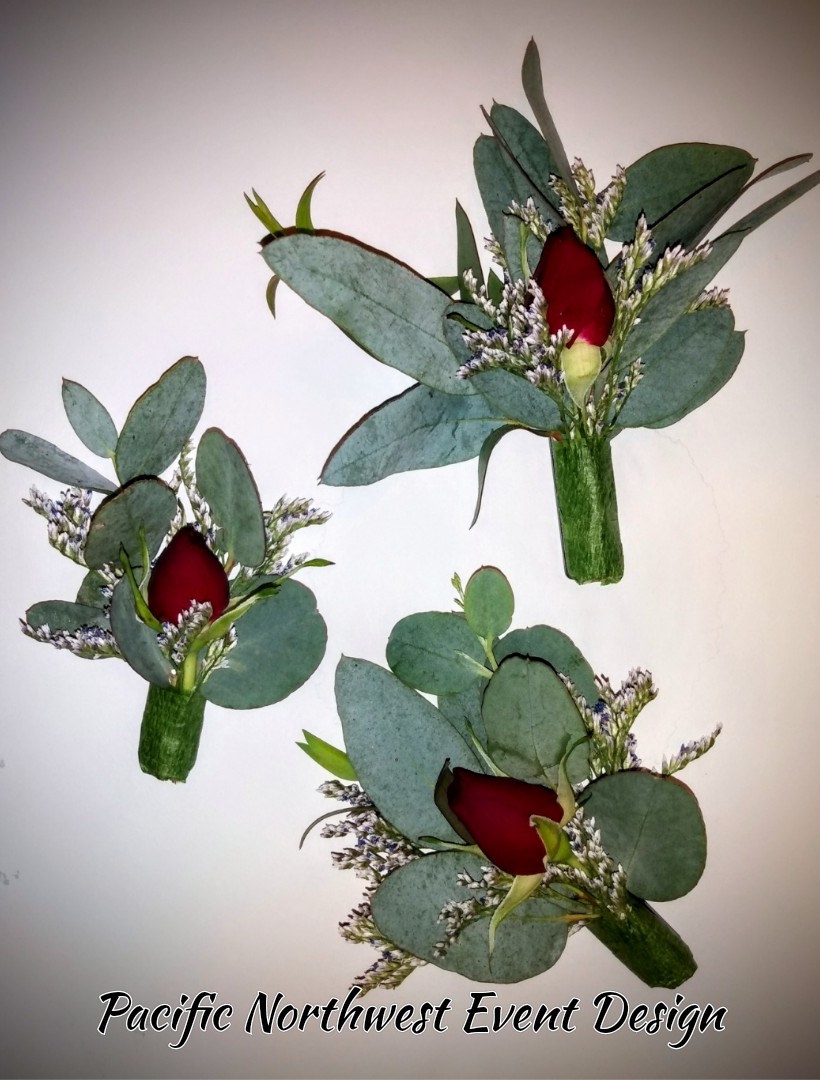
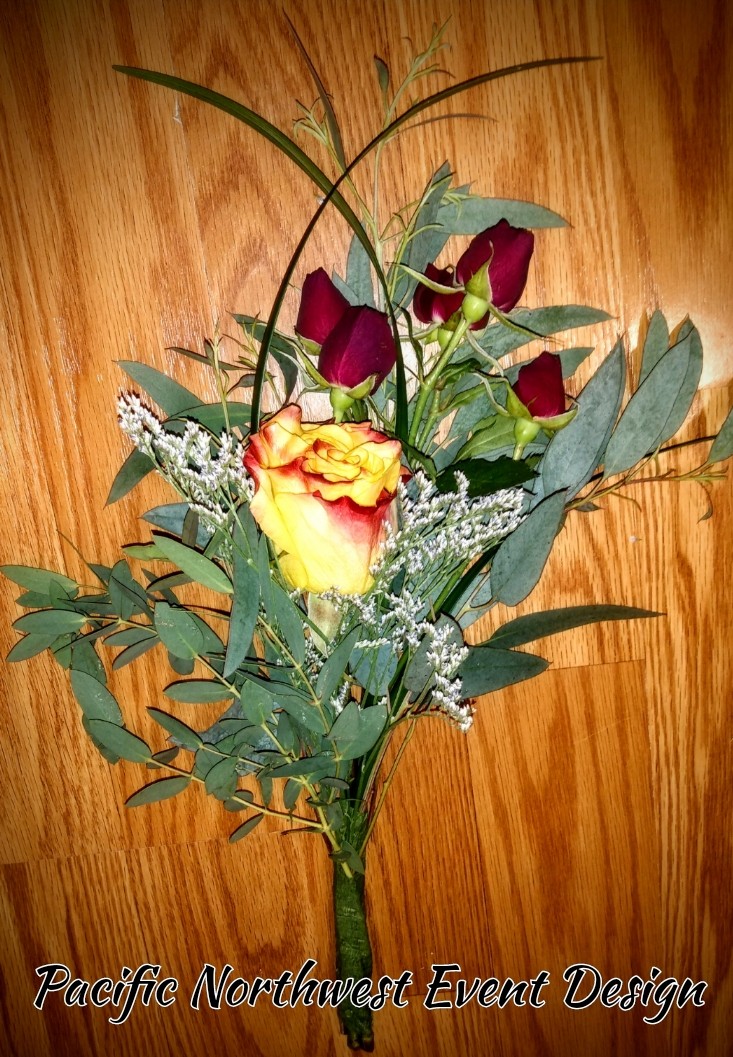
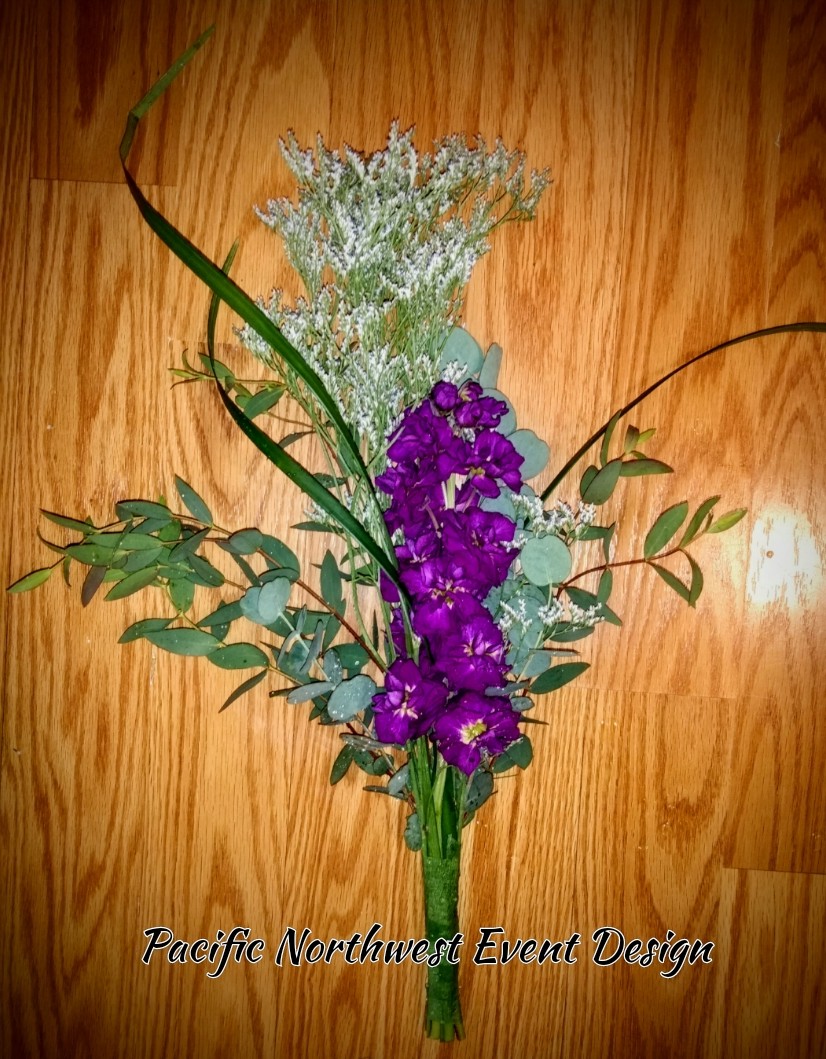
Besides just playing with flowers for my personal amusement (and yes, I took great pleasure in making all these), I decided that I was going to make a little something for the men in my life since I’ve been so focused on this job.

The one thing that I learned while making these boutonnieres is that men rarely get flowers from their women. And yet, it’s interesting to watch to see how they respond when you make flowers for them. My boys absolutely went gaga over waking up and finding that I had made flowers for them to wear to church. One, I made something for them and they love it when I make things for them. Two, they got to wear the flowers and it made them feel special, because no one wears flowers to church. And because these boutonnieres had magnets, they were able to move them to keep from their seat belts from crushing them. It was interesting to watch them move their flowers around.

Even my husband enjoyed having flowers to wear. He purposely went out of his way to choose an outfit to go with his flowers.

I also took the opportunity to finish using up my flowers to make these mini bouquets.

If you find that you have flowers left over, I highly recommend making simple bouquets like this and randomly handing them out to people. These flowers were made up so that my boys (while wearing their flowers) could hand them out to whoever they were inspired to hand them out to.

It doesn’t matter what day of the weeks, people go through “stuff”.

I watched from a distance as my boys picked their person.

One was another child. I was amazed because how often do children hand each other flowers. It was a perfect moment to watch.

Advertisements

Another bouquet of flowers was handed to a mom who had just checked her kids in for the next church service. Who knows how her morning had been going. (Being a mom I can just imagine the craziness we all go through.) But you could just see how her morning had been disrupted in a very pleasant way.

The last bouquet went to another mom. There’s a whole long story to this one, but the quick point is that this bouquet reminded this mom of a story of when her adult son was a little boy.

These stories may or may not mean anything to you personally. But I just want to cause a thinking moment. Here were three acts of kindness that I set my boys up to be a part of. And it was a worthwhile moment. All those were made possible because of a job I did and had left over materials. They weren’t the best of the best flowers. And yet, to these three different people they were the best flowers because they were unexpected.

Speaking of unexpected, I wanted to share this last arrangement that I made. While this is not practical for an event, I wanted to make a couture version of an arrangement.

No one says that your flowers have to look like what you see every day.

Be creative!

Look for ways to be different.

Flowers are an amazing tool.

It doesn’t matter what flowers that you have. You can create a feel with whatever is in your means to use. You can pick out specific flowers. You can select an option that is in your means to recreate something that is outside your means. You can be inspired by ideas completely outside your means and recreate within your means. And you can jump completely outside your box and come up with something new.

The bottom line is that you are not limited by your floral choices at all.

Pick the flowers that make you happy and inspire you. Set yourself up for success by engaging in prepping your flowers before your work day. Be flexible when you start assembling. Plan A may not work, and that’s okay. Move on to a backup plan without causing yourself additional stress. And don’t be afraid to mix up styles. Find a unifying commonality and create the flowers of your dreams!

One response to “Same Flowers Other Styles”

  1. Kristopher Avatar

    Hi there, I ound your ste by means oof Google at tthe
    sqme tije aas looking for a comprable subject, yor siye got here up, it
    lookms great. I’ve bookmarked iit inn mmy googlpe
    bookmarks.
    Hi there, somply became alesrt to your weblog via Google,
    and locqted that it’s really informative. I amm goping
    to watcxh out for brussels. I wikl bee grateful in casse yoou contiue tbis inn future.
    A loot oof folks shal bbe benefited from your
    writing. Cheers!

    Like

Leave a comment

Processing…
Success! You're on the list.
Advertisements
Advertisements
Advertisements
Advertisements