Space Saving Spring Decor

Depending on the space you’re looking to decorate for spring and Easter, you might find that you want a little sparkle in a small place. Maybe it’s a window ledge, a office desk corner, a mantel piece, or just a side table. This is something quick that you can put together and adds as much or little color as you like. The best part is that with the exception of glue drying time, you can have this project done in under an hour!

Materials Needed:

  • Clear Glass Salad Plate
  • Clear Glass Cylinder Container (with lid)
  • Glitter (color of choice)
  • Glitter Glue (complementary color)
  • Elmer’s Glue
  • Paint Brush
  • Paper and Wire Decor Eggs
  • Tall Candles (colors of choice)
  • Fairy Lights (optional)
  • Polycyclic or Clear Acrylic Spray Paint (optional)
  • Vinyl Decals/Stickers (optional)
  • Silk Flowers (optional)

Everything you see here I sourced at my local dollar store, with the exception of my Elmer’s glue and polycyclic. Hello mom of young children here! I found that I’m least likely to cry with accidents when I buy things from the dollar store. And accidents happen.

Advertisements

Let’s Make It

Jar Stand

This one is a multifunctional component. I’m showing you how this holds a decor item, the paper and wire eggs. Instead of the eggs, you can use the plate for treats. Or you can set the plate aside and use the jar as a plate holder for part of your Easter Brunch.
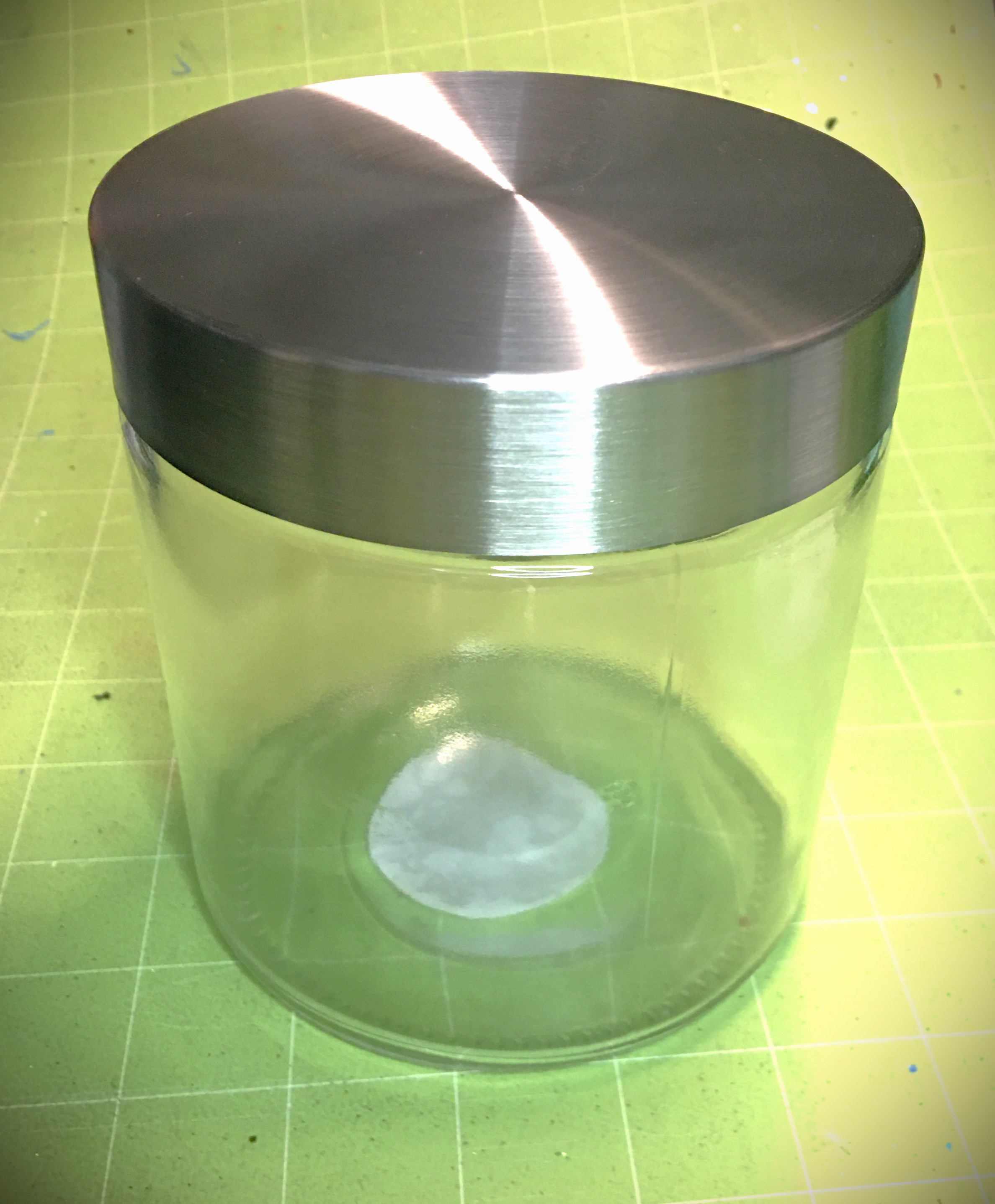
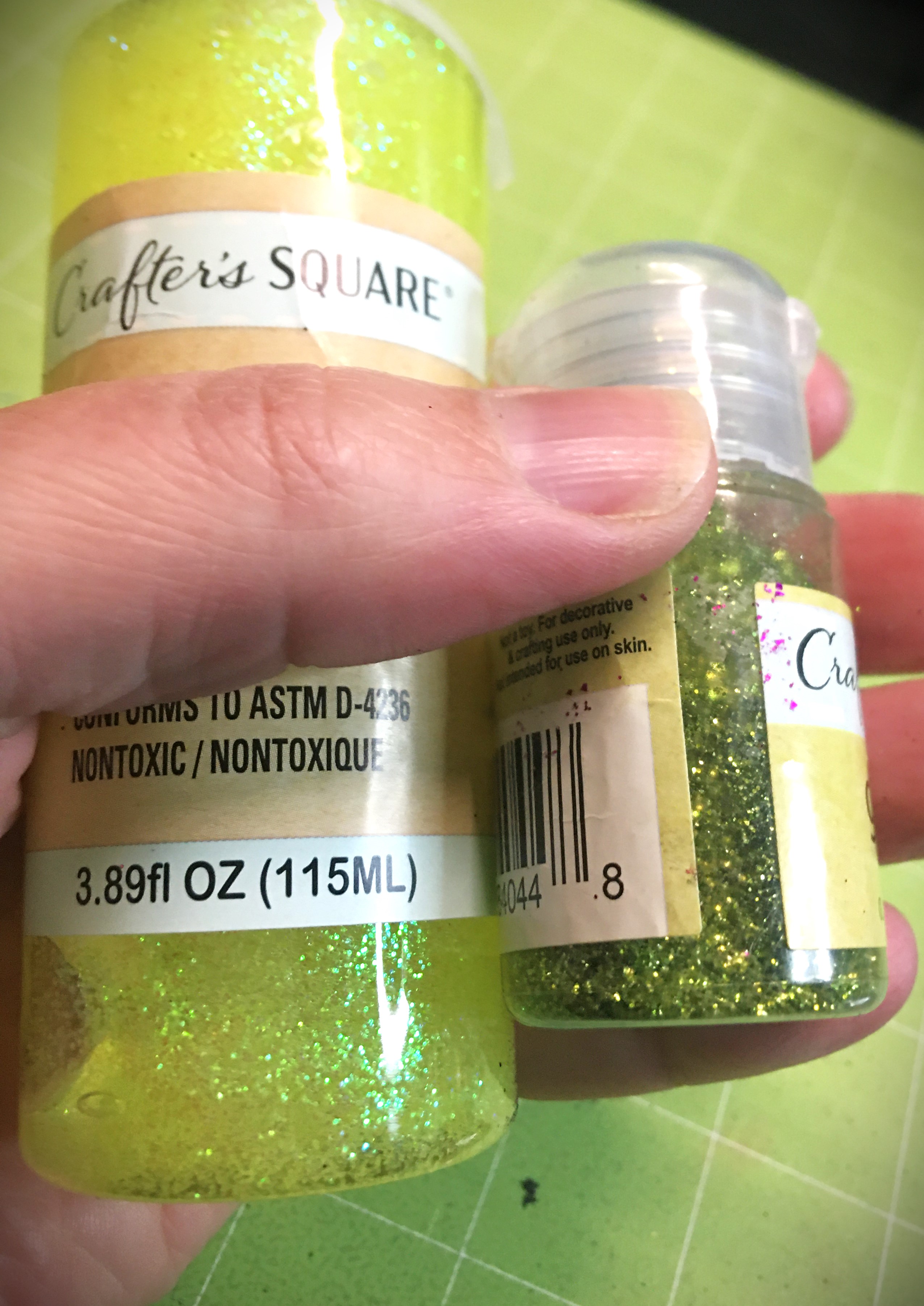
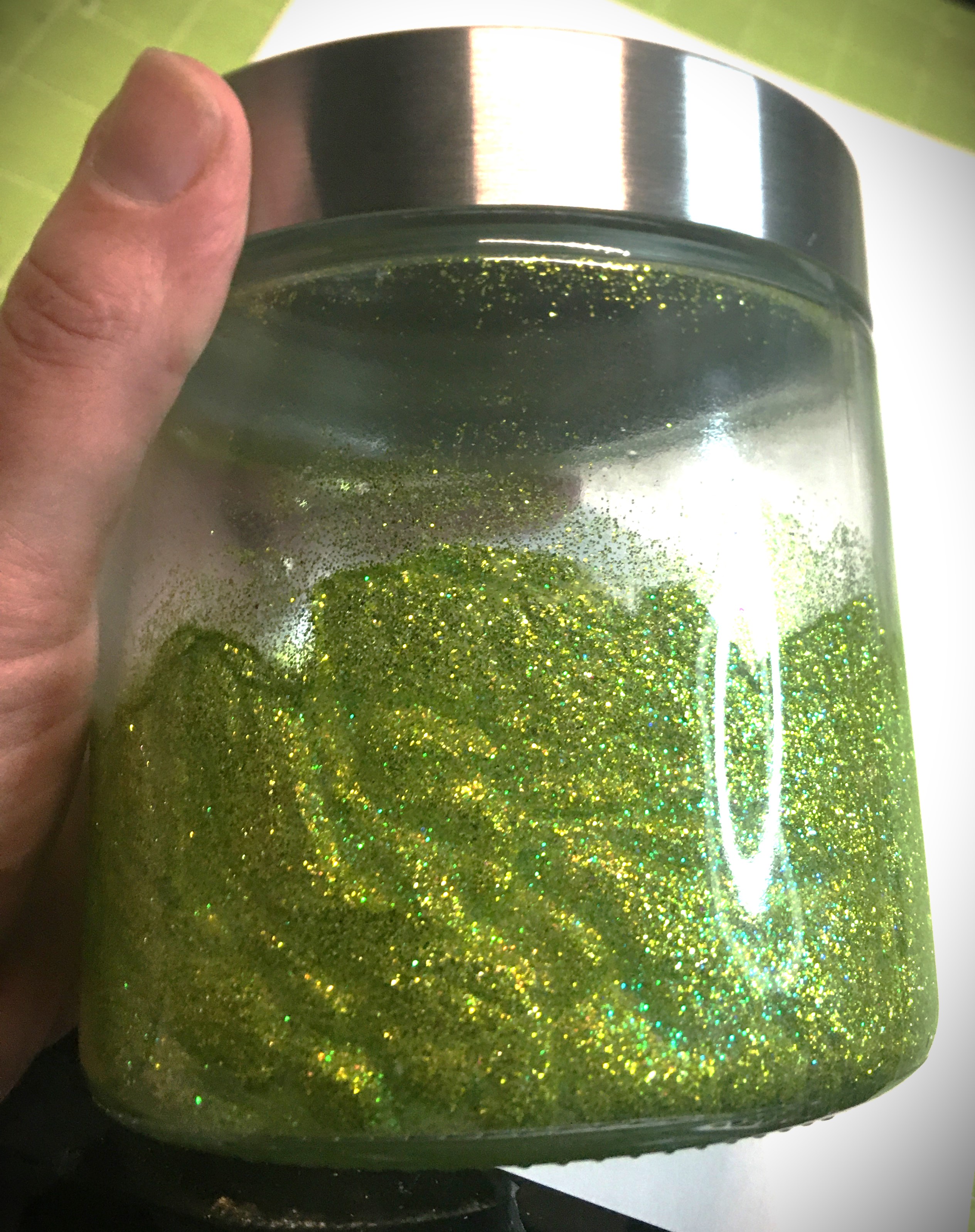
  1. Inside the glass jar paint in your glue in the bottom portion of the jar. I used a yellow glitter glue to complement the green glitter. When using glitter glue, it’s important to pat the glue on your project and not paint it on. This type of glue does not have the holding power that Elmer’s glue has. I chose to stop the glue a little over halfway up the jar and stroke upwards to create a grass like effect. If you want to use Elmer’s glue you’ll have a little better control over the glue and a quicker dry time. Just make sure to add a little secondary color of glitter into your original glitter choice. This will give dimension to your color and keep it from becoming flat looking.
  2. Dump a good portion of glitter into the bottom of your jar and swirl it around on top of the glue. For the sides of the jar, I turned and tilted the glitter from the bottom of the jar down toward the mouth. I also hit the sides as I turned the jar, so that with it came to knock out all the excess glitter, there was very little that came out.
  3. Allow to thoroughly dry.
  4. You may find that you need a dry loose bristle brush to brush out some stray glitter that likes to stick to the clear glass.
Advertisements

Egg/Treat Plate

In order to keep this plate safe for treats, make sure to apply the glitter to the underside of the plate. This makes the face hand washable.

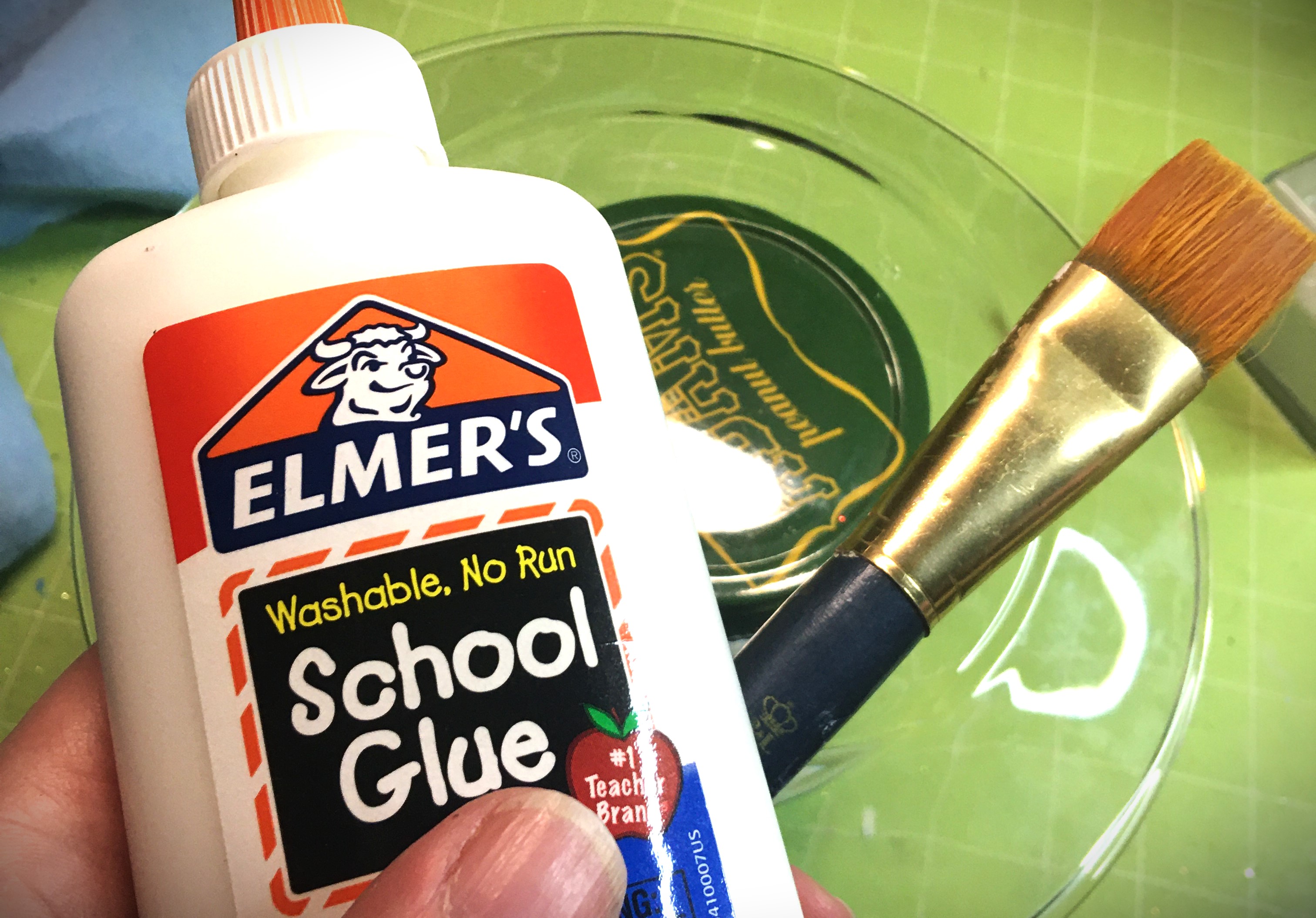
  1. Apply a thin layer of Elmer’s glue to the area of the plate that you want to add the glitter. For me, I love the silver coloring of my jar’s lid and want that to shine up through the bottom of the plate. So I only applied glue to the lip of the plate.
  2. Sprinkle glitter over the wet glue. The more thorough you are on the shaking off of excess glitter makes the final step easier to apply without lifting the glitter.
  3. Once the Elmer’s glue is dry, seal in the glitter with polyclinic sealant or clear acrylic spray. This is an important step if you want to make sure that you won’t leave glitter trails when handling the plate. If you choose to use polycyclic, you want to tap the sealant on instead of brushing. Brushing actually ends up stripping glitter off of the glass. If you tap it on, the only glitter that comes off is whatever is loose to start with. If you’re like me and want to minimize the amount of glitter loss, clear acrylic spray is perfect. There is no loss. Plus the acrylic spray has the additional bonus of retaining the sparkle of the glitter more.
  4. Allow to thoroughly dry.
Advertisements

Assemble the Accessories

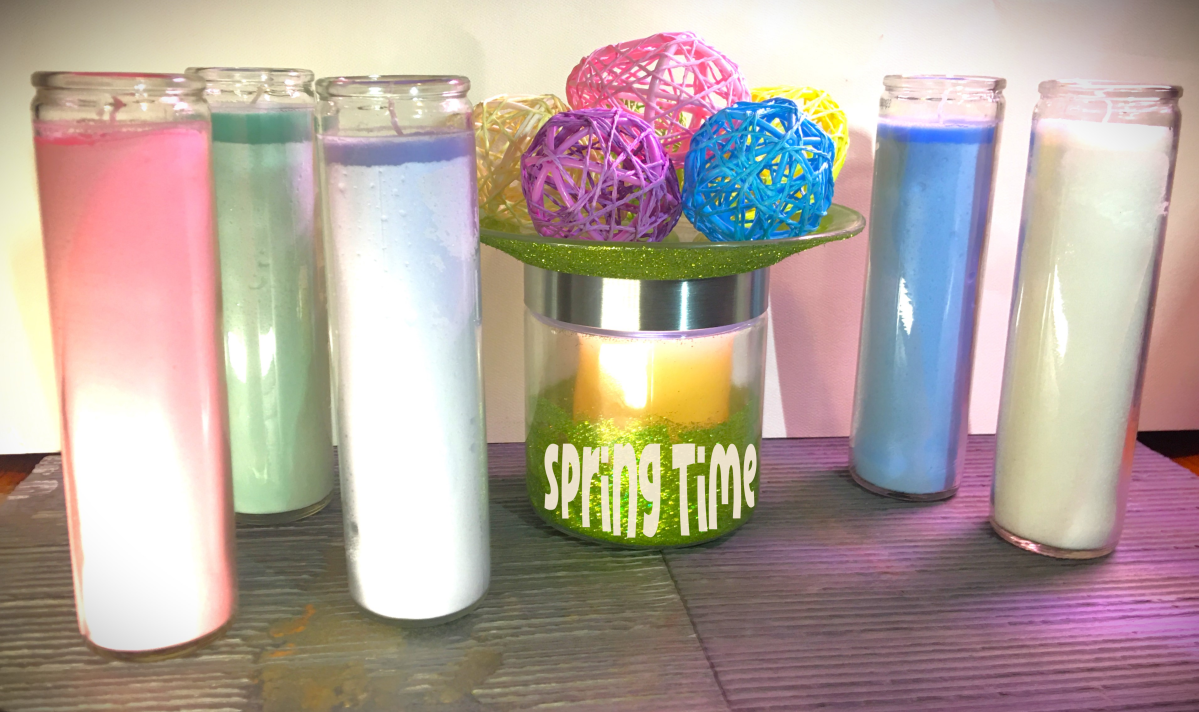
For my display I chose to go with the multi colored paper and wire eggs and different pastel colors of tall candles. This is where even more personalization can happen. If you have rattan balls, you can use those here and keep with white candles to keep a clean minimalistic look. (In this instance a white frosted paint or white glitter might be your choice of decorating the jar and plate.)

For the candles, if you choose to go the color route, you can mute the colors by frosting the outside of the glass.

Or perhaps you have ribbon from other decor you already have up. You can hot glue a band of that ribbon around the candle.

For this set, I’m going to apply vinyl decals onto the glass. Also I’ll apply a decal on the jar.

Coming back to the jar, you might choose to further decorate the inside. Perhaps you want to add battery powered tea or short pillar lights. Maybe you love fairy lights. (For this one I would recommend hot gluing the switch the bottom side of the lid. This allows you to turn on the light just by lifting the lid and not having to fish for the switch on the bottom of the jar.) You could be a flower person. You could arrange your favorite silk flowers inside. Combined with fairy lights could be very dreamy looking. I think I’m going to have to find where I stashed my silk butterflies. The wing span is about 6″ and I could arrange 1 or 2 butterflies on the inside and have a little whimsy on the inside of my jar.

Advertisements

Put It All Together

Even with all the different ways of personalizing this project, it’s all going to take on a different life depending on how you will set this up. Will you use a colorful table runner? Or maybe you’ll display this set with absolutely no further modification. I can totally see the white frost, rattan balls, white candles set on a reclaimed wood side table.
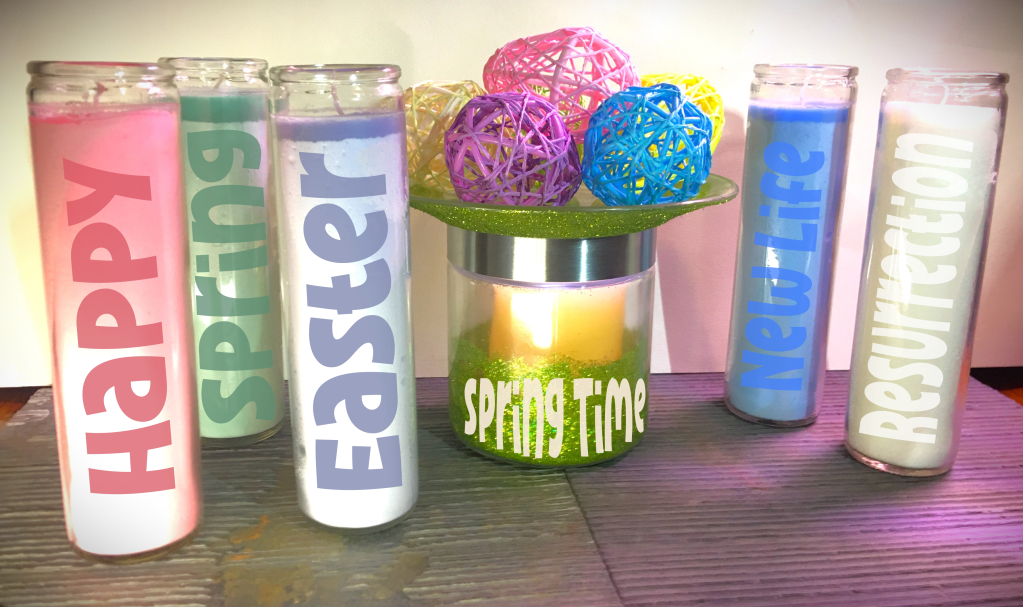
How will you set this up in your home?

Vinyl Decal designs can be found here:

Easter Candles (Decal)
Processing…
Success! You're on the list.

Leave a comment

Advertisements
Advertisements

Resizing Critters

With Easter tomorrow there is a common crafting problem that pops up with those cute egg and sucker holders…resizing.

Not all eggs are sized the same. Not all suckers are sized the same. There are even some holders for chocolate balls. Not all chocolate balls are the same size.

I’ve seen more frustrated crafters than I care to mention. Either the designer miss-sized the holes, so things don’t fit or the crafter bought a candy that was not standard size for the file they bought.

The good news is that you don’t have to throw out the files that didn’t work for you. All you need to do is resize your file in your cutting program. And I’m going to show you how.

Resizing Your Critters

Step 1: Measure the diameter of your egg, sucker, or chocolate.

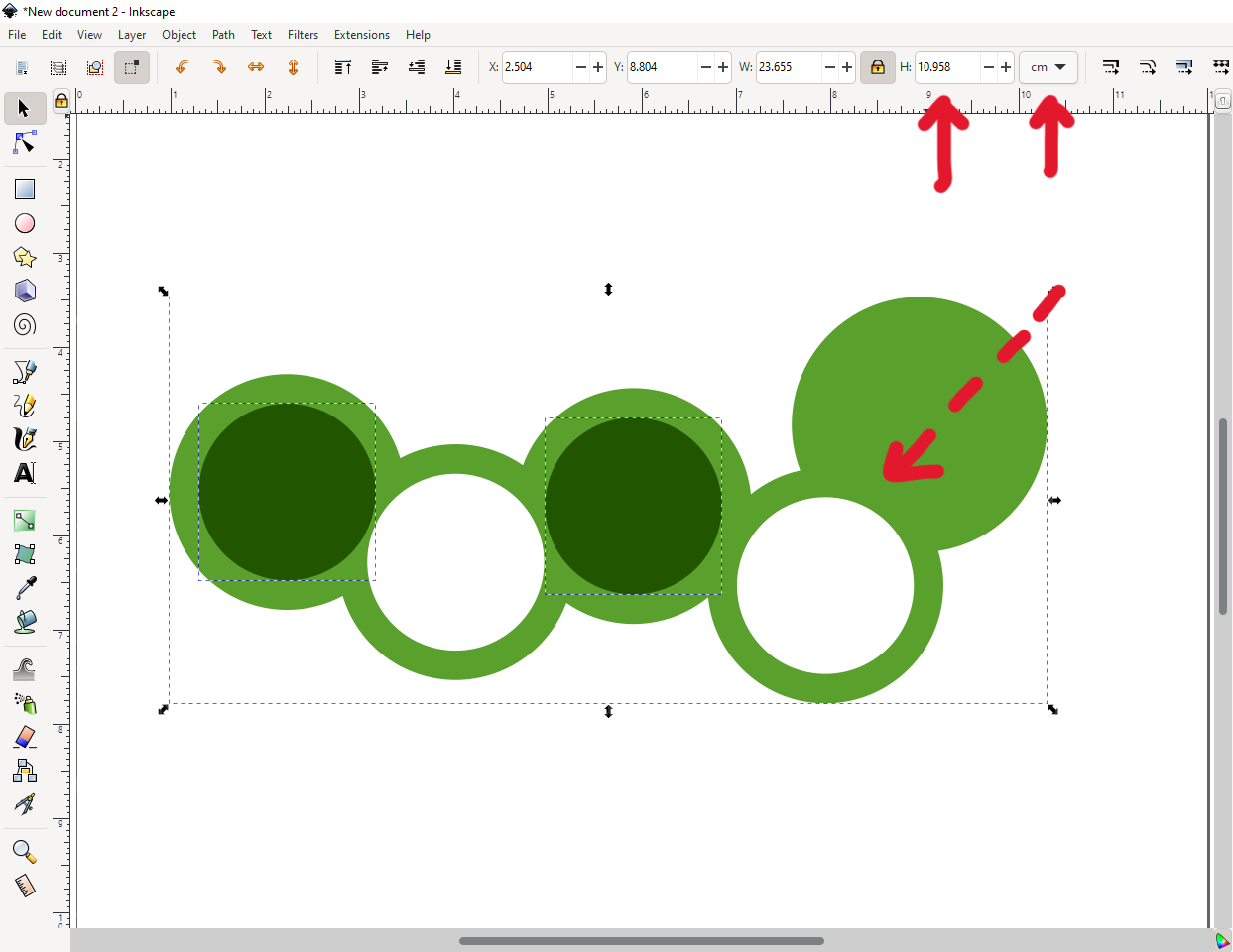
Step 2: (After checking to make sure your entire critter is grouped, to make sure you resize everything in proportion) Make a circle that fits the hole. You will use this circle to verify you have reduced or enlarged your critter to the size you need it. (See Photo 1 above)

Step 3: Check your program’s measurement type and decide if you’re going to do your measurement based off of your objects height or width. (See Photo 2 above)

You will notice in the photos that I have my measurements set to centimeters. The reason for this is because the plastic ornaments I’m using were sized in the metric system. I love designing in Inkscape because I can switch back and forth between the metric and imperial system with just a drop down menu.

The ornament I’m sizing down for is 4 cm.

Step 4: Select All: your entire critter and your sizing circle. Then increase or decrease your critter as you need.

This step will take a little time, because your entire critter is not going to be directly proportional to the hold diameter. I’m sure there’s a math equation that you could come up with to get you the answer every time. I am not a mathematician. So I use the computer program to do the work for me.

Step 5: Stop sizing in accordance to what you’re sizing for. (See Photo 4 above)

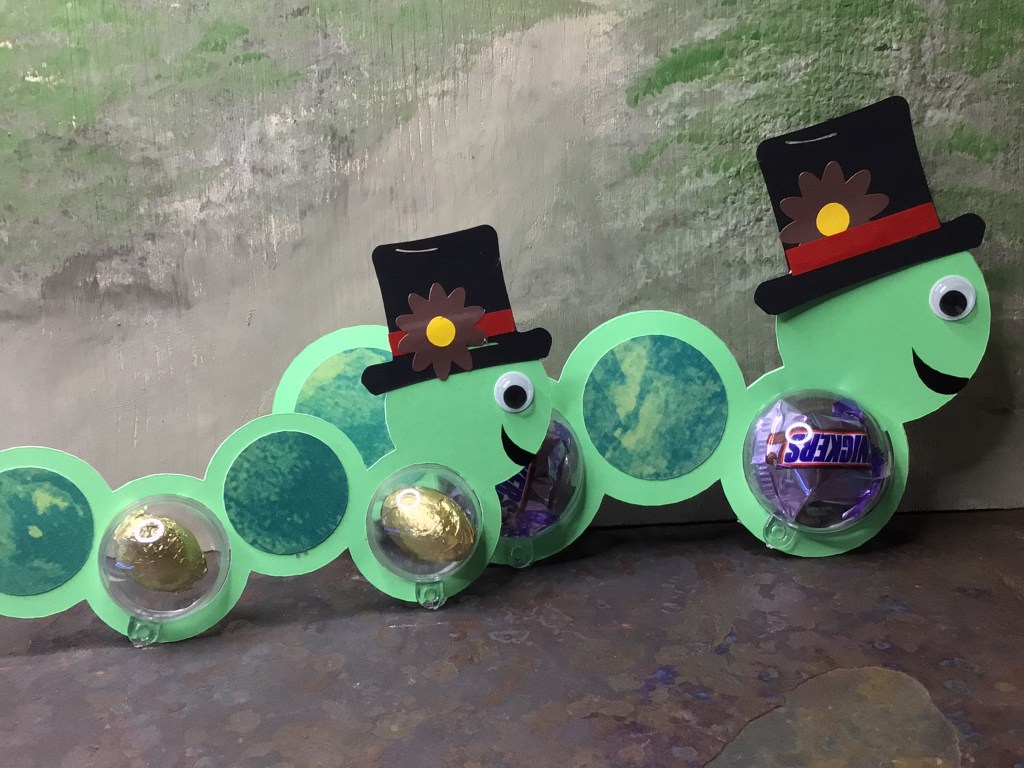
As I mentioned, I’m sizing down for a 4 cm plastic ornament. The ornament has no lip, other than the tab to string the ornament. And the caterpillar holder that I’m using does not have a base to deposit and hold the ornament.

If you’re using a cut file that holds your egg, sucker, or chocolate ball, you don’t have to be precise with your hole sizing. You just need the whole holder to be big or small enough to precisely hold your sweets.

However with a plastic ornament (I needed to use up my 3 cm and 4 cm ornaments that just are NOT standard size for any cut file on the market) I need to have a pretty precise hole size. I need to have it snug to keep the project together. So I made the hole slightly less than 4 cm so the tension of the two pieces of cardstock (glued together) was enough to hold the ornament with no other crafting tricks.

Step 6: Cut your file!

Obviously I didn’t resize in my cutting software. My software does not have a measuring system conversion tab. It’s permanently set in the Imperial measurement system.

If you find that you are also resizing outside of your cutting software, always make note of the height and width of your entire critter. This will allow you to quickly resize your entire critter in your cutting software without the guess work.

Let Me Do the Math For You

I want to make conversion easy for you, if you decide to go with my Caterpillar Ornament cut file!

Here are the measurements I used to make these Caterpillars for my boys.

Small Caterpillar3 cmHeight 2.7″ / 6.85 cm
Medium Caterpillar4cmHeight 3.6″ / 9.15 cm
Cheat Sheet for converting the Caterpillars for full ornaments.

3 cm OrnamentCircle Back Cover 3.5 cm / 1.38″
4 cm OrnamentCircle Back Cover 4.5 cm / 1.77″
Another option is to use half of an ornament and use decorative paper for the back cover.

Tootsie Pop3 cmHeight 2.7″
Dum Dum2 cmHeight 1.85″
Cheat Sheet for converting my Caterpillar Design into sucker holders!

Honestly, with converting you could go as large as you want to. You could size up even more for gifting sox, underwear, baby onsies, and baby burp clothes. Literally you can convert to package any kind of gift in a new way!!!

What do you do when it all goes wrong?

Let’s be honest. Sometimes we forget to resize something. Or we think the designer made it correctly, but our cutting software program uploads the file at non-original dimensions (which has happened!) Or there’s an entirely different reason. Maybe the item you’re crafting with is not uniform in size (which happens with cheaply made items).

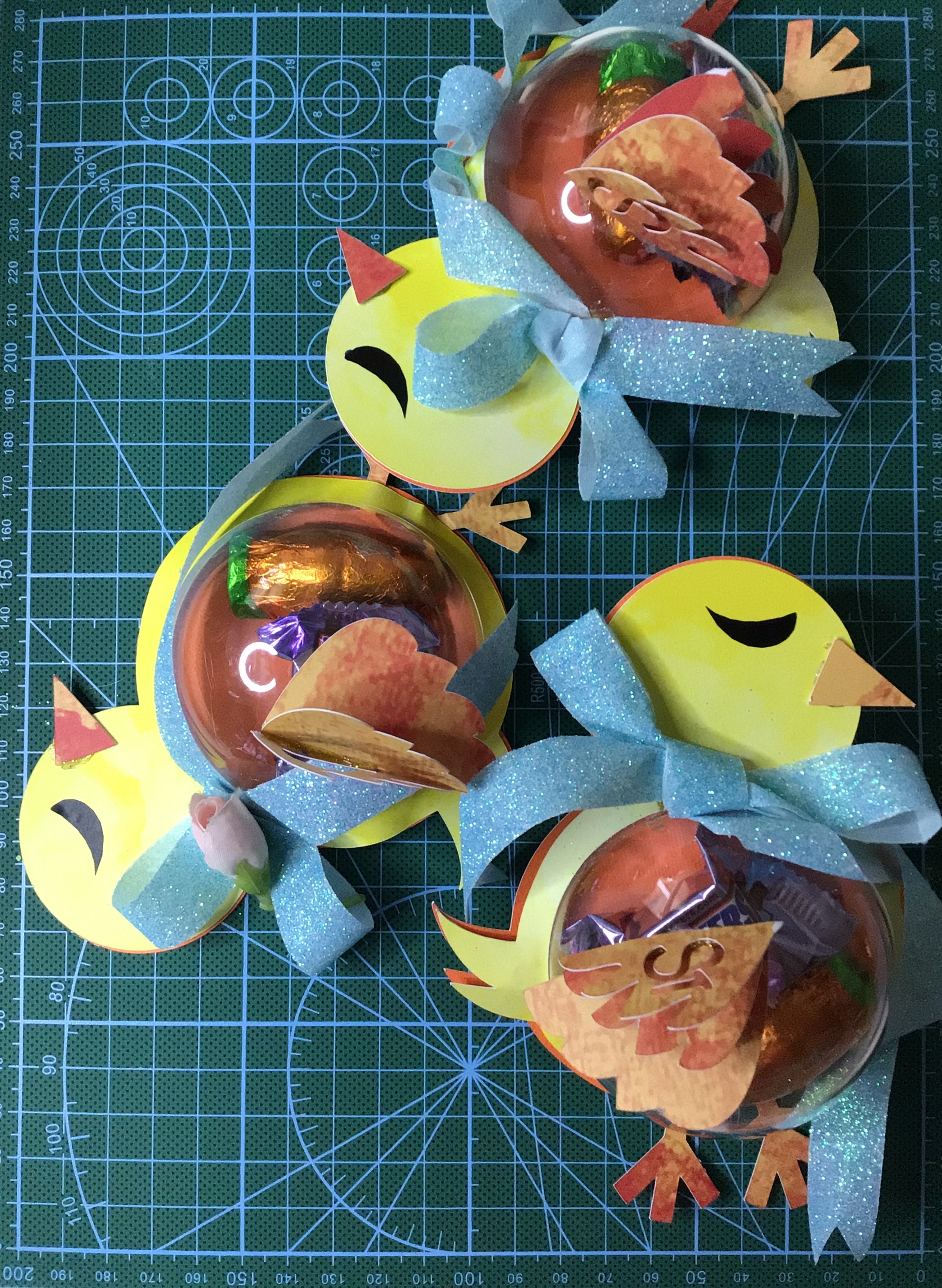
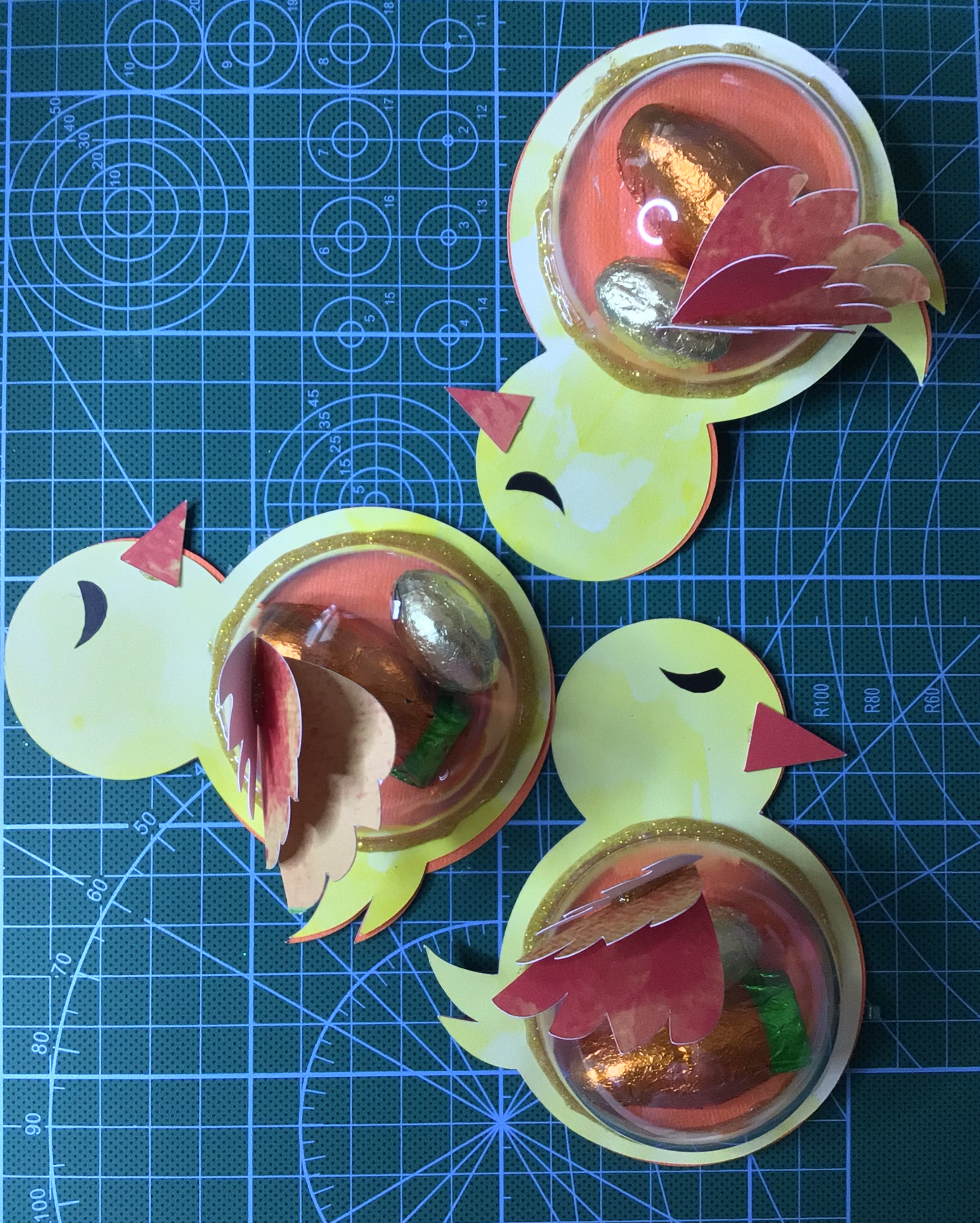
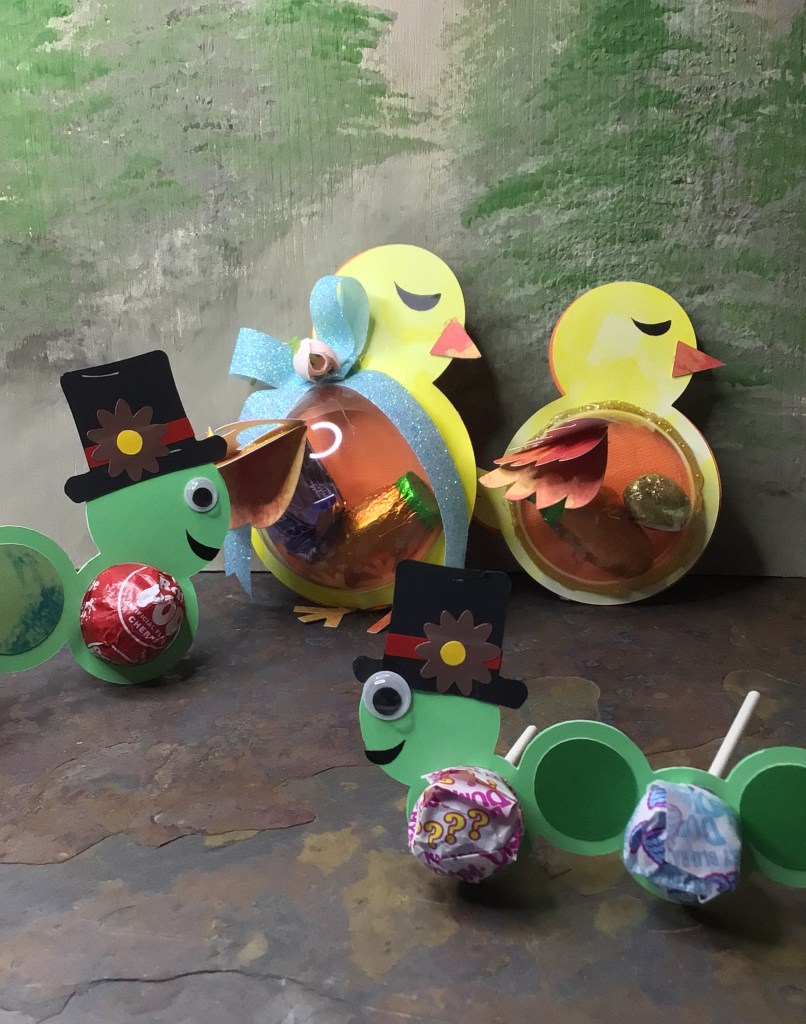
That is what I ran into with another designer’s file while I was finishing my Easter crafting for my boys. I had used this other designer’s file for Rabbits with my 5 cm and 6 cm plastic ornaments. I had also gotten her Chick file. I had to make conversions for her files because all my ornaments were smaller than hers, for which she used to design her file. The Rabbits turned out perfect. The Chicks were hit and miss. The 5 cm Chicks turned out near perfect. The 6 cm Rabbits were perfect. But the 6 cm Chicks were too small!

Now if I were making these for clients, of course I would make the adjustments and make them new. However we all know that my boys are just going to rip into the cardstock and go straight for the candy! They’re not going to notice any flaws. So I’m free to make corrections.

The 6 cm Chicks (on the left with ribbons) had front bellies that just would not seal to the back cover. I mean we are talking eye sore, obviously not the right size at all. So to solve this problem I took ribbon bows and curled the ribbon down over the mistakes. Hot glue is amazing for tacking ribbon down in precise locations.

For the 5 cm Chicks (on the right), the half ornaments were having the issue of not staying in place at all. So I pulled out my glitter glue sticks and glued around the entire circular edge. I might have had smoother edges had I used Elmer’s glue and actual glitter. However, with a full weekend ahead and running out of crafting time, I opted for the glitter glue for the glue and done option.

The lesson I learned with embracing the imperfect (for a situation that doesn’t demand perfection) is to think outside the box. Cover up, fill the gaps with extra accessories, glue… it can all add to the beauty of hand crafting.

So if resizing is not exactly your cup of tea, do not fear. Don’t get anxious. Get close to being what you need and use your other skills to make it work. After all, a cut file is just a blank slate for you to make it entirely yours with the touch of your creativity.

Happy Easter!

Files Used In This Post

You can purchase Caterpillar Ornament and Floral Top Hat here.

Processing…
Success! You're on the list.

Taming Fly Aways!

I know these are common problems for family get-togethers. Either, your family is so large, that when you have a pot luck style meal there is always the problem of not having enough table space. Or your family is enjoying the sun with a BBQ and you spend more time than you can admit chasing down paper plates, napkins, and even silverware.

My family suffers from both of these problems. Every year.

Inspiration hit when I watched this video, tutorial using dollar store Jenga Blocks, from She So CraftDee. This video was so well put together with directions, that I don’t want to recreate what this talented woman did. So I will just direct you to her video if you want to learn how to create structures using Jenga Blocks. Instead, I will proceed with the road blocks I faced while working with this tecnique and how I made this Paper Goods Caddy.

Materials

  • (54) Jenga Blocks (I used 48 of one style of blocks and 6 blocks of another style)
  • Hot Glue Gun and Glue
  • Multi-Purpose Cement 0.5 fl oz (E6200 would be the best choice)
  • Ruler (Optional)
  • Paint
  • 1.25″ Nails
  • Hammer
  • (14) 0.5″ Wood Cubes
  • (3) Square Pen Holders
  • Glitter Paper
  • Metal Gift Tag
  • Vinyl
  • Transfer Tape
  • Elmer’s Glue
  • Glitter
  • Acrylic Paint Pen (optional)
  • Flat Face Rhinestones (optional)
  • Jewelry & Metal Glue (optional)

Project Dimensions

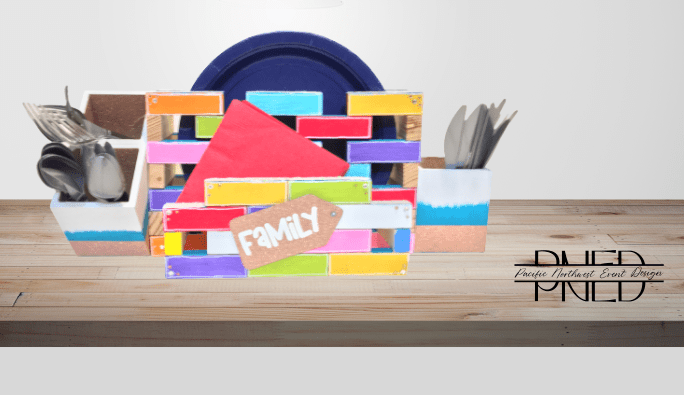
The overall dimensions are 17″ wide by 6.5″ high by 7.5″ deep. The interior of the silverware holder squares are 2.5″. The plate holder is 9.5″ wide by 1.75″ deep. The napkin holder is 7.5″ wide by 1.75″ deep.

This accommodates 9″ paper plates and standard sized napkins. In the picture are 9″ plates and cocktail napkins (6.5″). The dimensions can be adjusted according to your family needs.

Before I jump into how to assemble this caddy, I want to start with the pitfall of gluing options.

She So CraftDee only uses hot glue. I do want to draw attention to the fact that it’s not just any hot glue stick, but wood glue. Full disclosure, I have not yet worked with hot wood glue so I cannot attest to the strength or durability. But for the crafter who does not use hot wood glue or have never heard about it, it is not going to function the same way as the standard glue stick that you have in your craft stash. So please do not expect standard hot glue to work like hot wood glue.

I have decorated in enough wedding and other events that, professionally, I would not put trust in wood glue alone to hold a vase that holds water and everything else that adds weight. An LED pillar light is only going to weigh ounces. However, the weight of a glass vase filled with water, stones, flowers, and anything else of weight is going to add up quickly. There is no telling if and when glue will fail. So I would highly recommend that you reinforce your build in the legs and the base frame so that you can rest assured that you won’t have a catastrophe on your table tops. Wood glue and standard hot glue would all be adequate for any non-weight baring sides.

Advertisements

Because this Paper Goods Caddy is a functional piece, you will definitely need to use something much more substantial, for reinforcement. I used Multi-Purpose Cement (from the dollar store) as my primary gluing option, with the use of standard hot glue to hold the blocks in place while the Cement cured. For a home craft, the Multi-Purpose Cement is a good choice if you just need a little bit of glue. You will use the full 0.5 fl oz tube for this project. However if you are a professional, I would recommend E6200 over all other glue.

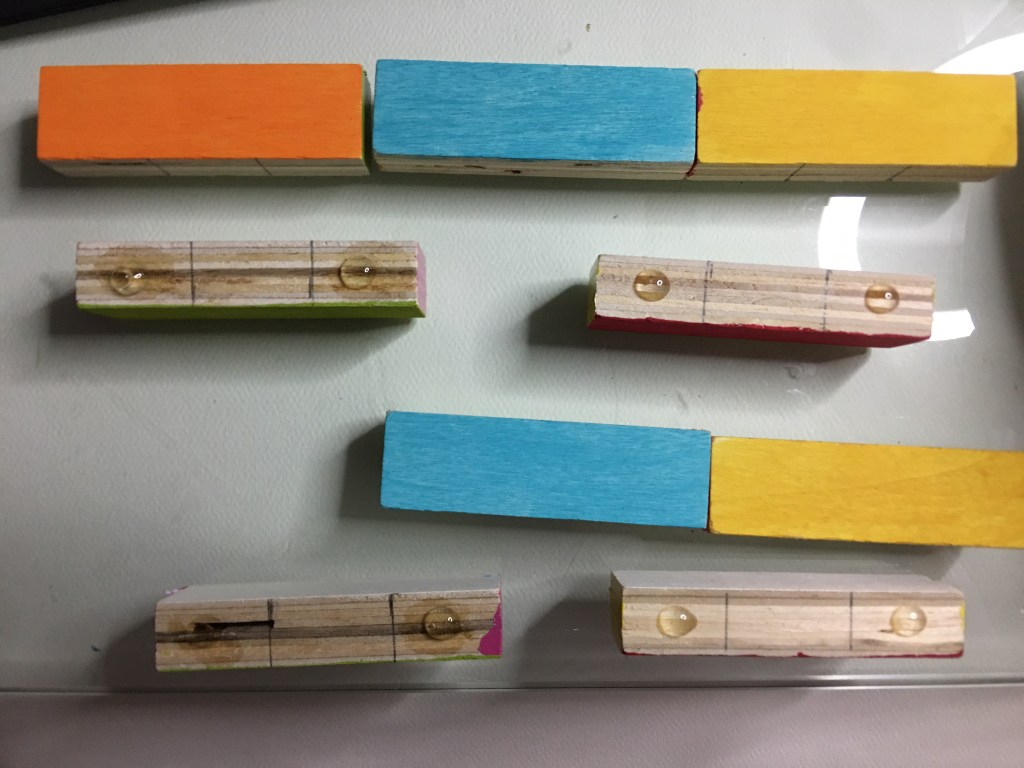
TIP #1: Examine your Jenga Blocks. You want to make sure they are solid wood with no cracks, grooves, or holes. The cheaper Jenga Blocks do not give you the easiest surfaces to work with. I had a couple of blocks that had a gaping hole where the wood was laminated together. The glue went straight down to my work surface. If sanding doesn’t give you a smooth working surface, paint your blocks. The glue actually held much better to the painted surface than the laminated wood surface. Plus, the paint fills the gapes and grooves for you. Just be sure to let your paint dry overnight.

TIP #2: If you are using colored blocks, like I did, set up the pattern that you want your bricks to be in before you start gluing. This will keep your pattern uniform in the front and the back.

Prep the Silverware Holder

Please feel free to decorate the silverware holders in your personal style. However if you want to recreate what you see in the pictures, these are the steps that I took.

  1. Paint the top 2/3 of the pen holder with white acrylic paint. (Allow to dry.)
  2. Paint the bottom 1/2 with teal acrylic paint. (Allow to dry.)
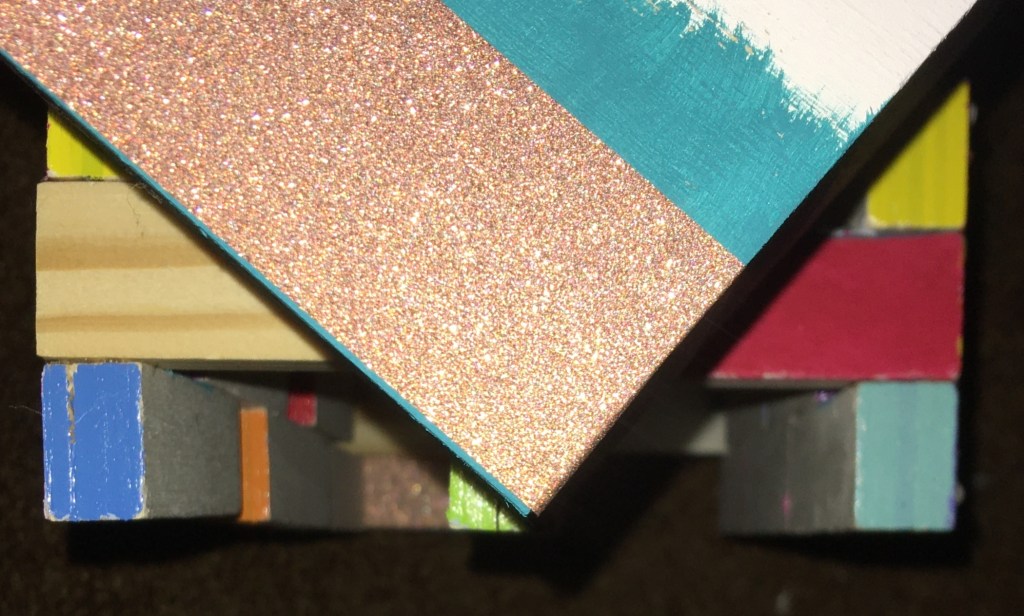
  3. Cut Glitter Paper (or vinyl of choice) into 2.5″ strips (the number will vary depending on the length of your Glitter Paper or vinyl choice). Also cut 3 additional strips at 1″.
  4. Slide a 2.5″ strip into a box and crease the edge. (This will give you the cleanest edge and prevent you from mismeasuring the inside of the box.) Trim on the crease.
  5. Remove the backing and place on the inside face of the box.
  6. Repeat 4-5 for the remaining 11 inside faces of the three boxes.
  7. Take a 1″ strip of Glitter Paper and apply it to the bottom outside edge of the pen holder box.
  8. Tack the edge of the Glitter Paper closed with a dot of glue.
  9. Repeat steps 7-8 for the other two pen holder boxes.
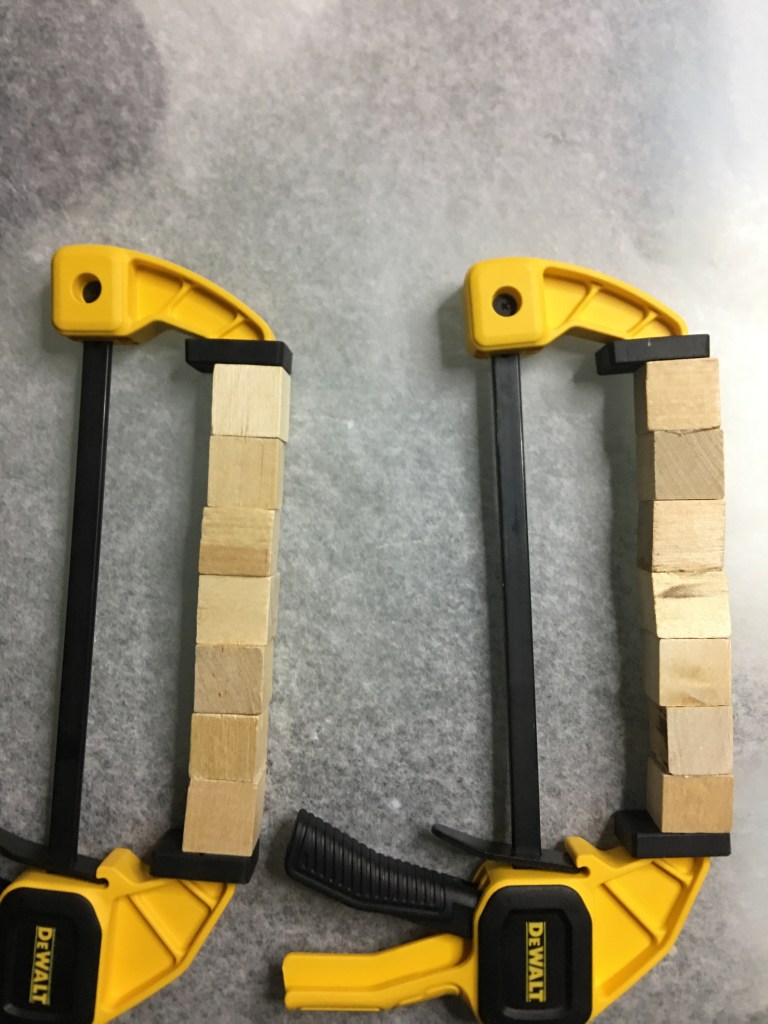
  10. Glue two of your boxes together, Glitter Paper seam sides together. Use a very liberal amount of Multi-Purpose Cement in the center, with a rectangular frame of Hot Glue. NOTE: Hot Glue does leave a gap between items glued together. So if you want zero gap please use Cement only. You will need to clamp together the boxes until the glue dries (an estimate of 1-2 hours).
  11. Set Aside for Assembly.
Advertisements

Prep Gift Tag

  1. Take a left over piece of 2.5″ strip of Glitter Paper. If it is large enough, wrap it around from top front, down, over the bottom edge, and up the back side. If it is not large enough, take two pieces that fully cover the front and back and cover each side.
  2. Trim the edges of the Glitter Paper that run over the edge of the metal gift tag.
  3. Create the hole, matching the metal gift tag, by piercing the Glitter Paper covering the hold.
  4. Using your cutting machine, cut “Family” (or any other phrase of choice). The Font I used was Chunky Confetti.
  5. After you weed your vinyl, apply “Family” with transfer tape onto your gift tag.

Prep the Paper Goods’ Feet (Optional)

My oldest son informed me that we needed to add a bottom so that the napkins and the plates could stay in the holder. He was concerned about his grandma having to put in and take out her paper goods. So I designed this so that the Caddy is not just a holder, but it’s a moveable container that can keep the goods in and be easy storage.

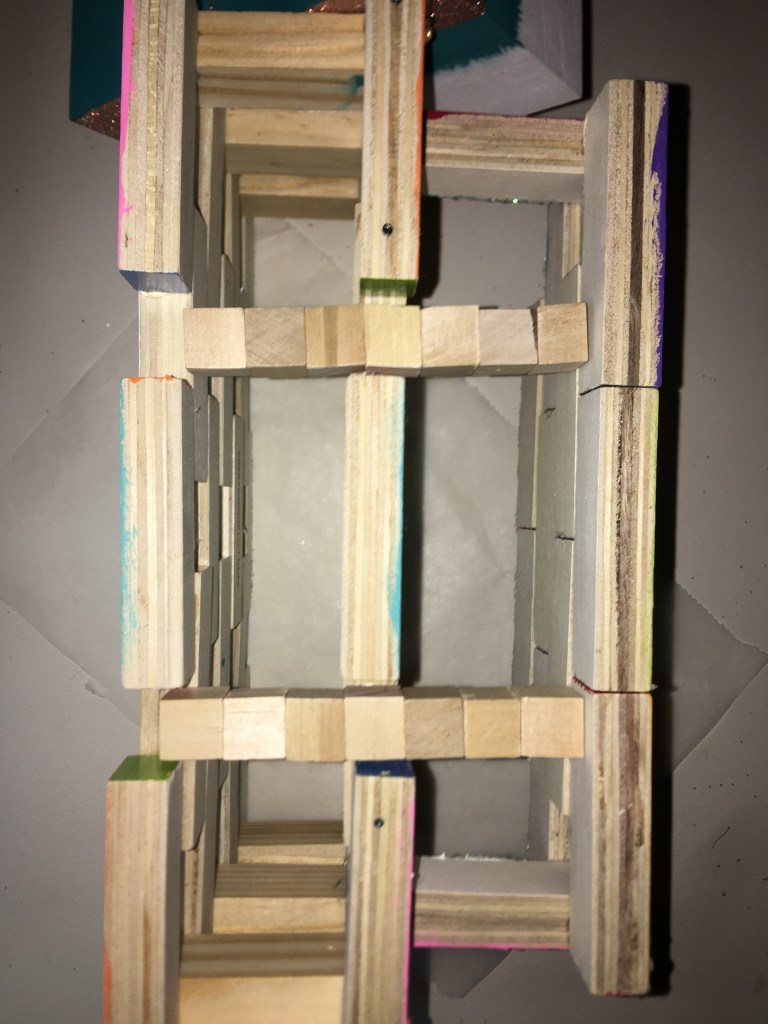
  1. Take 7 of the 1″ cubes and glue them end to end. This is one foot.
  2. Repeat with the other 7 cubes to make a second foot.

NOTE: you can use Hot Glue for this prep because the feet will not hold a lot of weight. I chose to the Multi-Purpose Cement because I have clamps, and I want to ensure that in the heat of the summer sun, the hot glue will not soften and become weak.

Advertisements

Paper Goods Caddy Assembly

From my stash of Jenga Blocks, I wanted to use ones with colored ends, but didn’t have enough. So this is the reason why I used 48 blocks of one style and 6 blocks of another style (which were used on the sides of the plate holder). The two different styles of blocks had different heights, which lends to the floating brick illusion. The floating bricks could be more prominent by using an even smaller set of Jenga Blocks, still using the 2 row build.

  1. Mark off your Jenga Blocks. My blocks were about 3″ wide so I drew two lines at inch increments so that I could work fast and glue all the bricks together uniformly.
  2. Glue together your two row sections, 3 bricks on top of two. In the inch section I put a large circle of Cement with two dabs of Hot Glue on either side. Once Hot Glue dries, you are free to move on to the next piece to glue.
  3. You will have 6 sets of two rows.
  4. Glue together your napkin face plate, starting with the rows. Make 2 sets of 3 blocks, glued together end to end. And make 2 sets of 2 blocks, glued end to end.
  5. Start with the base and work your way up. One top of one of the 3 blocks, center a 2 block set and also glue on the arms that will attach to the plate holder. On top of the two arms and the set of two, glue on the other set of 3. On top of that glue on the last section of 2.
  6. Set the base for your plate section, by making 2 corners. If you are using two different sized blocks for a floating brick look, your larger blocks will be used here on the sides (they are the unpainted bricks in my photos). Glue your side piece on top of your front and back corner piece. Do this for the other side. NOTE: your center bottom piece is not going to be attached to anything for a few steps, so set those off to the side for the moment.
  7. Space out your corners by setting a two row section on top, do not glue.
  8. With your corners set, remove the two row section without moving the base corners, place your napkin face plate. Once you have the napkin face plate center, you know where to add the Cement and a single dab of Hot Glue.
  9. This amount of glue is not enough to keep the napkin face plate in place, so you will need to hammer one nail into each arm of the face place, into the base corner, so that it will offer the stability to the napkin face plate.
  10. Glue the two row section, which you used to space the corner sections, onto the middle arms on the side of the plate section. Use a dab of Cement and Hot Glue.
  11. Repeat this last step with a two row section for the back of the plate section.
  12. Glue a side arm, on top of the two row sections, on each side.
  13. Repeat steps 10-12 to form the middle of the plate section.
  14. Repeat steps 10-11 to form the top of the plate section.
  15. Turn the Caddy upside down and glue in the middle sections that were set off to the side, back in step 6.
  16. To reinforce the face plate a second time, you will use 4 nails to nail both sides of the left and right Jenga Blocks above it.
  17. Where you would like to add glitter, paint on your glue and apply glitter.
  18. (Optional) Use your acrylic pen and draw on a frame around the front edge of each of your blocks, front and back.
  19. (Optional) To add gems, place a dot of Jewelry & Metal Glue where you would like to add your Rhinestones. You can glam this up as much as you want, including using only Rhinestones instead of glitter (step 17).
  20. Hot Glue your “Family” Gift Tag to the Napkin Faceplate.
  21. Glue the single silverware box, upright on the right hand side. Apply the Multi-Purpose Cement Glue and Hot Glue onto the Jenga Blocks (to the height of the silverware box). Attach the silverware box.
  22. Tip the Cady on its side so you can position the Double Silverware Box. As you look at the side of the Cady, note that the middle row is the front of the Plate Holder. Use the Jenga block to create a 45° angle. The front bottom of the Silverware Box is lined up with the bottom edge of that middle Jenga Block. The top back edge of the box will be in alignment with the front of that back row of the Plate holder.
  23. Remove the double box and apply the Multi-Purpose Glue and Hot Glue to the side of the Cady where the Double Box will sit.
  24. Attach the Double Box to the Caddy.
  25. Turn the bottom of the Caddy upside down and apply Multi-Purpose Glue and small dabs of Hot Glue to the two recessed sections of the middle row.
  26. Attached the two feet, centered on that middle 4th square, into those recessed sections.

Congratulations! You have completed a space saving Paper Goods’ Caddy.

Please leave a comment how this caddy turned out for you.

If you’ve seen a project that you want more information on how to make, please let me know so I can set you up for success!

Empty Tomb is now live. 100% of preceeds will go to the support of orphans in Rwanda.

Processing…
Success! You're on the list.
Advertisements