
For a few years now I have heard many of my growing friends sing the praises of grow bags and how wonderful they are. Not to mention that if anyone does not have land to grow a garden, this is a great substitute for growing on decks and patios. So I put it to the test.
My 2023 potato growing season, I put my raised bed (which I’ve grown potatoes in for the last four years) vs. 10 gallon black grow bags to see how they stacked up against each other. And this was great timing for this challenge because I wanted to up my potato crops to see if I could get that produce off of my shopping list and on my self sufficiency list.
Below I will tell you the results and my thoughts on the process. But first I wanted to start off by showing how I set up my grow bags. A lot of people set them up with just putting in potting or raised bed soil. I wanted to go a different route because with my family we try to go with natural fertilizers that fall into the organic farm spectrum of growing.
Setting up the Grow Bags
I set up these grow bags like I do with my brand new raised beds. But I structured it differently, aligning with how I’ve seen other people use their grow bags for growing potatoes. Those people layer their bags with soil on the bottom and top and hay in the center. The rumor is that this hay section allows the potatoes to grow large because they have less resistance from soil, which can compact down around the tubers. Keeping this in mind, here is how I layered my grow bags (from bottom of the bag working up):
- Raised Bed Soil
- Compost
- Pine fronds
- Small Pine branches
- Pine Fronds
- Compost
- Raised Bed Soil
This spring we had pruned back our pine trees. Normally these go into our compost pile. But as you can see below, these fronds had new growth tips on them, which have the most vitamins available. I didn’t want those nutrients to go to waste. So I separated out the softer fronds from the more rigid branches. As you see below.

These branches were then cut down to fit inside the grow bags without puncturing the sides.
With all my components prepped for work, I built up my grow bags. Right after I laid down my pine layers, I put down a fine layer of compost to set my potatoes down on. Once I placed my potato seeds down, then I covered them with the layer of compost and final layer of raised bed soil.


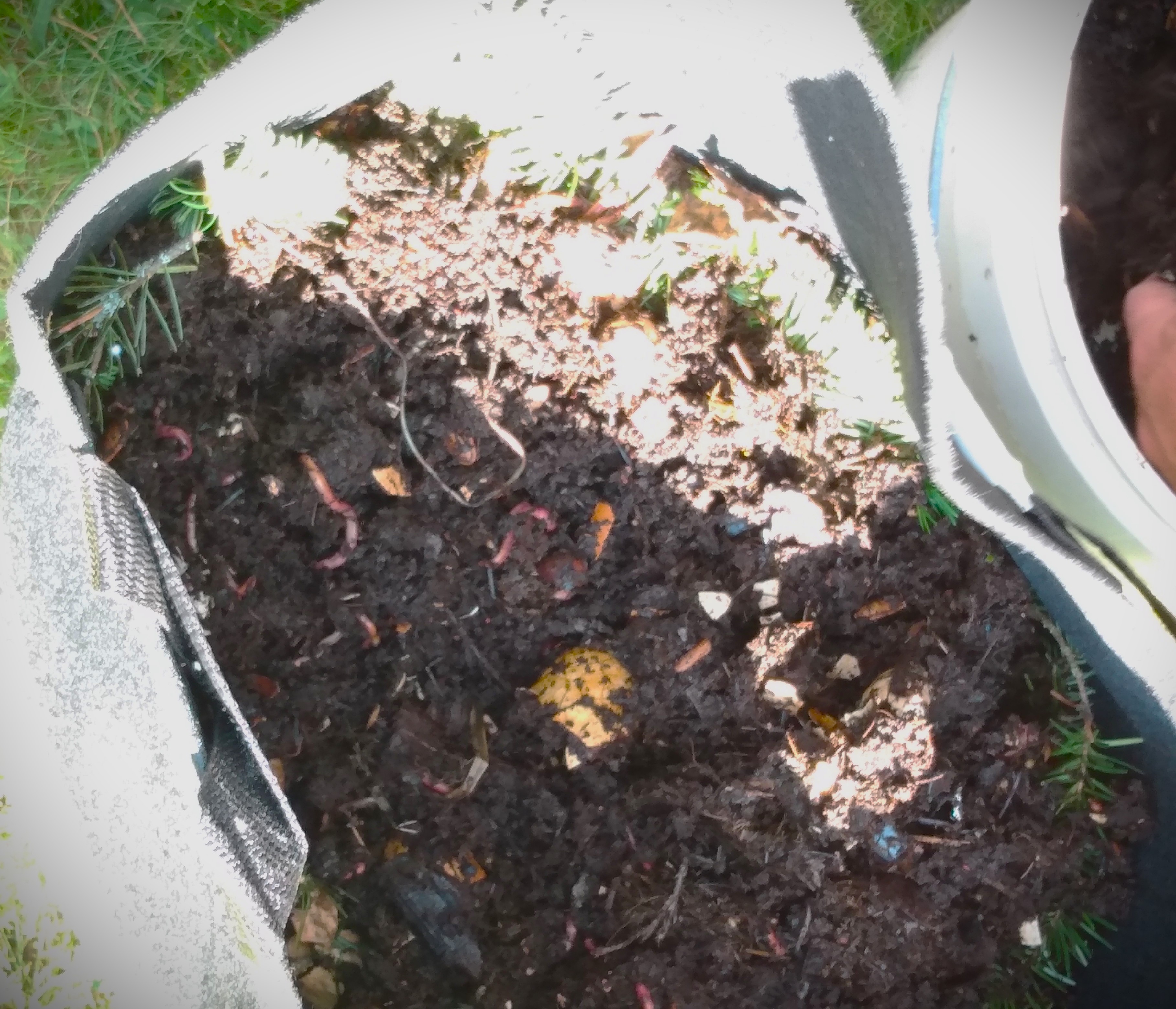
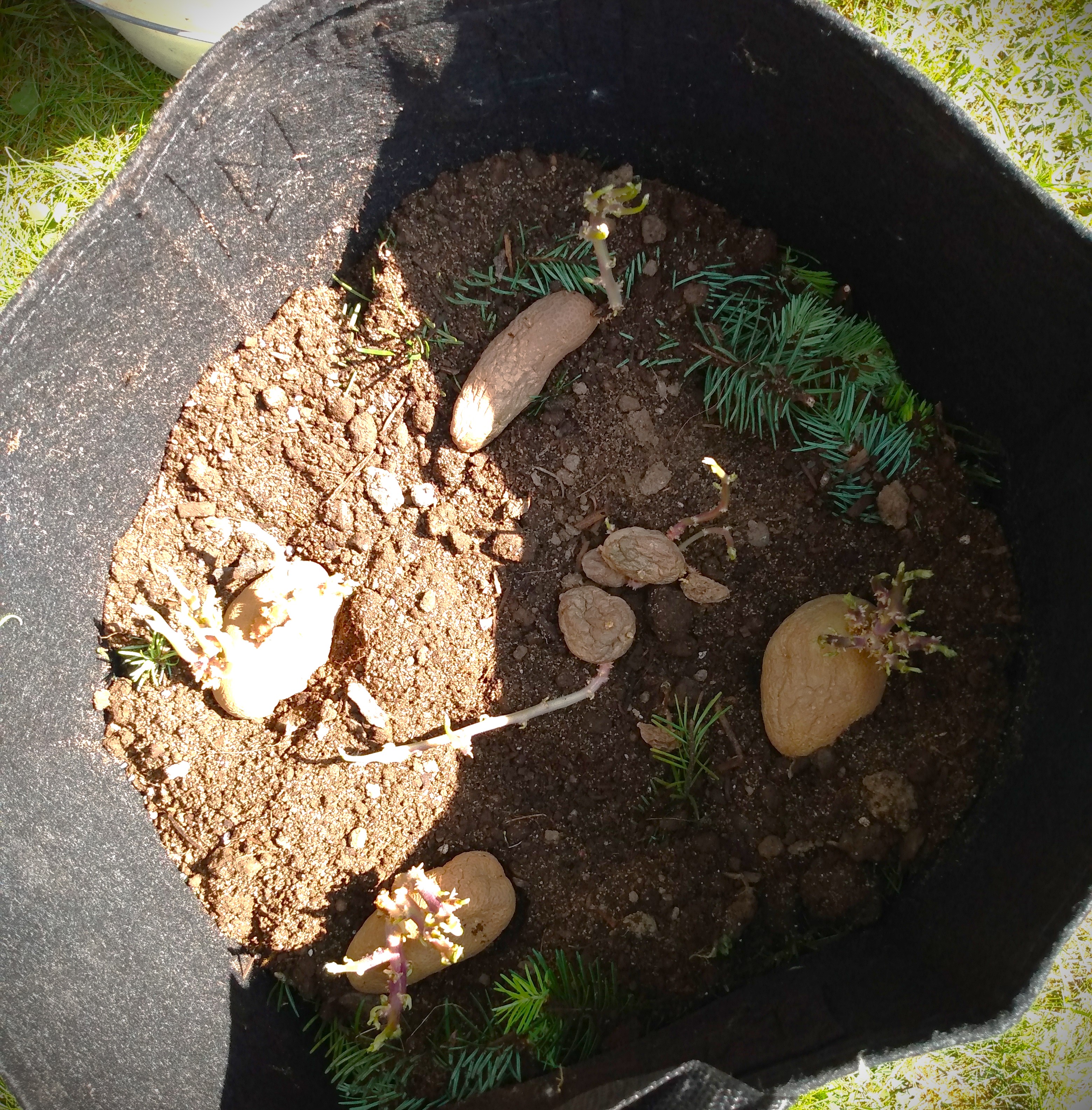
The pine branches and fronds were added primarily for slow release nutrition for my potato plants. But I placed them in the grow bags, like other growers place hay, because the thick layer of fronds (theoretically) gives them the tubers the ease of growth without the soil compounding around them from watering and rains.
To finish this experiment, I placed the grow bags near the same area that my raised bed potatoes were growing so they could receive the same amount of heat and light.
Sweet Potato Side Note
I haven’t yet harvested my sweet potatoes. But I prepared their grow bag the same way as my potatoes. I’m trying to give them the most time to grow and the vines haven’t died back yet.
That being said, the sweet potatoes are a first time experiment because I haven’t grown them before. So I may post about what happened this year, or I may wait to talk about them until I gain a few more seasons of growing them. But I did want to post this picture of my rooted slips before I planted them.
Out of everyone I watched in videos to learn about growing sweet potatoes the one bit of information I wasn’t able to see was what a good rooted structure looked like. This was mostly because those growers cut from harvesting slips to already having them in the ground.
So if you’re like me and you want to bench mark to compare what you’re growing next to, here is a picture of my slips before I put them in the grow bag.

The method of growing slips that worked best for me, was sitting the bottom (fat) end of the sweet potato in a glass of water. This method gave me strong slips about a month before the method of laying the sweet potato on its side in a container of soil. Everyone I watched swore by the soil method, but I honestly found the water method better for me.
The lesson for this side note: when first starting to grow something for the first time, try a few different methods at the same time to see which one provides better for you. What works for one grower may not work for you. And vice versa.
End of Season Results
It took a while for me to get to this point because even though the potatoes were started at the same time they didn’t finish as the same time.
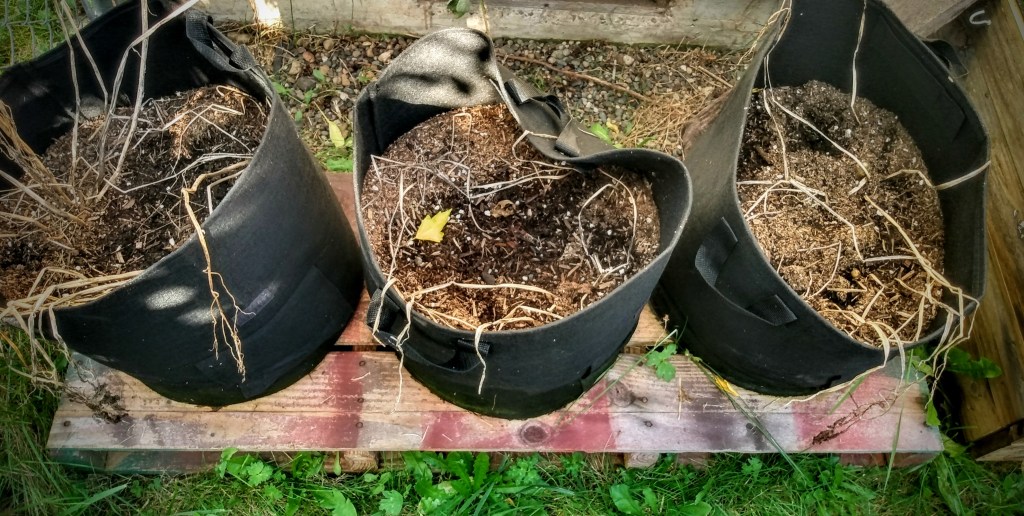
Starting from left to right, the first container I grew purple potatoes. The middle and right were my russets that had sprouted on me over the winter.
My purple potatoes grew seed flowers. I allowed the flowers to grow to see what that process was like and if I could collect the seeds. However my blossoms kept falling off. So I don’t know if the flowers were being trimmed by little garden helpers or if the flowers were falling on their own. Needless to say that I didn’t see how the seeds grow or if the plants even grew them. As soon as I learn that process, I will share that information with you. But for now I have nothing more to say other than flowers grew on the plant portion of the purple potatoes.
And true from those I watched from those who did have information on the flowers, when your potato plants grow flowers, it does delay the whole growth cycle. My two russet bags never grew flowers and the plants started dying back maybe 6 weeks before the purple potatoes did.
I wanted to keep these grow bags to use in the future. And since I didn’t want to lose the velcro integrity on the bottom, I didn’t use that “door” at all. Instead I brought over my wheelbarrow and dumped my bags in one at a time.
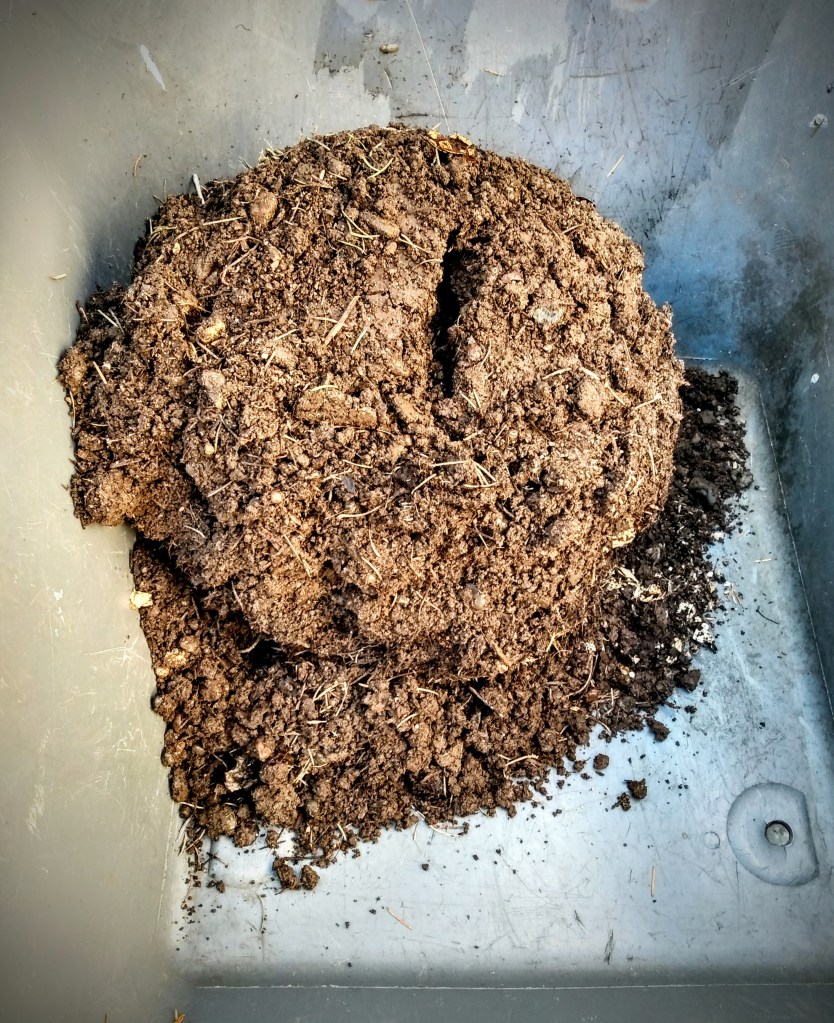
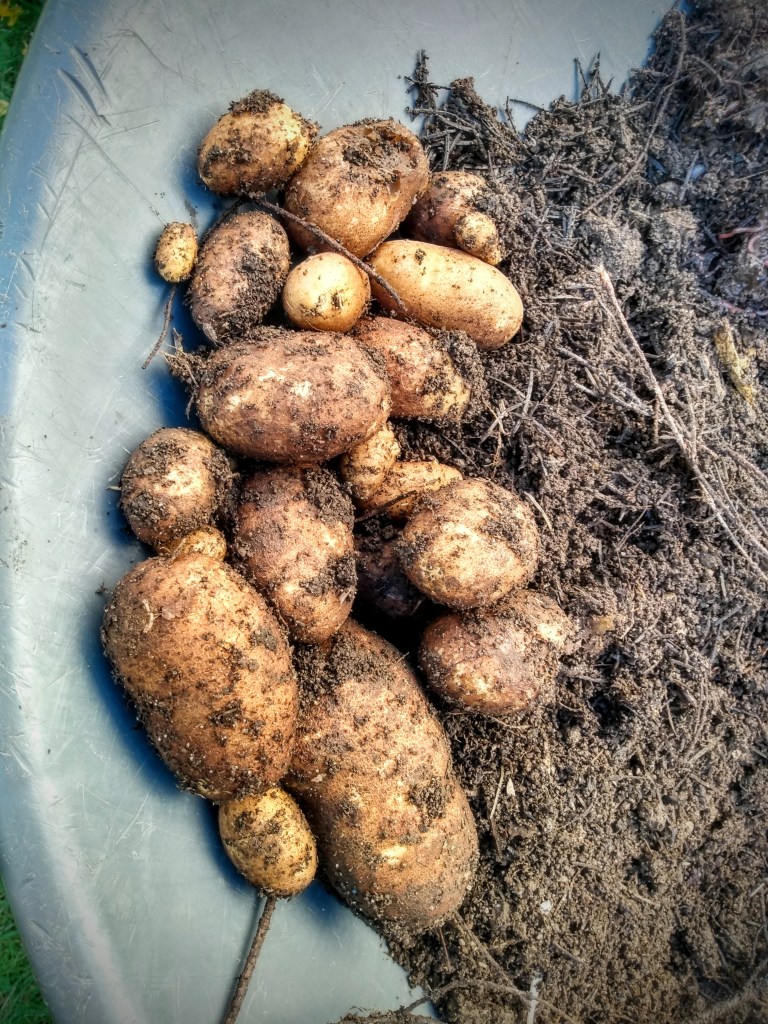
As you can see here, the soil still compacted. So even when you do take measures to prevent compacting, gravity is still going to work. This was the bag from the right side. I didn’t add any sand into this bag and that might have what made this one compact more than my other two bags.
Originally we had added sand to our compost for bags two, three, and sweet potatoes, in order to make the compost stretch between all the bags. The sand did keep the “soil” of the grow backs more loamy than the one that was straight compost.
Having seen what sand did for me in these grow bags, I will more than likely continue to add some soil with the fresh compost to prevent a clay like clumping from beginning to end of season.
That being said, if you look at the picture with the potatoes that I harvested from the first bag, you will see what didn’t compost down during the grow season. So if you’re worried about adding sticks into your grow bags, you can see that they will break down over the course of the season.

This was my first time growing purple potatoes. I chose them for some fun colors to make dinner with. And there’s the fact that dark purple fruits and vegetables have a higher antioxidant property and more vitamins and minerals than same fruit/veg families that are lighter in flesh color.
I wanted to make a quick mention on them, because as soon as I upturned the grow bag and started troweling through the soil I was asking myself, “Where are the potatoes?!”
As you can see above, these beauties hide with the soil. The way that I identified them was that they had an opal like sheen to them. So I pushed the soil to the side looking for anything that didn’t have the same matte finish as the soil.
I’m super excited for these potatoes to cure so that I can see my kids’ reactions to having purple potatoes for dinner. That and even more to the point, I want to eat something colorful that I haven’t eaten before!
Grow Results
Back this spring, I wasn’t too sure what I expected. Obviously I expected potatoes, but I didn’t know how these grow bags were going to work out.
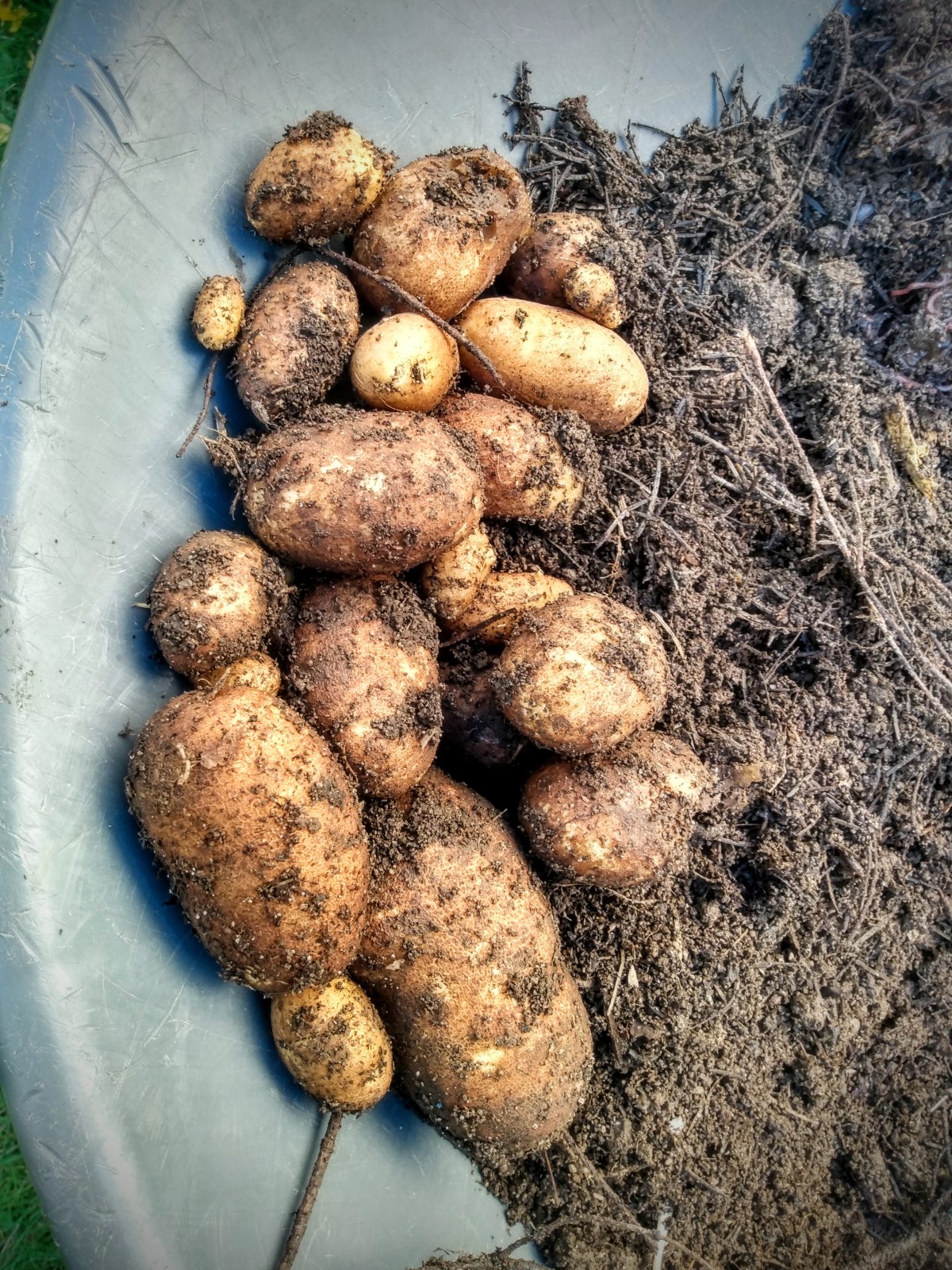
Here are the results of what each bag grew, in the same orientation as the bags were placed in the above picture; purples on the left and the ones that grew in compost/sand mixture on the right and middle.
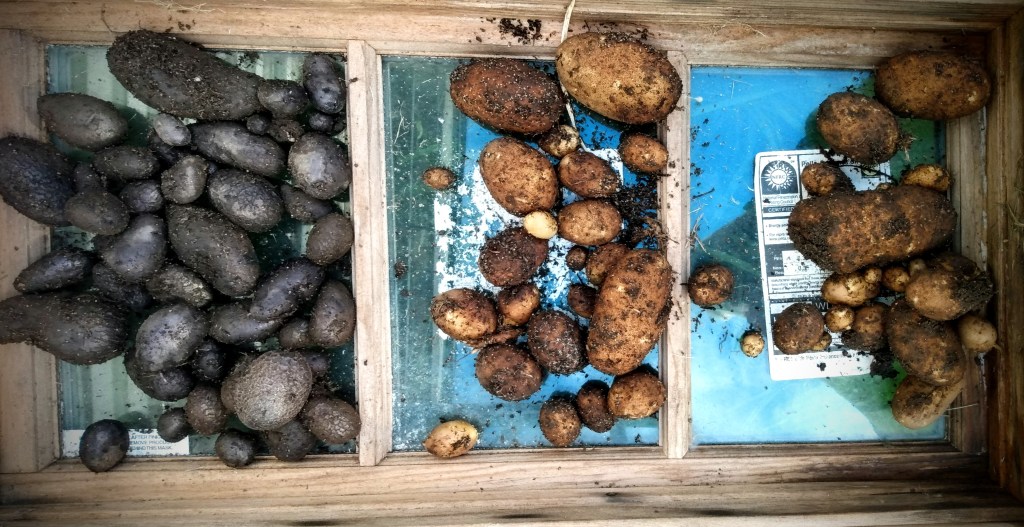
For the russet potatoes it looks like the number of potatoes were not limited by sand or no sand added. Even though I did get larger russets that grew in both bags, it seems like I got a better return on size by adding some sand to the compost. (Both had the pine branches and fronds, the only difference was sand in the compost.)
The purple potatoes outperformed the russet potatoes in quantity and overall size. This surprised me the most.
What I learned between the different varieties of potatoes is that I need to get some more different varieties and try them out to see if there are other potatoes that will grow better for me, like the purple ones grew better for me.
Side Note: red potatoes don’t grow well for me. Below you’ll see a single red. Not everything has to grow well for you. Half the fun with growing your own food is seeing which varieties grow well for you and which ones don’t. As it is, even when my neighbors grow the same vegetables as me, there’s often times variations in performance even when we have the same microclimate. But when you select and grow what grows best for you, you not only put food on your table, you have something to exchange with your neighbors who grow something else better than you.
One Final Comparison
As I mentioned at the beginning, I grew potatoes in a raised bed and the grow bags. I wanted to see the comparison on how things grew for me. Before I give the results, I did want to mention that I couldn’t go through my entire raised bed because I had a lone tomato plant that I couldn’t find any other home for, so I planted it in the corner of my raised bed that had a gaping hole. Once my potato plants started to die off, my cherry tomato plant took off and outperformed all of my other tomato plants. So out of respect for that super grower, I tried not to disturb its roots too much. That means that there could potentially be some potatoes under the tomato plant, but I couldn’t thoroughly check there. As it is that tomato plant is still producing even though I had already harvested and uprooted all my other tomato plants.
Here are the pictures of my grow bag (box on the left) and my raised bed (box on the right), taken side by side.
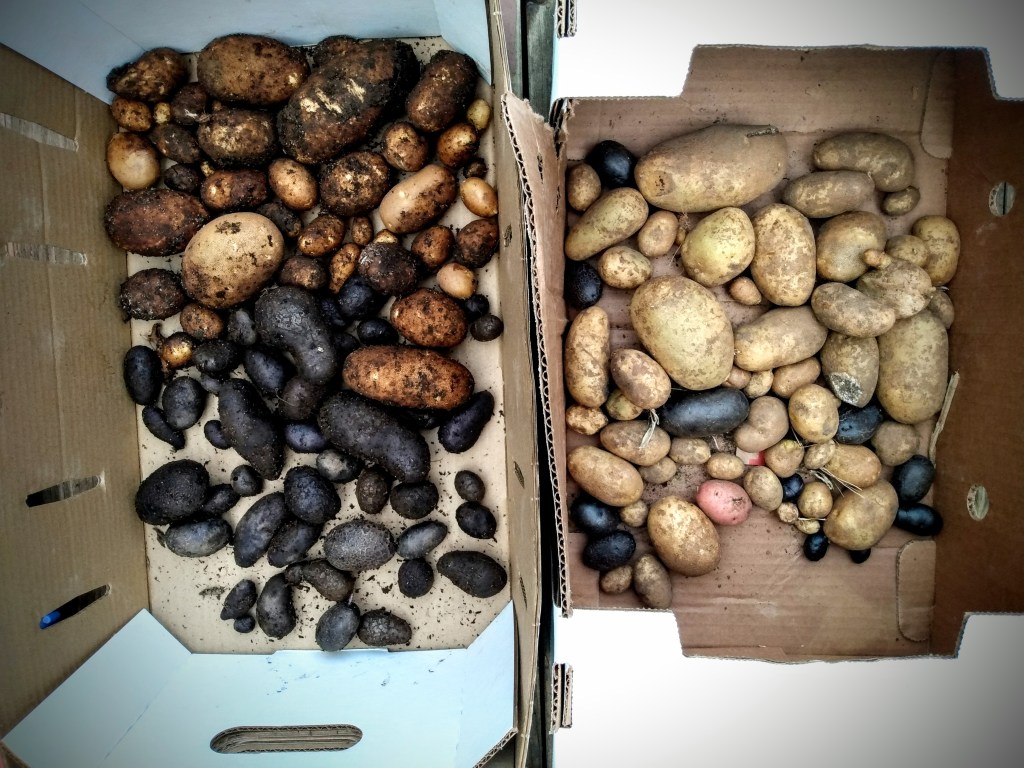
The raised bed might have had a couple less seed potatoes than I used in the grow bags, but we’re only talking about somewhere around a 2 plant difference if that is the case. So as far as quantity of potatoes go, the grow bags seemed to have done better. This result could be because the bags had the extra compost and pine trimmings that the raised bed didn’t have. But to be fair, the raised bed had seed potatoes planted about two months before I planted the grow bags, so the pine trimmings weren’t available for those plants. (The raised bed was harvested about two months before also.)
The sizes of potatoes seem to be about the same. But my largest potatoes did come from the raised bed.
I’m actually glad that I took the chance on the grow bags for my potatoes. I definitely think that it is a viable option for people to use if growing crops for your family is a challenge or not possible because you don’t have land to use to grow. I’ll post an affiliate link for the grow bags that I used below. And if you’re interested in using grow bags next year, but space is limited, if you can find a space to fit a 5 gallon bucket, you have the space to use a 10 gallon grow bag (which is slightly bigger, but you have a general idea of how much space you need.)
Things to remember when growing in a grow bag is that you will need to have a way of feeding your plants. Soil will have nutrients in it. But it won’t last forever. Compost is always a great option for feeding your plants because you’re putting nutrients back into your ground or plants that would normally just be sitting in a landfill, it’s an inexpensive way of feeding your plants, and you know or have more control with what is going into feeding the food you’re going to eat. If compost isn’t an option for your family, choose a fertilizer and/or compost product that works for you. The fewer chemicals that you choose to feed your plants means the fewer chemicals that enter the food that you eat. Take the time to read the ingredients label. If you can’t pronounce what you are reading, you probably don’t know what that ingredient is, and the chances are high that it’s something that you don’t want in your body.
Hopefully seeing this little adventure of mine has helped fill your curiosity of grow bags or give you another option that you might not have had before when it comes to you growing food for your family in a very limited space. And whatever you can grow means that you’ve saved that much money to apply elsewhere in your family budget.
Products I Use
This post contains affiliate links to products. We may receive a commissions on products purchased through these links, but at no extra cost to you. These items listed here are from Amazon but may be purchased at local markets.

10 Gallon Potato Grow Bag (5 pack)

In case you need to grow inside, LED Grow Light Strips for Indoor Plants, the red light gives you an option for growing plants that bloom.
 How I Can Do That
Leave a comment