Cake Dreams

One of the memories that we are so quick to build are children’s birthday parties. So how do we make memories that last?

Make a cake!

I can’t begin to tell you all the cakes that I remember through the years. There’s the Holly Hobby cake my mom made from me (a popular baby doll from the 70’s). There was the cake that got locked in the trunk on my sister’s birthday. The cakes my sister’s and I made for our parents because finances were tight but the box cake was a big way we could show they mattered. The cake my husband made for me with marshmallow frosting. The cakes I made for my kids.

The list goes on and on….

I could tell a life story just off of the cakes I’ve made through the years.

And I want you to know that you can make cakes that make memories without going to culinary school and gaining the education of a baker!

You can make cakes!

You can make memories!
Photo by cottonbro studio on Pexels.com

Even though I have cake recipe books which put a world of recipes from scratch, I’m going to show you how you can make a memorable cake using a box cake–which is in everyone’s price range. And in this age of inflation, when you can still find boxes of cake mix for a dollar, I want that to be available to you.

Box cake mixes are great. The directions are easy enough for my kids to follow and make on their own. (In fact I just made a cake for a local mom and my boys wanted to help because they love baking cakes with me. They had to skip out on this one, but I had to promise that they could make their dad’s cake all on their own without me!)

TIP: you can test the doneness of you cake sponge by poking the cake with a toothpick in the center. When you pull the tooth pick out, and it’s dry, your cake is done. You want no moisture or batter on the tooth pick. Although you might see cooked crumb–that is still done.

Or….

TIP 2: When your timer goes off take a temperature reading in the center of your cake. When you reach an internal temperature of 200°F, your cake is done.

This particular tip is invaluable. If you’ve watched baking competitions you see people testing cakes by poking it like a chef pokes a steak. The amount of resistance tells you the internal state of being done.

The average person doesn’t know what a done cake feels like. We can easily
learn the feel of an under done cake and an overly done (and dry) cake. I’m
going to save you the head ache and just tell you that you only need to reach
200°F and your cake will be perfectly done no matter what. This works for all
elevations. AND it gives you a more accurate unit of measurement to direct you
in how much longer to cook your cake when it’s under 200°F.

Now that you know you do not have an undercooked cake, you’re halfway done.

Some people find the cake (or sponge) cooking the most intimidating. Others find the frosting to be intimidating. But frosting a cake doesn’t have to be intimidating either, because I’m going to show you a trick that I used with the Pinterest inspiration picture that was given to me for the cake I made the other day.

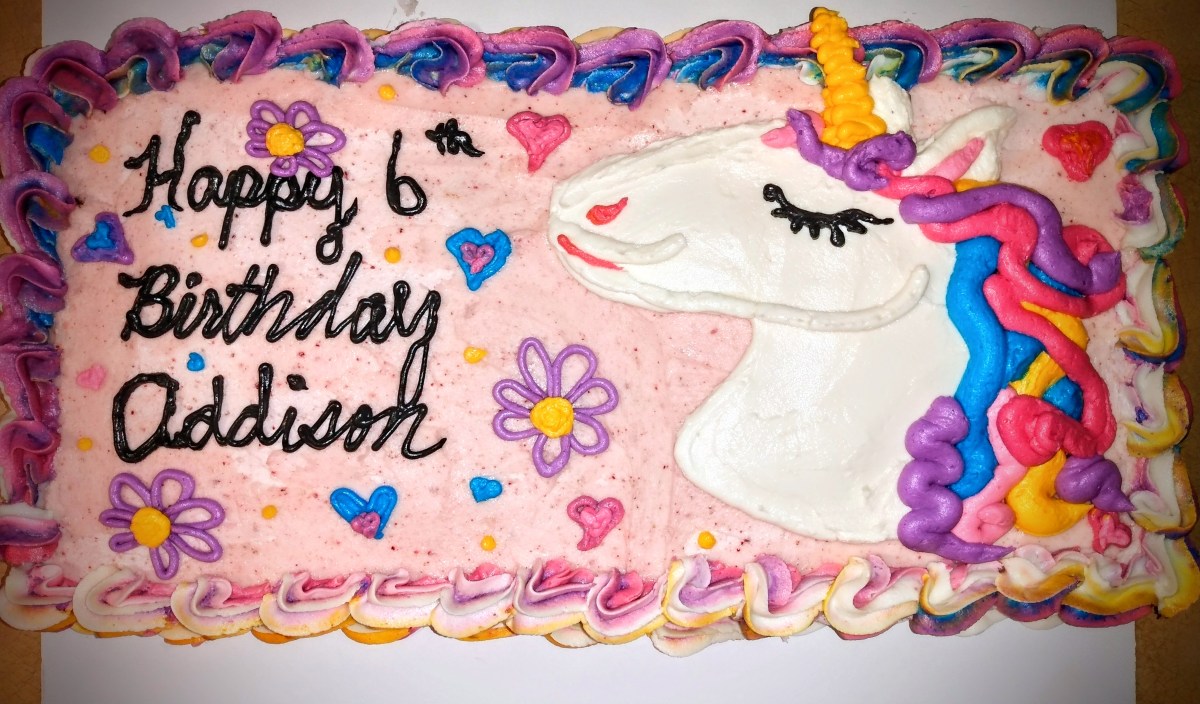
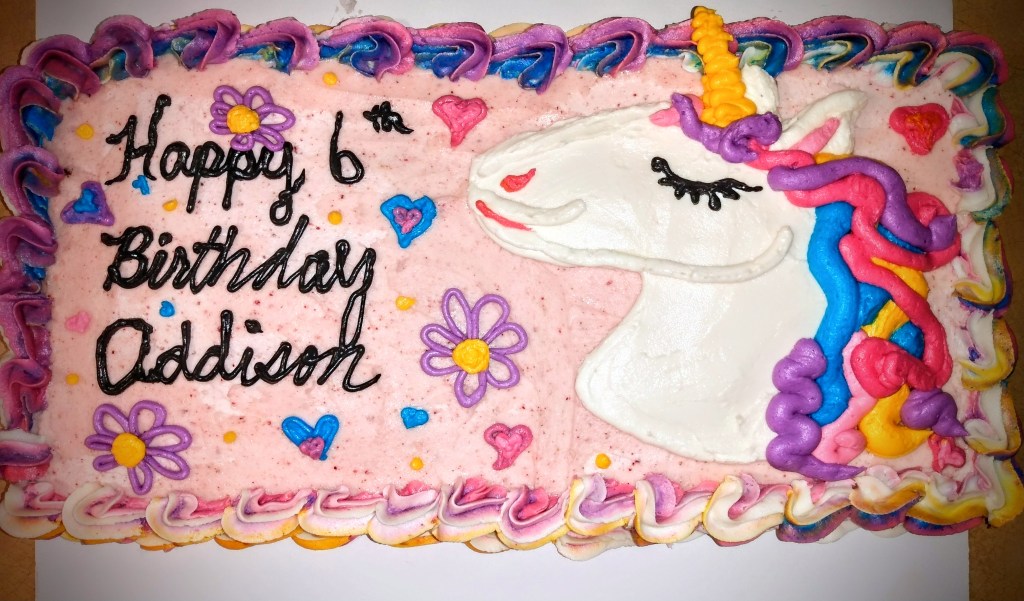
My go to frosting is formulated by Wilton. I’ve successfully modified this recipe to make it flavored. But this recipe gives you three different consistencies. I used two of these for the following Unicorn Cake that I recreated, stiff and medium. I used the medium for the filling between two layers and doe the exterior frosting. The stiff consistency I used for the decorative elements.

When it comes to coloring your frosting, the stores give you the choice of the liquid food dye or gel. The gel will give you vibrant colors for less.
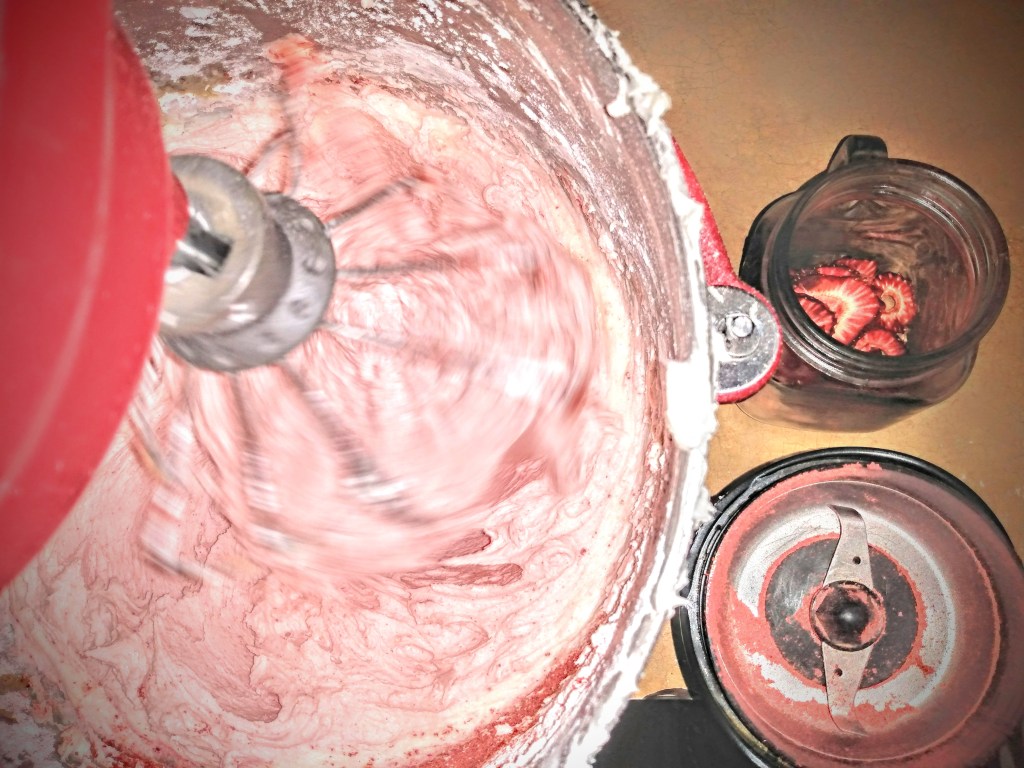
TIP: If you’re a family that is conscientious about food dyes, you can still color your frosting. What you’re going to do is plan in advance and dehydrate the fruit, vegetable, or edible flower for the colors you want. Don’t worry about the vegetables. The Wilton frosting is sweet and can overpower the vegetable flavor, if that is a concern for you.

As a point of reference, it took me about half a pound of strawberries (sliced, dehydrated, than powdered) to turn a single batch of Wilton frosting pink and mild strawberry flavor. I had the pink color to the frosting long before the strawberry flavoring that was requested by the birthday girl.

TIP: When you use a fruit with high water content, you definitely want to turn it into a powder in order to prevent your frosting from becoming watered down.

Frosting the cake is going to look a little differently depending on what kitchen tools you have available. If you can pipe the frosting onto the cake before you spread the frosting, you will be able to do a thin layer of frosting without getting crumbs of cake into your frosting.

Don’t have piping tools (pastry bag, coupler, and decorative tips), that’s okay. The trick is to take your butter knife (if that’s all you have), put dollops of frosting onto your cake, and then spread the frosting around using the flat of your knife.

The number one cause of crumbs in your frosting is your knife hitting the cake’s sponge. If you just move the frosting around, with your knife only touching your frosting, you should eliminate all crumbs.

If you still find you have crumbs, the other reason is that your frosting is too thick. This is particularly a problem with cakes that are light and fluffy. Not a problem!

If your frosting doesn’t spread easily, stop. Remove the frosting and put it back in the bowl. Add a teaspoon of water (or less) and mix it into your frosting to loosen it up. Test the consistency by trying to spread your frosting on your cake. It shouldn’t grip your cake like Velcro, but smoothly spread like mashed potatoes. Once you can easily spread your frosting, make that cake beautiful!

Want to make decorative elements, like an inspiration picture, but don’t feel confident in your piping skills? You will want this trick.

Don’t worry. You can use this trick even if you’re only comfortable using the tubes of colored frosting!

Print out your inspiration picture (with the elements blown up to the size you want them on the cake). If you have face details you want to recreate, make a copy for the body, and a second copy for the face. (The same is true for detailed that are stacked but not faces.)

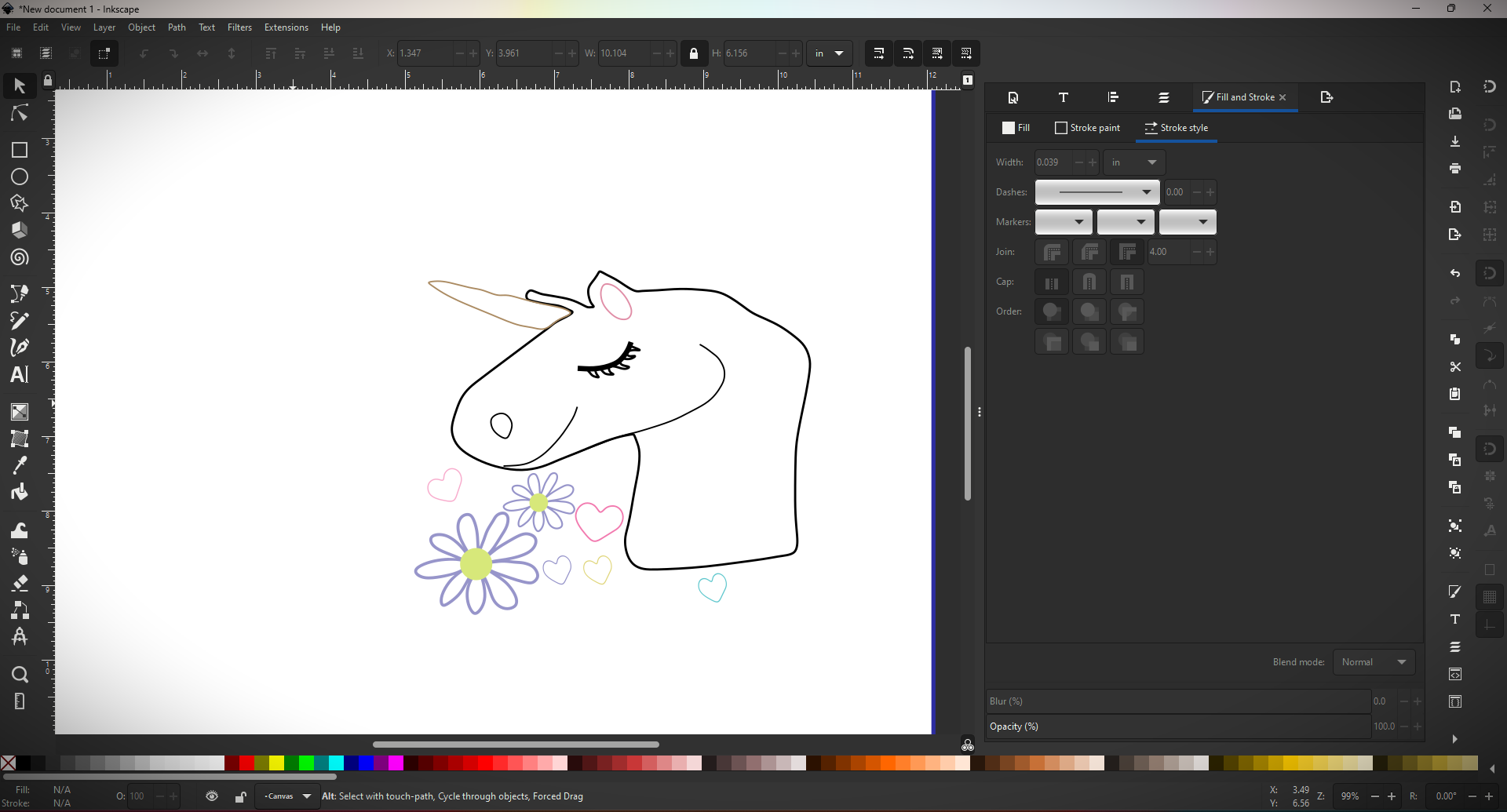
For example, here’s the inspiration that I was working with.

The original creator had freehanded the design of this cake. I’m fortunate if I can draw a horse head on paper with a pencil, so I needed this trick.

I do have skills in Inkscape where I took the picture and traced the elements and made my own stencils. After I printed out the stencils I put them on top of a metal cooking sheet. To keep them in place, I used a loop of tape. Then on top of the stencils I taped down a sheet of waxed paper.

Once my different colors of frosting were put in piping bags, I started tracing the stencil lines with the planned out colors.

In the instance with the unicorn head, I made the outline, then filled (flooded) the inside with frosting, smoothing everything out with a knife to make it look like a solid piece.

When all my decorative elements were piped out, I put the cooking sheet in the freezer.

You’ll want to plan this one ahead of time. The frosting will take time to freeze. Even with the stiff frosting, you will want this to be in the freezer for at least over night.

When the frosting is frozen, you can transfer the elements from the waxed paper to the cake.
A memorable cake doesn’t have to cost a fortune. In fact, making a cake shows the person that you love them. And it doesn’t have to be perfect.

My favorite cake my husband made was the marshmallow frosting cake. And I guarantee that none of us will make that frosting again. It was not user friendly because it was a pouring frosting instead of a classic spreadable one.

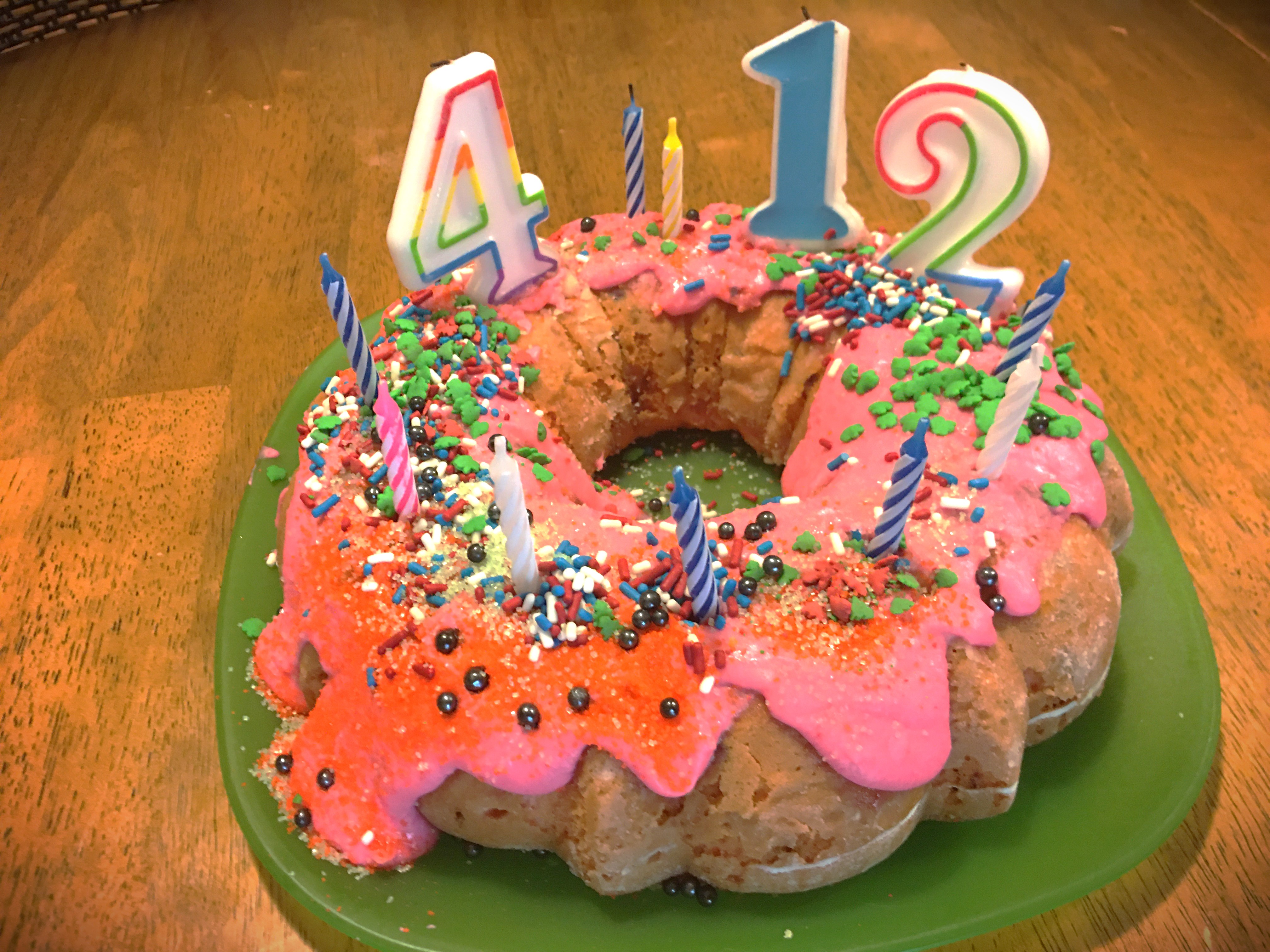
This isn’t the marshmallow frosting cake. But it is the one my boys made on their own, for me.

The most memorable cake I made was my son’s bubble cake. He wanted a bubble cake so I made a tall multi layer cake in the shape of a bottle of bubbles. That sponge would not keep shape. It wanted to disintegrate on me and there was not enough support I could put in to make it stay. Let’s just say I’m glad I made it a fondant cake, because that fondant was the only thing keeping it together. I was in tears. But my son was dancing with happiness over having a bubble cake.

I tell you these stories so that you know that sometimes the best memories come from the imperfections in our cakes. After all, my favorite childhood cake, the Holly Hobby one I mentioned at the beginning, wasn’t all perfection. I look at the pictures from that birthday and only see love. My mom looks at those pictures and sees the cramping in her hands because of all the piping that cake took. She finished that cake with tears of pain. But it meant the world to me.

So don’t be afraid to make that cake for your loved one!

It may turn out to be an imperfect but testament of love that lasts through the ages. Or it may be the cake that blows your mind because you never thought you could do it, but you did! No matter the outcome, it is always worth it to make that cake!
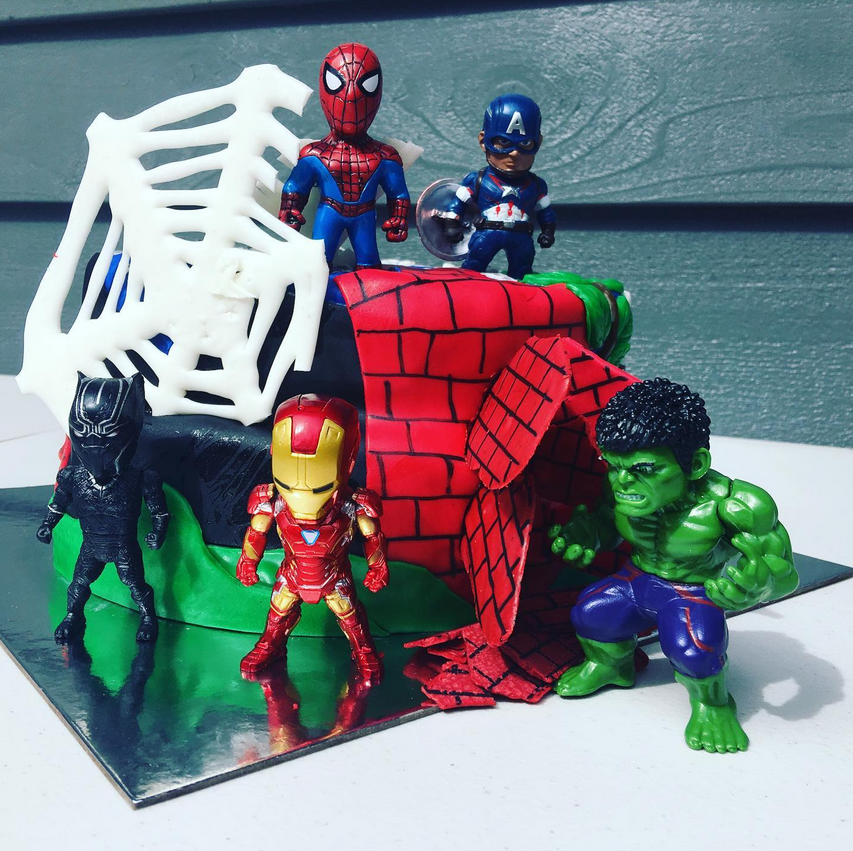
Super hero birthday
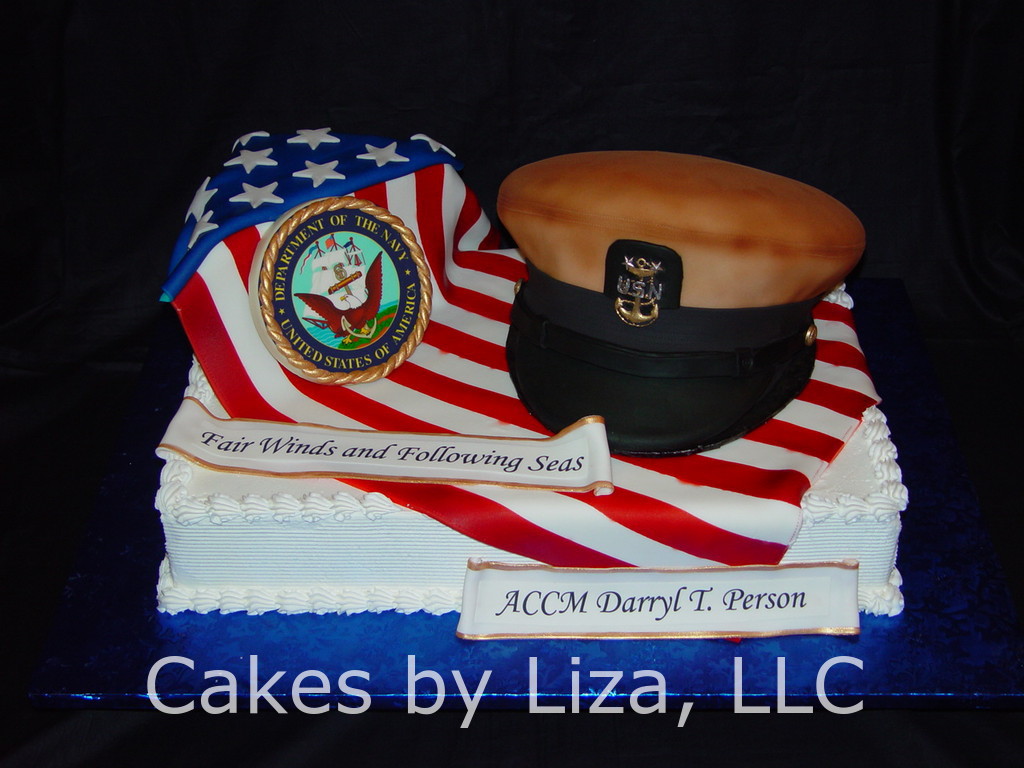
Navy Retirement Cake. Inspiration cake and my cake with the medalion that was placed against the center wave in the flag.
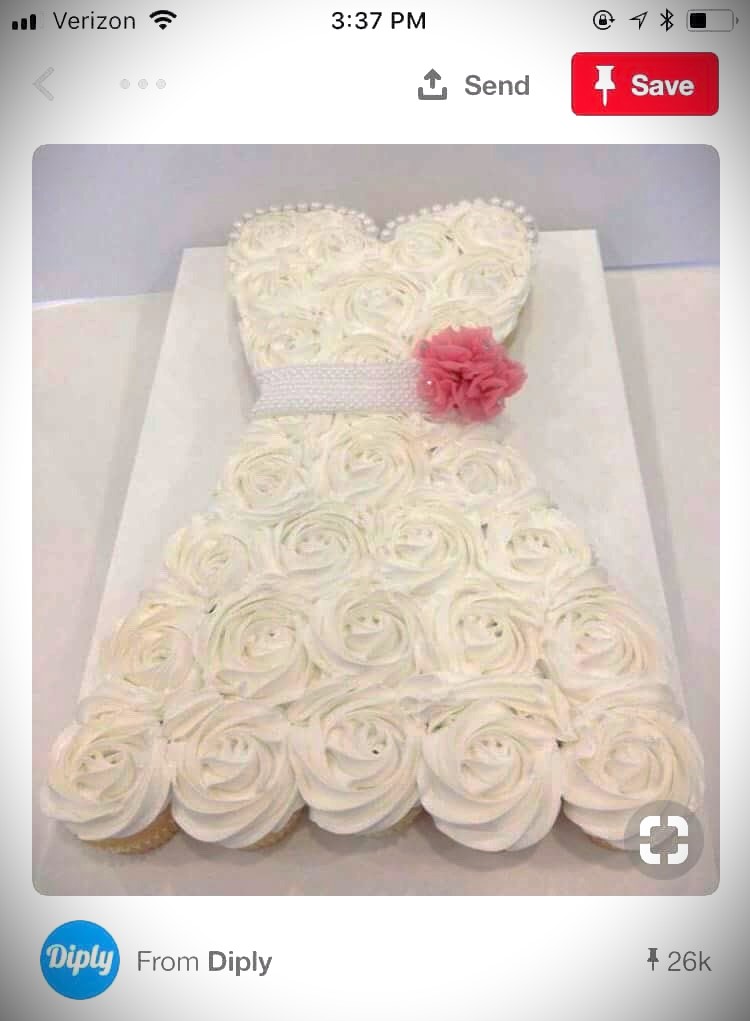
Bridal shower cupcake cake.

Transforming Memories

If you’re a sentimental person, or living with one, you know what I’m talking about when I say that it’s near impossible to get rid of those things that are just sitting there collecting dust.

Whether it’s a shirt collection, old ratty blankets, or any other fabric textile, I’m going to show you how you can transform it and reuse it in a meaningful way. And the bonus is that your sentimental loved one gets to keep their memories at the same time!

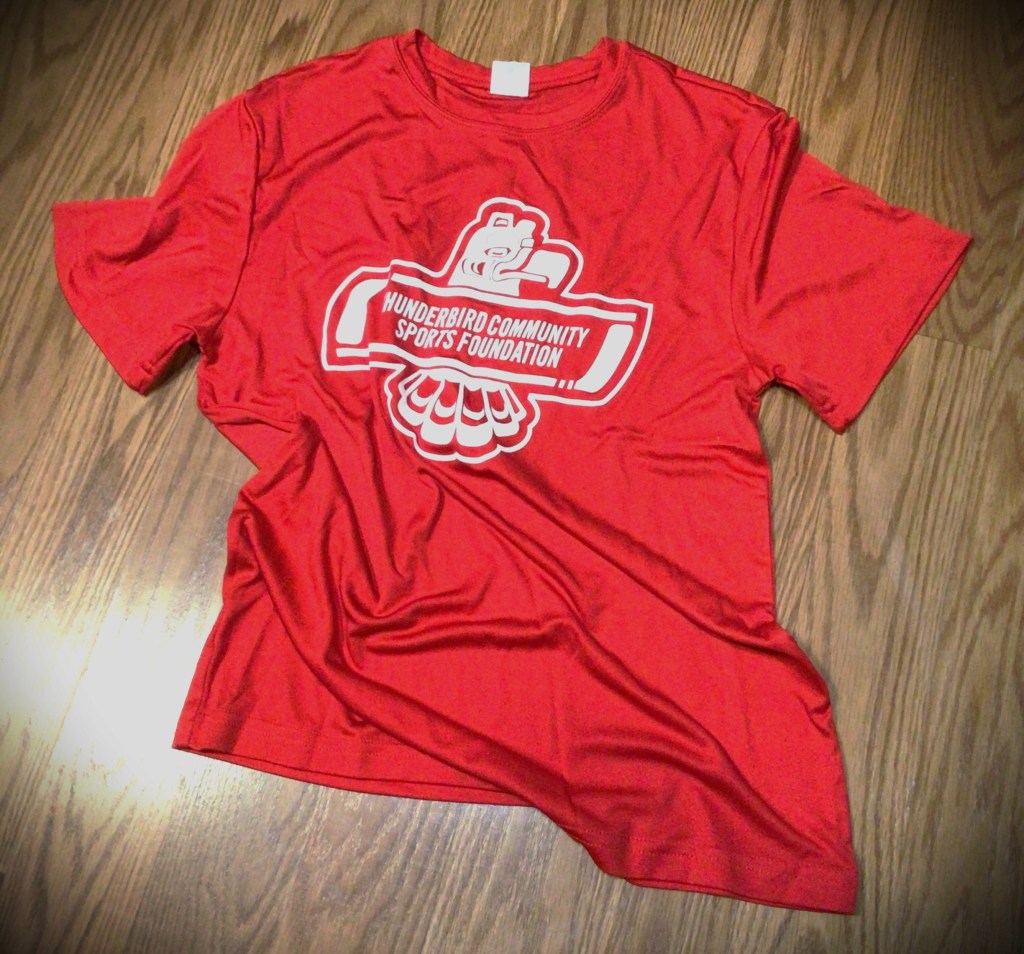
In this instance I’m using the spare jerseys that I had from coaching this past season. My office space is limited and I really couldn’t keep them for some theoretical team use. Besides, my boys have already a small collection of jerseys from different teams they have played on. I need a game plan of what to do with them, in the event that certain men in my family can’t let them go.

Breaking Shirts Down

If you’ve taken a look through Pinterest, you’ve seen how people have made pillow cases out of shirts of loved ones who have passed on. You probably have seen, many years ago, where logos and decals of shirts have been broken down into quilting squares. What do you do if you really don’t want pillow cases (especially out of stained jerseys) and the material doesn’t lend itself to quilting (or you just don’t quilt)?

Cut the shirt down into a thin fabric strip, or yarn if you will.

The beauty of breaking shirts down into a fabric yarn is that you have so many options in front of you on how you want to use the shirts. You can crochet/knit with it, weave, braid and turn it into cordage (which then can be used in other crafting and practical projects like macramé or net making–trellis for garden, make a reusable bag, or anything your imagination takes you).

Whatever terminology you want to use for the strips of fabric, or future use, I’m going to move forward by talking about the material as yarn.

Advertisements

How to Make Your Shirt Yarn

If you haven’t washed the shirt yet, and want to, make sure it’s washed and dried. If the shirt is stained from mud, grass, or anything else, don’t worry about it. As you will see in a moment, you will not see it when you finally work your yarn. If the shirt was stained by bleach, that’s not a problem either. Depending on the size of the bleach discoloration, it either won’t be noticed or it will add variegation to your yarn similar to the color variegated acrylic skeins of yarn you see in the store.

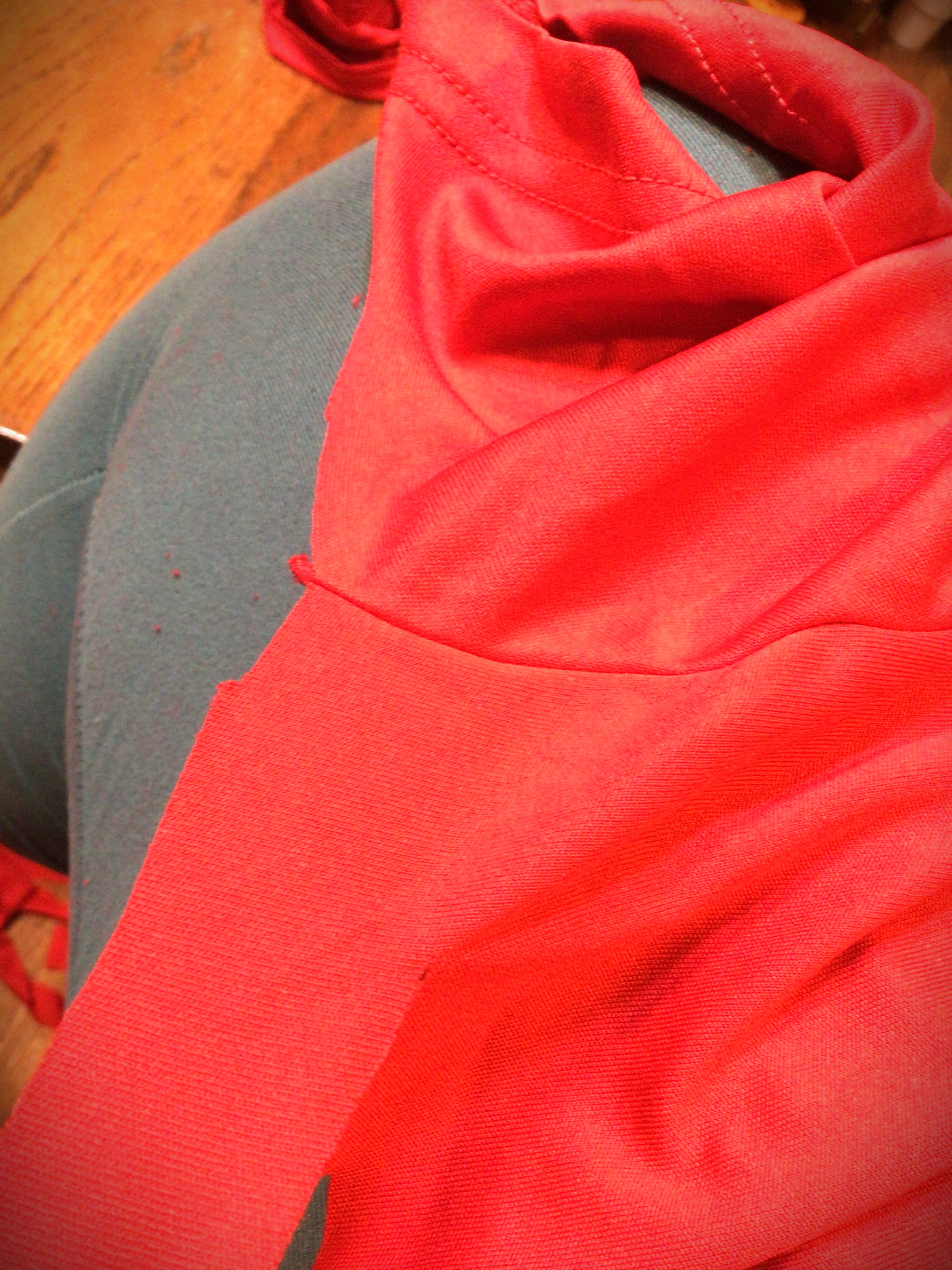
Lay your shirt out on a flat surface. The first shirt that I cut, I used my lap and the polyester stretched differently as I rotated the shirt as I cut. This made the lines uneven and rough. For the second shirt, I laid it out on my kitchen chair (you don’t have to have a crafting table to do this if you want to make yarn). My cuts were more uniform and with less jagged edges.

Don’t let your lack of cutting precision dissuade you from making yarn. If you find that you have little pennant like flags on your strips, when you crochet the yarn you will find that you have a textured look.

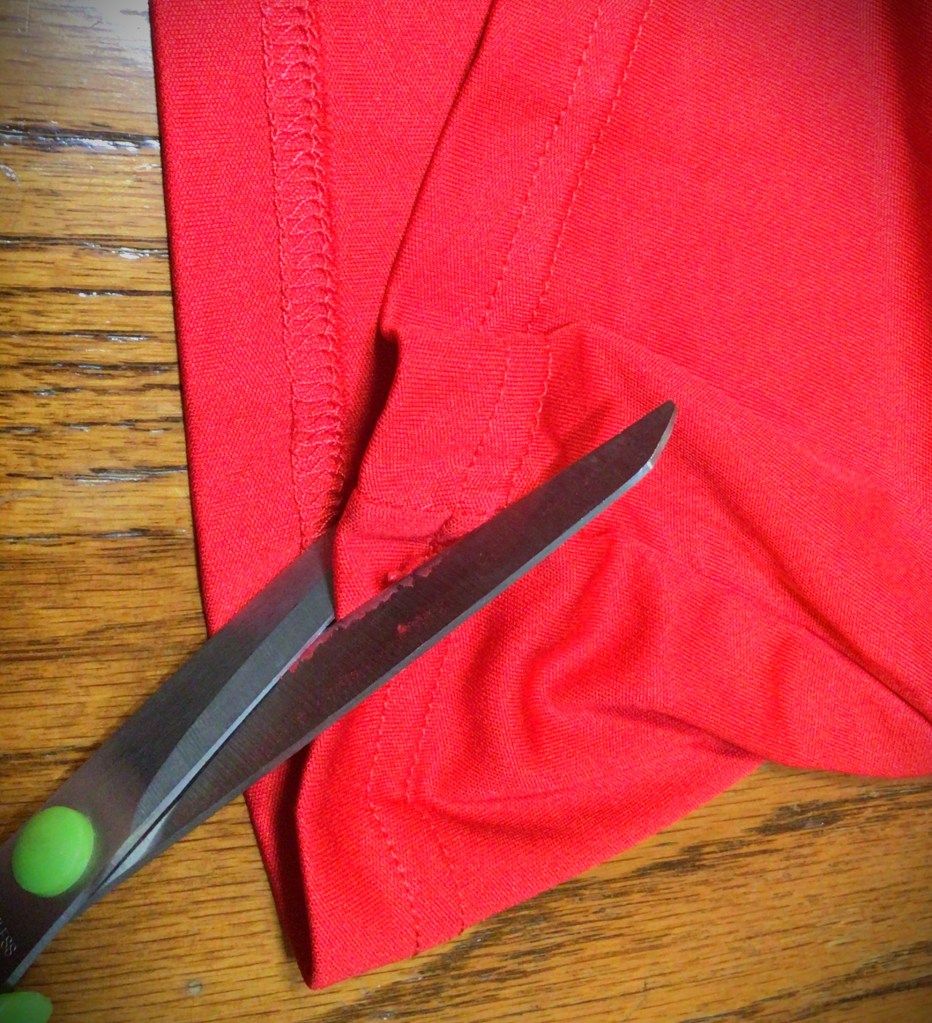
I started by cutting the bottom hem of the shirt. If you cut at a 90° angle, you will find that you have to cut on a slant to cut your next pass around the shirt. However, if you cut at a diagonal/45° angle, you will just circle around the shirt without noticing any change or needing to make adjustments.

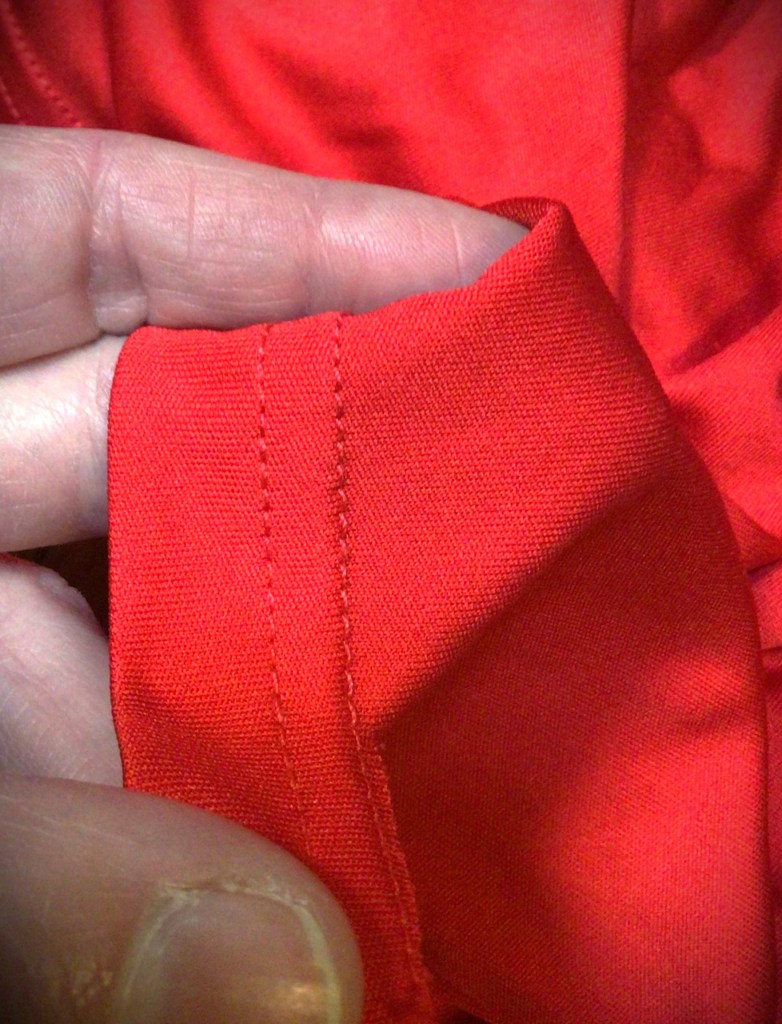
The thickness of the hem is a great way of feeling out how thick to cut your shirt into yarn. It’s about 3/4″ to 1″ wide. I wouldn’t go any wider than that, especially if you have thick vinyl lettering on your jersey/shirt.

As you cut along the hemline, look how its width is in proportion to your hand. I looked at how it fit between my first and second knuckles. With this visual cue, I could cut the rest of the shirt and keep the width pretty consistent.

I chose to start cutting my yarn from the bottom of the shirt because it allowed me to find my cutting groove without having to worry about the neck line or the sleeves.

By the time that I got up to the sleeves, I felt out how I wanted to cut the shirt.

One option was to remove the sleeves entirely. I chose to leave my sleeves intact because I wanted to maximize the length of yarn that I got from my jerseys. The beauty of jerseys is that they’re made of polyester and when you cut through the shirt/sleeve seam, the fabric remains intact. (Cotton shirts may fall apart when you cut the seam.) So all I did was focus on keeping my yarn width and keep cutting up into the sleeve and back down into the shirt.

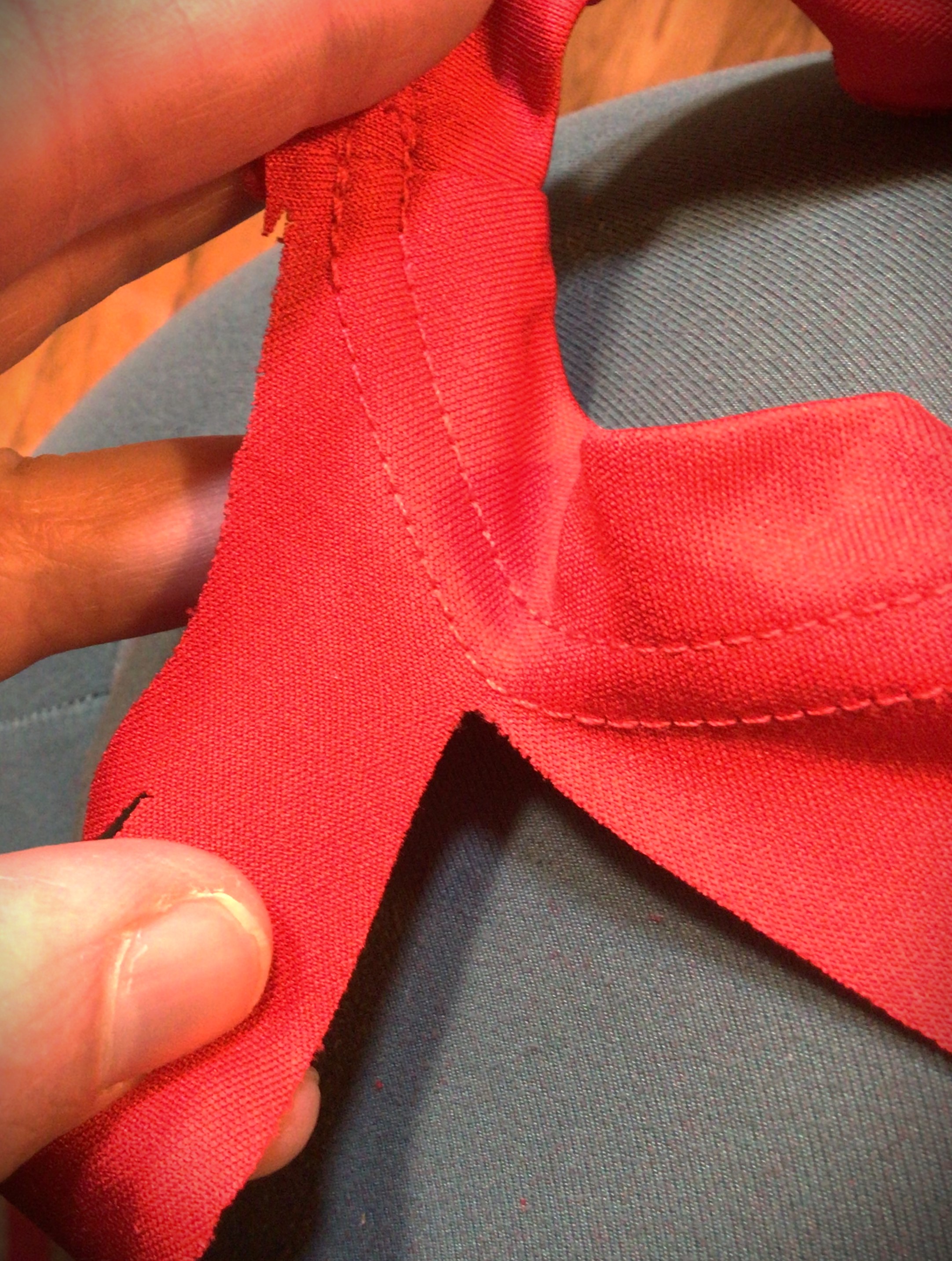
There does come a point where the sleeve separated and opens up and you can’t go directly back into the shirt body. At this point I just turned the fabric so that I turned the rest of the sleeve into yarn before joining back up into the shirt body.

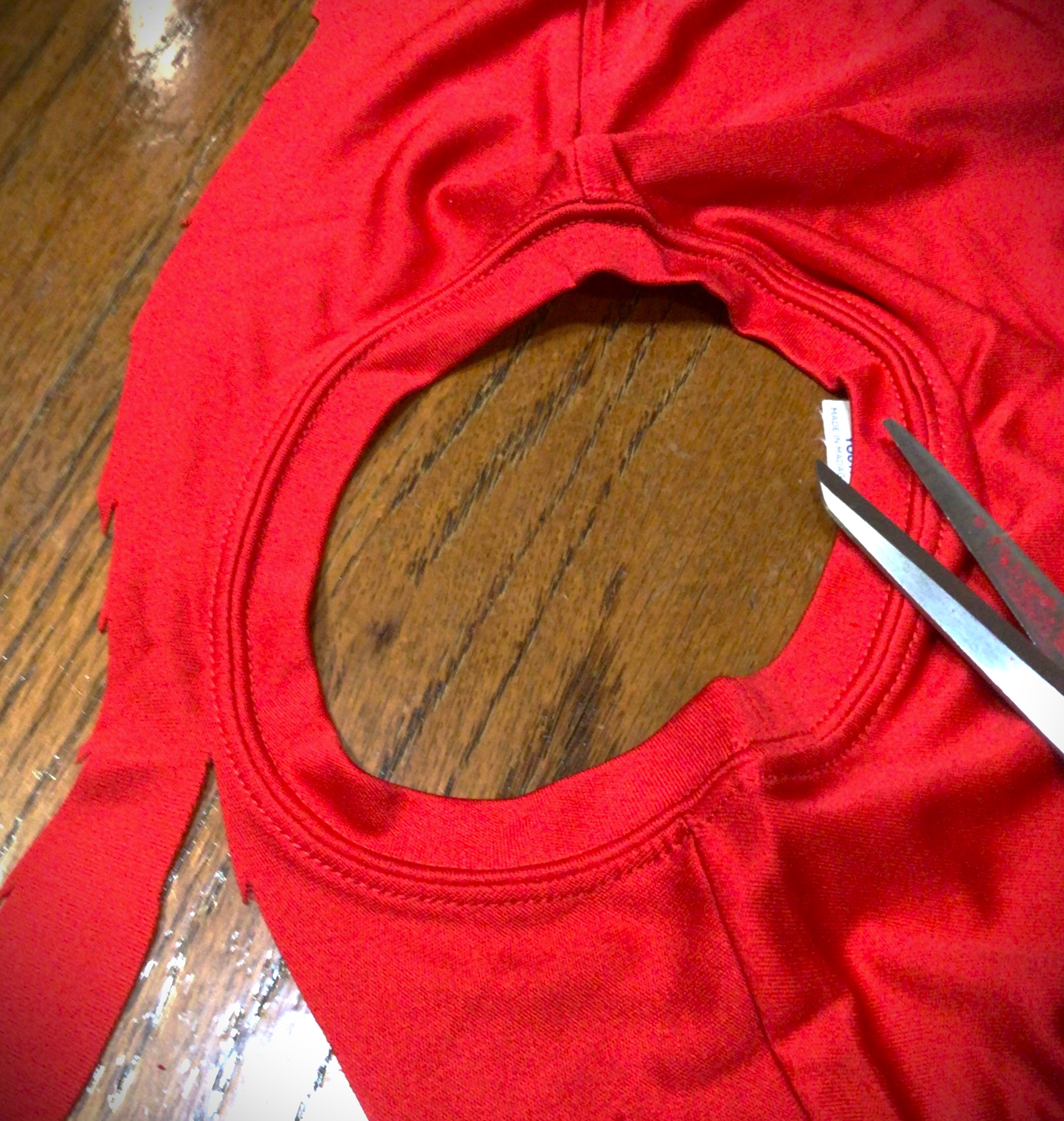
The neckline is also an odd point to cut around. What you want to do us keep thinking and focusing on keeping the width of your yarn. You can cut through the neck hem and there’s not going to be any issues. The jersey’s neckline stays intact on the seam.

Once you get to the end, you will more than likely find a funky end. Just keep your width, cut around corners and finish off the shirt. It will look like a spiral, but it won’t affect your project at all.

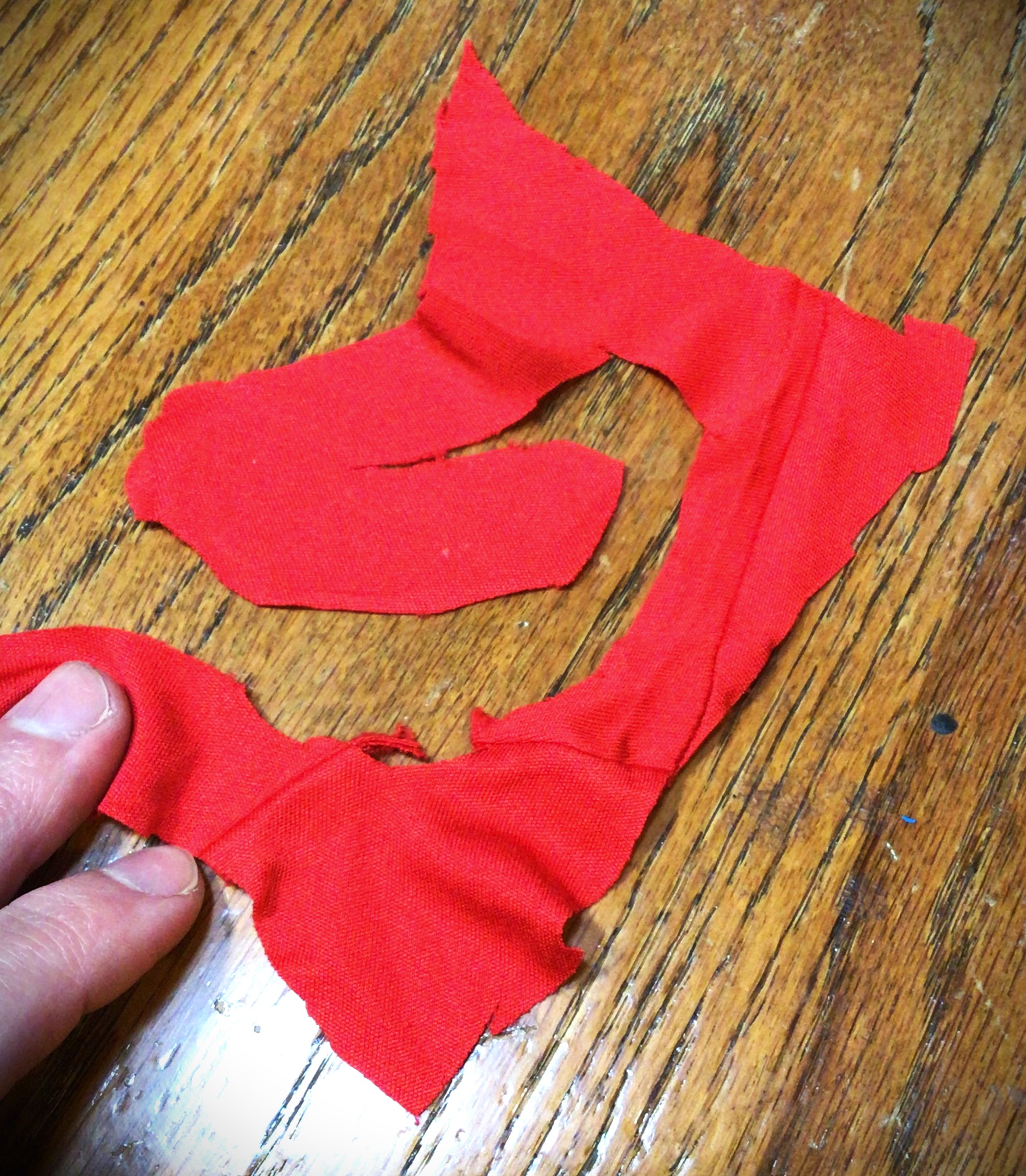
With your shirt cut down into one long strand of yarn, you can trim off any large triangular flaps that you see. Or you can wait to do any trimming until after you started working with the yarn.

I chose not to do any trimming until after I crocheted my yarn. Even though I had several flags on both balls of yarn, I only ended up cutting off three triangles. And those ones were about as long as my pinky when the yarn was unworked–just as a point of reference.

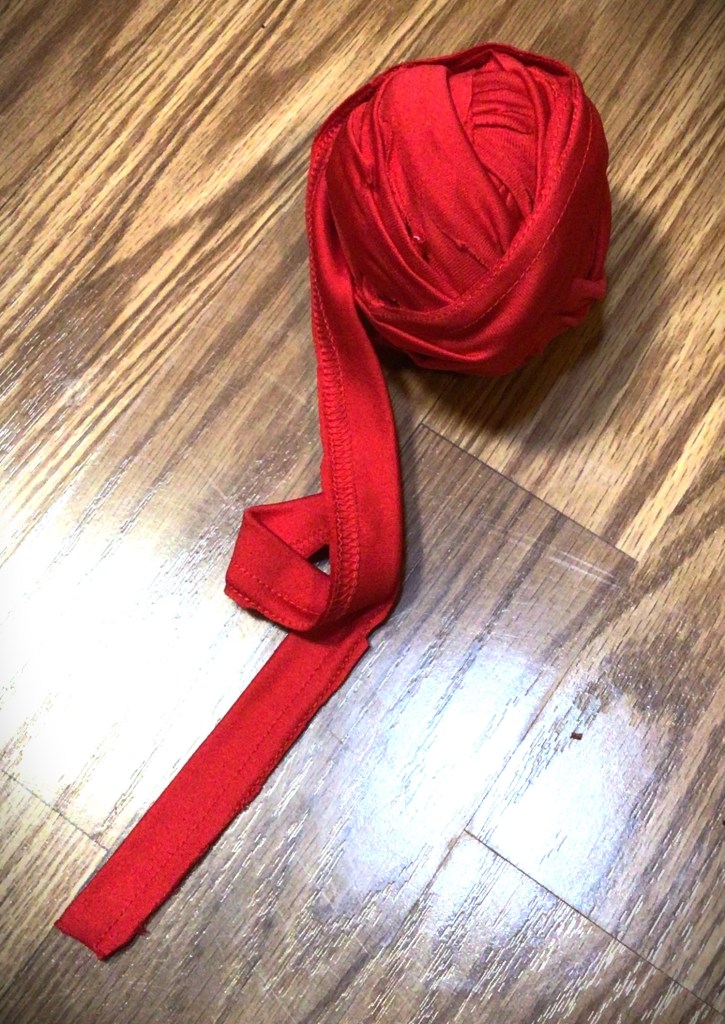
For storing your yarn, or prepping to go right into a project, go ahead and roll your yarn into a ball. Each yarn ball was smaller than the whole shirt folded. So even if you’re looking to save space, and not start your project yet, it is well worth prepping your shirts ahead of time into yarn.

Starting the T-Shirt Yarn

You can choose to start the t-shirt yarn the same way as you would with acrylic yarn. If you want to avoid a large knot, you can do this.

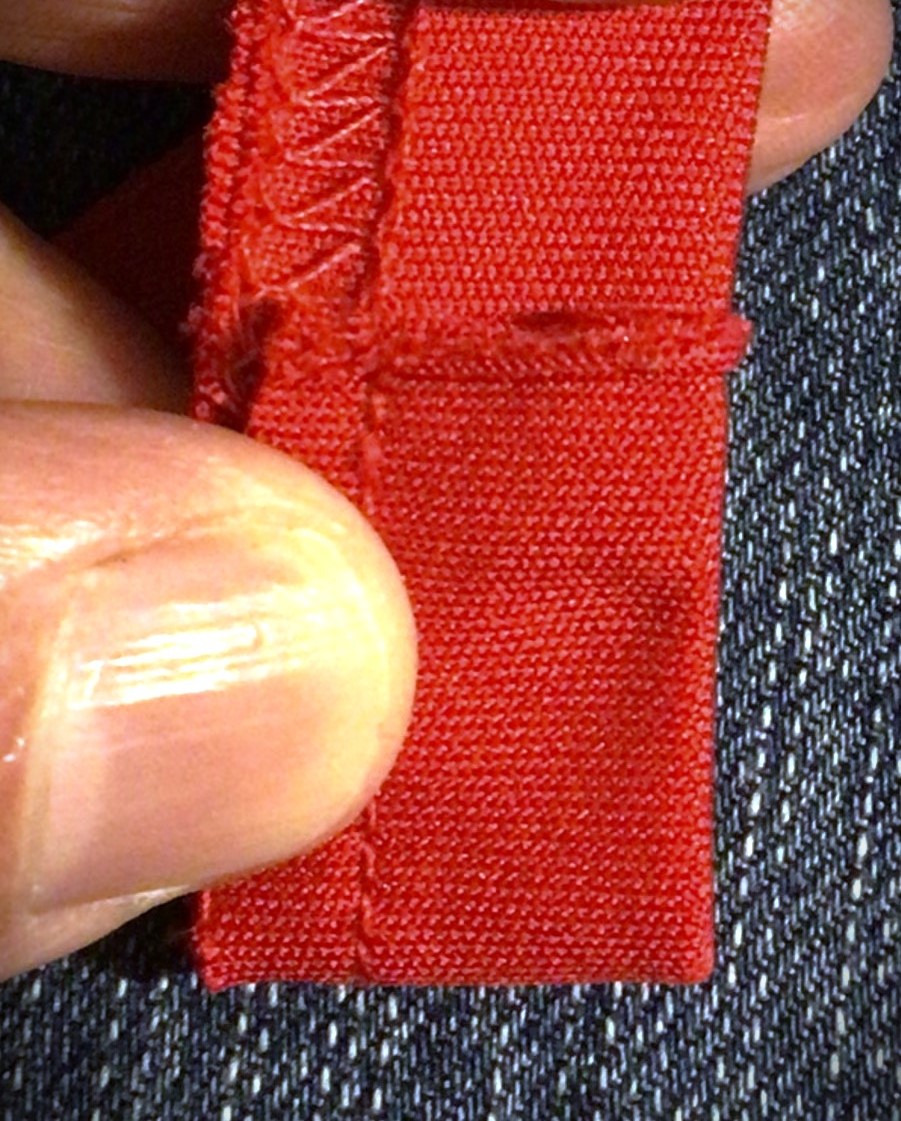
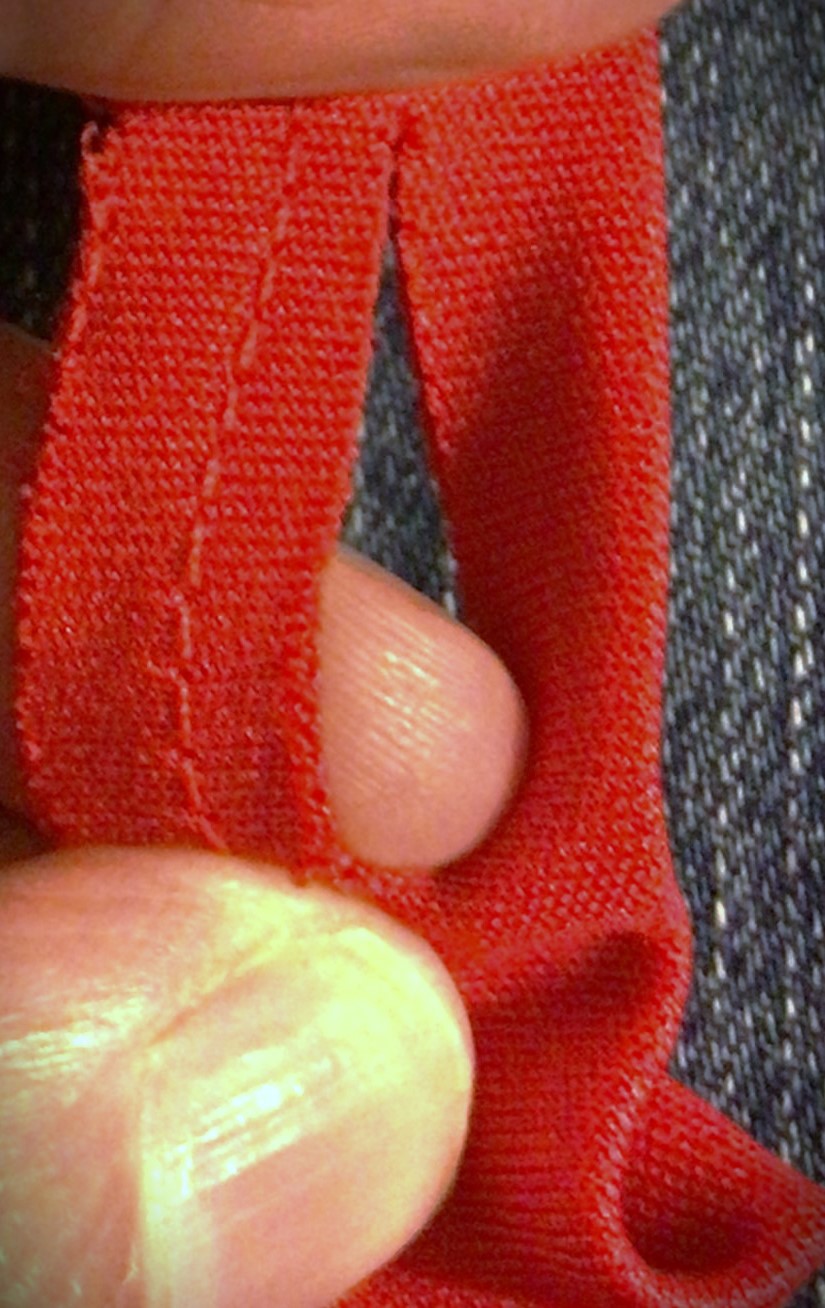
Double over the end of the yarn. Over the crease cut down the middle. When you open the yarn back up you will see that you have cut a hole in the yarn. From here you can choose to thread the yarn through the cut hole to make your first loop. Or you can treat this cut hole as your framework to start a circle or square block.

When you are finished with one ball and want to join your next one, you also have a couple options.

One option is that you cut a loop into the end of your next ball of yarn. The tail of the ball that is coming to the end, cut so you have two ends that you can tie into the loop you just cut into the next ball of yarn. (In the case of polyester, your knot is going to be small, so it will disappear as you work through the transition.)

Another option is that you cut a loop into the tail of the ball that is coming to an end. Thread the beginning end of the new ball through this loop. Make sure that you pull enough thread through so that your first couple of crochet/knit stitches are the doubled over yarn. (This minimizes the potential of a visual knot. However these stitches will be thicker than the ones on either end; from the end of the old ball and the addition of the new ball.)

Advertisements

Potential Projects

As I mentioned earlier, once you have your yarn made there are countless projects you can make. If you can crochet, knit, weave, or make cordage you can use this yarn for all those projects.

I don’t have nearly enough jerseys to make the one I want, a Christmas Tree Skirt. (I will just add to what I’ve started as jerseys become available. My kiddos are pretty fascinated by this and so I have no doubt that I’ll have their old jerseys before much longer.)

Before I leave you to start creating, I wanted to show you how this yarn works. You saw that the front of the jersey had about a third of the front covered by sponsorship decal. The back also was half covered by the jersey number and sponsorship as well.

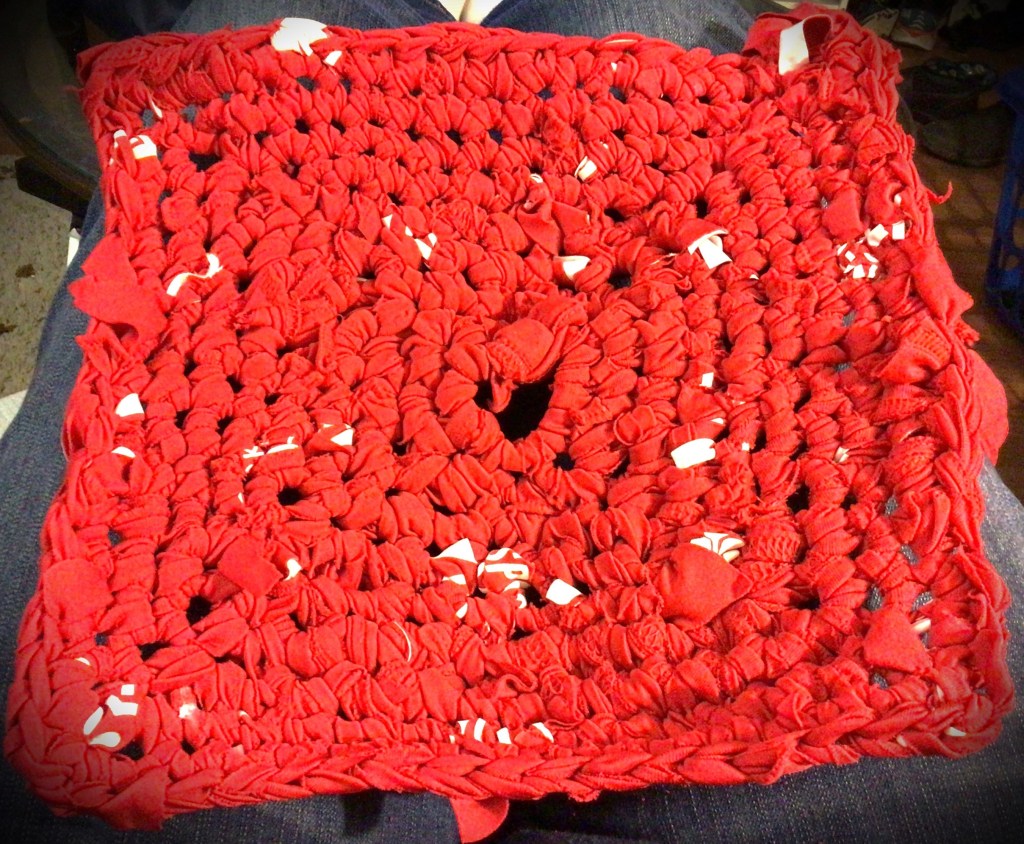
As you can see here, for as much white vinyl was on the jersey, in the end it’s just speckling. The thicker chunks of white are from the large jersey number from the back. You can even see the tips of the smaller pennant edges sticking out. Those can easily be trimmed back for a smoother appearance. Or they can be left to add texture and whimsy to your project.

Just so you’re not discouraged, the vinyl they use is difficult to work with. It did pucker as I crocheted. (You see how much it sticks out on the edges.) But as you continue to work your yarn it starts to lie more flat and incorporates itself into the piece.

Note: I didn’t use a standard crochet hook for this. I used a weeding hook (for when I cut my own vinyl) that has a handle that about as thick as my finger. Especially working with yarn that has stiff vinyl, it’s easier to manipulate when you use a thicker hook.

Hopefully this 10″ x 10″ square (made from one youth size S and one youth size M jersey) gives you an idea and even inspiration for what you might make with this kind of yarn. You could mix and match jersey colors into your project or make squares to color coordinate your project in a more analytical framework.

Be sure to comment below and post pictures of what you make using this kind of yarn!

Processing…
Success! You're on the list.

Leave a comment

Advertisements
Advertisements

Don’t Waste That Film

Earlier this week my son grabbed my phone and asked me to smile. Of course, out of my mouth came the standard mom response, “why?”

That one moment flooded me with memories.

Flashing through my head were the countless images of the photographs that my grandparents took on their road trips. Images of the photographs that were taken during vacations while I was still a child.

If you’ve lived through life before the digital age, I know you remember all the moments where you questioned if the shot you were taking was the one that you wanted to take when you only have 24 frames on your roll. And how excited you were when you had any surprise bonus shots after you took your 24th picture. The pure excitement of what you were going to take a picture of, what you thought you would never be able to shoot.

There was one specific image that came to mind when my son told me to smile. It was the one picture that I took on a childhood Disney Land trip. We were done at the park for the day and waiting for the trolley to arrive to take us back to our hotel. My mom sat on the curb, talking with my dad. She took out her coin purse and had just pulled out her key when I snapped my picture.

We were all excited to get our pictures back from being developed. Our family tradition was always to sit down together to look at all of our memories that we captures. When we got to my roll of film, my mom’s response to the picture I took of her was why did I take that picture? Why did I waste that one frame?

I don’t remember my response. I probably just shrugged and said I don’t know.

But here is the thing. That picture stands out in my mind to this day, because it was a candid moment in life. It wasn’t posed. It wasn’t staged. It wasn’t the fake smile while you grit through your teeth, “take the picture already.” This was a picture of my mom in a moment of being my mom.

I don’t know if my son said anything while my mind went down memory lane. But I stopped tying my son’s soccer cleats and smiled for his picture.

Imporptu picture taken by my son. Not the best, BUT this is how my son sees me!

Take the pictures.

Let others take pictures of you.

During one open house that I was working, to sign up clients to decorate their weddings, this whole conversation came up. One bride was on a budget and was talking with her mom about what they wanted to do while talking with me. Part of me hated what came out of my mouth. But the other part stands by it 100%. For weddings, don’t ever skip out on having a person designated to take photographs. Even videos are important.

Weddings are one of the few times in life where all your family members come to celebrate with you. It’s the one time where the majority of family differences are set aside. (Yes, some differences can and still present themselves, but people are generally trying to put on their best behavior.) And it never fails that a year, maybe a handful of years later a loved one dies. And it was the last time that you saw them.

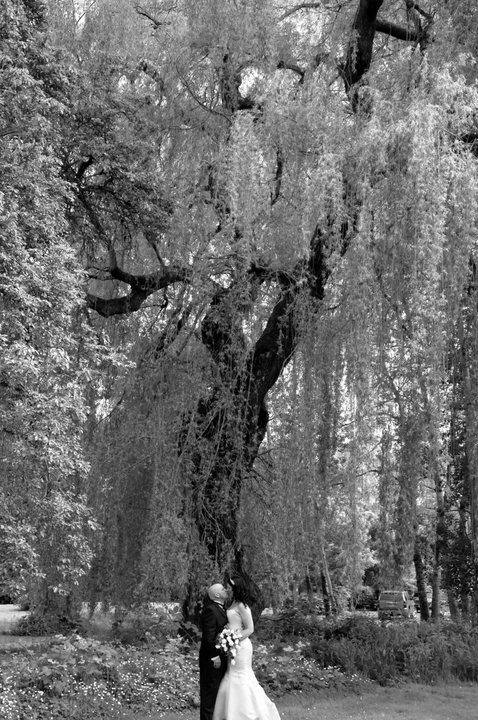
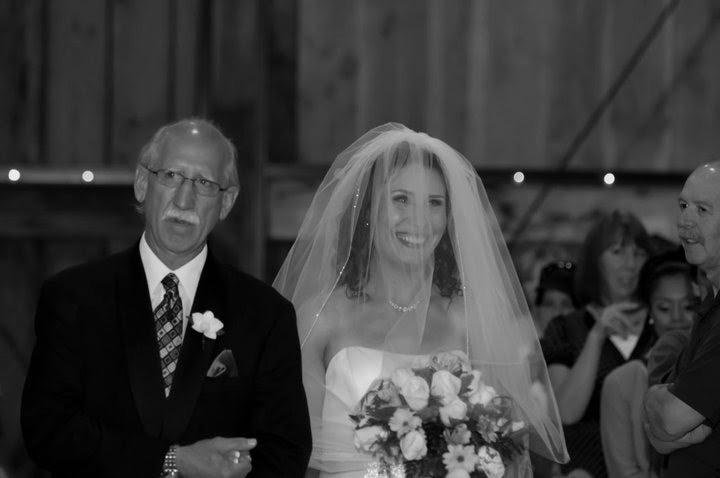
My wedding wasn’t the last time that my dad was in family pictures. But it was the last time that it was just him and I. And I was blessed to have a video taken of me dancing with my dad. You see, my boys never got the chance to meet my dad. I have plenty of pictures of him. But I grew up before the digital age. There were home video cameras, but it was one luxury items that was never on my family’s shopping list. And truth be told, my sisters have pictures of their weddings, but they didn’t have video of their weddings and their moments with my dad. (Sometimes we forget how quickly technology has made jumps and leaps in our lifetimes.)

This wedding video has become so much more than something my husband and I look back on and remember our forever day. I’ve sat down with my boys and periodically watch it with them so they can see who my dad was.

And this is precisely the reason why I absolutely do not regret talking myself out of a deal. I never wish anyone to lose a loved one. But I’m grateful if anyone has the opportunity to choose making lasting memories with loved ones, because there are moments of comfort that come when you can connect them in a time or day that the connection can’t be had.

Life changes so quickly. One moment you have a loved one with you and you can never imagine life without them. Or you have a friend or loved one that you are closer than close with and then life happens and there’s a difference. But the fond memories are still there.

I encourage you to make those moments.

And for all the brides that are planning their weddings that are on the side where a loved one is unable to be present for your big day, there are so many options that are coming more and more available to you to include them.

For my wedding, my husband missed his father on that day. He had passed away from cancer before we met, so it was physically impossible to have him present. The one thing that I did for my groom was plan a meaningful song for my husband to walk out to. Since his father was Irish, I chose an Irish song that my husband never knew before but spoke volumes to him. My Mother in Law also brought a picture of my Father in Law to set in a seat for him.

I know the photo in a chair is an antiquated idea, so I completely understand if that is last thing you want to do to honor a deceased loved one at your event. There are so many other brilliant ideas that are out there.

Families who have had advanced notice that a loved one would not live long enough for a wedding have made videos with wedding blessings/wishes, written letters, or even provided personal items for the “something old”.

Now there are the additional technology ideas of having a Q Code set up with the voice of the loved one that people can scan and hear the person. Or Spotify recordings that are being used. And who knows what will come in the near future to honor loved ones.

Even now, I’m kind of dating myself by remembering how Natalie Cole sang a duet with her father Nat King Cole. It wasn’t for a wedding, but just the desire of hers to fulfill her lifelong wish to sing with him. She had a well known black and white video of him singing Unforgettable, and she sang with the video of her father. Maybe that’s what you do to make a new memory with a loved one, where the time has passed.

Maybe your loved one is a grandmother who tatted or quilted. In fact, a Boho Wedding featuring a loved one’s tatted lace or doilies would be absolutely perfect! If it’s a small item that could be easily overlooked, make a shadow box and set it on the entry table. Or place it as part of your centerpiece on your sweet heart’s table.

There are even ways of incorporating a Grease Monkey loved one’s creations. Metal art or wheel hubs may not be appropriate for the wedding ceremony. But they can be incorporated in the decor for a cocktail hour or reception space.

The options are absolutely endless!

If you have a loved one that you want to honor, simply pick items that represent them. Any great decorator can find a meaningful way of incorporating absolutely anything so that it looks like its part of the larger decoration concept. It can still be classy. And you can absolutely still have the presence of your loved one with you on your big day.

Processing…
Success! You're on the list.