New Life to Wicker

There’s something about those moments in life when money is tight and you
try to do a lot on a dime that’s worth one cent. Here’s one of those
transformations from yard furniture that my husband brought home years ago.

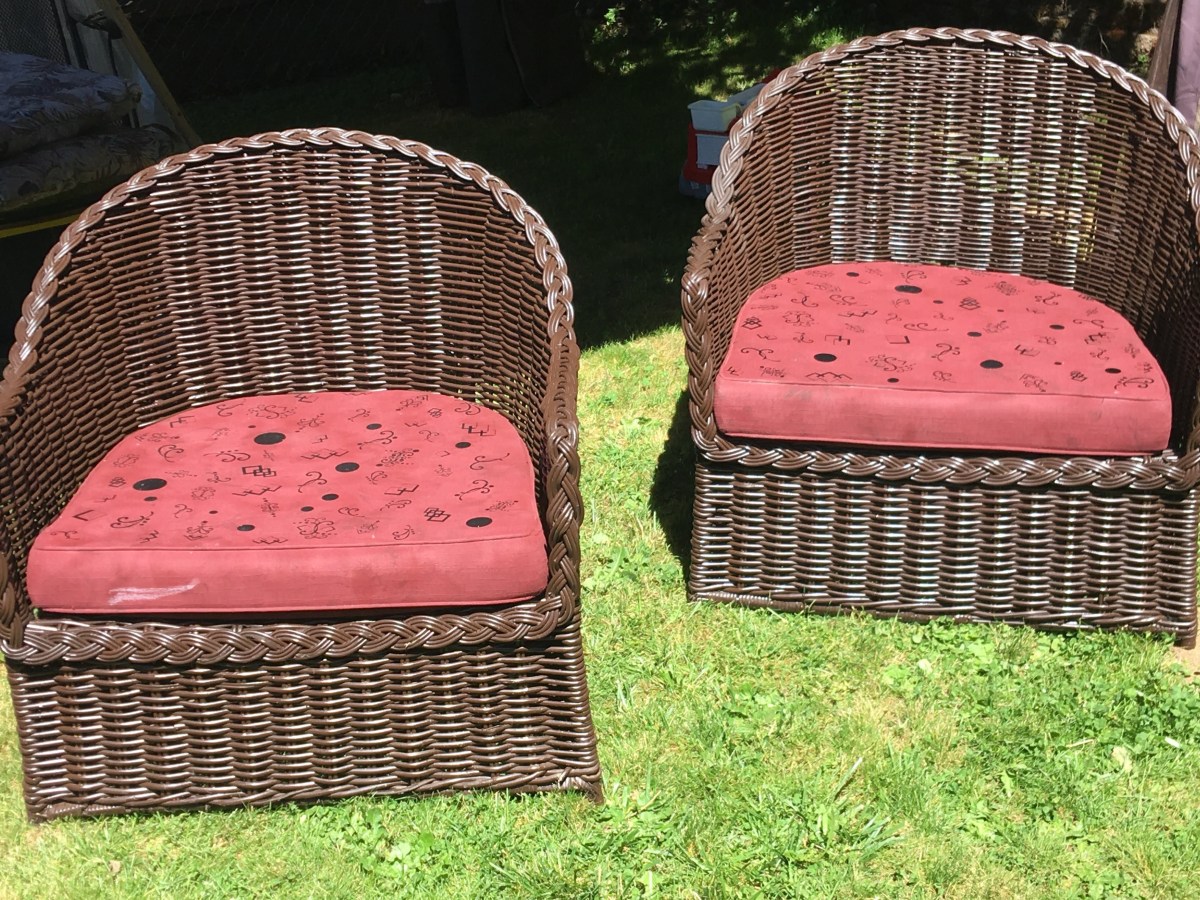
I don’t remember exactly where my husband found these two wicker chairs. It
was from a stage in our marriage where he would regularly hit garage and estate sales. If memory serves me well, these were a yard sale find.
The price was right, even if the quality wasn’t there.

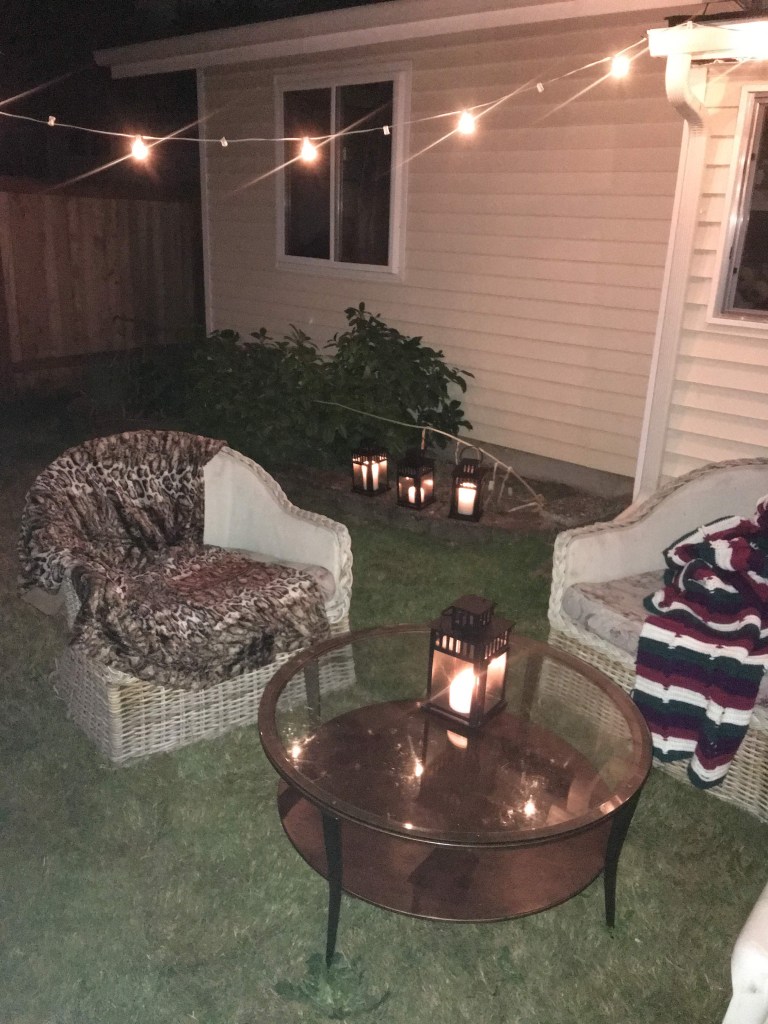
In the above picture I invited a few friends over for a yard party and needed the seating. So even though the fabric siding of the chairs were ripping out and had be hot glue gunned back to the wicker from the people who previously owned them, I hid these flaws by throwing blankets over them.

Close inspection will tell you that the falling apart wasn’t just on the side fabric. The wicker was unweaving on the bottom. The seat cushions were not only out of date by a couple of decades, but also starting to have holes.

We contemplated just throwing these chairs out.

The budget wasn’t there to replace them. And it was hard to toss them when they have always been our favorite seats to sit in during the summer and we have a nostalgic thing for wicker.

We just love them.

So I bought paint and made them over.

Prepping the Chairs

The first thing I had to do was rip all the fabric off and remove the staples with needle nose pliers. There’s no real trick to this, just a whole lot of patience.

The hot glue was easy to remove from the wicker and didn’t have any cosmetic damage. Once I saw this, I had no problem with this being the solution to the issue of the stripping that was unraveling on the bottom of the chairs.

Even though I thought I was going to have to buy new wicker stripping to replace what I thought was lost, I didn’t have to buy any. All that I needed to do was wrap the stripping back around the bottom frame and periodically drop a dot of hot glue to the frame as I re-wrapped the stripping.

I highly recommend using glue to hold anything you’re wrapping in place. There will always be a moment (or a dozen) where stripping will slip from your grip. And a small dot is all you need to keep from the whole section from unraveling and making you redo your work.

And if you’re afraid that you’ll use too much glue, make sure that you’re gluing on the “inside” of the chair. No one will see glue seepage when the chair is on the ground, so even the bottom edge of the chair is also a great place to secure the stripping.

Due to the age of the chairs, there were a few nails that had worked their way out. This made one chair in particular have the seat framing fall down under the rib that it was nailed to. That’s not a problem, because you just remove the nail, put the seat back on the rib and nail it back into place.

Fortunately, I had some extra finishing nails that were in my tool box.

While I was already repairing I decided to do some preventative work. To add additional support to the seat I nailed a few extra nails through the rib into the seat.

A Touch of Paint

There are a few different options that are out there for painting outdoor furniture. I didn’t want to deal with a primer or cleaning up brushes. So I opted for a spray paint with primer.

The one thing that I will say about wicker is that it takes more paint than you think if you want to get in all the nooks and crannies for a even coat. And for my own sanity, I did paint from different angles. One time through I painted the chairs from the upright position. For the second coat I flipped the chairs upside down.

If I do a wicker project again in the future, I will definitely paint in both directions again. There’s something about spray paint. It’s good about getting in tight places, but it really does need the extra help by changing paint directions.

These two chairs took 6 cans of spray paint. If you’re looking to do your own furniture spray painting project, this should give you a decent enough estimation on how much paint you should purchase for your project.

What about the Cushions?

There were two options that I had. At first I was leaning toward making a slip cover because that would be the easiest and quickest option. The only problem was that at the time that I was doing this project, outdoor fabric was more expensive then what I was willing to pay (starting at $15 a yard and I would have bought 4 yards).

My second option was fabric spray paint.

No one that I knew had ever worked with this type of spray paint, so I had no idea on what to expect. The only knowledge I had was watching a fashion designing competition. There was one contestant who used fabric spray to create a certain effect.

I’m sure fabric spray paint is perfect for a fabric that is a solid color.

Print on the other hand….

My pictures here don’t really show you the original print very well. But it’s a slate blue base with flowers (peach to dark rose color) and brown swirling flourishes.

I had chosen brick red fabric paint because it complimented the chocolate brown paint I picked for the wicker. And I thought that it would have great coverage since it’s a darker color.

Yeah, no.

I originally bought one can of fabric paint thinking that it would be more than enough. However, in reality I was only able to paint the top of each of the cushions because of the color disparity of the blue and brown in the original print. The short story is that it took nearly three cans of fabric paint to cover both sides of each of the cushions.

Another problem is that I left the covers on the foam form.

I chalk this fact to being the worst mistake I made for this project. The foam no doubt soaked up the paint, creating less coverage on the front of the fabric. And at the point that I did this project, my kids were babies and I had mommy fog brain. So now I would have removed the cover, but it just didn’t cross my mind then.

The good news is that the second layer of paint was thicker in coverage than the first. So if you wanted to get a solid color off of an old print, I’m absolutely positive that it is obtainable with 3 or 4 coverages. Just know that if you paint over a print, you’re going to have a phantom print showing through.

I wasn’t too opposed to the phantom print because it sparked a creative idea that I absolutely loved. Art Deco!

While Art Deco is more noted for being angular, the beauty of art is that
you take a style as your base and tweak it to fit what you see in your head. So
I took the squares and sprays seen in 1920’s architecture and added circles and
chandelier elements that matched the opulence of the time.

Truth be told, I had to work in the circles into the design to cover the
largest hole (which you see above).

Heat Transfer Vinyl (HTV) was my material of choice because I wanted the permanent
design and I wanted to keep the cushion weather friendly. It never fails that
our outdoor furniture gets caught in a summer rain a time or two each year.

Once the design was weeded, I cut the elements out and pieced them together
on the cushions in relation to the phantom swirls.

Now this HTV “print” that I made isn’t exactly everyone’s esthetic. I did want to share it with you because I wanted to show you how you can save furniture from being thrown out. Also, you have your own option for making your own design with materials that you have on hand in your home. And to encourage you to play with colors and designs that just are not on the market.

The one thing that I LOVED about this project was that I took chairs that I was constantly making excuses for, to my guests, and turned them into something that we’re happy to have in our yard for the next several years.


Do you have old lawn furniture that you can give new life to?

Comment below! Let me know what you did to rejuvenate a piece of furniture that you almost evicted.
Make A Container You Will Love

More and more people are moving to containers for growing their home gardens. So what do you do when you get sticker shock over the container prices online or in the box stores?

You build one!

Everyone talks about pallet projects. But I want to introduce you to crate raised beds.

My husband works for a company that builds machinery. The crates that are used there are tossed. Being resourceful and having access to free crates to reuse and repurpose, this is the way I build the majority of my container garden. This also has the added bonus of solving my time problem. I have so much on my plate, that building raised beds from scratch isn’t an option.

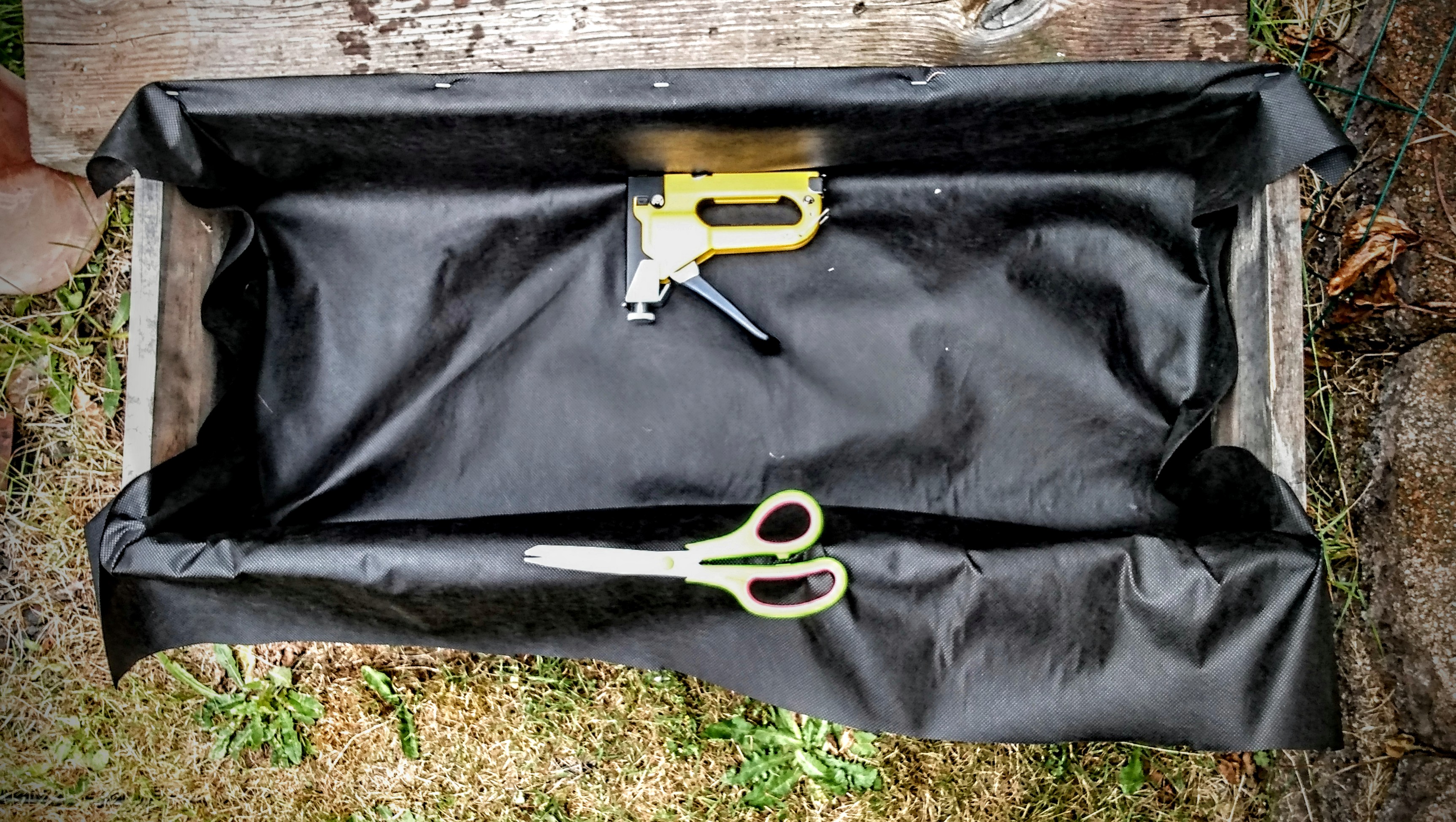
AND if you know how to use a pair of scissors and a staple gun, you can absolutely make this garden container!

There are so many different crates out there. The ones that I have and use as raised bed were formerly forklift crates. (They originally housed large machinery parts.)

With the crates you source, there are a couple of things to keep in mind.

  • If there is plywood (whether the floor or sides), you will need to remove it and replace with wood that hasn’t been chemically treated.
  • The crate floor should be solid. This will help contain your soil.
  • The sides are okay if they have gaps. We’ll line this and the soil will stay in.
  • Is this going to be a permanent or temporary container for your garden?
Advertisements

This last question is very important. It will determine if you need to source other materials for your container. You may find that you need screws, power drill, or even other parts if you plan on turning into a cold frame or want to add features like hoops.

The containers that are brought home to me are made out of pine. The boards are stapled together.

The containers that are brought home to me are made out of pine. The boards are stapled together. I know that these crates were not built to last forever. They’re not even sealed for weather. But being limited in time for my garden builds, I opt for leaving my crates as is.

Tip: you can weather protect wood by scorching it with a torch.

If you find that your crate is stapled together, this feature is going to limit how many seasons you will get out of your container.

For example, the boards of my 36″ x 36″ potato crate (above) started to pull away at the start of the third year. The wood is weathered but still as strong as the day the crate came home. This is one crate that I wished I would have reinforced with screws before filling. This crate got place before filling with dirt. And with the exception of this front face, there’s no easy way of coming back in to push the board back in place and screw in. It’s tightly spaced with other structures.

Tip: My hindsight advice is to increase the longevity of your crate container, reinforce the boards with screws, right from the beginning. This will prevent awkward maintenance in a few years.

Let me walk you through how I make my raised beds from crates

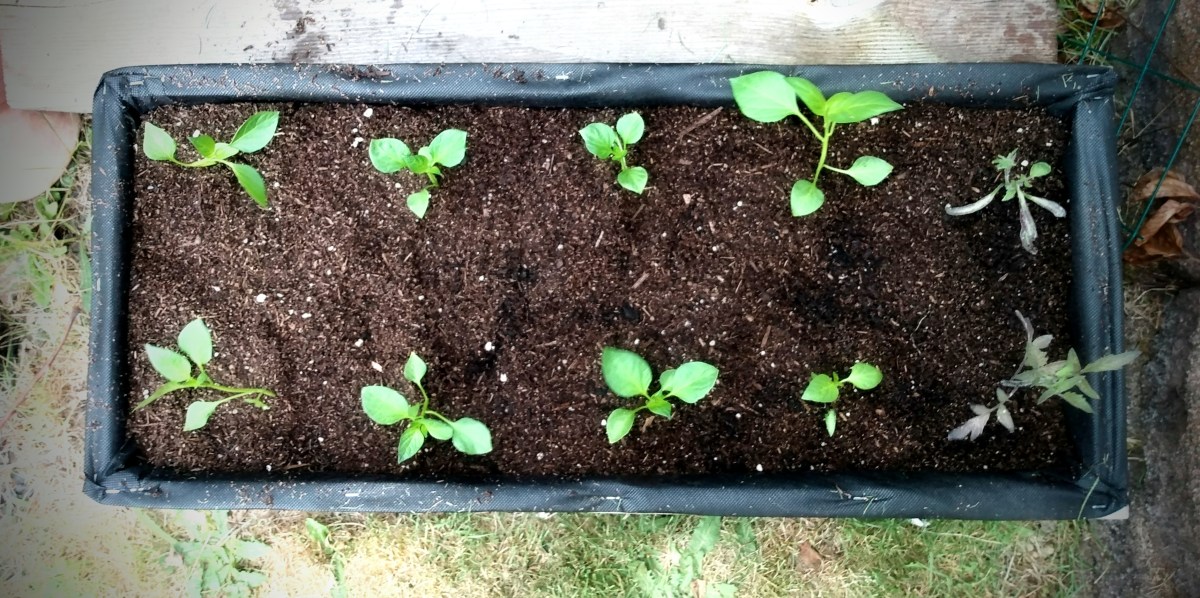
I’m using the smallest of my new crates 12″ x 32″ and about 18″ deep. (This one has been sitting for a couple months waiting for me to decide what I wanted to plant in it this season. I was gifted some pepper starts and knew exactly where they were going to go.)

Items you will need:

  • Wood Crate
  • Garden Weed Barrier
  • Scissors
  • Staple Gun

The first thing I do is fold over the edge of the garden barrier, to make a smooth finished edge, and staple it down across one edge of the crate. It’s not necessary to make a finished edge. I just like this step because sometimes the cut on my roll of barrier is slanted. So by making a new straight edge, this makes it easier to lay the barrier without worrying about it running sideways across the crate.
Note: When I line a crate larger than the width of my garden barrier, I line one side of the crate. Once that first piece is secure, I run a second piece for the opposite side of the crate. The overlapping of the barrier happens in the middle of the crate. There is no need to secure in the center floor of the crate because the weight of the soil will keep the barrier in place.

With this first edge of the crate secure, I drape the garden barrier across the top to make sure I’m laying it in centered and straight. Then I push the barrier down into the crate and make sure that the barrier has enough give to accommodate the full size of the bottom of the crate.

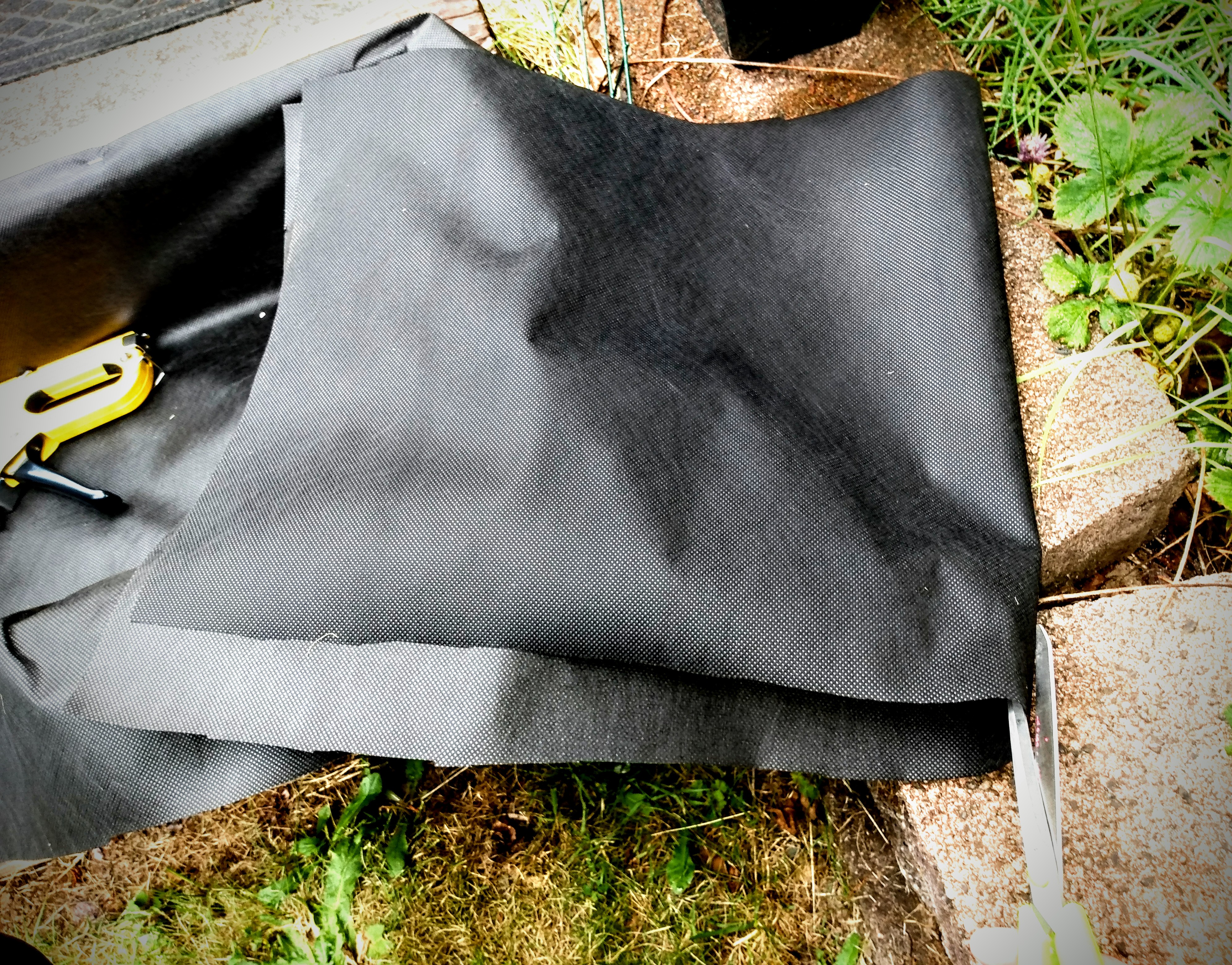
As you can see in the second picture, I trim my garden barrier a little longer than I need to fit inside the crate. One reason is that I usually don’t cut a straight line (obviously seen here). But more importantly, I learned over the last two years that you want more barrier inside the crate than you will think.

The crates I lined the first year, fitting the liner tightly to the inside. The following spring I noticed that these barriers started ripping out at the staples after the first winter of water and freezing. The barrier needed some flex that I did not allow for. So now I give some allowance.

Before I put my garden barrier away (and focus on securing the lining), I cut the width of the short side of the crate. Then I fold this strip of barrier in half and cut. Each half will line the sides of the crate. These side pieces I set aside (or stuffed in my pocket for this crate because of the wind). I set the roll of barrier to a side and go back to folding over the edge of this second crate long side, and staple it down in place.

Once the long sides of the crate are secure, I secure the edges along the short side to hold them in place before securing barrier down the short sides. This keeps them up and out of the way. And if you’re lining a crate while it’s windy out, you will thank me for having the barrier stay in one place so you can move through this project in the least amount of time.

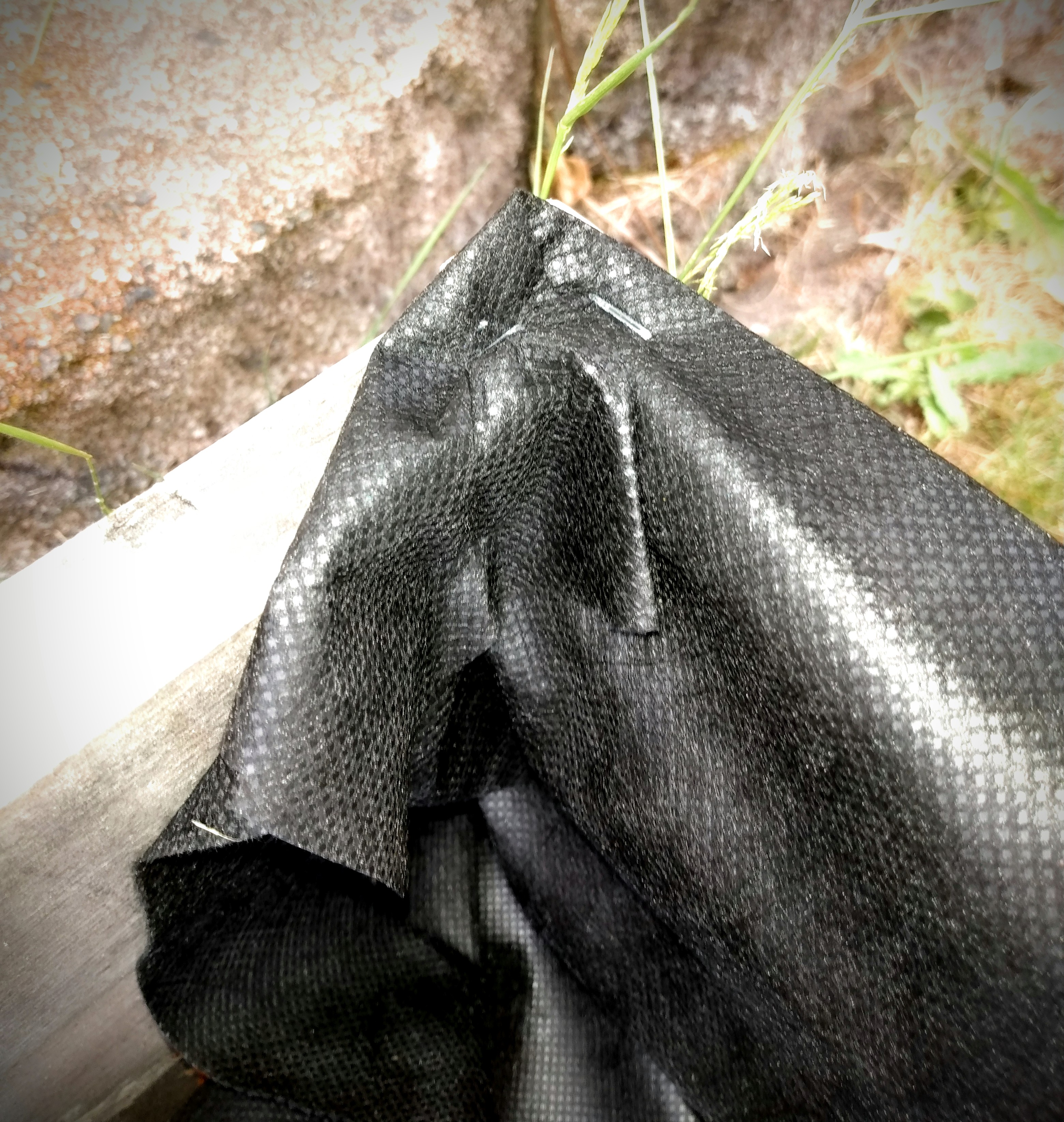
First I take the overlap, from the edge of the crate, and fold this corner down before stapling. This gives a reinforced edge as well and bringing the excess barrier down inside the crate. This doesn’t look pretty, but this is all about telling the barrier where you want it to go and keeping it contained.
Can this excess be trimmed off?

Of course it can. But you will see in just one moment, by keeping the excess length and tacking it up the side, you are creating a barrier that will keep all your soil in your raised bed without having a completely sealed liner. I use the weight of my soil to work for me so I have less steps to take.

For the next step, I pull out one of my side crate pieces of barrier that I just cut and line my first short side. I fold the edge of the barrier down, just like I did with the long side of the crate, and stapled down this top edge and pushed the rest of the length of this side down over the rough edges that were tacked down from the longer side. This flap is great because not only does it cover the edges of where dirt could go down and over time wash out of the bottom of the crate, but it also redirects any of this soil movement back toward the center of the crate.

So if you have the choice of having a generous flap (like seen here in picture two) or trimming it down, make an educated decision in favor of what’s going to help you maintain your soil. After all one of the problems with container growing of any kind is the loss of soil, mostly through drainage at the bottom of your container.

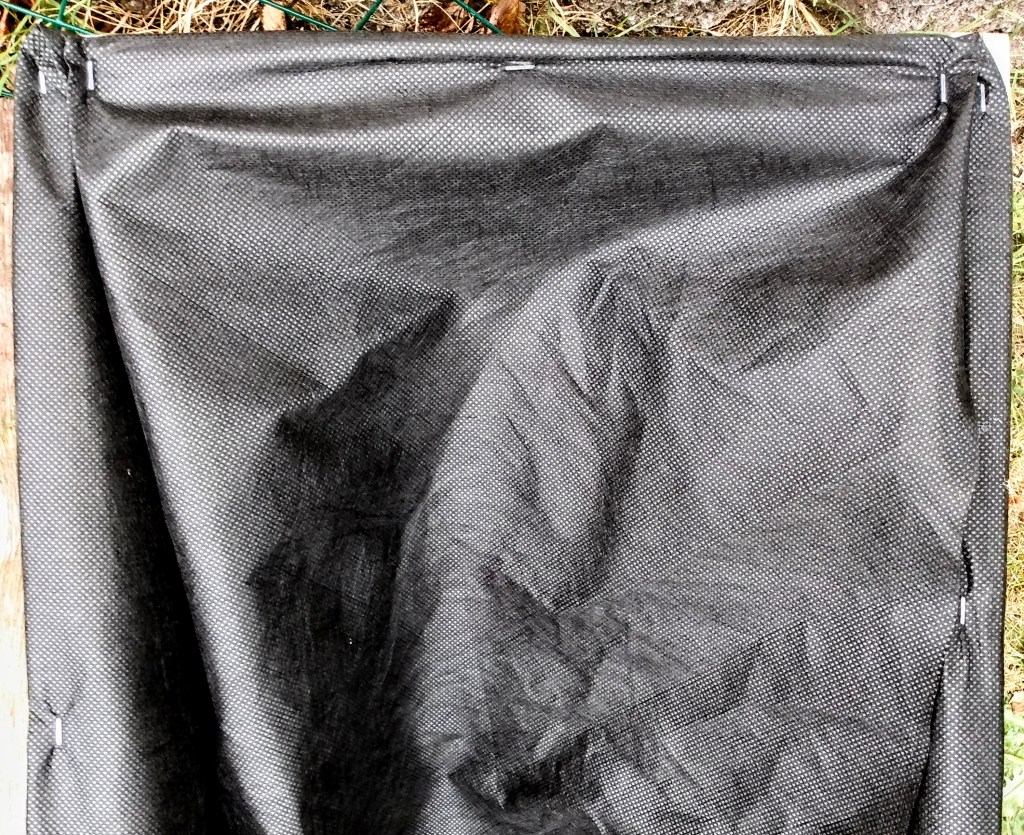
Once you secure the second short side of the crate, you will see here in picture 3 that you have a fully lined crate.

The first time I lined a crate, with no one telling me how to do it, I must have taken an hour to do this. Even with taking pictures, this only took me about 15 minutes. The larger crates don’t take any additional steps. So it really is time efficient to take a fully made wood crate and line it to make your own raised bed.

If you did not line your crate where you want it’s forever home to be, make sure that you move it now. Even with this smaller crate, the weight of it filled is more than I can move on its own. Even with a hand cart, I still wouldn’t want to move it because I could just see myself knocking it over and spilling all my soil all across my yard. For my sanity (and your own), I just make sure I place my crate raised beds before I fill them.

Advertisements

How I fill my raised beds

I’ll start by saying that I don’t fill my raised beds like everyone else.

One reason is that I don’t have the gardening budget to buy as much soil as I would need to fill all my crates, especially the large ones.

Another reason is that I’ve talked with many people about different types of gardening are available for each of us to choose from.

The drawback to container growing (even raised beds) is that there comes a time where there will be a depletion of nutrients in soil. So even though I do top off my crates with raised bed potting soil, I choose to think long term with my raised beds.

Hugelkultur and Mound gardening have beautiful foresight in them. Both of these forms of gardening is that they put long term “food” into their structure building. Both contain wood (usually in the form of branches and limbs of trees, logs in larger structures) which is slow release nutrients that takes many years to decompose and incorporate nutrients back into the soil. If fact, this is the best way of getting the micronutrients into the soil that standard commercial fertilizers do not ever put back into your containers.

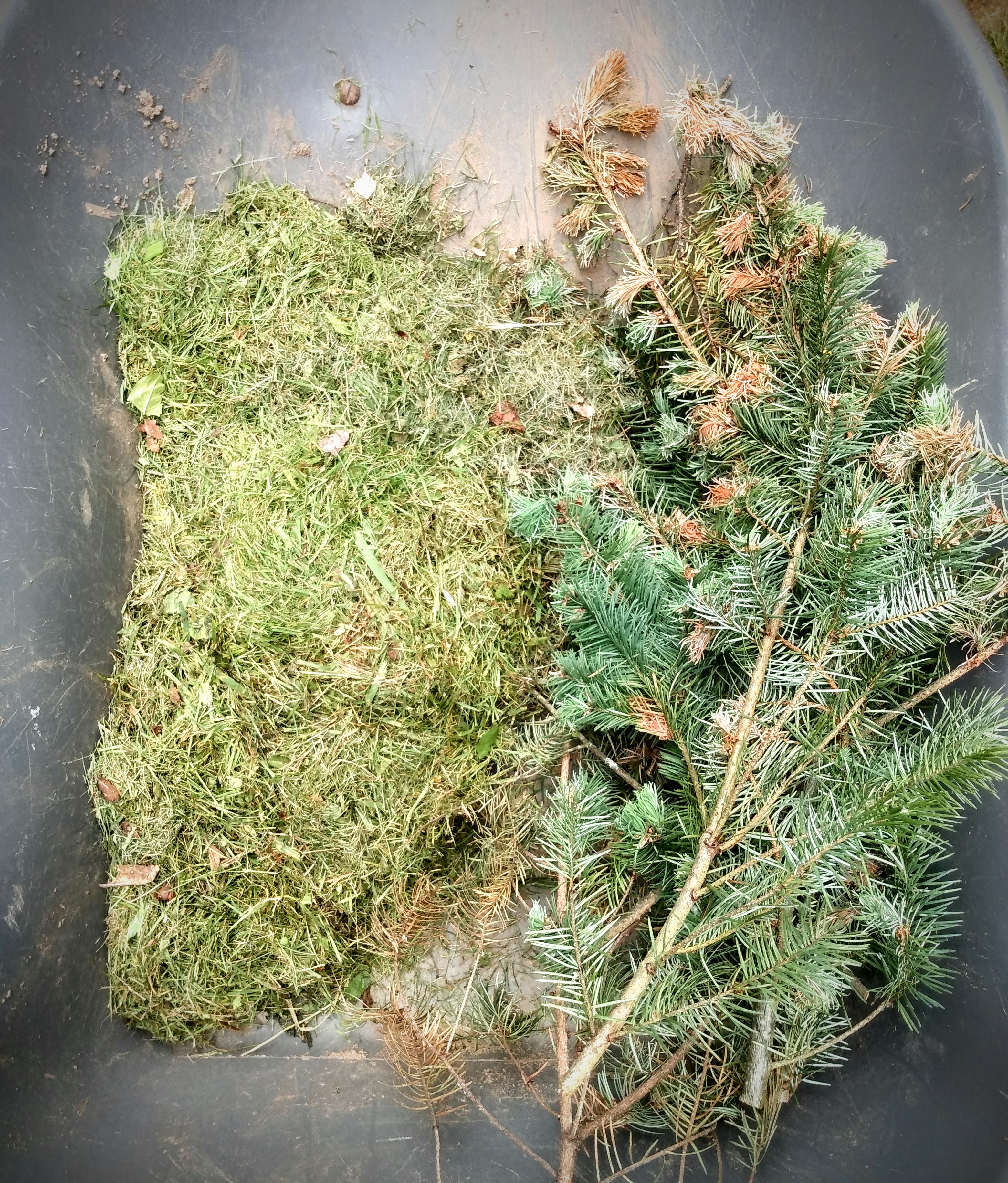
For this reason, I went back to my yard waste and compost. I grabbed some pine branches that we recently trimmed off of our trees, and a couple of handfuls of grass clippings. Especially with the large crates, these fillers are going to be amazing.

In the bottom of my crates I put the largest branches. Normally I put in camp fire sized pieces of wood in the bottom. This small crate doesn’t have depth for that. So I started off with what I consider my second layer, thin branches. Ever green boughs are perfect, not just because of the thicker needles (which take longer to break down than leaf waste) but also because they take up space.

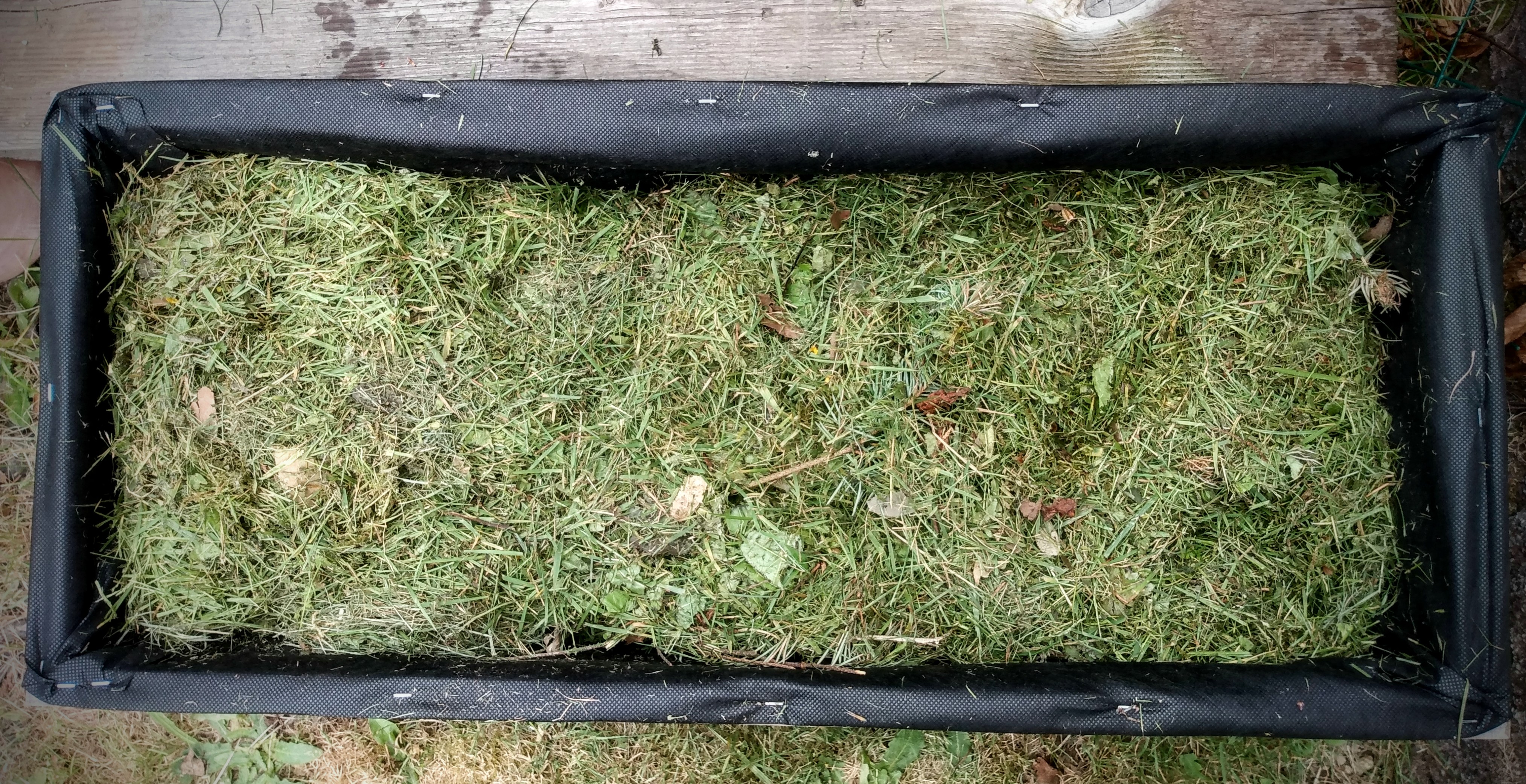
Next I put down green grass clippings. One, they take up space and leave nice medium for plants to spread out their roots. Two, the grass fills in the branch gaps and holes perfectly.

Think of that science experiment where you’ve seen rocks added into a jar first. Then it’s followed by pebbles, then sand, and then water. It’s a perfect example of maximizing the fill of a contained space with an incondensable material like rock.

I pack my raised beds with as much long term nutrients as I can. And this method of packing with larger material first, working your way down to the smallest, is the best way of packing your container box.

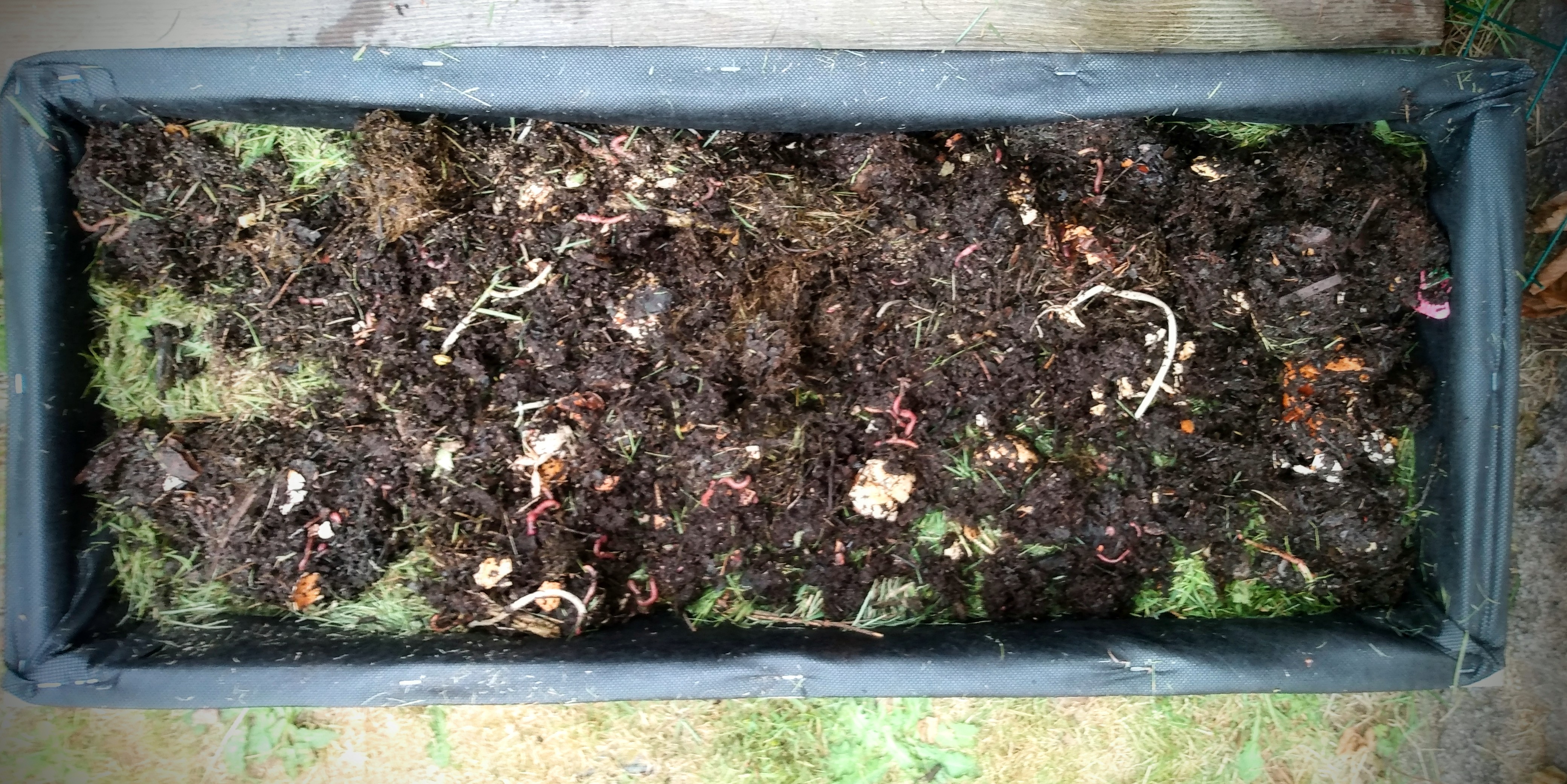
From here, I went back and grabbed a couple of pitchforks worth of raw compost (complete with some of my worm residents) and the last of my current supply of raised bed potting mix.

Of course it was the moment that my kiddos saw me grab the compost that they came rushing at me. My youngest dove in and tried to rescue the worms from being placed in this crate. He was acting like I was kicking them to the curb and evicting them. It took me a moment to tell him that he didn’t need to take them back to the in ground garden, I need them here.

And that’s one thing that I haven’t heard anyone talk about. We all know that worms are great for our garden. In fact we don’t give them a second thought in our in ground garden. So why aren’t we talking about them in our container gardening?

Worms are very much needed for a good growing biome. They help break down materials. And since I put in some large materials, I could let them do their own thing, or I can see if I have some worms who want to take advantage of this new home. (And this is another reason why I don’t fully seal off my lining in the crates. The worms are free to come and go as they move their way through any loose openings that take place over time. (And these openings do happen, but they’re more controlled.)

Anyway, I chased my youngest down and got my worms back in my compost. Then I quickly dumped the potting soil down on top to keep him from digging them back out. (I swear that child loves worms!)

I finish off with the raised bed potting soil because that is ready to go and host my pepper starts.

The down side to this layered nutrients in a raised bed

You may want to choose to do straight soil. Especially if you’re planting starts that will shortly need to have structures to assist in their growth. Just like these peppers will need some structure.

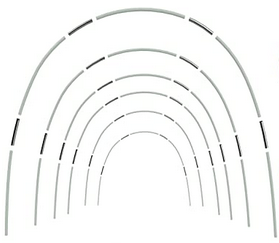
This layering, especially in this smaller size of crate, makes it impossible to add bamboo stakes for my peppers. They were just falling over. Fortunately, I have some carbon fiber cold frame hoops. I haven’t added them yet to this crate, but I’ll put in a hoop over each row to drop lines for the peppers to grow up.

I mention all of this, because if you choose to layer and expect it to hold up a stake or tomato cage, this first year just doesn’t give it the soil density to hold up a structure. So be prepared to come up with an alternate plan.

Another disadvantage to this layering is that as you can see in these pictures, I filled my crate up to the top. Over the course of this growing season, and especially over winter (when the rain helps to draw all the smaller soil material to settle into the branches in the bottom, I will see that this crate will only be half full next spring.

In the spring, I’ll add more compost and soil into this crate. At this point I can add mulch on top and the volume of the crate will not go down any further.

Again, this isn’t a horrible down side. It’s just one to be aware of and plan for. But this crate is now set up for many years of container growing. It will be sustainably nutrient rich, especially when I add the mulch and keep that going every season.


How do you like to container grow?


Here are a couple items I find useful in my garden.

This post contains affiliate links to products. We may receive a commissions on products purchased through these links, but at no extra cost to you. These items listed here are from Amazon but may be purchased at local markets.

One response to “Make A Container You Will Love”

  1. Clove One Clove All – How I Can Do That Avatar

    […] Make a Container You Will Love is how I start off all my new boxes. This time I reused one of my existing boxes. My onions didn’t do so well in it this past grow season, so I’m changing it up to see how my garlic will do here. […]

    Like

Leave a comment

Processing…
Success! You're on the list.
Advertisements
Advertisements

Transforming Memories

If you’re a sentimental person, or living with one, you know what I’m talking about when I say that it’s near impossible to get rid of those things that are just sitting there collecting dust.

Whether it’s a shirt collection, old ratty blankets, or any other fabric textile, I’m going to show you how you can transform it and reuse it in a meaningful way. And the bonus is that your sentimental loved one gets to keep their memories at the same time!

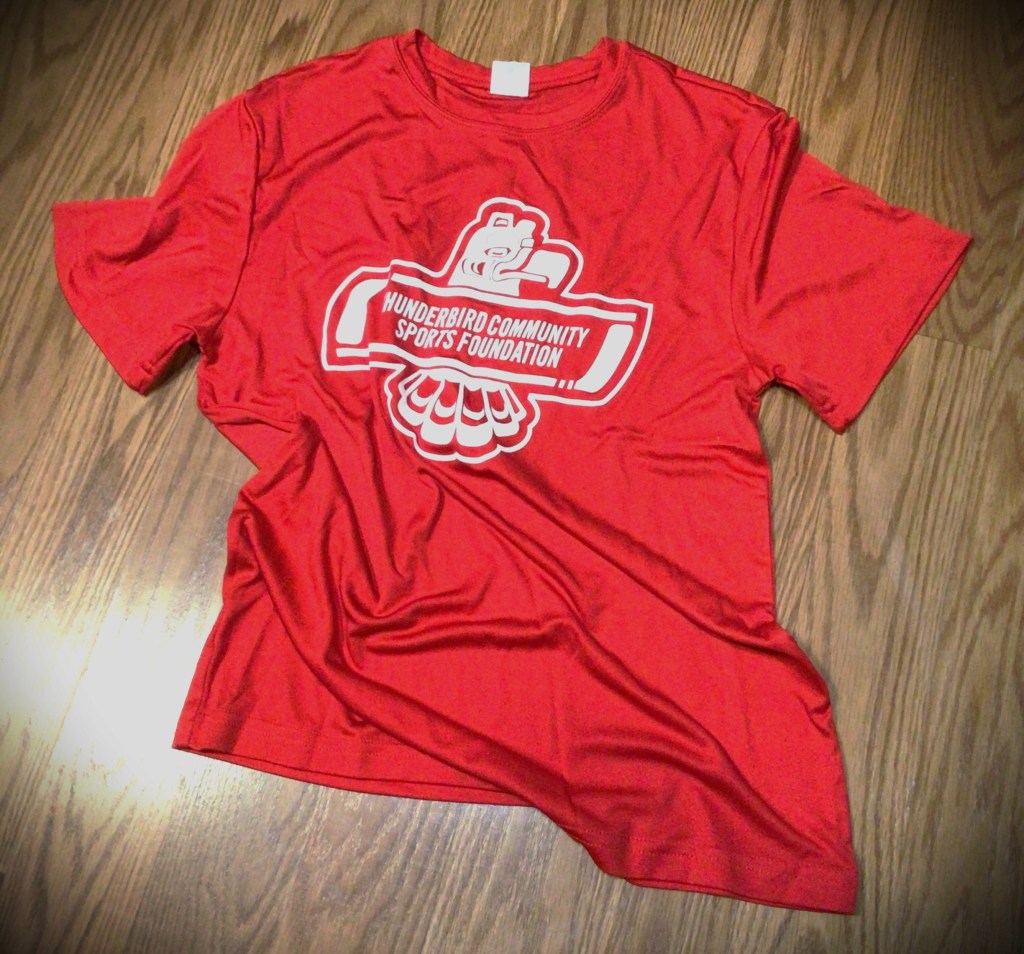
In this instance I’m using the spare jerseys that I had from coaching this past season. My office space is limited and I really couldn’t keep them for some theoretical team use. Besides, my boys have already a small collection of jerseys from different teams they have played on. I need a game plan of what to do with them, in the event that certain men in my family can’t let them go.

Breaking Shirts Down

If you’ve taken a look through Pinterest, you’ve seen how people have made pillow cases out of shirts of loved ones who have passed on. You probably have seen, many years ago, where logos and decals of shirts have been broken down into quilting squares. What do you do if you really don’t want pillow cases (especially out of stained jerseys) and the material doesn’t lend itself to quilting (or you just don’t quilt)?

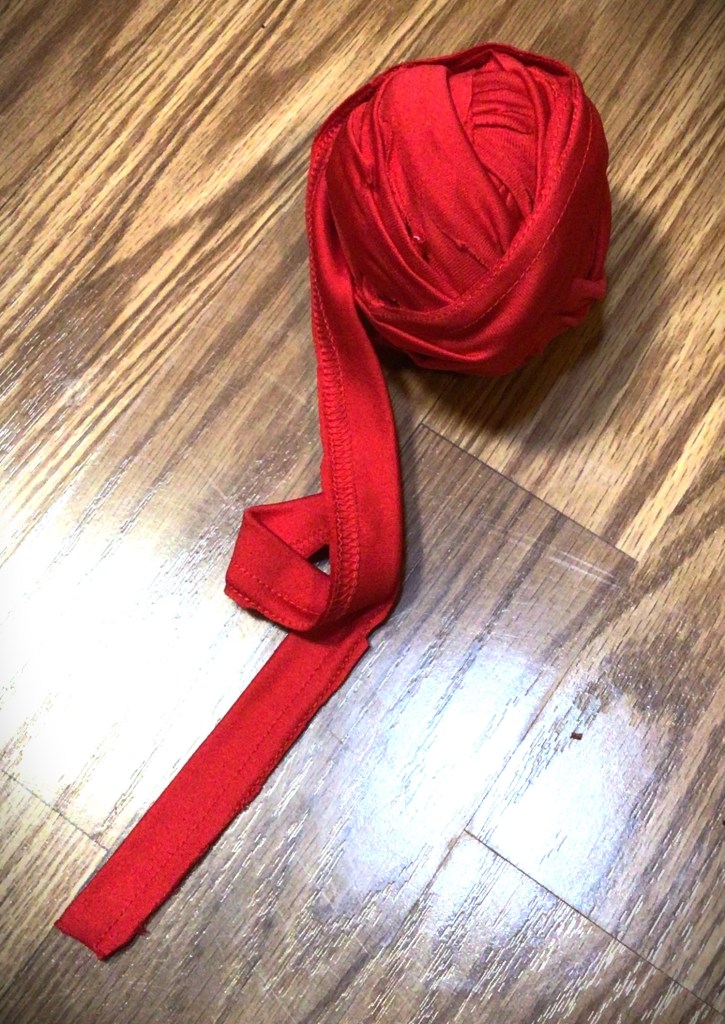
Cut the shirt down into a thin fabric strip, or yarn if you will.

The beauty of breaking shirts down into a fabric yarn is that you have so many options in front of you on how you want to use the shirts. You can crochet/knit with it, weave, braid and turn it into cordage (which then can be used in other crafting and practical projects like macramé or net making–trellis for garden, make a reusable bag, or anything your imagination takes you).

Whatever terminology you want to use for the strips of fabric, or future use, I’m going to move forward by talking about the material as yarn.

Advertisements

How to Make Your Shirt Yarn

If you haven’t washed the shirt yet, and want to, make sure it’s washed and dried. If the shirt is stained from mud, grass, or anything else, don’t worry about it. As you will see in a moment, you will not see it when you finally work your yarn. If the shirt was stained by bleach, that’s not a problem either. Depending on the size of the bleach discoloration, it either won’t be noticed or it will add variegation to your yarn similar to the color variegated acrylic skeins of yarn you see in the store.

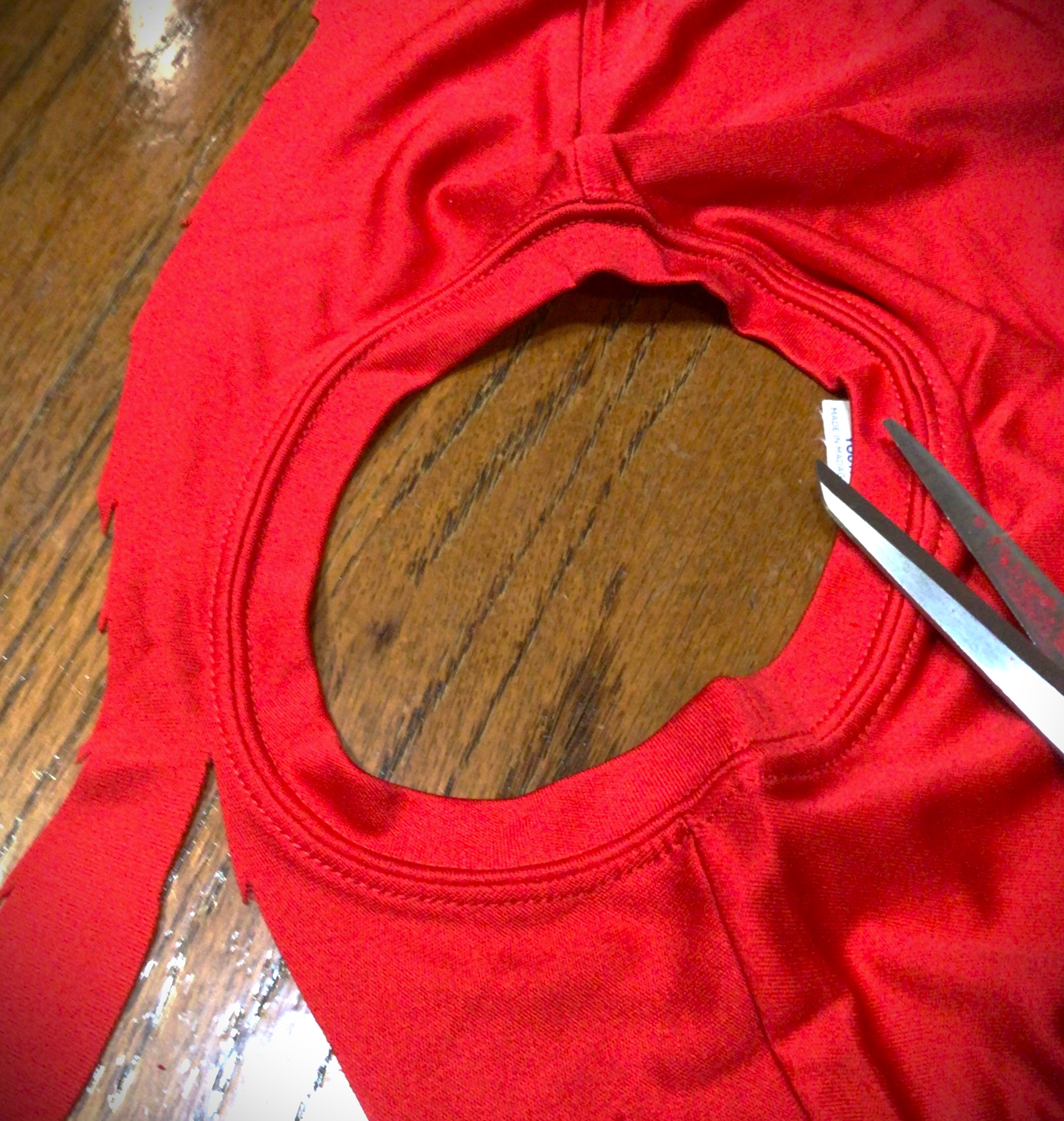
Lay your shirt out on a flat surface. The first shirt that I cut, I used my lap and the polyester stretched differently as I rotated the shirt as I cut. This made the lines uneven and rough. For the second shirt, I laid it out on my kitchen chair (you don’t have to have a crafting table to do this if you want to make yarn). My cuts were more uniform and with less jagged edges.

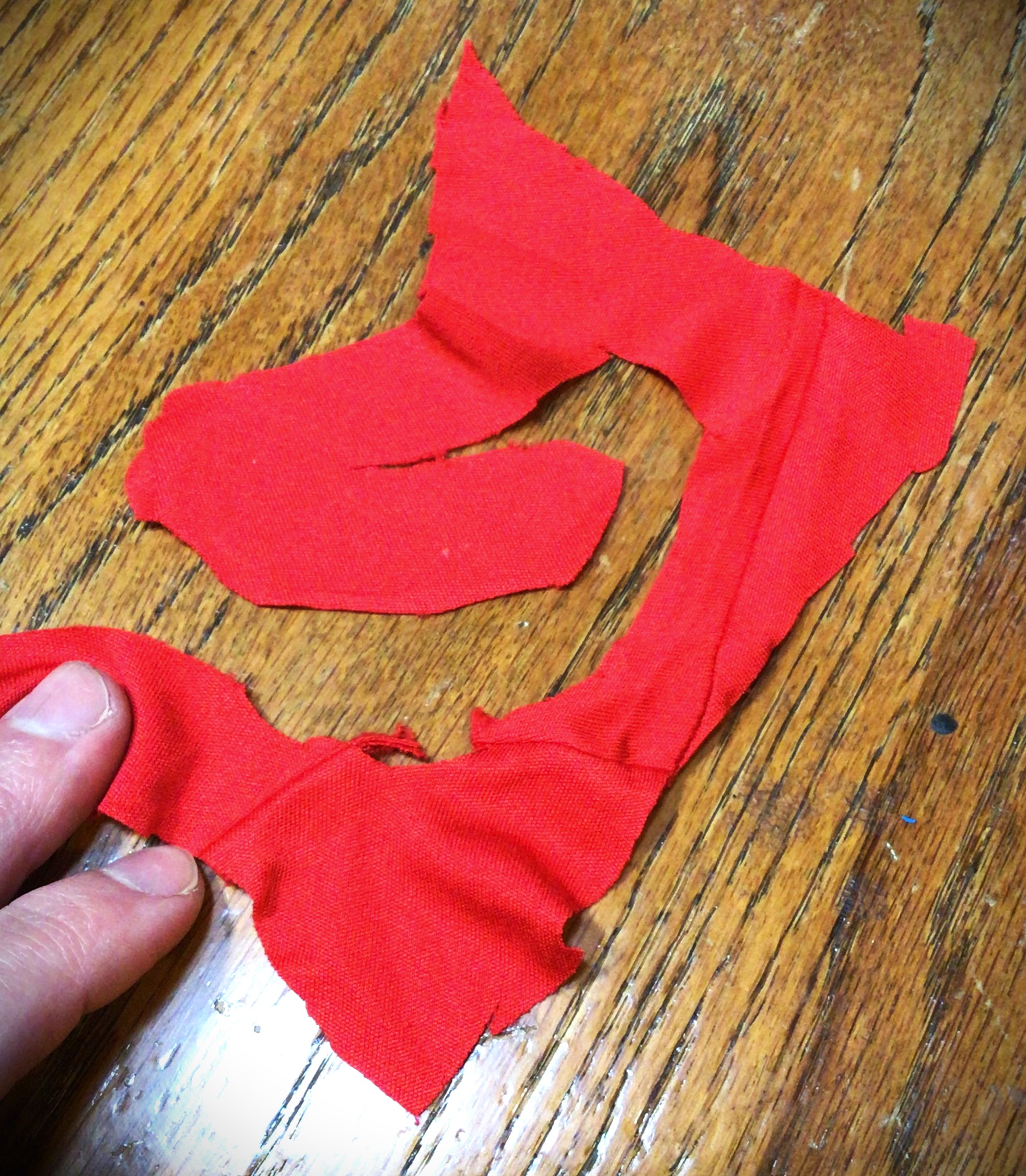
Don’t let your lack of cutting precision dissuade you from making yarn. If you find that you have little pennant like flags on your strips, when you crochet the yarn you will find that you have a textured look.

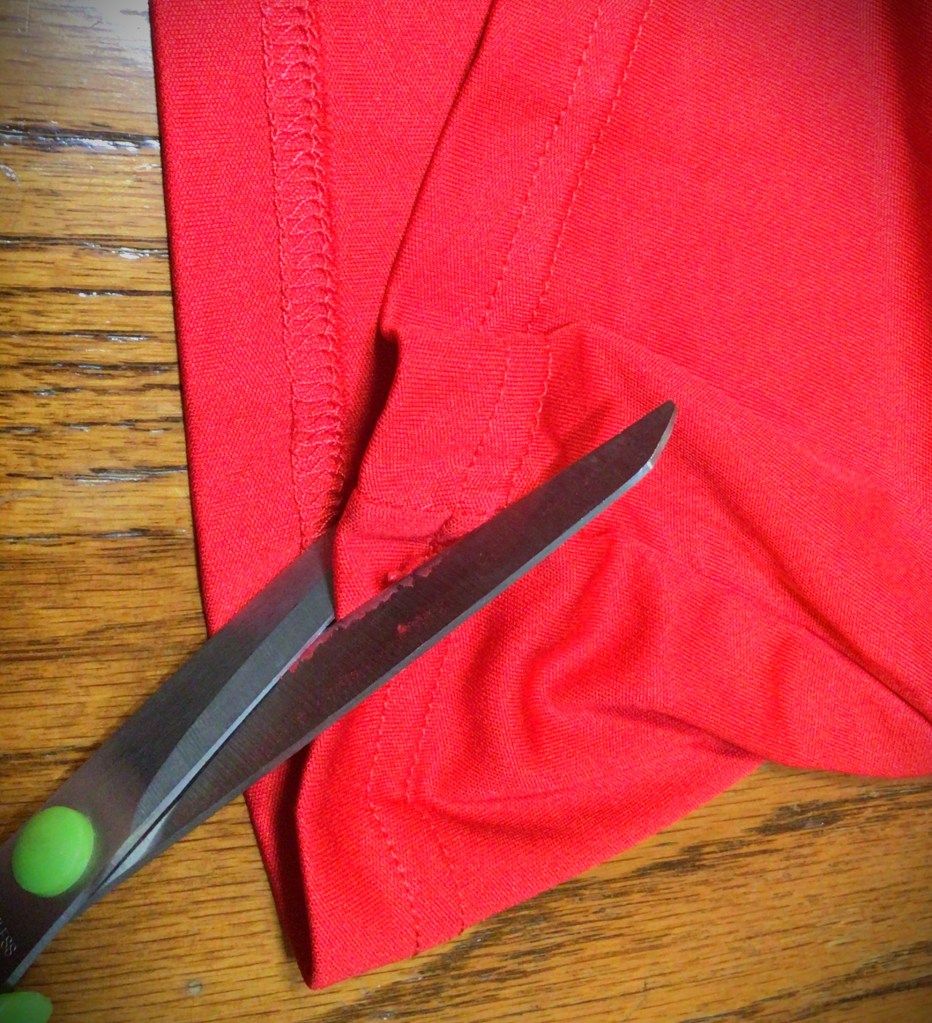
I started by cutting the bottom hem of the shirt. If you cut at a 90° angle, you will find that you have to cut on a slant to cut your next pass around the shirt. However, if you cut at a diagonal/45° angle, you will just circle around the shirt without noticing any change or needing to make adjustments.

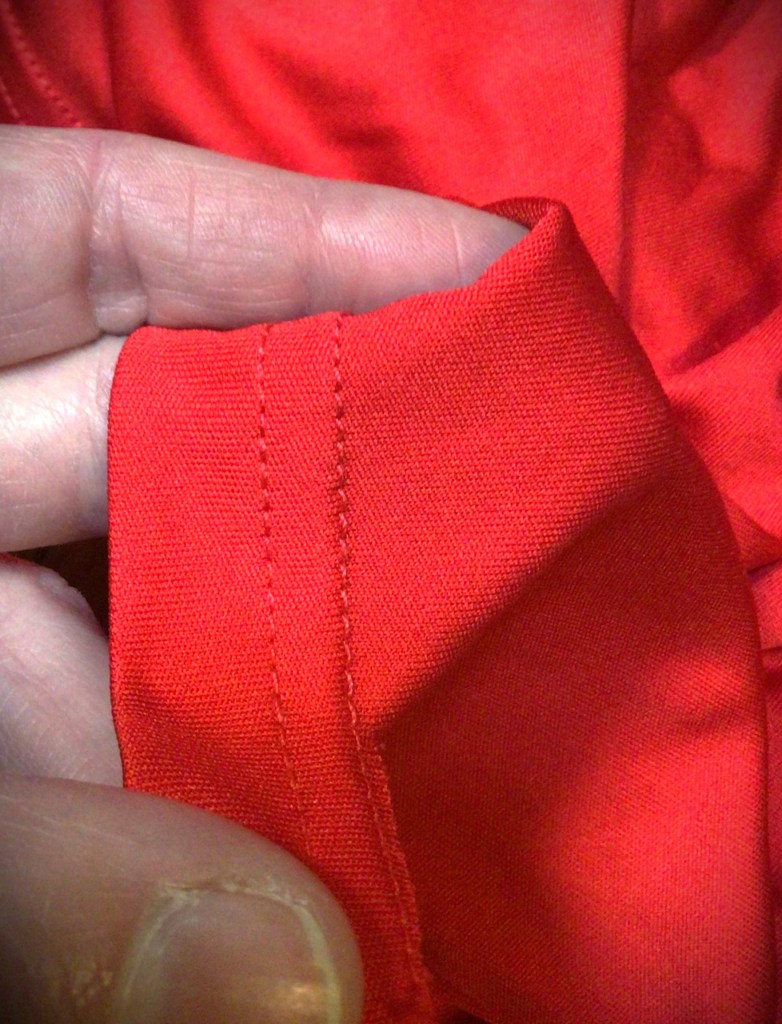
The thickness of the hem is a great way of feeling out how thick to cut your shirt into yarn. It’s about 3/4″ to 1″ wide. I wouldn’t go any wider than that, especially if you have thick vinyl lettering on your jersey/shirt.

As you cut along the hemline, look how its width is in proportion to your hand. I looked at how it fit between my first and second knuckles. With this visual cue, I could cut the rest of the shirt and keep the width pretty consistent.

I chose to start cutting my yarn from the bottom of the shirt because it allowed me to find my cutting groove without having to worry about the neck line or the sleeves.

By the time that I got up to the sleeves, I felt out how I wanted to cut the shirt.

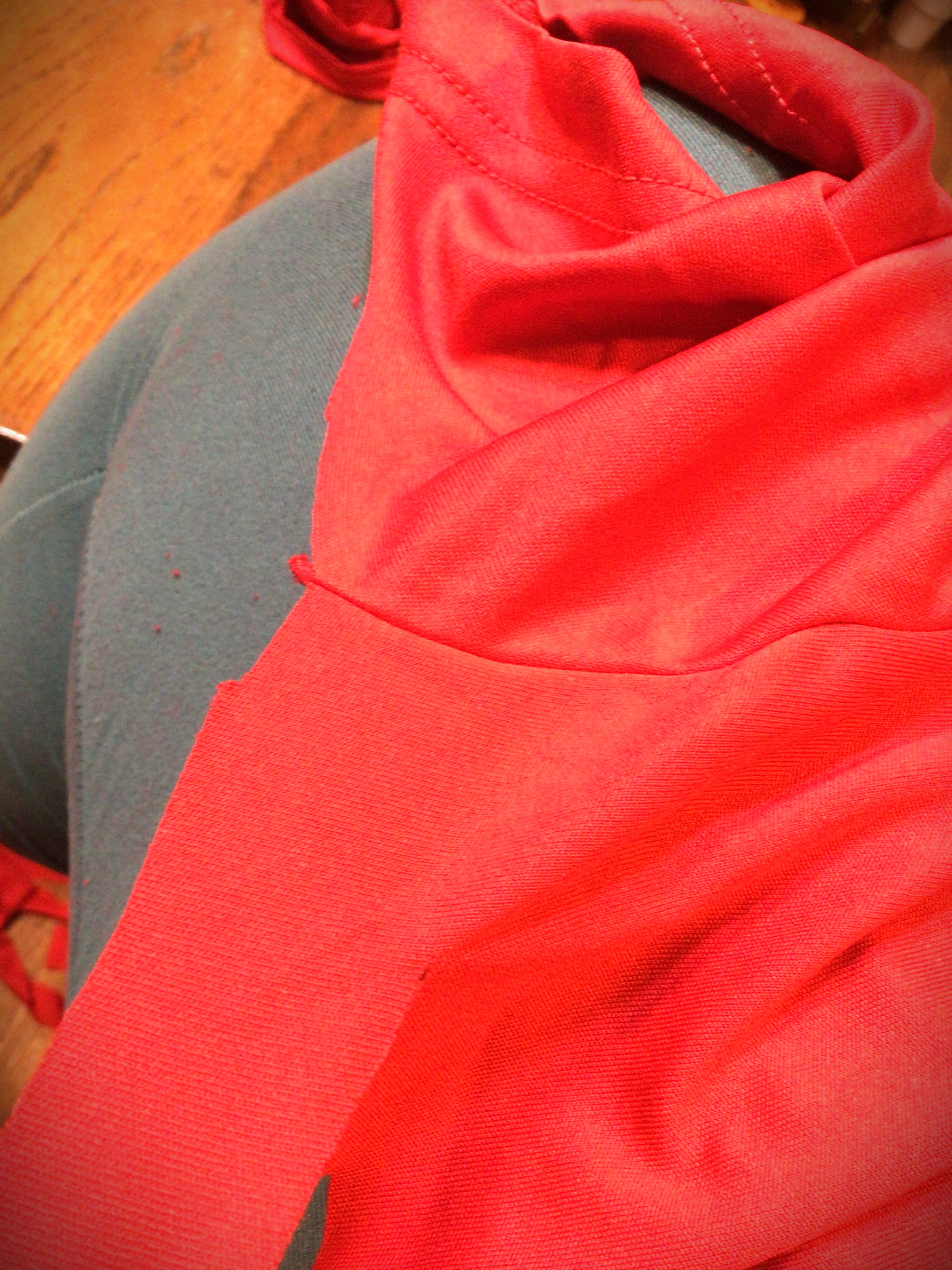
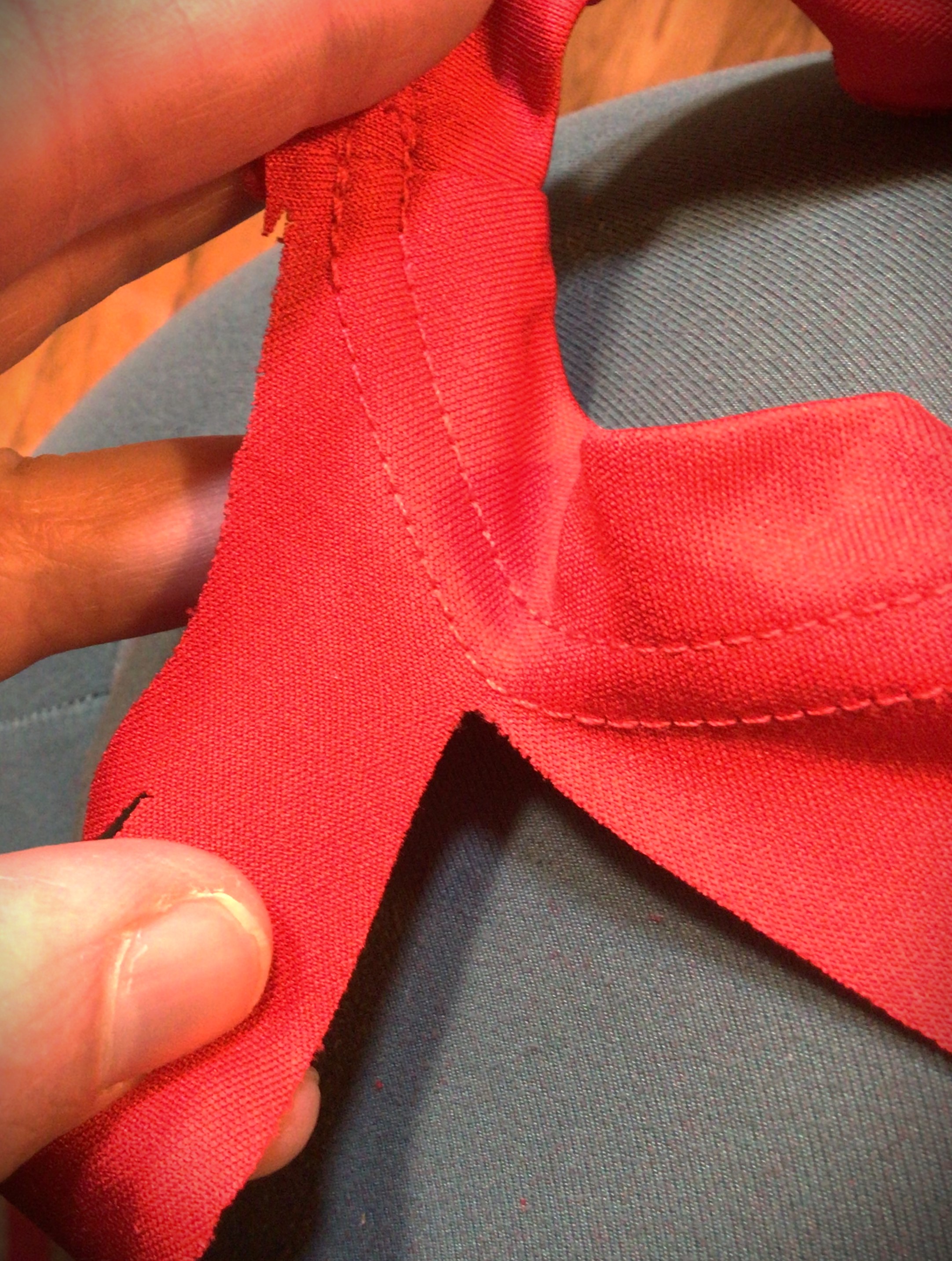
One option was to remove the sleeves entirely. I chose to leave my sleeves intact because I wanted to maximize the length of yarn that I got from my jerseys. The beauty of jerseys is that they’re made of polyester and when you cut through the shirt/sleeve seam, the fabric remains intact. (Cotton shirts may fall apart when you cut the seam.) So all I did was focus on keeping my yarn width and keep cutting up into the sleeve and back down into the shirt.

There does come a point where the sleeve separated and opens up and you can’t go directly back into the shirt body. At this point I just turned the fabric so that I turned the rest of the sleeve into yarn before joining back up into the shirt body.

The neckline is also an odd point to cut around. What you want to do us keep thinking and focusing on keeping the width of your yarn. You can cut through the neck hem and there’s not going to be any issues. The jersey’s neckline stays intact on the seam.

Once you get to the end, you will more than likely find a funky end. Just keep your width, cut around corners and finish off the shirt. It will look like a spiral, but it won’t affect your project at all.

With your shirt cut down into one long strand of yarn, you can trim off any large triangular flaps that you see. Or you can wait to do any trimming until after you started working with the yarn.

I chose not to do any trimming until after I crocheted my yarn. Even though I had several flags on both balls of yarn, I only ended up cutting off three triangles. And those ones were about as long as my pinky when the yarn was unworked–just as a point of reference.

For storing your yarn, or prepping to go right into a project, go ahead and roll your yarn into a ball. Each yarn ball was smaller than the whole shirt folded. So even if you’re looking to save space, and not start your project yet, it is well worth prepping your shirts ahead of time into yarn.

Starting the T-Shirt Yarn

You can choose to start the t-shirt yarn the same way as you would with acrylic yarn. If you want to avoid a large knot, you can do this.

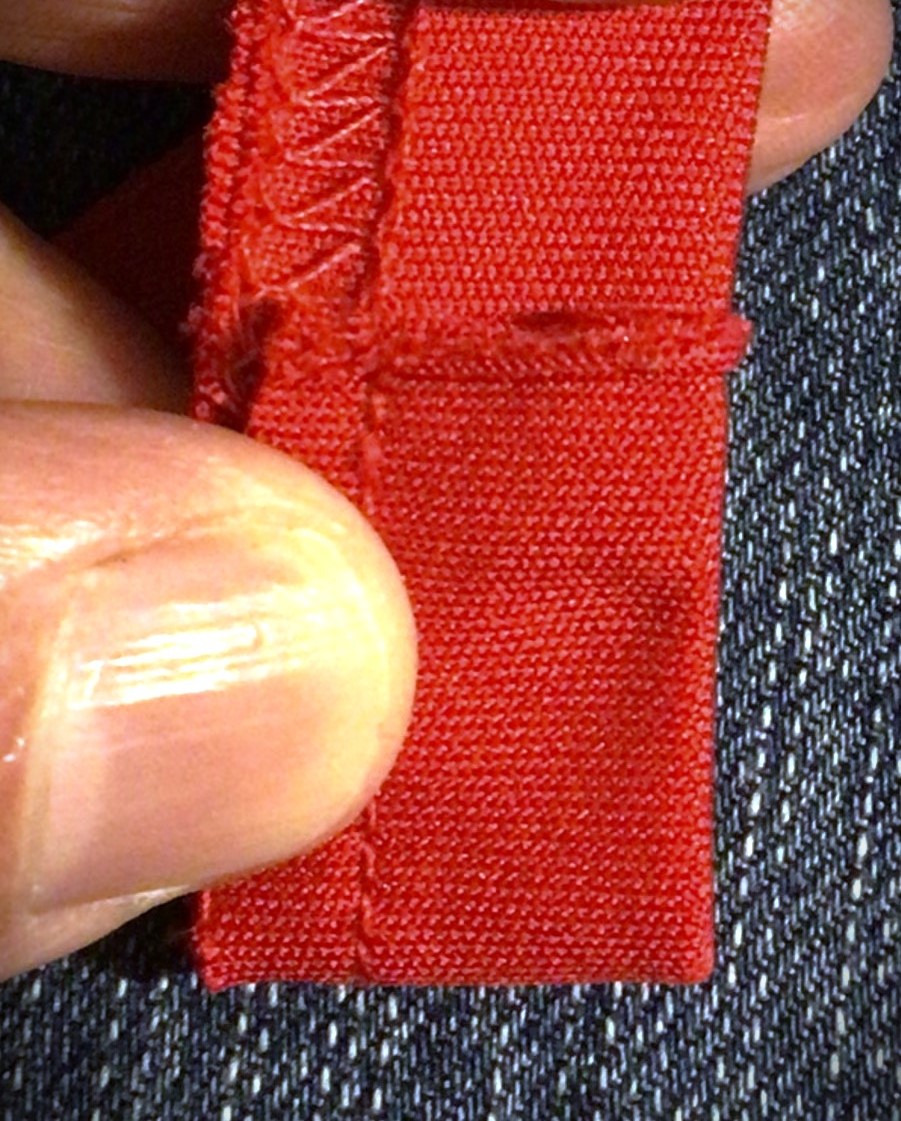
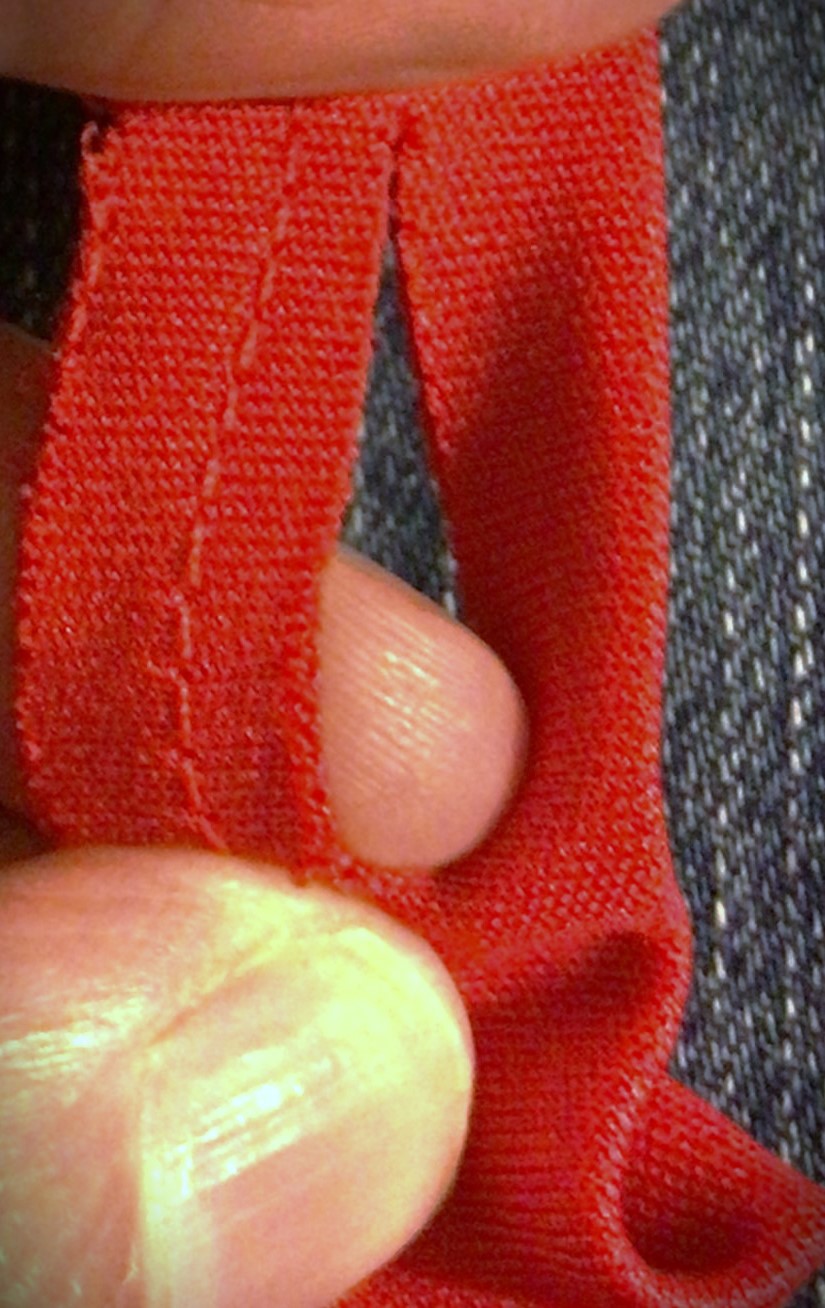
Double over the end of the yarn. Over the crease cut down the middle. When you open the yarn back up you will see that you have cut a hole in the yarn. From here you can choose to thread the yarn through the cut hole to make your first loop. Or you can treat this cut hole as your framework to start a circle or square block.

When you are finished with one ball and want to join your next one, you also have a couple options.

One option is that you cut a loop into the end of your next ball of yarn. The tail of the ball that is coming to the end, cut so you have two ends that you can tie into the loop you just cut into the next ball of yarn. (In the case of polyester, your knot is going to be small, so it will disappear as you work through the transition.)

Another option is that you cut a loop into the tail of the ball that is coming to an end. Thread the beginning end of the new ball through this loop. Make sure that you pull enough thread through so that your first couple of crochet/knit stitches are the doubled over yarn. (This minimizes the potential of a visual knot. However these stitches will be thicker than the ones on either end; from the end of the old ball and the addition of the new ball.)

Advertisements

Potential Projects

As I mentioned earlier, once you have your yarn made there are countless projects you can make. If you can crochet, knit, weave, or make cordage you can use this yarn for all those projects.

I don’t have nearly enough jerseys to make the one I want, a Christmas Tree Skirt. (I will just add to what I’ve started as jerseys become available. My kiddos are pretty fascinated by this and so I have no doubt that I’ll have their old jerseys before much longer.)

Before I leave you to start creating, I wanted to show you how this yarn works. You saw that the front of the jersey had about a third of the front covered by sponsorship decal. The back also was half covered by the jersey number and sponsorship as well.

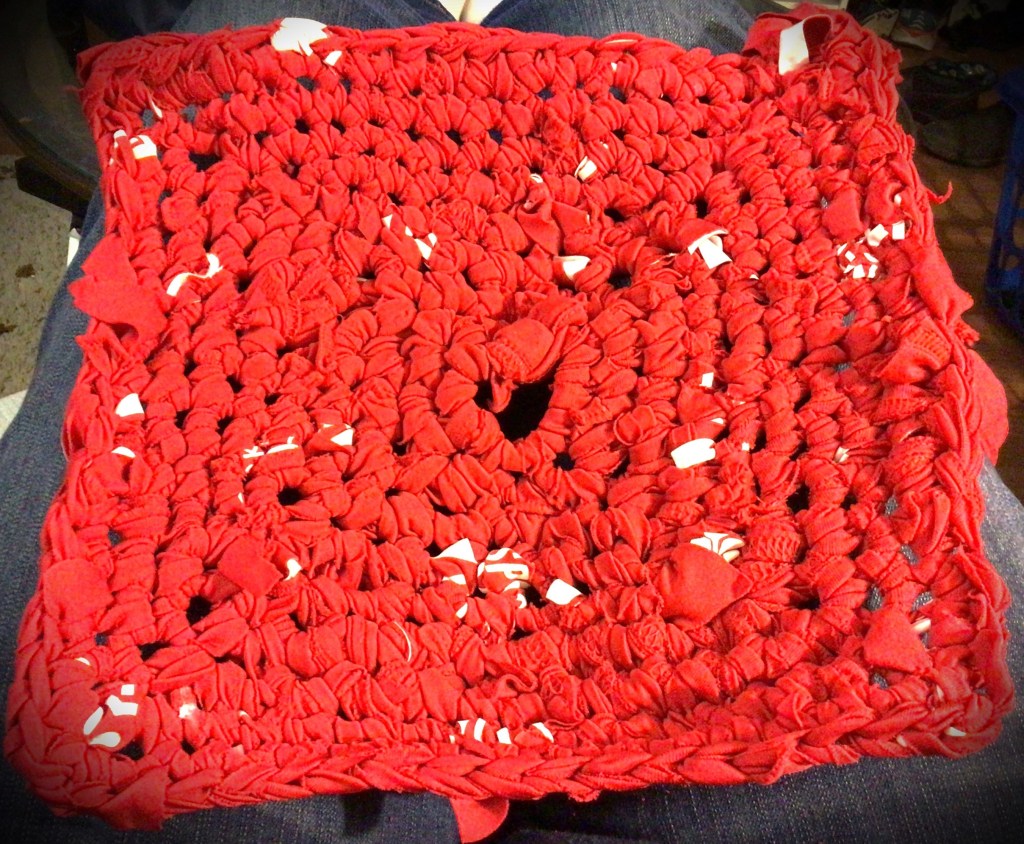
As you can see here, for as much white vinyl was on the jersey, in the end it’s just speckling. The thicker chunks of white are from the large jersey number from the back. You can even see the tips of the smaller pennant edges sticking out. Those can easily be trimmed back for a smoother appearance. Or they can be left to add texture and whimsy to your project.

Just so you’re not discouraged, the vinyl they use is difficult to work with. It did pucker as I crocheted. (You see how much it sticks out on the edges.) But as you continue to work your yarn it starts to lie more flat and incorporates itself into the piece.

Note: I didn’t use a standard crochet hook for this. I used a weeding hook (for when I cut my own vinyl) that has a handle that about as thick as my finger. Especially working with yarn that has stiff vinyl, it’s easier to manipulate when you use a thicker hook.

Hopefully this 10″ x 10″ square (made from one youth size S and one youth size M jersey) gives you an idea and even inspiration for what you might make with this kind of yarn. You could mix and match jersey colors into your project or make squares to color coordinate your project in a more analytical framework.

Be sure to comment below and post pictures of what you make using this kind of yarn!

Processing…
Success! You're on the list.

Leave a comment

Advertisements
Advertisements

Repurposing A Frame

(This post contains affiliate links to products. We may receive a commission for purchases made through these links.)

It never fails that you find something very cute to give something, but it comes with non-removable art that just not fit with what you want to gift or make for yourself. Maybe it is art that isn’t your style. Maybe it is a design that’s so cheap and is exactly the reason why you find it at the dollar store.

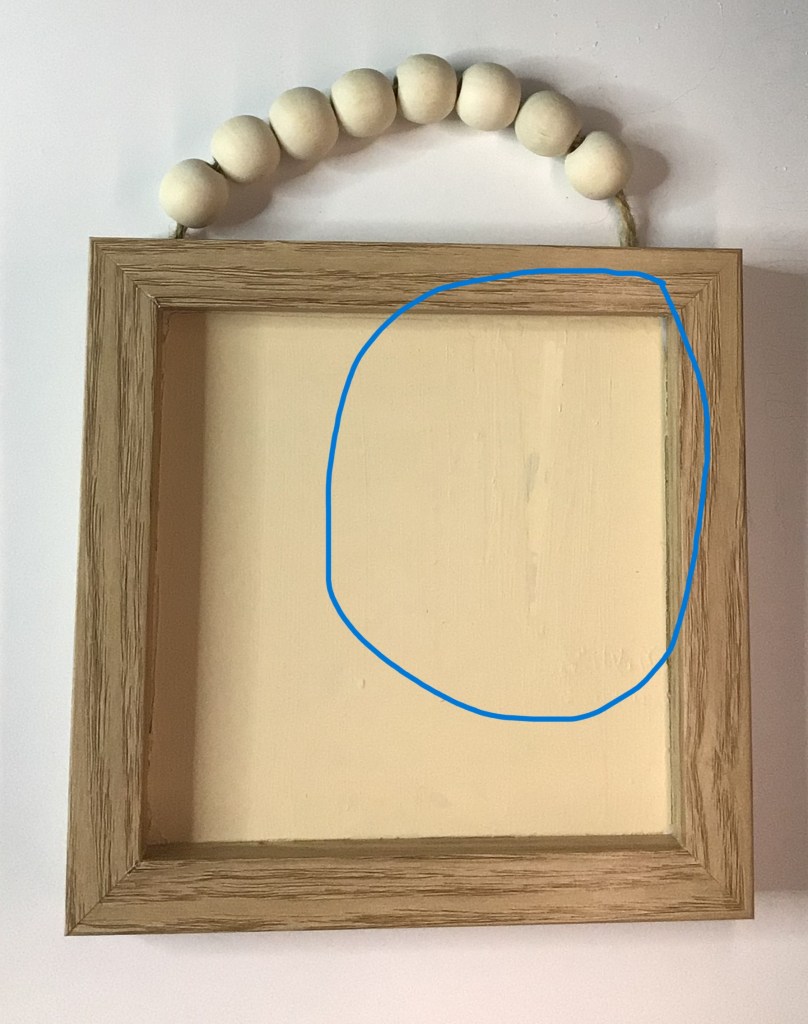
For example, I found this cute frame.

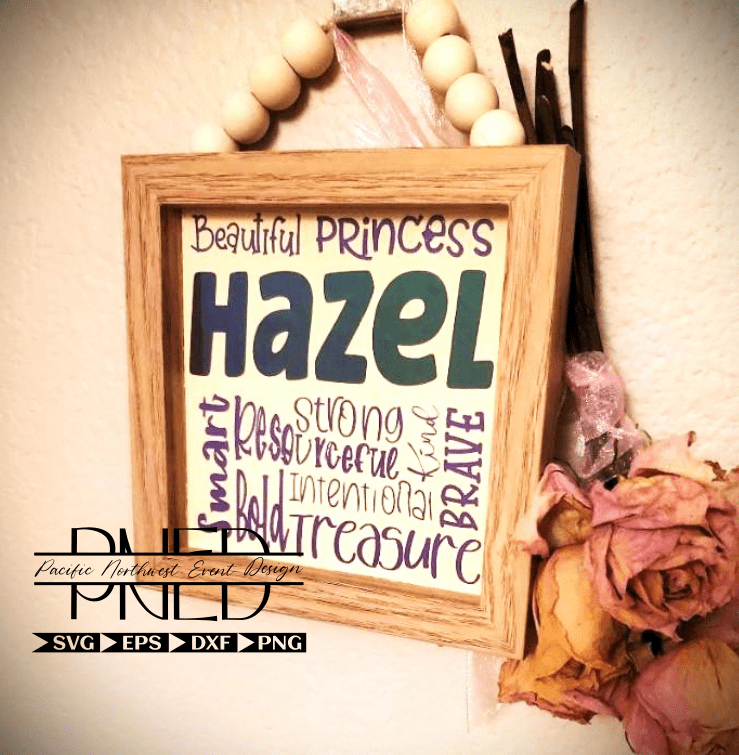
I found that the size was cute. And I absolutely loved the beaded clutch like handle. Best of all, I loved how the frame and handles were very much reminiscent of unfinished wood. This was the perfect blank slate that I could do so much with!

The negative mark was the non-removable art. Truth be told, I almost put this back on the shelf.

But here is how I turned this dollar store product into the perfect blank to make a personalized present.

First you paint over the non-removable art

Especially if you like the current state of the finish of the frame you’re working with, you want to grab some masking tape and tape off the frame to protect it from the paint. It doesn’t matter how handy you are with a paint brush, you really do want to take the few extra minutes to tape off the frame. It just takes an unexpected sneeze or someone sneaking up behind you, knock on the door, ring of the phone, or that your brush slips.

Apply the tape on the inside edge of the frame. Cut down the tape to the corner of the frame, so you can fold the edges over.

The tape that I used here was Green Frog Tape.

Once the frame is taped off, take your paint of choice and cover the original art.

I used Waverly Cashew Chalk Paint. Because this color is so pail, it took about 4 layers to cover up the dark original colors. The important thing to remember is that you always want to paint with thin layers. First they paint dries quicker. Second, you can apply cleaner layer lines.

If you choose to put on a thicker layer of paint to compensate for dark colors, it just takes forever to dry before you can add successive layers of paint.

Once the paint dries…

You have the choice of what you will do next. You can apply a stencil to paint on your new design. Or there is the option of hand painting a picture.

If you are done with all painting options, you’ll want to remove the tape.

Removing Tape

Depending on who you talk to, there are a handful of different theories on which time to remove the tape.

OPTION 1:

Some crafters say, remove the tape while the paint is wet. Yes, this method prevents peeling up the paint that you just laid down. The problem I have with this method is that if the paint is wet on the surface, it’s wet on the tape. So you have to pay attention to the paint on the tape as you pull it up:

  • Paint ending up back on your blank because of the tape flopping over backwards (or paint side down) on your frame.
  • Paint ends up on your fingers. Sometimes you forget, or think you avoided paint transfer, and then you find out later you had a small drop of paint on your finger and now you have a paint finger print.
  • Paint ends up somewhere else on your, like your shirt or pants.

OPTION 2:

Other crafters advise that you remove the tape when the paint is dry. This method is great for preventing all options of potential paint transfer. However, the problem with this method is that sometimes the paint adheres to the tape and pulls up off your project when you remove the tape. This is especially the case when the original surface is smooth or plastic.

OPTION 3:

A third group will tell you to wait for the paint to mostly dry. This is the happy medium to the first two options.

I’ve never been able to make OPTION 1 or 3 work for me. If there’s any wet paint, I’ll somehow find a way of getting it on me or transferring back onto my project. So my go-to is OPTION 2, wait for the paint to dry.

TIP for OPTION 2: right before you remove the tape, take an exacto knife, and run the blade along the bottom of the masking tape all around the frame. This will effectively separate the tape and paint.

What if my paint strips off with tape removal?

Have no fear! Take a breath and don’t panic. This is an easy fix.

The first thing you’re going to do is build back up your layers of paint on the surface where the paint stripped off.

TIP: To create the illusion of no paint stripping, keep from this new set of corrective paint layers from overlapping on to the original dry paint that remained intact.

Once you’ve built back up the layers of paint that had peeled off, you’re going to add one more layer of paint over the original and new paint. This will cover over any potential seams in the paint.

The best of all is that if you are going to add any decal over this paint, it is possible for the decal to cover over any potential seams. If you’re using this as a shadow box, the items you place in front of the painted back ground will cause enough shadows to distract from the seams.

This is an example of where one less layer of paint can show the difference of your paint patch job. Make sure to do the same number of layers, plus an additional layer over both original and new paint.

Adding decals over the background paint with transfer tape

I want to mention one more potential problem you can face, with paint peeling, with a project like this. Whether you’re adding vinyl or a decal with a clear piece of transfer tape, you will want to be mindful of this transfer tape. Even if the transfer tape has low tack, it can still find a way of holding the paint more than the paint is holding on to the project surface.

The way that I have gotten around this problem is that I think of the transfer tape ONLY having contact with the vinyl or decal, and hold those elements in their place for application. I go out of my way to NOT press the transfer tape down onto the paint.

Instead, what I do is gently place the design down on the painted surface so there is absolutely no adherence. The bonus to this is that you can use a weeding tool, palate or other tool to nudge the design center (or any other location) on the frame. Once the decal or vinyl is exactly where I want it placed, I only press down on the decal/vinyl with my finger. The pressure from your finger is enough to get the decal/vinyl to adhere. And once your elements are all pressed, you can then peel off the transfer tape without it pulling off your paint!

Can’t find a frame like this, but want to make one?

I have no idea if I will find this beaded frame again at my local dollar store. In fact I would be surprised if I ever did. There’s something about the cute things in that store chain, that you pretty much only find in stock one time.

The good news is that this is an easy frame to create!

Originally this frame has a 4 x 4 inch work space. But you can select any shadow box of any size.

You can make the wooden bead clutch handle by using a thick jute twine and stapling it to the frame.

Yes! This handle is literally stapled to a mini shadow box frame.

If you want a supply list, to make your own frame, here are the items you will need:

  • Shadow Box: 4×6 Frame, 8×8 Floating Glass Frame , 8×8 White Shadow Box, 3-Frame Set
  • Jute Twine
  • Wooden Beads: 16mm (Thumbnail size), 20mm (US Quarter is 24mm)
  • Staple Gun (if you choose to use a standard desk stapler, make sure that you use several staples on either side of the twine. The twine can be reinforced by using wood glue and gluing to the shadow box.)
  • Scissors
  • Paint/Stain (optional–if you want something other than unfinished wood)

I hope you have just as much fun as I had making this Affirmation Gift!

The Baby Affirmation cut file used for this project can be found in my shop here. To personalize with the child’s name, just select your favorite bold font and place in the provided blank space.

Processing…
Success! You're on the list.

Leave a comment