Patience Grasshopper

It never fails that each year something doesn’t go to plan. This past grow season, many growers across the US complained that what came up in their gardens was not the seeds that they bought.

What I found interesting was that it wasn’t one seed supplier that had a seed mishap, but a handful of large seed companies. It wasn’t one seed type, but several.

Across social platforms some growers tried to pacify upset growers by saying that mistakes happen. And the response often was that this doesn’t happen on the large scale that it did happen.

Truly, it was a weird moment, especially when so many people long for a time of no more surprises and life as normal as possible.

The problem is that if you’re not self sufficient in management of your seeds, you are vulnerable to the surprises that happen to other growers that you are dependent on. None of my seeds were packaged wrong. However I did order garlic over the summer. Shortly before delivery time I received an email telling me that one of the varieties that I ordered had a bad grow season so there were heads that were going to be sold this year.

No problem, I shifted my order to another variety. And this inconvenience probably worked out in my favor. My replacement order is a variety that will do much better with the winter that’s projected.

Advertisements

These are just a couple examples of what can happen when our seeds come from other growers. And as much as it feels unfair and out of our control, it serves as a good reminder that there is a skill we can all learn… Seed saving.

There are many benefits for saving your own seeds for next year’s garden. Provided that nothing happens to your crop, you are guaranteed seeds. These seeds have a memory that is specific for your microclimate. And if you have a surplus of seeds, you can trade them with neighbors.

One thing that I love about learning how to seed save is that I learn the whole life cycle of the plants that I grow.

Here are a few seeds that I collected this year.

Parsley

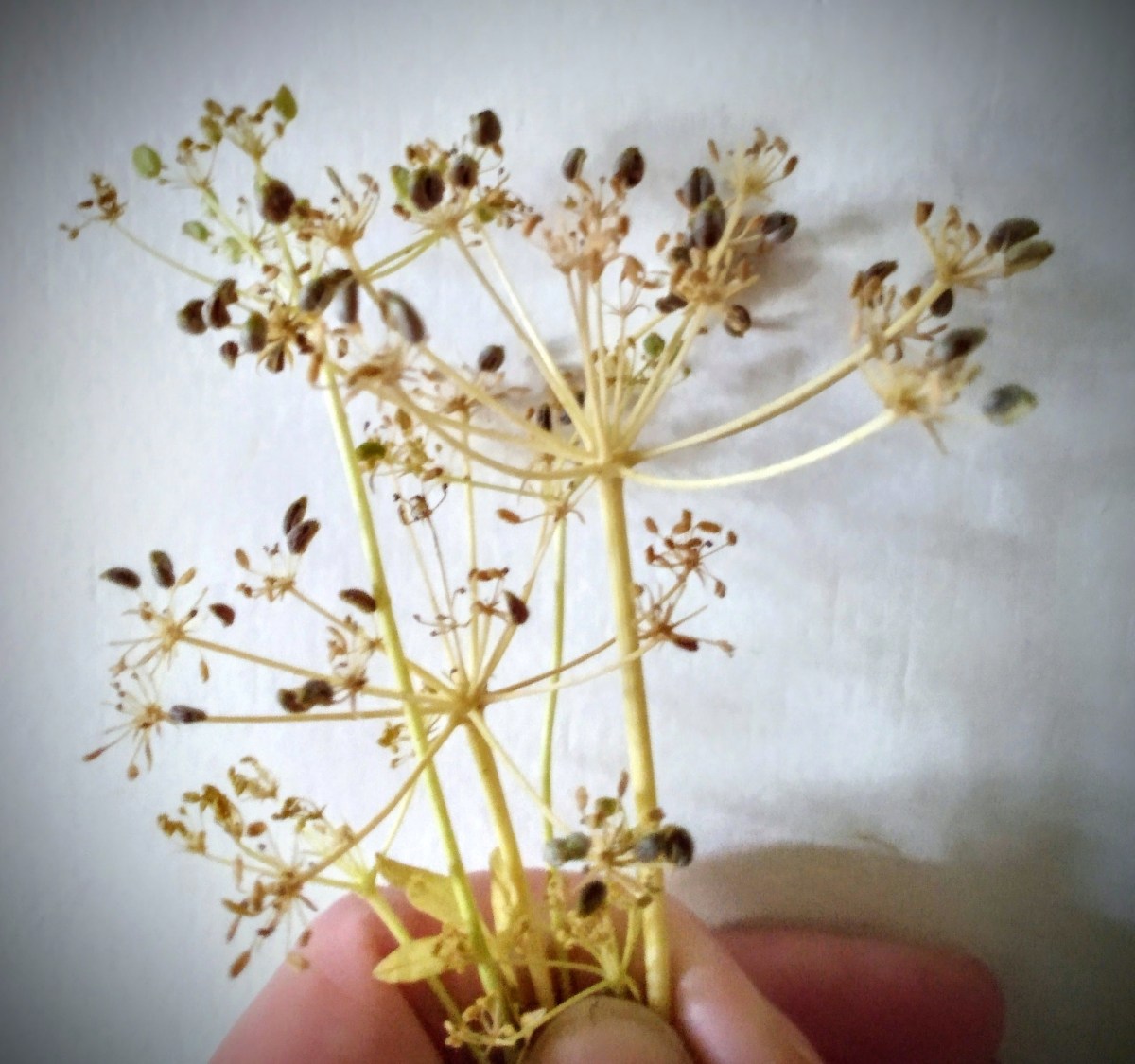
I kind of laughed when I saw my Parsley. The weather has been so weird lately that I had three different stages of seed production all at the same time. As you look at the pictures below you’ll see the progression from the tail end of the flower stage, into the green seed stage, and finally the mature seed stage.

Just with these three pictures, it’s easy to see why you have to have patience when you are waiting for your seeds to mature. And this is the reason why I wanted to share this information with you is because schools don’t teach you how to look for mature seeds. In a botany class you’ll see diagrams of the seed stage. But it is experience that shows you when it’s the right time to collect.

If you are unaware of what to look for, you can see seeds and make the mistake of collecting the seeds at that moment in time and you’re completely unaware that you saved seeds that are immature and will more than likely never sprout in the spring when you try to germinate them. Mature seeds are what you want to re-grow plants successfully.

TIP: If you’re unsure if you have mature seeds yet, take a small section of seeds now and leave the majority on the plant. If the seeds are green, the next time you go out and see a change in the seeds you will then know that what you first collected was immature seeds. Discard those seeds. If you think that you now have mature seeds, take a small section and save those seeds and leave a large number on the plant to further mature. If the seeds on the plant change, then you collected immature seeds. Discard those seeds. Once mature seeds have arrived they are only on the plant for a couple of days before they fall to the ground for self seeding.

Another benefit that this parsley gave me is that it gives you a place examination of seeing different stages. When first saving seeds, none of us know what to look for. We learn through trial and error or from someone who knows the life cycle of the plant and tells you specifically what to look for when gathering seeds. Going back to Parsley above, this particular plant shows that the seeds are ready when the seeds have turned black.

Sometimes flowering seeds are not as easy to recognize.

Advertisements

Catnip

This is my second year with Catnip, even though I sowed seeds for it 3 years ago. This is the first year that the plant actually bloomed for me, and it was only this one stalk of flowers that you see here.
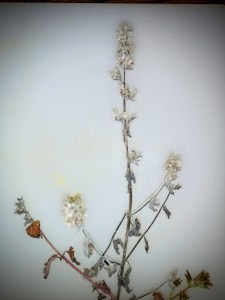
When I look closely at this stalk, it seems like I have captured a few different seed stages as well. There’s an obvious white blossom section still present. There’s one section that looks like it might be green seeds, it looks like a head of wheat berries. And then there is also one section (in the tallest branch) where I see a black seed and what looks like empty pods where seeds have dropped out.

The problem is that I tried looking up seed stages from this plant and I haven’t yet been able to find any source that helps me identify what mature seeds look like.

Because I grew this plant from seed, and I still have seeds left over, I can go back to the original seeds and see what those mature seeds look like.

But if you don’t have the benefit of mature seeds to compare with, there is this process of trial and error that you need to go through to learn the life cycle of seed growth to figure out what it is that you’re looking for. (See the TIP above.)

What I did want to draw your attention to is that even with flowering plants/herbs, the seeds are not all going to present themselves the same. Catnip and Parsley are both herbs. Parsley exposes it seed before it falls. Catnip looks like there is a pod covering, something akin to how seeds are presented in the Brassica vegetable family. The seed is grown inside a pod and once the seeds are mature, the pods open and the seeds drop.

I suspect that Catnip holds seeds in a single pod because when I look closely there is a transparent skin like “flower” that is empty. Now the flowers of catnip are not transparent. They are a very opaque white (at least on my catnip) flower that has shown itself to be hardy. (If you zoom in on the middle two branches you can see the remnants of these flowers on the decline. It’s very different in appearance to what you see in the tallest branch/section.) These transparent skins are mostly in this tallest branch/section. And when you look closely there, you see a single black seed. These black seeds are the mature seeds. (I pulled out my packet of catnip seeds that I had originally purchased. The seeds are black and small. So I can confirm this seed.)

Advertisements

Oregano

Most people never see the seeds from Oregano or other herbs (like Basil) because everyone is warned to prune off the flowers in order to promote a longer leaf grow season. And once the flowers develop, we’re told that the leaf changes its flavor. At the best it’s just a flavor change. At worst, the leaves become unpalatable. Because of this, most growers prune off the flowers as they start to grow at the end of the season.

If you want to have seeds, you have to leave the flowers on the plant and show patients. Pollinators have to go to work on these blossoms. When they are pollinatedyou have to wait even longer for the seeds to develop and grow.

I wasn’t planning on growing seeds on my oregano that I’ve grown in a basket and overwintered in a greenhouse. (I’ve noticed that some growers discourage overwintering oregano because the flavor becomes less desirable when you treat it like a perennial. However I’ve noticed no real change in leaf flavor. This was the first year that it bloomed on me, so I’ll have to wait until next year and try the leaves after being overwintered again.)
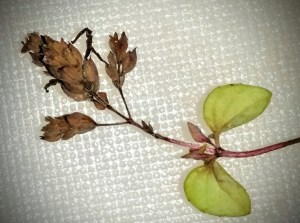
What I wanted to show with Oregano is that the seeds grow a little different. It’s similar to what I showed with Parsley, where the seeds are presented in a very obvious way. But instead of being a single seed spaced out in a firework cluster formation, the seeds of Oregano have a gathered cluster head.

The seeds here are a little more obvious to identify. But I wanted to talk about herbs like Oregano because as growers we are so accustomed to prevent seeding in favor of harvesting. I want to suggest that if it’s your desire to save as many seeds from the plants that you grow in the event that you have a surety of preserving what you use for food and medicine, it might be time to make a conscious decision to let the blossoms grow and go to seed so that you can collect. This is particularly a good idea if you haven’t learned how to clone that particular plant and you want to share with loved ones what you have been having success with.

Advertisements

Stevia

Stevia is a new to me plant. This past year I had found this start at a local shop and wanted to give it a go for growing. I’ve never seen what the seeds look like for this plant. And truly I know nothing about this plant other than the leaves are sweet and a viable alternative for sugar, if you’re looking for self sustaining options for providing for your family.

Where I am at now with this plant is not much further than where I was when I started. However, I’ve come to learn that the plant that I purchased grows in stalks instead of bushes. The longest stalk is about 3 feet tall. Currently it’s “dying” off for the season very similar to my Lemon Balm. The leaves became mottled (black and green). Unfortunately the latest wind storm caused my planter to fall and split the main stalk. (I’ll try to triage this stalk and see if I can bring it back. The break looks clean and free from disease. And to give it the best chance to over winter I’ll put it in a flowerbed that’s a bit more protected from the weather.)
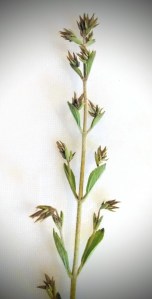
I didn’t set out to find how stevia propagated. Originally I thought it might be a perennial bush that spread instead of going to seed. However, one day out taking care of fall tasks, I found that the stevia had gone to seed. And that is what you see above. I have no idea what stage these seeds are at. I did snip this from the top of a stalk and left the other three stalks as they were (also seed bearing). That was two weeks ago and all the seeds are now gone.

The walk away lesson is that seeds take forever to grow. And then they are gone before you think about it.

Advertisements

Gladiolus

While talking about flowering seeds, I wanted to show one last example of how flowers can produce seeds. A Gladiola is officially a bulb flower, but it produces seeds.
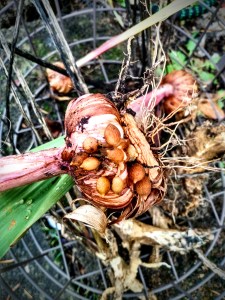
As you can see here, at the bulb of the gladiola, the seeds form underground.

If you’ve grown gladiolus, you know that they don’t produce seeds from their flowers. But if you’ve also grown bulb flowers you are also aware that bulbs (daffodil, tulip, chrysanthemum to name a few) duplicate themselves with a single additional bulb. So when you look at this picture and see all these seeds, you start to question everything you thought you knew.

The people who owned our home before us grew gladiolus out front. When I was ready to pursue gardening, gladioli were not on my list. For several years I kept pulling the stalks of each new gladiola and wondered what was going on. It didn’t matter if I pulled in the spring or fall, They just kept coming back. And If I left one because life was just too busy, the next season a half dozen would pop up. And that’s the short story about how I learned that gladiolus had seeds.

One year I pulled one up, like you see in the picture, and saw all the seeds forming on the bulb. And everything suddenly made sense. If I pulled the bulb after the seeds had formed (and subsequently stayed in the ground) of course a new garden of gladiolus would spring up next year.

This is one seed that if you do a search, you will find pictures of seeds and even a couple articles that talk about them.

Other seeds you will also find talked about online are seeds that are collected from the petals of flowers (marigolds and bachelor buttons to name a few).

As you can see, just by talking about seeds that come by flowers there is a whole world that opens up. And all of it because not all seeds look the same or are produced the same.

Advertisements

Seed Memory

Each spring packets of seeds are always on sale in brick and mortar stores. Starts are readily available at farmer’s markets, local growing communities, and certain stores. But as we saw with online seed sales, mistakes happen. What you think you purchased can turn out to be something different. It doesn’t matter if it was a true accident or something that was designed to happen. The walking away point that we can all move forward with is that the only seeds that are in your control are the ones that you save yourself.

I started saving seeds from my vegetable garden as a way of saving money when purchasing seeds and starts. “Free” seeds frees up your resources for other areas in your life. And if you know what to look for, you can read the signs for when your seeds are finished and ready to harvest.

In the future, I’ll share more about other seeds that I save (fruits, vegetables, herbs, etc.). I see the benefit in sharing because they may look different than what you anticipate. Or maybe you want to grow something new and have no idea what to look for. And when you go to search online, you don’t have any valuable information. And let’s face it, sometimes a picture is all we need to make the dots connect and understanding comes. And pictures are usually the thing that I find lacking.

But even more important than all this is what the seeds contain!

Advertisements

When you grow a plant, it passes on its knowledge through seeds. There’s no school that plants send their seedlings to so they can figure out how to live and survive. All of that is passed on in the DNA of the seed. When people talk about this, they say it’s Seed Memory.

Seed memory is so important because that is how plants produce young so that it will succeed in its environment. And this is the absolute reason why you want to save seeds.

When you buy seeds from online, you are purchasing seeds that are grown in one micro climate. While the grow zone number can be the same, there is a world of difference in the actual living conditions. For example, my US grow zone in the Pacific Northwest is the same number as certain places in the Deep South. And if you’ve been to both regions you will know that while there is similarities, but there are a lot of differences to the micro climates as well. In fact, one of my favorite online shops to buy from is located in the Midwest which has even more different microclimate than the Pacific Northwest and the Deep South. And that doesn’t even touch the differences between the microclimates in the Pacific Northwest region. In fact, the grow season is differential enough between my city and certain areas in the city next to me. Not to mention between my county and the next.

Advertisements

The plants that you grow from seeds that are purchased are plants that are grown in a different microclimate. This can be affected by how much humidity they expect to face, the amount of natural rain fall, frost dates, seasonal average weather, and so much more. The plant that I grow from seed expects my garden to be exactly like the garden that its parent plant grew in. And when that seedling starts to grow, it finds that it’s a different world out there. This can affect growth patterns, when fruit forms, and how and when seeds set.

If you start off with seeds that were saved from your own garden, the seedlings from those seeds do not have to readjust to a foreign world. They already have the seed memory for the microclimate that you are in. They know when spring hits, when the weather starts to warm up, when summer starts, when fall will start to bring the cooler weather, and when frost should happen. The seedlings get to focus their energy more on growth and will always outpace seeds that are from other regions.

That doesn’t mean that purchased seeds will fail. It just means that there is more going against those seeds that they have to overcome.

You will always have better success with seeds that you can save from your own garden.

Advertisements

Another thing about seed memory is that all the adversities that your garden faces, it will pass on in seed memory for future seedlings. For example, two years ago my garden had two winter seasons that jumped straight into a summer season.

Because I planted those seeds in my garden this past spring, those seedlings were ready for uncharacteristically cold spring. Those seedlings thrived and grew well from the get go, because they were not thrown off by a cool spring (which was still warmer than the spring of the parent plant).

What my garden struggled with this year was a decent spring that went into a cool summer (10-20°F cooler than the historic average). The seeds that I save this year (for my next growing season) now have the memory of a cool spring (from its “grandparents”) and a cool summer (from its “parents”).

While I don’t anticipate my garden producing super plants with all this seed memory. I DO anticipate that my starts will grow strong (even if it’s a cold spring) and will bear fruit according to growth/produce dates (even if it’s a cool summer) because the seed memory tells those seedlings to anticipate this obstacles to the grow season.

I have yet to find a study that talks about how far back seed memory goes. It is reasonable for seeds to remember two generations back. However it is not unreasonable for the seed memory to be uncalculatable. After all, as growers we are told that seeds are only viable for 3-5 years with germination rates declining with each and every year. However a palm tree was planted from a seed 2000 years old. Much of seed viability is dependent on the maturity of seeds, how they were harvested, how they were stored, and how they are sown.

As I’ve told many people this past grow season…

If you had a bad grow season, or things didn’t grow for you at all, chances are that you are not to blame.

The last 2 years of traceable weather obstacles that played a bigger part in your garden’s health than your affinity to growing plants. The memory of the seeds that you used had more to say about your harvest than the things that you did or did not do during the grow season.

Advertisements

What is in your control is how you pivot as a grower based off of the signs and calculatable information that you respond to during a grow season.

For example, one lady was surprised when I told her that since the beginning of 2023 and until Fall rains came, our microclimate was recorded to have had drought like conditions. In the winter we were in the tenth of an inch of rain on days we should have been having 3-5 inches of rain. Spring was the same way. Summer was summer as usual as far as historic rain levels hold.

She asked me, “Even though we had timed water irrigation.”

Yes, even timed water irrigation. Even though we as growers set our watering schedule as a means to remember to water, maximize our watering efforts, and conserve water… we are only adding to what normally falls as rain during each of our seasons.

Our gardens use the following math:

x rain volume + y additional water from grower = total growth water

Y can remain a constant through many many years, depending on when you started your timed irrigation.

X fluctuates depending on what falls naturally. (And this is a subject all of its own, depending on the circles of conversations you have.)

Plants depend (through seed memory) on the total growth water. If the water you provide is the same that you’ve always done in the past, but the rain volume has changed, there is going to be a difference in how your plants grow.

Advertisements

When growers talk about how a certain crop needs only 1″ (for example) of water a week, that is under the assumption that your garden is receiving regular rain water for the rest of the week. A plant does not depend on water from grower as their only source of water.

So if your garden struggled, it is entirely because there was a growth need in the seed memory that was not met during the grow season.

And that is what our job as growers is all about.

We need to recognize the signs. Know the history of our seeds. Work in connection with our plants to bring out the necessities and health that our plants need to produce for us and our families.

If you haven’t started yet, I encourage you to learn about the plants that you grow and start saving your own seeds to plant in upcoming years!


Leave a comment

Processing…
Success! You're on the list.
Advertisements
Advertisements
Advertisements
Advertisements

Saving Seeds

I know this isn’t talked about in early spring, because the focus is putting seeds in the focus is on planning and putting into ground right now. BUT….

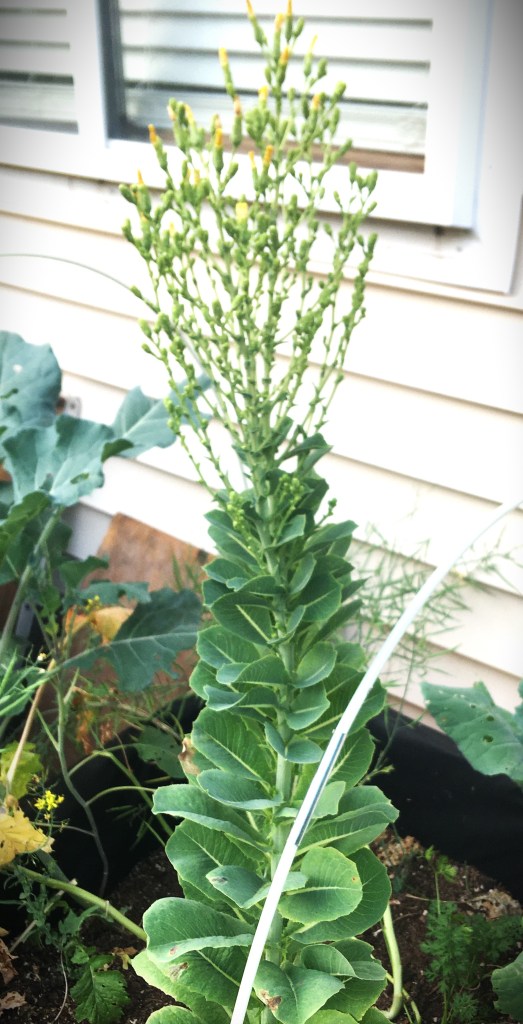
Here’s my garden right now. Even before the seeds go in the ground, I still have seeds that are preparing to be ready to harvest.

Talking with others who are expanding their seed saving skills, they haven’t yet experienced saving seeds from the Brassica family (cabbage, kale, cauliflower, broccoli and others). One reason for this is most likely because we grew up being told to clear out garden beds at the end of the year. But for gathering these seeds, you need to leave the plant in the ground after you’ve harvested.

In previous years, I harvested cabbage in the spring after the pods have formed and dried. But when I let this bed go fallow, I left the cabbage in for a second year. Mainly it was to see what the life cycle of cabbage looks like after I’ve long pulled mine.

Advertisements

In the second year with cabbage, any additional heads that grow are much smaller than the original year (for growing purposely, definitely not the best use of garden space). What I hadn’t counted on was a second gathering of seeds.

Why might you consider these seeds?

The general rule of thumb is that you save the seeds from successful plants–the biggest and best. But as I said, this second year cabbage didn’t really produce heads of quality in the second year.

Seeds are the memory of the plant.

The seeds of this second year cabbage not only contain the memory of the first year head growth AND it remembers the bad growing season this past year (unseasonably cold and wet that made me question if I’d grow anything).

Originally I wasn’t going to save these second year seeds because the potential passing on of tiny cabbage heads is not what I’m looking for. However the seeds do contain the memory of surviving through an uncharacteristic cold year.

So after going back and forth on what I’m going to do, I’ve decided to keep these seeds. I’m going to perform a comparison of first and second year seeds to see what the difference in performance will be.

This will be a future post since the seeds are not ready to do the comparison this year.

Advertisements

What is the life cycle of Brassica and their seeds?

Whether you’ve allowed your Brassica family plants go to seed or they just bolted on you when the heat of summer came, you may have seen something like this:

This was one of my rapini that bolted on me. The first thing that you see is the bolt.

Next, the flowers (which form the seed pods) grow for pollination. While there are still flowers you will see some of the seed pods developing.

Out of all the plants that I’ve collected seeds from, I think the Brassica family is the one that I’m most impatient with. I don’t know if it’s just my grow zone or everyone starts tapping their toe asking their plant, “Are you done yet?”

These pods remind me so much of beans. And I honestly expected them to bulge out more than you see above. But this is what the end of the seed maturing stage looks like, immature beans. Even though these pods are fully grown, they still aren’t done yet. They will turn beige.

Everyone I’ve heard always described them to turn brown. I translated that to mean that they would darken. But the first time that I saved these seeds, they started bursting open when they were beige in color. So once you start seeing the green fade from these pods, you know it’s almost time to pull the plant and collect the seeds.

What you are waiting for is the pod to turn papery dry. If you go out each day to check on your seed pods, you will get the feel for it when you see the first one pop open. The pod will look very much like this threaded hook:

Do you see how the center of this hook has a frame and then there is negative space?

Theseed pods of Brassica have the exact same structure. There is this frame like structure with negative space in the middle.

When the pod bursts, it’s the dry skin that cracks open and falls away. The seeds live in this center portion of the frame. So when the pods open, the seeds fall out and the frame remains on the Brassica stem.

The goal is to catch your Brassica with fully mature branches, dry beige skin, before they release their seeds. Once you accomplish this, you cut the branches off or uproot the whole plant.

If you can’t open a pod by rubbing it between your fingers, you will want to hang your branches/plant upside down in a cool dry place. This can take a week or two. But the pods will crumble.

Advertisements

Removing the Seeds from the Pod

Once the seeds opened in my hand, I chose to put the branches into a pillow case and tie off the open end. Then I gave the pillow case to my kiddos and told them to hit the pillow case against the deck!

This was perfect timing for this project because my kiddos were at each other and I couldn’t keep them from hitting each other. So I gave them an alternate action of being aggressive. After each one had a turn, the pods had all broken open and the seeds were all released inside the pillow case.

To separate out the seed from the chaff (stems and pods), I just used the traditional method of winnowing. I modified this by using a little modern convenience of a box fan on high speed. Because the chaff was so thoroughly dried out, they blew away with ease. And even though the seeds are small, they really do drop back down into the pillow case that I kept at the porch in front of my box fan.

Advertisements

If you want to see how this type of winnowing process is done, there are countless videos on YouTube. There are some that do this winnowing with Brassica seeds, but the majority is in relation to wheat and other grains. The process is the same. So whether you watch how grains or Brassica are winnowed, you will understand this process. There’s no need to invest in a winnowing box or other tool unless that is the path you want to go down. All you need is your seeds on a cloth and a wind source (whether natural or manufactured).

There’s no further step that you need to take in processing your seeds. Just store


Even though now is the time to plan and plant in your garden beds, I wanted to talk about saving Brassica seeds now. Where you plant your Brassica now for a spring crop, it will stay there for the rest of the growing season. And in some locations, it will need to overwinter to give your plant enough time to make its seeds and mature them.

This is a slow process. But it so worth it when you can grow hundreds upon hundreds of seeds in a single season and not be dependent on what’s available in future market sales.

What are your tips for saving Brassica seeds?

What other seeds do you save from your garden?

Processing…
Success! You're on the list.

4 responses to “Saving Seeds”

  1. Cary Avatar

    This post answered some questions I was having, thanks.

    Like

    1. Pacific Northwest Event Design Avatar

      I am so glad that I was able to help!

      Like

  2. Andre Avatar

    Love the unique perspective you bring to this topic.

    Like

    1. Pacific Northwest Event Design Avatar

      Thank you for reading! I hope you enjoy other posts as well.

      Like

Leave a comment

Advertisements
Advertisements

Rolling In Blueberries!!!

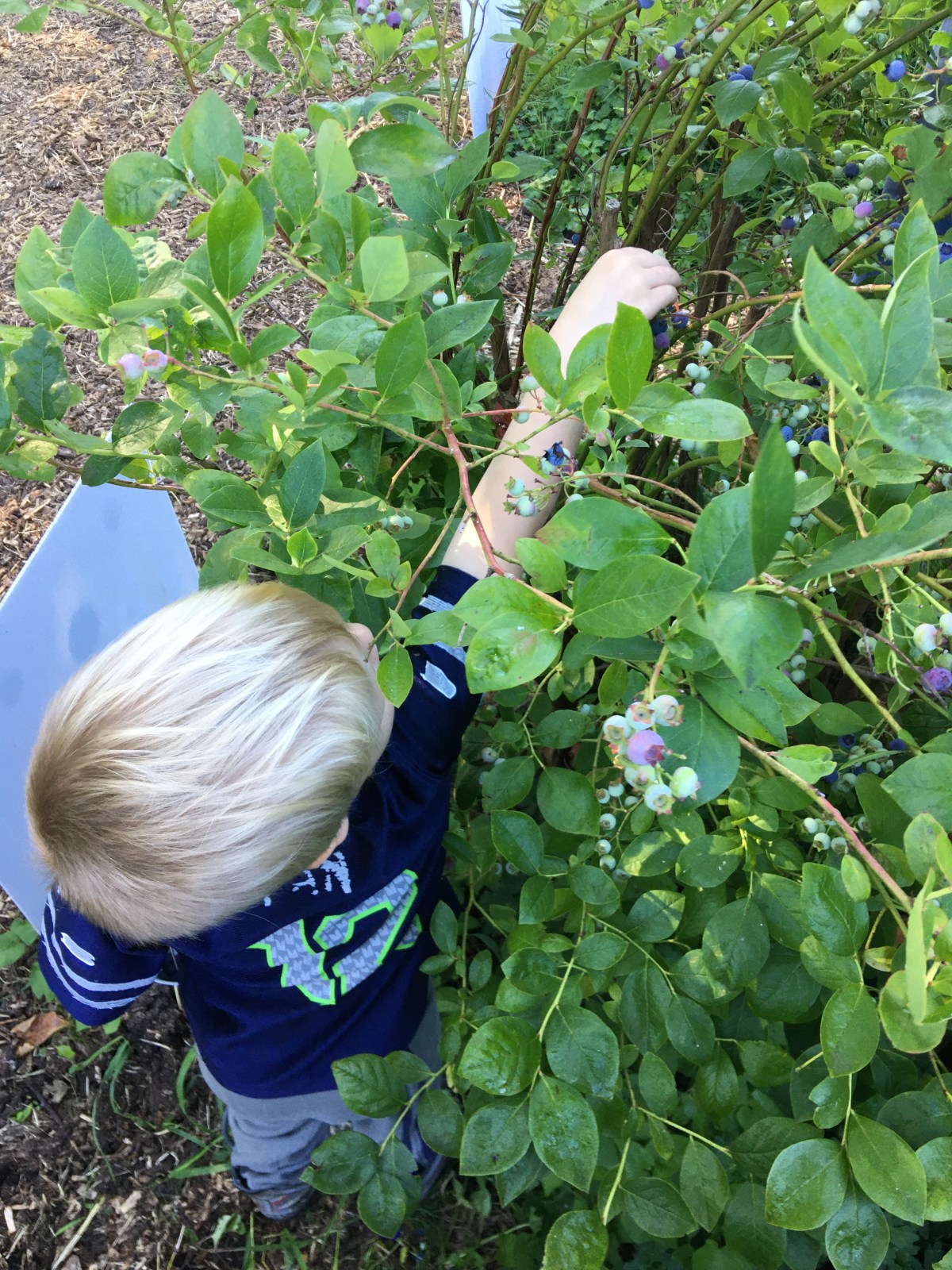
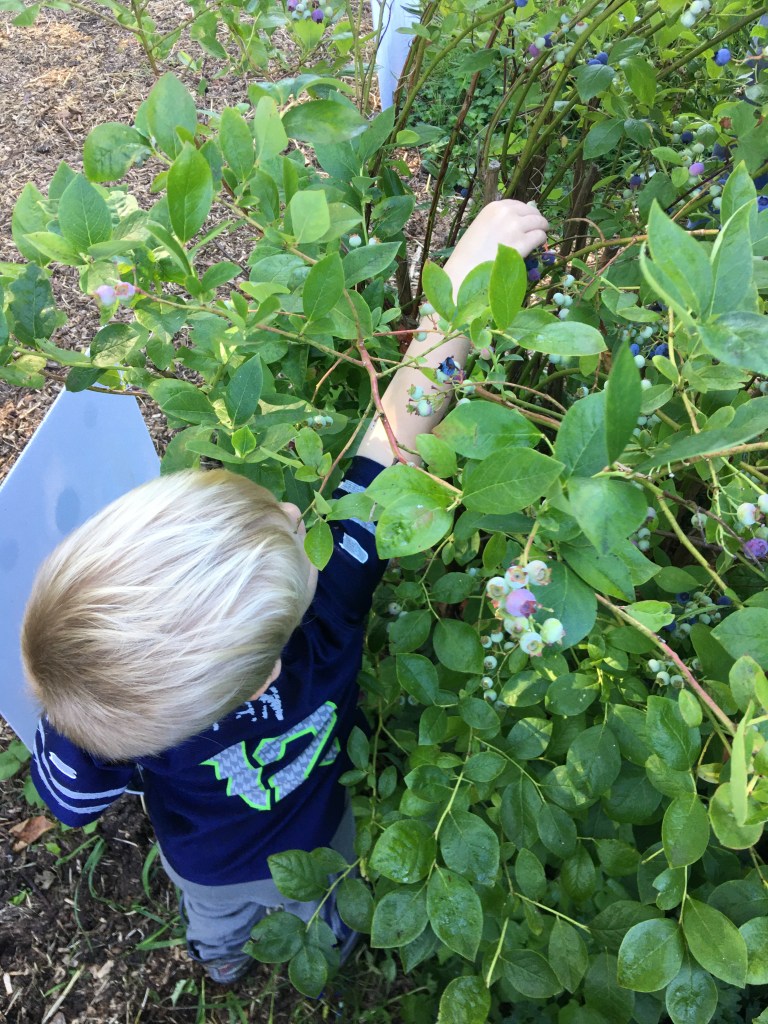
This picture was our family’s first time going out to pick blueberries. I have a second berry picking appointment coming up this weekend and I wanted to share with you our experiences and what you can do with any blue-berries that you picked this year. Or if you’ve yet to visit a blueberry farm, than the berries that you can find in your local produce stand or appointment.

This year blueberries were slow to come into season because of our long cold and wet spring in the Pacific Northwest. (In fact, our whole growing season was completely thrown off, not just the blueberries.

Why did I choose to pick our own berries this year?

My youngest two kiddos LOVE blueberries. If my mother in law or we buy a pint of blueberries from the store, these two will gobble them all up while your back is turned making lunch. LOL I wish that were an exaggeration!

My problems with store berries are that produce prices have jumped through the roof so much where I can only afford to buy one fruit, in moderate weight, each time I go to the store. Yes, we’re a family with a tight food budget. And truth be told, blueberry prices make it so that this fruit really isn’t in our range. I can choose a pint of berries or a few bunches of bananas, or a bag of clementines. So If I want to have fruit to last past one meal, you can guess which direction I usually go. And then there’s the problem that when the blueberries are on sale, sometimes I find berries that already turn, or they’re molding in a day or two at home. Again, not cost effective.

So when I saw a social media add for a local blue berry farm, I jumped on the opportunity!

If you know grocery store storage, you know that the fruit you purchase today is already about 3 weeks off of the plant that it grows on. So picking berries ourselves means that they’re the freshest that you can possible get. And you have the bonus of the fruit being picked while ripe, instead of green. (If you know how quickly the vitamins leave your produce once it’s picked, you understand the value of eating your produce as soon from picking as you can get.

Then there is the educational bonus. By taking the boys out to pick, they see where the blueberries come from (not the store refrigeration case), what the blue berry bush looks like, what a ripe berry looks in comparison to a green berry, and what kind of environment it takes to grow blueberries. (Yes, we picked with boots on our feet!)

Advertisements

This was definitely a learning experience for the boys because we had been picking an insane number of blackberries this summer. And the one thing that they immediately noticed is that they love picking blueberries over black berries because they don’t have thorns!

The remaining bonus to picking blueberries our selves is that we can speak with the farmer and learn about their farming practice. If it matters to your family if a farmer uses pesticides, natural organic sprays, or no sprays at all, this is how you get that information. There are many local farmers out there who do not have the time or money to purchase the “organic” sticker from the FDA. And often times, these farmers use a lot less product on their crops than the companies who can afford that sticker.

Pearson’s Bees and Berries is one of these farms. I would never have known that they skip even the organic sprays had I not met them and talked with them. But the first thing that I loved about this farm is that their bushes are heirloom. This is where I draw the most value from farmers. With as much as society pushes for scientific advancements, I really do not want those advancements in my food. I’m not the mom who buys everything organic. But I am the mom that buys produce (and grow my own) from heirloom and heritage plants whenever I can.

And I’m also the mom that buys directly from local farmers over grocery stores. People are under the assumption that farmers make a lot of money from their crops. Unfortunately, especially for the small farms, they don’t make very much from their crops unless they sell directly themselves. And I would rather my money go directly to a family to invest in their business than a chain. Plus it frees up the grocery resources for the families who are unaware of their local farmers or (for any numerous reasons) can’t make it out to the farms themselves. And if you’ve ever lived in a community where the power goes out or a snow storm comes in and the onion bins are empty, you know what it means to free up resources when you can. (The onion bin is a true story. Every year!)

This first visit to the blueberry farm, we picked 9 pounds of berries. This weekend we’ll pick another 9 pounds.

What do you do with all those berries???

I’m so glad you asked that question!

With my family, the way that we maximize our small grocery budget is by preserving everything that we can for the year. When berries are in season, we store them in a way befitting to how we will use them throughout the year. Apples we make apple sauce. And last year I learned how to can apple pie filling. So in the fall, I can buy the apples at the cheapest price of the year and take care of our apple needs for the year. Black berries, we pick them (for the price of gas to get to our picking location) and have our jam for a year or two for the insane amount of PBJ that we go through in our house.

This is my first year with blueberries to preserve for the year. So I photo documented everything to share with you here. If you decide to hit the berry farms this year before the season ends, you can have an idea on what you want to do with your berries!

Frozen

The first thing my mother in law recommended to use, when she heard of our first trip of picking blueberries, was that they freeze beautifully. And indeed they do!

I took this cookie sheet, and made a single layer of berries. I put them in the freezer to get them frozen and then put them into zip lock bags. I chose the quart sized bags and measured out the berries into 2 cup increments. Most blue berry recipes that I have (and looking at new ones), this is perfect for making a double batch of just about everything. And yes, I always make double batches of everything. With a family of five, with three of them growing, I just overcook to be on the safe side and err on the side of leftovers. And with blue berry muffins, it’s nice to have one baking session with treats for the week.

If I only need 1 cup, then at least I only have a cup of thawed berries in the fridge for the berry thieves to nab!

Dehydrate

The baker in me made me dehydrate. I’ve had many recipes where the juice of the berries was just too much for the sponge and it made a soggy mess! So by taking the liquid out of the berries, you not only save freezer space with this shelf stable preservation but you also keep the right consistency to cakes and muffins.

The problem was what is the right way to dehydrate blueberries?

Before I set up my dehydrator my mother in law had already found a news article that stated the way that you HAVE to do it–but the berries in half.

Now I froze 3 pounds of my berries. And that left me 6 pounds of berries to dehydrate. There was absolutely no way I was going to cut all those berries in half. I’m a mother of 3 after all!

So I performed an experiment.

I left berries whole, with an assumption going into this that they would take forever because of the sturdy berry skins, for one tray. The second tray I filled with berries that were cut in half.

As seen above: whole berries and smashed berries.

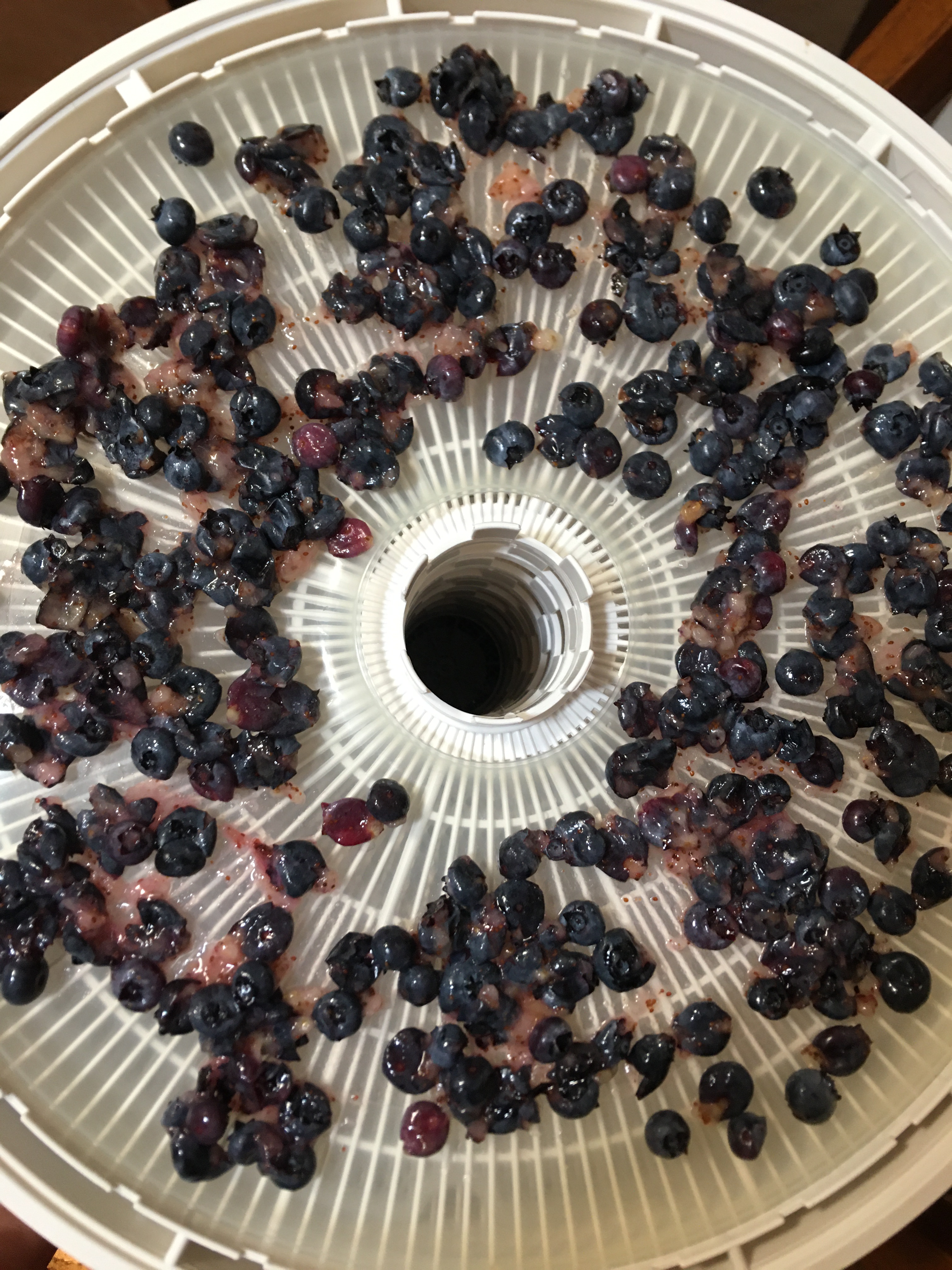
For three trays I lightly smashed the berries onto a plate, using a glass cup that I could look through. By using the glass cup you can make sure that you see which berries you are smashing, which ones you already smashed, and just how much pressure you are adding in connection to breaking the skins open. For the smashing, I applied just enough pressure that the skins split open, allowing the air in to dehydrate, and yet keep the majority of the fruit structure intact.

When you look at the pictures above, the whole berries and the cut berries looked the same. So I just put the whole berry picture up. Both of those sets were placed on the mesh insert. I’m done with the days of putting fruit directly on the trays. By using just the mesh I don’t ever have to scrub my trays. Plus the mesh you can fold and break up any of the thin bits that cling to the surface. So even the mesh don’t have to be scrubbed either! The Right picture is the smashed berries. You can see what I mean when I say just enough to break the skin. Some got a bit more flat than the other (which looks a lot like the whole berries on the left). But these berries are a bit messier. I wanted to save the mess and not lose out on any of the blueberry goodness. So I dehydrated these on the jelly roll sheets.

The final two trays of blueberries were my fully mashed berries. I’m teaching myself how to seed save from different plants. My tomatoes are not yet ripe, so I can’t practice on those yet. So I chose to use the blueberries as my maiden voyage. And I’ll talk more about that below!

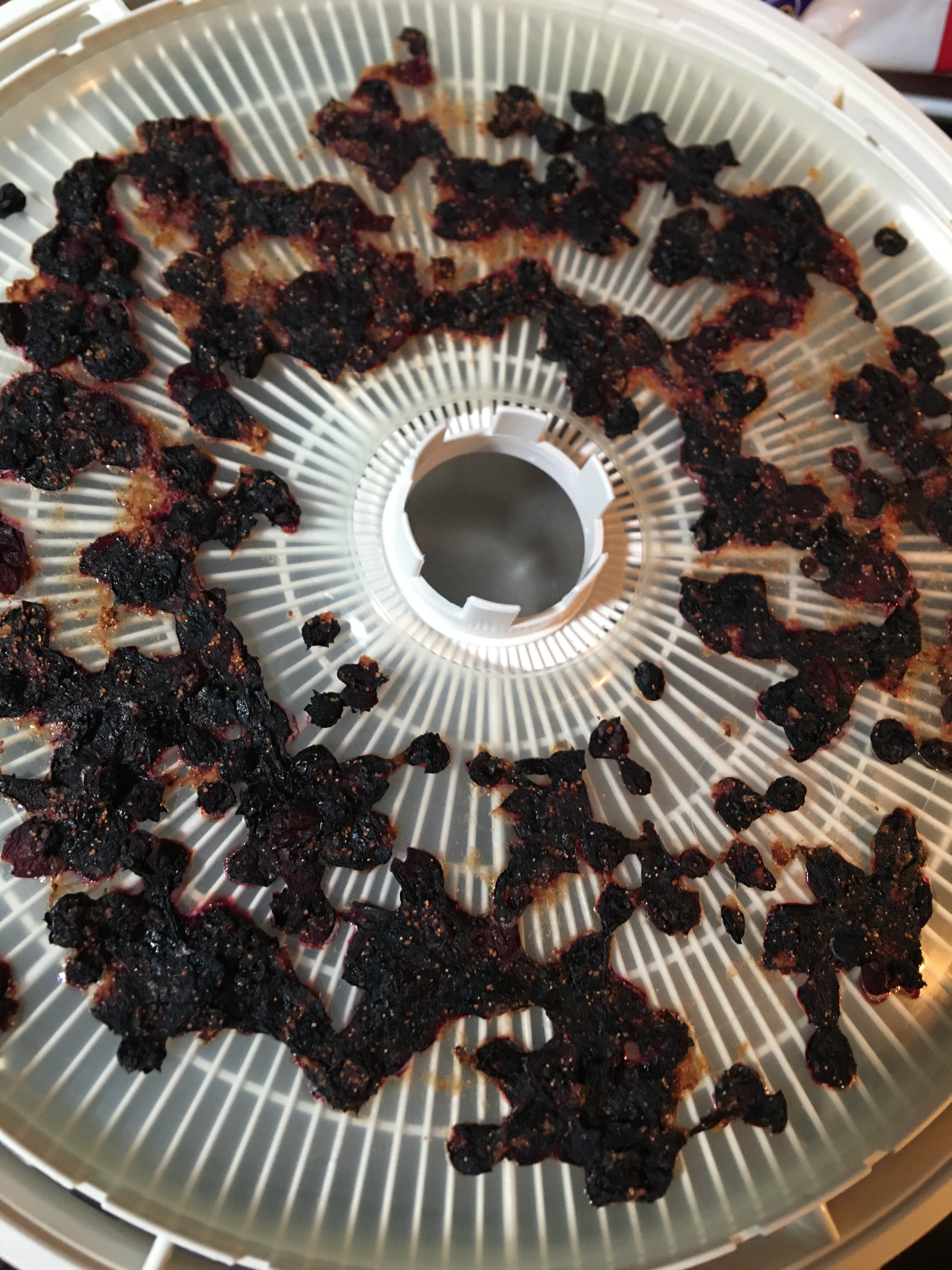
As you can see below, with the final dehydrated product, the fully mashed berries were a mess, a beautiful, lovely mess! So those of course were on a jelly roll insert.

As seen above: smashed and fully mashed.

The drying time and final products actually surprised me! The smashed and mashed took the least time to dehydrate, as anyone would expect. They took about the same amount of time, 13 hours. (Of course we had very high humidity days, which didn’t help here.) The mashed berries pulled off the jelly roll just like any fruit leather would. So if you want fruit leather you can use a blender or you can skip that extra clean up and just use a plate and glass. Of course the blender will give you the means of smoothing out everything across the jelly roll and produce a nice solid leather you can cut into perfect strips. Or you can go the quick and dirty route and skip the whole cutting process. Either way works and is a complete judgment call.

The smashed berries surprised me. I didn’t think they would turn out as perfect as they did. There was very little flesh spread and it looks nearly identical to how the whole and cut berries turned out, when they finished. These look exactly the same as the dehydrated blueberries in the packets of oatmeal or premade blue berry muffin packages. My walking away point is that for the least dehydrating time and same end product, a light smash is the way to go for dehydrating berries!

What surprised me the most was that the cut berries and the whole berries took the same 23 hours to dehydrate. Cutting the berries didn’t speed along the process for me. Even when I ate a whole berry and a cut berry, their textures were identical. I’m not sure why the article my mother in law read said that you had to cut the berries for the best result. There wasn’t a difference.

However there was a difference between the whole/cut berries vs. the smashed berries. When dehydrated the smashed berries had a little bit of pop corn roughness to it, but it had a bit more “airiness” to them. You could say they had a snap and not as dense feel to the teeth. It wasn’t a completely night and day difference between the three methods. But it was noticeable.

My Vote: a quick smash of the blueberries and dehydrating them is the way to go!

One side product you might not have thought of

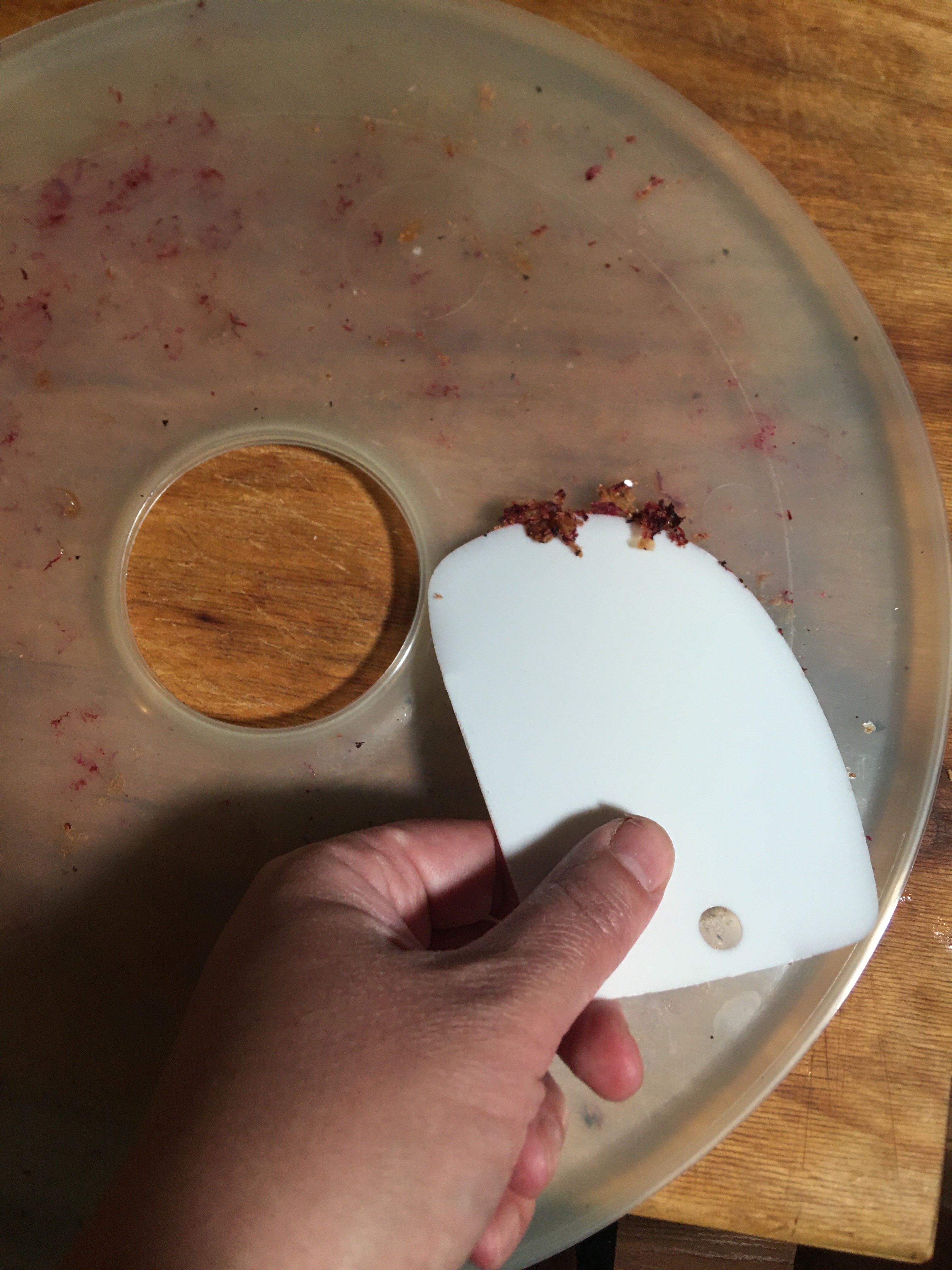
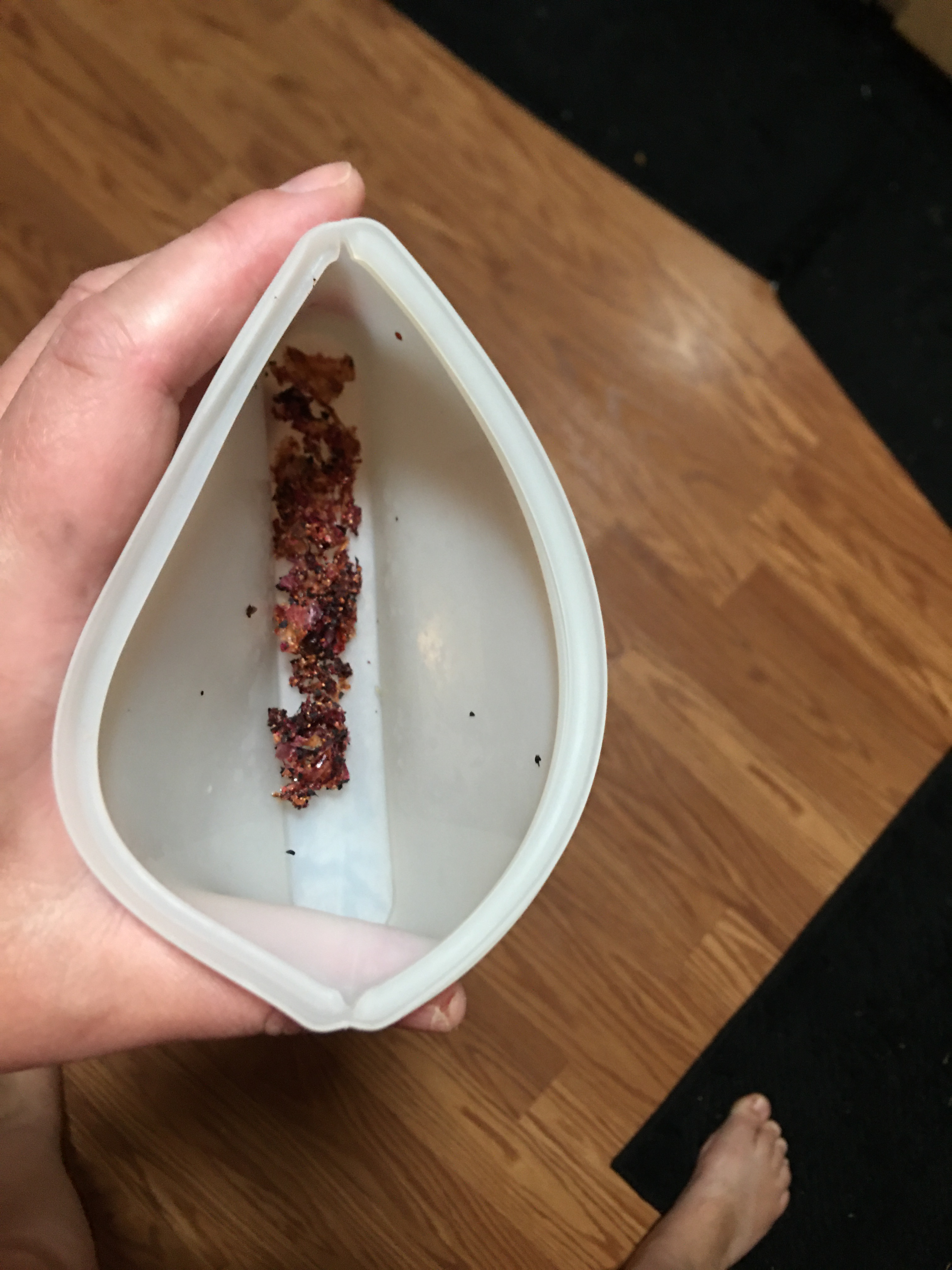
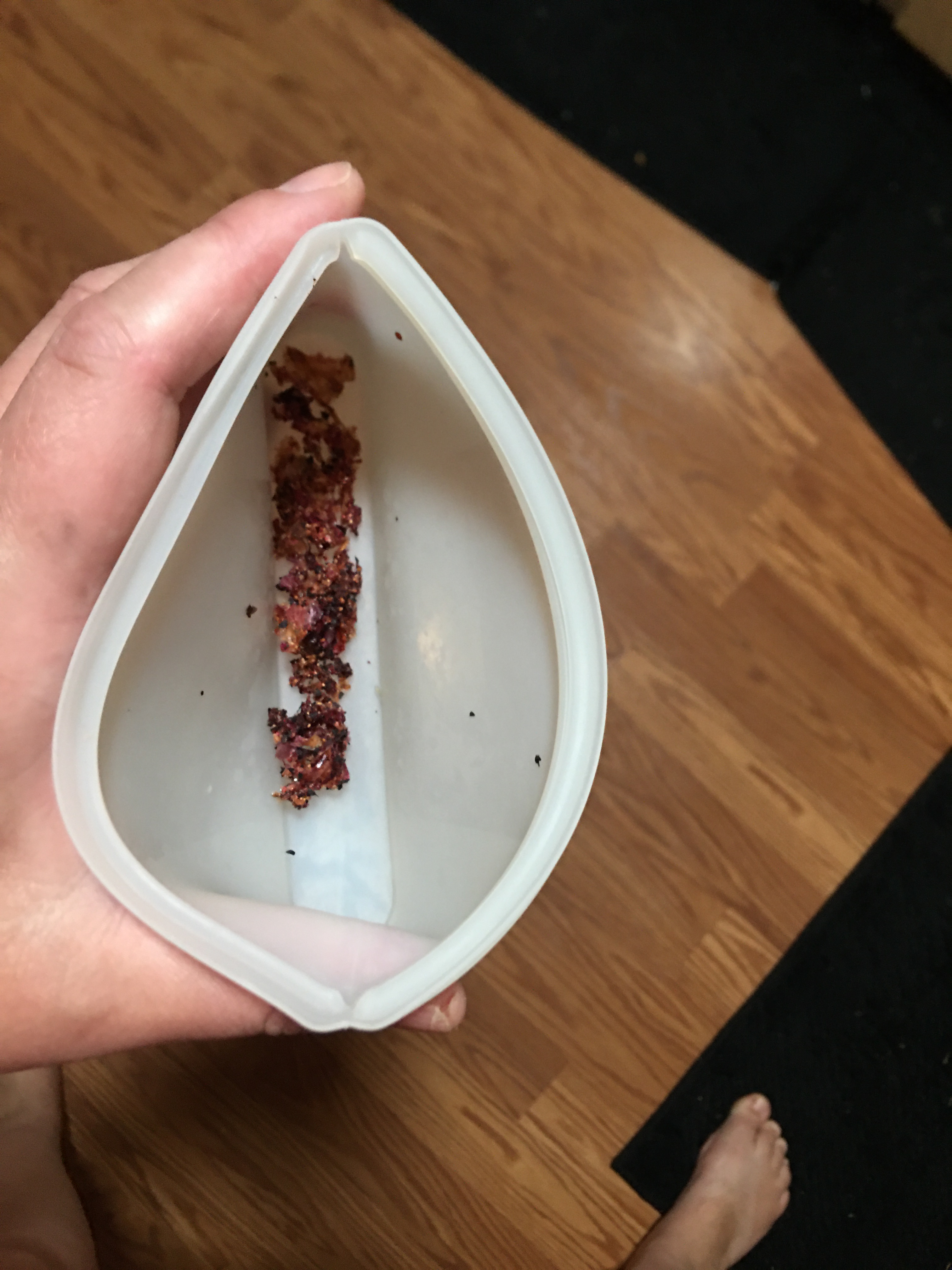
Before I end this portion of dehydration, I wanted to talk about this one last observation. I like finding ways of using as much as I can of the things I preserve. And if you’ve dehydrated long enough, especially with the jelly rolls, you know there is always that bit from the juice and fragments of flesh stuck to your tray. This time, I decided on another experiment. I scraped off this little remnant. As you can see in the right picture below, I didn’t gain a whole lot of extra bits off of 5 jelly rolls, but I want you to stay tuned because I use this bit in a recipe below and I want you to know that this is completely usable!

What caused me to go to this effort?

I had to scrape my jelly rolls anyway, to make it quicker for washing when I was all done–no scrubbing. I took a taste of these scrapings. And let me tell you what! These scrapings have just as much flavor as the blueberries themselves. So yes, all that flavor, I was definitely going to cook with that.

Saving Seeds

I have no idea how successful this attempt of seed saving will be. I’m very new to this skill set. Including this batch of blue berry seed, I have three other plant varieties that are in the process of cold stratification.

If you are also new to seed saving, perennial plants do require cold stratification in order to tell the seed that it’s ready to sprout. I only have a small garden so it’s not space effective for me to plant seeds in the fall and let them over winter (cold stratify naturally) and hope they take off in the spring. So the best option for me is to go through the stratification method using my freezer and start the seeds indoors and plant any successful starts.

With blueberries, the methods I’ve seen people use for capturing seeds all involved using a blender and wasting the flesh. As you can imagine, I have no intention of losing berries to waste, so I tried something different.

If you remember above, when I talked about mashing the blueberries I mentioned seed saving. Here is what I did. The mashing broke apart the berries that you would see happen in a blender. The difference is that the flesh, I was able to put in my dehydrator and use it as a food source.

On the plate that I mashed the berries on, I removed the thick flesh and left the juice on the plate. With a silicone spatula, I scraped the juice from the plate into the bows that you see here.

As you can see, there seeds were quite numerous from the several handfuls of berries that I mashed. Definitely the seeds are numerous enough to get me a few starts to plant this spring. And I might have enough to share with others.

The method that I used to separate out the seeds from the juice and bits of flesh was the sluicing method. If you’ve seen a video on how you sluice a pan of gold, you understand the steps that I took here. I didn’t pour in very much water, maybe 1/4 cup of water at a time. I swirled the water in the bowl and let the water separate the juice and flesh from the seeds.

It is true what you hear; the seeds to stick to the bottom of your blender, or in this case your bowl. There will be a few floating seeds, but those are the ones that you don’t want anyway.

I sluiced, in my soup bowl, four or five times until you I got to this last picture of the seeds in the bowl.

From this point I continued in the stratification method that others already show how to do; place a damp paper towel in a zip lock bag, place the seeds on the paper towel, and place in the freezer to start the stratification process. (These are placed in the freezer for a minimum of 90 days for blueberries.)

I know that I’m not going to have any blueberries for five years, but I want to start this process now. And I might have to plan ahead and grown several bushes because I definitely have blueberry lovers on my hands!

Freeze Dried

While I do not have a freeze drier, I so wanted to mention this method of food preservation. This method maximizes on the flavor and texture of the blueberry while maintaining the maximum level of vitamin retention. No other food preservation method tops this method at this moment in food history.

That alone is reason enough, but there is also the added bonus of berries being shelf stable and fresh for up to 25 years, 1 year after opening. If you’ve water bath or pressure canned any preserves, you can recognize the benefit of not having a jar or seal failing you.

Maybe you’re like me and don’t have a freeze drier. I want you to know that you still have that option available to you.

More information on freeze dried blueberries can be found here.

I’m going to talk more about freeze dried berries next week, because I’m going to use these in recipes. And believe me, if you are a professional cake or cupcake baker, you’re going to want to see what freeze dried berries can do for you and your clients. You’re going to have all the berry flavor without throwing your water ratio off. Plus the added bonus of being able to decorate with the berries that you can’t do with fresh and less of your precious time than dehydrating.

Blue Berry Recipe

I wanted to share the blue berry recipes that I have and how each of these ways of preserving blueberries act in a given recipe, but I’ve given you ALOT of information already. So be sure to tune in next week for the recipes and how the berries work.

BUT in the meantime I don’t want to leave you hanging with the jelly roll scraping. So here we go on this quick analysis.

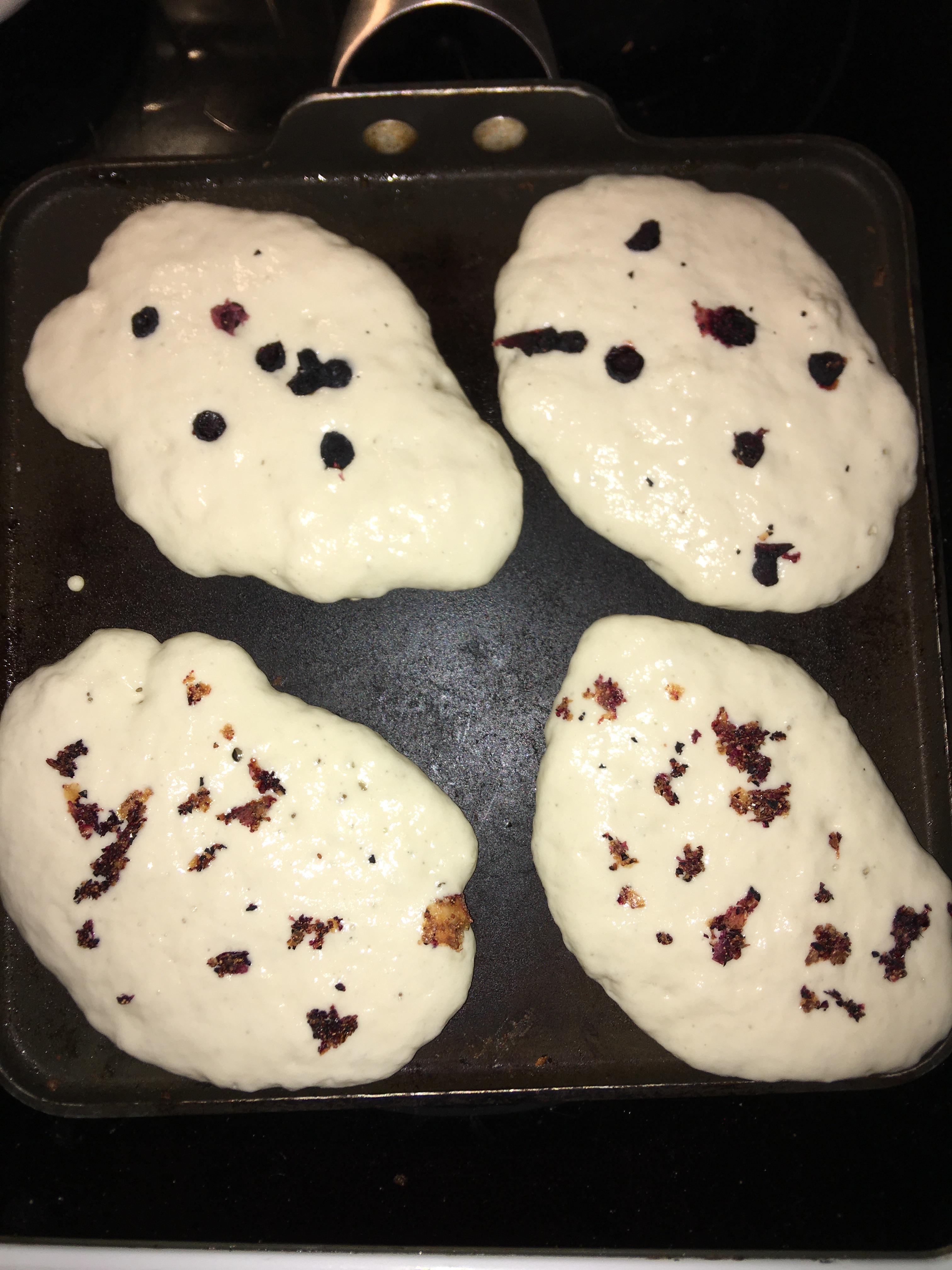
As seen above: the berry scrapings and blueberry pancakes (above: whole dehydrated berries, bottom: berry scrapings)

I didn’t have very much of the scraping, just enough for two pancakes for the boys. I made two other pancakes with the dehydrated berries. (And of course some plain flapjacks for the kiddo who dares to turn his nose up on blueberries.)

The dehydrated berries had a bit of crunch to them, but did not disappoint in the flavor department. The blueberry scrapings I absolutely loved! There was the full blueberry flavor without the bite of a dry blueberry, or even the wet squish of pancakes with fresh berries in them.

I’m so tempted to make more mashed berries and spread it very very thin to maximize the blueberry scrapings, because it’s the absolute perfect world for blueberry pancakes–full flavor without messing up the texture of a classic pancake!


Products seen today

These products are affiliate links. We can receive a commission from purchases made through these links, but at no extra cost to you. These products I have purchased for myself. Where I have talked about them, my statements are based on my experience on these products.

Nesco FD-1018A Garden Master

This was a replacement dehydrator for my other Nesco that served me well for over a decade. I wanted to make this recommendation because this dehydrator came with a mesh and jelly roll for each tray. I was prepared to purchase these accessories, but was so pleased to find out that I didn’t have to.

Processing…
Success! You're on the list.

Leave a comment

Advertisements