
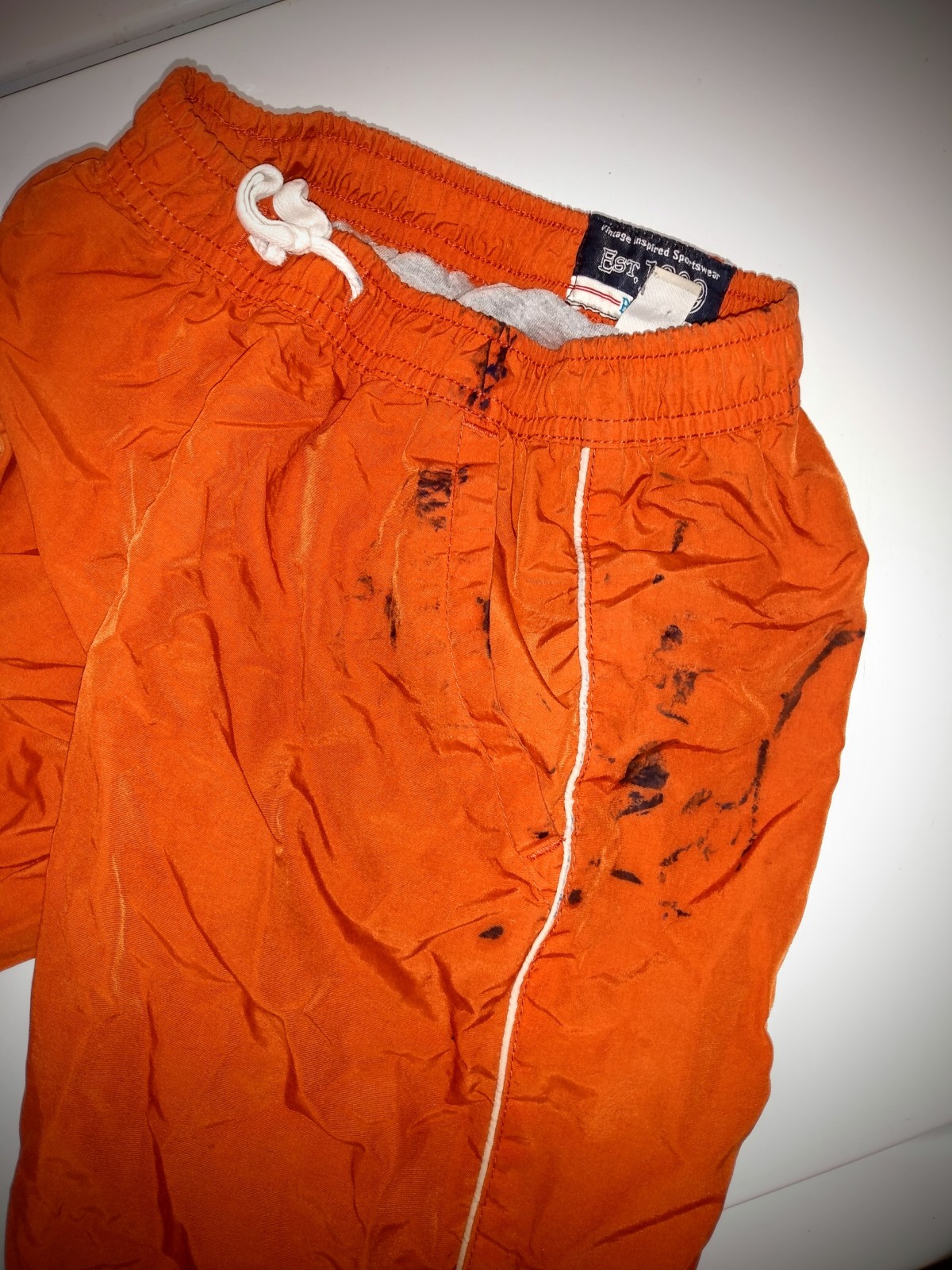
(I’m going to pepper the pictures of results through this post. So this time the pictures are not directly linked to what I’m sharing with you in that immediate space.)
Nothing causes disruption in a family more than sitting down to the laundry and finding that someone went through the wash that shouldn’t have.
This past week, my disruption was a caused when a blue crayon high jacked a tumble in my drier!
My whole load of laundry was affected. And what made me cry the most was a sweater that was gifted to me and this was its first washing.
Did I mention it was a large load of laundry?


Cotton napkins: the tags were removed so if I remember right these napkins are 100% cotton. Later on I’ll talk more about why this may be important.
Fortunately my husband was brilliant and immediately started a quick search to see if there was a possible remedy… even a small chance of not having to throw out so many clothes to the scrap bin.
He never did tell me what he found out. But two days later (when enough time had passed), I ran my own search. The videos I found were either from other housewives (and one preschool teacher) who used items they found in their homes or ken using chemicals that may or may not eat your clothes if you used it (maybe a slight exaggeration but not far off).
The teacher used a toothbrush. And I wasn’t going to go through with a toothbrush on 50+ pieces of clothes and linens. And with the options remaining… you guessed it! I chose the house wife remedies.
The ingredients that were used by all videos were vinegar and Dawn dish soap. Half also added washing soda.

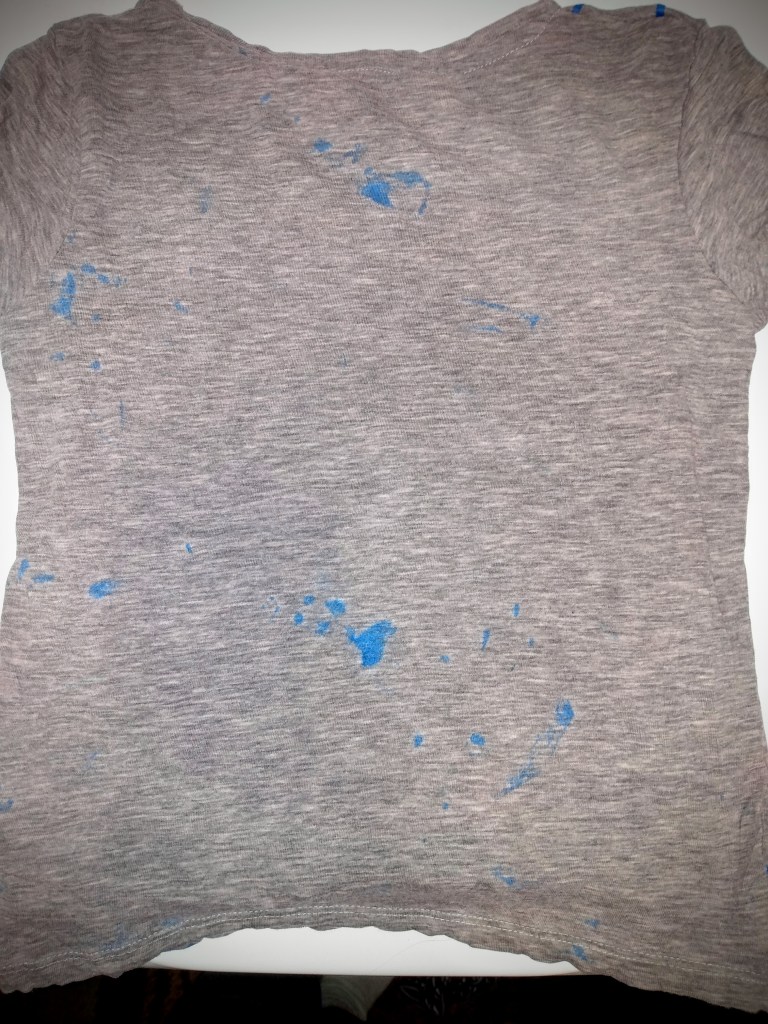
This is one of my kids’ shirts. This is a blend of cotton and polyester. The tag is worn out so I can’t give the percentages.
Why Dawn Dish Soap?
If you think about what makes up a crayon, you find that it’s in the wax/fat or oil based. Dawn is known for being aggressive with breaking down oils and fats.
Will any dish soap work?
Absolutely not! There are a lot of cheap dish soaps out there that doesn’t break down fats and oils. If you’ve ever used cheap dish soap where you have to scrub an oily dish with the soap and absolutely no water to dilute it, you know what I’m talking about.
However, for my experiment, I used Kirkland (store brand) dish soap that is marketed as having four times the grease fighting power. This is something that Dawn is always advertising in their marketing. So I have reason to believe that this is Dawn just relabeled as the Costco store brand. Even if I’m wrong, it’s this degreasing action that I’m going for because wax is oil based, whether natural or synthetic.
Out of the three ingredients the dawn dish soap is, initially, the one ingredient that I wouldn’t skimp on. My hypothesis is that this is the ingredient that is the make or break item for this science experiment to work.
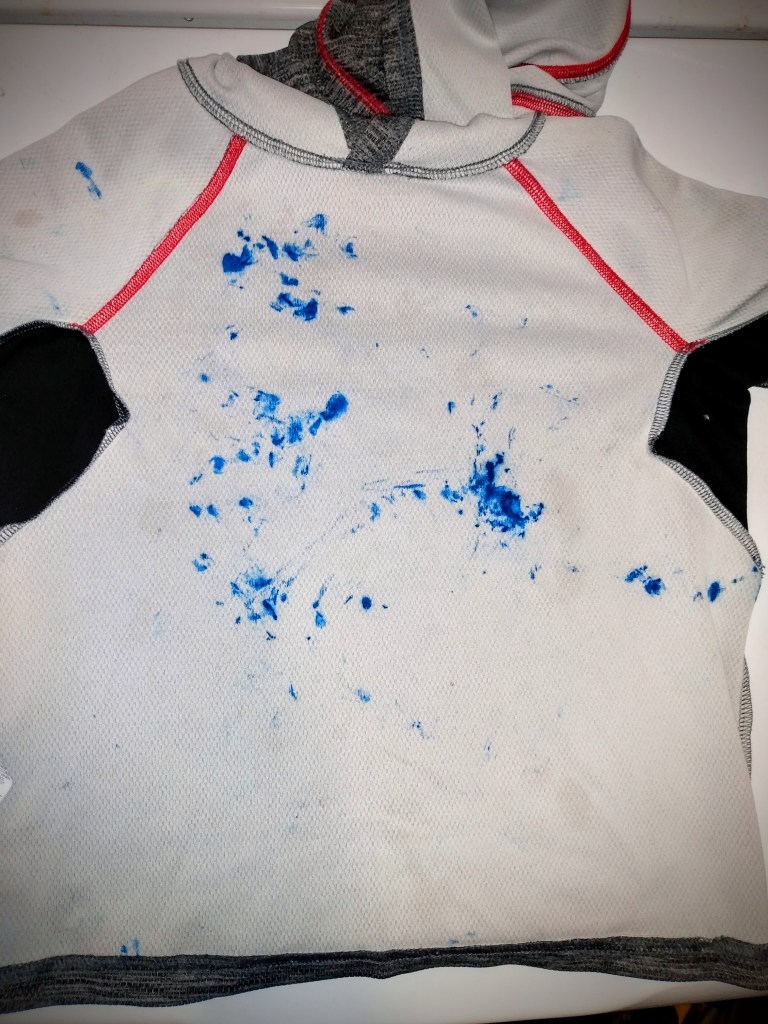

Here is another one of the kids’ shirts. This athletic shirt is also a poly blend with less cotton content than the previous shirt.
What about Washing Soda and Vinegar?
These two ingredients I’m not picky on brand and I use them interchangeable. So by all means if you have an opinion, please drop it below in the comments.
I am a homeschooling mom, but here is where my scientific knowledge is going to be lacking. We haven’t gotten to the lessons yet to understand why bicarbonates or vinegars do what they do in the laundry.
But for generations vinegar has been used when washing clothes to freshen them up (in the days before fabric softeners or laundry crystals) and give your laundry a little fluff. And that’s not even mentioning that vinegar is amazing for giving your washing machine a good little wash to break down laundry build up in the wash barrel.

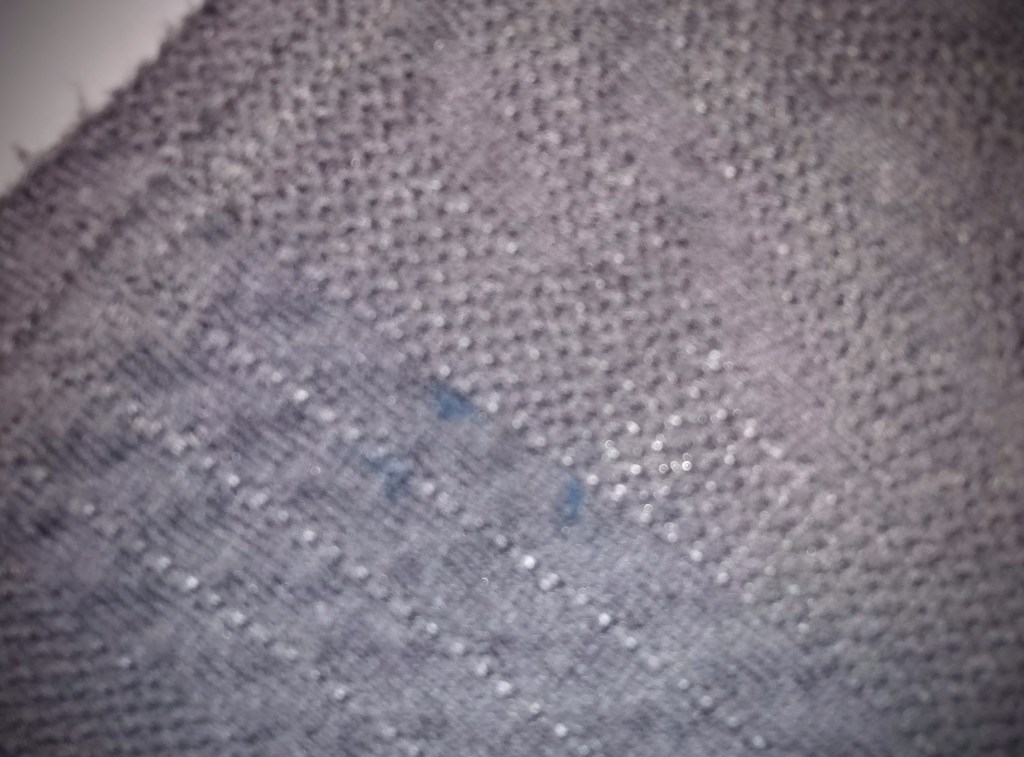
This sweater I wanted to include to show what happens with a woven texture.
I suspect that vinegar is a key component in this laundry remedy because it loosens and opens the fibers up from compression. So the vinegar works in concert with the dish soap by getting in there a opening up the space for the soap to get all around the crayon wax and break it up.
In my experience there’s been no noticeable difference between a 5% acidity vinegar and the vinegar I make from apple scraps or orange when it comes to how it behaves in my laundry. Of course there is the difference of scent that comes from the apples or the oranges. But other than that, both types of vinegar (commercial vs. home ferment) behave the same.
I’m not sure how the videos with only Dawn dish soap and vinegar works supposedly as well as the videos that use dish soap, vinegar, and washing soda. The reason for this is because I know that there is a chemical reaction that happens between the vinegar and washing soda. But I’ll come back to this point when I get down to what I found when I played with the measurements of these two ingredients. The combination of the vinegar and washing soda DID have direct correlation to how much of the crayon got removed from my laundry.


These athletic pants are a poly blend that includes rayon.
First Things First
Before you can go back and rewash everything, the first thing that has to happen is checking to make sure that your drier is clean from residual wax.


The drier pictures I wanted to keep with this section of text.
As you can see from the pictures that I took of my drier barrel, my load was so large that the clothes kept the barrel from being covered in the crayon wax. I did have one spot next to my lint trap.
So on the one hand, this is what you want your drier to look like. And on the other hand, here is what you’re looking for. I didn’t have to go through the hassle of running my drier empty to warm the barrel up and then wipe out the crayon wax. If I did have to I favored the video where people wiped the hot drier barrel with a drier sheet. I don’t use drier sheets with my laundry, so if I had to clean out my drier this time I would have warmed up my drier barrel and then use a rag sprayed so that it became damp with vinegar.
When you’ve verified that your drier is clean, you can then move forward with treating your clothes.


This is a pajama shirt is another example of a cotton poly blend.
What’s the Recipe?
That is the real question because no one tells you the measurements of what they use for their results. They eye ball it and tell you to be generous with the ingredients.
I’m telling you that there is a difference with the amount you use and the results you will see!
Without knowing the measurements that they used, you cannot truly recreate the results that they got. So I followed the eyeballing method that I saw in all the videos. BUT I also measured what it was that I was putting in.
Full disclosure, my washing machine has a larger barrel than the standard machine. So depending on the size of your washing machine you may need to adjust the amount of ingredients that you use when this issue happens to you.


This is a 100% cotton wash cloth with a waffle weave pattern.
I split my ruined load in half to run two different batches.
For the first run of treatment (which you see the before and after two picture sets above and below) I used the following:
- 1 Cup Washing Soda
- 1 Cup Vinegar
- 3/4 Cup Dish Soap
Before I put the clothes back into the washing machine I started running the water into my machine. It’s important to make sure that you run the water as hot as your machine will allow. The heat is what softens the wax and makes it easier for the cleaning agents work. I also put my machine on the setting that allowed for a deep clean (where the clothes can soak for a few minutes). With the water running, here is the order that I did everything else:
- Add the clothes
- Pour the washing soda evenly across the top of the load
- Pour the vinegar directly over the washing soda (you will see the washing soda start to foam)
- Pour the dish soap as evenly as you can on the top of everything
- Close the lid and let the machine run its wash cycle

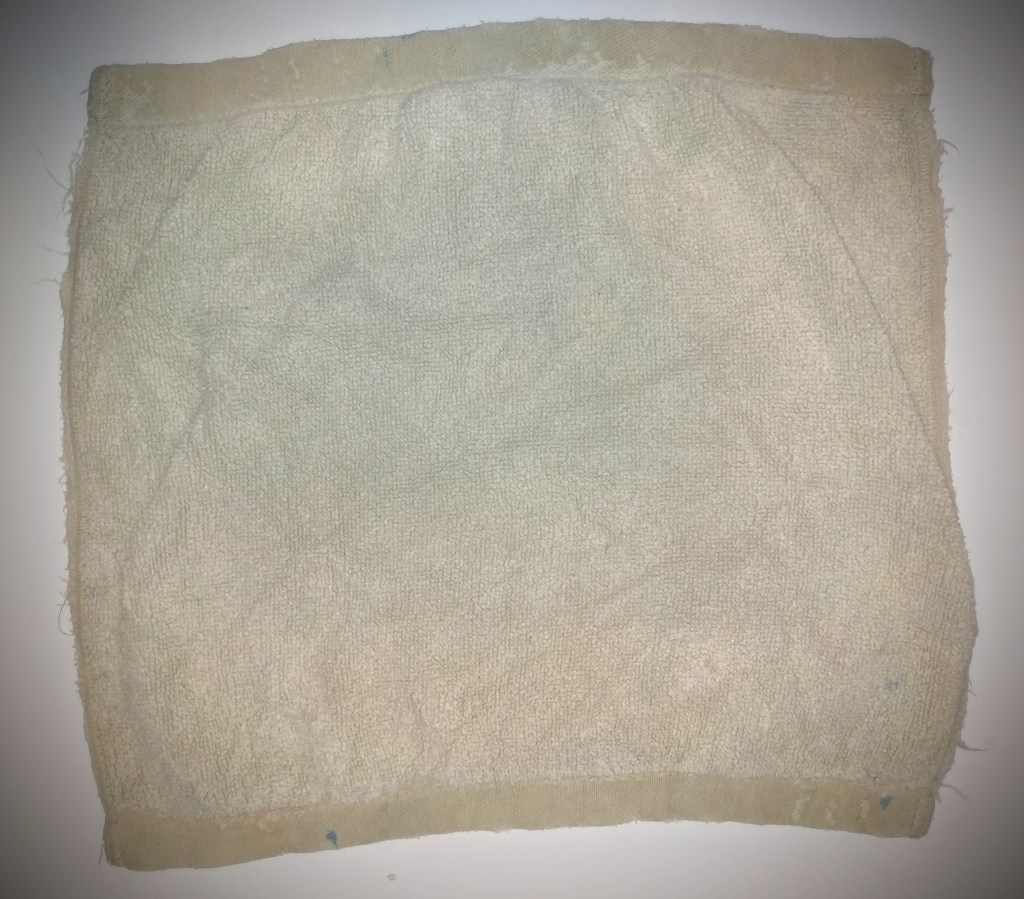
This washcloth is a blend with a nap weave.
All of the pictures that you have seen above have been the worst of the worst of what got hit by the melted crayon. Everything else came out of the treatment with the wax removed.
Below this point you’ll see what the second run, with a modified measurement of ingredients. Please note that I did not run these clothes through the drier unless I was happy that they were free from was (or as you will soon see that I gave up and just accepted the fact that I wasn’t going to get the wax out).
For the second run of treatment I put in the second half of the laundry for its first laundry/treatment run PLUS the articles from the previous attempt that I wasn’t happy with. This second test, in the end, was run with a 3/4 load instead of a 1/2 load that I previously ran.
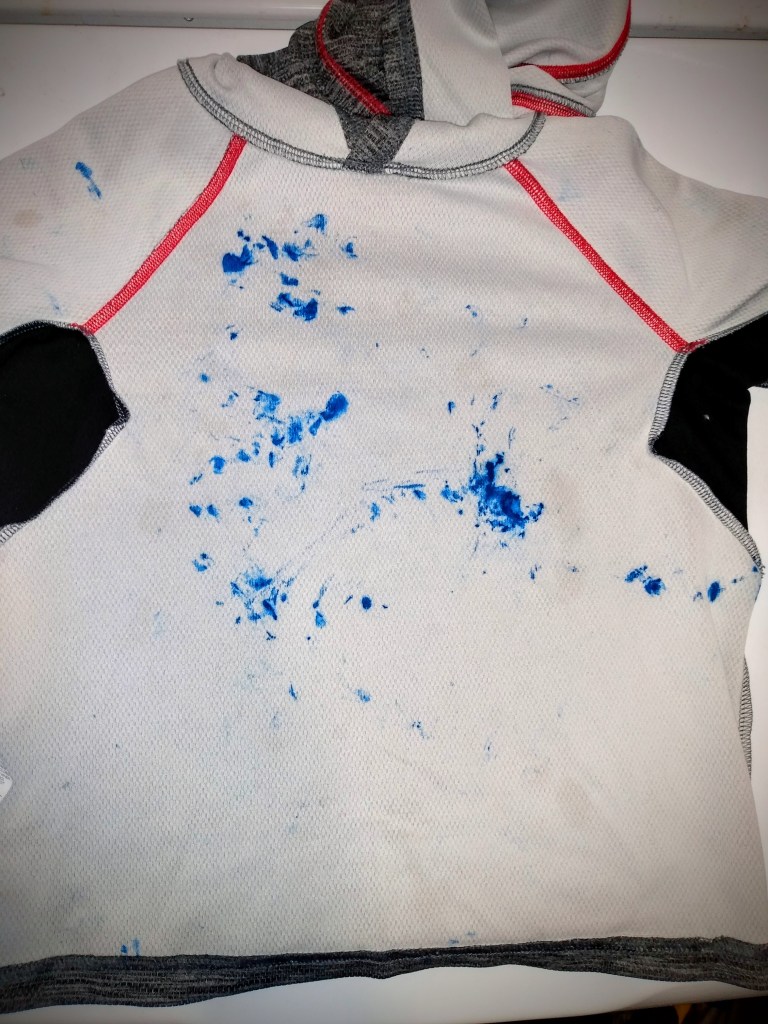


The second run of this athletic shirt removed minimal amounts of crayon wax that was left on after the first run. I resolved that I wasn’t going to be able to get any more out.
I followed the same procedure above.
Here is the change of ingredient measurements.
- 2 Cups Washing Soda
- 2 Cups Vinegar
- 3/4 Cups Dish Soap
The Results
From the second load, there was nothing that I needed to rewash a second time (like I had to do with the first treatment load). And you see the results of the first treatment load that went through the second treatment.
I hope there’s not a second time where a crayon goes through my laundry. But let’s be honest. I still have young kids so there’s still a chance.
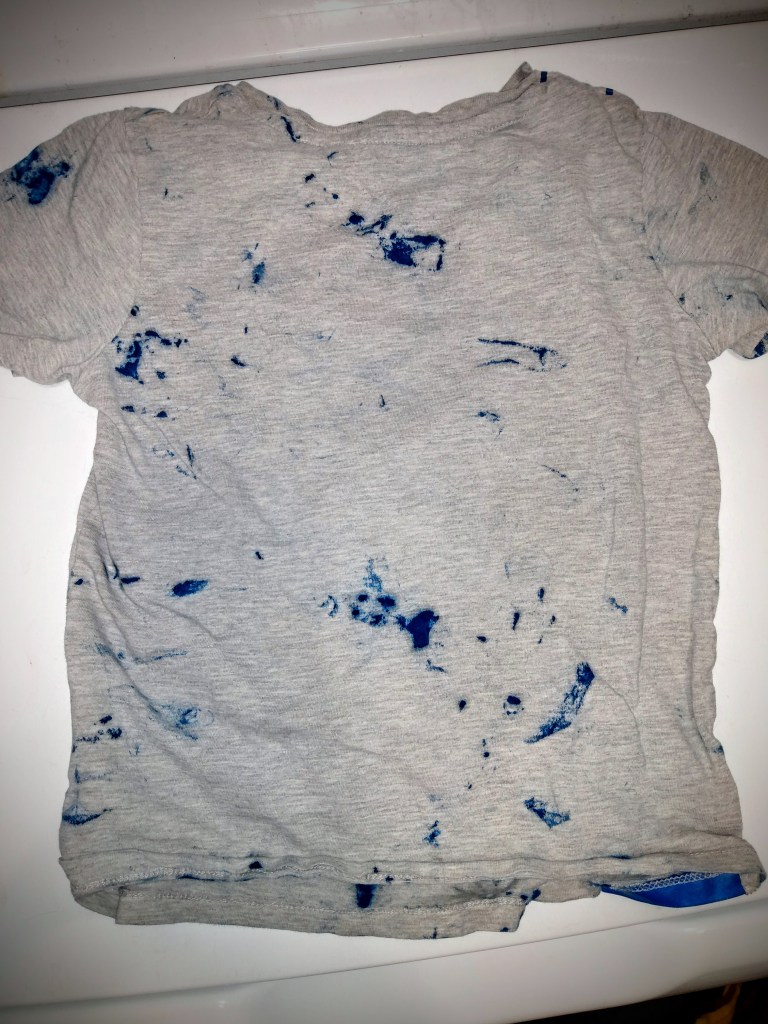
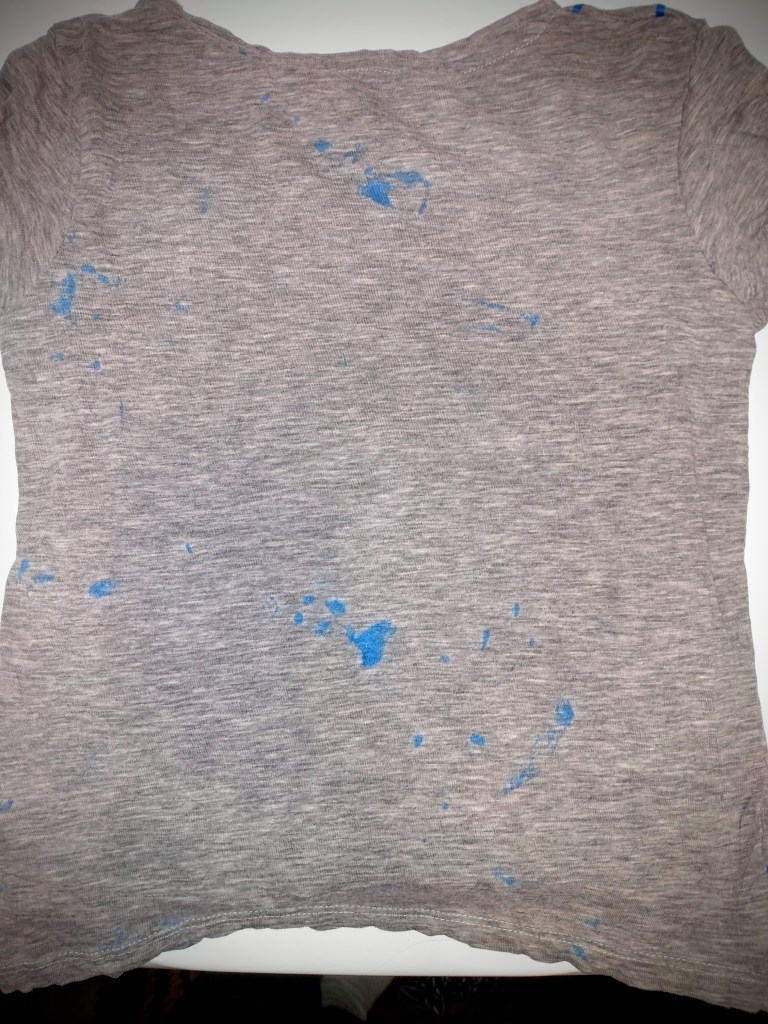
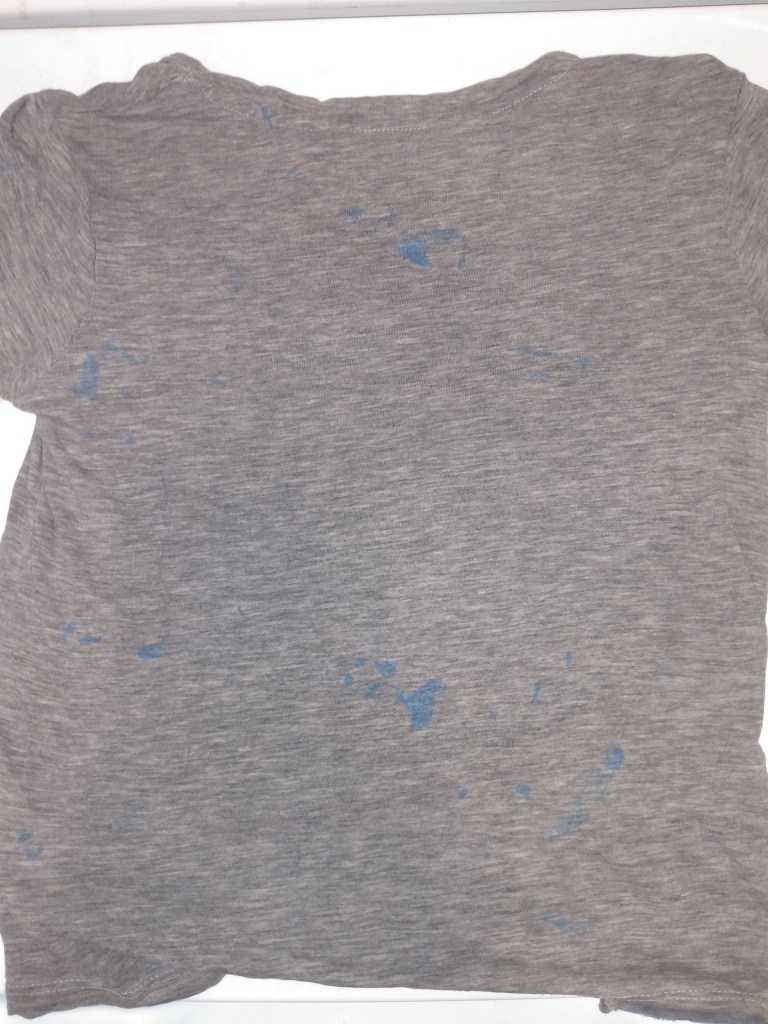
There was an improvement on this t-shirt. However I was unable to get everything out. But my kids have worse stains from pens and paint that this was livable.
Should I need to deal with crayon damage, this is the recipe that I’m going to use and why.
- 2 Cups Washing Soda
- 2 Cups Vinegar
- 1/2 Cup Dish Soap
For treating the crayon damage, the washing soda and vinegar proved to be the combined more active ingredient over the dish soap. The increased dish soap amount made the clothes crispy in clothing feel when I pulled everything out of the washing machine. This is classic for when you’ve used too much soap/detergent on your clothes.
More does not necessarily mean better. And in this instance, my initial thoughts, expectations, and hypothesis were wrong.

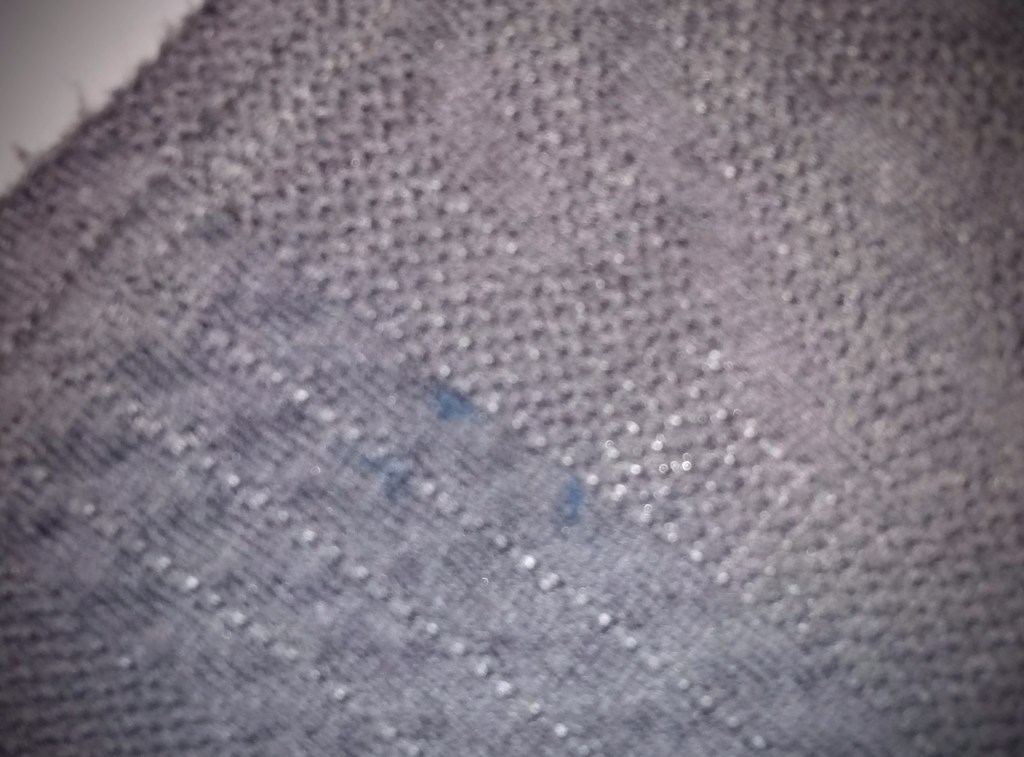

I was most happy that this sweater had all the crayon wax removed. After all, this was the gift that I spoke about at the beginning of the post.
With the dish soap, even with the first load the fragrance was so strong that even a half cup was either already too much or at the top end of how much I should have used for the size of my washing machine. And if you’ve ever washed dishes by hand, you are aware of how little of a good soap that you need to use in your sink. I’m going to say that the same is true with using it as a treatment for your clothes in a washing machine.
Does the fiber content of your clothes make a difference???
I literally had no idea that I was even going to be answering this question when I set out to fix my laundry. But I did notice a difference.
What I found extremely noteworthy is that crayon wax does not want to let go of natural fibers!
The athletic pants was the most synthetic of the clothes that were most damaged by the crayon. And even with the first treatment, it pretty much came out. The cotton shirts did not want to release all of the wax. And one item I didn’t document (because I didn’t catch them until after I was done and folding all the laundry after being dried) was my bamboo socks. The socks were 100% bamboo and did not let go of any of the wax that it got from blue crayon.
I don’t have the answer for different fiber content of your affected clothes. But I did want to mention that this one fact will play in how easy or difficult it is get crayon wax out of your clothes. Synthetic fibers appear to let the wax go the easiest. Natural fibers appear to need more aggressive modes of getting the wax out, if you’re looking to fully remove it.
Other Options
There are other options out there that people say work for removing crayon wax from your clothes. They seem to mostly comprise of using chemicals to remove them. I’ve seen people use industrial strength degreasing cleansers (primarily used on clothes usually being cleaned from automotive oils stains) and acetone nail polish.
For me, I’m not willing to test these ones out on my clothes because I don’t want to accidentally burn a chemical hole in my clothes. And I’ve been in the process of trying to remove any chemicals from my clothes and skincare products because our world is inundated with chemicals that bombard our skin and health.
I know that not everyone shares this sentiment. So I wanted to put out the other options out there for those who do not have those issues with using those products and want to try to fully remove crayon wax. Or maybe you do share the same sentiment, but a beloved heirloom table cloth or baby clothes got damaged by crayon. Sometimes there are just instances where the personal risk is justified over your everyday choices.
What are you go to remedies for damages done in the laundry?
Paint, pen, grease, wax, etc.
 How I Can Do That
Leave a comment