
With the growing list of food ingredients that people become sensitive to, it’s easy for families to kind of go numb reading ingredient lists. Not only is it difficult to read the chemical name of some of the ingredients (let alone answer the questions, “Why is this in here?”), but some families are now asking, “What isn’t listed?”
For example, natural flavoring is listed as a single ingredient but can actually incorporate up to 200 different ingredients. It’s a shady practice, because it could be something as simple as a proprietary blend of herbs. Although it’s more likely the summation of chemicals used for extractions of certain elements for flavoring. But how is a family to know what chemicals or processes were used and make the educated decision if this is something that is harming the health of a loved one?
So whether you’re looking to cut some corners in your grocery budget, trying to eliminate ingredients in your diet, or simply wanting to eat more simply (knowing exactly what you’re cooking with, able to say the ingredients, and other reasons) you can make basic kitchen ingredients from scratch. Bullion is one of those ingredients that you can make in advance and have it in your pantry waiting for you to use!
First Make Your Stock
I’m going to move forward here with making chicken stock and turning it into chicken bouillon. However you can do this by making your own beef stock or vegetable stock. (And I just want to say that when you make your own vegetable stock, it actually has more flavor and tastes a thousand times better than what you will buy in your local grocery store!)
There are also a few different ways that you can cook your stock. You can make stock on stovetop, in a slow cooker in your oven, in a crock pot, or a pressure cooker. The only difference is going to be the amount of time you commit to. With the exception of the pressure cooker, you will want to cook low and slow to release all the nutritional benefits of your ingredients. A lot of influencers, bloggers and You Tubers will encourage you to make a stock in a short amount of time. Of course it is possible, but I want to encourage you to take the time and cook your stock ingredients out.
If you’re making a bone broth, cook it so that you extract the marrow from the bones. If you’re cooking vegetables, don’t assume that because you’re not extracting marrow that you can get by with less time. Check out my post A Touch Bitter? where I specifically talk about vegetable stock.
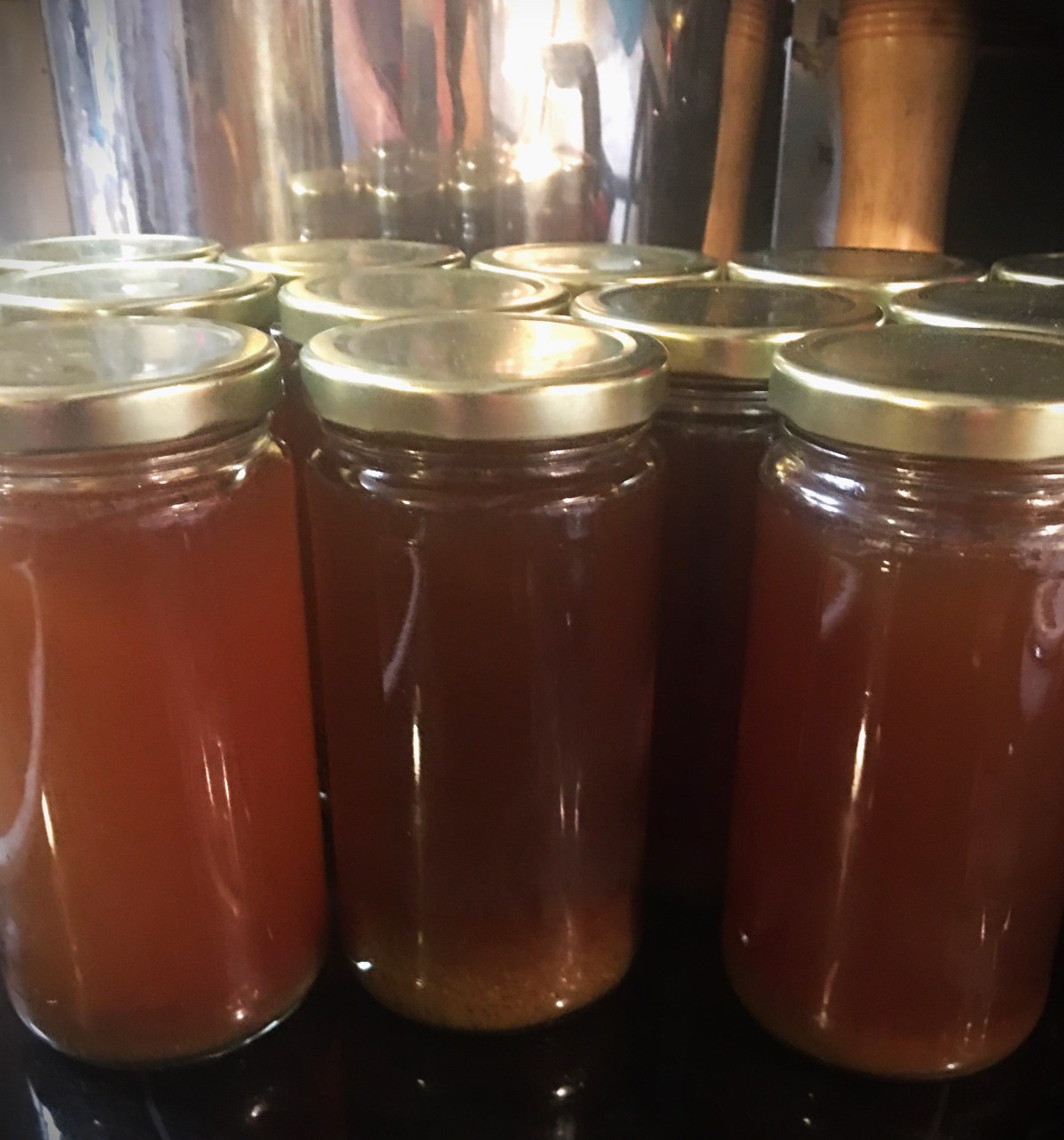
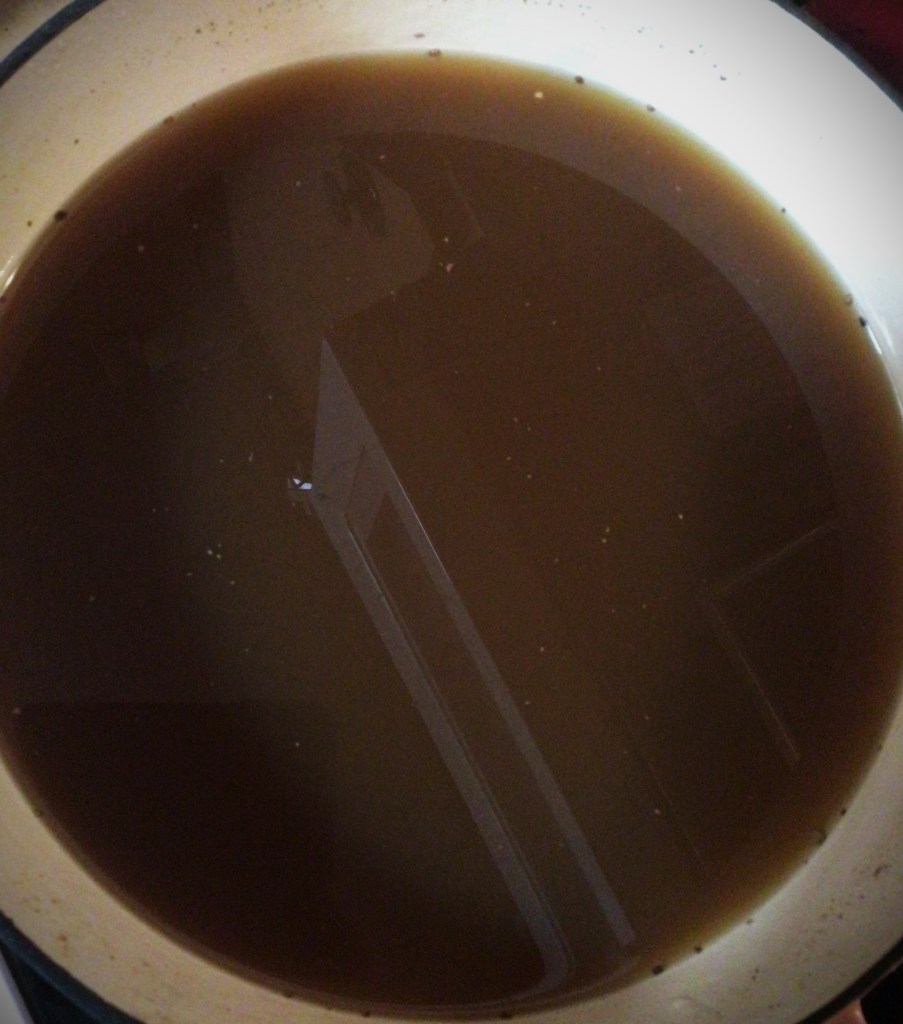
You know that you have a good and flavorful stock when it has rich and dark colors. The color comes from all the nutrients that you cook out from your original ingredients.
My Chicken Stock
I’m going to be honest with you here, daddy taught me how to cook by following a recipe. But I inherited a wild cooking hair from mom, where we improvise. I cook by smell, then by flavor, all over what a recipe says. I’m working hard to make notes on my recipes to find a strong base that is pretty average for how my recipes go. Just know that when I have chicken bones to use, I literally use the ingredients that I have on hand. And just like your kitchen, there are ingredients that I run out of. I don’t go to the store for missing ingredients. I run with what I have.
Here’s what I have standard in my kitchen:
- onion skins (kept in a vegetable food scrap bag in the freezer)
- garlic skins (vegetable food scrap bag)
- stems of herbs that dehydrate to make my own dried herbs (vegetable food scrap bag)
- dehydrated herbs from my garden (oregano, basil, lemon balm, sage, parsley, chives and others)
- dehydrated herbs that I have yet to successfully produce in my garden (ginger, tumeric and others)

General Recipe
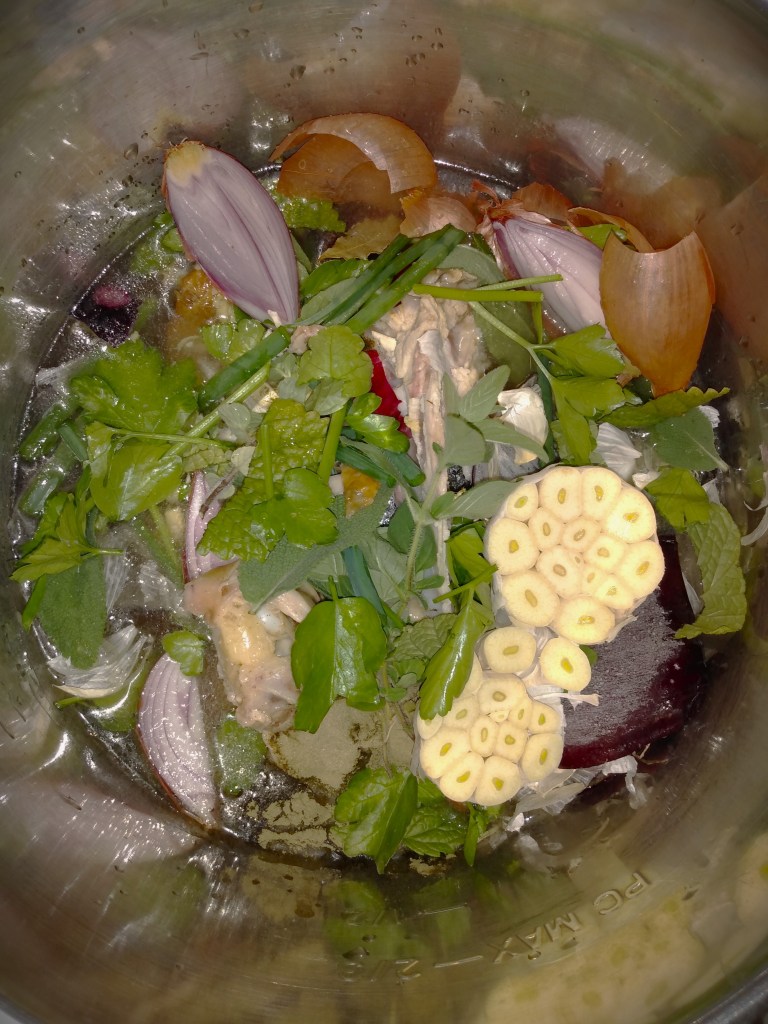
In my 8 quart instant pot I add:
- the bones of one whole chicken fryer
- if the chicken came with gizzards, I cook the gizzards here in my stock.
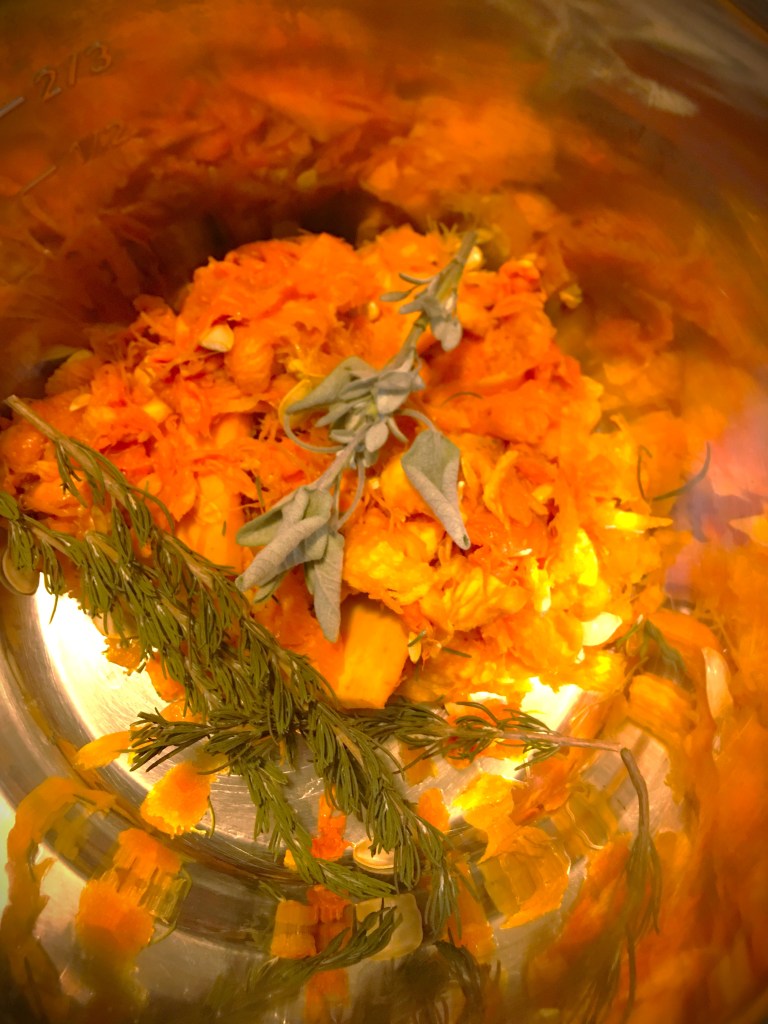
- the vegetable food scraps from my freezer (ideally I aim for the skins of about 4 onions, the skins of 2-4 garlic heads, half a bunch of leafy herbs)
- herbs from my seasoning shelves (including salt and pepper)
- filtered water that fills my pot up to it’s Max line.
The herbs are generally where I run out of supply and have to improvise. If I have everything the herbs that I like to add are:
- Ginger
- Bay leaves
- Lemon balm (fresh will give you more of a lemon flavor, dehydrated will have more of a green tea lemon flavor, use according to which type you’re using. I like going heavier on the fresh lemon balm)
- Rosemary
- Oregano
These herbs I go heavy on. If I’m out of any of these, I improvise using other herbs. Sage I use sparingly because it’s such a potent herb. Cilantro I use sparingly because I have family members who dislike the flavor of this herb. So I keep this one low in quantity to still get the nutritional value, but the flavor is not prominent at all. Fresh cracked pepper I use in varying levels depending on what my stock is currently at. Salt, I try to remember to add, but half the time I forget. Because the flavor of salt is not extracted, like herbs, I have no problem seasoning with salt once my pressure cooking is done.
I set my instant pot to pressure cooking, on high, for 3 hours. (No matter which stock type I’m making, I don’t ever go less than 3 hours.) This is what gives you full extraction.
Making Bullion
Once your broth has finished processing, you strain out all the ingredients. With a vegetable stock, I go ahead and compost the vegetable bits that I strain out. With bone stock I strain out all the bones and vegetables and they are thrown out.
If you’re making vegetable bullion, you can cool your stock down to room temperature and then move forward with the next step. If you make a bone broth (chick, beef, venison, goat, sheep, etc.) you will need to cool your broth off over night in your refrigerator. The exception is if you have a fat skimmer that can separate the fat out from hot broth. I do not. So I refrigerate my stock over night.
Once the fat layer has formed on your chilled broth, you skim the fat off of the broth.
You have to skim off of the fat, because when you make bullion you want to have a long shelf life. Fat is the limiting factor in shelf stable food. It will go rancid before anything else goes bad. So by removing the fat, you ensure that you have a long shelf life for your bullion.
When my chicken broth is been skimmed from fat, I grab my jelly roll trays for my dehydrator and set my dehydrator up where it’s going to process the broth. The reason why I set my dehydrator up in location and fill the jelly roll trays on the stacked racks is because the broth is going to run to lowest point. There is not going to be an even layer of broth. So I fill in place and pour the stock until I reach the lip at one point on my tray. This will maximize the amount of broth I can process at a single time.
Dehydrating liquid hack: before placing your liquid on the jelly roll trays put it in a sauce pan and reduce the stock. By evaporating the liquid down, you will cut down on your dehydrating time and save space in your dehydrator.
I run my dehydration temperature at 140-145°F until the broth is crispy like this. Dehydration time is going to vary depending on if you reduced your broth first, the temperature you dehydrate out, and most importantly the thickness of where your broth pools. The thicker sections will be gummy to touch until it’s properly dehydrated. The thinner bits you can leave as is. Or when you check on your progress, you can used a silicone spatula to push the thinner bits in closer to the thicker bits (this makes it easier to remove the thinner sections when you’re finished dehydrating).

In the center of my jelly roll try, you’ll see that I put my coffee/herb grinder in the center. It makes it easy to brush the chunks and bullion dust into the grinder. When the container reaches its limit I remove the tray, cap the grinder and run it for about 10 seconds. Just long enough for the broth to turn into a powder. The bullion powder I put directly into my mason jar that I’m going to store it in.

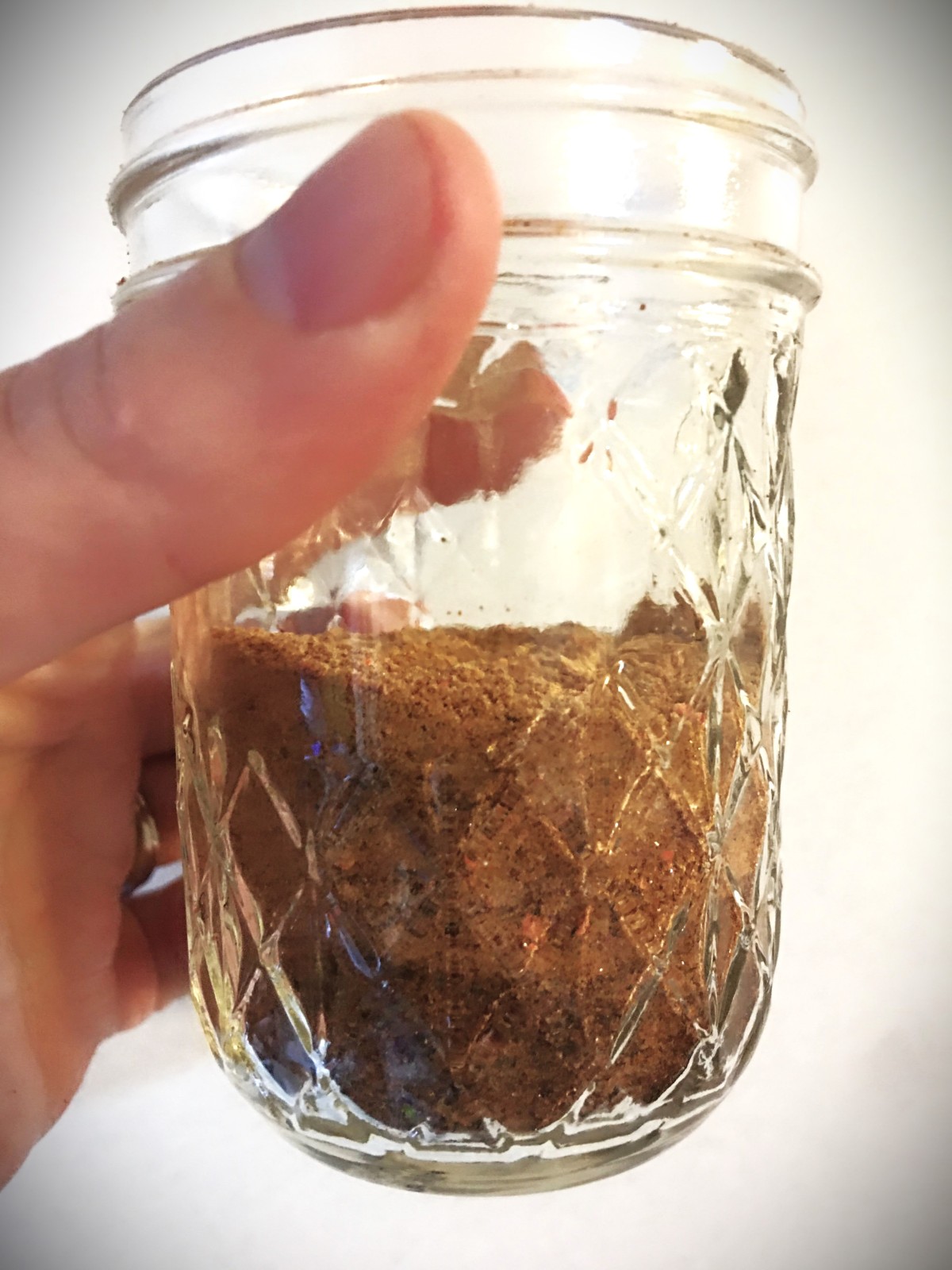
Just so you won’t be alarmed, what you see in this 1/2 pint size jar is what my 8 quart size instant pot produces. My first time making my own bullion, I was disappointed that it didn’t make more. But that disappointment disappeared when I tasted the bullion. You will not be disappointed with the intense flavor!
This is perfectly save to keep in your pantry or in your spice cupboard.
Personally I have a tiny kitchen, so I keep my bullion on the top shelf of my fridge. The bullion usually doesn’t last my family a year. Although there was a time where I needed to free up some jars and use my canned chicken stock, so I had one batch of bullion powder in my fridge for about 2 years. It was still fresh and flavorful when I went back to finish this bullion off.
Comment below and tell me how you like this space saving flavorful bullion.
How does it compare to what you’ve previous bought from the store?
This post contains affiliate links to products. We may receive a commissions on products purchased through these links, but at no extra cost to you. These items listed here are from Amazon but may be purchased at local markets.
If you don’t have a current dehydrator and are looking for one, I have been very pleased with this dehydrator. This was an upgrade from my very first dehydrator, but still on a budget. If you’re in a tight financial place, with today’s economy, this is the one that I highly recommend. Not only was it a great price, but it also included jelly roll trays for each rack (something that can’t be said with other budget units)


Herb Grinder Elictric has been great for keeping all the ground herbs/boullion contained in the grinding bowl.






 How I Can Do That
Leave a comment