Meaningful Gifts

Happy Mother’s Day to all the moms who are celebrating today with their children, the moms who are missing their children, the moms who have lost their babies far too early, those who shared an all too brief moment with their babies, the mothers who are in the middle of a season of making the dream of motherhood a reality, and those who love on the children from other mothers who lean on you to be the loving assurance in this season of their life. No matter what motherhood looks like to you, Happy Mother’s Day!
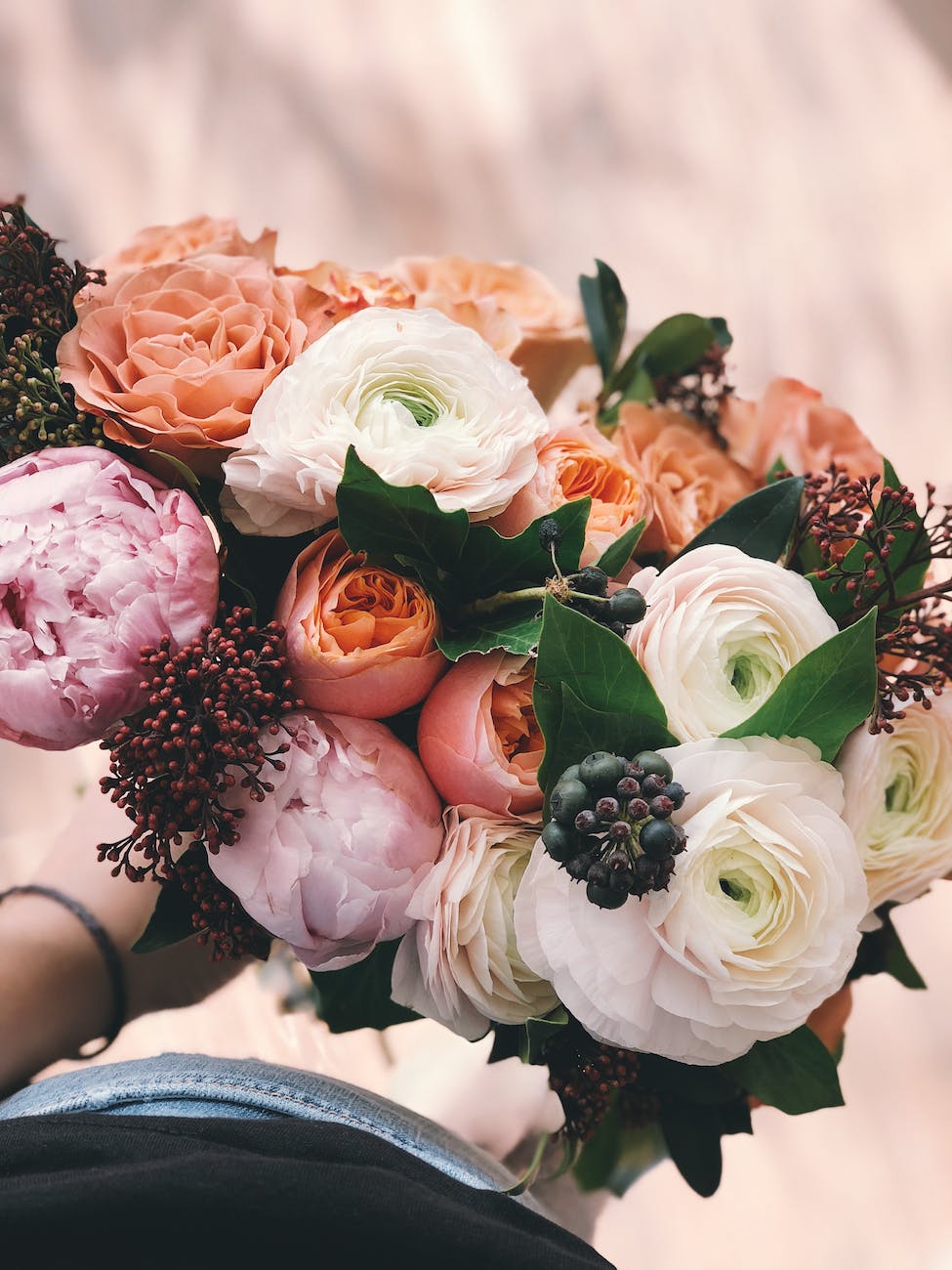
Photo by Secret Garden on Pexels.com

Depending on who you talk to, some people feel that holidays are too commercialized. Others find it difficult to find the perfect gift. And others find it difficult to gift a loved one while feeling the financial pressures of this season of world history. No matter where you personally find yourself on this spectrum, I want to help you find inspiration on how you can find a meaningful gift for someone. Whether it’s a belated mother’s day present, a birthday, anniversary, father’s day, grandparents’ day, teacher appreciation, graduation, or any other occasion, know that you can gift in a meaningful way.

I’m going to use the example of the mother’s day gift that I gave one of the mothers in my life. While this may not apply to the person in your life, the same principle can be applied in finding what you can gift that special person in your life.

This mom loves talking about her memories. For many years she’s shared her precious memories of when she operated a daycare. And one of those fond memories is when she grew gardens with the children under her care.
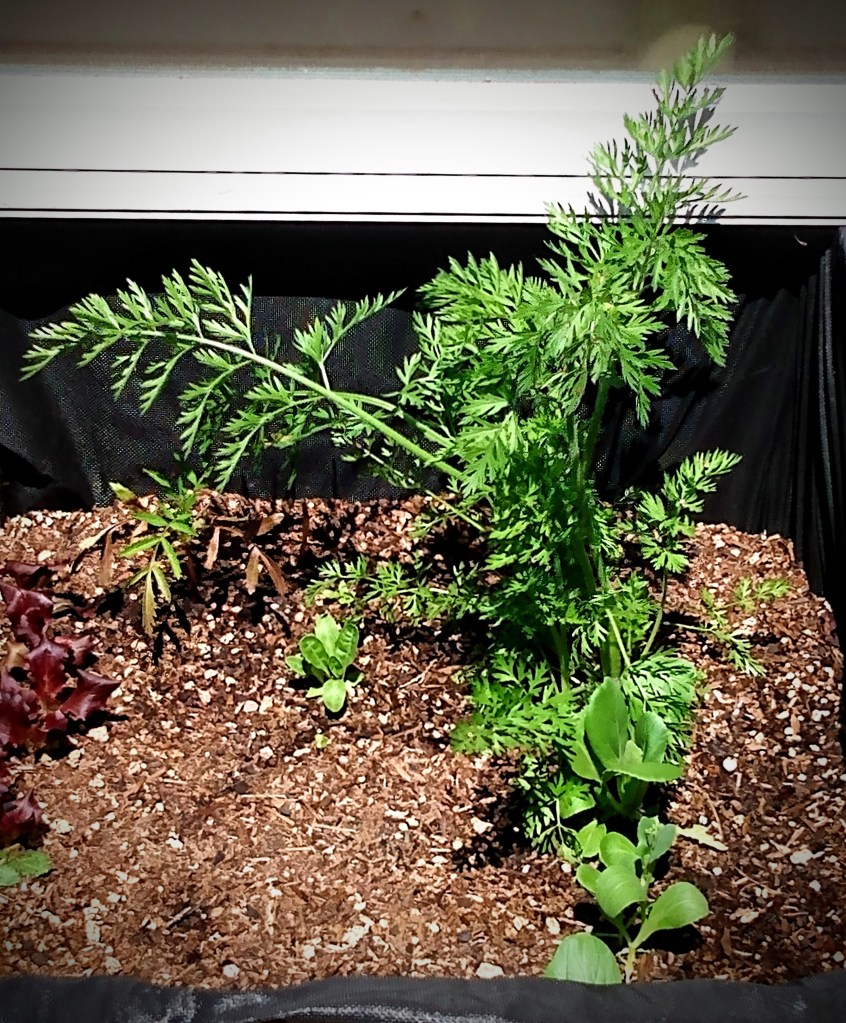
Growing salads in a container box.

One thing about moms, it seems pretty universal that sharing memories usually isn’t about the memory. It’s about reliving a moment in life that brought pleasure to them.

From this understanding, I knew that building a garden for this mom was a gift that would fill her love tank. Not only is it an opportunity for her to relive precious memories in the here and now, it also opened the opportunity to add more memories in association with these older memories. By building a garden and scheduling time to upkeep and tend to the garden, it was also guaranteeing visits and making time for her to spend time together.
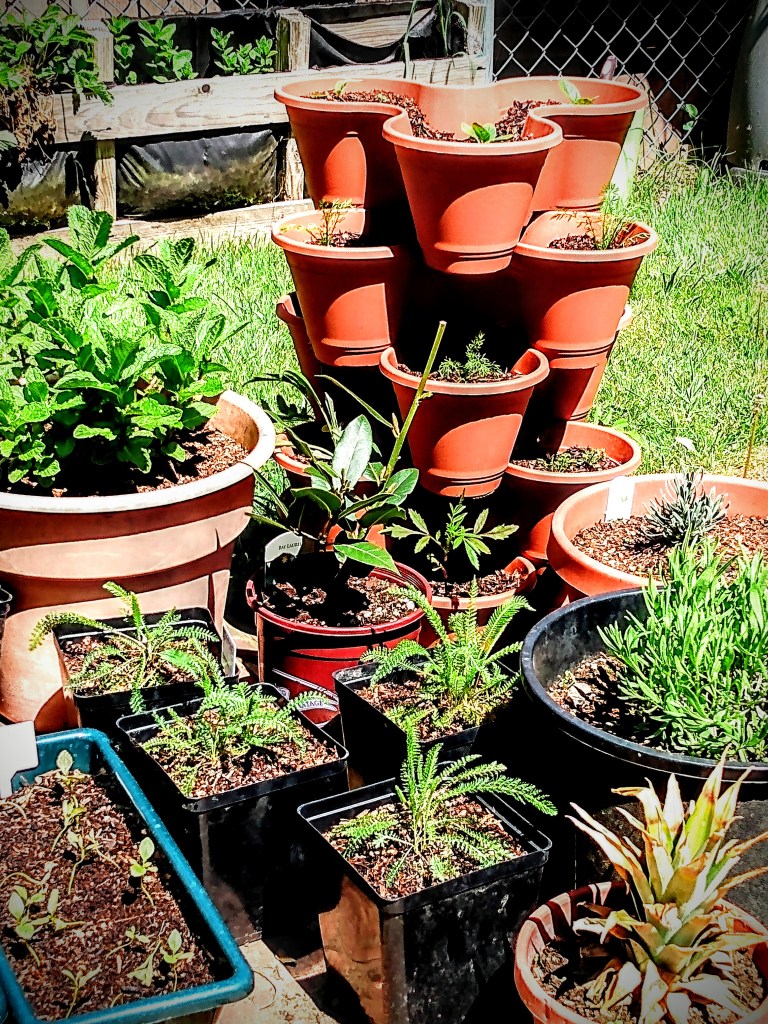
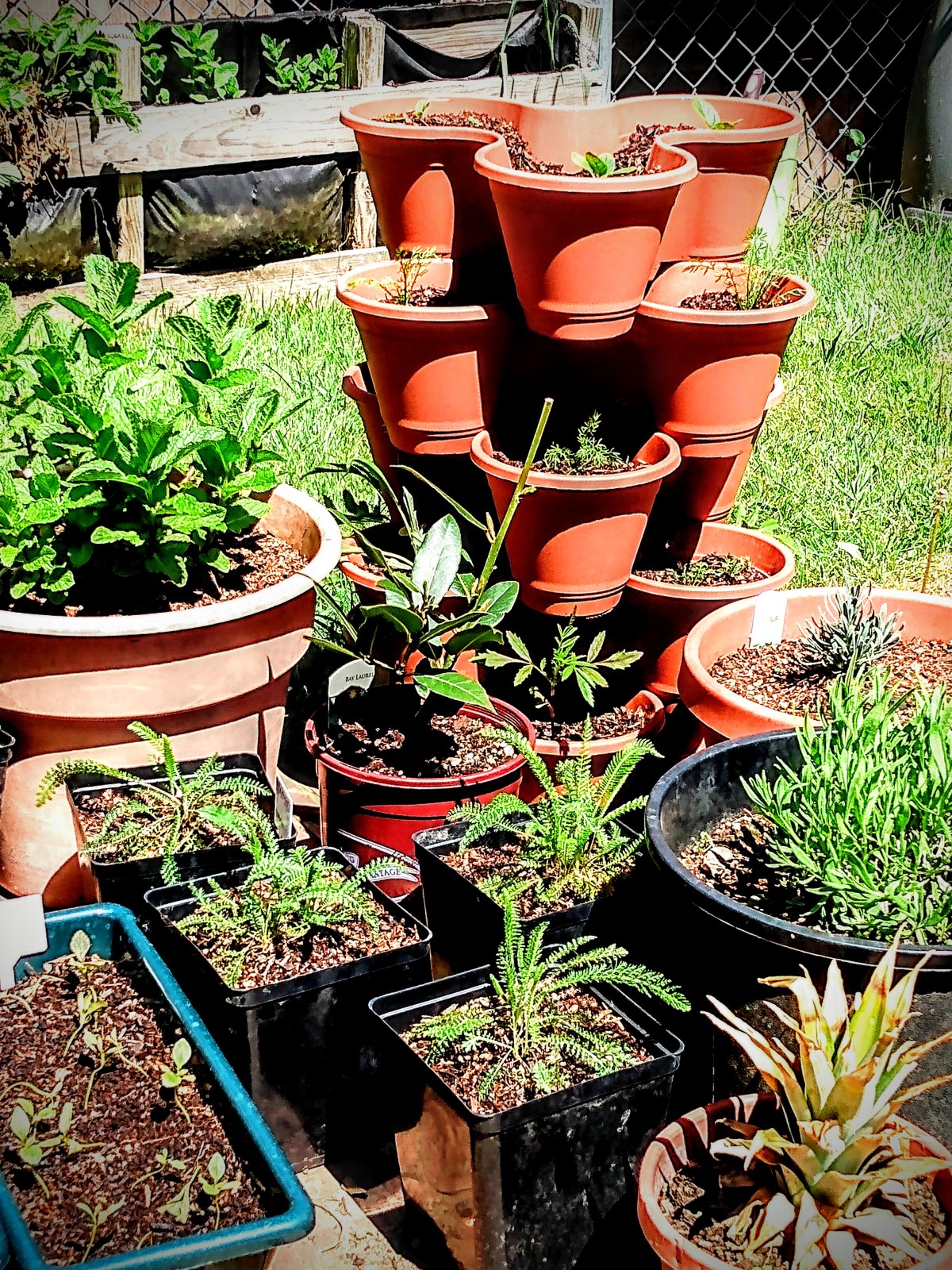
Container growing for small spaces.

For this mom, she has two love languages. Her primary love language is gift giving. Her receiving love language is quality time.

Making a deposit of part of this season’s garden was not just a simple arrive, dig holes, put in start, say good bye, and move on with the day.

Advertisements

For this Mother’s Day gift, it took in the appearance of leaving all the gardening supplies in the car and starting off with a sit down chat and getting caught up with all the news, even if it was only a day since we last saw each other. Then, I was able to go prepare the garden beds for this first plant installment.

Even before I could bring out the plants, this mom was already so filled with love that she wanted to spend some more talking. As much as I wanted to stay task driven (my personality is to knuckle down and get a project done quickly so I can move on to the next task), this day was all about showing love to this mom.

Pallet boxes for narrow spaces and hanging baskets on cyclone fence

So we had another chat session.

When I could find a polite moment to get back to the task of putting the starts back into the ground, I made that move. And with the final post plant watering, I went back and gave this mom one last extension to the gift I was giving her.

Remember, I said that this mom shows love to others by giving to them. So while I was building this garden for this mom, I know that the one thing that would bring her even more pleasure is by telling her upfront that the goal of this garden is primarily to meet her primary produce needs, I’m planting more than she will personally need so that she can give from the garden to others.

I wish I could share with you the look on her face, because she was bursting with love. Knowing that she was having a garden this year was more than enough to help her feel love, she felt seen and more loved because the gift was enabling her to show love to others without need to be reserved or anything else. It was a gift that was freely given so that she could freely give to others.

Growing herbs in repurposed gutters hung on a cyclone fence.

I know that this story may or may not show you specifically what you can give the hard to shop for person, but there is a valuable lesson here.

A good gift is designed to make a person feel loved because it speaks to how they most readily feel loved.

If you don’t know this love language, ask your person how they most feel loved. They will gladly tell you. It could be a tangible object or food that makes them feel loved. Or it can be a non-tangible activity, expression, or display.

A great gift is one that fills their love tank, but also doubles as a tool to enable them to share their love with others.

Container growing garden with DIY budget friendly or recycled components. Chicken wire trellis threaded through upright supports.

Maybe your loved one is not like this mother. Maybe they don’t show love to others by giving them things. Maybe they show love through acts of service. However their schedule is busy. By gifting them your time to do tasks for them or help them create time, this can free up time where they can show love to others by spending time with another person.

My encouragement to you today is to be inspired with a gift idea that doesn’t come from the shelf of a store. Yes, there are many store bought items that are amazing and meaningful. I want to strike the inspirational fire to give a gift out of love and seeing the other person at a core level. And also enable them to pass on love to others.

Advertisements

Right now we live in an interesting moment in history. It is an uncertain time for many families. But it is also a prime moment to celebrate others by giving to them in a way that shows them that you remember past conversations. Where you have heard and remembered things that could have easily been passed off as trivial information in the moment.

Let’s show our loved ones that we see them. And we celebrate them for who they are.

Again, Happy Mother’s Day!

publicdomainpictures.net

This post contains affiliate links to products. We may receive a commissions on products purchased through these links, but at no extra cost to you. This item link is to Amazon but may be purchased at local markets, and found at your local library.

If you are unfamiliar with Love languages, here is the book that started it all.

The Five Love Languages by Gary Chapman

Originally this was written for understanding your mate. There are several other editions available to meet other relationship needs such as children, being single, and in relationship of a military service member.
Processing…
Success! You're on the list.

Leave a comment

Advertisements
Advertisements
Advertisements
Advertisements

Cake Dreams

One of the memories that we are so quick to build are children’s birthday parties. So how do we make memories that last?

Make a cake!

I can’t begin to tell you all the cakes that I remember through the years. There’s the Holly Hobby cake my mom made from me (a popular baby doll from the 70’s). There was the cake that got locked in the trunk on my sister’s birthday. The cakes my sister’s and I made for our parents because finances were tight but the box cake was a big way we could show they mattered. The cake my husband made for me with marshmallow frosting. The cakes I made for my kids.

The list goes on and on….

I could tell a life story just off of the cakes I’ve made through the years.

And I want you to know that you can make cakes that make memories without going to culinary school and gaining the education of a baker!

You can make cakes!

You can make memories!

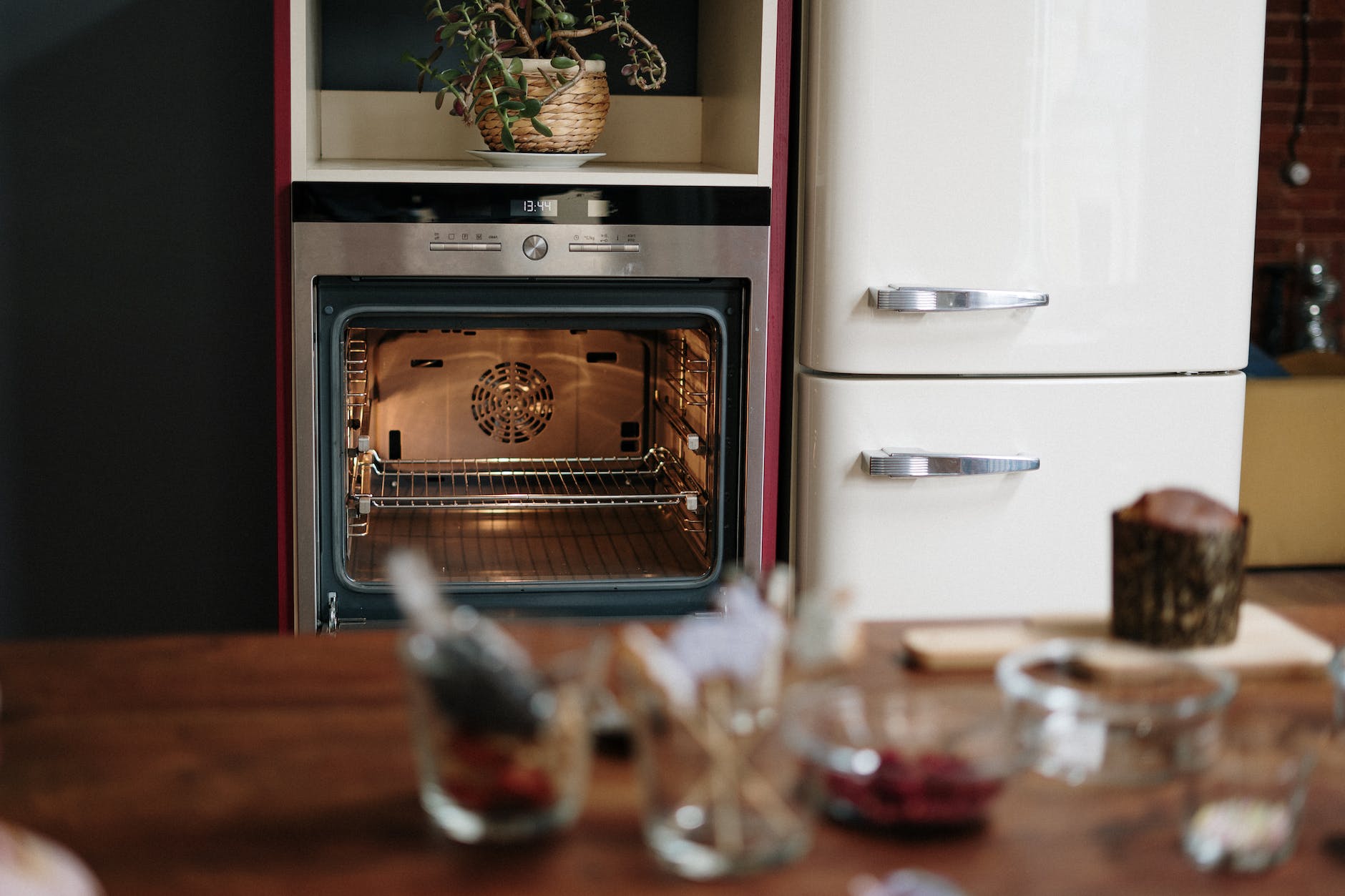
Photo by cottonbro studio on Pexels.com

Even though I have cake recipe books which put a world of recipes from scratch, I’m going to show you how you can make a memorable cake using a box cake–which is in everyone’s price range. And in this age of inflation, when you can still find boxes of cake mix for a dollar, I want that to be available to you.

Box cake mixes are great. The directions are easy enough for my kids to follow and make on their own. (In fact I just made a cake for a local mom and my boys wanted to help because they love baking cakes with me. They had to skip out on this one, but I had to promise that they could make their dad’s cake all on their own without me!)

TIP: you can test the doneness of you cake sponge by poking the cake with a toothpick in the center. When you pull the tooth pick out, and it’s dry, your cake is done. You want no moisture or batter on the tooth pick. Although you might see cooked crumb–that is still done.

Or….

TIP 2: When your timer goes off take a temperature reading in the center of your cake. When you reach an internal temperature of 200°F, your cake is done.

This particular tip is invaluable. If you’ve watched baking competitions you see people testing cakes by poking it like a chef pokes a steak. The amount of resistance tells you the internal state of being done.

The average person doesn’t know what a done cake feels like. We can easily
learn the feel of an under done cake and an overly done (and dry) cake. I’m
going to save you the head ache and just tell you that you only need to reach
200°F and your cake will be perfectly done no matter what. This works for all
elevations. AND it gives you a more accurate unit of measurement to direct you
in how much longer to cook your cake when it’s under 200°F.

Now that you know you do not have an undercooked cake, you’re halfway done.

Some people find the cake (or sponge) cooking the most intimidating. Others find the frosting to be intimidating. But frosting a cake doesn’t have to be intimidating either, because I’m going to show you a trick that I used with the Pinterest inspiration picture that was given to me for the cake I made the other day.

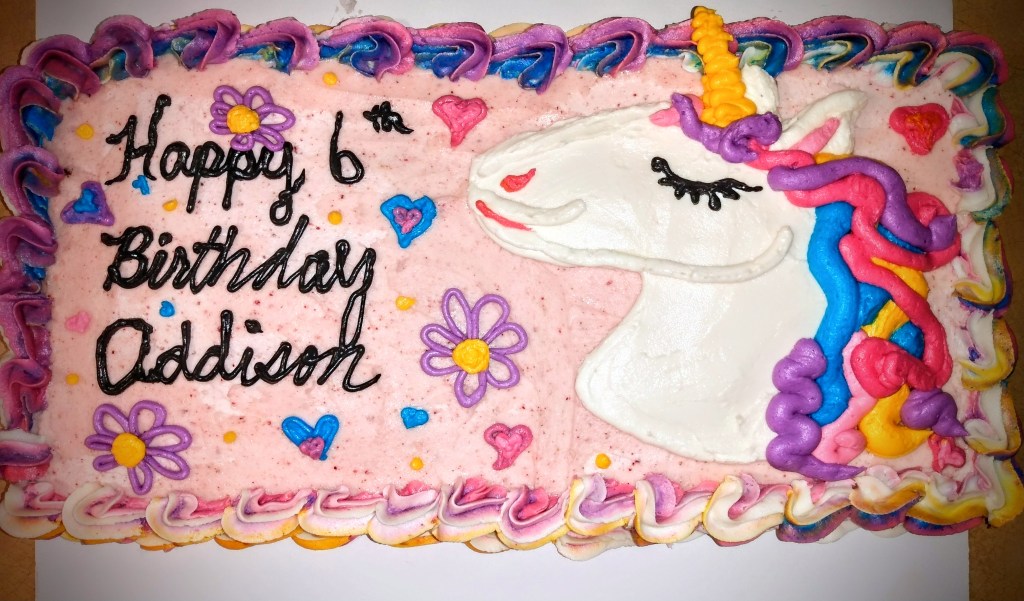
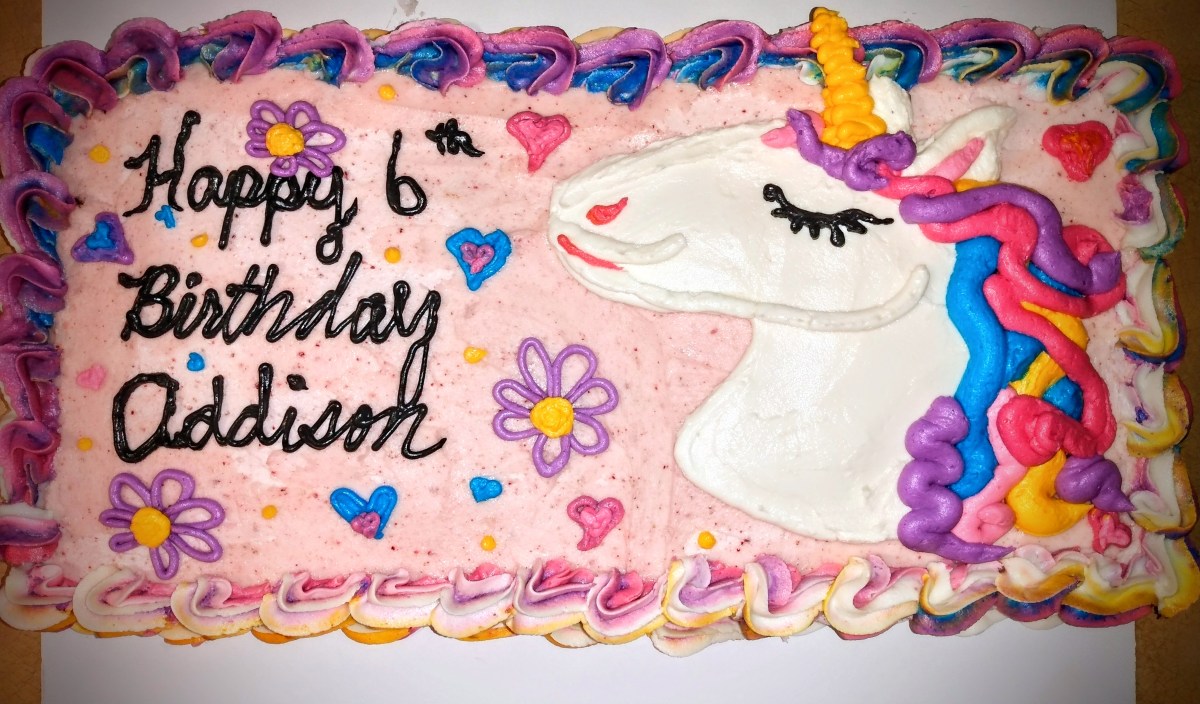
My go to frosting is formulated by Wilton. I’ve successfully modified this recipe to make it flavored. But this recipe gives you three different consistencies. I used two of these for the following Unicorn Cake that I recreated, stiff and medium. I used the medium for the filling between two layers and doe the exterior frosting. The stiff consistency I used for the decorative elements.

When it comes to coloring your frosting, the stores give you the choice of the liquid food dye or gel. The gel will give you vibrant colors for less.

TIP: If you’re a family that is conscientious about food dyes, you can still color your frosting. What you’re going to do is plan in advance and dehydrate the fruit, vegetable, or edible flower for the colors you want. Don’t worry about the vegetables. The Wilton frosting is sweet and can overpower the vegetable flavor, if that is a concern for you.

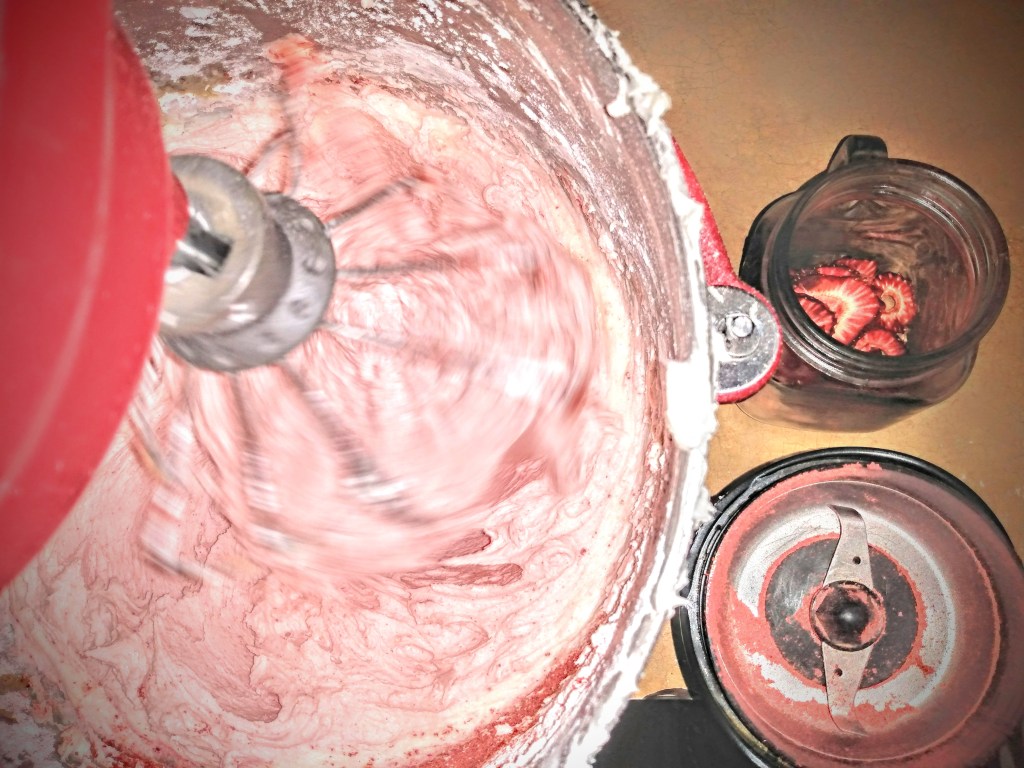
As a point of reference, it took me about half a pound of strawberries (sliced, dehydrated, than powdered) to turn a single batch of Wilton frosting pink and mild strawberry flavor. I had the pink color to the frosting long before the strawberry flavoring that was requested by the birthday girl.
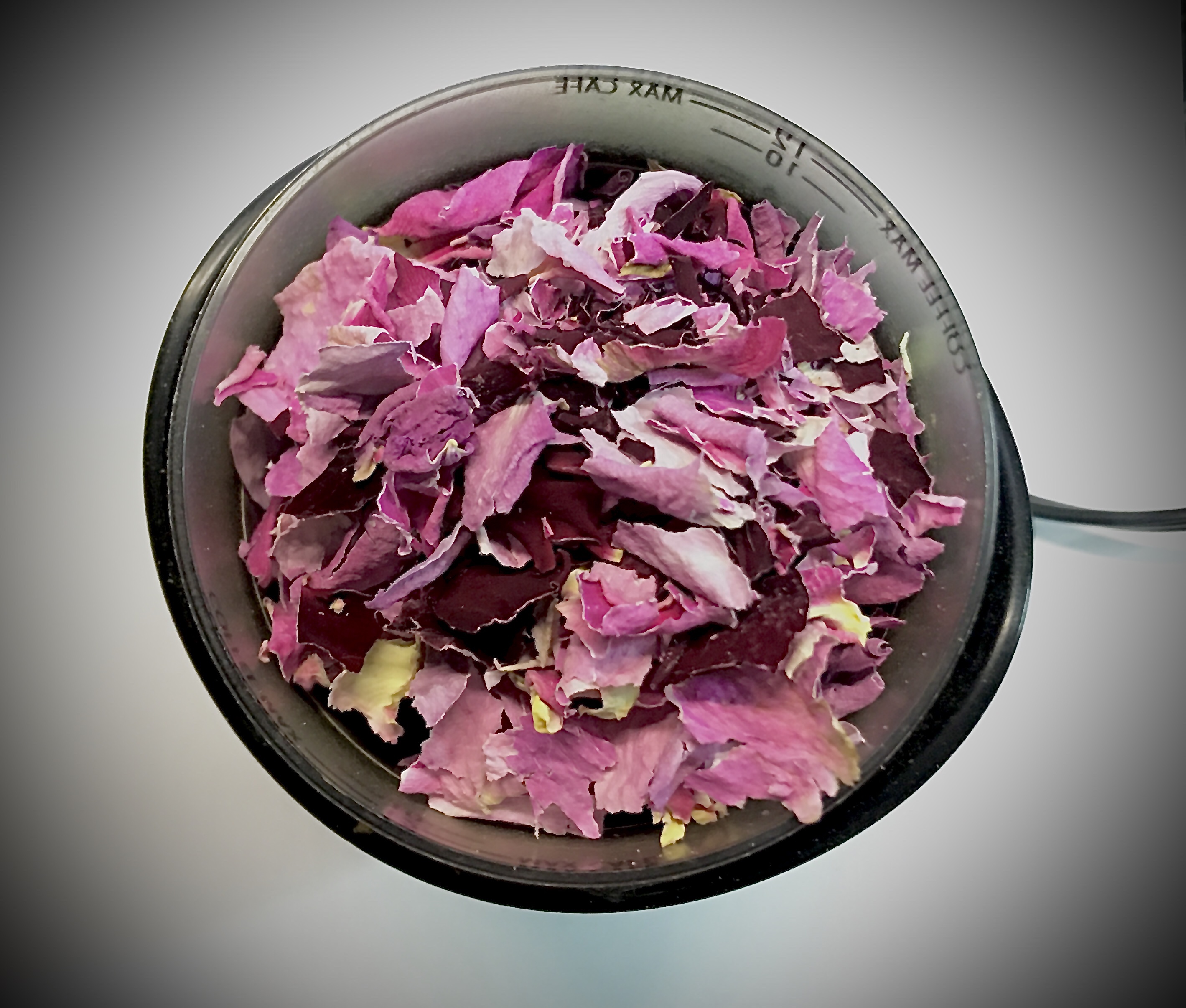
TIP: When you use a fruit with high water content, you definitely want to turn it into a powder in order to prevent your frosting from becoming watered down.

Frosting the cake is going to look a little differently depending on what kitchen tools you have available. If you can pipe the frosting onto the cake before you spread the frosting, you will be able to do a thin layer of frosting without getting crumbs of cake into your frosting.

Don’t have piping tools (pastry bag, coupler, and decorative tips), that’s okay. The trick is to take your butter knife (if that’s all you have), put dollops of frosting onto your cake, and then spread the frosting around using the flat of your knife.

The number one cause of crumbs in your frosting is your knife hitting the cake’s sponge. If you just move the frosting around, with your knife only touching your frosting, you should eliminate all crumbs.

If you still find you have crumbs, the other reason is that your frosting is too thick. This is particularly a problem with cakes that are light and fluffy. Not a problem!

If your frosting doesn’t spread easily, stop. Remove the frosting and put it back in the bowl. Add a teaspoon of water (or less) and mix it into your frosting to loosen it up. Test the consistency by trying to spread your frosting on your cake. It shouldn’t grip your cake like Velcro, but smoothly spread like mashed potatoes. Once you can easily spread your frosting, make that cake beautiful!

Want to make decorative elements, like an inspiration picture, but don’t feel confident in your piping skills? You will want this trick.

Don’t worry. You can use this trick even if you’re only comfortable using the tubes of colored frosting!

Print out your inspiration picture (with the elements blown up to the size you want them on the cake). If you have face details you want to recreate, make a copy for the body, and a second copy for the face. (The same is true for detailed that are stacked but not faces.)

For example, here’s the inspiration that I was working with.

The original creator had freehanded the design of this cake. I’m fortunate if I can draw a horse head on paper with a pencil, so I needed this trick.

I do have skills in Inkscape where I took the picture and traced the elements and made my own stencils. After I printed out the stencils I put them on top of a metal cooking sheet. To keep them in place, I used a loop of tape. Then on top of the stencils I taped down a sheet of waxed paper.

Once my different colors of frosting were put in piping bags, I started tracing the stencil lines with the planned out colors.

In the instance with the unicorn head, I made the outline, then filled (flooded) the inside with frosting, smoothing everything out with a knife to make it look like a solid piece.

When all my decorative elements were piped out, I put the cooking sheet in the freezer.

You’ll want to plan this one ahead of time. The frosting will take time to freeze. Even with the stiff frosting, you will want this to be in the freezer for at least over night.

When the frosting is frozen, you can transfer the elements from the waxed paper to the cake.

A memorable cake doesn’t have to cost a fortune. In fact, making a cake shows the person that you love them. And it doesn’t have to be perfect.

My favorite cake my husband made was the marshmallow frosting cake. And I guarantee that none of us will make that frosting again. It was not user friendly because it was a pouring frosting instead of a classic spreadable one.

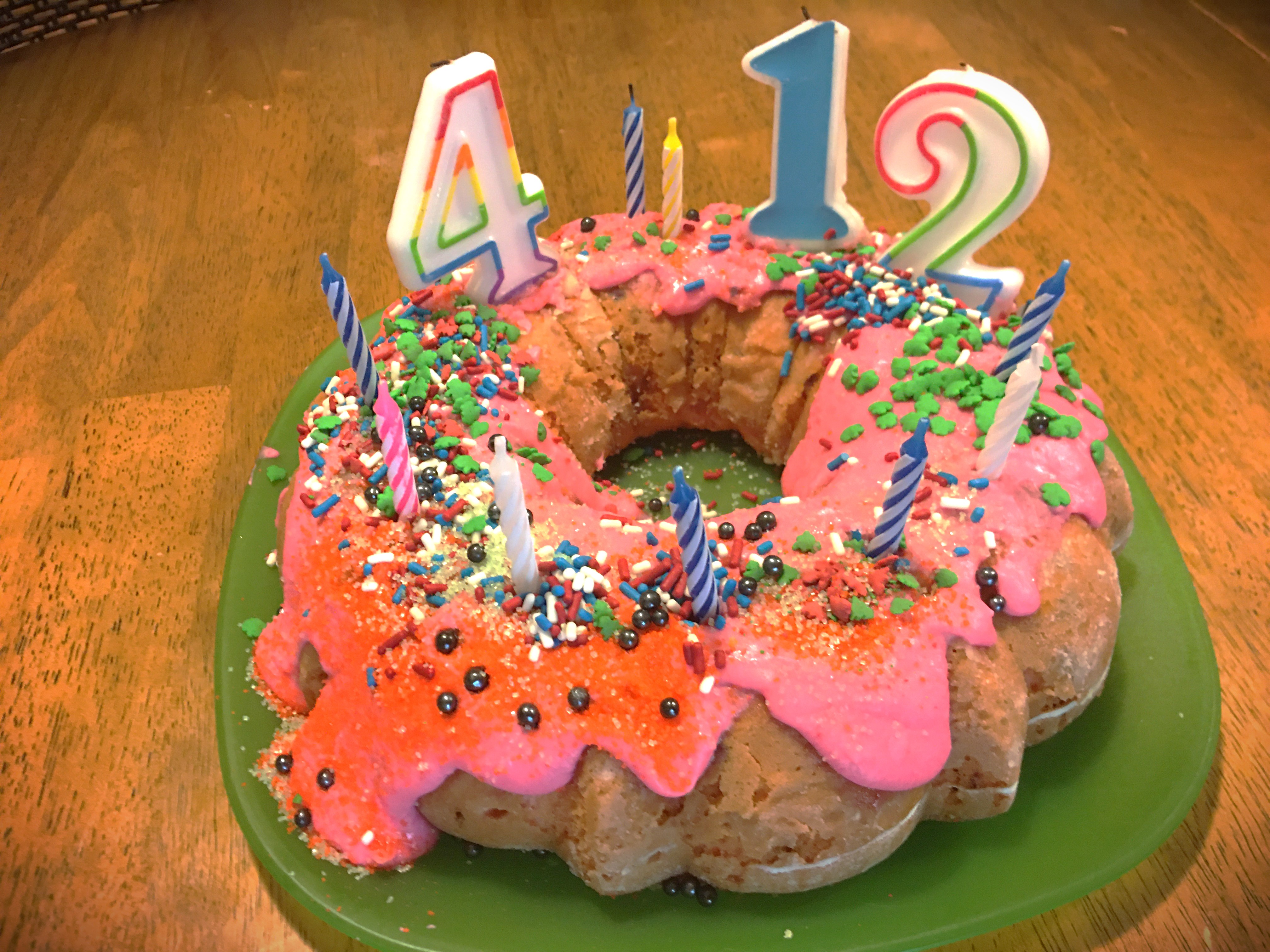
This isn’t the marshmallow frosting cake. But it is the one my boys made on their own, for me.

The most memorable cake I made was my son’s bubble cake. He wanted a bubble cake so I made a tall multi layer cake in the shape of a bottle of bubbles. That sponge would not keep shape. It wanted to disintegrate on me and there was not enough support I could put in to make it stay. Let’s just say I’m glad I made it a fondant cake, because that fondant was the only thing keeping it together. I was in tears. But my son was dancing with happiness over having a bubble cake.

I tell you these stories so that you know that sometimes the best memories come from the imperfections in our cakes. After all, my favorite childhood cake, the Holly Hobby one I mentioned at the beginning, wasn’t all perfection. I look at the pictures from that birthday and only see love. My mom looks at those pictures and sees the cramping in her hands because of all the piping that cake took. She finished that cake with tears of pain. But it meant the world to me.

So don’t be afraid to make that cake for your loved one!

It may turn out to be an imperfect but testament of love that lasts through the ages. Or it may be the cake that blows your mind because you never thought you could do it, but you did! No matter the outcome, it is always worth it to make that cake!

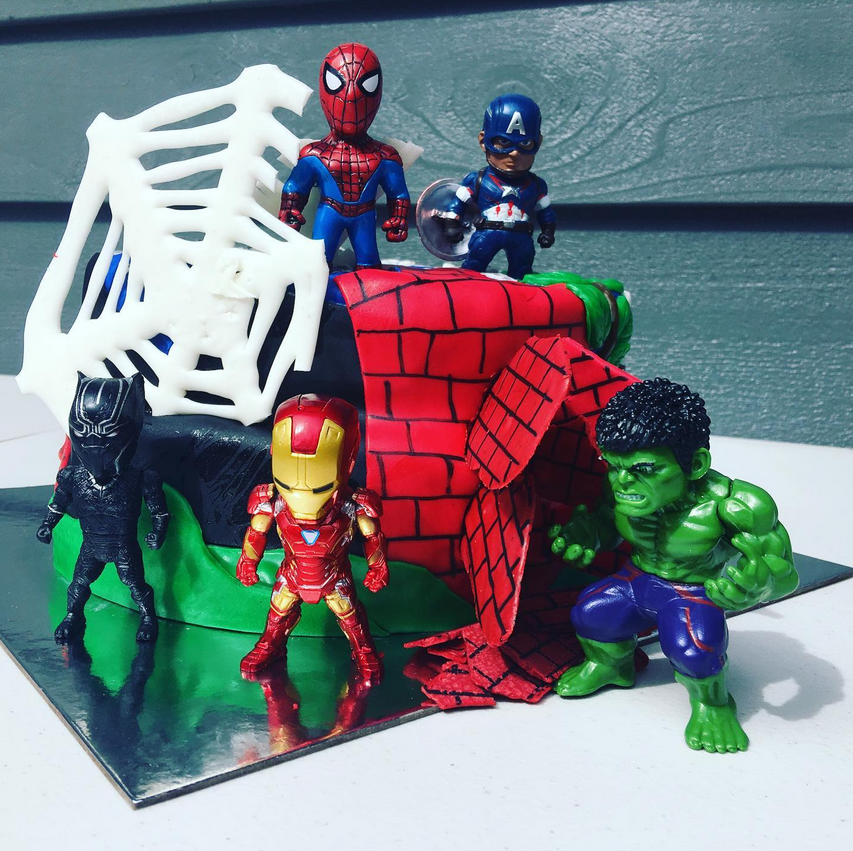
Super hero birthday

Navy Retirement Cake. Inspiration cake and my cake with the medalion that was placed against the center wave in the flag.

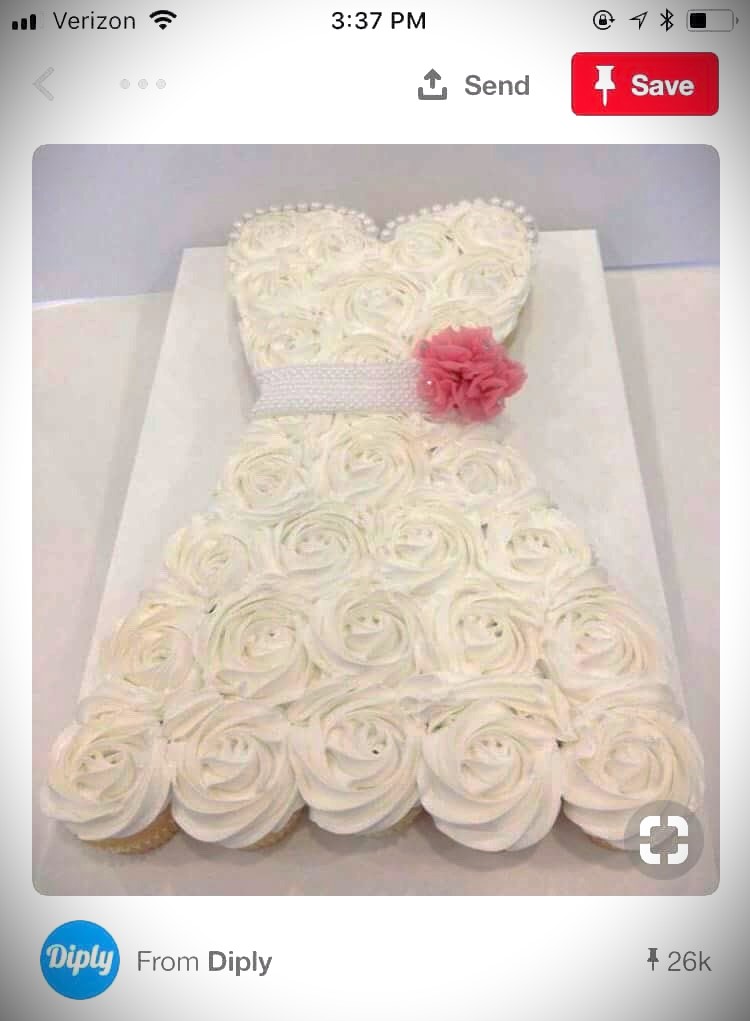
Bridal shower cupcake cake.

The Vanilla Life

Photo by Qwirki & Co. on Pexels.com

There’s just something about having real vanilla extract in your pantry. It’s so tempting to reach for that imitation vanilla extract on the grocery shelf when you see that price tag on the real extract. But there is such a huge difference in flavor when you use the real stuff.

I’m not going to go into the problems and scary information that will want you stay away from the imitation extract. There’s not need to create fear or disgust. So I’m just going to focus on the good and benefits of the real vanilla and add value to making the purchase of the real vanilla beans to make your own extract and other products.

How to make a Vanilla Extract

All you need to make your own extract is vanilla beans, 70-proof alcohol (or higher), and a glass jar (with a sealing lid) to extract. The three most common alcohols used are bourbon, rum, and vodka. (My preference is vodka because it has the least amount of alcohol flavor.) A general rule of thumb is to use 4-6 vanilla beans for each 8 oz of alcohol.

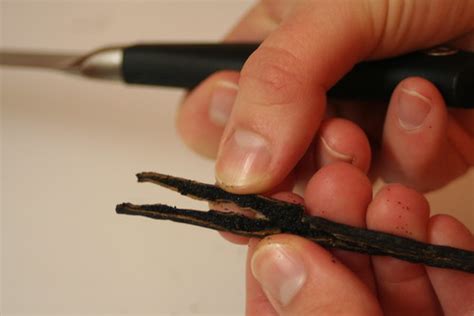
Slice the vanilla beans down the length of the bean. This opens the bean up to create the most surface area for extraction. It also releases the bean, which heightens the flavor of the extraction.

flicker.com

Put the cut beans into your jar and fill the jar up to the brim with your alcohol of choice. Tighten the lid and give the ingredients a good shake. Place in a cool dark place for a minimum of two months. (For a rich potent extract, let it sit for 6-12 months.) Shake the jar daily for the first two weeks.

The draw backs of making your own extract

What everyone tells you is that as you use your extract, you need to keep topping off your jar.

My big problem is that I use vanilla extract a lot and I quickly found that my extract quickly became diluted! I didn’t do anything wrong. It’s just that the non-vanilla alcohol quickly overtook the extract. And so my vodka quit tasting like a vanilla extract and began tasting more like vanilla infused vodka. That’s not so much of a problem if you’re after flavored liquor. But it’s a huge problem if you’re using the extract for baking.

flicker.com

My solution is making a few jars of vanilla extract at the same time. Yes it is a little overkill at first glance, but bear with me. Once your jar starts giving you a less potent extract, it’s time to shelve it and let the vanilla beans go to work and extract more. By giving this first jar a little vacation, and grabbing a second jar, you get the benefit of having vanilla potency as well as keeping the extract cycle going.

Some people say that your beans will last for 5 years. My mom had gifted me a bean from Hawaii where it was marketed to last up to 25 years. I’m not going to put an expiration date on your beans. My Hawaiian bean and the second one that I added to it, are still in their jar maybe 18 years after I first received it. I just recently fished this jar back out from the back of my cupboard because I finally had beans and alcohol to start back up on my real extract. The older beans are only giving off a diluted vanilla extract now. So I added 2 new beans in to jump start my extraction and get real vanilla back in my life. And I have a larger bottle started, which I should get to the longer extracted window before I need to use it and give my smaller bottle a break and refortify itself.

Benefits of Vanilla

If you grew up like I did, the only thing you were exposed to was imitation vanilla extract. If you were fortunate enough to have a family member go to Mexico, they might have brought back a real vanilla extract. But all you knew was that it was a luxury and yes it tastes amazing.

What you May not know

Vanilla beans contain B Vitamins (niacin, thiamin, B6, Pantothenic acid), potassium, riboflavin, copper, magnesium, and iron. They also have these properties; antioxidant, anticancer, anti-inflammatory, and are neuroprotective.

Depending on if you want to just make your own real vanilla extract, or would like to use vanilla to help meet your other health needs, the above information is a great starting point to talking with a naturopath or herbalist to see how vanilla can find a new course for healing your body.

I started looking a little deeper into what other benefits I could gain from vanilla (aside from incomparable baking goodness) when I got into soap and lotion making. It’s probably well thought about how vanilla is great as a comforting aroma therapy to soothe anxiety and calming the stomach. After all vanilla bean ice cream is pretty much a comfort food.

What was new information to me is that there have been studies that show there is the potential of vanilla having the benefits of increasing hearth health by helping to reduce LDL cholesterol, it’s antibacterial properties help treat acne, the antioxidants have healing properties to boost your immune system, help heal split ends and strengthen hair, and slow down the aging process (age spots and wrinkles).

Advertisements

All of these benefits were what has been found in the studies that have researched the compound Vanillin. These studies have done work in vanilla extracts and the seeds. And if this interests you, these studies are well worth reading up on.

Even if you don’t want to pursue vanilla for health reasons, it is worth knowing that vanilla beans contain over 200 compounds. And their concentrations are dependent on the region from where the beans are harvested. Again, this is another area of diving into that is well worth the look. I wanted to mention this (as well as point you back up to the vitamins and minerals mentioned in the beginning) to point you toward the benefit of using real vanilla extract over imitation vanilla extract (which has absolutely none of these components).

Extract is not the only thing you can make from Vanilla

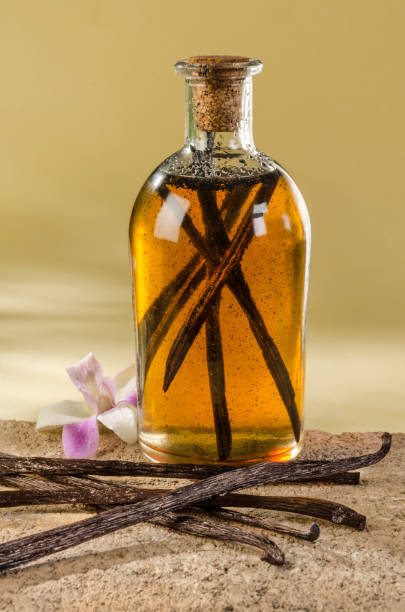
Vanilla beans can also infuse oil.

In the infusion that I made, I used 4 vanilla beans, a quart sized mason jar, and olive oil. (You can choose your own carrier oil, like jojoba oil, or any other that is better absorbed into your skin. Each oil has its own benefits that it offers the infusion.)

Follow the same steps as above, with the vanilla extract. The only difference in the method is that the vanilla beans are scraped from the bean pod. The pods are what I put into the oil. (The beans I put into a lotion–this will be its own post in the future.)

Instead of keeping my oil in a cool dark place, I left mine in a westward facing window and used solar heat to help the infusion for 2 months. Even using winter sun, the finished oil has a warm vanilla scent.

This oil can be used for so many different needs.

  • Use the oil on your skin for massage or relieve dry skin
  • Use to improve sleep whether you put a drops of oil in a warm bath or smell the oil before going to bed
  • Improve your skin health by adding a couple drops into your face wash or lotion
  • It is reported to soothe minor burns when you add 2-3 drops to effected area
  • Use in desserts (for whatever recipe calls for oil and you chose a cooking oil like avocado or olive)

I also use infused oil in products I made for sale.

Advertisements

If you are interested in using vanilla beans for cooking only, you can put a bean in with some sugar in your food processor and blend together. This will give you a fancy sugar that you can dust on top of desserts or use as a sugar rim on a drink of choice. The same can be done with salt (even though savory herbs are usually matched with salt).

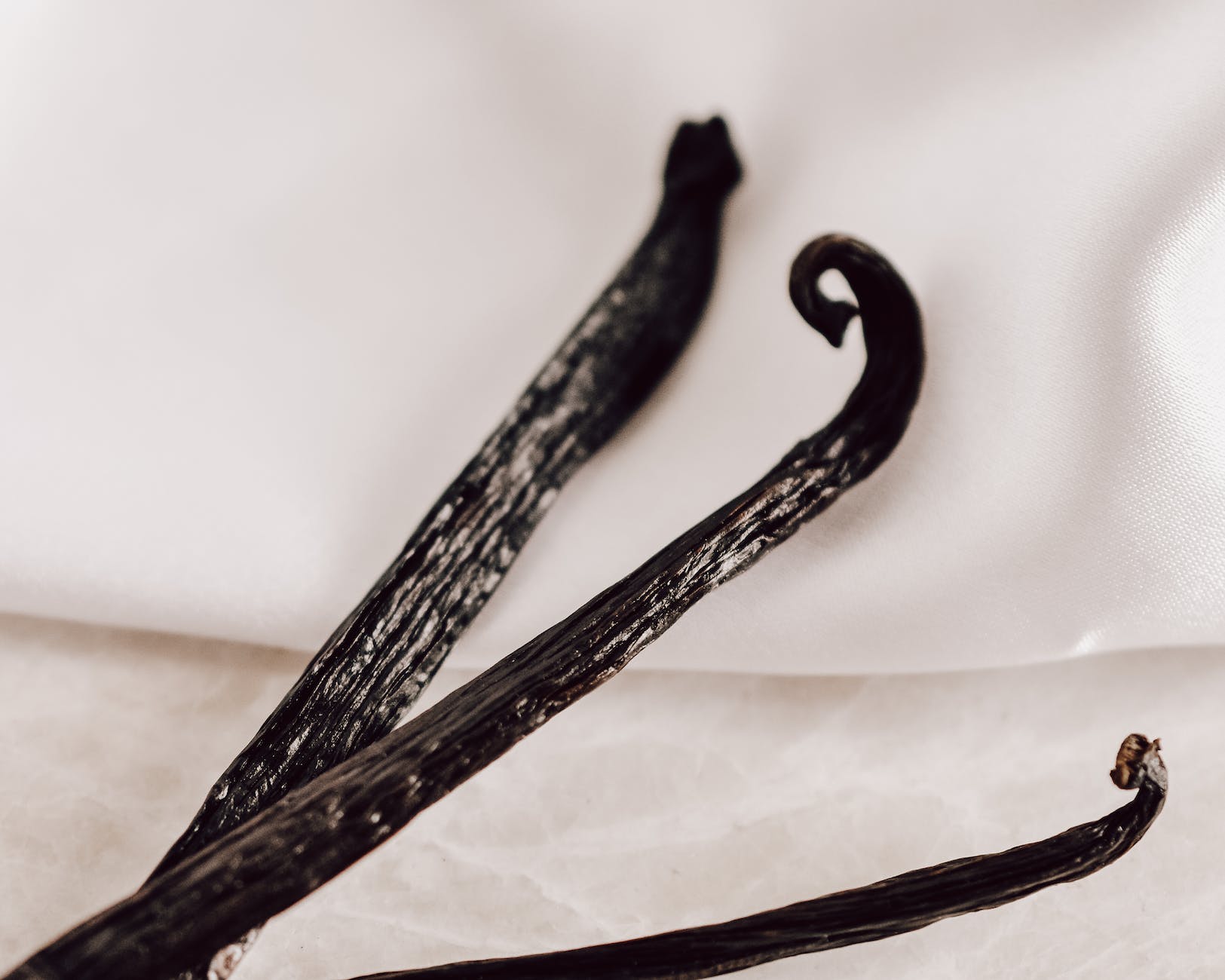
The most important thing to keep in mind when using vanilla beans, whether in extract or infusions, make sure that your beans have an oily sheen to them. Many compounds are found in the oil of the bean and speak to the overall health and quality of the bean.

There is so much goodness found in vanilla beans. Hopefully, you have learned something new about vanilla. That it has so much more to offer than just being the flavor of a beloved ice cream or just a simple ingredient that you add to your cakes and cookies.

What have you used Vanilla for?


This post contains affiliate links to products. We may receive a commissions on products purchased through these links, but at no extra cost to you. These items listed here are from Amazon but may be purchased at local markets.

Are you looking for a new place to buy vanilla beans? I am very pleased with this vendor.

Processing…
Success! You're on the list.

2 responses to “The Vanilla Life”

  1. Damien Safdeye Avatar

    I really like what you have acquired here, certainly like what you’re stating and the way in which you say it. You make it entertaining and you still take care of to keep it wise. I can not wait to read far more from this site.

    Like

    1. Pacific Northwest Event Design Avatar

      Thank you for commenting! I appreciate what you’ve shared. My goal is to take a new skill and make it approachable for someone who might question if they can do it. Being entertaining is an amazing bonus. Thank you for reading, and I hope you enjoy future posts.

      Like

Leave a comment

Advertisements
Advertisements
Advertisements

More Than Arm Candy

I have to love my husband who loves to give practical gifts. Usually he stays away from gifting flowers because they last for a few days before they’re composted. However, there are so many uses for not just roses but other flowers as well. While I’m going to be talking about roses here, there are so many other flowers that can be used in the exact same way!

For those who are unaware, roses are edible. (Before you do eat rose petals, make sure that they haven’t been sprayed with chemicals, pesticides, insecticides, or anything else that is harmful to you.) Roses contain vitamins A & C, Niacin, Potassium, Iron, Calcium, and Phosphorus. Some places where you’ll find fresh petals are on a dessert/cake or in beverages such as teas.

Advertisements

It’s not just the petals that are usable to our bodies. Rose hips (the bulb at the bottom of bud, harvested at the end of the rose season from the rose bush) is used in the beauty industry and baby products for the benefits it has to the skin.

The benefits to the skin is the primary reason why I decided from this last bouquet of roses that was given to me that I was going to use the petals for my next batch of soap.

I started making soap because I’m not okay with all the chemicals that are being used in soaps in the commercial market. Other than using soap dyes (which I’ve had my tub and skin discolored from bath bombs and other products) the mission I’m on is finding natural dyes to color my soap. For pink soap, I’ve seen soap makers use dyes or French clay.

Now Calendula is a well known floral natural food grade colorant. For red/pink colorant, Beets can be used in food. But anyone who’s worked with beets knows that your skin and clothes can be discolored. So I wanted to find a different red/pink colorant for my soap that I can grow in my garden. So I came to roses.

Advertisements

How to Process Roses

There’s two easy ways of doing this.

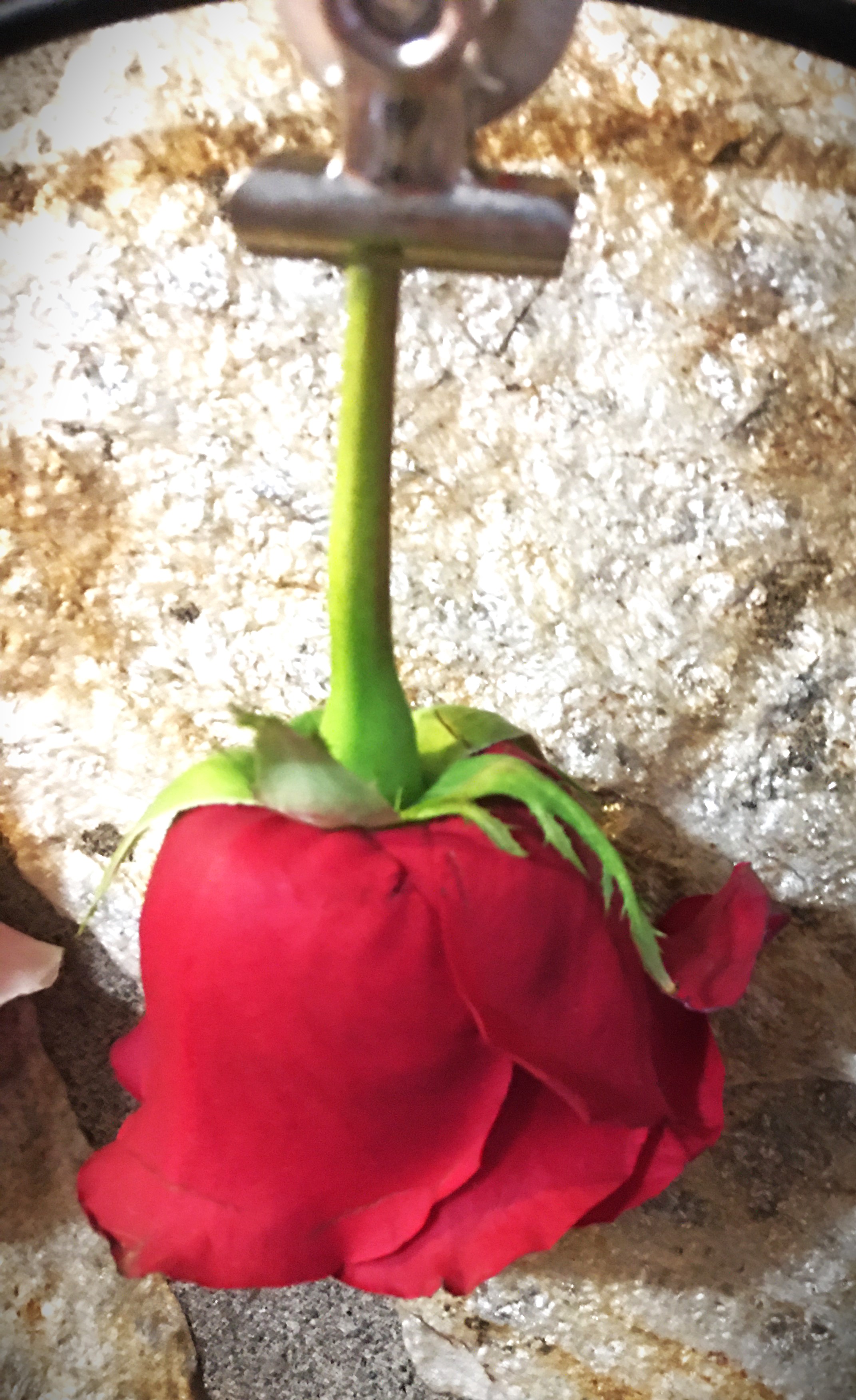
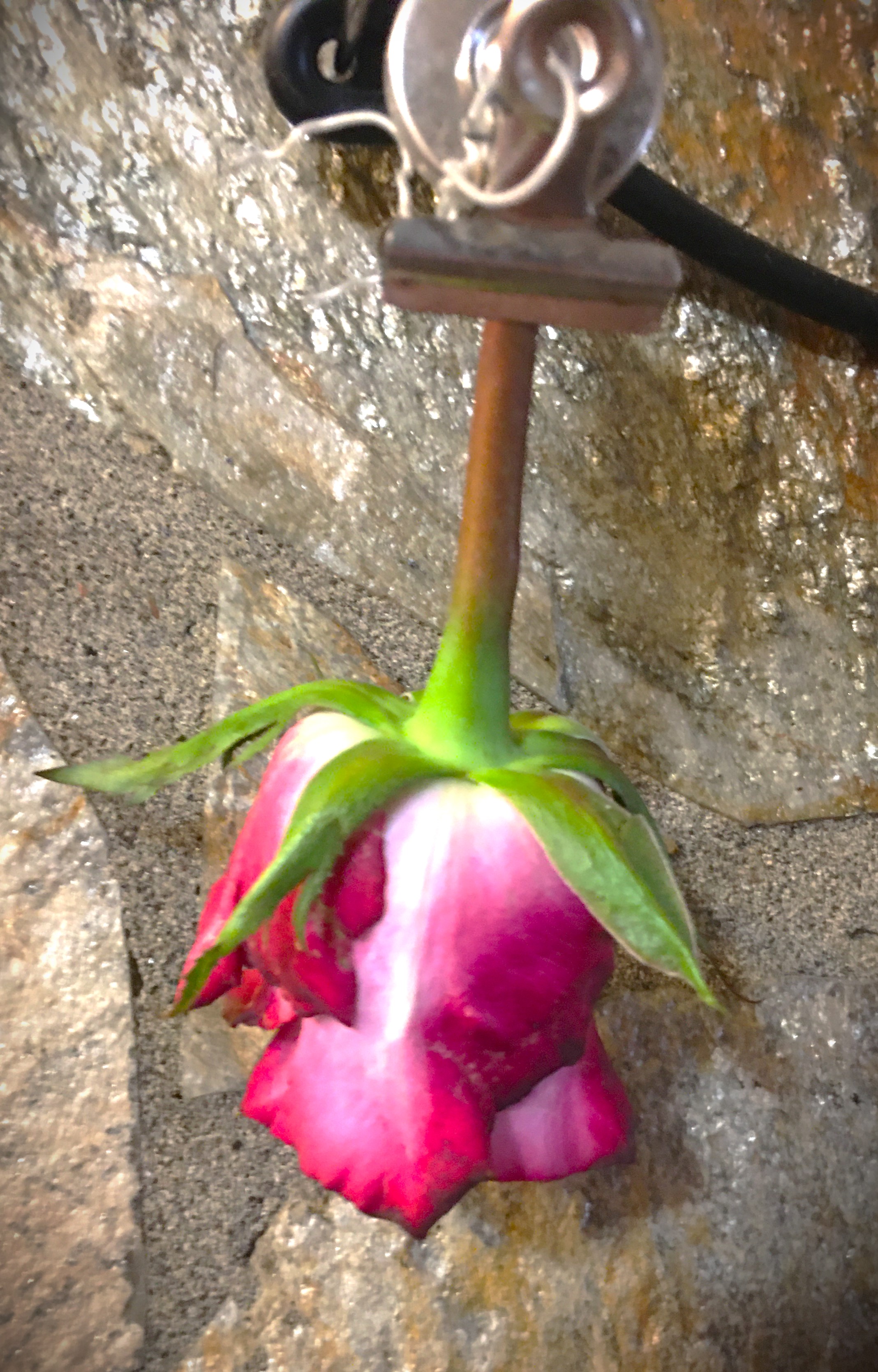
The first is to hang the roses upside down to slowly dry them out. The benefit of this method is that all the vitamins and natural compounds that our bodies benefit from are at a higher concentration when they are dried at a low temperature and slowly.

Ideally, the most benefit would come from using the petals fresh. And while it is possible to use fresh ingredients in soap making (I make orange colored soap using pumpkin puree), there’s no way of breaking down the petals for a smooth and consistent colorant unless you want to use a blender and puree it with the water content of your soap. While it’s not a bad idea, unless you grow roses year round (which I don’t) you have a limited supply due to the window of fresh flowers available. (This is the reason why dried petals are best for me.)

This drying method is slow and takes time. Also any white component will yellow as it dries out. This can affect your over all final color depending on which rose you use. With the red rose, not so much. But the other two, the tinge will be noticible.

So there’s the second method, using a dehydrator.

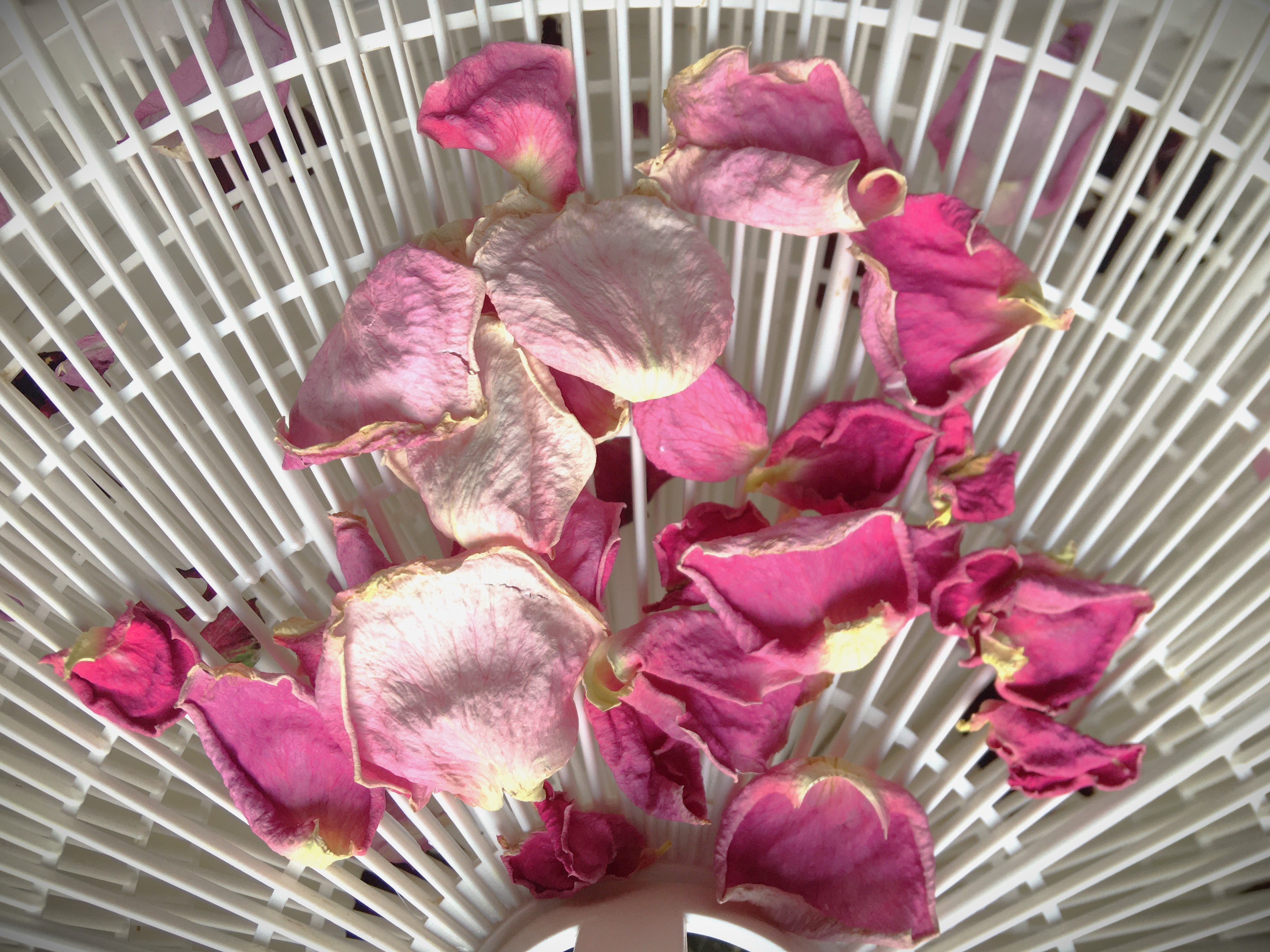
The benefit from using a dehydrator is that petals are finished drying in about 24 hours (at 90°F, the lowest setting on my dehydrator) and their colors are only affected by growing darker.

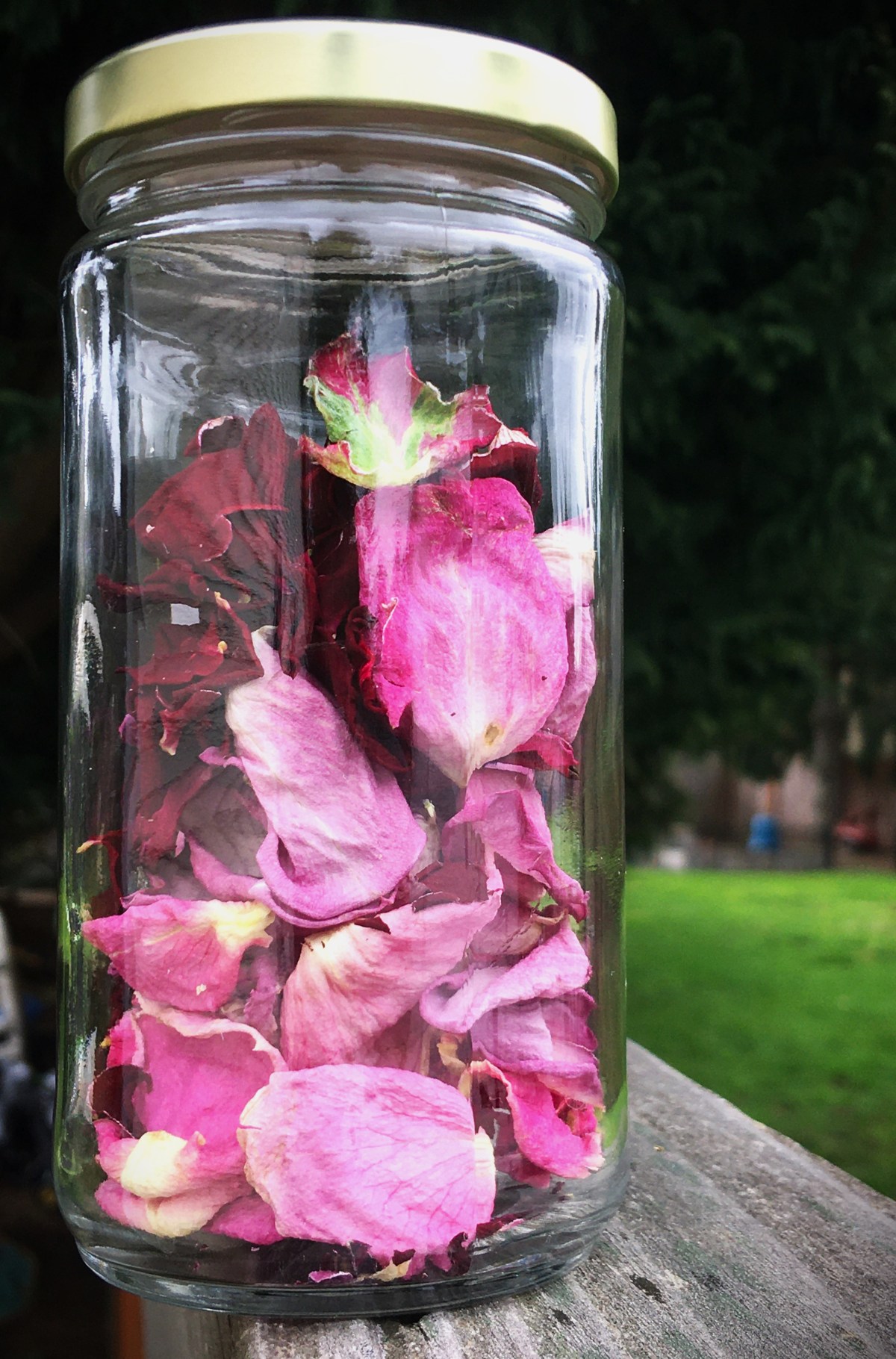
As you can see here, the white component on the pink flowers have not discolored too much. This is great because when I turn these petals to powders, I’ll retain a pink like quality.

Before I move on to finishing these petals, I want to mention that if you want to make a natural confetti for cake decorations or throwing for a party/wedding celebration, all that you need to do is crush your dried petals by hand and store them in an air tight container (like a lidded glass jar) to prevent them from rehydrating due to humidity in the air.

As you can guess, with the fact that there were lavender inner petals on the second rose (the one with the variegated pink and white outer flowers), this is the reason why I blended in the red petals with the pink ones, to keep the pink and stop the transitiontoward purple (although I’m not opposed to purple soap.)

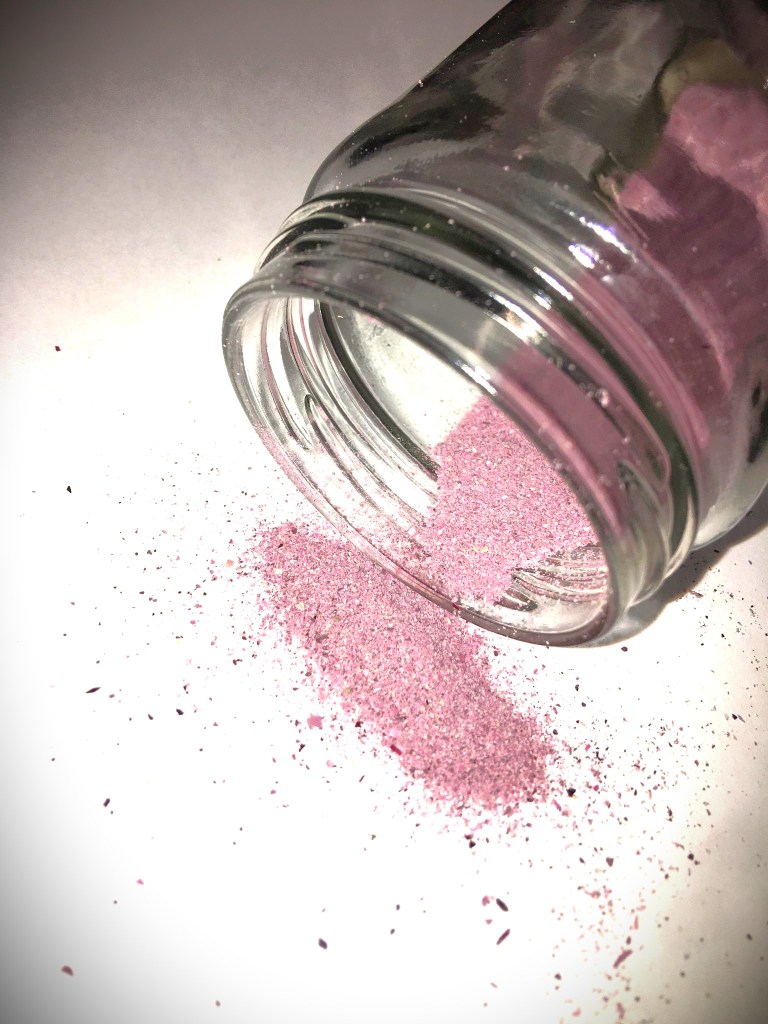
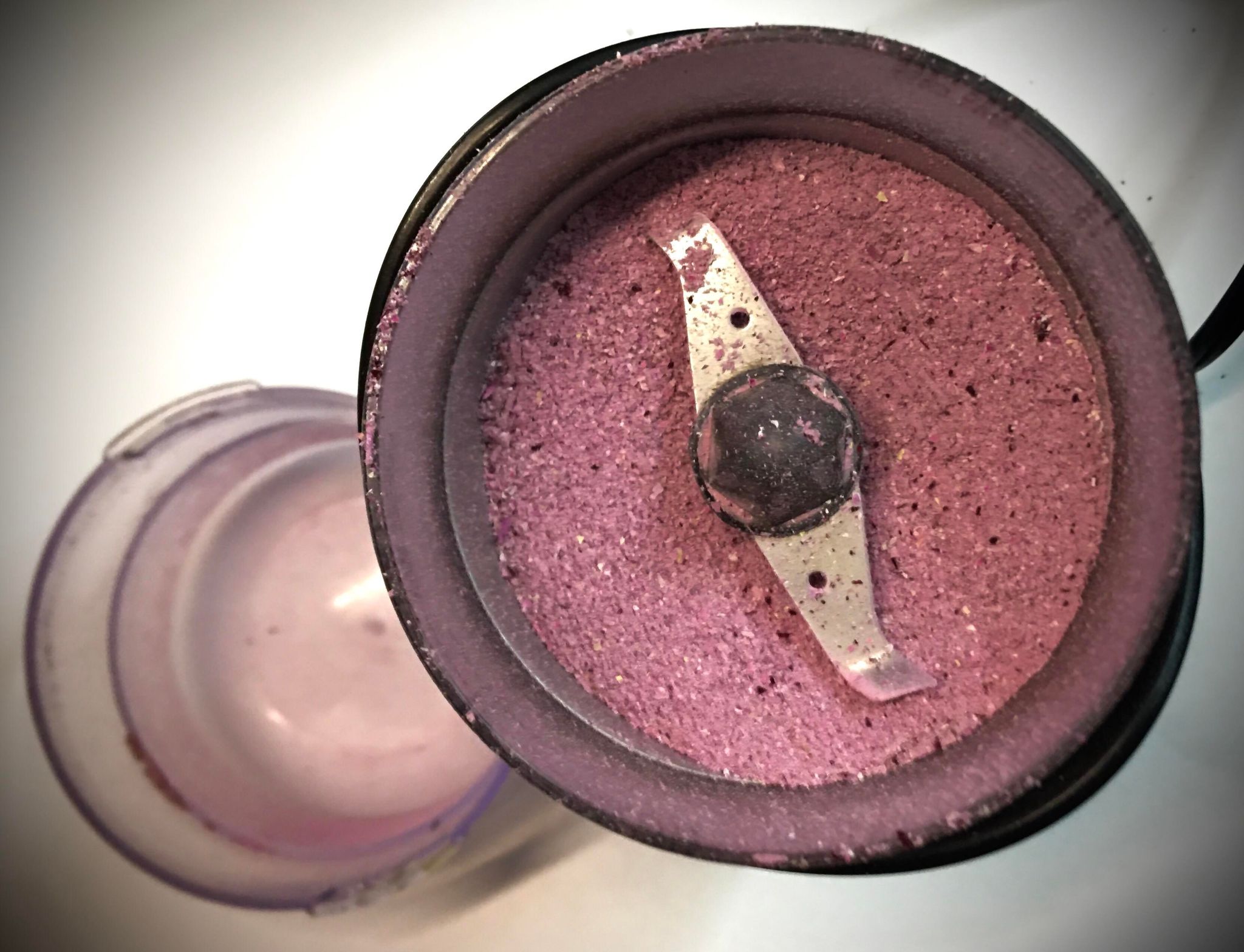
To make Rose Powder, all you need to do is put the crushed petals into a coffee or herb grinder and run it until you get the consistency that you are looking for. Because I’m looking to make a colorant for my soap and don’t want to have flower chunks in it, I took the powder down to a very fine grind.

The fun part about Rose Powder is that you’re not limited to use it as a natural dye or colorant. You could dust this on the icing of a confectionary dessert. If you want to make pink pasta, use this powder as part of your dry ingredients. Mix the powder with a sugar or salt and you have a pink sugar or salt rim to your favorite beverage.

No matter what celebration you have coming up, keep this idea in mind. If you want to dress put your Easter cup you can make a sugar rim using all sorts of different colored edible flowers. Calendula gives you yellow/orange, Violets blue/purple, Hibiscus yellow/orange/pink/blue/purple, there are so many other flowers. If you want to see a quick list of different edible flowers, here’s a jumping of point here.


What unique way do you use flowers?

Processing…
Success! You're on the list.

Leave a comment

Advertisements
Advertisements

Garlic Love

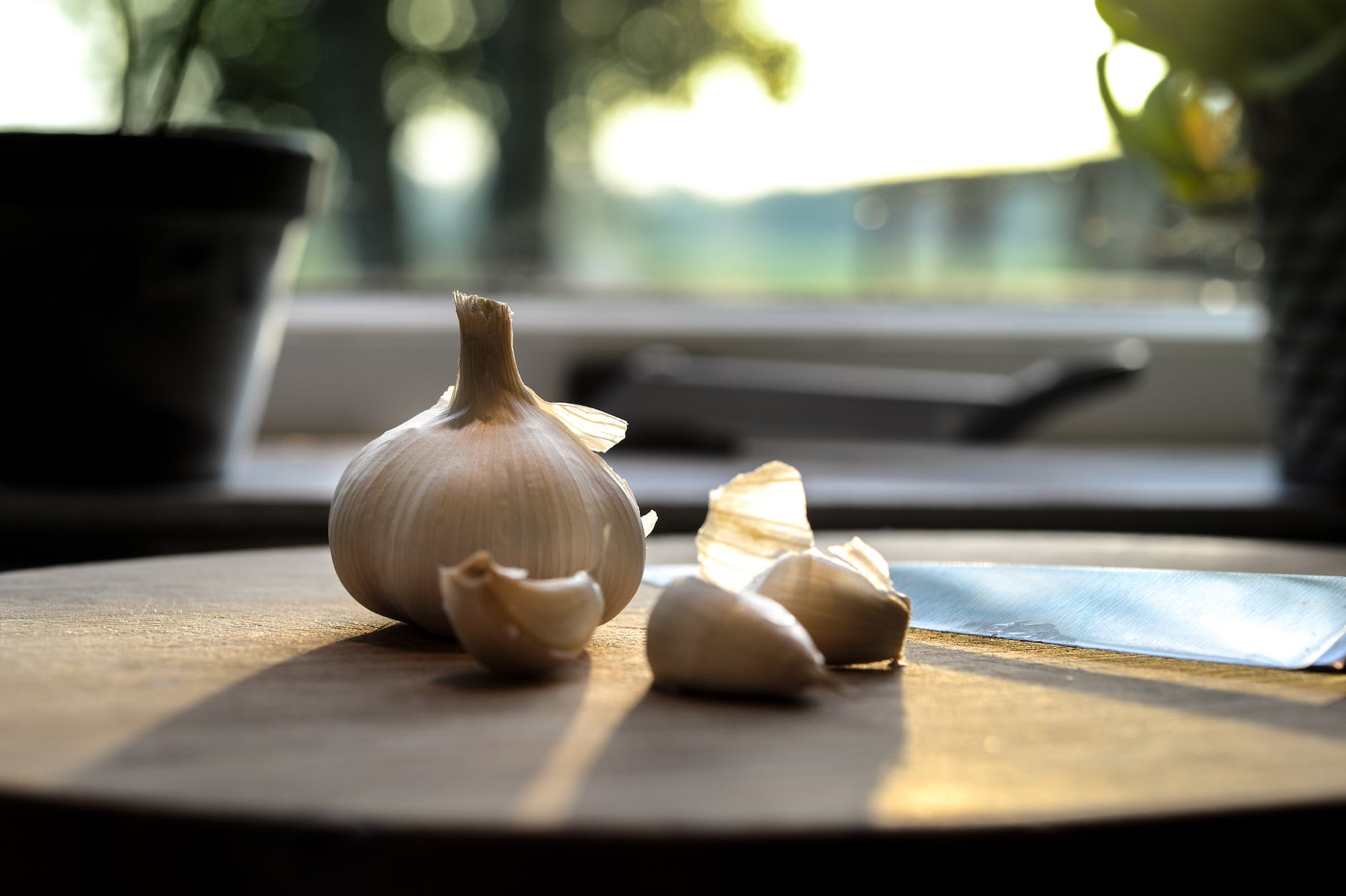
Photo by Skitterphoto on Pexels.com

I don’t know about you, but the one ingredient that buy a lot of is garlic. In fact, if a recipe calls for garlic cloves, I always add in more if not double, just because I find that most recipes under season with garlic.

There has only been one problem in my house. Okay two problems. When I look for cloves I either don’t find any or I find mummified cloves that somehow managed to make their way into the back of my spice cupboard.

This past year my question to myself was, how do I preserve garlic so that it’s ready for me when I need to use it? Followed up with the question, is it possible to buy garlic in bulk and not have it stout on you and you lose it before you can use it.

The answer to the first… you can ferment garlic and extend its shelf life.

The answer to the second se question is, yes!

At the end of the last farmer’s market season, I took advantage of the end of the season clearance sale at my local vendor. I bought garlic in bulk (at least from the perspective of a single family for personal use. If I remember right, I bought somewhere near the vicinity of 7 pounds worth of garlic. Needless to say it was a far cry higher than any other time I’ve purchased garlic.

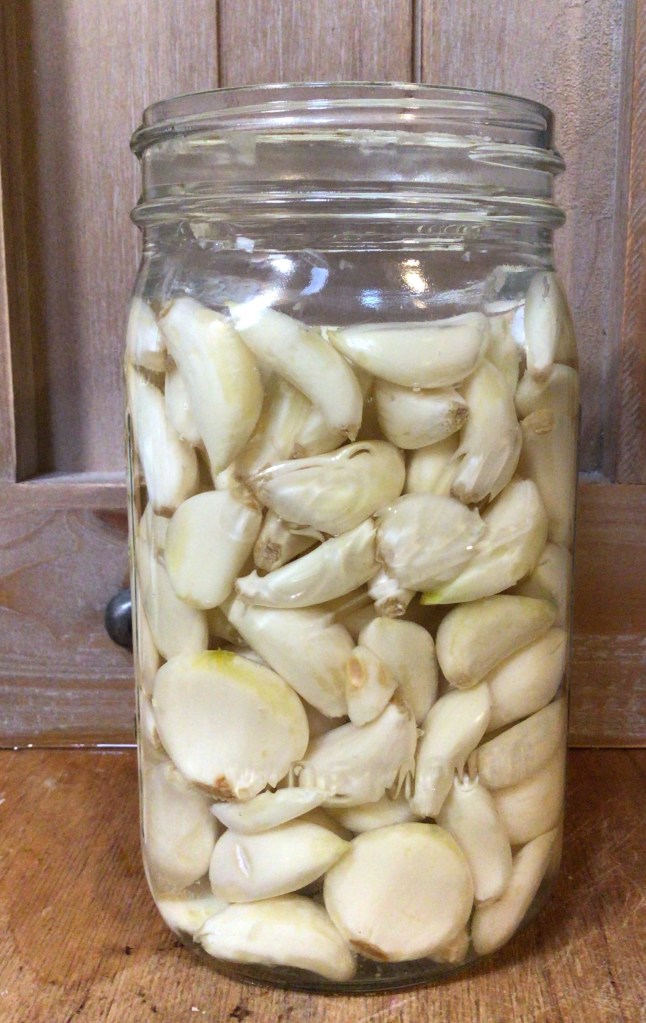
Before the purchase, I had looked up different ways to ferment garlic just to make sure I had at least one way of doing this and I was going to use/eat it. (When it comes to pickling and fermenting the flavors generally don’t taste good to me.) There we’re two that I wanted to try. Both were simple—just two ingredients each. One was garlic and water and garlic with honey.

Now the garlic and water ferment I had a general idea what to expect because I’ve fermented cabbage with water and salt. The honey sounded a bit out there and was a mystery to me.

If you’re like me and already asked, can you ferment with honey? The answer is yes! I was surprised and even excited. Especially when I did more research and found that garlic fermented in honey is a great home remedy for colds and coughs. The garlic clove has compounds that equip your body to fight off common colds. The honey, from this fermentation, is a great natural cough syrup.

Advertisements

During the time of this fermentation (this past fall) there was a time when local parents were having. She’s time hunting down children’s cough syrup. But fortunately, I don’t have to worry about that now because I’m keeping honey fermented garlic in stock at my house. (My way of freeing up resources for other families, who have not yet learned about natural medicine and need those resources for their kiddos.

Fermenting garlic is very simple.

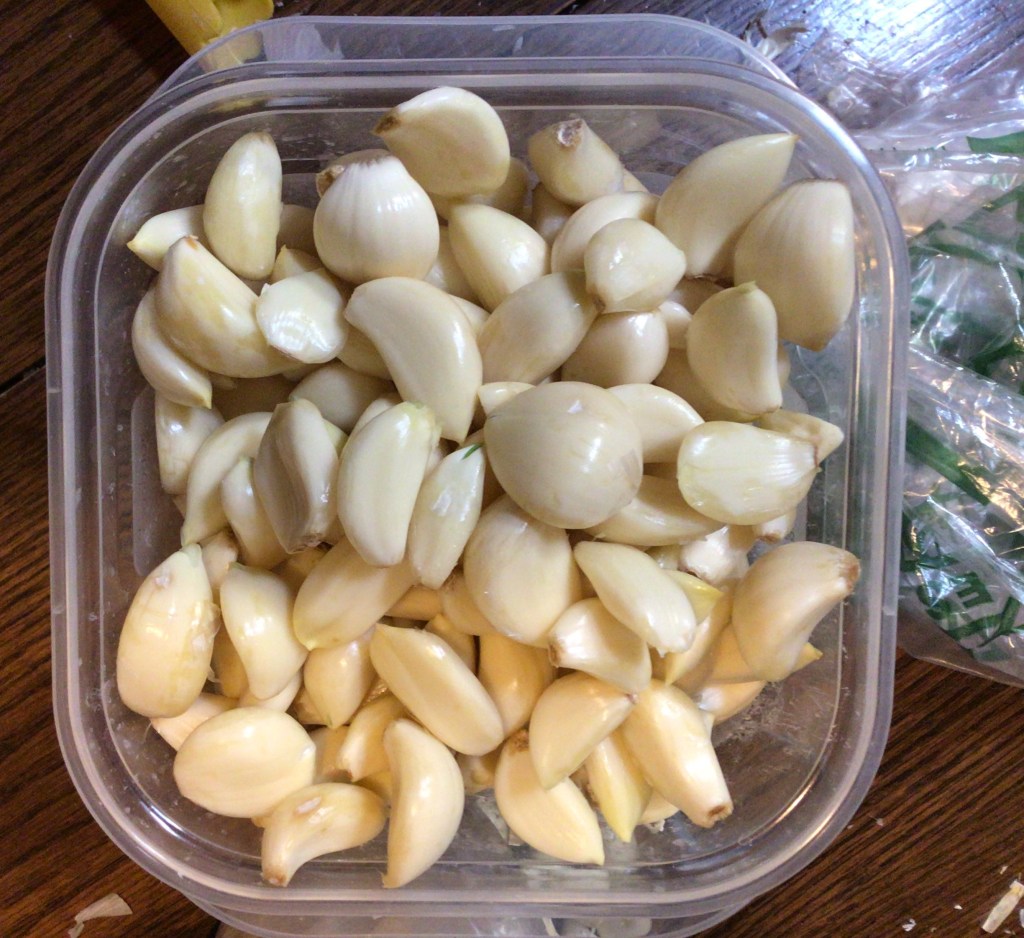
  • Peal garlic cloves.
  • Put the cloves in a mason jar with 2” of head space.
  • Fill your mason jar with your fermenting liquid so that it covers your garlic.
  • Remove air bubbles and add more liquid as needed.

This step is particularly important for honey because of how thick it is. It oozes between cloves but doesn’t really thoroughly get in and around all the cloves. So I use a wooden chopstick and move the cloves around to get the honey to get in all around the cloves. Even with the honey levels well above the cloves, when I did the first stir, the honey level dropped by half. I had to go through the process of adding more honey and stirring about three times. I knew I had gotten all the air out when I stirred the cloves and the honey level did not drop a bit.

  • Place a fermenting weight on top of the cloves.
  • Lightly secure a canning lid on your mason jar. (Better yet, use a fermenting lid which allows the ferment to “burp” on its own.
  • Keep in a cool dark place where you can remember to burp the jar.
  • Garlic is fermented and ready for use in 4-6 weeks.

TIP: During active fermentation, it’s a great idea to keep the jar in a bowl. There’s a great chance that the ferment will bubble over while you’re not looking. And a bowl is your best friend when it comes to cleaning up.

TIP 2: The aroma of garlic is going to be very strong during active fermentation. So make sure the place where you keep it is one where you won’t mind the smell. (At first I had it in our pantry, but my husband was not okay with the smell. I relocated it to another location. The good news is that the garlic smell in the pantry was gone in a couple days.)

Peeling In Bulk

There are a couple of options that you have available.

You can peel the garlic the classic way with a paring knife. It’s long and tedious (particularly when you have young children under foot).

I don’t know if this next idea is still making the circuit around social media–putting cloves in a mason jar and shaking the skins off. I wished that this “trick” worked. Let’s just say that I raced my husband. He tried the jar method and I used a paring knife. The jar is fail if you fill the jar halfway or a quarter full with garlic cloves. The only time it semi worked was when the amount of cloves just covered the bottom of the jar. In the end, my husband shoved the cloves over to me when I out counted him with my paring knife. There were still the last layers of skin on the cloves that I had to peel off with the knife.

My preferred method of peeling garlic is with a silicone garlic peeler tube. With a dry tube and properly dried out garlic, it only took 1-2 rolling presses in my hands and all the layers were peeled away.

Unfortunately we only have one tube in my house and my husband and I fought over it. So we turned it into a competition. How many cloves could we peel in the amount of time it took the other to break down one bulb into cloves ready to go. We actually didn’t keep score because we were too busy laughing and working quickly on whatever end of the competition we were on!

Advertisements

How did the garlic turn out?

The quick answer is that I did not prefer the flavor of the finished garlic that was fermented in water. It has an acidic flavor that I have to cook out of the garlic. At this point, all health benefits from making fermented garlic is long gone, because it’s cooked to death. (I’ll come back to this.)

Originally I wasn’t sure if I would like the honey fermented garlic at all. But let me tell you this, I will never preserve garlic any other way!!!!

At the end of the fermenting process, the honey looks lighter in color and its thickness looks like it was watered down. When you taste the honey, it’s not honey sweet anymore. There’s still some sweetness present but it’s been dulled down remarkably. The garlic itself takes on a slight nutty flavor and is slightly sweeter. The pungent snap that we’re use to experiencing when eating raw garlic is greatly reduced. The garlic is still firm, but not as firm as garlic fresh from the garden.

The honey garlic is perfect to mince and add raw to a salad, especially if you drizzle a little honey on top as part of the dressing. You will not regret using honey garlic as a finishing touch on Italian or Asian inspired dishes. In fact, I can think of many many more applications for this form of garlic than I can with its raw counterpart.

Benefits of Fermented Garlic

The most famous compound that Garlic is known for providing is Allicin. If you need a jumping off point for the health benefits that allicin provides for our bodies, check out this article. In short it’s good for helping your Immune System do its job and reducing inflammation.

Fermentation brings its own benefits to any vegetable that you bring through this process. The most talked about benefit is improving your gut health by feeding the good bacteria that resides in your Gastrointestinal System. Here’s a good place to start seeing all the other benefits available to our bodies.

These two reasons are enough to send you on a well rewarding researching adventure for understanding why garlic and fermented foods are both important to being added into our diets.

Advertisements

Why Should I Ferment Garlic?

Whether you grow your own garlic are want to take advantage of garlic that you find at a great price, fermenting garlic is a sure way of preserving your garlic.

Over the years, I’ve tossed out garlic because it turned into mummified cloves, had mold, or started sprouting before I could use it. By fermenting, you get to stop the clock on the life of your garlic. The common practice of braiding garlic and storing it in a cool dark place slows down the clock on the garlic, but it will still approach a time where those bulbs and cloves also start to sprout. By fermenting, you’re adding more time that you have available to use the garlic that you have in your kitchen.

And in the instance of the honey garlic, you have the added bonus of having a home remedy cough medicine. Over the last two years there have been many things on the store shelves that have been out of stock. Cough syrup, especially for children, was one of those things this past fall and winter. I haven’t even bothered checking the shelves to see if that situation has fixed itself. But I can rest assured that a dose of the honey with a clove of garlic will not only treat coughs in my family, it will give our bodies added nutrients which help our immune systems fight off whatever cold or virus that we are dealing with.


What do you love using garlic for???


Products used today:

This post contains affiliate links to products. We may receive a commissions on products purchased through these links, but at no extra cost to you. These items listed here are from Amazon but may be purchased at local markets.

Processing…
Success! You're on the list.

One response to “Garlic Love”

  1. 664 Avatar

    I read thiks piece off writing fuloly on tthe topic of the differenc of hottest
    aand previous technologies, it’s reemarkable article.

    Liked by 1 person

Leave a comment

Advertisements
Advertisements